
10 Black Flowers That Are Hauntingly Beautiful (And Real)
If you've been falling down the black flowers rabbit hole on social media lately, you're not alone! The black flowers aesthetic is having a major moment, sitting right at the intersection of gothic plants, moody color, and a fearless approach to garden design. As a landscape designer, I'm here for all of it.
The good news? These flowers are completely real, widely available, and easier to grow than you might think. Whether you're building a full dark garden or just want to add some drama to a pot on your porch, this list is your starting point.
And one more thing worth mentioning: every image in this article is real, sourced directly from professional horticultural growers or carefully chosen stock photography. No AI-generated flowers here, just the real thing, gloriously dark and garden-ready.
Are Black Flowers Actually Black?
Here's the honest answer: true botanical black doesn't exist in nature. What we call "black flowers" are actually the deepest, richest shades of burgundy, purple, and maroon. These shades are so dark they read as black to the eye, especially in certain lighting. Up close, these flowers often reveal even more depth and beauty than their photos suggest.
This article may contain affiliate links. If you make a purchase through one of these links, I may earn a commission at no additional cost to you.
10 Stunning Black Flowers for Your Garden
1. Queen of Night Tulip
Tulipa ‘Queen of Night’
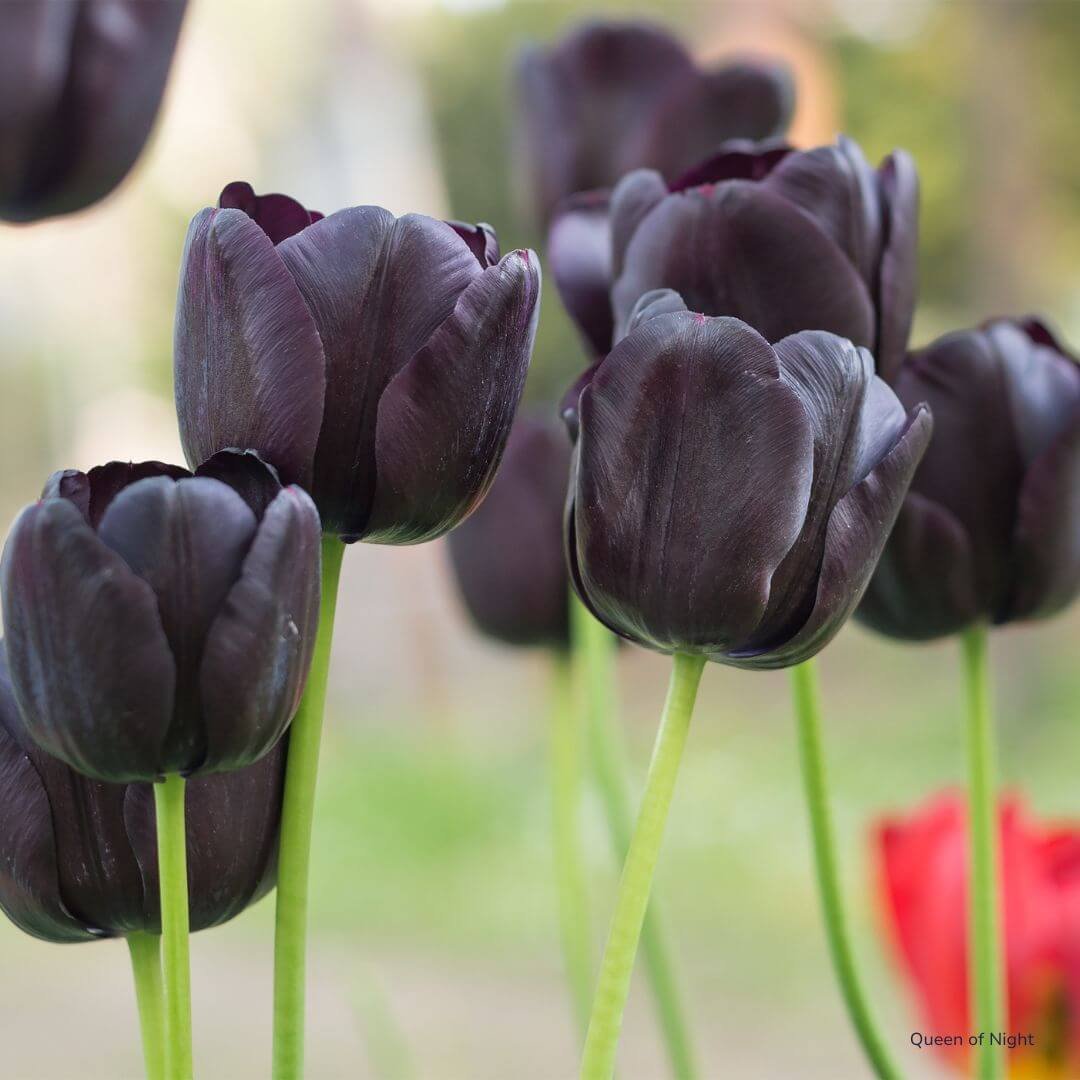
Queen of the Night, reigning over dark gardens since 1944. 🖤 Image credit @santi-jk via Canva.com
Perennial (bulb) | Zones 3–8 | Full Sun
This is the one that started it all for most dark garden lovers, and it absolutely deserves its reputation. Queen of Night is a deep, velvety maroon-black tulip with a satiny finish that looks almost unreal in the spring garden. It's one of the most famous black flowers in nature, and it's been stealing hearts since the 1940s.
Blooms in mid-to-late spring, reaching about 24 inches tall
Plant bulbs in fall, about 6 inches deep. Queen of Night is a perennial tulip, meaning it will rebloom each spring for several years before the blooms gradually diminish and the bulbs need replacing.
2. Wedding Party® Dark and Handsome Hellebore (Lenten Rose)
Helleborus x hybridus ‘Dark and Handsome’
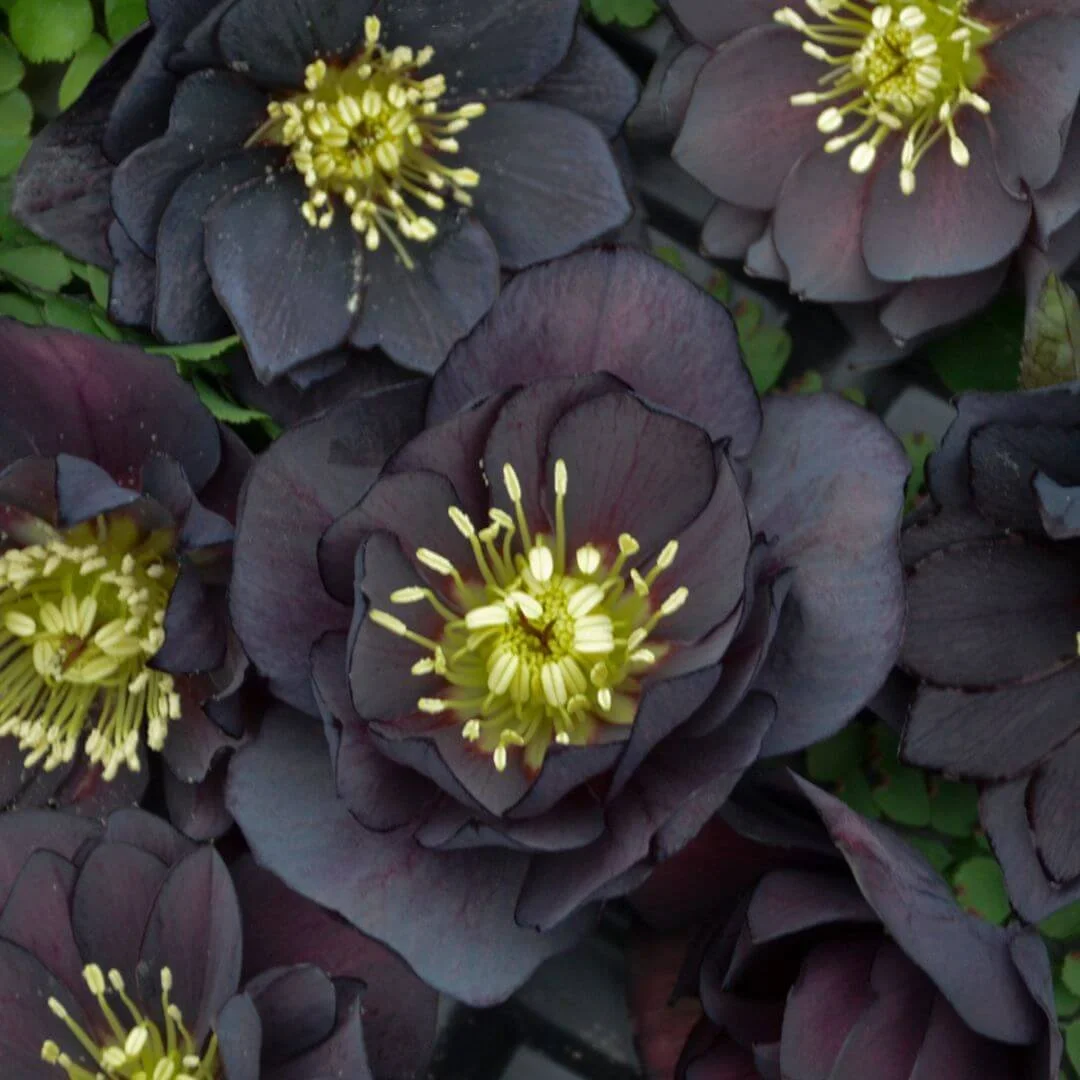
Wedding Party® Dark and Handsome Hellebore. Image courtesy of Walters Gardens, Inc.
Perennial | Zones 4–9 | Part Shade to Full Shade
If you have a shady spot that needs some drama, hellebores are your answer. Dark and Handsome is a variety with deep, near-black nodding blooms that appear in late winter to early spring, sometimes even pushing through snow. They're evergreen in most zones, which means you get year-round structure even when they're not in bloom.
One of the few truly shade-tolerant black flowers; perfect under trees and on the north side of the house
Slow to establish but very long-lived. Plant it once and enjoy it for decades!
3. Blacknight Hollyhock
Alcea rosea 'Blacknight'
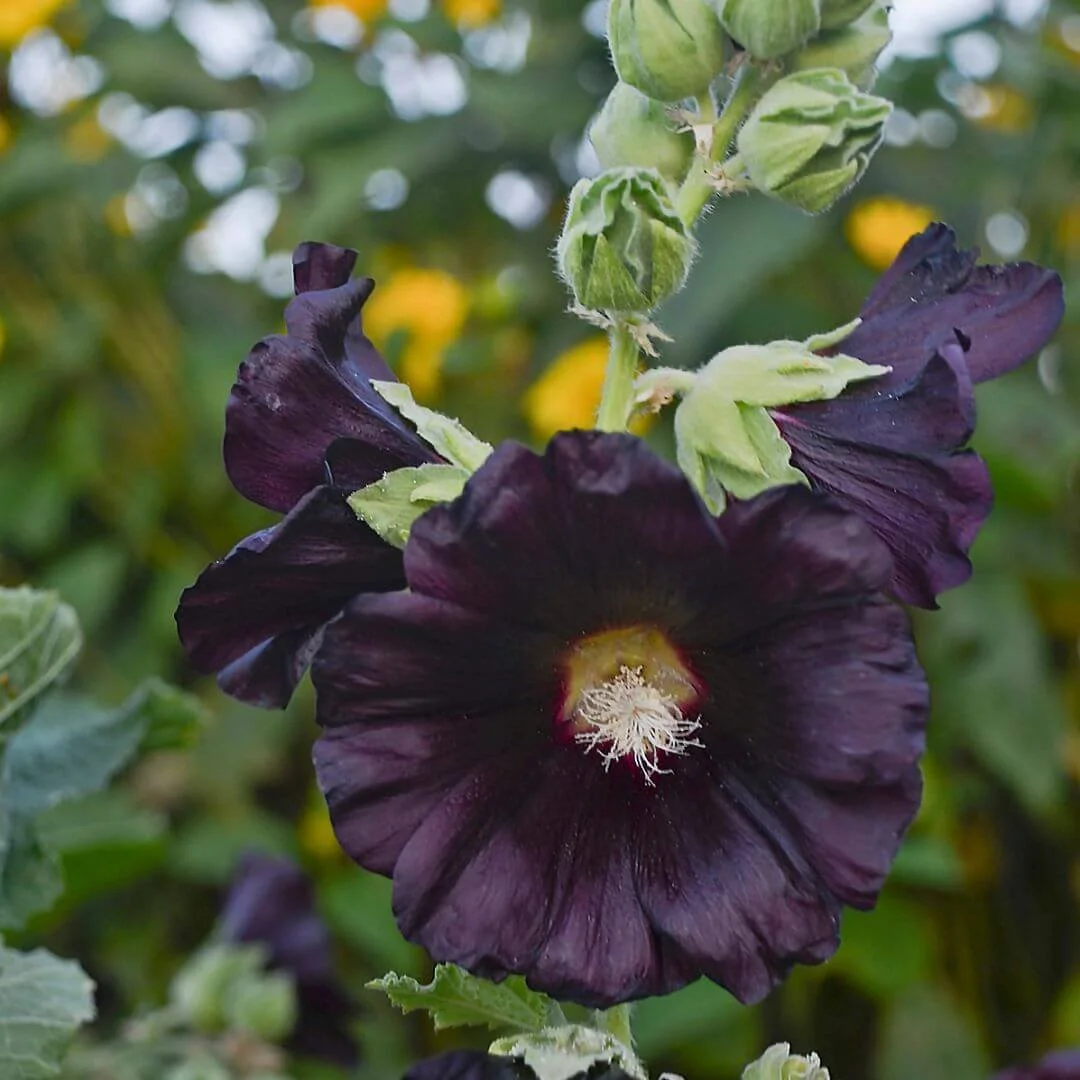
Blacknight Hollyhock. Image courtesy of Walters Gardens, Inc.
Biennial (blooms second year) | Zones 3–8 | Full Sun
Hollyhocks are a classic cottage garden flower, and Blacknight is their moody, dramatic alter ego. The blooms are a rich, velvety maroon-black held atop spires that can reach 5-6 feet high. They are dramatic, old-fashioned, and absolutely stunning against a fence or wall! A quick note on the biennial part: hollyhocks typically grow foliage the first year and bloom the second, so plant them two years in a row to ensure you always have flowers.
Self-seeds freely, so once established it tends to return on its own
A great choice for beginners because it's a tough, drought-tolerant, and unfussy once established
4. Sorbet® Black Delight Viola
Viola cornuta ‘Black Delight’
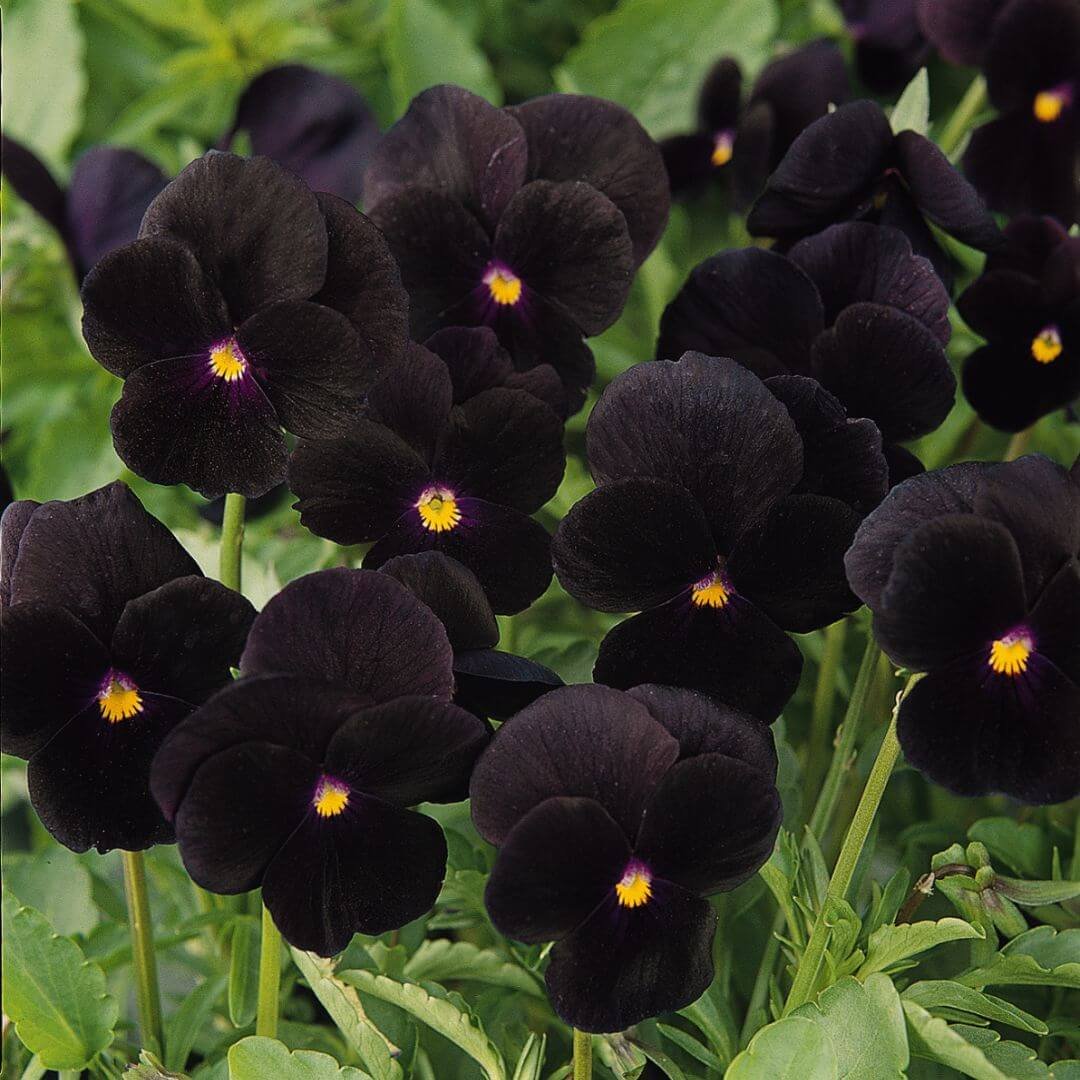
Sorbet® Black Delight Viola. Image courtesy of Ball Horticultural Company
Annual | All Zones | Full Sun to Part Shade
This little viola punches way above its weight in the drama department. The flowers are a deep, velvety near-black with the tiniest yellow eye at the center, making them moody but with just a hint of whimsy. Violas are cool-season flowers, which makes them perfect for spring and fall containers when most of your other plants are just getting started or winding down.
Stays compact (about 6–8 inches), making it ideal for pots, window boxes, and border edges
Deadhead regularly to keep the blooms coming all season long
5. Blackwater Bearded Iris
Iris germanica ‘Blackwater’
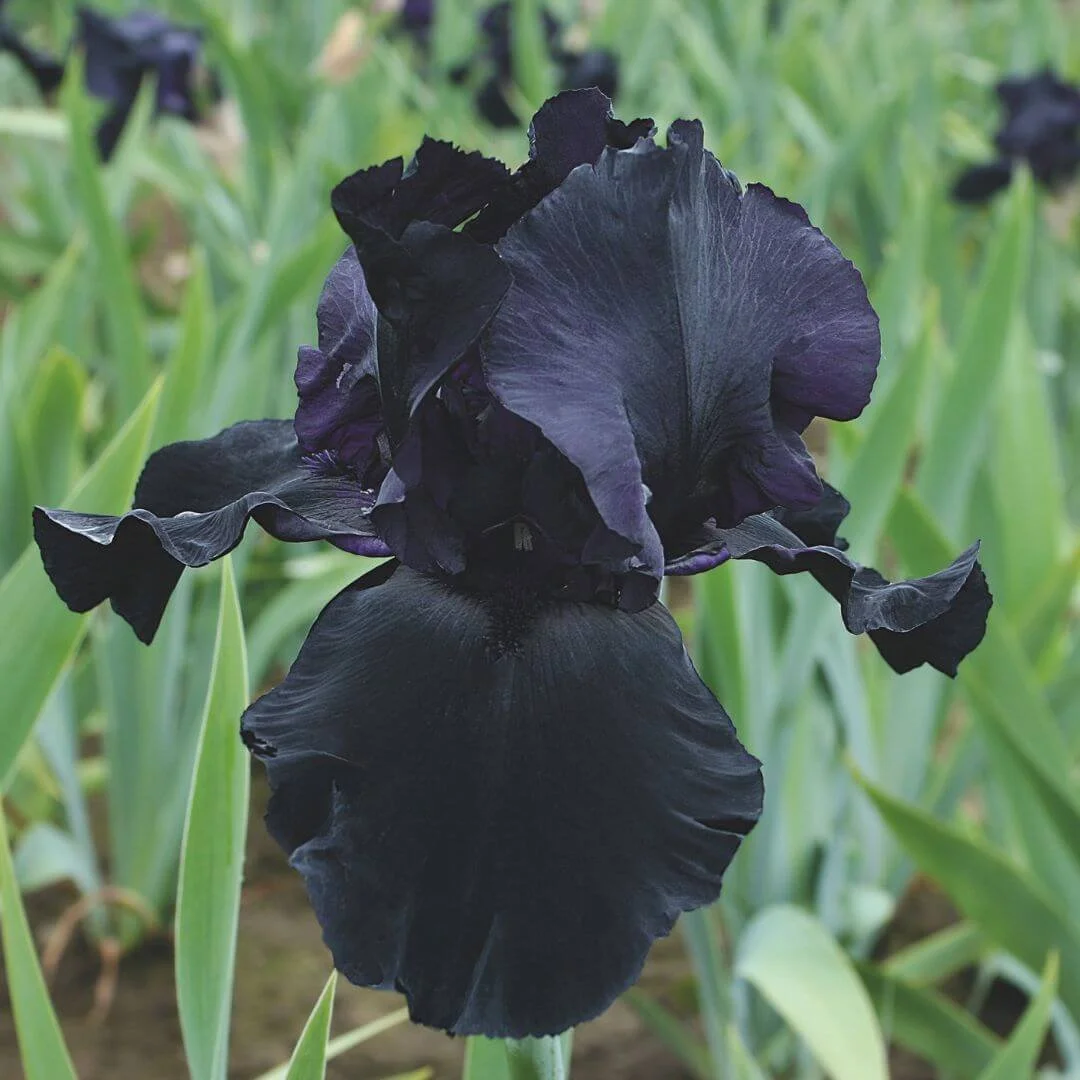
Blackwater Bearded Iris. Image courtesy of Ball Horticultural Company
Perennial | Zones 3–9 | Full Sun
Bearded irises have an inherently architectural quality. Blackwater is one of the most striking varieties you can grow, with deep, velvety near-black flowers that photograph beautifully. They bloom in late spring and early summer, and once established they're incredibly low-maintenance.
Plant rhizomes (the thick root-like structures) just at the soil surface. Burying them too deep prevents blooming.
Over time, bearded iris clumps become overcrowded and flowering declines. Dig them up every 3-4 years, separate the rhizomes, and replant the healthiest sections to keep them blooming abundantly.
6. Arabian Night Calla Lily
Zantedeschia ‘Arabian Night’
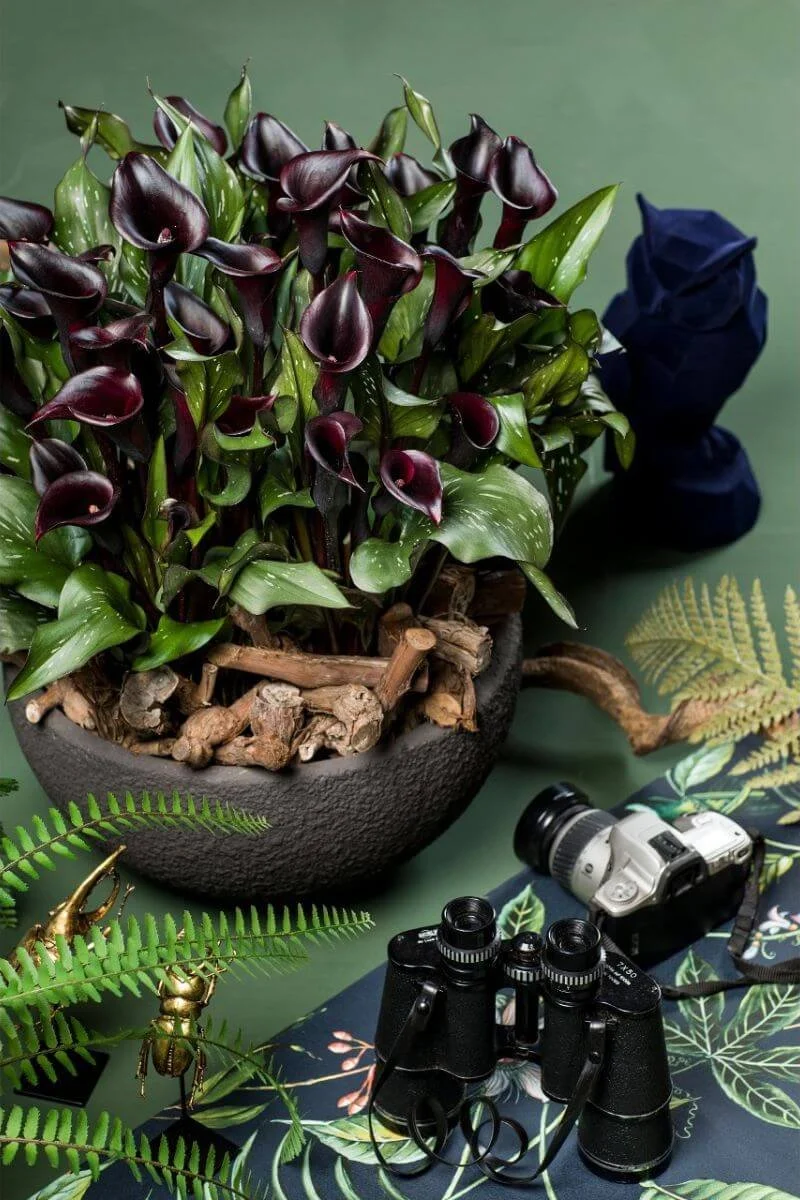
Arabian Night Calla Lily. Image courtesy of Dümmen Orange.
Tender Perennial | Zones 8–10 (or grow as annual) | Full Sun to Part Shade
Arabian Night is one of the most dramatic black flowers you can grow, full stop. The deep maroon-black spathes (the elegant petal-like wrapper around the bloom) have a waxy, sculptural quality that looks almost like art. In colder zones (below Zone 8), treat it as an annual or dig up the bulbs in fall and store them indoors over winter.
Stunning in containers and pairs beautifully with chartreuse or silver foliage for contrast
Prefers consistently moist soil; don't let it dry out completely between waterings
7. Black Knight Pincushion Flower
Scabiosa atropurpurea ‘Black Knight’
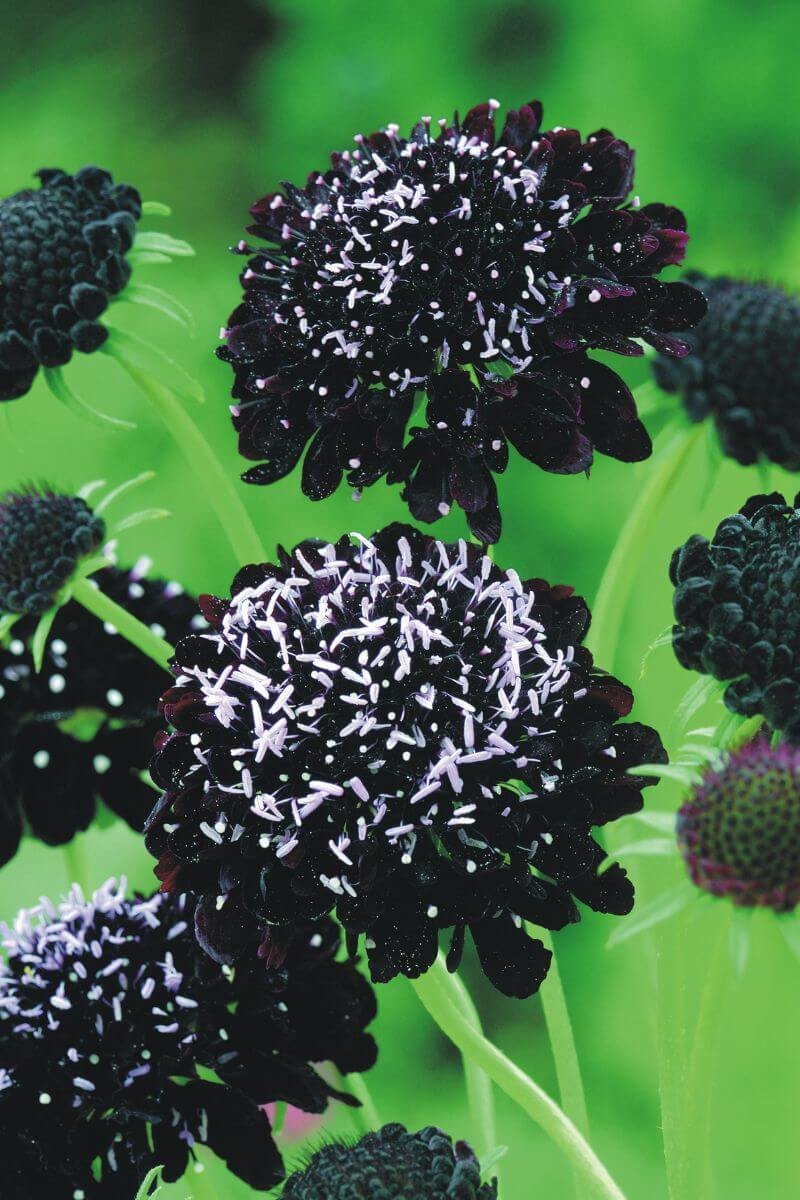
Black Knight Pincushion Flower. Image courtesy of Ball Horticultural Company
Annual | All Zones | Full Sun
Pincushion flower (also called scabiosa) is a classic cottage garden plant, and the Black Knight variety brings a moody twist to the soft, airy flowers. The blooms are a deep burgundy-black with a delicate, textured center that pollinators absolutely love. It's also a fantastic cut flower if you want to bring some of that dark aesthetic indoors.
Blooms continuously from summer through fall; the more you cut, the more it blooms
Relatively drought-tolerant once established. A good choice for beginner gardeners!
8. Angelflare™ Black Summer Snapdragon
Angelonia angustifolia ‘Angelflare™ Black’
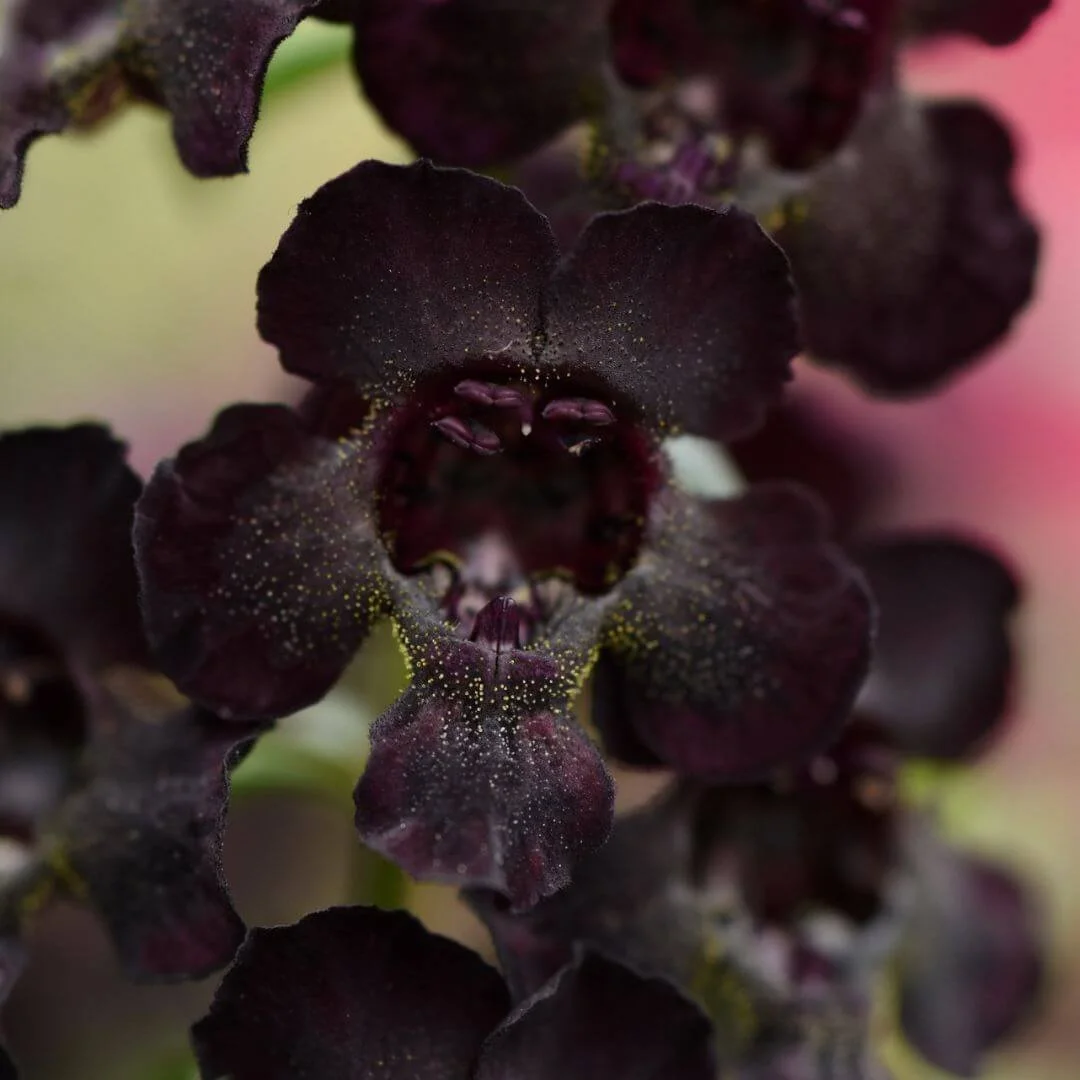
Angelflare™ Black Summer Snapdragon. Image courtesy of Ball Horticultural Company
Annual | All Zones | Full Sun
Summer snapdragon (Angelonia) often gets overlooked, but it's one of the hardest-working summer annuals you can grow, and Angelflare Black is a showstopper! The deep, near-black flowers are small but prolific, blooming continuously through heat and humidity without complaint. It has a light, pleasant fragrance that's a bonus on warm evenings.
Heat and drought tolerant, it thrives in the hottest part of summer when other flowers struggle
Great for containers, window boxes, or the front of a sunny border
9. Fun House™ Black Widow Petunia
Petunia hybrida ‘Fun House™ Black Widow’
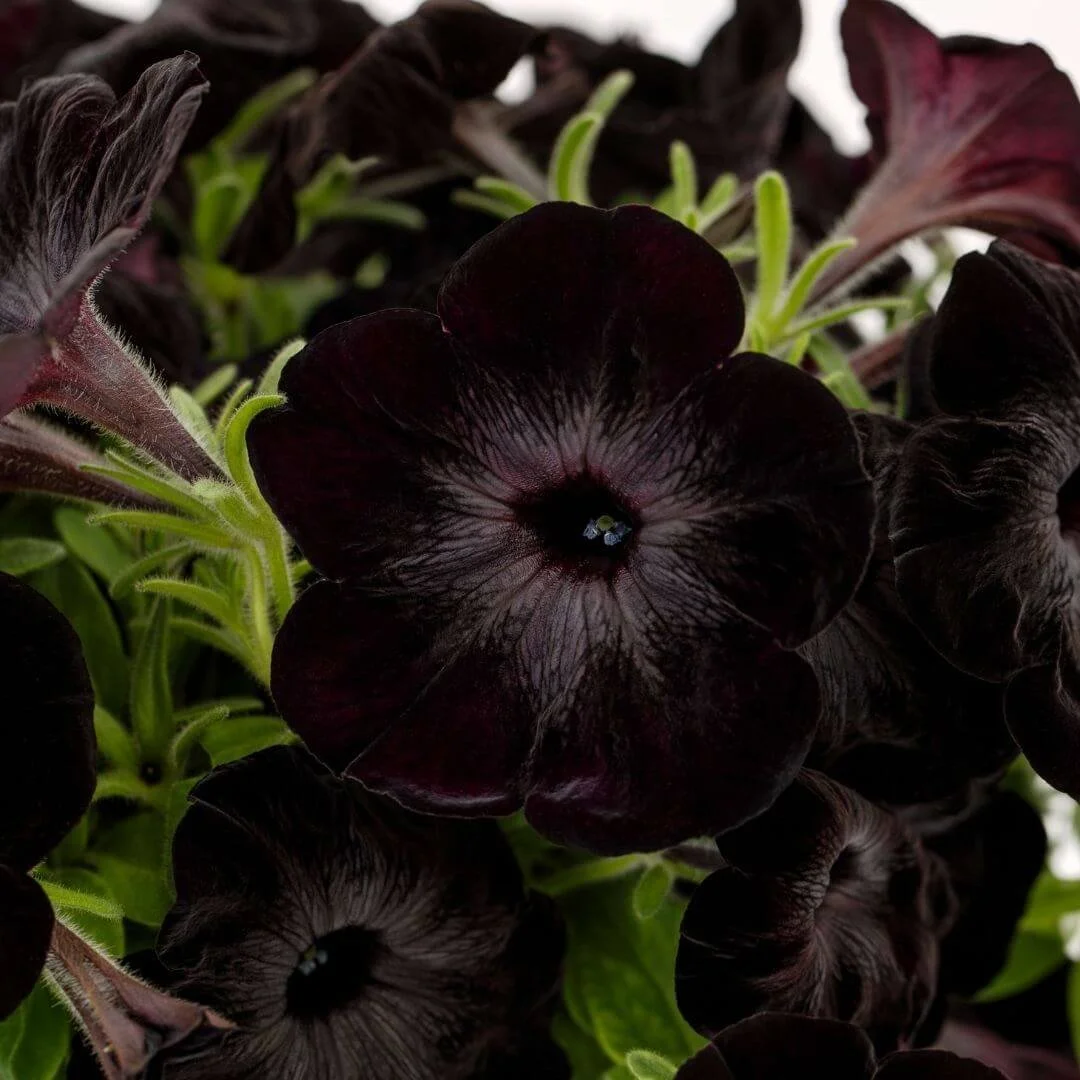
Fun House™ Black Widow Petunia. Image courtesy of Syngenta Flowers and National Garden Bureau
Annual | All Zones | Full Sun
Petunias are a garden staple, and Fun House™ Black Widow brings serious edge to a familiar favorite. The flowers are a deep, velvety black-purple that holds its color well even in strong sun (some dark petunias can fade, but this variety is bred for color retention). It's also a prolific bloomer that spills beautifully over the edges of containers and hanging baskets.
Pinch back leggy stems mid-season to encourage bushy, full growth
Feed every 1–2 weeks with a balanced fertilizer for the best bloom production
10. Decadence® Dark Chocolate Baptisia
Baptisia x 'Dark Chocolate'
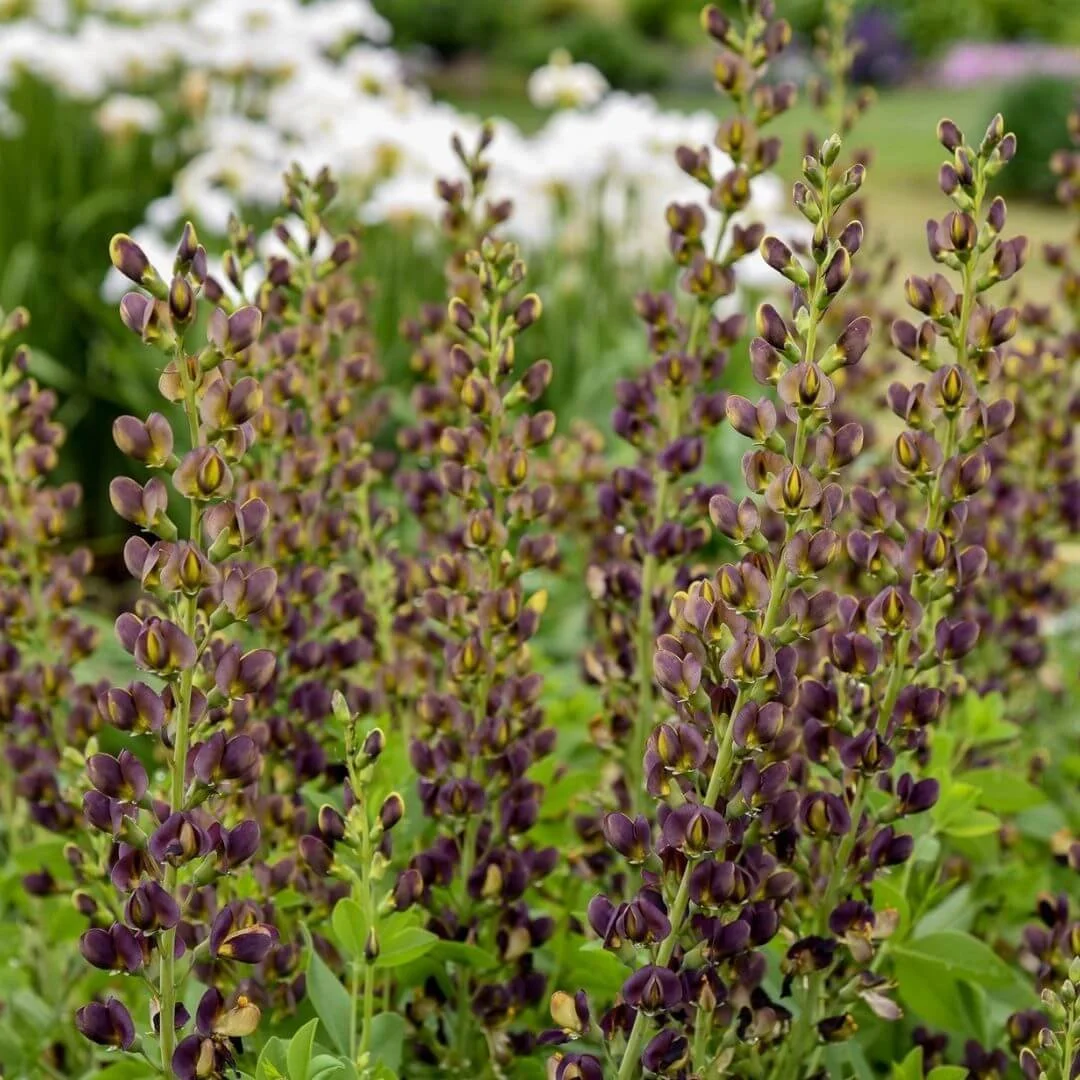
Decadence® Dark Chocolate Baptisia. Image courtesy of Proven Winners, provenwinners.com
Perennial | Zones 4–9 | Full Sun to Part Shade
Baptisia, also called false indigo, is a native perennial with deep chocolate-brown to near-black blooms carried on upright spires above blue-green foliage. It's architectural, beautiful, and incredibly tough once established.
One important thing to know as a beginner: Baptisia is slow to get going. It spends its first 2-3 seasons putting most of its energy into building a deep, robust root system rather than flowering heavily. But once it settles in, it blooms prolifically and lives for decades with almost zero maintenance. Think of it as a long-term investment in your garden.
Drought-tolerant and deer-resistant once established; a genuinely tough plant
Do not move it once planted. Baptisia has deep taproots and really dislikes being disturbed!
Goth Garden Books We Love
Love a good garden book? Browse my curated list of goth garden reads below and support independent booksellers at the same time. Because great gardens deserve great books.🖤
Browse the full list on Bookshop.org
Keep Exploring: More Dark Garden Inspiration
Helpful Resources
Not sure which hardiness zone you're in or what's happening with drought conditions in your area? These are the tools I rely on:
Frequently Asked Questions About Black Flowers
What flowers are naturally black?
No flowers are truly black in a botanical sense, but many come remarkably close. The darkest flowers in nature, including black tulips, hellebores, irises, and petunias, are actually extremely deep shades of burgundy, maroon, and purple that appear black to the naked eye. The effect is most dramatic in softer light or shade.
Are black flowers hard to grow?
Most black flowers are no harder to grow than their lighter-colored counterparts; they just have a more dramatic look. Many of the varieties on this list, including Blacknight hollyhock and Black Knight pincushion flower, are actually quite beginner-friendly and low-maintenance.
Can I grow black flowers in containers?
Absolutely. Several black flowers are especially well-suited to container gardening, including Sorbet® Black Delight viola, Fun House™ Black Widow petunia, Arabian Night calla lily, and Angelflare Black™ summer snapdragon. A dark container with a mix of black flowers and silver or chartreuse foliage is one of the most striking combinations you can put together.
What is the most famous black flower?
Queen of Night tulip is probably the most iconic and widely recognized black flower, beloved by gardeners since the mid-20th century. It's a great first choice for anyone just starting to explore the black flowers aesthetic.