
Tomato Growing Guide: From Seed to Harvest
There is something deeply satisfying about growing your own tomatoes. From the moment a tiny seedling pushes up through the soil to the day you pull a sun-warmed fruit right off the vine, the whole process is nothing short of rewarding. Whether you are brand new to vegetable gardening or you have been growing tomatoes for years, this guide will walk you through everything you need to know from choosing the right variety to harvesting at peak flavor.
One important thing to know before we dive in: tomato growing has a lot of regional nuance. Temperatures, disease pressure, and which varieties perform best can vary significantly depending on where you live. Throughout this guide, I’ll point you toward your local cooperative extension office as your best resource for region-specific advice. Think of them as your free, science-based local expert. This guide is your big-picture foundation; your extension office helps you fine-tune it for your backyard.
I have also included real photos sourced directly from horticultural growers throughout this article, so you can see exactly what healthy plants and different varieties actually look like in real garden conditions.

Marzito Tomatoes. Image courtesy of PanAmerican Seed & Ball Horticultural Company.
This article may contain affiliate links. If you make a purchase through one of these links, I may earn a commission at no additional cost to you.
1. Choosing the Right Tomato Variety
Step into any seed catalog or garden center in spring and the sheer number of tomato varieties can feel overwhelming. The good news? Once you understand a few key distinctions, choosing the right tomato becomes a lot more intuitive.
Growth Habit: Determinate, Indeterminate & Semi-Determinate
Tomatoes fall into three growth categories, and knowing which type you are growing makes a big difference in how you care for them:
Determinate (bush) tomatoes grow to a set height (usually 3 to 4 feet) and then stop. They set most of their fruit at roughly the same time, which is great if you want a big harvest for canning or sauce-making. They do well in cages and containers and usually need less staking.
Indeterminate (vining) tomatoes keep growing until frost kills them. They produce fruit continuously throughout the season, which is ideal if you want a steady supply for fresh eating. They need tall, sturdy support. Think 5- to 6-foot stakes or a trellis, not just a standard cage.
Semi-determinate tomatoes are a middle-ground option that grow to a moderate height and produce fruit over a longer period than determinate types. A good option if you have limited space but want more than one flush of fruit.
Tomato Types: A Quick Overview
There are several distinct tomato types, each with its own culinary sweet spot:
Beefsteak: Large, meaty, and juicy. The classic sandwich tomato. Individual fruits can weigh over a pound. Usually indeterminate and late to ripen, but worth the wait.
Cherry: Small, sweet, and prolific. One of the easiest types for beginners. Great for snacking and salads, and they tend to be more forgiving of heat stress than larger varieties.
Grape: Similar to cherry but with a firmer, meatier texture and an oblong shape. Less prone to cracking.
Roma / Paste: Meaty with low water content and few seeds. Ideal for sauces, paste, and canning.
Saladette: A mid-size type that bridges the gap between cherry and slicing tomatoes, great for salads and fresh eating.
Globe (Supermarket type): The standard round slicing tomato most people recognize from grocery stores. Reliable producers with good shelf life.
Heirloom: Open-pollinated varieties passed down through generations and grown for exceptional flavor. Unlike the other categories here, heirloom refers to genetics rather than fruit shape, so heirloom tomatoes can be beefsteak, cherry, paste, and more.

Tomato Heirloom Marriage™ Cherokee Carbon. Image courtesy of Ball Horticultural Company.
Heirloom vs. Hybrid: What You Need to Know
Heirlooms are beloved for their deep, complex flavor, but they often lack the disease resistance and consistent yields that hybrids have been bred to deliver. Hybrids have traditionally had a reputation for sacrificing flavor, but plant breeders are actively closing that gap, and there are some genuinely delicious hybrids on the market now. Standouts to look for include Mountain Magic, Dark Star, Sun Sugar, and Sungold cherry tomatoes. These varieties offer excellent flavor alongside improved disease resistance.
For beginners, cherry tomatoes are the most forgiving place to start. They require less work for the plant to ripen, handle heat better than large-fruited types, and are less prone to common problems.
You can find a great selection of tomato seeds, including beginner-friendly cherry varieties like Sungold at Burpee.
2. When to Plant Tomatoes
Tomatoes are warm-season crops that are frost-tender and need consistent warmth to thrive. The golden rule: do not plant tomatoes outdoors until after your last frost date AND your soil temperature is at least 60°F. If you plant into cold soil, your tomatoes will simply sit there and not grow. Warm soil is what really gets root growth going.
Nighttime temperatures matter too. Ideally, nights should consistently stay above 50°F before you transplant. Plants won’t die in temperatures down to the low 40s, but they won’t thrive either.
To find your last frost date, check the Old Farmer's Almanac First and Last Frost Dates by Zip Code finder. You can also consult your local cooperative extension office's planting calendar. Find your state extension office through the USDA's Land-Grant University Extension Directory.
A soil thermometer is a simple, inexpensive tool that takes all the guesswork out of timing. Pick one up at Burpee before the planting season begins.
3. Starting from Seed vs. Buying Transplants
Both approaches work beautifully. It really comes down to your goals, your timeline, and how much you enjoy the seed-starting process.
Starting from seed gives you access to a much wider range of varieties than you’ll ever find at a garden center, and it’s considerably more economical if you’re growing a lot of plants. Start seeds indoors 6 to 8 weeks before your last expected frost date. Sow seeds ¼ to ½ inch deep (check your seed packet for the specific recommendation) and keep them in a warm spot (70°F is ideal for germination).
Buying transplants from a nursery is the most convenient option and gets you a head start, especially if you have a shorter growing season. Look for stocky, dark green plants rather than tall, leggy ones. A compact plant with a thick stem will outperform a spindly one every time.
Whichever route you choose, hardening off is non-negotiable. Before transplanting any seedling outdoors, spend 7 to 10 days gradually introducing it to outdoor conditions. Start with an hour or two of shade, and slowly increase sun exposure each day. Skipping this step leads to transplant shock.
Ready to start from seed? Burpee’s Tomato Lover's Seed Starting Kit has everything you need to get your tomatoes off to a great start.
4. Soil, Sun & Site Selection
Tomatoes are sun-lovers through and through. Aim for a spot that receives at least 6 to 8 hours of direct sunlight daily. In northern regions, more sun is always better. In areas with intensely hot summers, a bit of afternoon shade can actually help protect plants during heat spikes (more on that in a moment).
For soil, tomatoes want well-draining, slightly acidic conditions with a pH of 6.2 to 6.8. Work in generous amounts of compost before planting to improve both drainage and fertility. Heavy clay soils benefit from extra organic matter to improve drainage, while sandy soils benefit from compost to help retain moisture. Raised beds are excellent for tomatoes because they warm up faster in spring and drain well, but in-ground planting and containers work beautifully too.
Crop Rotation: Don’t Skip This Step
Crop rotation is one of the most important and most overlooked practices in tomato growing. Avoid planting tomatoes (or any nightshade family member, including peppers, eggplant, and potatoes) in the same spot more than once every 2 to 3 years. Rotating helps break the disease cycle, particularly for soil-borne diseases like fusarium and verticillium wilt that can persist in the soil.
If you have a small garden and can’t rotate in-ground beds, here’s a practical workaround: on your “off” years, grow tomatoes in containers and let the in-ground bed rest. Choose varieties specifically bred for container growing when you do this. It’s not a perfect solution, but it significantly cuts down on disease pressure compared to planting in the same soil year after year.

Little Sicily Tomatoes. Image courtesy of Bonnie Plants via National Garden Bureau.
5. How to Plant Tomatoes
One of the best tips in tomato growing is to plant your tomatoes deeply. Unlike most vegetables, tomatoes can grow roots along their buried stem, creating a stronger, better-anchored plant with a larger root system that can access more water and nutrients. Aim to bury about two-thirds of the stem when transplanting, leaving the top few leaves above soil.
For very tall or leggy seedlings, try the trench method. Dig a shallow horizontal trench and lay the stem at an angle rather than planting straight down. The stem will naturally grow upward toward the light, and roots will develop along the buried portion. You can also remove the lower leaves before planting to help prevent rot.
Spacing is important too. Give determinate varieties about 18–24 inches between plants, and indeterminate varieties 24–36 inches to allow for good airflow, which helps prevent disease. Add your support structure (cage, stake, or trellis) at planting time rather than later, so you don't disturb the roots. Optionally, mix a little compost or fertilizer into the planting hole to give your transplants a strong start.
6. Watering & Fertilizing
Consistent moisture is the key to healthy tomatoes and problem-free fruit. Aim for about 1 to 2 inches of water per week, and more during hot spells. Always water deeply rather than shallowly. Deep watering encourages roots to grow downward, making plants more drought-resilient.
Water at the base of the plant rather than overhead. Wet foliage is an invitation to fungal disease, and this is one of your most powerful tools for preventing blight. Morning watering is ideal, because if any foliage does get wet, the sun will dry it quickly.
Mulch is your best friend here. A 2- to 3-inch layer of straw, shredded leaves, or pine needles around your plants conserves moisture, moderates soil temperature, and reduces the splash-back of soil onto lower leaves (another blight-spreading culprit).
For fertilizing, tomatoes are heavy feeders. At planting, work a balanced fertilizer into the soil. Once flowers appear and fruit begins to set, shift to a fertilizer lower in nitrogen and higher in phosphorus and potassium. Too much nitrogen at this stage produces lush, leafy growth at the expense of fruit. Avoid over-fertilizing at any stage, since it can harm plants or leach nutrients. Slow-release or organic fertilizers work well for steady, safe nutrition.
For best results, feed your tomatoes with a fertilizer formulated specifically for them, like Burpee’s Enhanced Tomato and Edibles Plant Food.
7. Staking, Caging & Support
Almost all tomatoes benefit from support. It keeps fruit off the ground, improves airflow, and makes harvesting much easier. The type of support you need depends on your variety:
Determinate varieties do well in standard tomato cages or short (2½ to 3-foot) stakes.
Indeterminate varieties need sturdy support of at least 5 to 6 feet. A heavy-gauge stake, a Florida weave trellis system, or a DIY reinforcing wire cage all work well. Some sturdy commercial tomato cages or towers are also suitable if they can handle the weight of mature plants. Standard flimsy wire cages will not cut it for a vigorous indeterminate variety.
The most important rule: add your support at planting time. Driving a stake or placing a cage around an established plant risks damaging the root system.
Browse Burpee's full selection of tomato cages and garden supports to find the right fit for your varieties and garden style.

WonderStar™ Red Tomatoes. Image courtesy of PanAmerican Seed & Ball Horticultural Company.
8. Common Tomato Problems (and How to Handle Them)
Blight: The #1 Tomato Enemy
Blight (early and late blight) is the disease most tomato growers will eventually face, and the most important thing to understand is this: nothing is 100% effective against it. Blight overwinters in the soil, which means it can come back year after year in the same growing area. Your best and most powerful defense is not a spray, it’s good garden hygiene.
A blight-prevention hygiene routine looks like this:
Maintain good airflow around plants. Proper spacing and removing suckers on indeterminate varieties both help.
Remove fallen leaves from around plants promptly.
Cut off any leaves that touch the ground.
Never water overhead. Always water at the base.
Do not prune or work with your plants when they are wet from rain or morning dew. You can inadvertently spread disease on your hands and tools.
Aim for dry, airy conditions at the leaf level as much as possible.
At the end of the season, clean up all plant debris thoroughly, because blight overwinters in that debris and in the soil.
Some gardeners use liquid copper spray as a preventive measure, but it is not reliably effective on its own. Good hygiene is always your primary strategy! For region-specific guidance on blight types and management, your cooperative extension office is an invaluable resource.
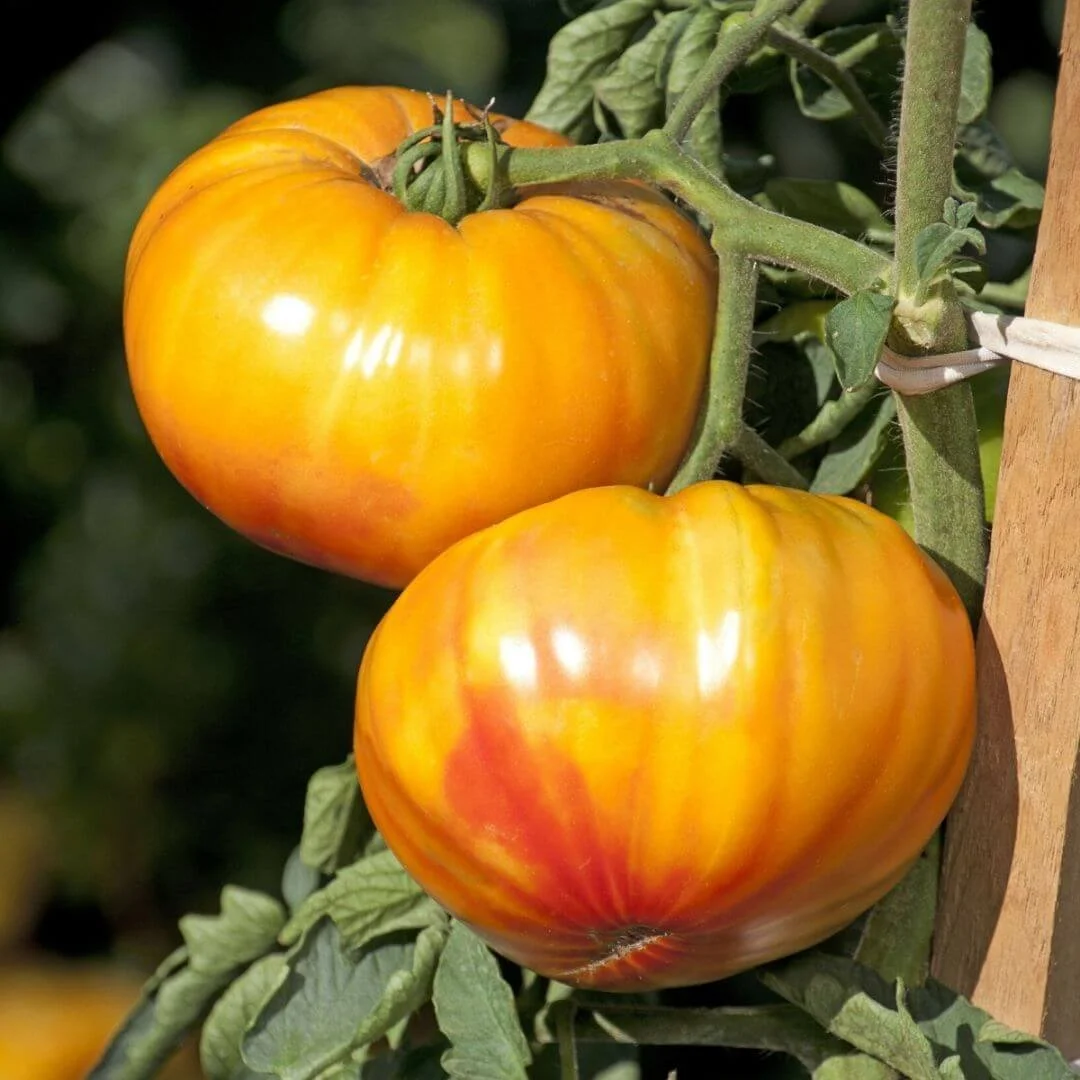
Buffalosun Tomato. Image courtesy of All America Selections via National Garden Bureau.
Blossom End Rot
That dark, sunken patch on the bottom of your tomatoes is blossom end rot. It's caused by calcium deficiency in the fruit, but the usual culprit is inconsistent watering, not a lack of calcium in the soil. Consistent deep watering and mulching help the plant take up calcium properly and are your best prevention strategies.
Cracking
Tomatoes crack when they take up water too quickly after a dry spell. The fruit expands faster than the skin can stretch, which can cause radial or longitudinal splits. Consistent watering and mulching are the best way to prevent this problem.
Pests
Hornworms are one of the most dramatic tomato pests. These large, green caterpillars can defoliate a plant quickly. Hand-pick them when you see them, or use biological controls such as parasitic wasps or Bacillus thuringiensis (Bt) if needed. Leaf-footed bugs and stink bugs pierce ripening fruit, leaving tough, discolored spots inside. Harvesting at the breaker stage can help minimize damage. Interplanting with basil, marigolds, and other companion plants can deter pests and attract beneficial predators.
Disease Resistance Codes
Reading the disease resistance codes on plant labels is worth your time. Look for letters such as V for verticillium wilt, F for fusarium wilt, N for nematodes, and T for tobacco mosaic virus. Codes can also be combined, such as VF, to show multiple resistances. Choosing resistant varieties gives your tomatoes a strong head start against common problems.
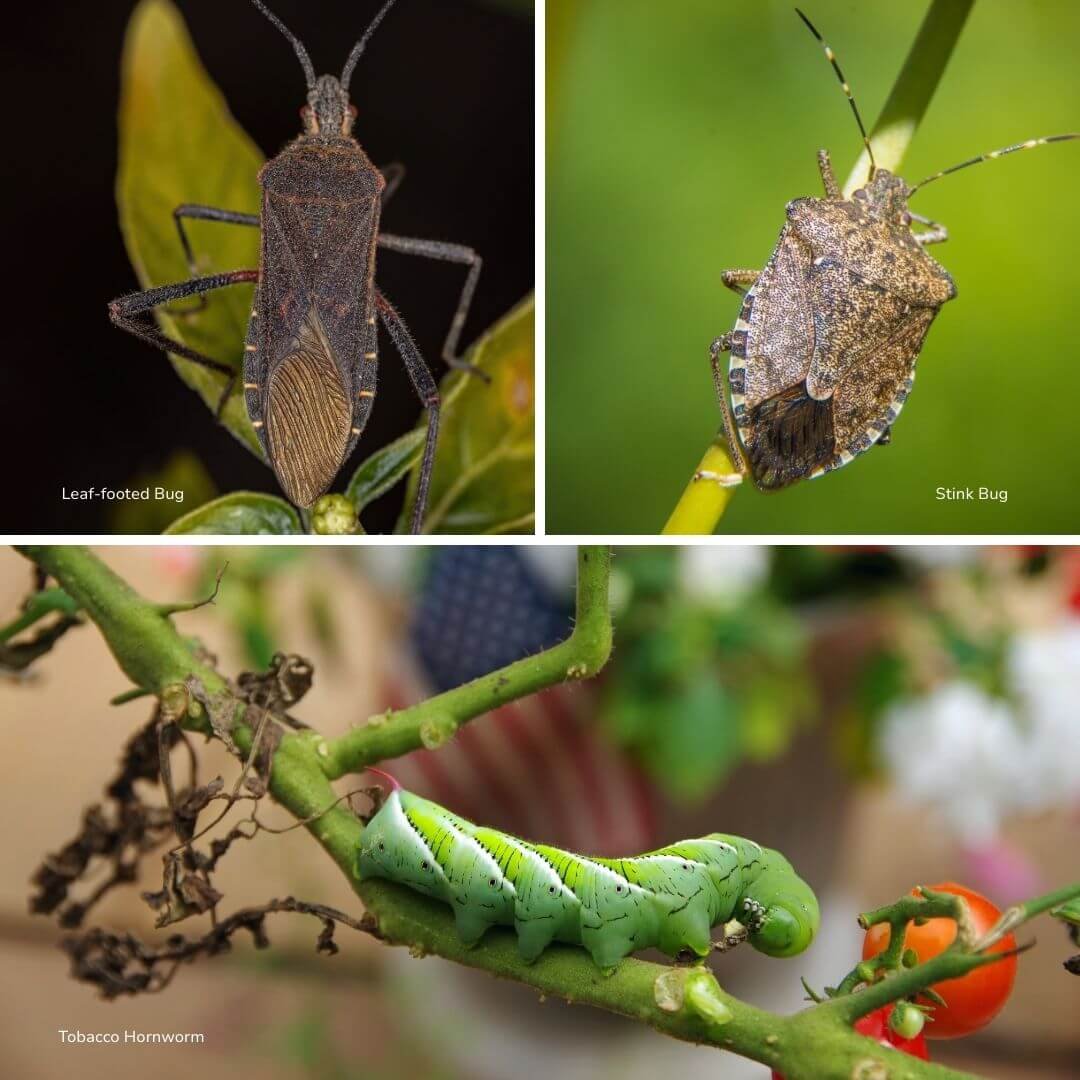
Common tomato plant pests. Image credits via Canva.com: leaf-footed bug @Vinicius Souza, stink bug @ChristinaPrinn, tobacco hornworm @PaulPellegrino.
9. A Note on Heat & Pollination
Here is something many gardeners do not know until they’ve experienced a fruitless summer: tomato pollen becomes unviable when daytime temperatures consistently exceed about 85°F or nighttime temperatures stay above 70–75°F. When this happens, flowers drop without setting fruit. Your plants may look perfectly healthy, but you get no tomatoes.
If you live in a hot-summer climate, the solution is to look specifically for heat-set varieties, which have been bred to pollinate successfully even in high heat. Consistent hydration also helps. Providing partial afternoon shade, mulching, and proper spacing can further reduce heat stress. When selecting varieties for hot climates, check with your local extension office or read plant tags and catalog descriptions carefully for heat tolerance information.
10. How to Harvest Tomatoes
The best time to harvest tomatoes is at the “breaker stage”: when the fruit has just begun to shift from green to its mature color. At this point, the tomato will ripen fully and develop its full flavor on your countertop, away from the vine. When ripening off the vine, keep tomatoes in a single layer rather than stacked to prevent bruising and uneven ripening. Harvesting slightly early also helps you stay ahead of pests like hornworms, stink bugs, and the squirrels that seem to have impeccable timing. 😉
Never refrigerate tomatoes. Cold temperatures below 55°F destroy the flavor compounds that make a homegrown tomato worth growing in the first place. Store them at room temperature, stem-side down, and use within a few days of peak ripeness.
At the end of the season, you can extend your harvest by “topping” indeterminate plants by cutting off the main growing stem 4 to 6 weeks before your first expected fall frost. This redirects the plant’s energy into ripening existing fruit rather than producing new growth that won’t have time to mature.
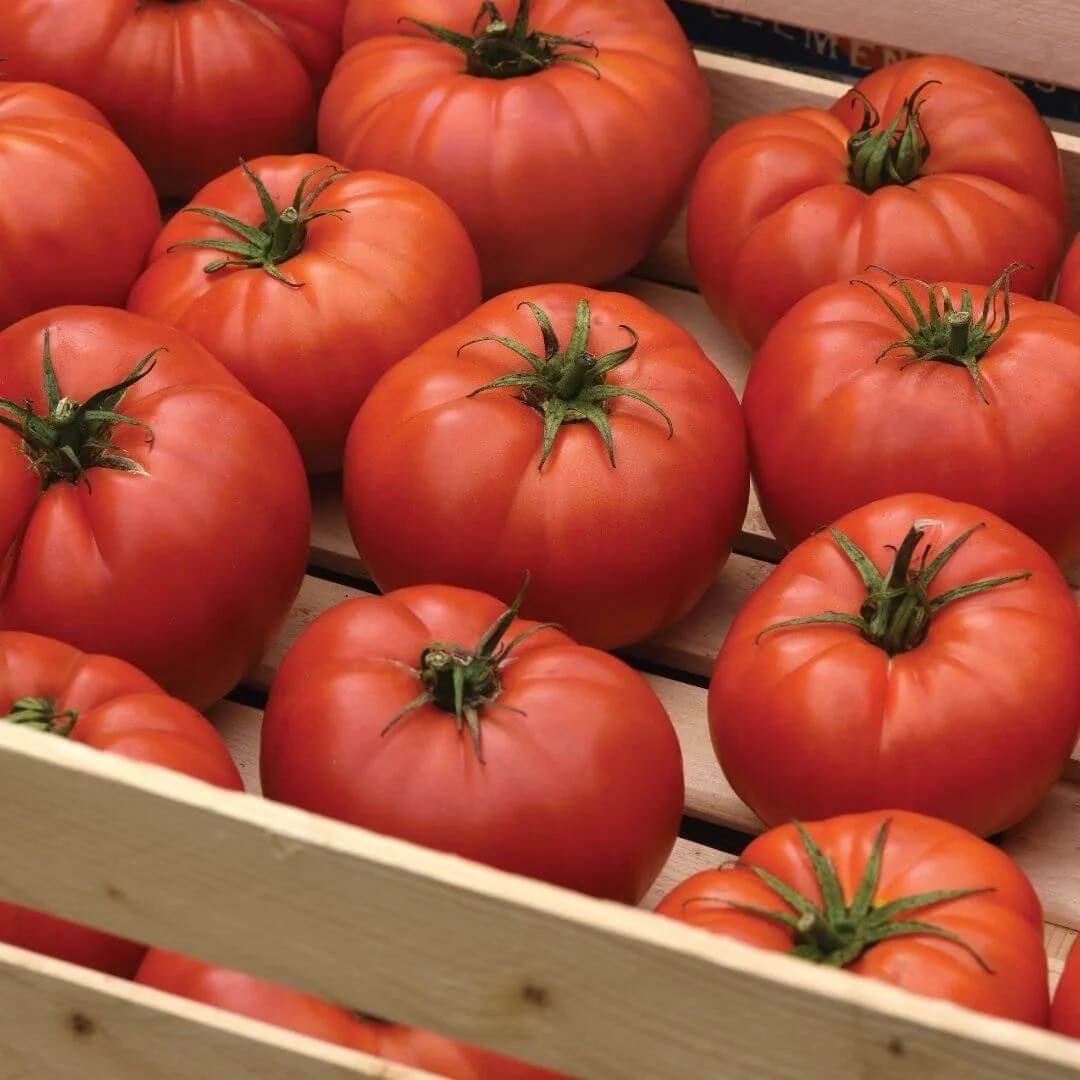
BrightStar Beefsteak Tomatoes. Image courtesy of PanAmerican Seed & Ball Horticultural Company.
Frequently Asked Questions About Growing Tomatoes
When should I plant tomatoes?
Plant tomatoes outdoors after your last frost date, when soil temperatures have reached at least 60°F and nighttime temps are consistently above 50°F. Check your local cooperative extension office’s planting calendar for region-specific timing.
How much sun do tomatoes need?
Tomatoes need a minimum of 6 to 8 hours of direct sun per day. In northern climates, more sun is always better. In very hot southern climates, light afternoon shade during the hottest part of the day can actually be beneficial.
How deep should I plant tomatoes?
Plant tomatoes deeply, burying about two-thirds of the stem. Tomatoes are unique in that they can grow roots all along their buried stem, resulting in a stronger, more drought-resilient plant. For very leggy transplants, plant in a shallow trench at an angle.
What’s the difference between determinate and indeterminate tomatoes?
Determinate tomatoes grow to a set height, produce fruit all at once, and are great for canning or small spaces. Indeterminate tomatoes keep growing and producing until frost. They need taller support but give you tomatoes all season long. Semi-determinate varieties fall in between.
Why are my tomatoes not producing fruit?
The most common culprit in hot climates is heat. Tomato pollen becomes unviable when daytime temperatures consistently exceed 85°F or nighttime temperatures stay above 70 to 75°F. In cooler climates, insufficient sun, cold soil, or too much nitrogen fertilizer can also prevent fruit set. Look for heat-set varieties if summer heat is your issue.
How often should I water tomatoes?
Aim for 1 to 2 inches of water per week through a combination of rain and supplemental watering. Water deeply at the base of plants rather than overhead. Consistent moisture is key. Irregular watering leads to blossom end rot and fruit cracking. Mulching helps maintain even soil moisture between waterings.
What is blight and how do I prevent it?
Blight is a fungal disease that overwinters in soil and can devastate tomato crops. Prevention is your best strategy: maintain good airflow, remove suckers on indeterminate varieties, keep fallen leaves cleaned up, avoid overhead watering, never work with plants when wet, and clean up all plant debris at season’s end.
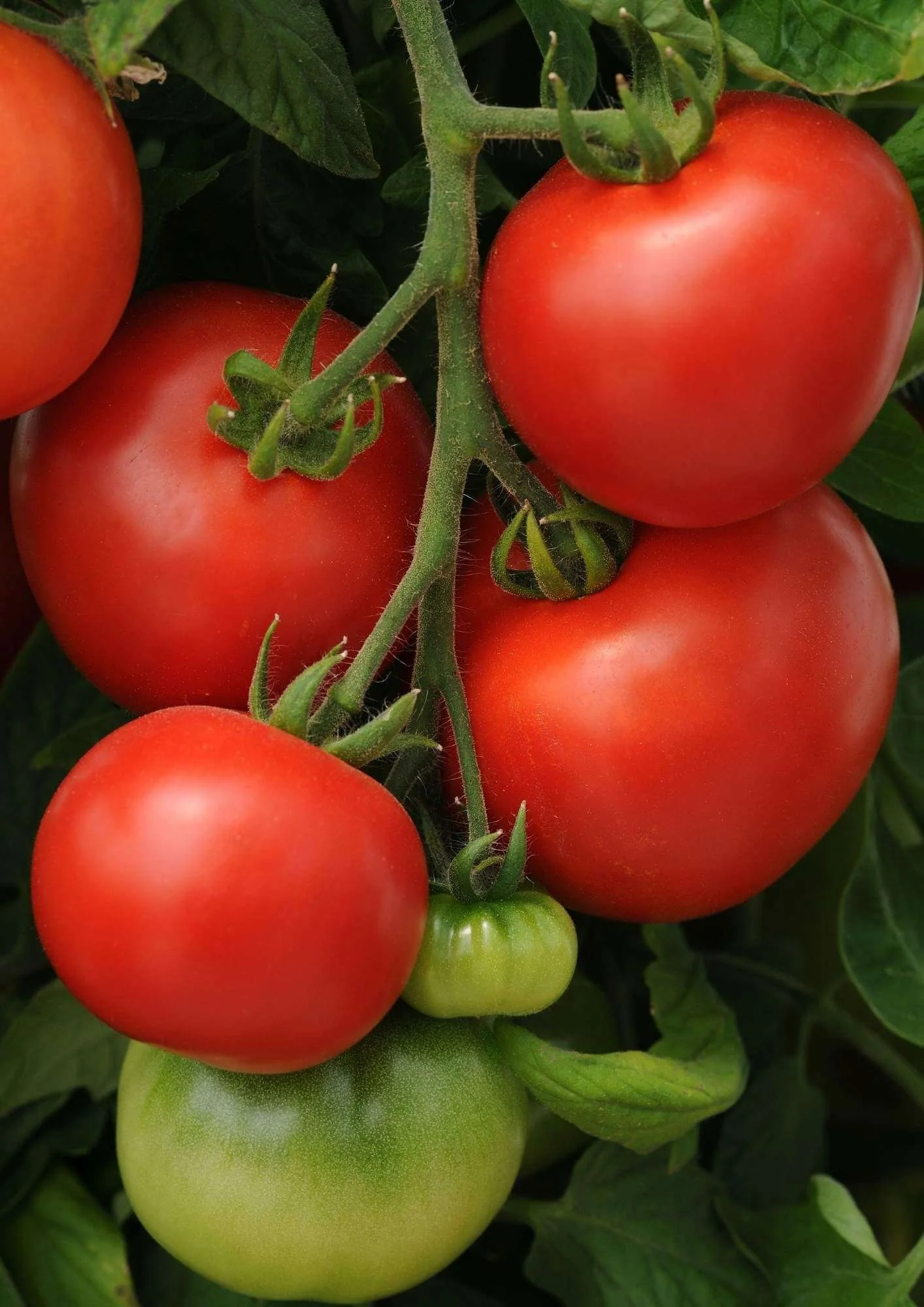
Homeslice Tomato. Image courtesy of PanAmerican Seed & Ball Horticultural Company,
Ready to Grow?
Growing tomatoes is one of the most rewarding things you can do in a home garden, and now you have everything you need to do it well. Start with a variety that suits your climate and cooking style, give your plants the sun, warmth, and consistent care they crave, and stay on top of airflow and hygiene to keep disease at bay.
Once you’ve got the basics down, the variety world opens up beautifully. Check out our guides to the best indeterminate tomato varieties and best determinate tomato varieties to find your next favorite plant.
Happy growing! 🍅
Follow Plant and Bloom Design Studio for Gardening Tips