
Star Magnolia: The Perfect Small Tree for Spring Drama in Compact Gardens
Transform your small yard with early spring magic using this versatile, low-maintenance flowering tree
If you're searching for a show-stopping focal point that won't overwhelm a modest landscape, the star magnolia (Magnolia stellata) deserves a prominent place in your design plans. This deciduous beauty delivers what every homeowner and landscape designer dreams of: multi-season interest, adaptability to various garden styles, and breathtaking early spring blooms that arrive when your yard needs color most.

The small star magnolia tree is a great choice for planting close to buildings and in small backyard landscaping.
Why Landscape Designers Love Star Magnolia
Unlike its towering magnolia cousins, star magnolia stays refreshingly compact - typically 10-20 feet tall and wide - making it ideal for today's smaller residential lots. But size isn't its only advantage. This slow-growing tree begins flowering at just 2-3 years old (most magnolias make you wait a decade!), rewarding your design vision almost immediately.
The delicate, star-shaped blooms open in late winter to early spring, often before the leaves emerge, creating a stunning architectural silhouette against bare branches. Each lightly fragrant flower displays ribbon-like petals that flutter in the breeze, softening the hard lines of buildings and houses and bringing movement to the garden. The show lasts 2-3 weeks, and fuzzy silver buds provide ornamental interest even before they open.

The small star magnolia tree (Magnolia stellata) flowers best in full sun.
Design Applications: Where Star Magnolia Shines
As a Specimen Tree: Plant star magnolia where its unique form commands attention - near an entryway, in the center of a small lawn, or near a window where you'll enjoy the blooms from indoors. Its rounded, multi-stemmed habit creates an artistic, sculptural presence year-round.
Foundation Plantings: Use star magnolia as an anchor in foundation beds, underplanted with low-growing perennials like creeping phlox, sweet woodruff, or early spring bulbs. The layered effect creates depth while the magnolia's moderate scale won't overpower your home's architecture.
Woodland Edge Transitions: Few trees soften the transition from manicured lawn to naturalized woodland as gracefully as star magnolia. Its informal branching habit bridges formal and wild spaces beautifully.
Mixed Privacy Borders: Combine star magnolia with evergreens like boxwood or hollies, along with other flowering shrubs, to create a dynamic privacy screen that offers year-round structure and seasonal color peaks.
Along Pathways: Line a garden path or driveway with a series of star magnolias for a stunning spring corridor. The trees' manageable size won't obstruct views or create excessive shade.

A star magnolia flower unfurls in spring.
Multi-Season Garden Interest
Spring isn't star magnolia's only moment to shine. By summer, attractive seed pods develop, eventually splitting open to reveal bright orange fruits that birds, squirrels, and other wildlife eagerly devour - adding life and movement to your garden. The tree's smooth gray bark and architectural branching structure provide winter interest, while the oval leaves offer a soft green backdrop for summer perennials.
How to Plant Star Magnolia for Success
Site Selection: This is where good design meets horticultural wisdom. Choose a sheltered location protected from harsh winds, which can damage emerging flowers. Full sun (6+ hours daily) produces the most abundant blooms, though star magnolia tolerates light shade - useful when designing layered woodland gardens or east-facing foundation beds.
Soil Preparation: Star magnolia thrives in organically rich, well-drained, consistently moist soil. Before planting, amend your native soil generously with compost - this improves both drainage and fertility while creating the slightly acidic conditions magnolias prefer.
Planting Timing: Plant in spring or fall when moderate temperatures allow roots to establish before weather extremes arrive. This timing also lets you envision the tree in your garden through multiple seasons before committing to its permanent location.
Spacing Considerations: Most star magnolia cultivars spread 10-15 feet at maturity. Position trees at least 5-10 feet from structures (depending on your chosen variety's mature size) to allow proper canopy development and protect foundations. Remember: Despite their shallow, spreading nature, magnolia roots are remarkably flexible - they bend rather than break through sidewalks and foundations.
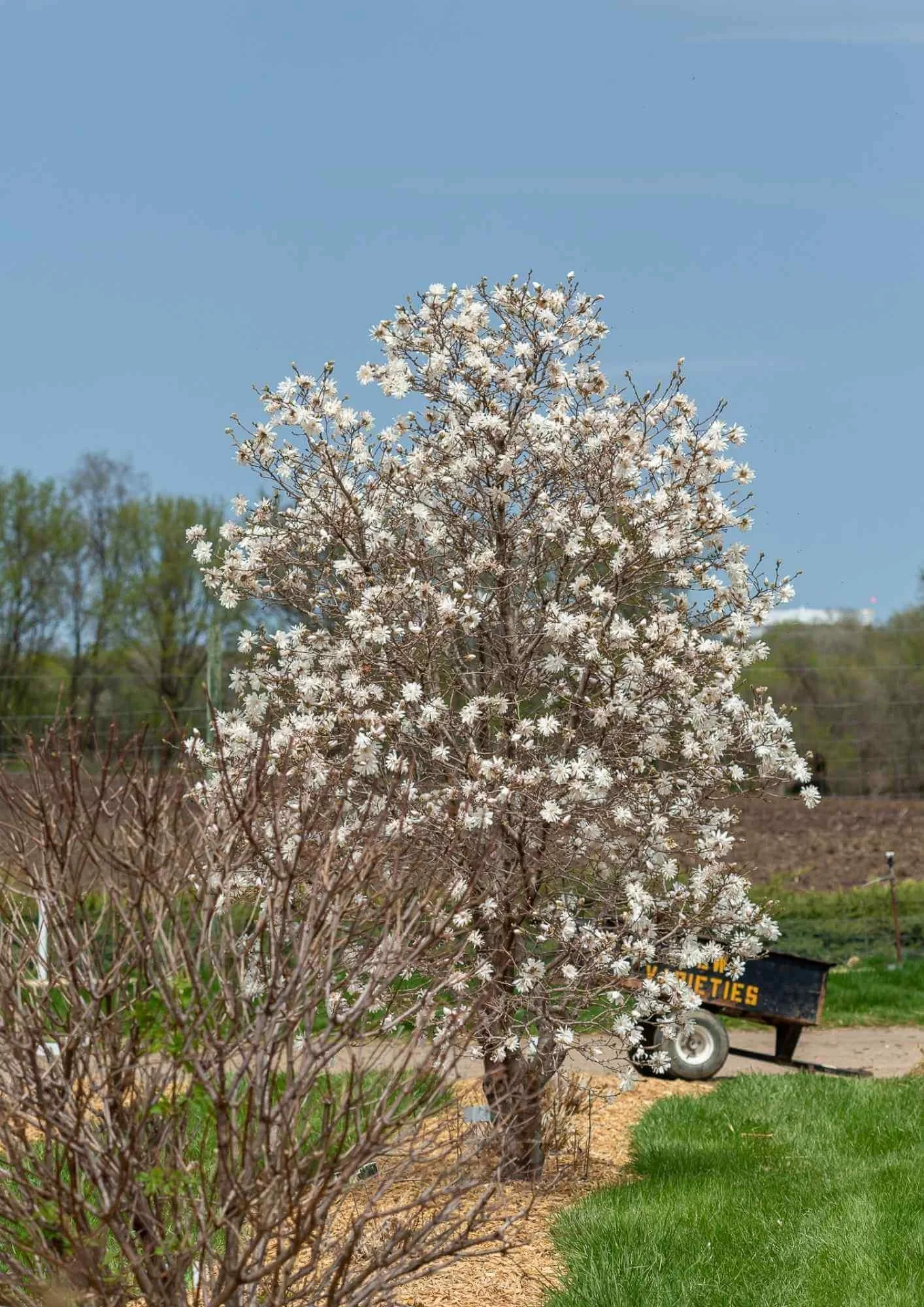
Centennial Blush Star Magnolia Tree. Image courtesy of Bailey Nurseries.
Essential Care for Thriving Trees
Watering: Consistent moisture is crucial - magnolias don't tolerate drought. Water deeply at the base, especially during dry spells, keeping soil moist but never waterlogged. Newly planted trees need especially attentive watering until established. (Check your local conditions at the U.S. Drought Monitor.) Read our article Landscaping Basics: How to Water a Tree for more info.
Mulching: Apply 2-3 inches of organic mulch around the root zone (avoiding direct contact with the trunk) to retain moisture, suppress weeds, and regulate soil temperature - all while creating a polished, finished look in your landscape beds.
Fertilizing: These small trees are light feeders. Apply a balanced tree and shrub fertilizer once annually in early spring. Over-fertilizing can actually trigger disease and pest problems, so resist the temptation to overdo it.
Pruning: One of star magnolia's best qualities? It needs minimal pruning. Simply remove dead or damaged branches immediately after flowering in spring. Avoid heavy shaping, which can compromise the tree's natural, artistic form.
Cultivar Selection Guide
'Royal Star': Most widely available; large white flowers from pink buds; 10-20' tall × 10-15' wide
'Waterlily': Richly fragrant pink flowers fading to white; blooms later (more frost-resistant); 10-20' × 8-15'
'Centennial Blush': Prolific pale pink blooms; upright oval form; 12-18' × 10-15'
'Kikuzaki': Compact dwarf for tight spaces; light pink to white; 10-12' × 6-10'
'Pink Stardust': Faster-growing with fragrant pink flowers; 15' × 10'
'Scented Silver': Exceptionally fragrant white blooms; narrow upright form perfect for tight spots; 15' tall
'Jane Platt': Light pink flowers; rounded conical shape; 10-20' tall
'Rosea': Deep pink buds open to pink-then-white flowers; 12-25' tall
'Centennial': Pure white with slight pink blush; broad pyramidal; 15-20' × 15-20'
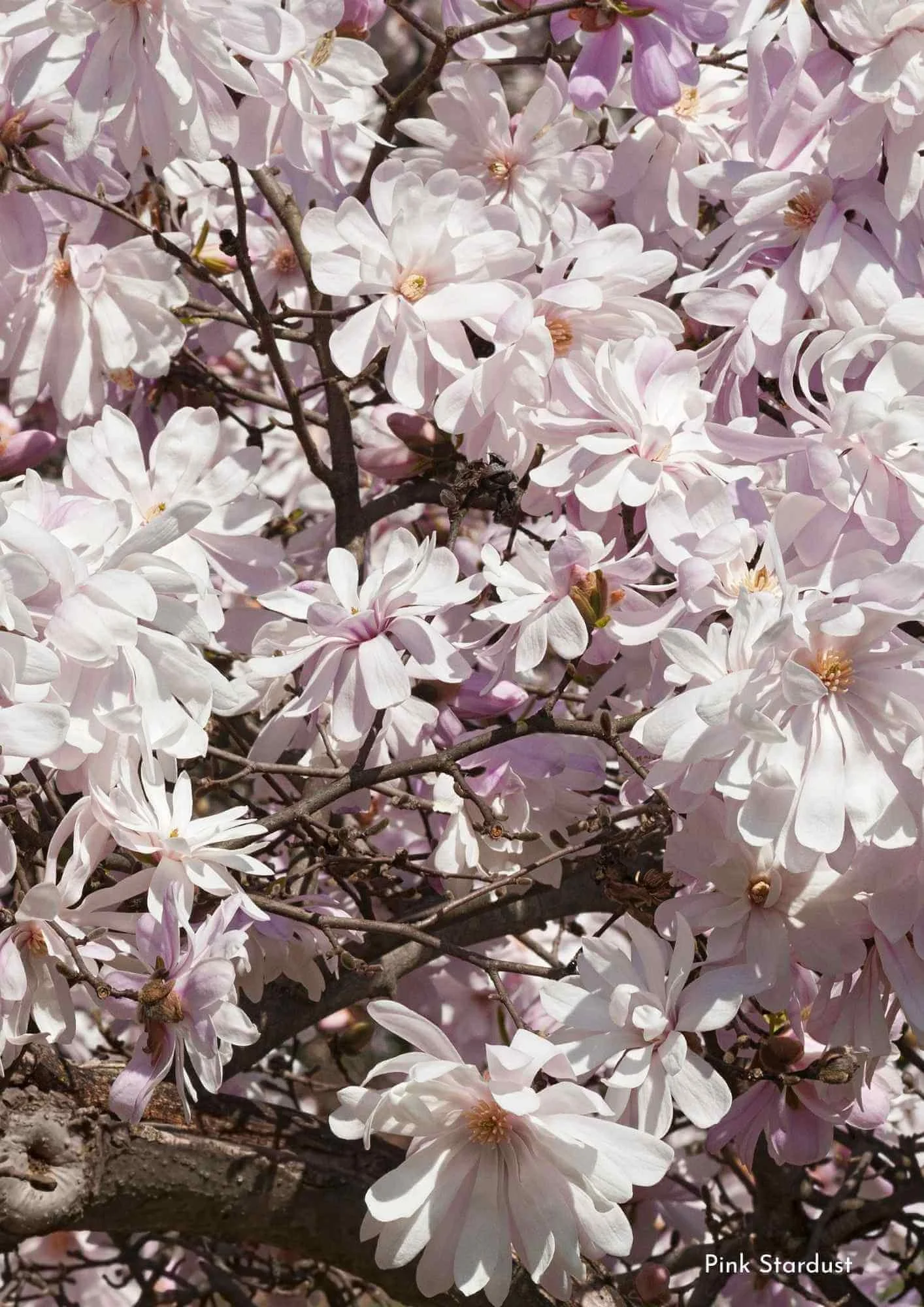
Pink Stardust Star Magnolia Tree. Image credit @nickkurzenko via Canva.com
Troubleshooting Common Issues
Frost Damage: Because star magnolias bloom in late winter or early spring, late frosts can damage buds and flowers, turning them brown or black and preventing full development. Leaves may curl and darken as well. While unsightly, this doesn't harm the tree long-term - it just means you'll wait until next year for the floral display. Designer's tip: If frost damage is common in your area, consider planting a Little Girl Magnolia hybrid instead - specifically bred for frost resistance. Read our article about the Little Girl Magnolias.
Magnolia Scale: Watch for small, oval insects that excrete sticky honeydew, attracting ants and promoting black sooty mold growth on foliage and nearby surfaces. If you notice an infestation, contact an ISA certified arborist for treatment options.
Chlorosis: Yellow leaves with green veins indicate nutrient deficiency (usually iron or manganese). Growth may appear stunted. This is treatable by a certified arborist - find one at TreesAreGood.org.
Wildlife Considerations
Star magnolia isn't a deer favorite, though hungry deer will browse anything when food is scarce. The bigger concern? Bucks rubbing antlers on young trees in fall. Protect saplings with tree guards or fencing until they develop enough girth to withstand damage.
Final Design Thoughts
Star magnolia offers what every successful landscape design needs: a tree that provides multiple layers of interest without demanding excessive space or maintenance. Its early blooms lift spirits after long winters, its summer foliage provides a calming backdrop, its fall fruits feed wildlife, and its winter structure adds sculptural beauty to bare-season gardens.
Whether you're designing a formal front garden, a naturalized backyard retreat, or a compact urban courtyard, star magnolia adapts beautifully—proving that great things really do come in small packages.
Pin for later:
Follow Plant and Bloom Design Studio for More Garden Ideas