
Best Companion Plants for Tomatoes (And What to Avoid)
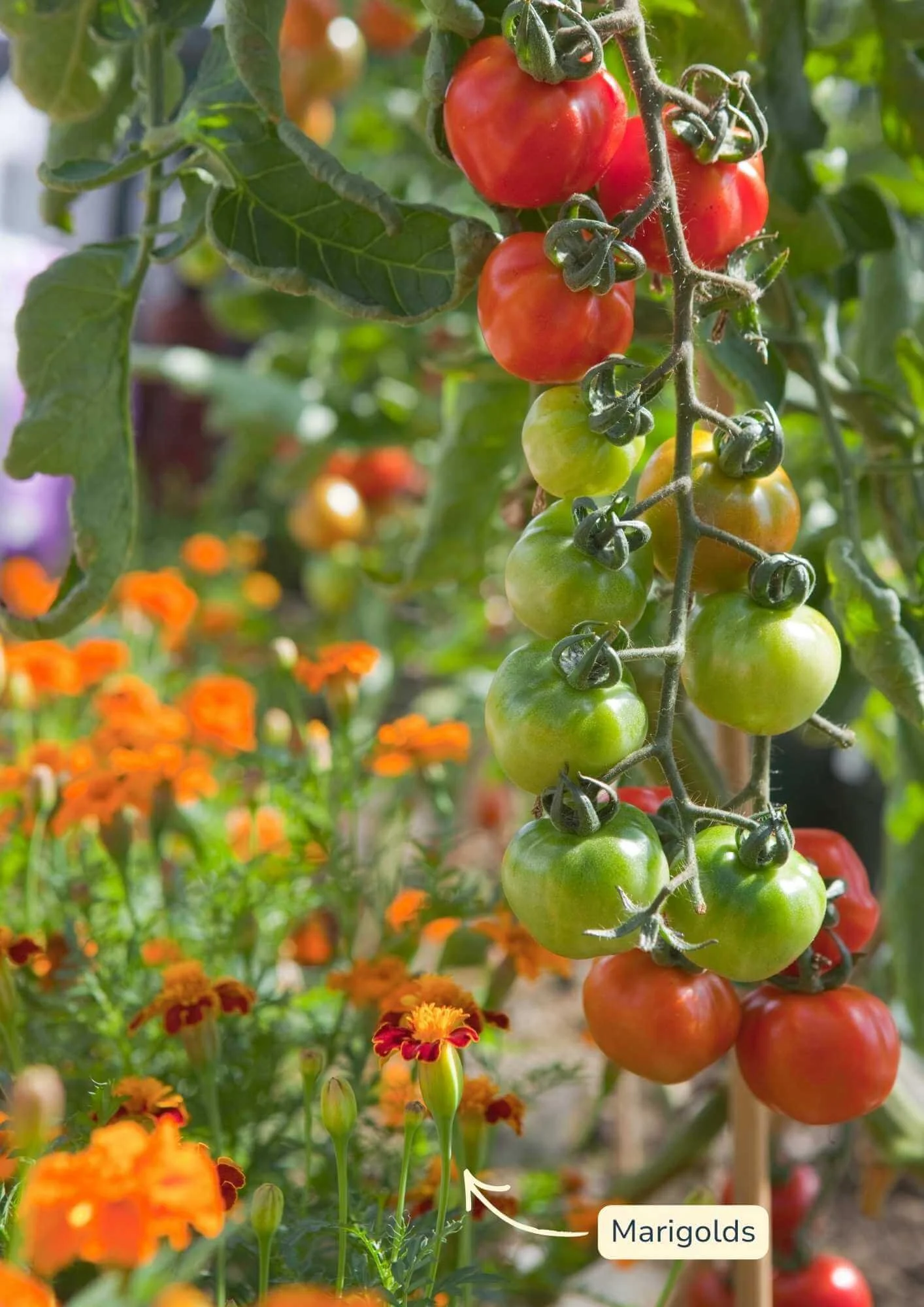
Marigolds make beautiful and hardworking companions in the tomato garden bed, repelling whiteflies and adding a cheerful pop of color all season long. Image credit @vandervelden via Canva.com
If you've ever grown tomatoes, you know they can be a little high-maintenance. They're hungry and thirsty, they attract every pest in the zip code, and they have opinions about drainage. But happily, they're also remarkably good neighbors when you pair them with the right plants. And delicious, too! 🍅
Companion planting is the practice of growing certain plants together so they can support each other. Some companions deter pests. Some attract the beneficial insects that eat those pests. Some enrich the soil, lure pollinators, or act as living mulch to suppress weeds and retain moisture. In this article, we'll take a look at the best companions for tomatoes, and a few plants you'll want to keep far, far away.
One quick note before we dive in: I've used only real photos throughout this article, because you deserve to see what these plants actually look like in real life. A computer-generated image can't help you make good decisions for your garden. All photos here are either my own, sourced from reputable horticultural growers, or carefully selected stock images. What you see is what you get.
If you're not sure how to grow tomatoes yet, or you're just getting started, start here: my complete Tomato Growing Guide will walk you through everything from seed to harvest.
A gentle reminder: gardening has a learning curve, and that's okay. These companion plants are genuinely helpful, but they're not a magic bullet. For the best results, use companion planting as one part of a broader IPM (Integrated Pest Management) approach. Think of IPM as a common-sense approach to pest management, one that puts chemicals at the very bottom of the list. Instead of automatically reaching for a spray when something goes wrong, IPM means starting with smarter choices: planting varieties that are naturally disease-resistant, keeping an eye on your plants so you catch problems early, rotating what you grow where each season, and keeping the garden clean and tidy to reduce hiding spots for pests and disease. Pesticides are only considered as a last resort, and only when a pest problem has genuinely gotten out of hand. It's better for your garden, better for the beneficial insects doing good work out there, and better for the environment. I'll link to a beginner-friendly IPM guide in the resources section below.
This article may contain affiliate links. If you make a purchase through one of these links, I may earn a commission at no additional cost to you.
What Is Companion Planting for Tomatoes?
Companion planting is an age-old practice that's gotten a lot more interesting as researchers have started putting it under a microscope. The idea is simple: some plants are just better neighbors than others. When you grow the right combinations together, everyone benefits.
For tomatoes specifically, companions can help in a few distinct ways:
Soil chemistry helpers: Some plants release helpful compounds into the soil through their roots. These compounds can suppress pathogens, improve nutrient availability, or even prime nearby plants' natural defense systems against pests and disease.
Trap crops: A trap crop is a sacrificial plant that pests find more attractive than your tomatoes. Instead of protecting your tomatoes directly, it lures the bad guys away and takes the hit so your tomatoes don't have to. Radishes and nasturtiums are classic examples.
Repellents: Certain plants produce strong aromatic oils or compounds that confuse or deter pest insects. When planted nearby, they make it harder for pests to locate your tomatoes by scent.
Pollinator supporters: Tomatoes are self-pollinating, meaning they don't need a second plant for pollination, but they do need physical movement to release pollen. Bees are particularly good at this because their flight muscles shake pollen loose. Without enough pollinator activity, you can end up with fewer fruits and more blossom drop. Planting nectar-rich flowers nearby keeps those pollinators coming back all season.
One more thing worth mentioning: it really helps to get to know the insects in your garden, both the friends and the foes. A fantastic resource is Garden Insects of North America: The Ultimate Guide to Backyard Bugs by Whitney Cranshaw and David Shetlar. It's a comprehensive, photo-rich field guide that helps you identify what you're actually looking at out there.
Best Companion Plants for Tomatoes
Here's our list of top companion plants for tomatoes. For each one, I've included what problem it solves, why it works, and how to use it in your garden.
Asparagus
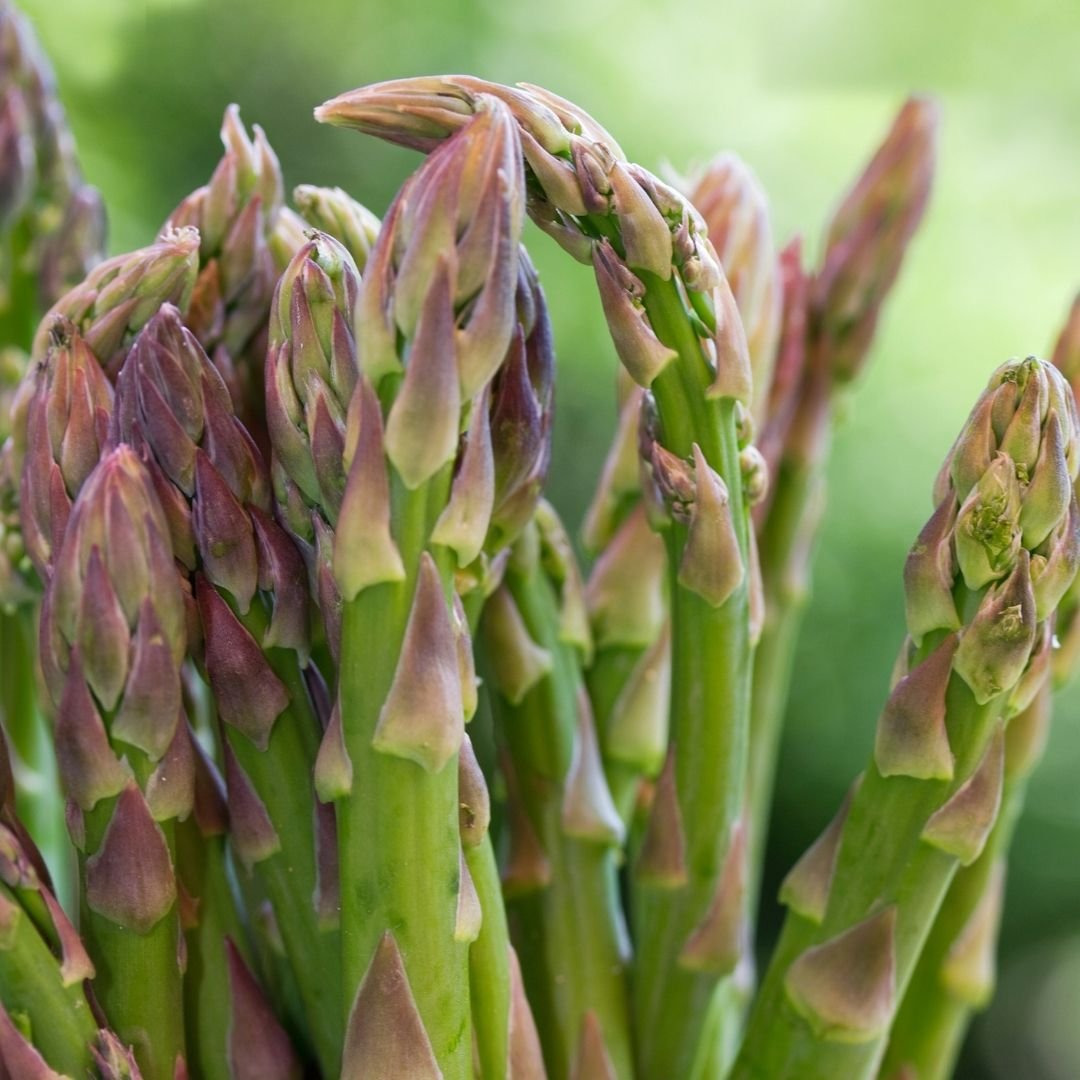
Jersey Night Asparagus. Image courtesy of Ball Horticultural Company.
Asparagus and tomatoes are one of the most interesting pairings in the vegetable garden. Asparagus roots secrete a compound called asparagusic acid that has been shown to have nematicidal properties, meaning it can help suppress harmful nematodes in the soil. Nematodes are microscopic pests that attack plant roots and cause significant damage. Tomatoes, for their part, produce solanine, a natural compound found throughout the nightshade family that is widely reported by gardeners to deter asparagus beetles, making this a pairing that works in both directions.
There's another practical bonus: asparagus is harvested in early spring and then left to fern out, which means your asparagus bed is essentially done with its main event just as it's time to plant your tomatoes. The two crops share the space beautifully across the season without competing for the spotlight.
Establish a long-lived asparagus border and tuck tomatoes alongside each season once the spring harvest is done.
Shop asparagus bare root plants on Burpee.com.
Basil
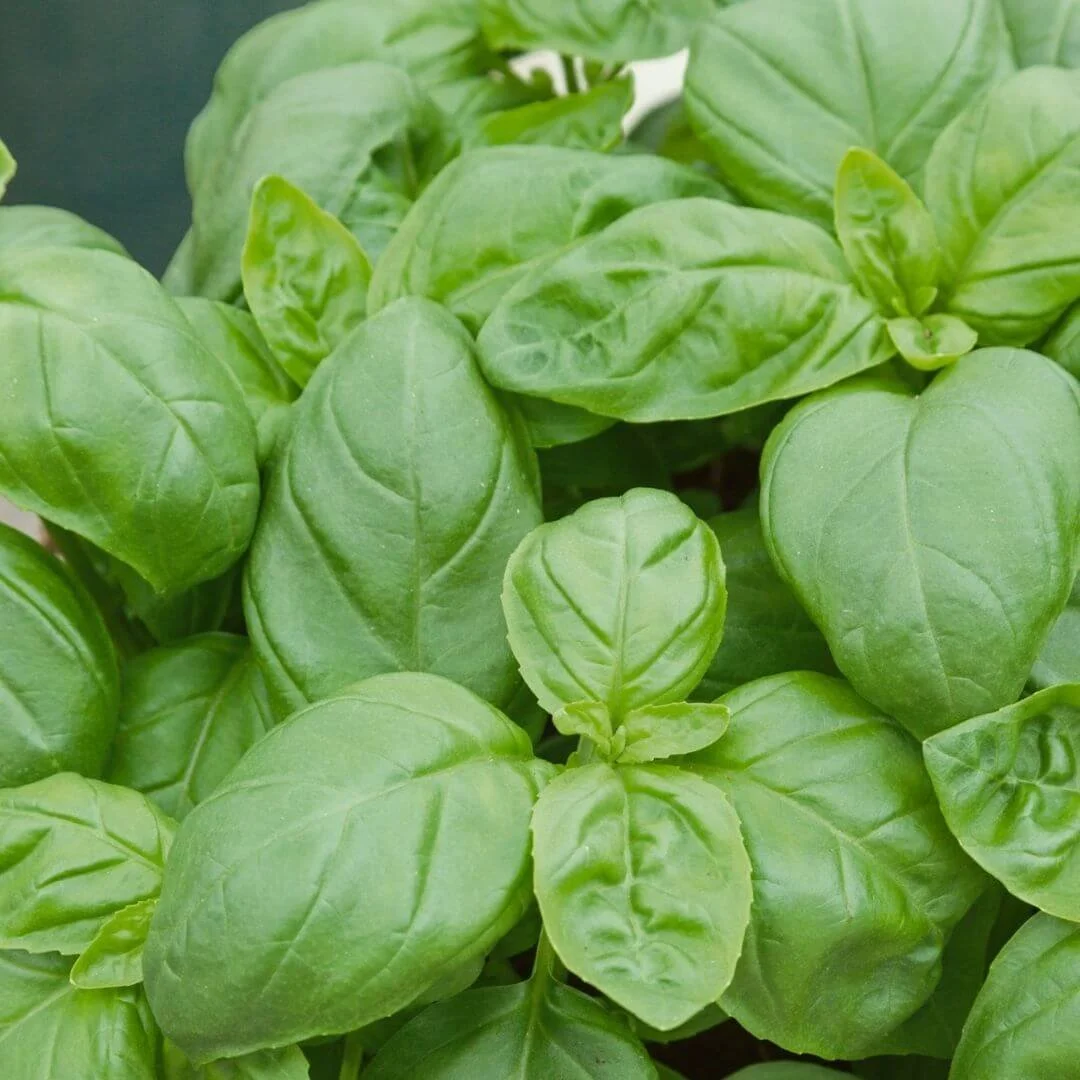
Basil Treviso. Image courtesy of All America Selections and National Garden Bureau.
Basil is the classic tomato companion, and for good reason. Emerging research suggests that basil releases aromatic volatile organic compounds (airborne chemical signals) that can prime the tomato plant’s own defense system. The result? A tomato that responds more quickly to pest attacks and physical damage. Think of it as putting your tomato on high alert.
Some studies also show that interplanting basil with tomatoes can help reduce pest pressure, particularly from whiteflies, though results vary depending on growing conditions and spacing. And of course, they taste incredible together! Fresh tomatoes, basil, mozzarella. Summer on a plate.
Plant basil generously throughout your tomato bed. It's fast-growing, easy to harvest, and happy in the same full-sun, well-drained conditions your tomatoes prefer.
Shop basil seeds & plants on Burpee.com.
Borage
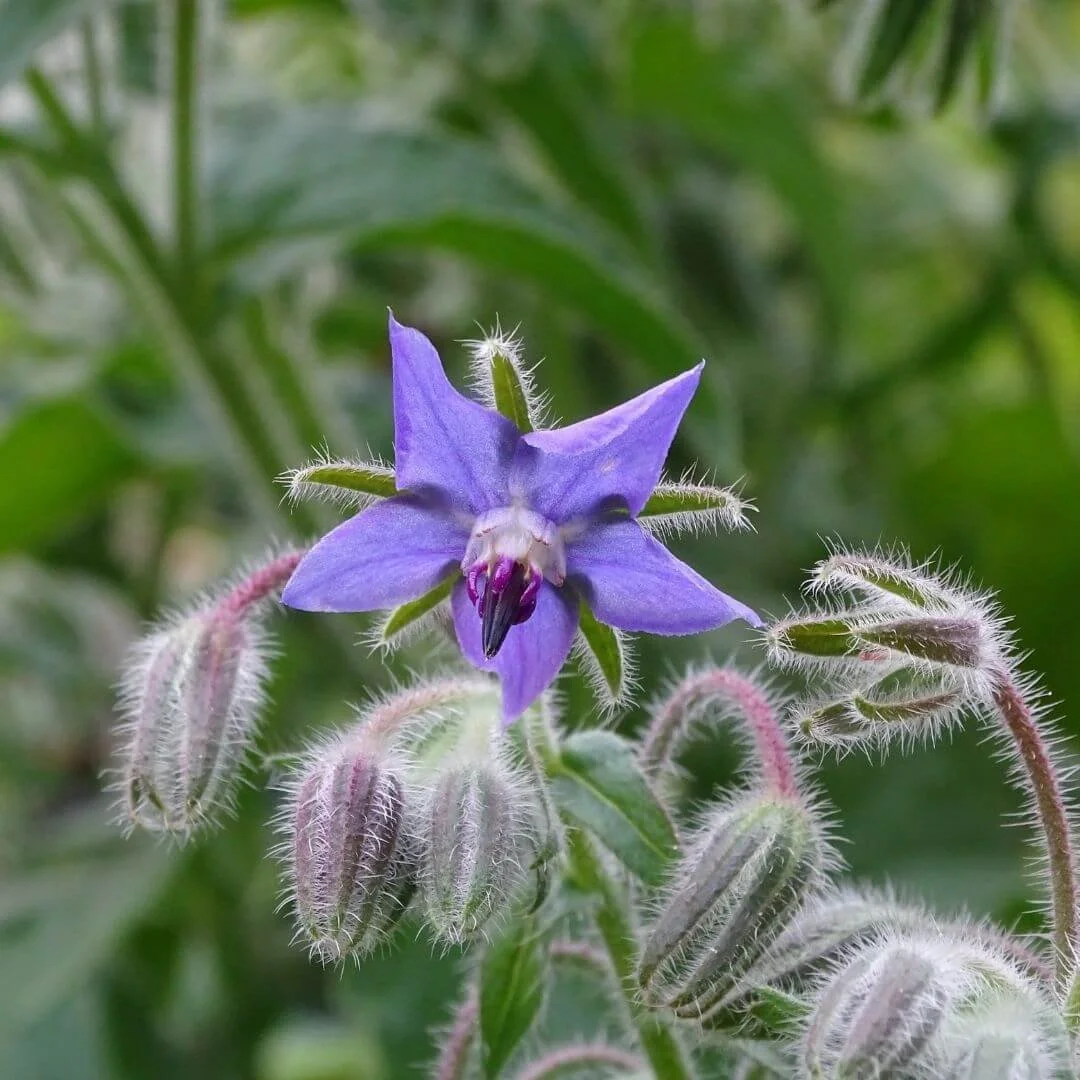
Borage plant. Image credit @zimt2003 via Canva.com.
Borage is one of the most underrated companion plants for tomatoes, and honestly one of my favorites. It attracts parasitic wasps, tiny non-stinging beneficial insects that lay their eggs inside tomato hornworms and aphid colonies, effectively eliminating them from the inside out. (I know. Nature is metal.) Borage is also a powerhouse pollinator magnet, drawing bumblebees and other native bees to your garden.
Worth knowing too: the bright blue star-shaped flowers are edible, lovely in salads, and make a stunning garnish.
One thing to know before you plant: borage is aggressive and reseeds prolifically. Depending on your garden goals, this is either wonderful or a mild nightmare. If you want it to naturalize and fill gaps in the bed year after year with zero effort on your part, just let it go to seed. If you have a more formal or tightly managed garden, deadhead it before the flowers drop and you'll keep it in check.
Shop borage seeds on Burpee.com.
Calendula
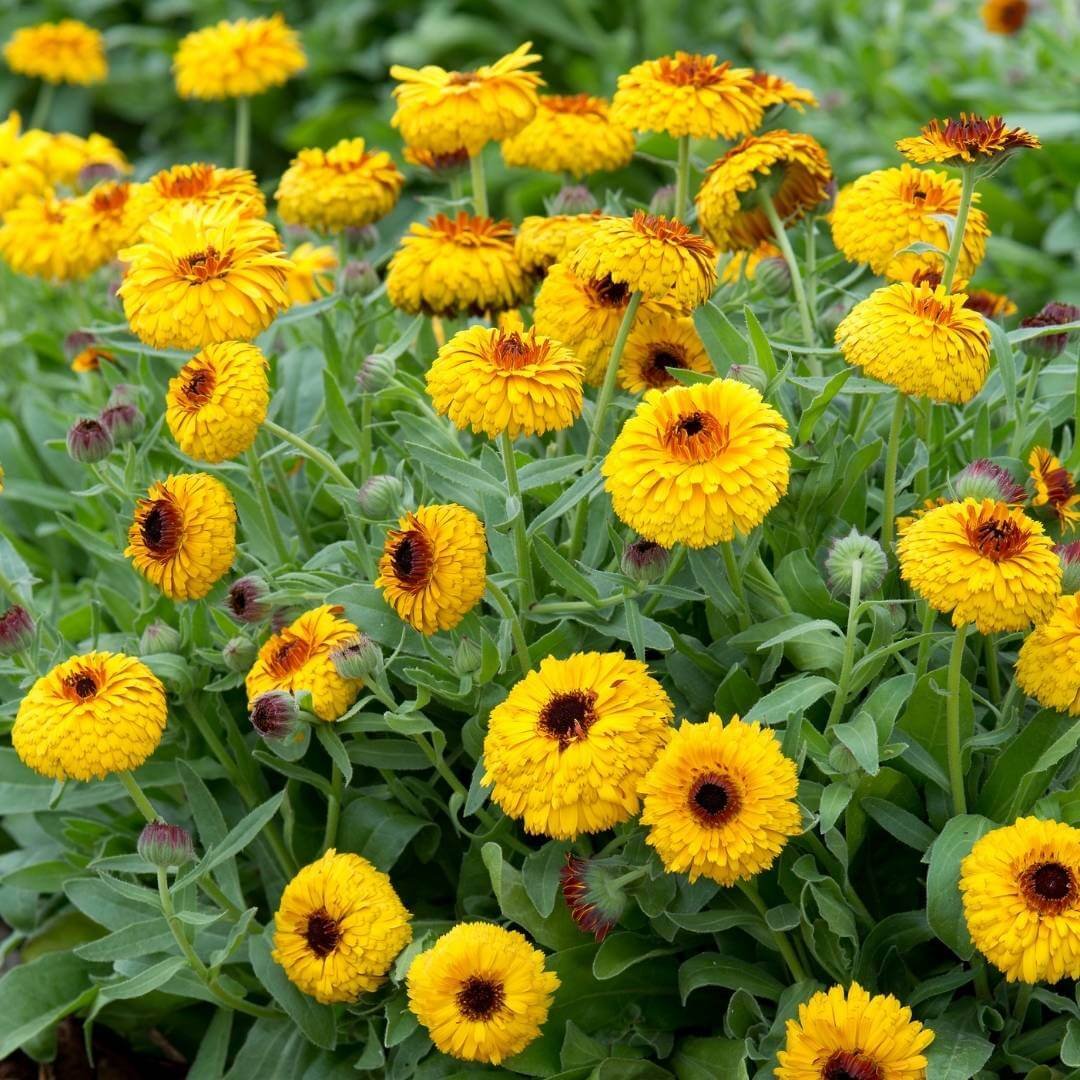
Bull’s Eye Calendula. Image courtesy of Sahin Home Garden - Takii Europe and National Garden Bureau.
Calendula (also called pot marigold, though it's not a true marigold) is a workhorse of the companion planting world. Its resinous, slightly sticky stems can trap small insects like aphids and whiteflies before they reach your tomatoes, and its bright blooms attract hoverflies and parasitic wasps. Both are voracious predators of common tomato pests.
Calendula is easy to grow from seed, blooms prolifically from summer through frost, and comes in warm oranges and yellows that look beautiful woven through a tomato bed. Direct sow around your tomato transplants and let it fill in.
Shop calendula seeds on Burpee.com.
Marigolds
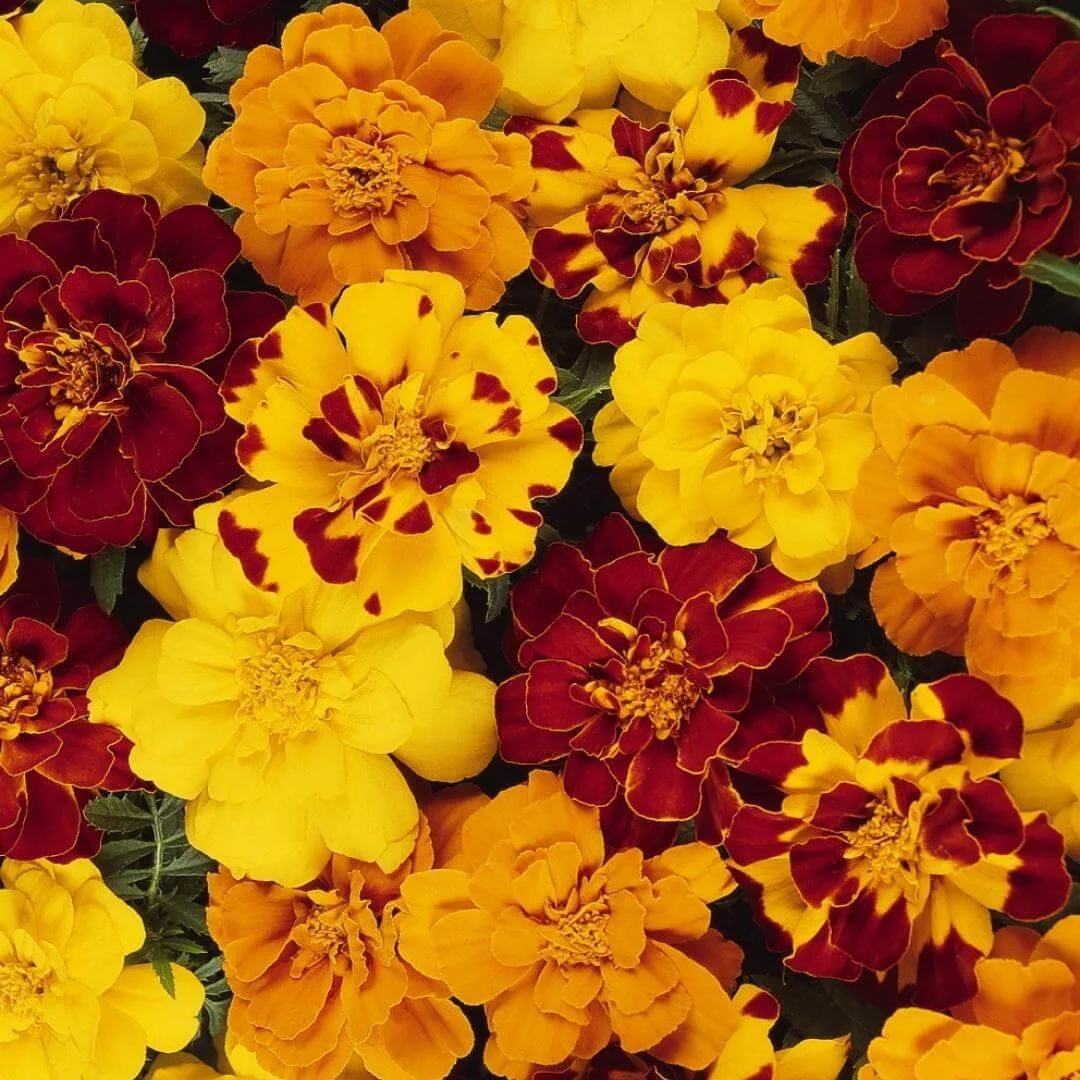
Durango® Outback French Marigold Mix. Image courtesy of Ball Horticultural Company.
Marigolds are probably the most famous companion plant in all of vegetable gardening, and they genuinely earn their reputation! French marigolds (Tagetes patula) in particular have been shown to repel whiteflies with their scent, and when planted densely as a cover crop before tomatoes go in, certain varieties ('Nema-Gone' and 'Golden Guardian') can suppress root-knot nematodes in the soil.
Plant marigolds as a border around your tomato bed, or tuck them between plants. They're low-maintenance, heat-tolerant, and add a cheerful pop of color all season long.
Shop marigold seeds & plants on Burpee.com.
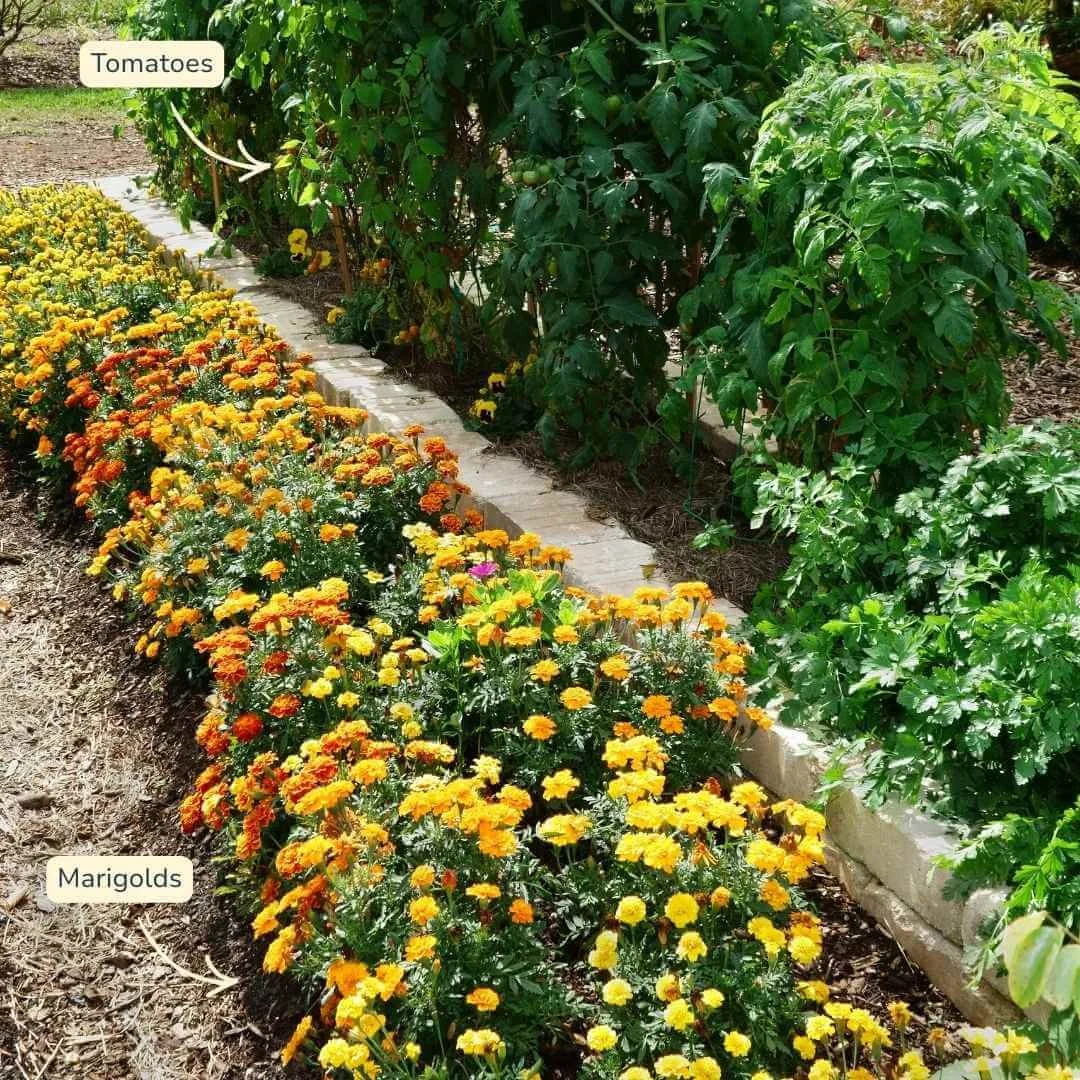
Plant marigolds as a border in front of your tomato bed to help repel whiteflies all season long. Image credit @NoDerog via Canva.com.
Nasturtiums
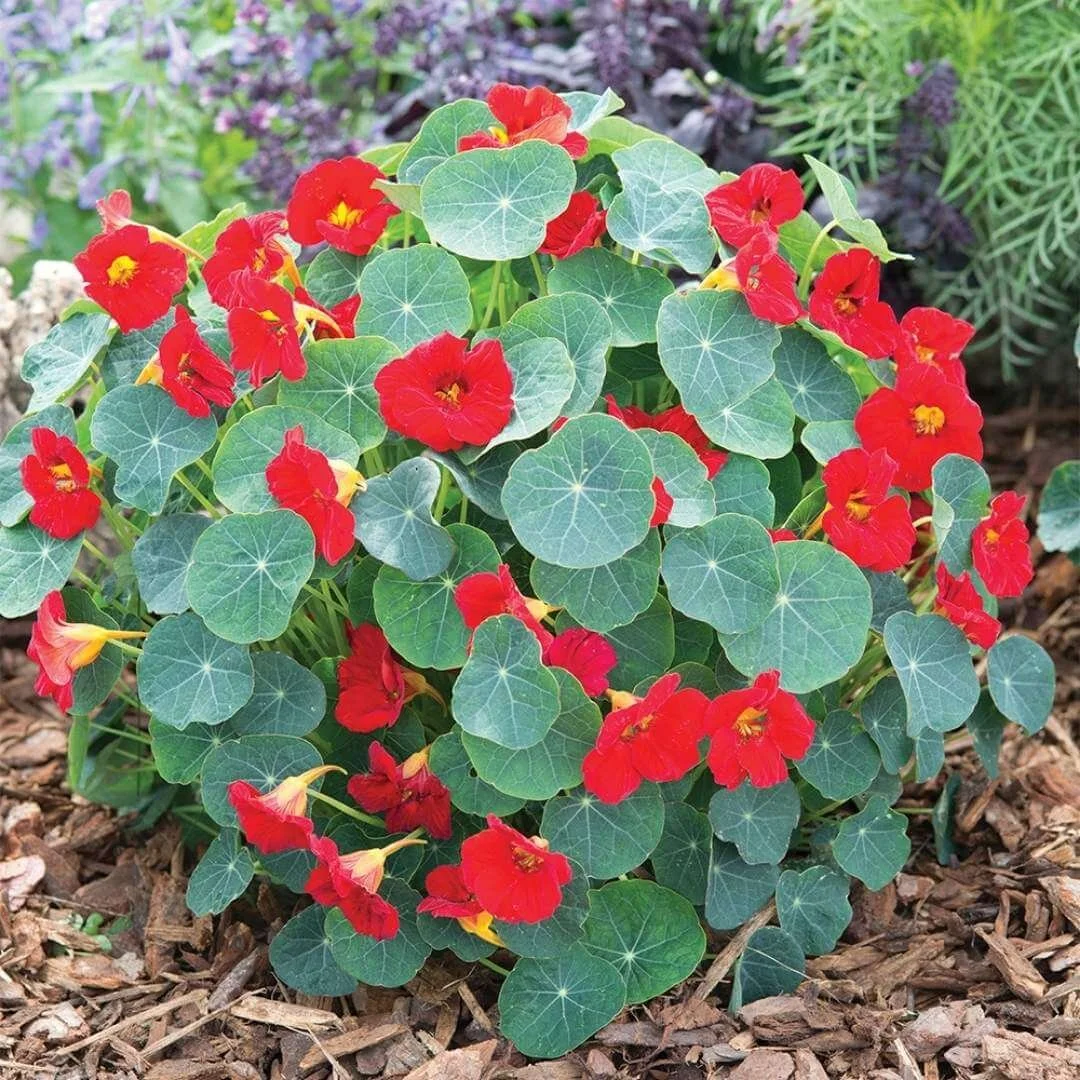
Baby Red Nasturtium. Image courtesy of American Takii, Inc. and National Garden Bureau.
Nasturtiums are a classic trap crop, meaning they're so appealing to certain pests that insects will flock to them instead of your tomatoes. Aphids in particular find nasturtiums irresistible, making them a useful sacrificial plant at the edges of your bed or scattered throughout.
As a bonus, nasturtiums are edible (flowers and leaves have a peppery bite), they attract pollinators, and they're incredibly easy to grow from seed. They also have a habit of trailing beautifully over the edges of raised beds, which I appreciate from a design standpoint.
Shop nasturtium seeds on Burpee.com.
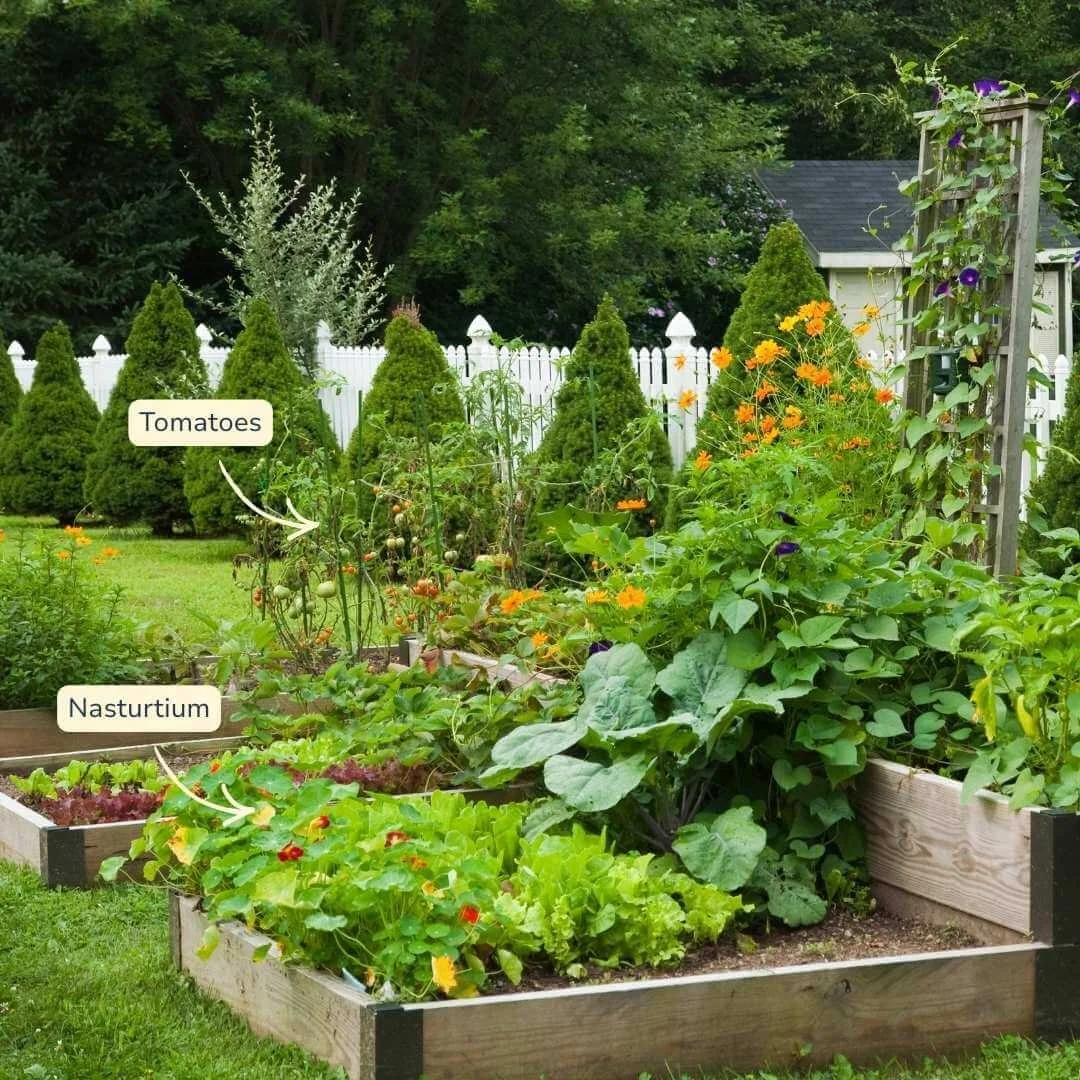
Nasturtiums and tomatoes make great raised bed companions. Nasturtiums act as a trap crop for aphids, luring them away from your tomatoes. Image credit @rviard via Canva.com.
Radishes
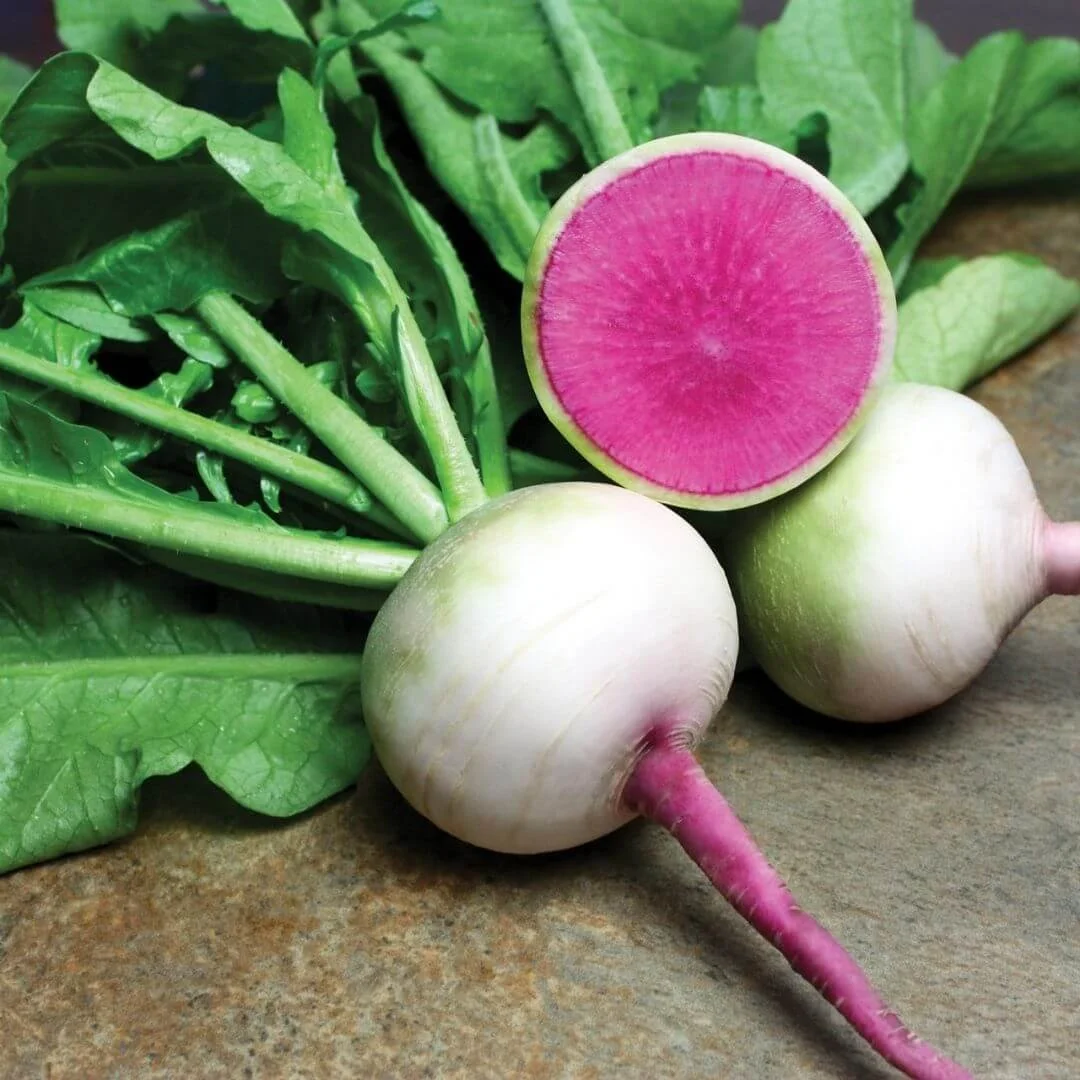
‘Starburst’ Hybrid Radish. Image courtesy of Ball Horticultural Company.
Radishes are an excellent trap crop for flea beetles, those tiny, jumping insects that chew small holes in tomato seedling leaves. Flea beetles strongly prefer radish foliage, so planting radishes immediately adjacent to young tomato transplants can protect them during their most vulnerable stage.
Radishes grow quickly (30 days from seed to harvest), so you can succession-sow them throughout the season. Their short roots won't compete with your tomatoes, making them ideal space-fillers in between plants.
Shop radish seeds on Burpee.com.
Rosemary
Rosemary produces aromatic oils (specifically borneol, camphor, and 1,8-cineole) that have been shown to repel aphids, thrips, and whiteflies, all common and troublesome tomato pests. These oils are released most strongly when the plant is brushed or disturbed, so don't be afraid to give it a gentle brush as you walk through the garden.
Rosemary is a perennial in Zones 8 and above, and marginally hardy in Zone 7 with some winter protection and the right variety selection. In the mid-Atlantic, it's worth experimenting with cold-hardy varieties like 'Arp' or 'Madeline Hill' which have the best track record in borderline zones. In colder zones, overwinter it in a pot indoors.
Shop rosemary seeds & plants on Burpee.com.
Thyme
Thyme is a low-growing herb that earns its place in the tomato bed in a few ways. Researchers at Iowa State University found that interplanting tomatoes with thyme resulted in a measurable reduction in egg-laying by adult armyworm moths (the adults that produce the larvae responsible for significant tomato damage). Creeping thyme varieties also makes excellent living mulch, spreading along the soil surface to help retain moisture and suppress weeds around tomato root zones.
Plant thyme between tomato plants or along bed edges. It's drought-tolerant once established and pairs wonderfully in the kitchen with….you guessed it…tomatoes. 🍅
Shop thyme seeds & plants on Burpee.com.
Pollinator Plants to Grow Near Tomatoes
Tomatoes need pollinators, particularly bumblebees, to reach their full yield potential. Unlike honeybees, bumblebees use buzz pollination: they vibrate their flight muscles at a specific frequency that shakes pollen loose from tomato flowers (amazing 🐝). The more bumblebees and native bees visiting your garden, the better your fruit set will be.
One important note: avoid double-flowering or pom-pom type blooms when selecting pollinator plants. While these decorative forms look beautiful, bees have a hard time accessing the nectar inside. Stick to single-flowering varieties and your pollinators will thank you!
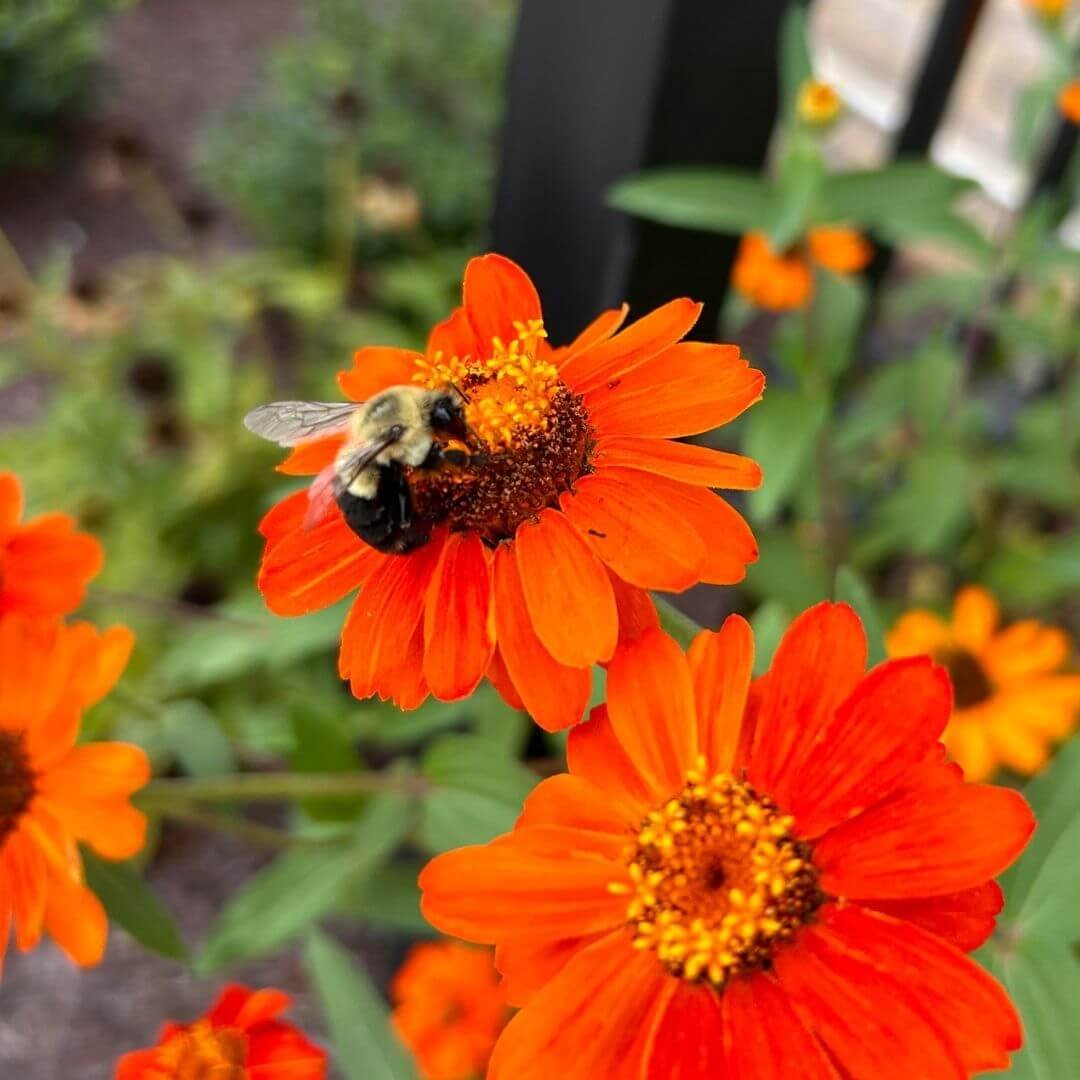
A bumblebee doing what bumblebees do best. Single-flowered zinnias like this one give pollinators easy access to nectar, so skip the pom-pom varieties and your bees will thank you. Image © Plant and Bloom Design Studio
Here are some of the best bumblebee and native pollinator favorites to plant near your tomatoes:
Zinnia (Zinnia elegans), annual for zones 2–11: One of the easiest flowers to grow from seed, zinnias bloom all summer long and are magnets for bees, butterflies, and beneficial insects. For pollinators, choose single-flowered varieties like 'Pinwheel', 'Forecast’, or ‘Profusion Orange’ rather than the double or semi-double flowering types.
Bee Balm (Monarda didyma and Monarda fistulosa), perennial for zones 3–9: Both species are outstanding native pollinator plants, but Monarda fistulosa (wild bergamot) is particularly drought-tolerant and beloved by native bees. Monarda didyma offers showier red and pink blooms. Both spread over time, so give them room or use them as a bold background planting behind tomato beds.
Goldenrod (Solidago species), perennial for zones 2–9: Goldenrod gets unfairly blamed for hay fever (that's ragweed, goldenrod pollen is too heavy to be airborne). In reality, it's one of the most important late-season nectar sources for native bees. Plant it at the back or sides of your garden. 'Fireworks' is a well-behaved cultivar that won't take over.
Purple Coneflower (Echinacea purpurea), perennial for zones 3–8: A native prairie perennial that bumblebees absolutely love. Blooms from midsummer into fall, providing nectar when many other flowers have finished. Extremely low maintenance once established.
Phenomenal® Lavender (Lavandula x intermedia 'Phenomenal'), perennial for zones 5–9: Selected specifically for its exceptionally long bloom time from early summer well into fall. Phenomenal® is also more heat- and humidity-tolerant than most lavenders, making it a great choice for the mid-Atlantic and southern climates. Bees go absolutely wild for it.
Russian Sage (Perovskia atriplicifolia), perennial for zones 4–9: Technically a sub-shrub, Russian sage produces airy spikes of violet-blue flowers from midsummer through fall. It's drought-tolerant, deer-resistant, and an excellent source of late-season nectar for native bees. 'Little Spire' is a more compact cultivar if space is limited.
Mountain Mint (Pycnanthemum species), perennial for zones 4–8: If you want to attract every bee in the neighborhood, plant mountain mint. This native perennial is arguably the single best pollinator plant for the eastern U.S., supporting dozens of native bee species. It spreads by rhizome, so plant it where it has room to roam or contain it in a raised bed.
What NOT to Plant Near Tomatoes
Now that you know what to plant, here's what to avoid. These plants can compete with your tomatoes, share disease vulnerabilities, or actively inhibit their growth.
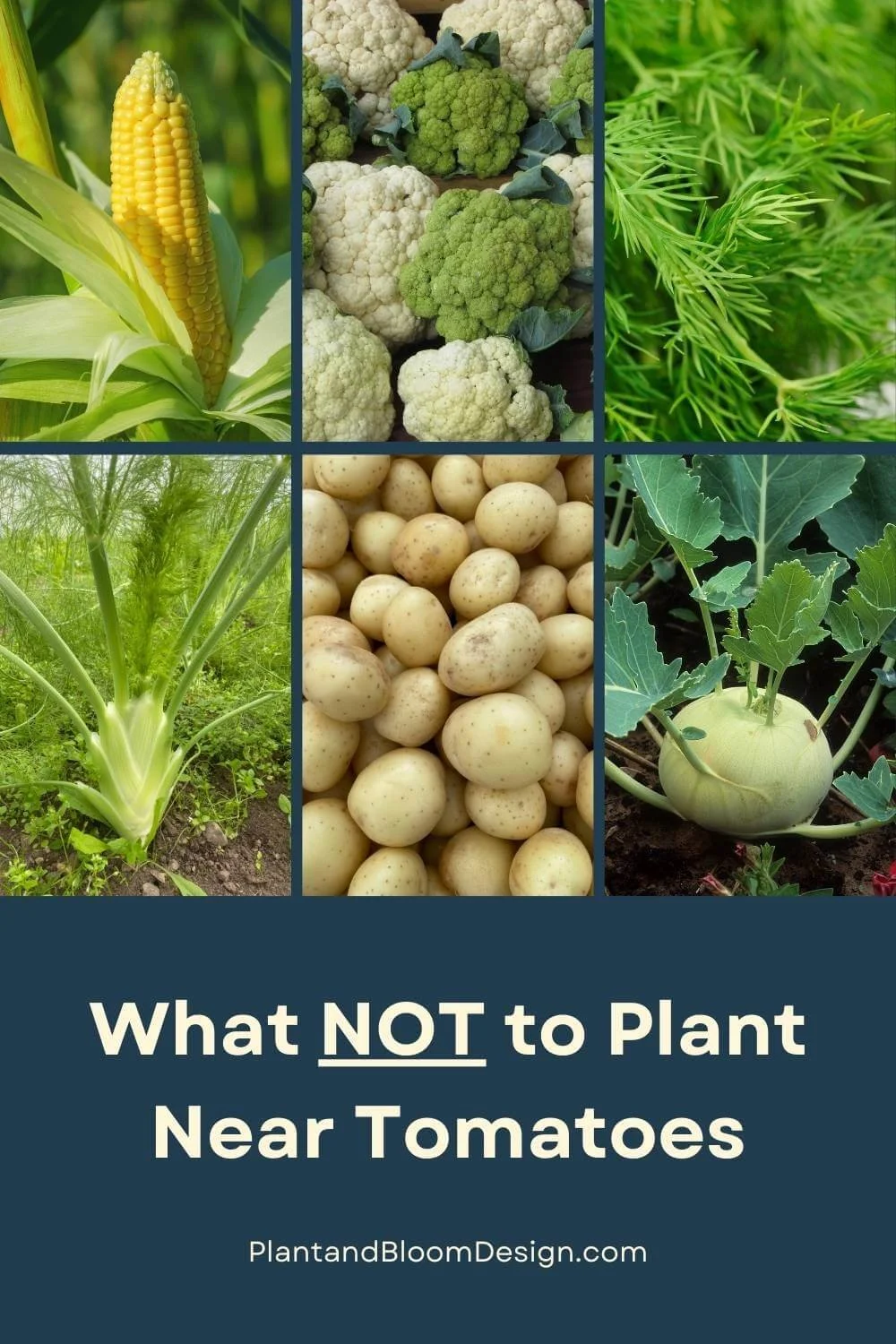
Corn: Corn and tomatoes share a common enemy. The tomato fruitworm is actually the same species as the corn earworm (Helicoverpa zea). Planting them together is essentially an all-you-can-eat buffet invitation for this pest. Keep them on opposite ends of the garden.
Dill (mature): Young dill seedlings are generally considered fine companions, but mature dill is widely reported to inhibit tomato growth. The evidence isn't conclusive, but it's repeated often enough by experienced gardeners that it's worth keeping them separated once dill matures.
Potatoes: Never plant tomatoes near potatoes. Both are members of the nightshade family (Solanaceae) and share the same devastating disease: late blight (Phytophthora infestans). Planting them together or even in the same bed year after year dramatically increases your risk of a blight outbreak that can destroy both crops.
Fennel: Fennel is famously allelopathic, releasing compounds from its roots and leaves that inhibit the growth of many neighboring plants including tomatoes. It's also a poor companion to almost everything in the vegetable garden. Give fennel its own dedicated spot, well away from your tomato beds.
Brassicas (broccoli, cabbage, cauliflower, kohlrabi, Brussels sprouts): As a group, brassicas are heavy feeders that will compete with your tomatoes for nutrients. They also thrive in cool weather and tend to bolt or decline just as tomatoes are hitting their stride, making them impractical companions from a timing standpoint as well.
How to Design Your Tomato Companion Planting Bed
Choosing the right companions is only half the equation! Where and how you plant them matters just as much. Here are my practical tips for setting up a productive, well-designed tomato bed:
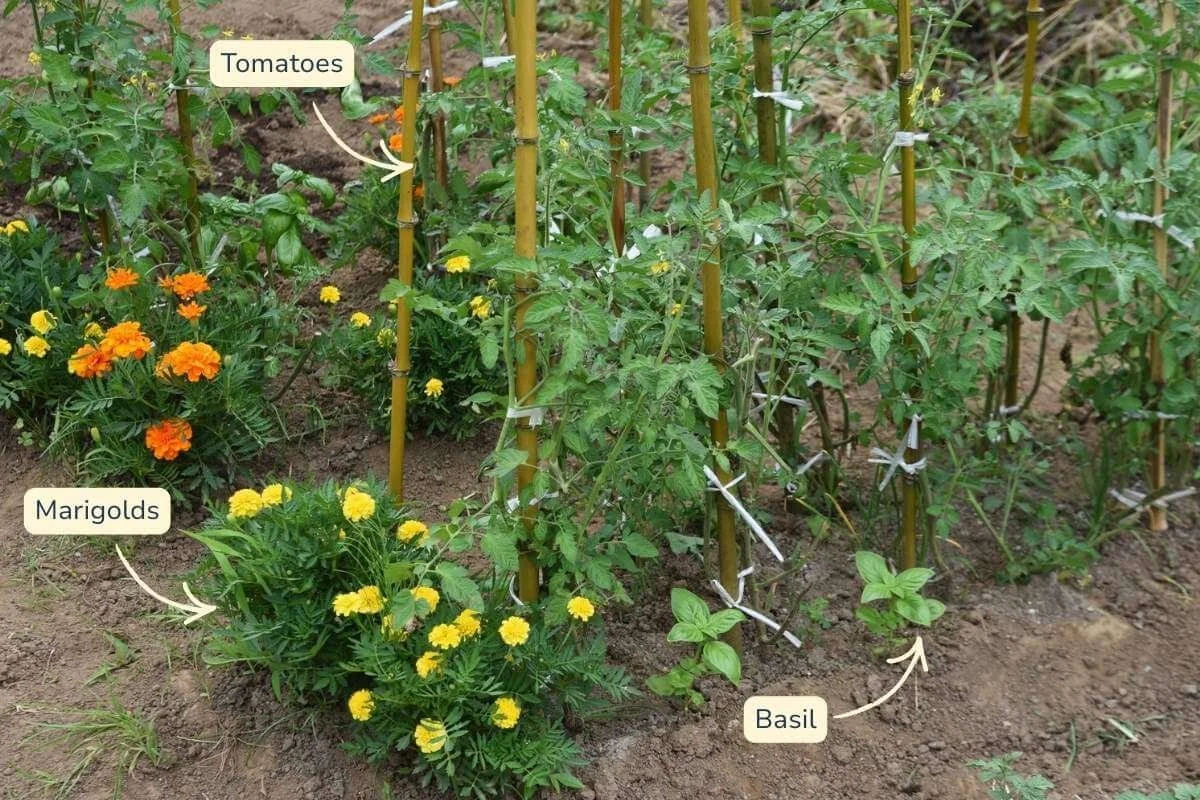
A well-designed tomato bed layers function and beauty with staked tomatoes, pest-repelling marigolds, and fragrant basil all working together. Image credit @afloimages via Canva.com
Choose the right site: Tomatoes need full sun. Aim for 6 to 8 hours minimum, and 8 to 10 hours is even better if you have it. Locate your garden where it's also accessible to a water source; you don't want to be hauling hoses across the yard in mid-August.
Find level, well-draining ground: Tomatoes (and most of their companions) hate wet feet. Avoid low spots where water pools after rain. Raised beds are an excellent solution if your native soil is heavy or slow-draining.
Start small: I say this to every gardener: do not overplant your first or second season. It's far better to have a small, thriving, manageable bed than a large overwhelming one. Start with what you can realistically care for, and expand as your confidence grows.
Mind your trees and shrubs: Avoid planting your vegetable bed near established trees and shrubs, whose root systems often extend far beyond their canopy. Those roots will compete with your tomatoes for water and nutrients, often winning.
Black walnut alert: Keep your tomato bed at least 75 feet away from black walnut trees. Black walnuts release a toxic compound called juglone from their roots, leaves, and hulls that is lethal to tomatoes and many other garden plants.
Plan for height: Place taller crops, including any tall companion plants like goldenrod or purple coneflower, on the north and west sides of your bed so they don't shade out your sun-loving tomatoes.
Wheelbarrow access: Make sure every section of your garden is reachable with a wheelbarrow or garden cart. You'll need to move compost, mulch, transplants, and harvested vegetables regularly. You'll thank yourself for planning ahead with this one.
Don't crowd your tomatoes: Tomatoes need good air circulation to stay healthy. Crowded plants stay wet longer, which invites fungal disease. Give them the recommended spacing on the label or seed packet, and resist the urge to squeeze in one more plant. I am speaking from experience and also still in denial about my plant addiction. 😜
Plan for support structures: Tomatoes will need caging, staking, or trellising. Factor that into your spacing and design before you plant, not after.
Shop tomato cages & supports on Burpee.com.
Helpful Resources
A few resources I recommend for tomato growers at every level:
IPM Guide for Home Gardeners from the University of New Mexico: pubs.nmsu.edu - A clear and practical guide to Integrated Pest Management written for home gardeners. Start here if IPM is new to you.
Key to Common Tomato Problems with photos from the University of Maryland Extension: extension.umd.edu - An excellent visual diagnostic tool for identifying what's going wrong with your tomato plants.
U.S. Drought Monitor from the University of Nebraska-Lincoln: droughtmonitor.unl.edu - An up-to-date map showing current drought conditions across the United States. Useful for gardeners making watering and irrigation decisions, particularly during hot, dry summers when tomatoes are most vulnerable to moisture stress.
Comparing Watering Methods: Soaker Hose vs Drip Irrigation: Tomatoes need consistent, deep watering to thrive, and how you deliver that water matters. This article breaks down the pros and cons of both methods to help you choose the right one for your garden.
USDA Plant Hardiness Zone Finder: planthardiness.ars.usda.gov - Not sure what zone you're in? Look it up here.
Garden Insects of North America by Whitney Cranshaw and David Shetlar: The most comprehensive field guide to garden insects I've come across. If you want to know what you're actually looking at in the garden, friend or foe, this is the book. I use it all the time.
Frequently Asked Questions
What is the best companion plant for tomatoes?
It depends on your biggest challenge, but basil and marigolds are the most versatile all-around companions. They are easy to grow, widely available, and address a range of pest issues. If hornworms are your nemesis, borage is worth adding to the mix since it is believed to attract the parasitic wasps that target them. For nematode problems, look to asparagus or French marigolds.
Can I plant basil next to tomatoes?
Absolutely! Basil is one of the best companions you can grow with tomatoes. Research shows it primes tomatoes' natural defenses and reduces pest pressure from thrips, aphids, and whiteflies. It also happens to be delicious in every tomato recipe imaginable. Plant it generously throughout the bed.
What should you not plant near tomatoes?
Avoid fennel (inhibits growth), potatoes (share late blight vulnerability), corn (attracts the same pests), and mature dill (can inhibit tomato growth). Brassicas like broccoli and cabbage are also poor companions, since they compete heavily for nutrients.
Do marigolds really help tomatoes?
Yes, with some nuance. French marigolds (Tagetes patula) are the most effective variety for tomato companionship. They repel whiteflies with their scent, and when grown as a dense cover crop before tomatoes go in, they can suppress root-knot nematodes. They're not a one-plant cure-all, but they're a genuinely useful part of an IPM toolkit.
Can tomatoes and peppers be planted together?
Yes! Tomatoes and peppers are both members of the nightshade family and share similar growing requirements: full sun, warm temperatures, consistent moisture, and fertile, well-draining soil. They make compatible bed-mates, though since both are heavy feeders, make sure to amend your soil well before planting and fertilize regularly through the season.
Ready to Plan Your Tomato Bed?
Companion planting is one of those garden practices that feels almost magical once you start doing it. Watching your tomato bed transform into a living, buzzing, pest-resistant ecosystem is genuinely satisfying! But remember, it works best as part of a thoughtful overall approach, not as a replacement for good soil, consistent watering, and paying attention to your plants.
For a complete guide to growing tomatoes from seed to harvest, head to my Tomato Growing Guide. Happy gardening! 🍅