
10 Best Trees to Plant This Fall
Published: July 13, 2026
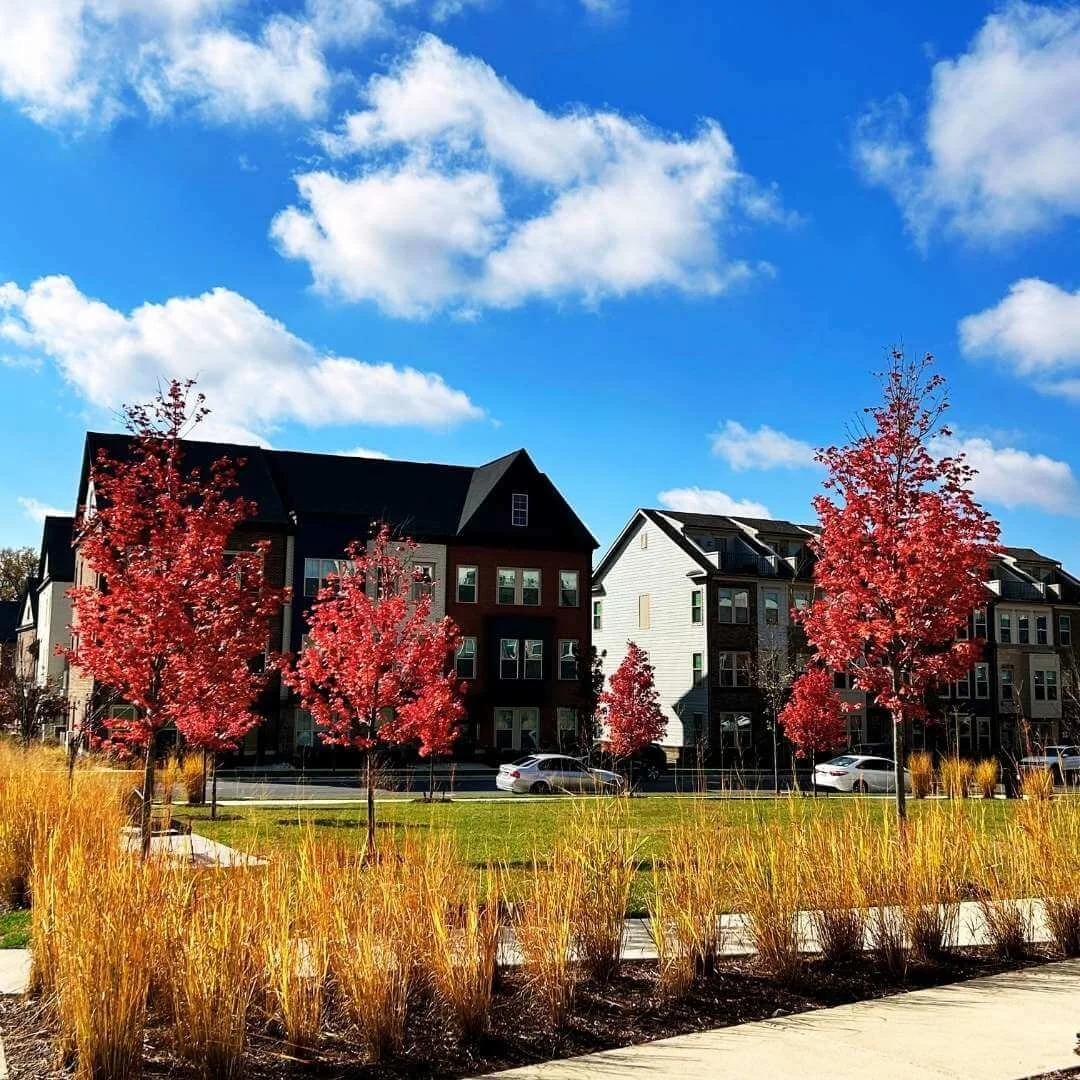
A well placed tree can transform an entire landscape, and fall is the perfect time to plant one. These are ‘Red Sunset’ maples, #1 on this list. Image © Plant and Bloom Design Studio
As a landscape designer, if someone asks me for one quick fix that will make the biggest impact on their yard, my answer is almost always the same. Plant a tree. I get asked this kind of thing constantly, at parties, at barbecues, whenever people find out what I do for a living. It’s a little like being a doctor who never quite clocks out.
And this advice holds up well because trees do more work than almost anything else you can add to a landscape. A well placed tree brings a sense of grounding and maturity to a home, increases property values, and provides shade that can meaningfully lower your summer cooling bills.
Beyond your own yard, trees quietly sequester carbon, help manage stormwater runoff, and offer food and shelter for birds, pollinators, and other wildlife. Very few investments in your home give back on that many levels at once.
If you've been dreaming about adding a tree to your yard, fall is one of the best times of year to plant. While spring gets all the attention, cooler fall air combined with soil that's still warm from summer gives new roots the perfect opportunity to establish before winter arrives.
Your new tree spends the fall and mild winter months developing a strong root system, so it's ready to put on vigorous new growth in spring instead of struggling through its first hot summer.
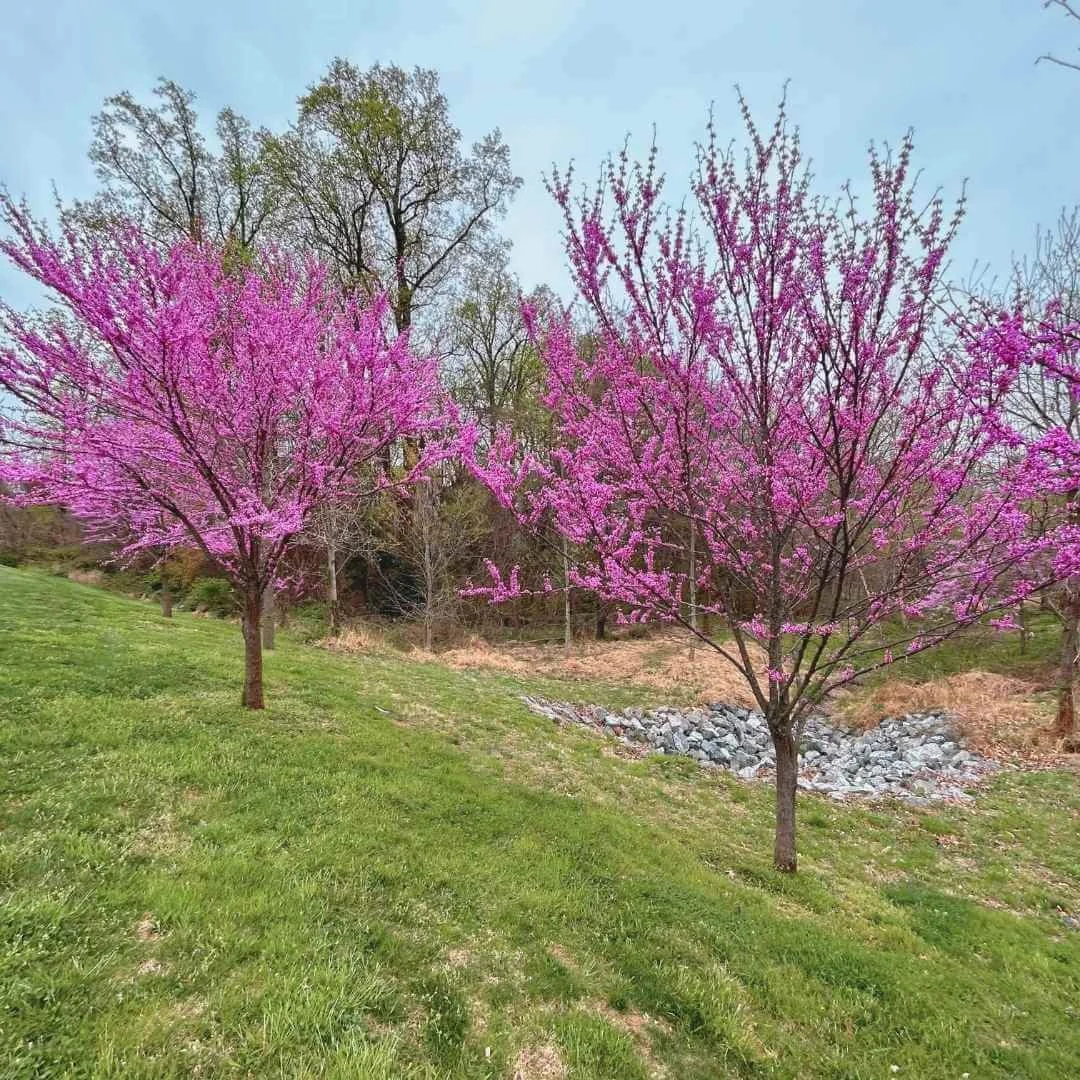
When planted in fall, trees like the Eastern redbud (#6 on this list) reward you with a stunning spring flower show a few months later. Image © Plant and Bloom Design Studio
I've put together a list of ten of my favorite trees to plant in fall, each selected for a different reason. Some earn their place for outstanding fall color, others for supporting wildlife, and some because they're the perfect solution for challenging spots, like wet areas or shady corners. Whatever your landscape needs, there's a tree on this list that's a great fit.
One quick note before you shop: many of these trees are available in a wide range of sizes, shapes, and even leaf colors. Always check the plant tag before buying to make sure the variety's mature height, width, and growth habit fit your space and your landscaping goals.
As always, take a little time to evaluate your site before planting. Consider how much sun the area receives, how well the soil drains, and how much room the tree will have once it reaches full maturity. And before you dig, call your local utility locating service to have underground gas, water, and electrical lines marked.
All the photos in this guide are real, either taken by me or sourced directly from reputable growers.
Let's get into my top ten picks for fall planting.
This article may contain affiliate links. If you make a purchase through one of these links, I may earn a commission at no additional cost to you.
1. Best for: Fall Color
Red Maple
Acer rubrum
Mature Size: Varies by cultivar; approximately 35–60 feet tall and 12–35 feet wide
Light: Full sun to part shade
Zones: 3 to 9
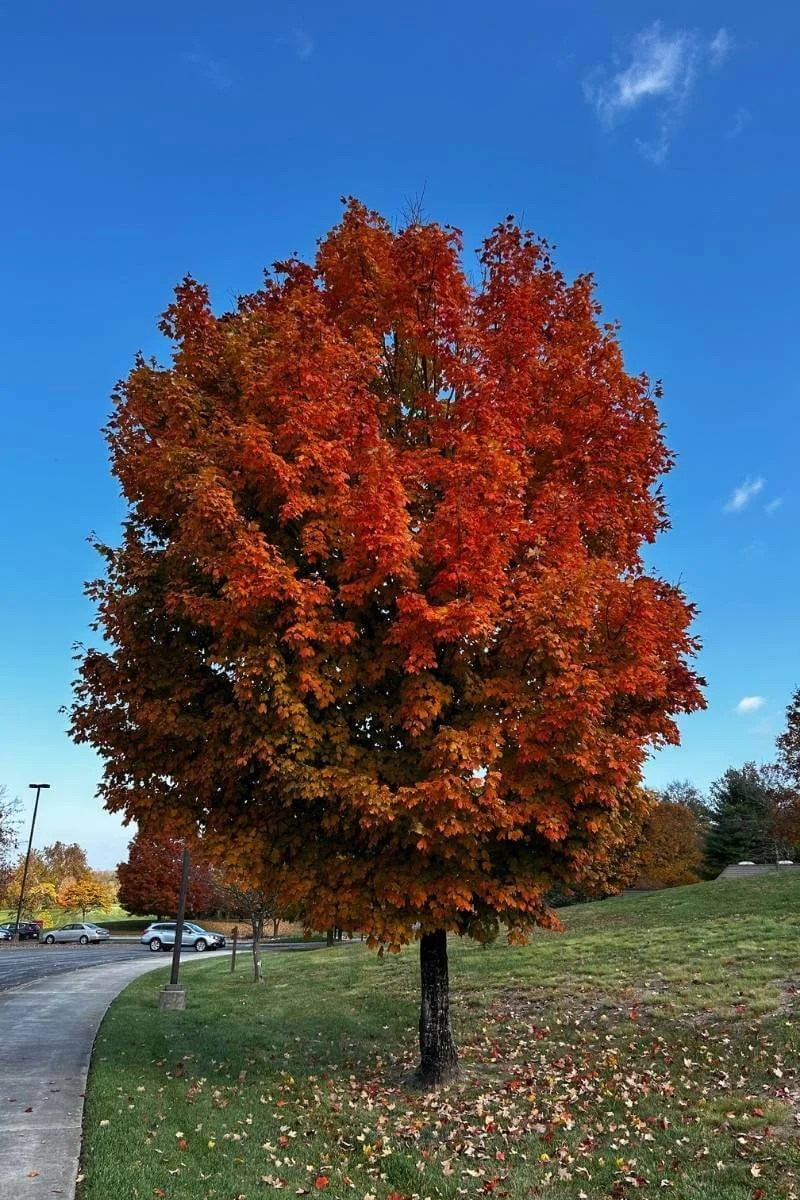
‘October Glory’ red maple showing off its signature fiery red fall color. Image © Plant and Bloom Design Studio
Few trees deliver the kind of dependable fall color that the red maple does. Its brilliant autumn display is one of the reasons it remains a landscape favorite. If you are planning to add one to your yard, fall offers the perfect planting window, allowing its roots to establish before the stress of summer heat arrives.
This adaptable native handles evenly moist soil well but also tolerates drier spells and clay. It grows quickly into a rounded, shade producing crown, making it a great choice if you are working with an empty yard that needs mature plantings in a hurry.
One thing to plan around: red maple's roots stay fairly shallow and will spread wide over time. Give it distance from the driveway, patio, and foundation, and let it stretch out in an open lawn area instead.
For the best fall show, look for ‘October Glory’, ‘Red Sunset’, or ‘Autumn Blaze’. The straight species is lovely, but these cultivars were specifically bred for richer, more dependable color.
2. Best for: Spring Blooms and Fall Color
Kousa Dogwood
Cornus kousa
Mature Size: Varies by cultivar; approximately 8–30 feet tall and 5–30 feet wide
Light: Full sun to part shade
Zones: 5 to 8
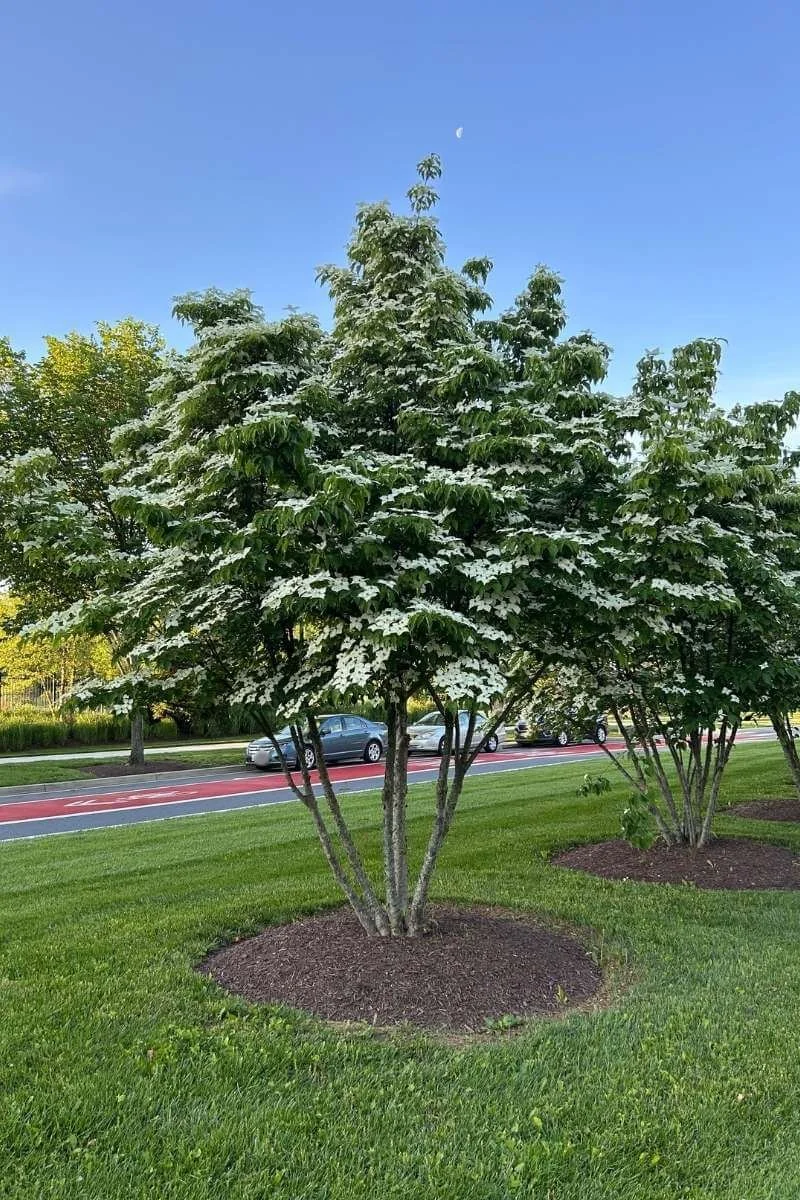
Kousa dogwood trees in full spring bloom. Image © Plant and Bloom Design Studio
This elegant dogwood tree earns its spot on my list because it works so hard across three seasons. In late spring it produces creamy white, star shaped bracts that resemble flowers and float gracefully above the layered branches. A few cultivars, like ‘Satomi’, bloom in soft pink instead if you want something a little different.
Summer brings lush green foliage and developing berries, and by fall the berries ripen to a raspberry pink just as the foliage turns rich shades of red, burgundy, and purple.
Kousa dogwood is a great choice for tricky spots that get morning sun and afternoon shade, a lighting situation that stumps many homeowners but is actually ideal for this tree. It is also more disease resistant than some native dogwoods, and birds love the ripening fruits.
Planting in fall gives this tree a head start on root development before it puts its energy into next spring's blooms.
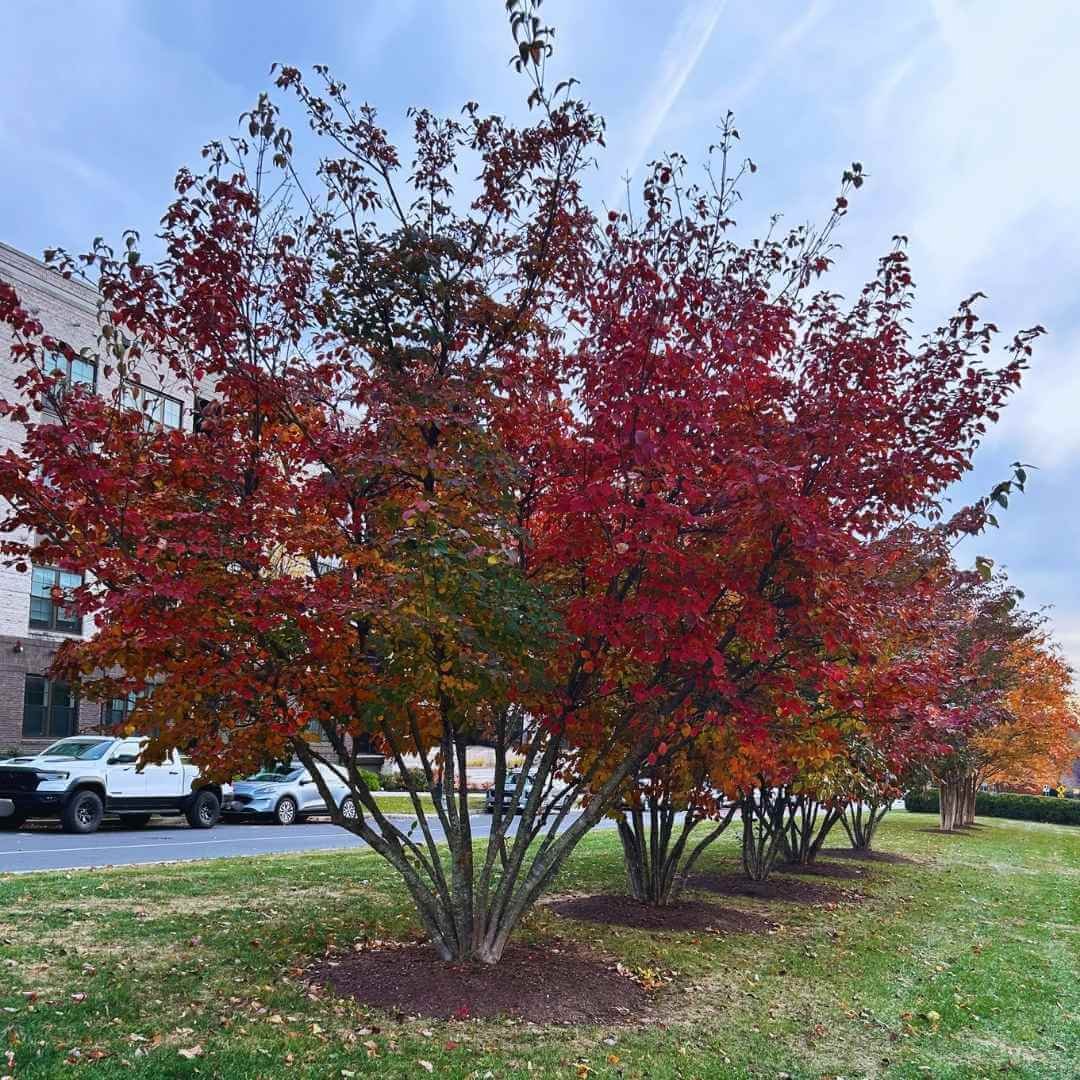
These Kousa dogwoods are just beginning their fall transformation, with green and red foliage mingling before the tree turns fully crimson. Image © Plant and Bloom Design Studio
3. Best for: Wet or Low Lying Spots
Bald Cypress
Taxodium distichum
Mature Size: Varies by cultivar; approximately 4–70 feet tall and 3–30 feet wide
Light: Full sun
Zones: 4 to 10
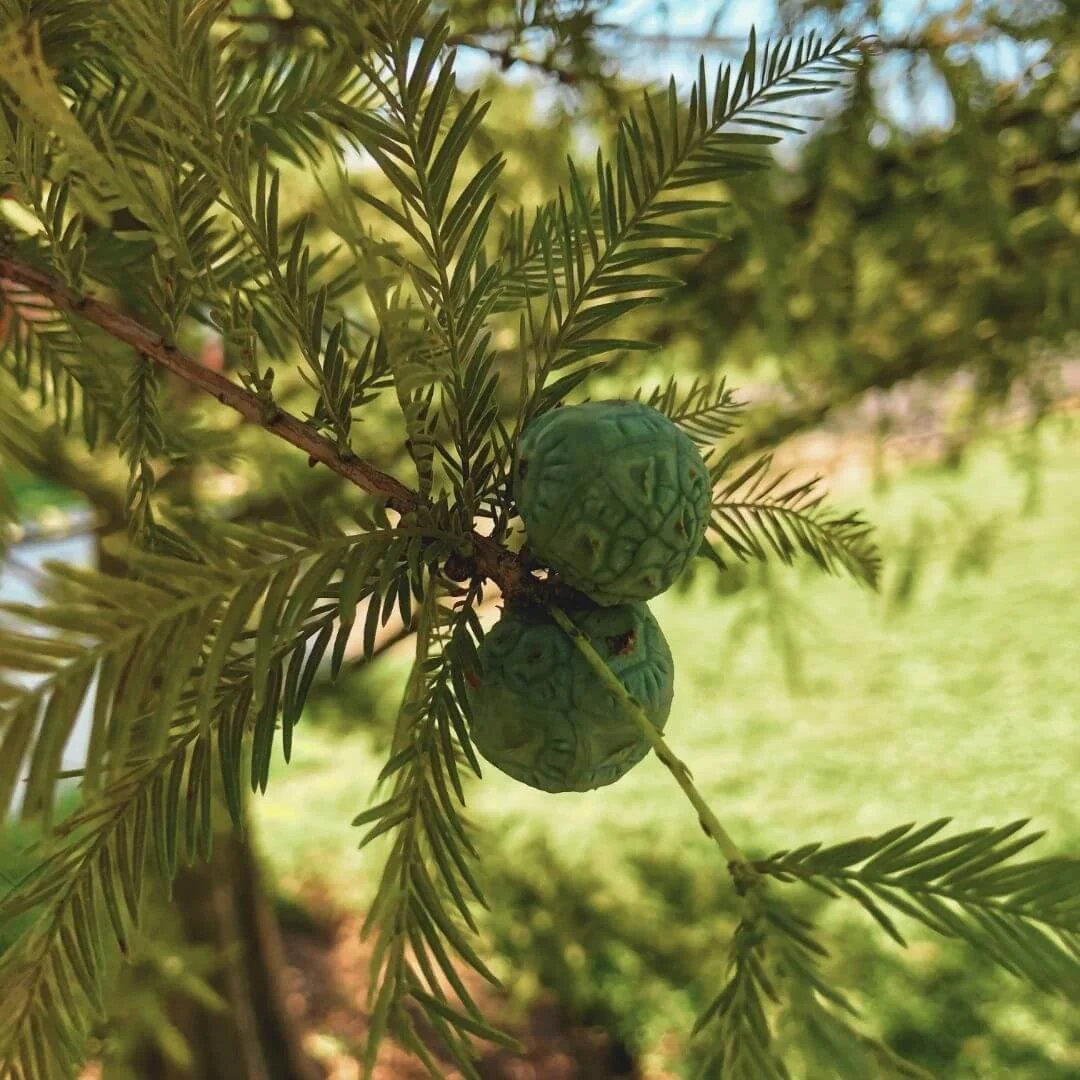
One of the few deciduous conifers, bald cypress combines the structure of an evergreen with the seasonal beauty of a deciduous tree, dropping its needles every fall after producing small cones. Image © Plant and Bloom Design Studio
Bald cypress thrives in wet, poorly drained soil and even standing water, making it an excellent choice for a soggy corner of the yard, next to a pond, or a low lying drainage area. It also adapts well to average garden soil, so don't rule it out just because your yard isn't swampy.
Although it's a conifer, the bald cypress behaves differently from pines and spruces. Each fall, its soft, feathery needles turn brilliant shades of copper and rusty orange before dropping, creating one of the most striking autumn displays of any landscape tree.
Most people picture bald cypress as an enormous tree, and the straight species can definitely reach impressive heights. Fortunately, several smaller cultivars make it a practical option for more modest landscapes.
‘Peve Minaret’ stays compact and narrow, ‘Lindsay's Skyward’ has a slender, spire like form, and ‘Shawnee Brave’ matures at a more manageable 40 to 60 feet tall. Each offers the graceful texture and seasonal beauty of the species without requiring the space of a full sized bald cypress.
If you want to learn more, read my article The Ancient, Prehistoric Bald Cypress Tree.
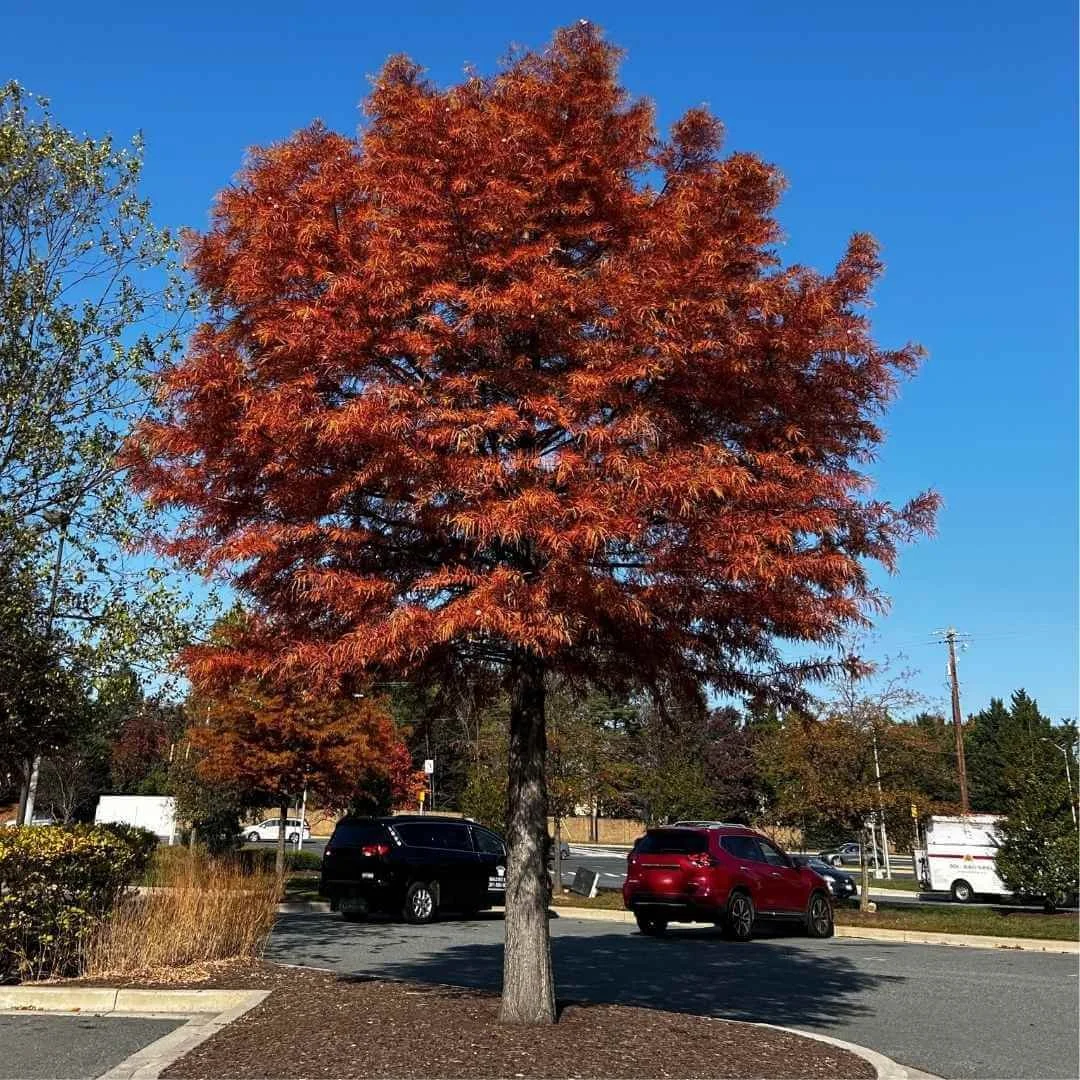
Bald cypress is often associated with swamps and wet soils, but this adaptable tree can thrive in surprisingly tough conditions. Here, it brings fiery burnt-red fall color to a parking lot, showing that the right tree can flourish far beyond its traditional habitat. Image © Plant and Bloom Design Studio
4. Best for: Multi Season Interest
Crape Myrtle
Lagerstroemia indica
Mature Size: Varies by cultivar; approximately 6–40 feet tall and 6–30 feet wide
Light: Full sun
Zones: 6 to 9
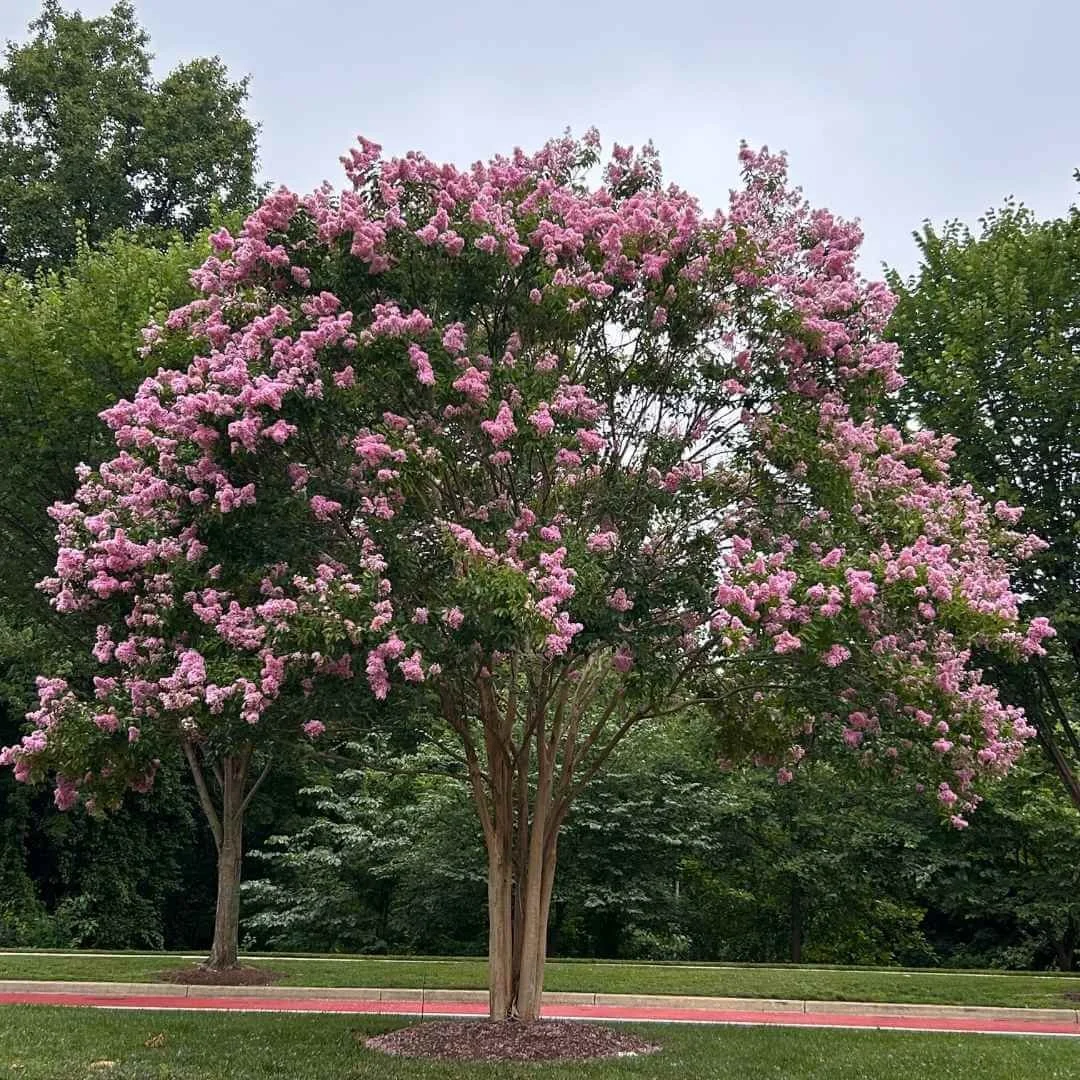
Muskogee crape myrtle in full summer bloom, prized for its soft lavender flowers. Image © Plant and Bloom Design Studio
Few trees earn their keep in the landscape quite like the crape myrtle. Its summer flower show in white, pink, lavender, or red gets most of the attention, but the encore act is just as good. Fall brings warm orange and red foliage, and once the leaves drop, smooth, peeling bark takes over as the star, keeping the tree interesting straight through winter.
Size is where crape myrtle gets tricky, since the same name can refer to anything from a large shade tree to a compact shrub form depending on the cultivar. Always confirm the mature size before you buy.
Larger varieties need open space to spread without crowding a house or walkway, so I tend to place them out in the lawn where the wide, cascading canopy has room to become a real focal point rather than a maintenance headache.
A few reliable options to look for: ‘Natchez’, a large tree with striking bark and white blooms; ‘Muskogee’ if you want lavender colored flowers; ‘Dynamite’ for a true, saturated red; and ‘Acoma’, a small tree with white flowers.
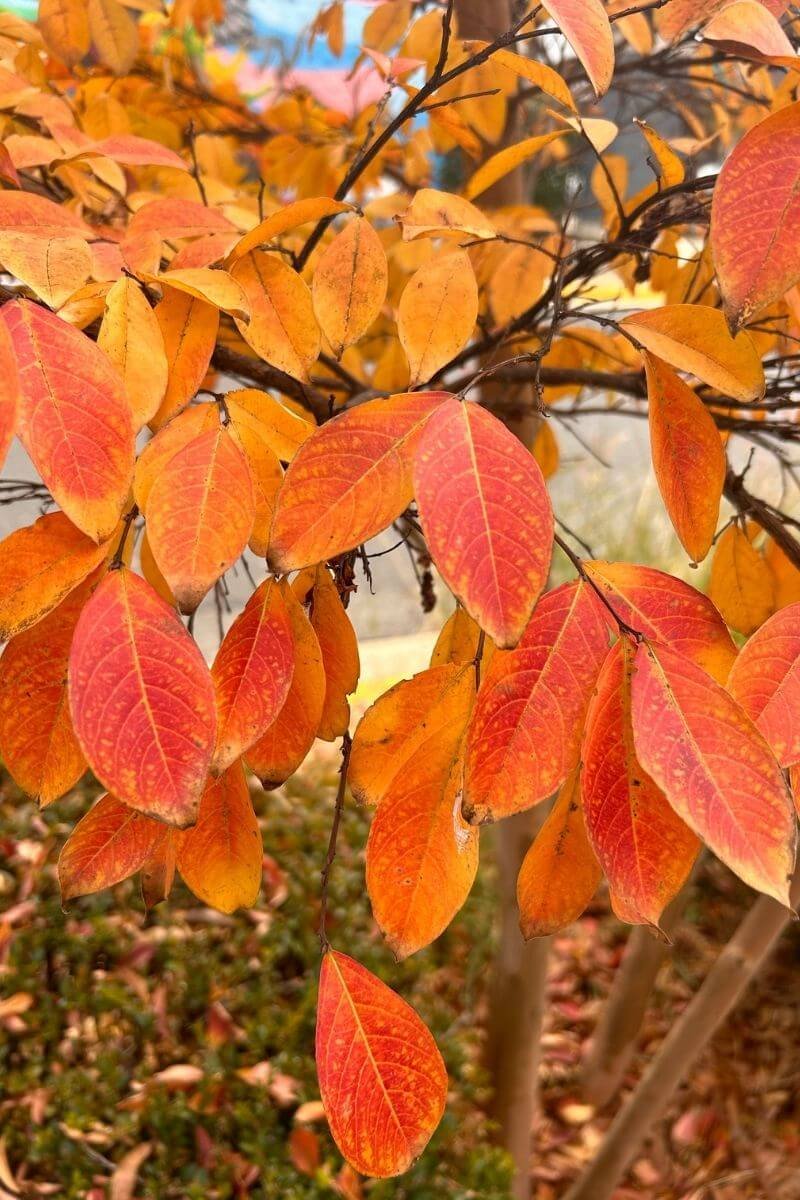
The beauty of crape myrtle goes beyond its summer blooms. Fiery orange fall foliage gives way to smooth, peeling bark, keeping this tree a landscape standout through winter. Image © Plant and Bloom Design Studio
5. Best for: Corners of the House
Seven Son Flower
Heptacodium miconioides
Mature Size: Varies by cultivar; approximately 6–20 feet tall and 5–10 feet wide
Light: Full sun
Zones: 5 to 9
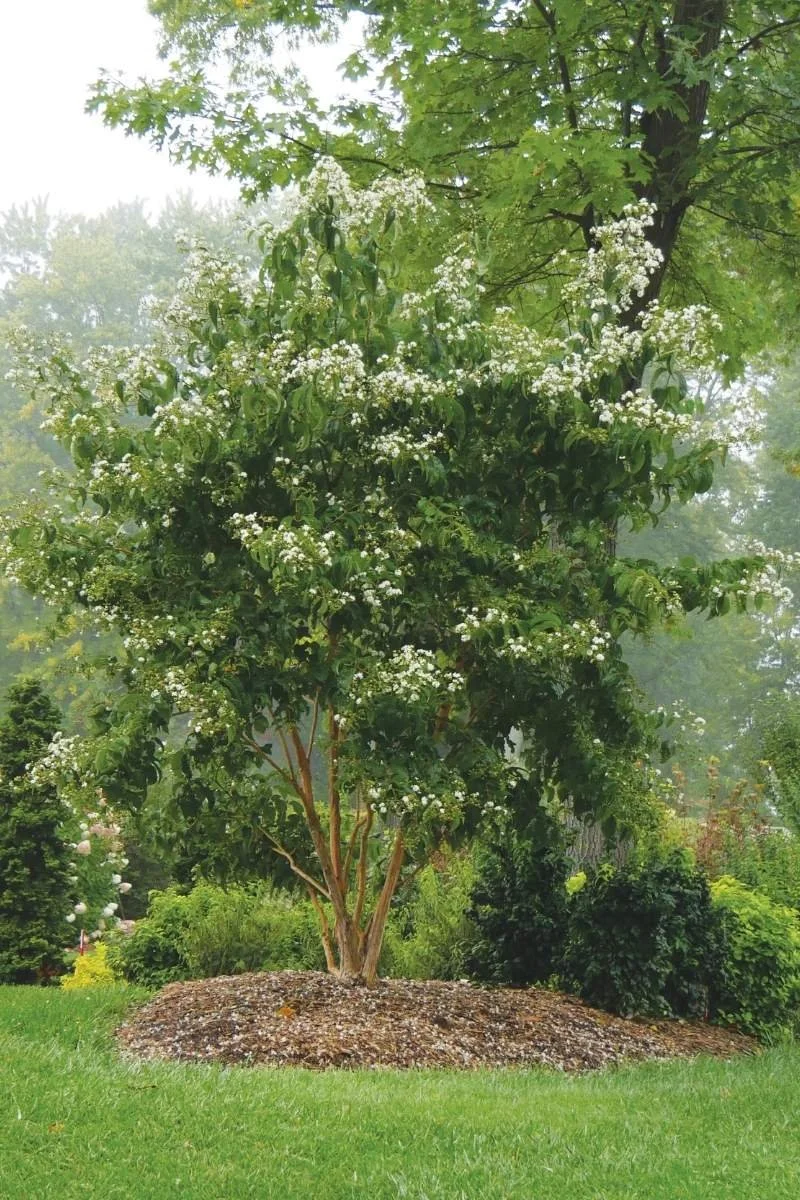
Plant a seven son flower in fall, and by the next summer you'll have pollinators flocking to its fragrant white blooms. Temple of Bloom® image courtesy of Spring Meadow Nursery, Inc. and Proven Winners, provenwinners.com
Few small trees offer as much year round interest as seven son flower. Rather than providing a single moment of beauty, this tree continues to evolve through the seasons, making it an especially rewarding choice to plant in fall.
Fragrant white flowers appear in late summer, followed by rosy red calyces that look like a second round of blooms from a distance. As the leaves drop, the creamy, peeling bark takes center stage in the winter landscape.
In the nursery trade, you’ll most often find ‘Temple of Bloom’ and ‘Tianshan’ rather than the straight species. These two widely available cultivars stand out for their exceptional four-season interest.
I often specify this tree for house corners because its narrow, 5-to-10-foot spread fits comfortably where larger trees would eventually overwhelm the space. Leave 4 to 5 feet between the trunk and foundation so the branches can mature naturally with minimal pruning.
The late season flowers are also a valuable nectar source for bees, butterflies, and other pollinators at a time when many trees have already finished blooming, making seven son flower as beneficial for wildlife as it is beautiful in the landscape.

After its fragrant white flowers fade, seven son flower gets a second flush of color with rosy red bracts that look like a fresh round of blooms. Temple of Bloom® image courtesy of Spring Meadow Nursery, Inc. and Proven Winners, provenwinners.com
6. Best for: Spring Flowers
Redbud
Cercis species
Mature Size: Varies by cultivar; approximately 4–30 feet tall and 6–35 feet wide
Light: Full sun to part shade
Zones: 4 to 9
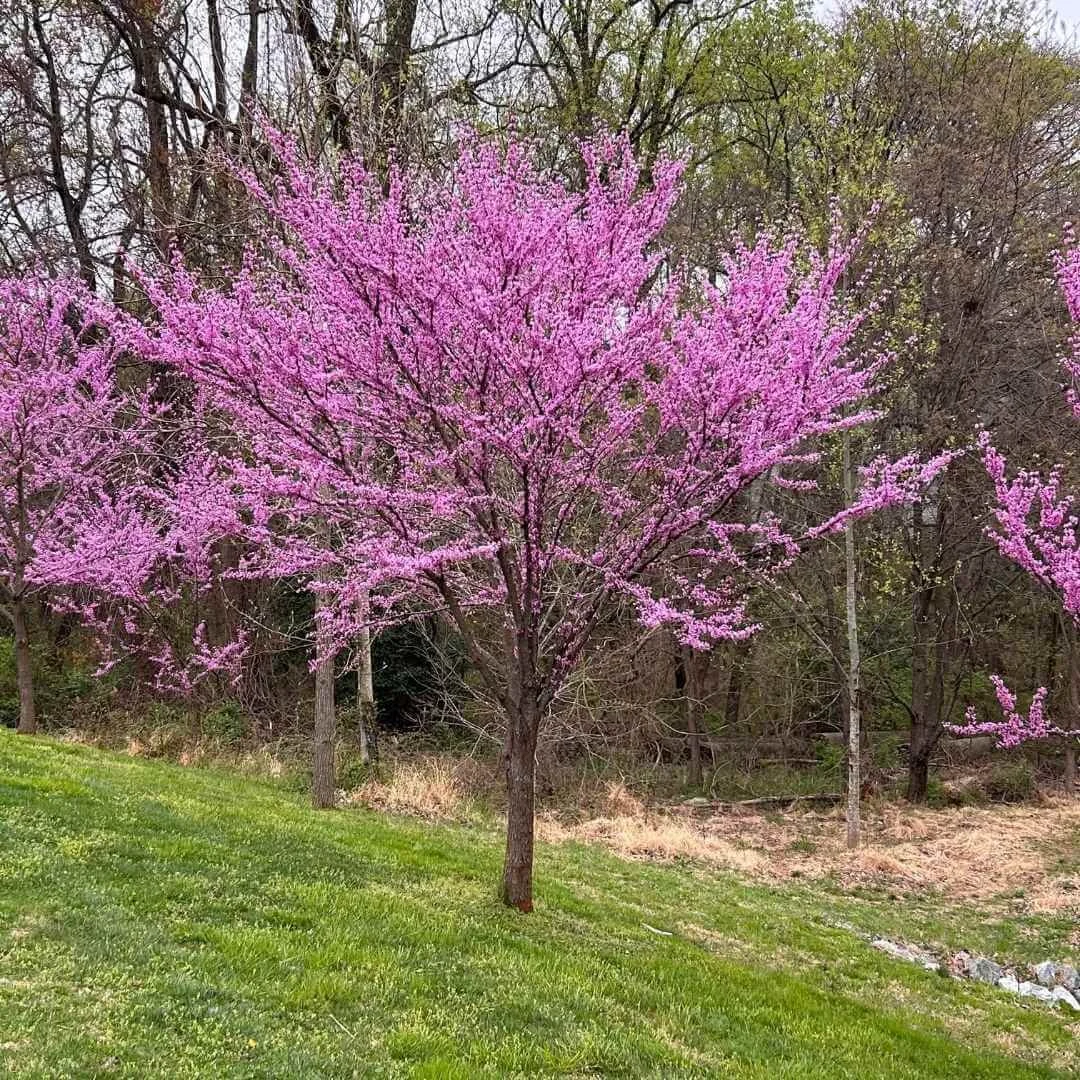
This Eastern redbud thrives at the transition between lawn and woodland, its rose purple blooms a welcome sign of spring after a fall planting. Image © Plant and Bloom Design Studio
Plant a redbud this fall, and you're setting the stage for one of spring's earliest and most welcome displays. Redbuds bloom before their leaves emerge, covering bare branches with clusters of flowers that appear almost overnight as winter fades. A fall planted tree also has the advantage of establishing roots during the cooler months, giving it a strong foundation before the demands of summer.
Redbuds adapt to both full sun and part shade, although their form changes depending on growing conditions. In sun, they develop a denser, more rounded canopy, while in shade they take on a more open, airy shape.
Either way, they make a beautiful specimen tree near a front entry, patio, or garden path. If you have the space, planting two or three together creates a spectacular spring display.
Eastern redbud, Cercis canadensis, is the native species most commonly available, and cultivars like ‘Merlot’, ‘The Rising Sun’, and ‘Forest Pansy’ offer foliage colors ranging from deep burgundy to golden orange and purple, adding another layer of interest long after the spring flowers fade.
Not sure which redbud variety is right for you? My guide to Which Redbud Tree Is Best? walks through the differences so you can find the perfect fit for your space.
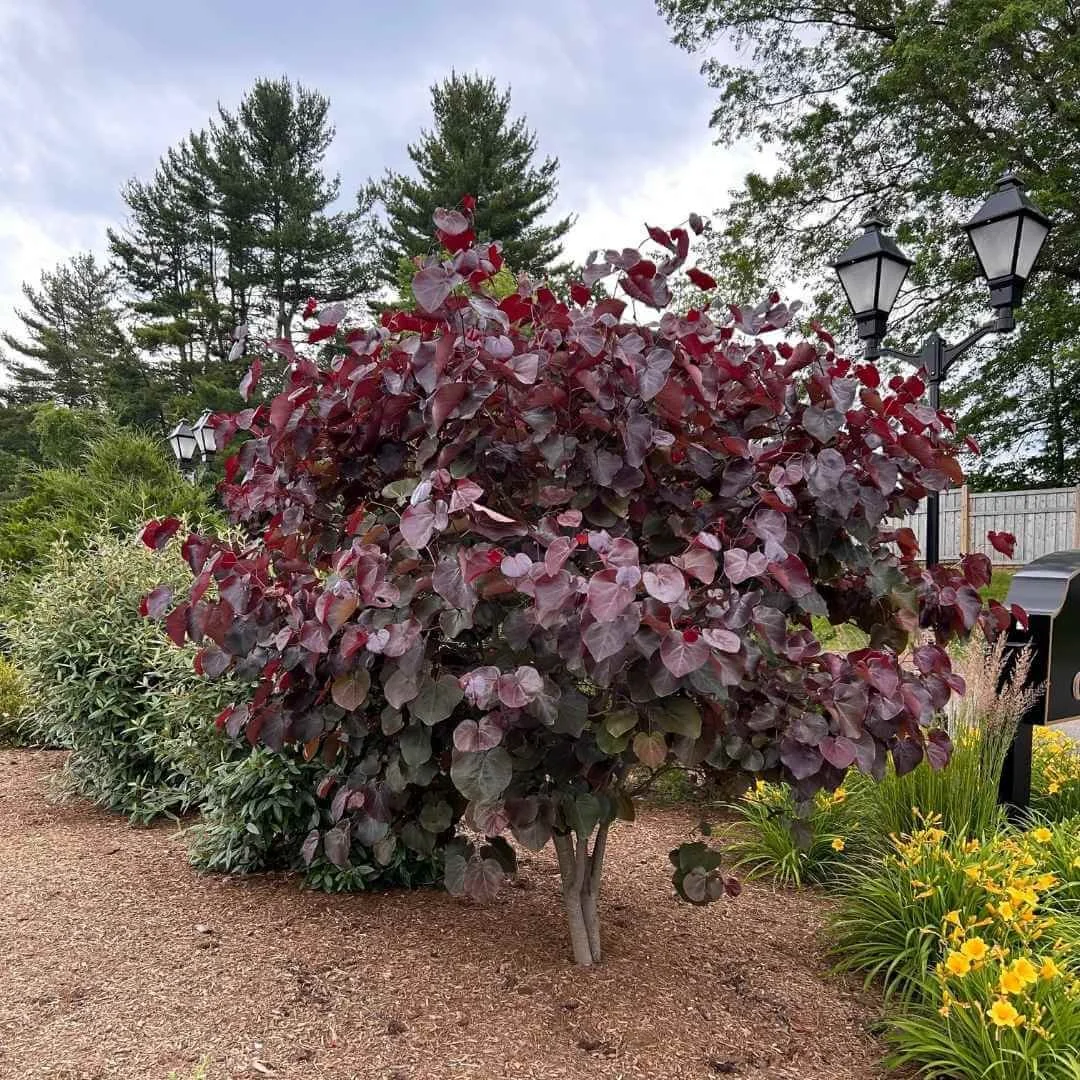
‘Merlot’ is just one of many redbud varieties available, each offering its own take on this spring favorite to suit almost any garden style. Image © Plant and Bloom Design Studio
7. Best for: Easy Cherry Blossoms
Okame Cherry
Prunus x incam ‘Okame’
Mature Size: 15–25 feet tall and 15–20 feet wide
Light: Full sun
Zones: 6 to 9

The Okame cherry tree welcomes spring with an abundance of pink flowers, one of the earliest and easiest flowering cherry trees you can plant. Image © Plant and Bloom Design Studio
Cherry trees have a reputation for being delicate, but Okame breaks that stereotype. It is one of the tougher flowering cherries, handling heat, humidity, drought, and even clay soil better than many of its relatives. Fall planting gives this resilient tree the perfect opportunity to establish its roots before facing the stress of summer.
What you get in return is an early and generous spring display. Fragrant, hot pink flowers cover the branches for several weeks in late winter or early spring, often arriving before many other trees have even begun to leaf out. A tree planted in fall can spend the cooler months quietly building its root system, giving it a strong foundation for years of healthy growth and beautiful blooms.
Its manageable size makes Okame cherry a versatile choice for residential landscapes. Use it as a specimen near a walkway or patio, where the spring flowers can be appreciated up close, or plant several along a driveway or property line to create a stunning ribbon of early season color.
Want to learn more about this early spring bloomer? Visit my guide, Welcome Spring with the Okame Cherry Tree.
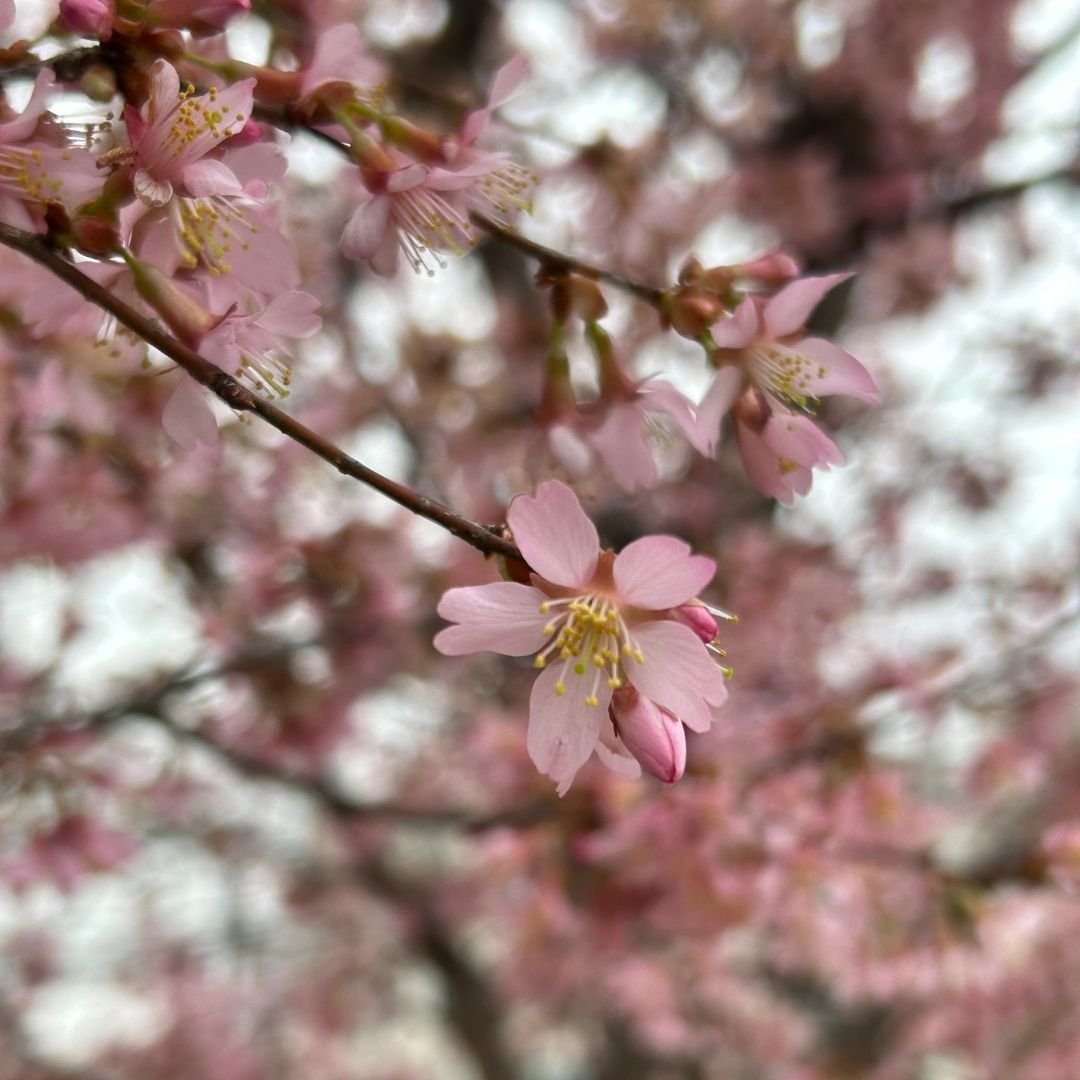
Okame cherry's small, delicate blossoms are just as lovely up close as they are from a distance. Image © Plant and Bloom Design Studio
8. Best for: A Wildlife-Friendly Landscape
Swamp White Oak
Quercus bicolor
Mature Size: Varies by cultivar; approximately 30–70 feet tall and 12–60 feet wide
Light: Full sun
Zones: 3 to 8
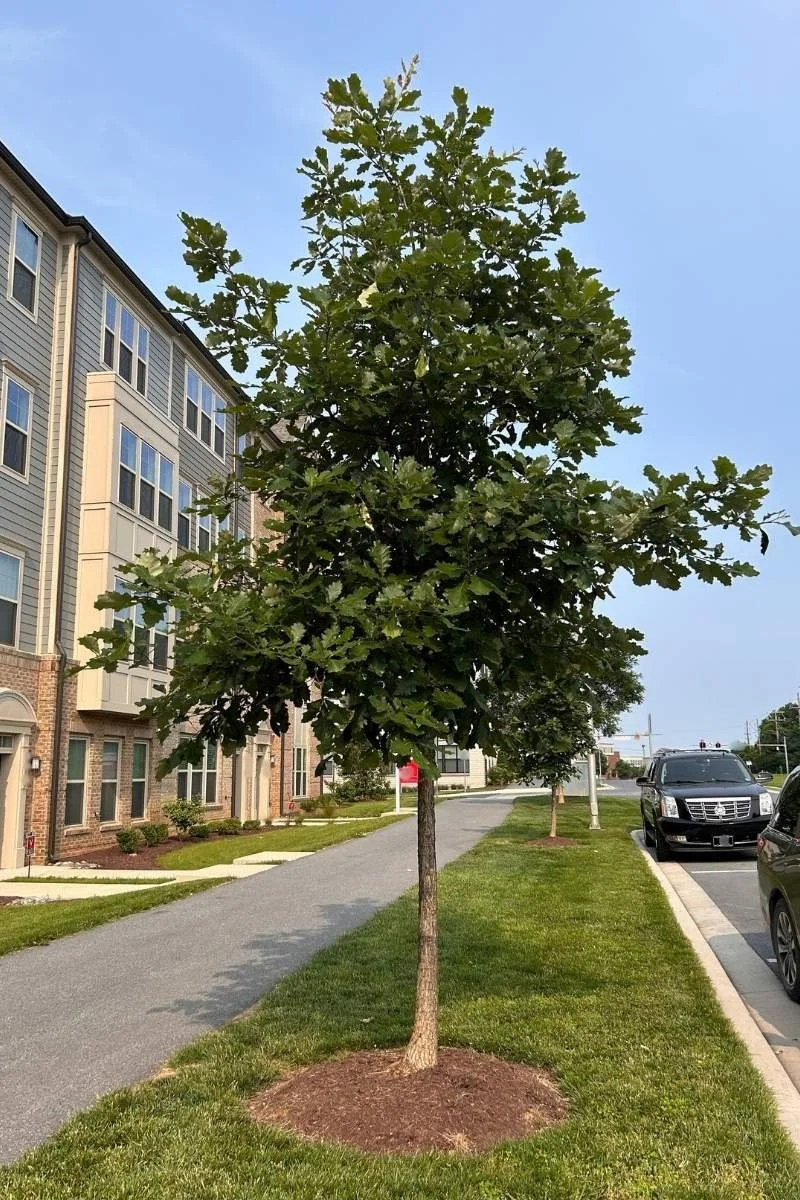
Swamp white oak is a wonderfully adaptable tree that provides abundant food for wildlife, from acorns for jays and woodpeckers to leaves that host countless caterpillar species. Image © Plant and Bloom Design Studio
Planting a tree is one of the simplest ways to leave a lasting mark on your landscape, and few trees create a greater legacy than an oak. Oaks are considered keystone species because they support an extraordinary range of insects, birds, and other wildlife, making them one of the most ecologically valuable trees you can plant.
Fall is also an ideal time to plant one, giving the tree the cooler months to establish a strong root system before the demands of spring and summer growth.
Swamp white oak is an especially handsome choice, with glossy green leaves that flash silvery undersides in the breeze, attractive peeling bark, and a strong, long-lived structure.
In spring, its catkins provide an early pollen source for insects, while its acorns become an important food source for woodpeckers, blue jays, deer, squirrels, and countless other animals. Like other native oaks, it also serves as a host plant for hundreds of caterpillar species, which in turn help feed nesting songbirds.
Despite its name, swamp white oak is not limited to swampy conditions. It thrives in full sun and tolerates a wide range of soil types, from consistently moist spots near a pond or low area of the yard to more typical, well drained garden soil, once established. This adaptability makes it an excellent choice for homeowners who want a beautiful shade tree that also leaves a lasting legacy for local wildlife.
For tighter spaces, ‘Beacon’ is a swamp white oak cultivar with a tightly columnar form, reaching just 12 to 15 feet wide at maturity. If you have room for the classic broad canopy, ‘American Dream’ offers a tight, pyramidal shape and increased disease resistance.
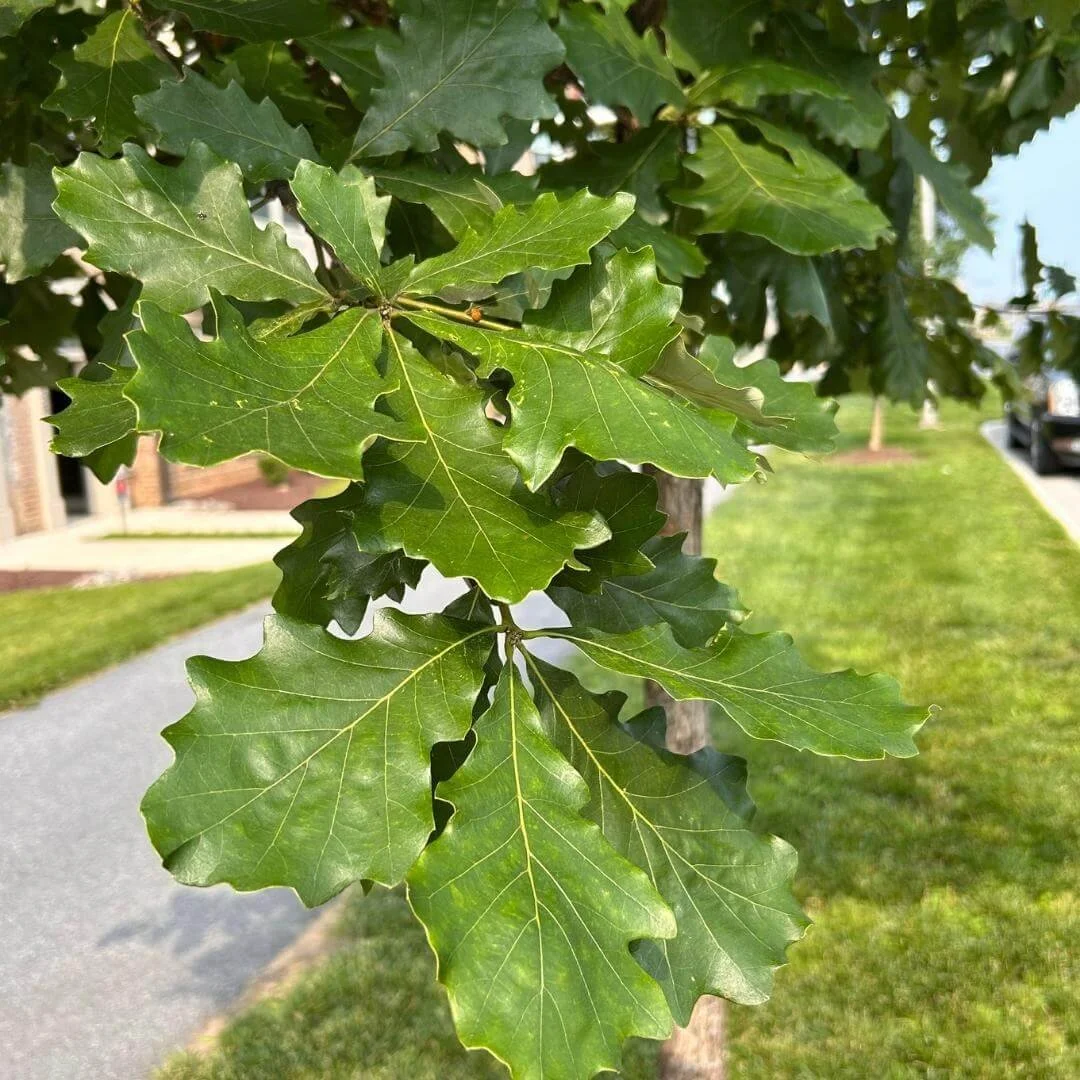
Swamp white oak’s glossy green leaves bring rich texture to the landscape, while silvery undersides catch the light when a breeze blows. Image © Plant and Bloom Design Studio
9. Best for: Small Yards
Serviceberry
Amelanchier species
Mature Size: Varies by cultivar; approximately 6–30 feet tall and 4–20 feet wide
Light: Full sun to part shade
Zones: 4 to 9
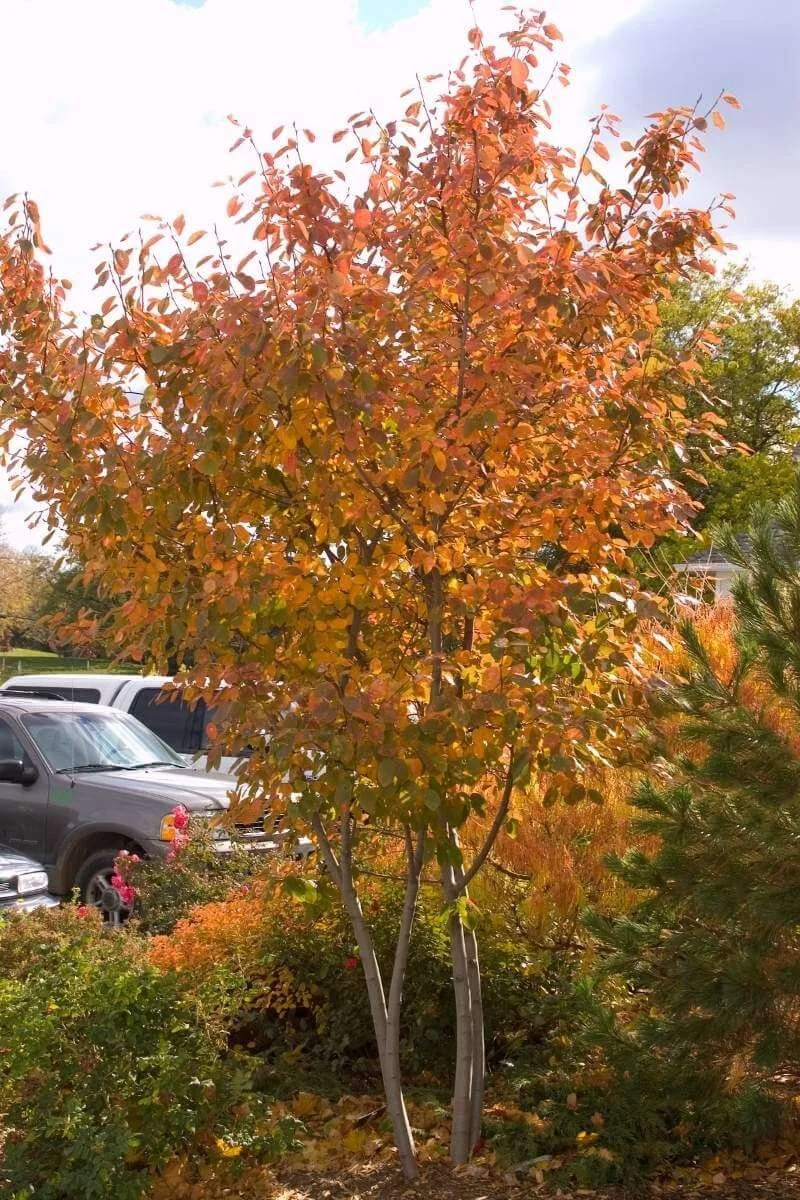
‘Autumn Brilliance’ serviceberry lives up to its name, turning brilliant shades of red and orange each fall. Image courtesy of Bailey Nurseries
Serviceberry may be one of the most overlooked small trees for home landscapes, and planting one this fall is a great way to change that. It delivers four seasons of interest without overwhelming a small yard.
Delicate white flowers appear in early spring before the leaves emerge, making it one of the first native trees to bloom each year. The blooms give way to blue-purple berries in early summer, a favorite of birds that often disappear within days of ripening. By autumn, the foliage turns brilliant shades of orange and red that rival many larger trees grown for fall color.
I often use serviceberry near patios and walkways, where its graceful, multi-stemmed form adds structure without feeling heavy or overgrown. It also thrives in part shade, making it a favorite solution for the in-between spaces with filtered light beneath taller trees or just a few hours of sun each day.
‘Autumn Brilliance’ is one of the most widely available cultivars, valued for its dependable performance and exceptional fall color. If space is tight, ‘Prince William’ is a smaller variety worth seeking out. For a straight native species, Amelanchier canadensis and Amelanchier arborea are excellent choices, offering the same early blooms, wildlife value, and multi-season appeal.
Looking for more small tree ideas? Check out my guide to 10 Small Trees for Front Yard Landscaping.
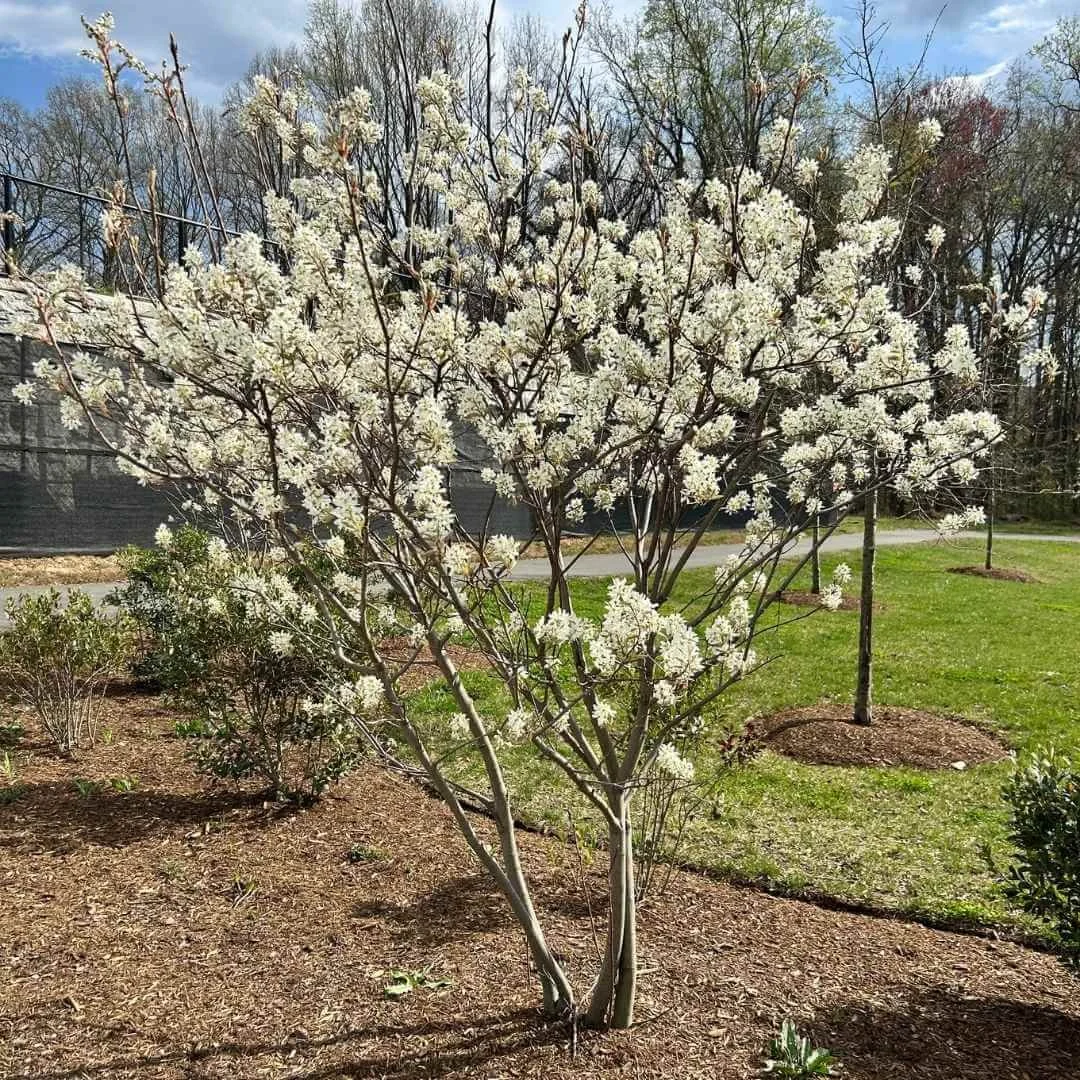
Prince William is a smaller serviceberry variety, covered here in the delicate white blooms that arrive each spring. Image © Plant and Bloom Design Studio
10. Best for: Bees and Pollinators
American Linden
Tilia americana
Mature Size: Varies by cultivar; approximately 60–80 feet tall and 30–60 feet wide
Light: Full sun to part shade
Zones: 3 to 8
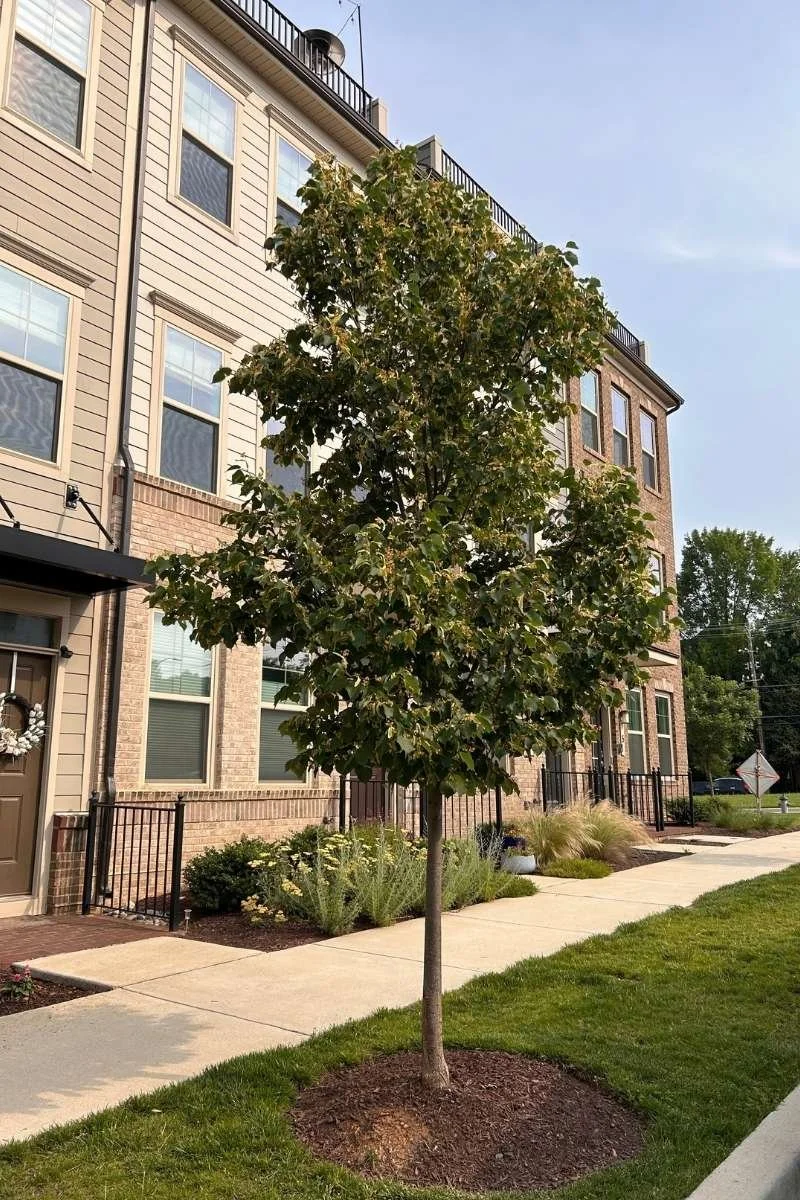
American linden is a long lived shade tree, and bees find its fragrant flowers hard to resist. Image © Plant and Bloom Design Studio
If supporting pollinators is one of your landscape goals, American linden is one of the best trees you can plant. Its clusters of pale yellow flowers appear in late spring and fill the air with a sweet fragrance that attracts bees in remarkable numbers. Beekeepers have long valued lindens for their nectar-rich blooms, which produce highly prized honey.
This large, long-lived shade tree reaches 60 to 80 feet tall with a broad canopy, so it deserves a place where it can grow freely for decades. Fall planting gives its extensive root system extra time to establish before the stress of summer heat and the demands of supporting a mature canopy.
American linden continues supporting wildlife beyond its flowering period. The small nutlets that develop after flowering provide food for birds and other animals from summer into fall, making it a valuable choice for gardeners who want a landscape that supports wildlife year-round.
Frequently Asked Questions About Fall Tree Planting
Is fall really a good time to plant trees?
Yes. Fall is one of the best times to plant trees because cooler air and warm soil create ideal conditions for root growth before winter arrives. The tree gets a chance to settle in underground before it has to support a full canopy through summer heat. The timing matters, but choosing the right tree for your conditions matters just as much. Explore the list above to find the best fit for your landscape.
What is the best tree to plant in fall for fall color?
Red maple is a classic choice for reliable autumn color, but it is far from the only option. Trees like bald cypress, serviceberry, and Kousa dogwood offer spectacular fall displays in different sizes and styles, including bald cypress, a conifer that surprises many homeowners with its own vivid autumn color. See the full list above for trees that bring color beyond the usual favorites.
What trees can I plant in fall that will bloom in spring?
Fall planting is a great way to set the stage for spring-flowering trees like redbuds and the Okame cherry. By establishing roots before spring arrives, these trees are ready to put their energy into growth and blooms when the weather warms. Discover which early-blooming trees made the list above and why they are worth planting now.
What is the best tree for a small yard?
Small yards often benefit from trees that provide multiple seasons of interest without overwhelming the space. Serviceberry is one of the best examples, offering spring flowers, summer berries, and brilliant fall color in a graceful, compact form. It is just one of several small-space trees featured above.
Which trees are best for wildlife and pollinators?
The best wildlife trees do more than attract a few bees or birds; they also help to create a healthier backyard ecosystem. Swamp white oak, American linden, and seven-son flower each support wildlife in different ways, from acorns and caterpillars to nectar-rich flowers late in the season. Explore the full list above to find a tree that matches your wildlife goals.
What tree should I plant in a wet or poorly draining yard?
Wet soil can limit tree choices, but it does not mean you have to settle for a boring landscape. Bald cypress is one of the standout choices for challenging wet areas, offering unusual texture, dramatic fall color, and even smaller cultivars for more average sized yards. Learn more about this adaptable tree and other planting ideas above.
How do I know what size a tree will actually grow to?
One of the biggest landscaping mistakes is choosing a tree based on its size at the garden center rather than its mature size. Cultivars can vary dramatically, even within the same species, so checking the expected height and width before planting is essential. The guide above includes mature sizes and cultivar recommendations to help you choose wisely.
When should I plant trees for the best results?
In most regions, fall is the ideal planting window, typically several weeks before the ground freezes. However, the best timing depends on your specific climate and local conditions, so it's worth checking with your local cooperative extension office for guidance specific to your area. The bigger advantage of fall planting is giving roots time to establish before the stress of summer arrives.
Why should I plant a tree instead of another type of plant?
Trees are one of the biggest investments you can make in a landscape. They provide shade, habitat, seasonal beauty, and structure for decades, often becoming the plants that define a garden over time. Choosing the right tree is about more than filling a space, it’s about creating a landscape that grows better with age.
Helpful Resources for Fall Tree Planting
Here are a few more fall tree planting resources I turn to again and again:
USDA Plant Hardiness Zone Map. Confirm your exact zone before choosing a tree.
Rutgers University List of Landscape Plants Rated By Deer Resistance. A helpful reference if deer browsing is a concern in your area.
US Drought Monitor Map. Useful for checking current conditions in your region, since drought stress will affect how much extra watering trees need.
Trees are Good: International Society of Arboriculture. A great place to find a certified arborist near you for long term tree care.
Landscaping Basics: Learn How to Water a Tree. My own guide to proper tree watering techniques, which are especially important during a new tree's first two years in the ground.