
Front Yard Landscaping: 3 Design Principles
Your front yard is the first thing guests see when they arrive at your home, and it's what passersby notice from the street every single day. Yet so many homeowners struggle to create that polished, intentional look that professional landscape designs seem to achieve effortlessly.
After more than 12 years as a landscape designer, I can tell you that the difference between a front yard that looks "fine" and one that looks professionally designed isn't about spending thousands of dollars or having rare plants. It's about understanding and applying three core design principles that professionals use on every single project.
In this guide, I'll walk you through these essential principles so you can transform your front yard landscaping from an afterthought into a welcoming, beautiful entrance that boosts your home's curb appeal and makes you proud every time you pull into the driveway.
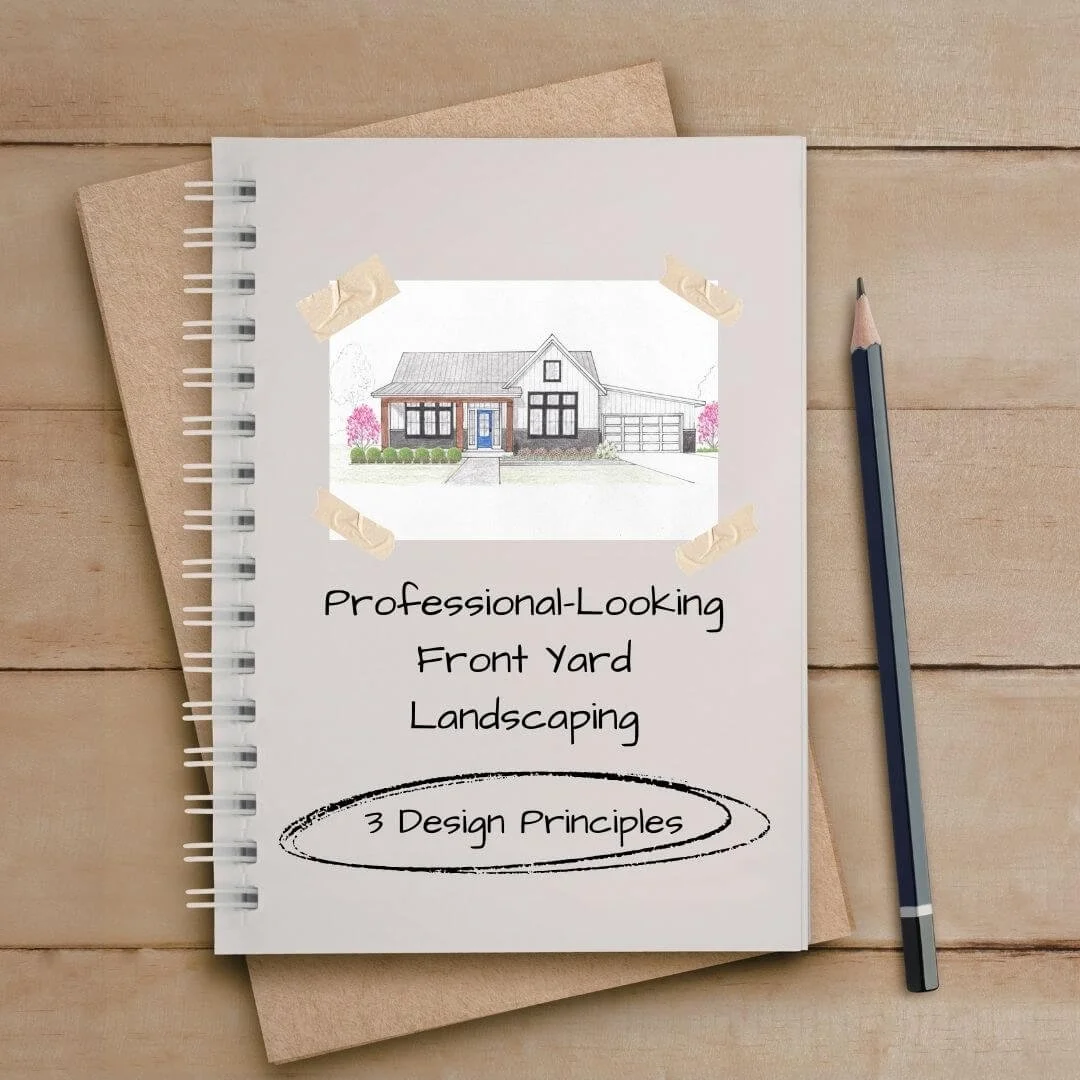
© Plant and Bloom Design Studio
Why Most Front Yards Fall Flat (And How Design Principles Fix This)
Before we dive into the principles themselves, let's talk about why so many front yards lack that finished, cohesive look.
The most common problem I see? Homeowners plant things randomly without a plan. They buy what catches their eye at the garden center, stick it in the ground wherever there's space, and hope for the best. The result is a hodgepodge of plants that don't work together visually and often don't even suit the growing conditions.
Another major issue is thinking too small. Foundation plantings get crammed right against the house with no thought to mature size, creating a cluttered look within a few years. Or homeowners plant in straight single rows that look stiff and uninspired.
Professional landscape designers avoid these pitfalls by following time-tested design principles that create visual harmony, proper scale, and cohesion. Once you understand these principles, you'll start seeing your front yard landscaping, and every yard you encounter, in a completely new way.
Principle #1: Create Layers for Visual Interest and Depth
One of the fastest ways to spot amateur front yard landscaping is a flat, one-dimensional planting bed. Everything is roughly the same height, creating a boring horizontal line that does nothing to frame the home or create visual interest.
Professional designs use layering to create depth and dimension. Think of your planting beds in terms of varying heights that work together: tall elements, medium-height plants, and low-growing options that create a complete, polished look.
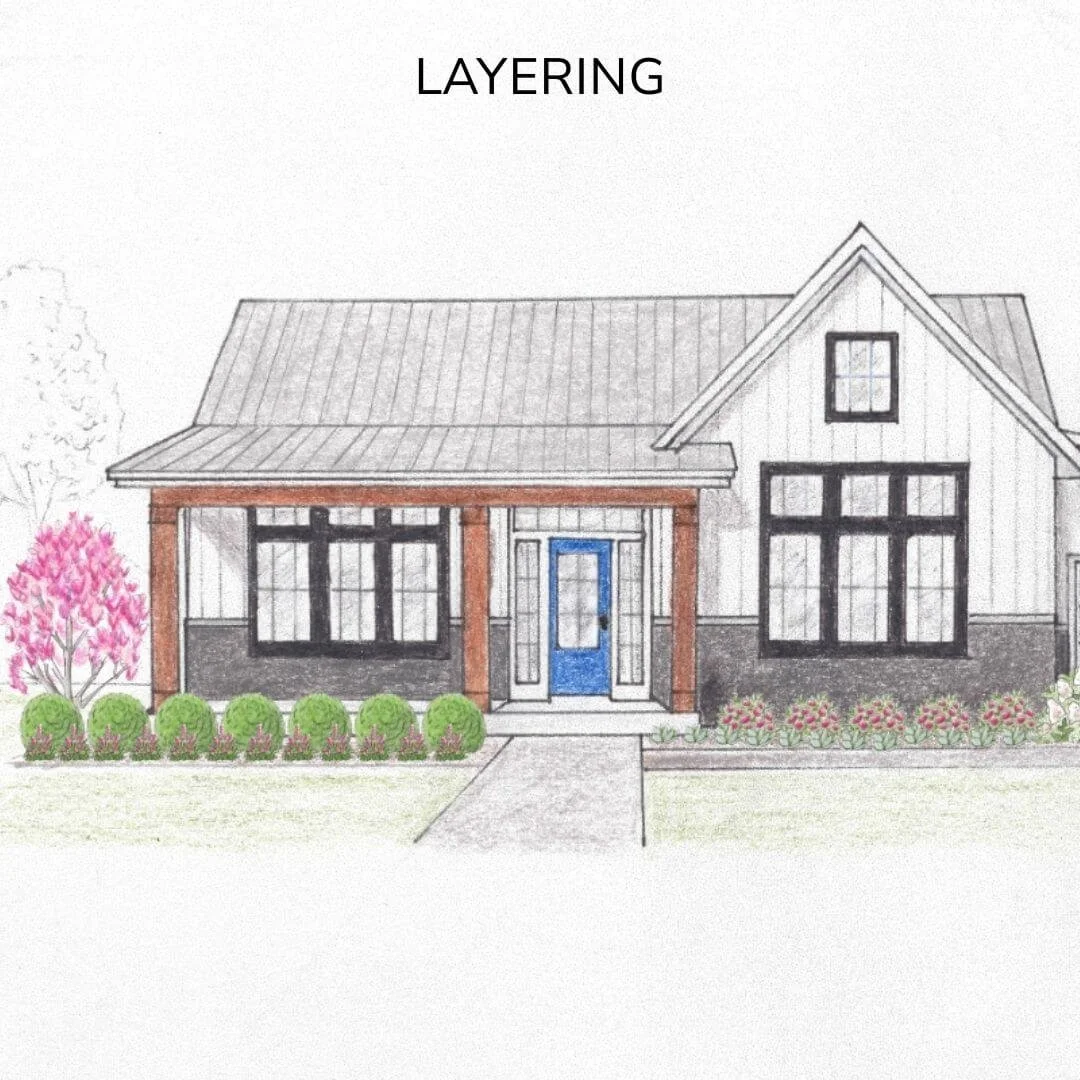
This front yard landscape design drawing shows a mix of tall shrubs, medium-sized shrubs, and low-growing plants to illustrate the layering principle. © Plant and Bloom Design Studio
Understanding the Three Height Layers:
The magic of layering isn't about following a rigid formula, it's about incorporating three different height ranges that create visual flow and dimension. How you arrange these layers depends entirely on your specific space, sightlines, and architecture.
Tall Layer → Trees and Large Shrubs: These are your tallest elements that provide height, structure, and vertical interest. Depending on your space, these might be small ornamental trees, large shrubs, or even specimen evergreens. They create a sense of enclosure, frame views, and add drama to the landscape.
Medium Layer → Mid-Sized Shrubs: This is your workhorse layer that fills space and provides year-round presence (especially when you choose evergreens). These plants bridge the gap between your tallest and shortest elements, creating smooth transitions rather than awkward jumps in scale.
Low Layer → Perennials, Groundcovers, and Compact Shrubs: These bring color, seasonal interest, and softness at ground level. They're typically what you see first from certain viewpoints and help transition planting beds to lawn or hardscaping areas.
How Layering Adapts to Different Situations:
Here's where layering gets interesting. There's no single "right" way to arrange the layers of your front yard landscaping. It completely depends on your home's architecture, where your beds are located, and what views matter most.
Foundation plantings along your house: Here, you might place taller plants closer to the house (especially near corners or to flank windows) with medium and low plants stepping down toward the lawn. Or you might keep everything relatively low and uniform if you have large windows you don't want to block. A single-story ranch needs a different approach than a two-story colonial.
Island beds in your front yard: These beds are viewed from all sides, so you'd typically place taller plants toward the center or back (depending on primary viewpoints) with medium and low plants radiating outward. Think of it like arranging flowers in a vase, with the tallest in the middle, and shorter ones around the edges.
Driveway or walkway borders: These linear beds often work best with a more gradual layering effect. Place medium-height plants near the hardscape with low groundcovers tumbling over the edges, or a mix of heights that creates visual rhythm as you walk or drive past.
Corner beds or property borders: These might feature taller plants as anchors or focal points with layers stepping down in multiple directions depending on sightlines from the street, driveway, and front door.
Key Principles for Successful Layering (No Matter Your Layout):
Think about mature size, not nursery size: That cute little shrub in the gallon pot will likely grow much larger in a few years. Always check the plant tag for mature height and width information! This tells you what the plant will become in 5-10 years, not what it is today. Plant for its mature size, spacing plants appropriately from the start. This is crucial for maintaining your layered effect long-term without plants outgrowing their intended roles or becoming overcrowded.
Consider sightlines from multiple angles: Walk around your property and think about what views matter most. Where do you see your front yard landscaping from the street? From your driveway? As you approach the front door? Layer your plants so they create appealing compositions from your most important viewpoints.
Don't plant everything in a flat row: Even if you have limited depth in your planting beds, you can create layering by choosing plants with different mature heights and staggering their placement slightly. A few inches of front-to-back variation goes a long way toward creating dimension.
Why This Works:
Layering your front yard landscaping creates visual dimension even in shallow or narrow planting beds. It gives your eye a path to follow through the landscape rather than skating across a flat, monotonous plane.
When you layer thoughtfully, you also maximize year-round interest. Consider including evergreens in one of your layers for winter structure and year-round presence, spring blooms or fall color in another layer for seasonal drama, and vibrant long-blooming flowers in your low layer to carry interest through the summer months.
The beauty of layering is its flexibility. It's a principle, not a formula. You adapt it to your unique space, and that's what makes your landscape feel custom-designed rather than cookie-cutter.
Principle #2: Use Repetition to Create Cohesion
This might be the most misunderstood principle in landscape design. Homeowners often make one of two mistakes: they either plant one of everything (creating visual chaos) or they worry that repeating plants will look boring.
Here's the truth about front yard landscaping: repetition is the secret ingredient that makes professional designs look intentional and cohesive.When you repeat the same plant in multiple spots throughout your front yard, you create rhythm and unity. Your eye naturally follows these repetitions, making the whole space feel well thought out rather than random.
How to Use Repetition Effectively:
Professional designers don't plant one of everything. Instead, they choose a focused plant palette, usually just 5-8 different plants for an entire front yard, and they repeat those plants strategically.
Choose your "backbone" plants: Select 3-5 key plants that will do the heavy lifting in your design. These should be plants that look good for most of the year (evergreens are excellent for this) and that you'll use multiple times. These repeated plants create the foundation that holds your entire design together.
Repeat in odd-numbered groups: Plant in groups of 3, 5, or 7 rather than even numbers. Odd numbers feel more natural and less formal. You might plant three of one shrub near your front door, then repeat that same shrub in a group of five near your driveway. The varied groupings maintain interest while the repeated plant creates unity.
Don't be afraid of "boring": I promise you, repeating the same plant multiple times won't look boring, it will make your front yard landscaping look professional and intentional! What looks boring is a scattered collection of single plants with no relationship to each other.
Strategic Repetition Patterns:
Foundation plantings: Repeat the same shrub along your foundation to create a cohesive ribbon of color and texture that frames your home. This repetition creates a visual anchor that grounds your house in the landscape and looks intentional rather than haphazard.
Border edges: Use the same low-growing perennial or groundcover along the entire front edge of your planting beds. This repetition creates a defined border and pulls the whole design together visually.
Symmetrical vs. asymmetrical repetition: You can repeat plants symmetrically (matching plantings on either side of your front door for a formal look) or asymmetrically (using the same plants in different groupings throughout the yard for a more casual feel). Both work—it's about the style you prefer.
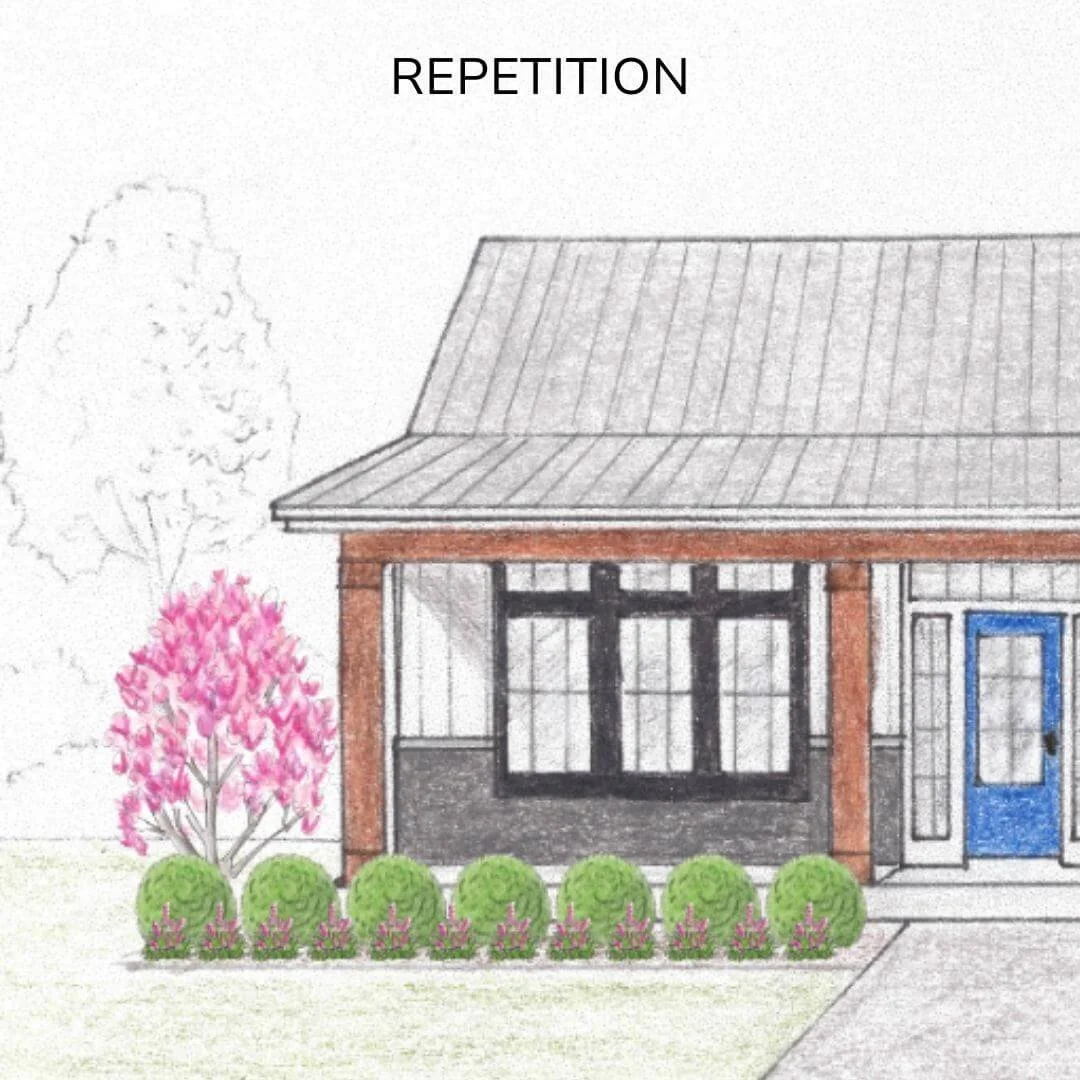
Zooming into this drawing of front yard landscaping, we see how repeating the same shrub along the foundation creates a cohesive ribbon of color that anchors the home in the landscape. © Plant and Bloom Design Studio
Why This Works:
Repetition gives your landscape a professional, designed look because it shows intentionality. It proves you made deliberate choices rather than random purchases at the garden center (we’ve all been there, no judgement 😉).
When you repeat plants in your front yard planting scheme, you also simplify maintenance. You learn how to care for fewer plant types, and your yard develops a unified look that's naturally easier to maintain. Plus, when you're planting multiples of the same plant, you're essentially batching your maintenance tasks. One pruning technique to learn, one fertilizing schedule to remember, one watering preference to master.
Think of it this way: a professional designer might create a stunning front yard with just 6-8 different plant types repeated strategically. A DIY landscaper often has 20+ different plants all competing for attention with no cohesion.
I say this as a self-proclaimed plant addict who has to physically restrain herself at every garden center visit. Repeat after me: less really is more when it comes to front yard plant selection. Trust me, I've learned this the hard way over 12+ years of designing landscapes. Your front yard isn't the place to showcase your entire plant collection. Save that for the backyard where nobody’s watching! 😀
Principle #3: Balance Mass with Texture
This is the principle that takes a good front yard landscaping design and makes it truly exceptional. It's about creating visual balance by mixing plants with different forms and textures: some bold and solid, others delicate and airy.
Without this balance, landscapes can feel either too heavy and monotonous or too busy and chaotic. When you get it right, your front yard has visual harmony that's incredibly pleasing to look at, even if people can't quite articulate why it works so well.
Understanding Mass vs. Texture:
Mass (Bold Forms): These are plants with solid, substantial forms and often bold foliage. Think evergreens with dense growth habits, shrubs with large, glossy leaves, or plants with a strong architectural presence. They provide visual weight and structure. They're the anchors of your design and the plants that ground everything else.
Examples of plants with mass: boxwoods, hollies, oakleaf hydrangeas, cherry laurels, smokebush.
Texture (Delicate, Airy Forms): These are plants with fine foliage, loose growth habits, or feathery flowers. They provide lightness, movement, and visual interest without overwhelming. They soften the heavier mass plants and add elegance and grace to the design.
Examples of plants with texture: blue fescue grass, Japanese painted fern, Arkansas blue star, Russian sage, Gaura, Astilbe.
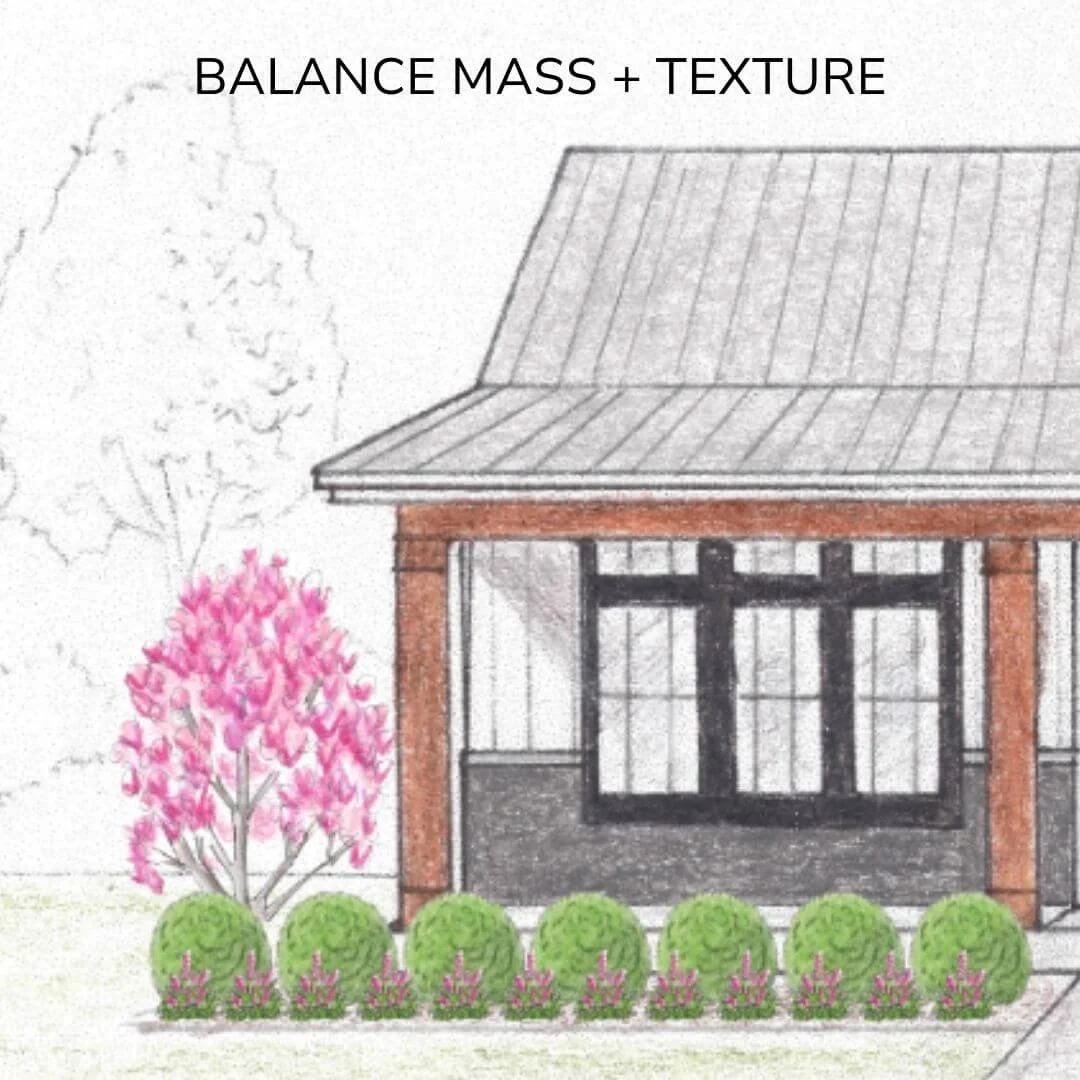
Looking closer, this same front yard planting scheme also demonstrates a balance of mass and texture by using solid evergreens for mass and airier flowering trees and perennials for textural contrast. © Plant and Bloom Design Studio
How to Balance Mass and Texture:
Use mass plants for structure: Your evergreen shrubs and other mass plants should form the backbone of your design (notice how this works with Principle #2 about repetition!). These are typically your middle-layer plants that provide year-round presence and weight.
Soften with texture: Once you've established your structural mass plants, weave in textural plants to lighten the composition.
Pair opposites for impact: Place fine-textured plants near bold-leafed plants to create contrast that makes both look better. A delicate ornamental grass looks even more elegant next to the solid form of an evergreen shrub. A bold-leafed hosta looks even more dramatic when surrounded by fine-textured groundcovers.
Consider foliage, not just flowers: Don't only think about blooms when considering texture. Foliage is what you'll see for the majority of the year, so choose plants with interesting leaf shapes, sizes, and forms. Some plants have glossy leaves, others matte. Some have tiny leaves, others large and bold. This variety creates visual interest even when nothing is blooming.
Why This Works:
Balancing mass and texture creates visual interest without chaos. It gives your eye places to rest (on the solid mass plants) and places to explore (in the intricate texture plants). This balance feels naturally harmonious, like a well-composed piece of music with both steady rhythm and interesting melody.
When you get this balance right, your front yard landscaping has depth and sophistication that goes beyond just "pretty flowers." It becomes a composition that's interesting to look at from every angle and in every season.
Side note: If you're feeling a bit overwhelmed trying to choose plants that layer beautifully, repeat cohesively, AND balance mass with texture—I get it. That's a lot to juggle when you're standing in the garden center! I've done the heavy lifting for you in my Easy Full Sun Front Yard Plant Palette, but more on that at the end.
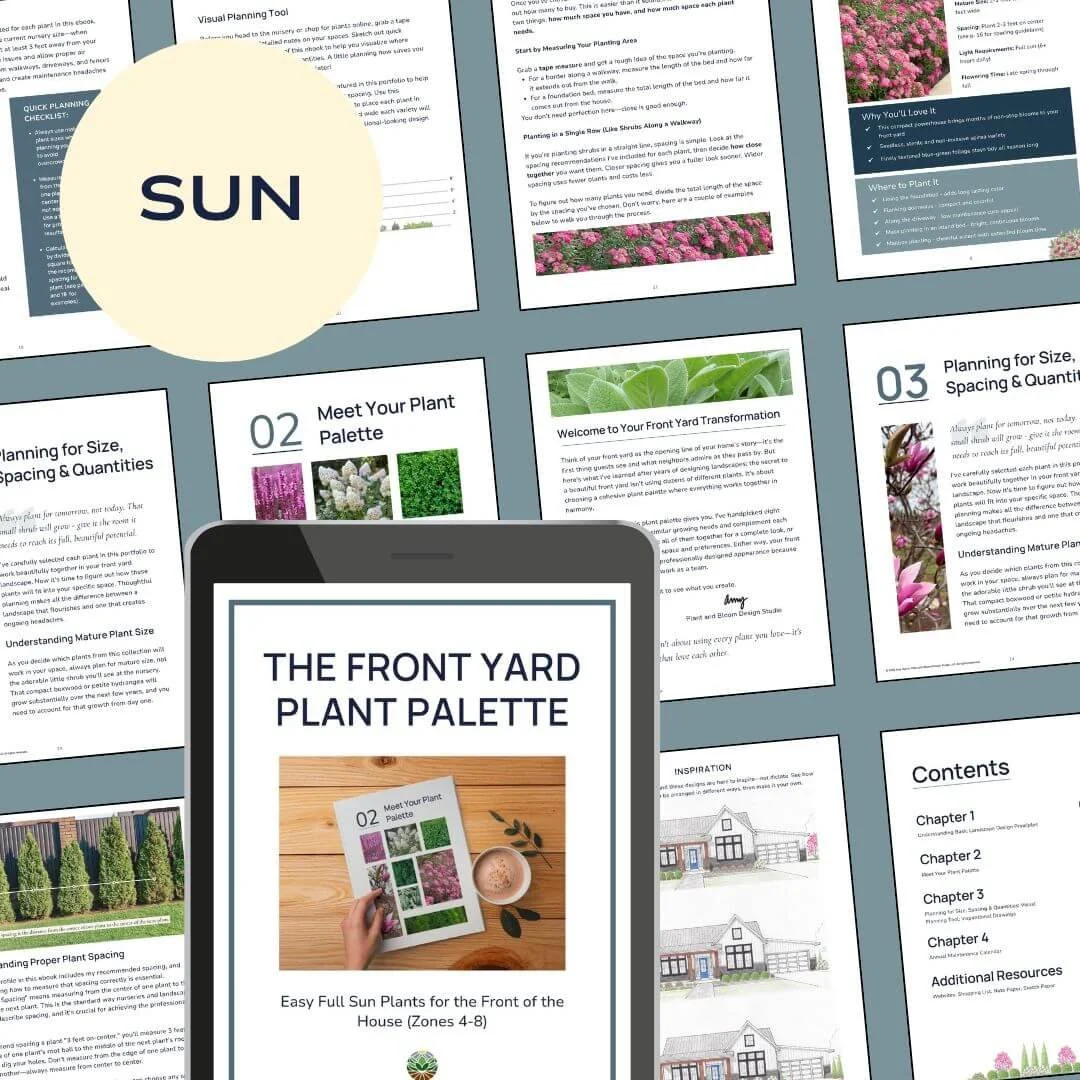
☀️ Full Sun Front Yard? Transform Your Curb Appeal with a Professional Plant Palette
Stop guessing what to plant in your sunny front yard! This comprehensive landscaping guide solves the biggest problem DIY homeowners face — creating a cohesive, professionally designed look without the overwhelm of choosing the right plants for full sun.
Say Goodbye to Random Planting
Does your front yard feel like a hodgepodge of plants that don't quite work together? You're not alone. Most homeowners buy what catches their eye at the garden center and hope for the best, resulting in a cluttered, uncoordinated look. This ebook changes all that.
This Front Yard Plant Palette features 8 handpicked, versatile full sun plants for zones 4-8, specifically chosen to complement each other beautifully and create that polished, professionally designed appearance. These aren't random suggestions—they're a curated plant palette designed to work as a team, giving you confidence every step of the way.
This 28-Page Downloadable Ebook Includes:
✓ Chapter 1: Understanding Basic Landscape Design Principles – Learn professional secrets for creating visual harmony and avoiding common front yard landscaping mistakes
✓ Chapter 2: Meet Your Plant Palette – Detailed profiles of 8 carefully selected full sun plants (zones 4-8) that work beautifully together
✓ Chapter 3: Planning for Size, Spacing & Quantities – Discover how to account for mature size when planning your layout, plus spacing guidelines and plant quantity recommendations
✓ Visual Planning Tool & Inspirational Drawings – See how these plants come together for maximum curb appeal
✓ Chapter 4: Annual Maintenance Calendar – Know exactly what to do and when, season by season
✓ Bonus Resources: Helpful plant care reference sites, ready-to-use shopping list for purchasing plants, note-taking pages, and gridded design paper for planning your layout
Perfect For:
Full sun front yards (6+ hours of direct sunlight)
Zones 4-8 (Not sure of your zone? Visit the USDA Plant Hardiness Zone Map)
DIY homeowners who want professional-looking results
Anyone tired of guessing what plants will look good together
Homeowners ready to boost their curb appeal on a budget
Those ready to refresh old and overgrown front yard plantings
Homeowners with a lawn or landscaping service who need design direction
Flexible Design Options:
Use all 8 plants together for a complete, coordinated look, or mix and match based on your space and personal preferences. Either way, you'll achieve that professionally designed appearance because these plants were specifically chosen to complement each other.
Ready to Create Your Dream Front Yard?
For just $12, you'll get instant access to professional landscape design knowledge that typically costs hundreds of dollars in designer fees. Download this easy-to-follow ebook and start transforming your front yard today!
📘 IMPORTANT: What You're Purchasing
This is a digital plant guide ebook (PDF format), not physical plants, seeds, a printed book, or a custom landscape design drawing.
You'll receive a digital ebook detailing 8 professionally selected plants with guidance on how to arrange them using landscape design principles. This is a flexible plant palette with design ideas—not a specific layout drawn for your yard. Every yard is different, so you'll adapt these recommendations to fit your unique space. You are responsible for purchasing the actual plants from your local nursery or preferred online plant retailer. The included shopping list makes plant purchasing easy!
To receive your digital download: Your ebook will be available immediately after purchase—both on the checkout page and via email. Please ensure your email address is correct at checkout. Due to the digital nature of this product, all sales are final.
Supporting Elements That Enhance These Three Principles
While layering, repetition, and mass-texture balance are your core principles, there are a few supporting concepts that enhance professional-looking results:
Year-Round Interest
As you select plants for your three layers, think about what each plant contributes throughout the year. The best designs offer visual interest in all four seasons, not just spring and summer.
Spring: Spring bloomers can range from very early (late February bulbs) to late spring (May-blooming perennials), and some are quite ephemeral—putting on a gorgeous show for just a week or two before fading. Pay attention to bloom times on plant tags and don't assume something will flower all spring long. Understanding these bloom windows helps you plan more realistically for your landscape.
Summer: Summer isn't just about flowers! Many trees, shrubs, and perennials offer lush foliage that creates its own appeal. Think ferns with their cooling shade-casting fronds, or variegated plants with cream or white edges that brighten shady spots and create a refreshing, cooling effect in the heat.
Fall: Look for plants with bright autumn foliage color or late-season blooms, plus seed heads and berries that add visual interest.
Winter: Choose plants with attractive bark, persistent berries, evergreen foliage, or interesting branching structure that looks good against snow or gray winter skies. This is where your evergreen mass plants really shine, because they provide structure when everything else has died back.
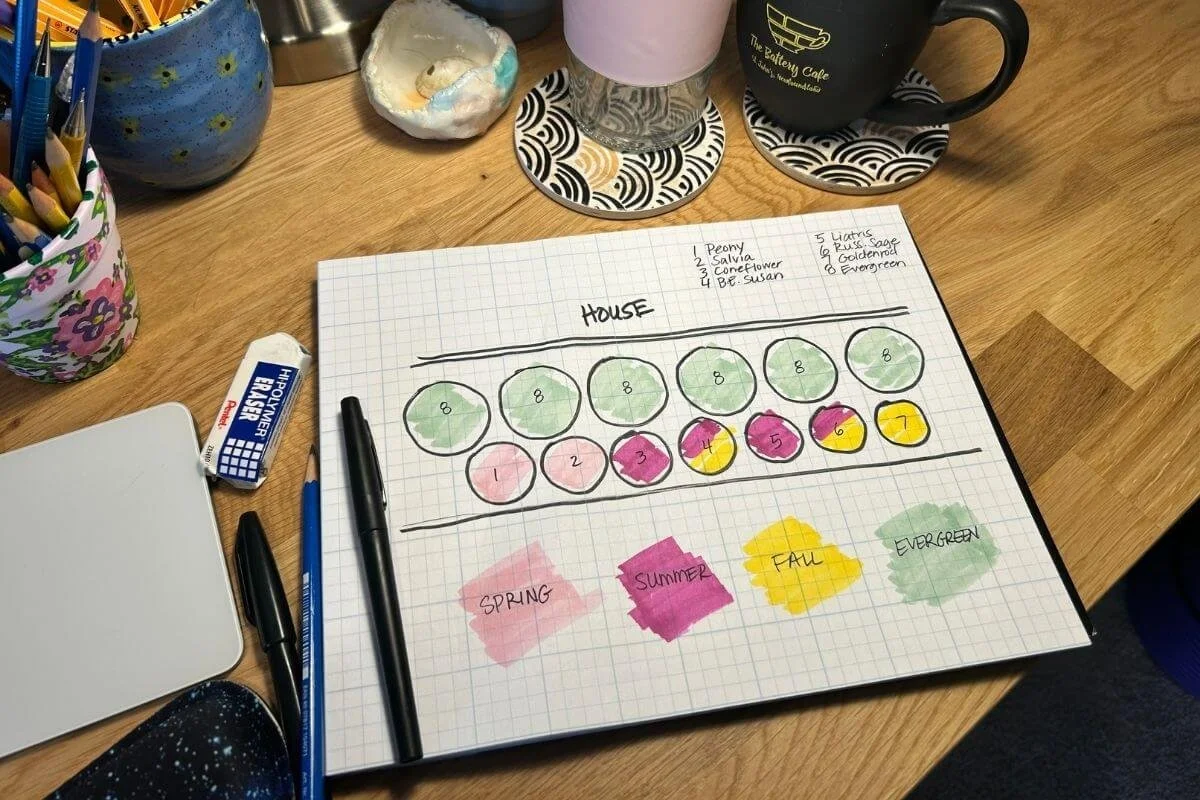
This simple sketch of a front yard landscaping bed makes it easier to visualize seasonal interest. © Plant and Bloom Design Studio
Proper Scale and Proportion
Match plant size to house size: A large two-story home can handle larger-scale plants to look balanced. A small cottage needs more delicate, refined plantings to maintain proper proportion.
Plant for mature size, not nursery size: That little 12-inch shrub in the pot may grow to 4-6 feet wide in five years. Plant for what it will become, not what it is today. Yes, your landscape might look a bit sparse initially, but proper spacing prevents overcrowding and maintains good scale long-term.
Group small plants appropriately: Small perennials often need to be planted in groups of 3, 5, or more to create enough visual mass to register at a distance. A single small perennial gets lost; a drift of five creates impact. This ties back to both repetition AND mass-texture balance.
Creating Focal Points
Every successful landscape benefits from 1-3 focal points. Focal points are areas that naturally draw the eye and create visual interest. These might be architectural features you already have (your front door, a beautiful porch, an arbor or gate) or elements you create through planting (a specimen tree, an especially beautiful grouping of plants, or eye-catching containers).
Focal points work through contrast because they stand out from their surroundings. This is why those repeated backbone plants are so important: they create the calm backdrop that allows focal points to shine.
Putting the Principles Together: Creating Your Front Yard Design
Now that you understand these three core principles, you might be wondering how to actually apply them to your specific front yard situation.
You understand that you need:
Three distinct layers (tall, medium, low) that create depth
Repetition of key plants to create unity and cohesion
Balance between mass and texture for visual harmony
But here's where most DIY landscapers get stuck: translating these principles into specific plant choices, spacing decisions, and design layouts that work for your unique conditions.
The Reality of DIY Landscape Design
You could spend hours (or even weeks!) researching individual plants, checking mature sizes, confirming hardiness zones, and trying to mentally visualize how everything will work together. You'd need to figure out:
Which specific plants provide the right heights for proper layering in your space
Which plants to repeat for unity without overwhelming the design
Which plants offer bold mass vs. delicate texture
Which plants work well together in full sun conditions
How to space everything for mature size while not creating a sparse, sad-looking landscape initially
Which plants provide year-round interest in your climate zone
Whether your chosen plants have similar care needs so maintenance isn't a nightmare
It's doable, but can be time-consuming and overwhelming, especially if you're new to gardening and landscape design. There are literally thousands of plant options to sift through!
A Faster Path to Professional Results
This is exactly why I created my Easy Full Sun Front Yard Plant Palette Ebook.
Instead of spending weeks researching and second-guessing your choices, you get a cohesive plant palette where I've already applied these three principles for you:
✓ Layering perfected: 8 plants specifically chosen to create three distinct height layers—from tall shrubs all the way down to low perennials and groundcovers
✓ Repetition built-in: The palette is designed so you can repeat these plants strategically throughout your front yard to create that professional cohesion
✓ Mass-texture balance achieved: I've handpicked plants that offer both bold structural forms and delicate airy textures, so you get visual harmony automatically
Plus you get the details that make implementation easy:
Exact spacing recommendations so you achieve professional results without overcrowding
Mature size information so you can plan confidently for the long term
Growing requirements and care tips for each plant
Ready-to-use combinations that work beautifully together
It's basically the shortcut to applying everything you just learned, without the trial and error, without the research overwhelm, and without spending a fortune on plants that might not work well together.
These aren't random plant suggestions. This is a carefully curated palette based on the exact principles I use in my professional landscape designs, adapted specifically for homeowners who want beautiful, doable results in full sun front yards.
Get the Easy Full Sun Front Yard Plant Palette Ebook here →
Final Thoughts: Design Principles Transform Ordinary Yards into Showstoppers
The difference between a front yard that looks just okay and one that stops people in their tracks isn't about rare plants or huge budgets. It's about applying these three essential design principles:
Layering creates depth and dimension with three distinct height levels
Repetition creates unity and cohesion through strategic plant placement
Mass-texture balance creates visual harmony that's pleasing year-round
Master these principles, and you'll never look at front yard landscaping the same way again. You'll start noticing them in professionally designed landscapes everywhere you go. More importantly, you'll be able to create that same polished, sophisticated look in your own front yard.
Whether you tackle your design project with my plant palette ebook or chart your own course with these principles in mind, you now have the foundation to create truly beautiful curb appeal that makes your home shine.
Amy is a landscape designer with over 12 years of experience and runs Plant and Bloom Design Studio in the Washington DC metro area. She specializes in helping homeowners create beautiful landscapes using design principles and plant combinations that actually work in real-world conditions.
📍Pin this for later!
Follow Plant and Bloom Design Studio for Garden and Landscaping Ideas