
Butterfly Garden for Kids: Free Design Plan + Complete Plant List (Zones 4-8)
Want to trade screen time for sunshine and real-world wonder? This free butterfly garden design transforms any sunny backyard into a living classroom where kids can watch monarch butterflies, observe caterpillars munching on leaves, and learn about the magic of pollination, all summer long.
Download Your Free Butterfly Garden Design Plan
Get the complete landscape design, shopping list with photos, and planting guide, designed specifically for families in zones 4-8!
This isn't just another garden plan. It's a 28-foot by 4-foot pollinator paradise specifically designed to:
Bloom during summer break when kids are home to enjoy it
Include both nectar plants (for feeding butterflies) and host plants (for caterpillars)
Feature an annual zinnia planting area, a hands-on activity kids can do every year
Support monarch butterflies and over 100 other butterfly and moth species
Create close-up viewing opportunities for curious young naturalists
Whether you're an experienced gardener or picking up your first shovel, this free landscape design makes it simple to create an outdoor space that buzzes with life, color, and learning opportunities.
A Note About the Plant Photos in This Guide: You'll notice something different as you scroll through this plant list: every photo shows real plants, not AI-generated images. These are actual plants I've photographed myself, sourced from trusted horticultural growers, or carefully selected from authentic stock photography. I believe it's important to see plants exactly as they grow in real gardens, not perfect computer-generated images that set unrealistic expectations. Real plants have character, natural variation, and honest beauty, and that's what you'll see here.
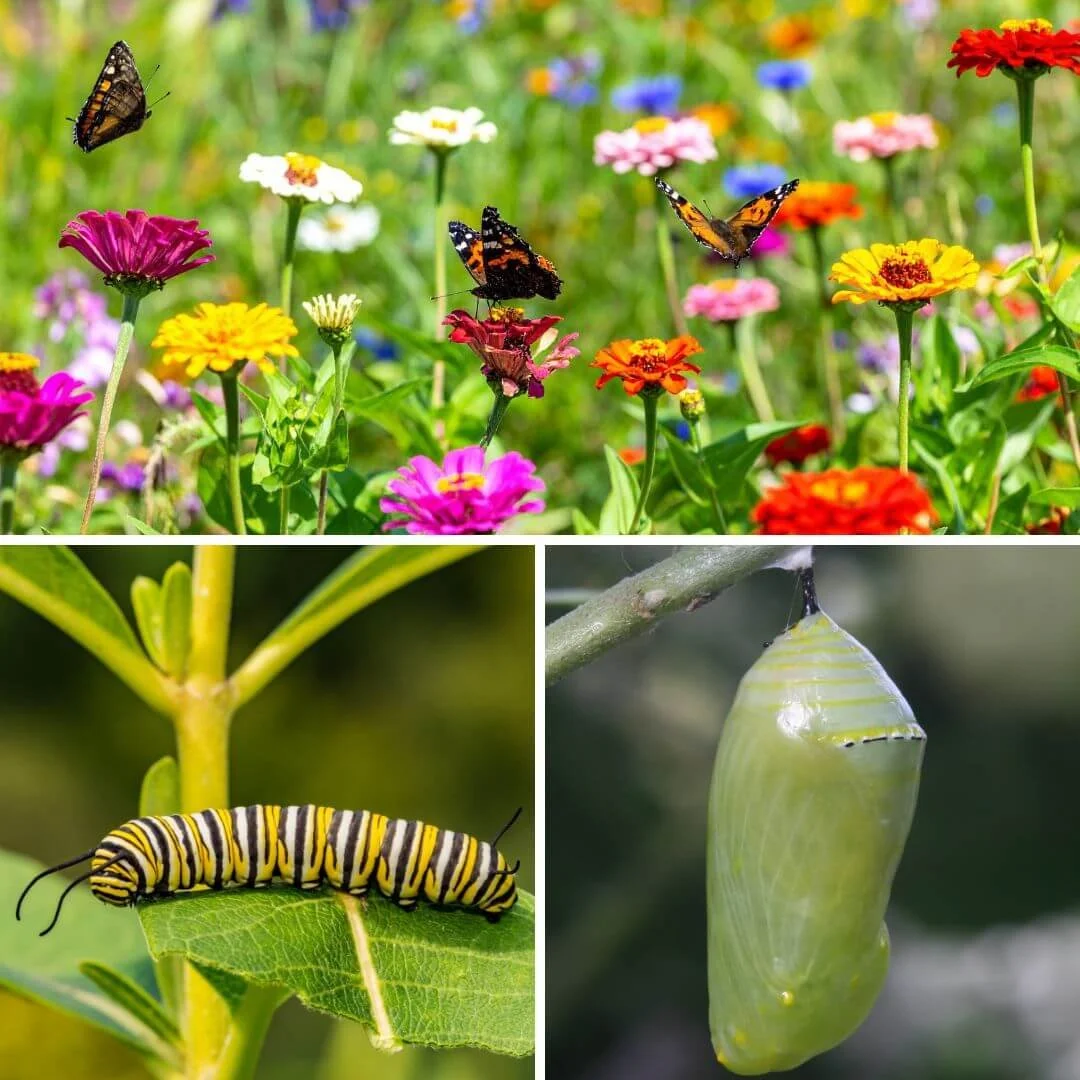
From caterpillar to chrysalis to butterfly—this garden design helps kids witness the complete butterfly lifecycle in your own backyard.
This article may contain affiliate links. If you make a purchase through one of these links, I may earn a commission at no additional cost to you.
Why Create a Butterfly Garden for Kids?
Butterfly gardens offer unique benefits that go far beyond pretty flowers:
Educational Value
Observe complete metamorphosis firsthand—from egg to caterpillar to chrysalis to butterfly
Learn about plant-pollinator relationships and food webs
Practice patience and observation skills
Understand the importance of native plants and habitat conservation
Physical & Mental Health Benefits
Encourages outdoor play and reduces screen time
Provides vitamin D and fresh air
Creates opportunities for mindful observation and wonder
Builds responsibility through watering and maintenance tasks
Environmental Impact
Supports declining pollinator populations
Creates crucial habitat for monarch butterflies and other at-risk species
Introduces children to environmental stewardship early
Demonstrates how individual actions can support biodiversity
Is This Butterfly Garden Design Right for You?
Before you download the free plan, let's make sure this design fits your situation. This honest assessment will save you time, money, and frustration!
✅ This Design is Perfect For You If:
Your Growing Conditions:
You garden in USDA hardiness zones 4-8 (check your zone on the USDA’s Plant Hardiness Zone Map)
You have a full sun location (6+ hours of direct sunlight daily)
Your soil is well-draining (not heavy clay or standing water)
You have space for a 28-foot by 4-foot border garden
Your Gardening Philosophy:
You welcome beneficial insects into your yard (bees, butterflies, beetles, bugs!)
You avoid or are willing to stop using pesticides in this area
You're comfortable with a naturalistic, cottage-garden aesthetic (not formal or manicured)
You don't mind a few holes in leaves where caterpillars have been munching
You can delay fall cleanup to protect overwintering caterpillars
Your Family & Lifestyle:
You want a hands-on project to do with kids, grandkids, school groups, or youth groups
You'll be around during the summer to enjoy peak bloom time
You have time for regular watering, especially during establishment
No one with bee sting allergies frequents the area (these flowers attract many pollinators, including bees)
Your Goals:
Create close-up viewing opportunities for caterpillars and butterflies
Support monarch butterflies and other pollinators
Teach children about nature, ecosystems, and responsibility
Add vibrant summer color to your landscape
❌ Skip This Design If:
You only have part shade or full shade (these plants need lots of sun!)
You want year-round color (this garden peaks in summer)
You prefer tidy, formal gardens with visible mulch and no holes in leaves
You regularly use pesticides and don't want to stop
You have heavy clay soil or poor drainage
Bugs and caterpillars gross you out
You travel extensively in summer and can't maintain the garden
You need a foundation planting for the front of your house (this is too wild-looking)
Not the right fit? Check out our guide to the best shade plants, tidy bushes for the front of the house, or popular shrubs for evergreen landscaping!
Understanding Sun Requirements: Will This Location Work?
One of the biggest mistakes in butterfly gardening is underestimating sun requirements. Let's make sure you're setting yourself up for success.
What "Full Sun" Really Means
Full sun means 6 or more hours of DIRECT sunlight per day, and for this particular design, more is definitely better. These sun-loving perennials and the butterflies they attract thrive in bright, hot conditions.
How to Measure Sunlight in Your Yard:
The All-Day Method: On a sunny day, check your proposed location every hour from 8 AM to 6 PM. Note when direct sun hits the area and when it's in shade.
The Quick Check: If the area is sunny from 10 AM to 4 PM (6 hours during peak sun), you're golden.
Watch for Sneaky Shade: Trees with sparse canopies can create dappled shade that seems bright but doesn't provide enough direct sun. When in doubt, choose a more open location.
Ideal Locations:
Open areas along fences (southern or western exposure)
Side yards with no tree coverage
Back yard borders away from the house shadow
Former lawn areas with full exposure
Locations to Avoid:
Near tall buildings or fences that cast afternoon shadows
Under tree canopies (even if they seem "light")
Northern exposures that get morning-only sun
Areas that are sunny in winter and early spring but will be shaded when trees leaf out
Complete Plant List for Your Kids' Butterfly Garden
This carefully curated plant list provides nectar for adult butterflies, host plants for caterpillars, and blooms timed perfectly for summer when kids can enjoy them. Each selection is chosen for its ability to attract pollinators AND its "kid-friendly" observation opportunities.
1. Purple Dome New England Aster (Symphotrichum novae-angliae 'Purple Dome')
Why It's Perfect for Kids: This compact native aster creates a purple-blue cloud of flowers that attract dozens of butterfly species. Kids love counting how many butterflies visit at once, and the shorter stature (1-2 feet) makes it easy for little ones to observe up close.

Purple Dome Aster. Image courtesy of Ball Horticultural Company.
Key Details:
Type: Perennial (comes back every year)
Quantity Needed: 2 plants
Mature Size: 1-2 feet high × 2-3 feet wide
Bloom Time: Late summer through early fall (August-October)
Hardiness Zones: 4-8
Watering Needs: Moderate once established
Sun Requirements: Full sun
Butterfly Benefits:
Host plant for over 100 species of butterflies and moths including Pearl Crescent and American Lady
Nectar plant for late-season migrating monarchs
Supports native bees and other pollinators
Money-Saving Tips:
Propagate from division: If you know a gardener growing this plant, ask for a division in spring or fall. Asters divide easily!
Grow from seed: Follow packet directions carefully—many asters need cold stratification. Start seeds indoors 8-10 weeks before last frost.
Look for native plant sales: Check with local native plant societies, conservation organizations, or Master Gardener groups for annual plant sales with great prices.
Substitutions if Unavailable:
Symphotrichum novae-angliae (native species, taller at 3-5 feet)
Grape Crush Aster (Aster novi-belgii 'Grape Crush')
Pink Crush Aster (Aster novae-angliae 'Pink Crush')
Aster 'Wood's Purple'
Aster 'Wood's Pink'
Aster 'Wood's Blue'
Care Tips:
Pinch back stems in June to encourage bushier growth and more flowers
No need to deadhead—let seed heads remain for winter bird food
Divide every 3-4 years to maintain vigor
2. Autumn Joy Stonecrop/Sedum (Sedum 'Herbstfreude')
Why It's Perfect for Kids: The flat-topped flower clusters create perfect butterfly "landing pads" that kids can observe from inches away. As flowers age from pink to rust-red, they continue attracting pollinators throughout their long bloom season, making this plant endlessly entertaining!
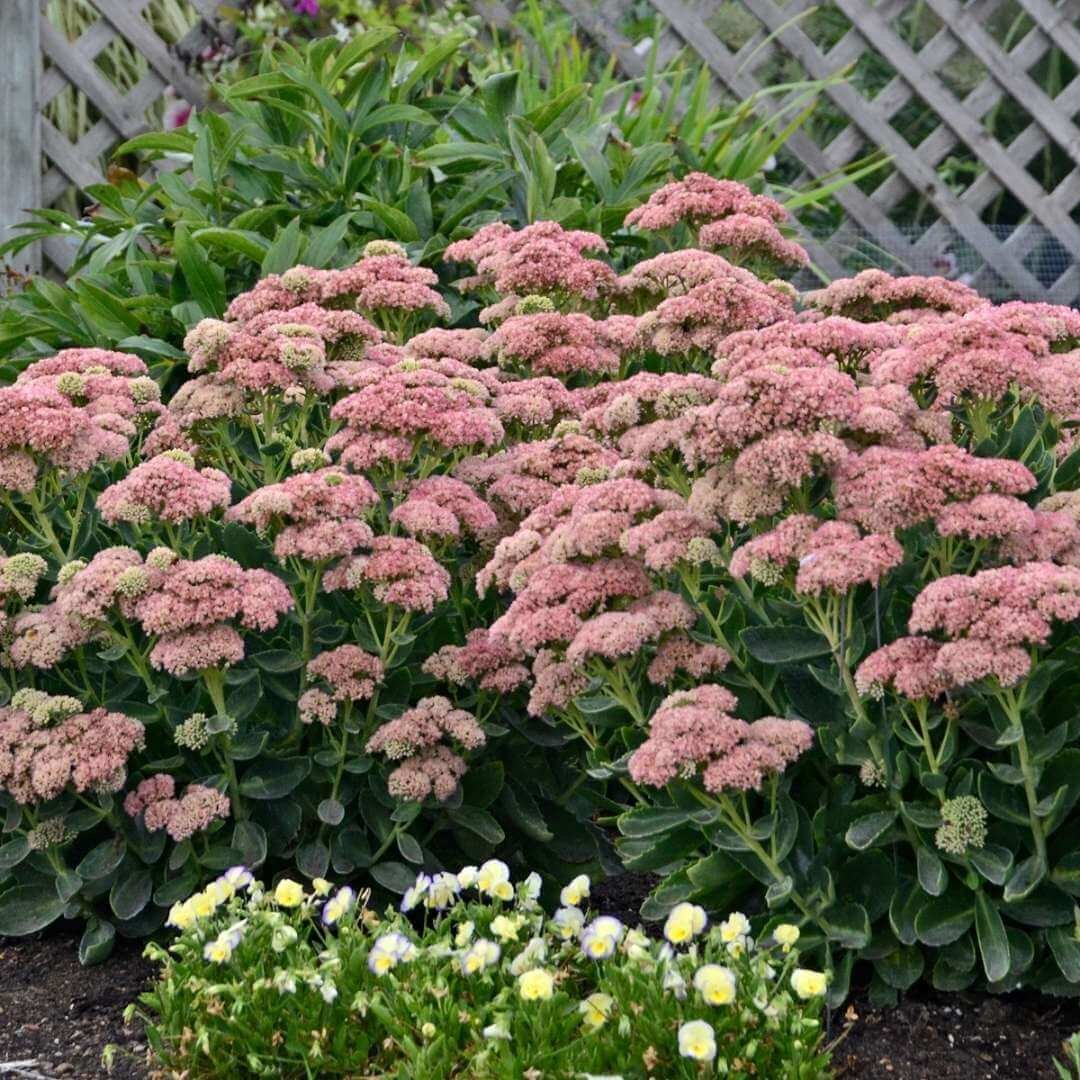
Autumn Joy Sedum. Image courtesy of Ball Horticultural Company.
Key Details:
Also called: Sedum ‘Autumn Joy’, Hylotelephium spectabile 'Autumn Joy'
Type: Perennial (comes back every year)
Quantity Needed: 2 plants
Mature Size: 18-24 inches high × 18-24 inches wide
Bloom Time: Late summer through fall (August-October)
Hardiness Zones: 3-9
Watering Needs: Low once established (very drought-tolerant!)
Sun Requirements: Full sun
Butterfly Benefits:
Nectar plant for butterflies, bees, and beneficial insects
Flowers last 6-8 weeks, providing extended feeding opportunities
Late-season blooms are crucial for migrating monarchs building energy stores
Money-Saving Tips:
Easiest plant to propagate! Sedums root from almost any piece. Ask a neighbor for a stem cutting in spring or a division anytime during the growing season. Stick a 3-inch stem cutting directly in soil, water regularly for 2 weeks, and you'll have a rooted plant
Not recommended: Growing from seed takes 1+ years for blooming-size plants
Substitutions if Unavailable:
Sedum 'Autumn Fire' (similar, slightly more red tones)
Sedum spectabile 'Neon' (hot pink flowers)
Sedum 'Purple Emperor' (burgundy foliage, pink flowers)
Sedum 'Matrona' (pink flowers, purple-tinted foliage)
Care Tips:
Pinch back in late May or early June to encourage thicker, stronger stems that stay upright
Extremely low maintenance and thrives on neglect!
3.Butterfly Weed (Asclepias tuberosa)
Why It's Perfect for Kids: This is THE monarch magnet! Butterfly weed is the host plant for monarch caterpillars, meaning you'll likely spot the iconic black, yellow, and white striped caterpillars munching away. Kids can watch the entire lifecycle unfold right in your garden.
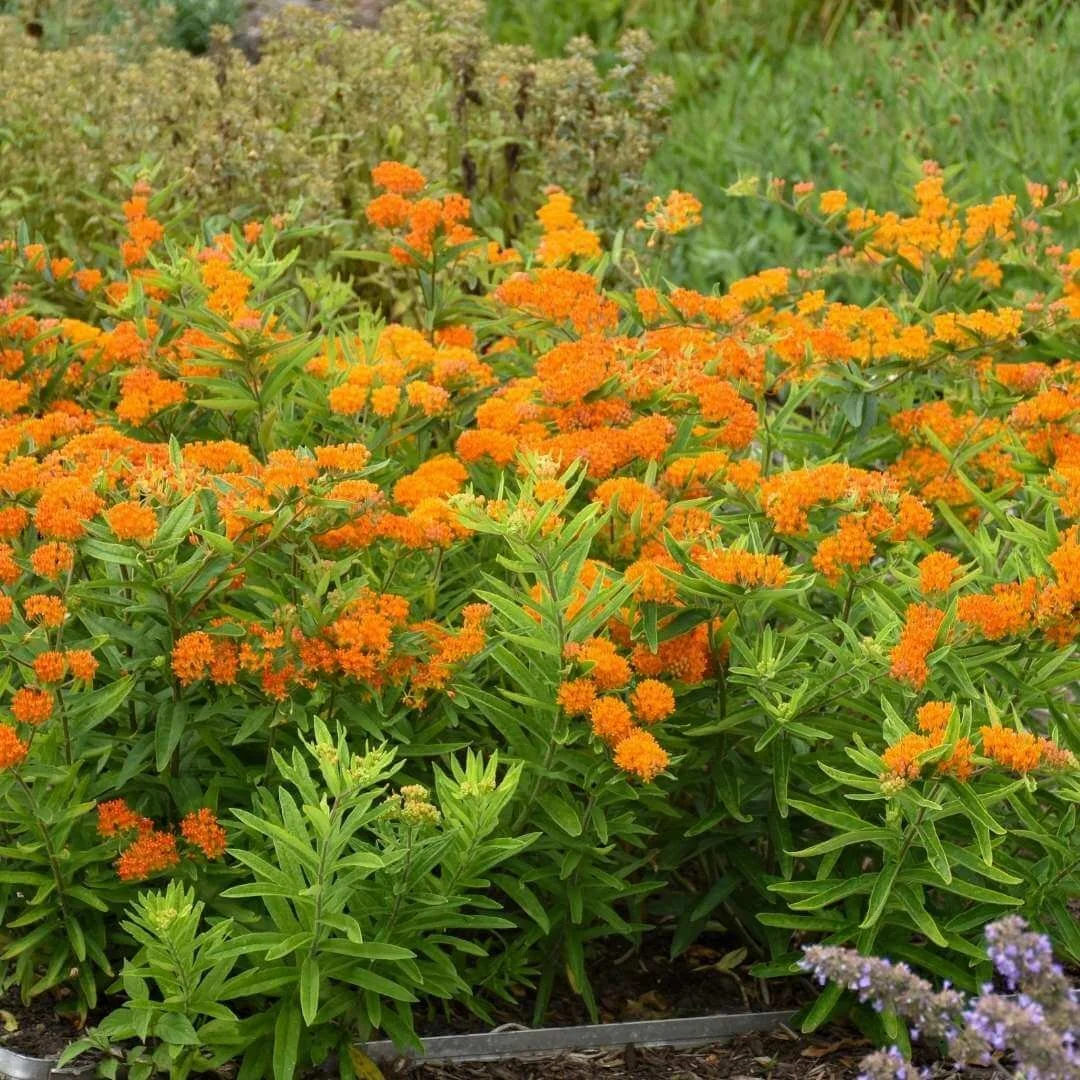
Butterfly Weed. Image courtesy of Walters Gardens, Inc.
Key Details:
Type: Perennial (comes back every year)
Quantity Needed: 6 plants
Mature Size: 2-3 feet high × 12-18 inches wide
Bloom Time: Summer (June-August)
Hardiness Zones: 3-9
Watering Needs: Low once established (drought-tolerant)
Sun Requirements: Full sun
Butterfly Benefits:
Primary host plant for monarch butterflies (caterpillars ONLY eat milkweed!)
Nectar plant for numerous butterfly species
Attracts other beneficial insects including ladybugs and lacewings
Supports native bees and hummingbirds
Important Note About Milkweed Sourcing: If supporting native, local ecotypes is important to you, use the Xerces Society's Milkweed Finder to locate regionally appropriate plants. This helps preserve genetic diversity and supports local monarch populations.
Money-Saving Tips:
Growing from seed: Possible but requires cold stratification (simulating winter). Seeds need 30 days in refrigerator before planting. Start indoors 8-10 weeks before last frost.
Not recommended: Division or cuttings—butterfly weed has a deep taproot and doesn't transplant well once established
Substitutions if Unavailable:
Hello Yellow Butterfly Weed (Asclepias tuberosa 'Hello Yellow') - yellow flowers
Gay Butterflies Butterfly Weed (Asclepias tuberosa 'Gay Butterflies') - colorful variety with orange, red and yellow flowers
Common milkweed (Asclepias syriaca) - it does tend to spread aggressively; use only if you have space and don’t mind the spread
Swamp milkweed (Asclepias incarnata) - requires consistently moist soil; not drought-tolerant like butterfly weed
Care Tips:
Slow to emerge in spring—be patient! Mark location so you don't accidentally dig it up
Don't panic about holes in leaves—that means caterpillars are using it!
No fertilizer needed
Butterfly Observation Tips for Kids:
Check undersides of leaves for tiny white eggs (size of a pinhead)
Look for caterpillars in all stages—they molt 5 times before forming chrysalis
Chrysalises are jade green with gold dots—check stems and nearby structures
Time from egg to butterfly: approximately 4-5 weeks
Identify all the insects visiting milkweed with the University of Wisconsin’s Common Milkweed Insects guide.
4. Zinnia
Why It's Perfect for Kids: Zinnias are a child-friendly annual that kids can grow from seed themselves! Fast-germinating (5-7 days), fast-growing (blooms in 60 days), and total butterfly-magnets. This is the hands-on, "I grew this!" plant every kid needs.
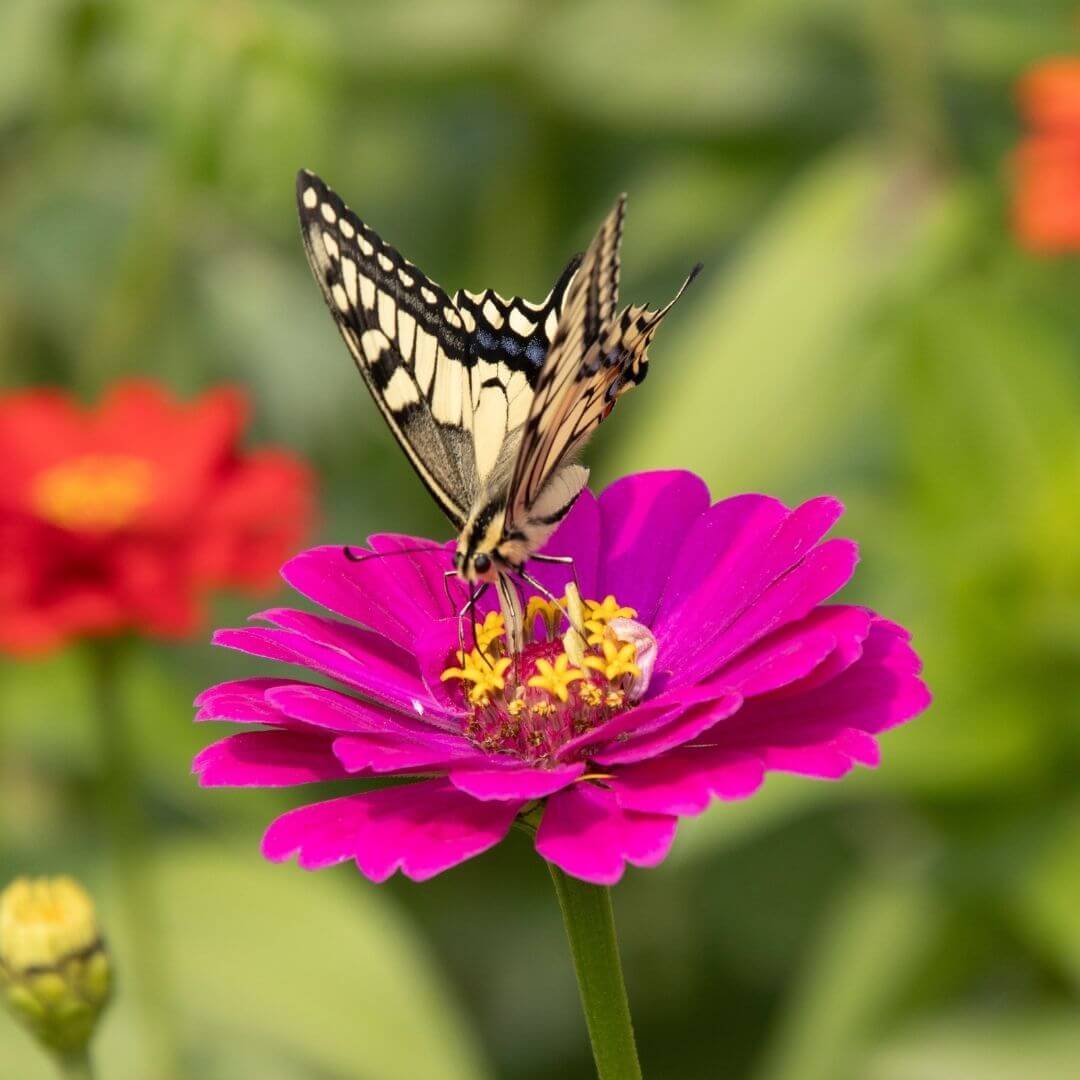
Look for single-flowered zinnia varieties with bright yellow centers, these attract the most butterflies because the nectar is easy to reach. Image credit @lancier via Canva.com
Key Details:
Type: Annual (replant each year)
Quantity Needed: 1 seed packet, single-flowering type
Mature Size: Varies, 1-4 feet depending on variety
Bloom Time: Late spring until frost (continuous blooms for months!)
Hardiness Zones: All zones (grown as annual)
Watering Needs: Moderate; seedlings need consistent moisture
Sun Requirements: Full sun
Butterfly Benefits:
Nectar plant for butterflies (especially monarchs, swallowtails, and painted ladies)
Single-flowered varieties with yellow centers are most attractive to butterflies
Continuous blooms = continuous food source all summer
Choosing the Right Zinnia:
Look for: Single-flowered varieties with yellow centers
Avoid: Double-flowered or pom-pom types (butterflies can't access nectar easily)
Recommended Varieties:
‘Pinwheel' - Distinctive single flowers with separated petals, 2-3 feet tall, classic zinnia look
'Profusion White' - Clean white single flowers with bright yellow centers, 12-15 inches, disease resistant
'Profusion Orange' - Vibrant orange single flowers, 12-15 inches, blooms nonstop all summer
‘Forecast’ - Long-lasting flowers and mildew-resistant, grows 2.5-3 feet tall
Any seed mix labeled "single-flowered" for butterflies or pollinators
Money-Saving Tips:
One packet = entire season: Most packets contain 50-100 seeds for less than $5
Save seeds: Let some flowers dry on plants at season’s end. Harvest seeds for next year (free!) - check out Seed Savers Exchange guide
Direct sow: No need for seed-starting equipment—plant directly in soil after last frost
Find everywhere: Available at nurseries, hardware stores, even grocery stores in spring
How to Involve Kids in Zinnia Growing:
Spring Activity (After Last Frost):
Let kids clear the designated zinnia planting area
Have them poke holes 1/4 inch deep, spaced 6-12 inches apart
Drop 2-3 seeds per hole
Cover with soil and water gently
Assign daily "seed checker" duties—sprouts appear in 5-7 days!
Summer Activities:
Daily "bloom counter" competition (who can count the most blooms?)
Butterfly observation journal (which colors attract the most butterflies?)
Gentle deadheading to encourage more flowers
Watering responsibilities
Fall Activity:
Seed harvesting and storage for next year
Pressing flowers for crafts
Substitutions if Unavailable:
Cosmos (Cosmos bipinnatus) - similar ease, slightly different flower shape
Marigolds (Tagetes) - easier to grow but slightly less attractive to butterflies
Purpletop Vervain (Verbena bonariensis) - perennial alternative, self-sows
Care Tips:
Water at soil level to prevent powdery mildew on leaves
Deadhead regularly for continuous blooms
No fertilizer needed—too much creates leaves instead of flowers
5. Autumn Sun Coneflower (Rudbeckia nitida 'Herbstsonne')
Why It's Perfect for Kids: This is the dramatic height element—growing 6-8 feet tall! Kids love watching something grow taller than adults. The bright yellow, drooping petals and distinctive green centers attract skipper butterflies whose rapid, darting flight patterns fascinate children.
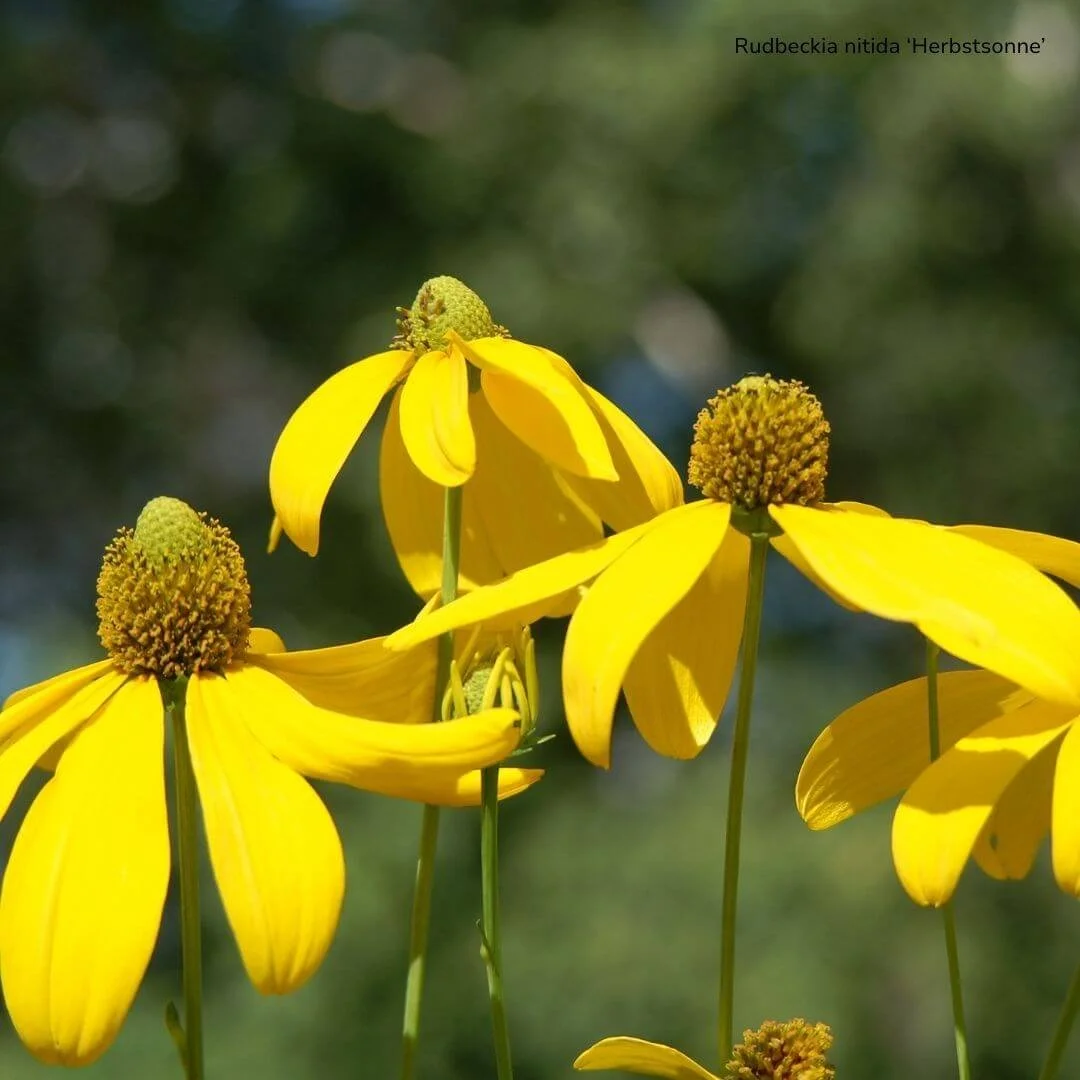
Autumn Sun Coneflower. Image credit @gareth12468 via Canva.com
Key Details:
Also called cutleaf coneflower or green-headed coneflower (Rudbeckia laciniata ‘Herbstsonne’)
Type: Perennial (comes back every year)
Quantity Needed: 1 plant
Mature Size: 6-8 feet tall × 2-3 feet wide
Bloom Time: Mid-summer through fall (July-October)
Hardiness Zones: 4-9
Watering Needs: Low to moderate once established
Sun Requirements: Full sun
Butterfly Benefits:
Host plant for silvery checkerspot butterflies
Nectar plant for numerous species including skippers, swallowtails, and sulphurs
Late-season blooms feed migrating butterflies
Seed heads provide winter bird food (goldfinches love them!)
Money-Saving Tips:
Easy to divide: If you know someone growing this plant, ask for a division. Best done in spring or fall.
Growing from seed: Possible but seeds can be hard to source. Most gardeners buy plants online, at well-stocked local nurseries, or at native plant sales.
Single plant goes far: One plant creates significant impact due to height and spread—you only need one!
Substitutions if Unavailable:
Rudbeckia maxima (Large Coneflower, dramatic foliage)
Eutrochium maculatum 'Gateway' (Joe-Pye Weed, similar height, purple flowers)
Care Tips:
Usually no staking needed despite impressive height—stems are surprisingly sturdy
Exception: If grown in overly fertile soil or very moist conditions, stems may flop. Stake with bamboo poles if needed.
Deadhead early blooms to encourage more flowers, and leave some later blooms for seed production
Cut back to ground level in spring
Kid-Friendly Activities:
Measure growth weekly (kids love tracking height progression!)
Use as backdrop for butterfly observation photos
Count how many butterflies visit at once during peak bloom
Watch for goldfinches eating seeds in fall and winter
Year-Round Maintenance Calendar
Bookmark this page for future reference!
Year-round Tasks
Do not use pesticides in your garden. Most pesticides are “broad spectrum”, meaning they kill broadly. That includes butterflies, caterpillars, bees, milkweed bugs, and all the interesting insects you are trying to attract to your garden, as well as harming the creatures further up the food chain that eat them. Learn more about pesticides and their risks from the Xerces Society.
This garden has low to moderate watering needs. Some plants are drought-tolerant, but they still require monitoring and occasional watering to thrive and maintain their health - “low-water” does not mean no water! All newly planted garden plants will require regular watering to establish strong root systems and adapt to their new environment. Read How to Water Your Plants to gain a better understanding of the watering needs of your garden.
Spring
Delay spring cleanup to protect overwintering caterpillars and insects. The Xerces Society provides detailed guidance on spring cleanup timing.
Be patient with growth, since this summer-flowering garden is slow to leaf out and get started. Especially the butterfly weed!
Freshen up mulch, if needed.
Sow zinnia seeds directly into the ground, once the danger of frost has passed. If you are unsure about frost dates in your area, visit NOAA’s interactive map.
Water as needed to maintain plant health.
Pull weeds. If you're unsure what is a weed or a plant, wait until growth begins and you can identify the plants more clearly.
Year 3 maintenance: Divide the asters, stonecrop, and coneflower plants, and share divisions with neighbors or plant elsewhere in your landscape. If you are unsure how to divide plants, watch Mississippi State University’s video about how to divide perennials. Butterfly weed has a long taproot and does not respond well to division, so do not disturb!
Summer
Enjoy the garden: Observe caterpillars, butterflies, and other bugs as the garden comes into full bloom.
Get kids involved:
Assign watering and weeding tasks
Develop a routine to check on plants and search for butterflies and caterpillars together
Search for chrysalises
Create a butterfly watering station. Learn how with this tip sheet from the National Wildlife Federation.
Water as needed, and arrange for vacation watering if you'll be away
Weed regularly to keep the garden tidy.
Stake flowers, as needed: The flowering stems of Autumn Sun coneflower are strong and typically don’t require staking. If the plant is grown in overly fertile or very moist soil, the stems will flop over and need staking.
Put out a puddling dish for butterflies. It’s easy to create - visit PennState’s Extension for more info about how to create a puddling station for pollinators.
Bring some flowers indoors: Autumn Sun coneflowers and zinnias flower heavily and make great cut flowers.
Magnifying glasses, butterfly identification guides and books about common garden insects can make the experience more engaging for kids.
Fall
Leave the garden as is: Allow flowering to finish naturally and let the plants go dormant.
Water as needed until plants go fully dormant after the first frost.
Let flower heads dry on the plants to provide winter food for birds.
Avoid cleaning up:
Protect overwintering caterpillars and insects by leaving plant materials and leaf litter around the garden bed undisturbed.
Some insects nest inside the dead plant stems, so avoid cutting them down until springtime.
Winter
Leave the garden undisturbed to protect overwintering insects.
Watch for birds eating flower seeds and foraging for insects in the leaf litter.
Plan for next season:
Shop for zinnia seeds.
If starting zinnia seeds indoors, plan to sow seeds in late winter.
Do you need to invest in any watering equipment or tools to make your maintenance tasks easier next summer?
Build on your kids’ experience:
Continue reading about butterflies and caterpillars.
Many kids enjoy paging through visual butterfly and insect ID guides, even if they can’t understand the text.
If you are lucky enough to live near an indoor butterfly house, conservatory, or lepidopterarium, see if you can pay a visit! You may even pick up some new kids’ butterfly garden ideas!
Frequently Asked Questions (FAQ)
General Butterfly Garden Questions
Q: When is the best time to plant a butterfly garden? A: Spring (after last frost) or fall (6-8 weeks before first frost) are ideal planting times. Spring planting gives plants a full growing season to establish before their first winter. Fall planting can be less stressful on plants due to cooler temperatures and increased rainfall, but plants won't bloom until the following summer.
Q: How long does it take for butterflies to find a new garden? A: Butterflies can discover new nectar sources within days, but building a robust butterfly population takes 1-2 full seasons. Host plants (like butterfly weed for monarchs) take longer to attract egg-laying females because butterflies must recognize them as suitable caterpillar food sources. Patience pays off—year two is typically much more active than year one!
Q: Will this garden attract bees too? A: Yes! These butterfly-friendly plants are equally attractive to native bees, honeybees, and other beneficial pollinators. If someone in your family has a bee sting allergy, this garden design is not appropriate. For everyone else, the bees are a bonus—they're excellent pollinators and fascinating to observe. Teach children to observe calmly without swatting, and bees will generally ignore them.
Q: Can I modify this design for a smaller space? A: Absolutely! This design can be scaled down. For a 14' × 4' space (half the size), use: 1 Purple Dome Aster, 1 Autumn Joy Sedum, 3 Butterfly Weed, half a packet of zinnia seeds, and skip the Autumn Sun Coneflower (or move it to another spot in your landscape). The principles remain the same—full sun, well-draining soil, and pesticide-free maintenance.
Plant-Specific Questions
Q: Why do the leaves of my butterfly weed have holes? A: Congratulations—that means monarch caterpillars are using your plant as food! Holes in milkweed leaves are a sign of success, not a problem. Each monarch caterpillar consumes approximately 20-30 leaves during its 2-week larval stage. Healthy, established milkweed typically survives even heavy caterpillar feeding and will regrow.
Q: My butterfly weed didn't come up in spring. Is it dead? A: Probably not! Butterfly weed is notoriously slow to emerge—sometimes not showing any growth until late May or even early June (zones 4-6). Mark its location in fall so you don't accidentally disturb it, and wait patiently. If nothing appears by mid-June, gently scratch away surface soil to check for green growth at the crown before giving up.
Q: Do I need to deadhead the flowers? A: Selectively, yes. For coneflower, deadhead early-season blooms to encourage more flowers, but leave late-season blooms to set seed for birds and to allow any caterpillars to complete development. For milkweed, asters and sedum, no deadheading needed—let them bloom naturally. For zinnias, regular deadheading promotes continuous blooms all summer; at season's end, leave some flowers to go to seed if you want to save seeds for next year.
Q: Can I use swamp milkweed or common milkweed instead of butterfly weed? A: Yes, but with important considerations:
Swamp milkweed (Asclepias incarnata): Requires consistently moist soil, not drought-tolerant like butterfly weed. Use only if your site has moisture.
Common milkweed (Asclepias syriaca): Spreads aggressively via rhizomes and can take over garden beds. Only use if you have space for it to spread or are willing to manage it rigorously. Excellent for wild areas or large spaces.
Butterfly weed (Asclepias tuberosa): Best choice for controlled garden settings. Clumps slowly, doesn't spread aggressively, drought-tolerant once established.
Maintenance Questions
Q: When can I cut back the dead plants? A: Wait until spring! Ideally, delay cleanup until you've had 7-10 consecutive days with temperatures above 50°F. This ensures overwintering caterpillars and beneficial insects have emerged from their dormant state. In zones 4-6, this is typically late April or May. In zones 7-8, late March or April. The Xerces Society provides detailed guidance on spring cleanup timing.
Q: Do I need to fertilize this garden? A: No! These native and pollinator-friendly plants thrive without supplemental fertilizer. In fact, over-fertilizing can reduce flowering and create weak, floppy growth. The exception: if your soil is extremely poor quality, incorporating compost at planting time provides a slow-release nutrient boost without the problems associated with chemical fertilizers.
Q: How often do I need to water? A: During establishment (first 8 weeks after planting): Water 2-3 times per week, deeply. Once established: Water only during extended dry spells (7-10 days without rain). All plants in this design are relatively drought-tolerant once their roots are established. Exception: Zinnias need more consistent moisture than the perennials, especially during bloom time. See our complete watering guide for more details.
Q: What if I have deer? A: All plants in this design are deer-resistant, meaning deer typically avoid them in favor of tastier options. However, no plant is 100% deer-proof! During severe winters or when natural food is scarce, deer may browse plants they normally ignore. If you have heavy deer pressure, consider adding physical barriers (fencing) around the garden, at least until plants are well-established.
Pest and Problem Questions
Q: Are pesticides ever okay to use in a butterfly garden? A: No. Pesticides—even "organic" ones like neem oil or insecticidal soap—kill indiscriminately. They will kill the caterpillars, butterflies, and beneficial insects you're trying to attract. If you have a pest problem (like aphids), use targeted solutions: blast them off with water, encourage ladybugs and lacewings (which eat aphids), or simply tolerate minor cosmetic damage. A truly healthy ecosystem has both pests and their predators in balance. Read more from the Xerces Society about pesticide risks.
Q: What if I see hornworms or other caterpillars I don't recognize? A: Use an identification app (iNaturalist, Google Lens) before removing any caterpillar! That "scary" looking caterpillar might become a beautiful native moth or food for the baby birds nesting in your trees. This is a great teaching opportunity for kids about diversity in nature, as well as the food chain. In general, leave the caterpillars alone—they're exactly what you're trying to support!
Q: My asters have powdery mildew. What should I do? A: Powdery mildew looks unsightly but rarely kills plants—it's primarily a cosmetic issue. It's caused by poor air circulation and humidity. To reduce future occurrences: space plants appropriately (don't overcrowd) and when watering, aim the water at the soil, not the leaves. Don't use fungicides—they can harm pollinators. The plants will survive fine despite the white coating on leaves.
Kids and Safety Questions
Q: Is it safe for kids to handle caterpillars? A: Most caterpillars don't bite or sting, but some have irritating hairs or spines. Teach children to observe without touching as the general rule. Stick with "look, don't touch" and provide magnifying glasses or bug viewers for close observation.
Q: Can kids help with garden maintenance? A: Absolutely! Age-appropriate tasks include:
Ages 3-5: Watering (with supervision), counting butterflies and bees, checking plants for caterpillars
Ages 6-9: Weeding (with guidance on plant vs weed ID), planting zinnia seeds, butterfly journaling
Ages 10+: All maintenance tasks including division, more independent watering, seed saving
Gardening teaches responsibility, patience, and environmental stewardship—all valuable life skills!
Q: What if my child wants to raise monarch caterpillars indoors? A: While tempting, experts increasingly recommend against indoor rearing. Monarchs raised indoors may have navigation problems during migration and can spread diseases (like OE - Ophryocystis elektroscirrha) if equipment isn't properly sterilized. The best approach is to create excellent outdoor habitat and let nature take its course. Kids can still observe the entire lifecycle outdoors—it just requires more patience and daily checking!
Next Steps: Download Your Free Butterfly Garden Plan!
Ready to Get Started?
Your free download includes:
✅ Full-color planting diagram with exact plant placement
✅ Shopping list with photos for easy plant identification
Download your complete butterfly garden design plan now and start creating memories with your kids!
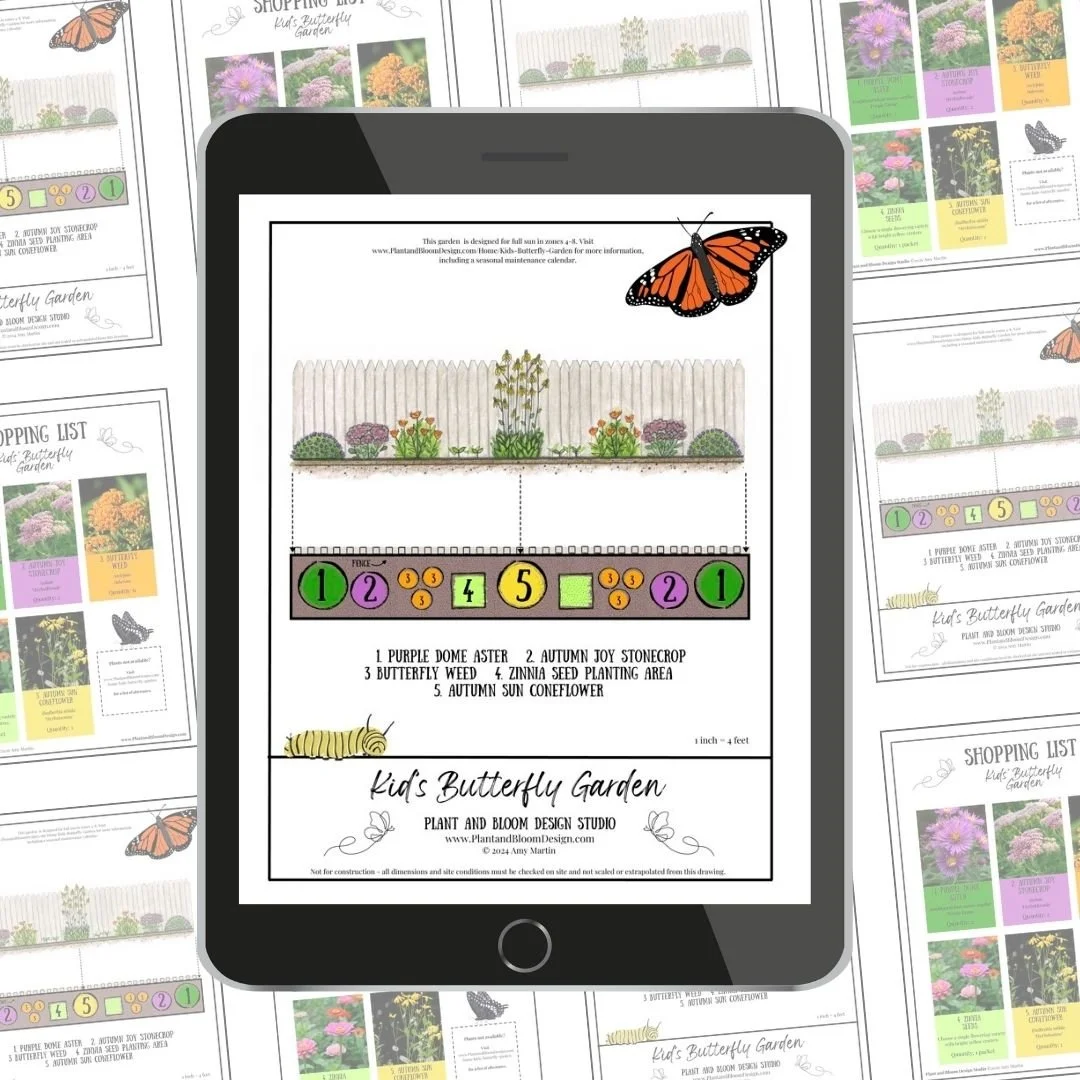
🦋 Create a Magical Butterfly Haven: Free Butterfly Garden Landscape Design!
Turn your backyard into a summer paradise for kids and butterflies alike with this FREE digital download! This easy DIY landscape design is perfect for inspiring outdoor play and nature discovery while boosting your home's curb appeal.
This two-page document includes everything you need to get started:
Page 1: A beautifully crafted, to-scale landscape design tailored for a 28-foot by 4-foot garden bed.
Page 2: A complete plant palette shopping list featuring vibrant, butterfly-attracting blooms and plants that support the life cycle of butterflies.
This Garden is Designed For:
Full sun (6+ hours of direct sunlight per day)
Zones 4-8
Well-draining, loamy soil
A long, empty space in front of a fence or shed, or a blank exterior wall of a building
Why You'll Love This Free Landscape Plan:
Designed with summer magic in mind, this affordable DIY landscaping idea creates a lush, colorful sanctuary that will come alive with fluttering wings and curious caterpillars—just in time for kids to enjoy while school's out. It's a budget-friendly way to transform any yard into a pollinator haven.
Read the accompanying article "Butterfly Garden For Kids" to learn how to choose the perfect spot and get easy-to-follow, year-round maintenance tips for your new garden.
Ready to Start Your Butterfly Journey?
Download this free landscape design plan and watch your yard—and your kids' imaginations—come to life. It's the perfect introduction to DIY landscape design for beginners!
To receive your free digital download: Simply enter your email address during checkout, and the file will be sent directly to your inbox. No payment information is required—just skip the payment fields. Please note that the billing address fields cannot be skipped at this time. Squarespace requires a billing address even for free products - this is a platform requirement.
Transform Your Backyard Into a Butterfly Haven
Creating a butterfly garden with kids isn't just about planting flowers—it's about nurturing curiosity, teaching environmental stewardship, and making memories together. Whether your children are spotting their first monarch caterpillar, measuring the height of towering coneflowers, or learning to save zinnia seeds for next year, this garden becomes a living classroom right outside your door.
The best part? You don't need to be an expert gardener to succeed. With this free design plan, clear plant list, and seasonal maintenance guide, you have everything you need to create a thriving pollinator paradise that will delight your family for years to come.
Ready to trade screen time for sunshine?
Download your free butterfly garden plan above and let the adventure begin! 🦋
📍 Pin this post for future reference 📍
Related Articles You'll Love:
Follow Plant and Bloom Design Studio for Garden and Landscaping Ideas