
25 Best Perennials for Full Sun Gardens
Whether you're new to gardening or looking for fresh inspiration, I've got you covered with this comprehensive list of 25 of the best perennials for full sun. These sunny garden perennials will bring color, texture, and life to your garden from spring through fall.
I've highlighted each plant's best features and bloom time so you can design a garden that looks gorgeous year-round. And here's something important: every photo you'll see is real, not AI-generated. These are actual plants that have been photographed by me, sourced from trusted horticultural growers, or carefully selected from stock images. I believe you deserve to see what these best full sun plants actually look like in gardens, not some impossibly perfect computer-generated fantasy.
This list is organized by bloom season, starting with spring and moving through fall, then alphabetically within each season. If you're wondering why perennials are such a smart choice, here's the beauty of them: unlike annuals that you replace every year, perennials come back season after season. They literally give you more bang for your buck. Most of these plants will grow larger over time, and many can be divided and spread around your yard, giving you even more plants for free.
Essential Design Tips for Sunny Garden Perennials
When planning your garden with these best full sun plants, pay attention to two crucial factors:
Height matters. Perennials range from a few inches high to over 6 feet tall. You'll want to place taller plants at the back of borders and shorter ones in front, and keep an eye on what's near windows so nothing blocks your view as it grows.
Bloom time is everything. Strategic planning means you'll have something beautiful happening in every season. I like to sketch out my designs (nothing fancy, trust me!) to visualize how the garden will look throughout the year. Here's a simple sketch I made that shows you exactly what I mean:
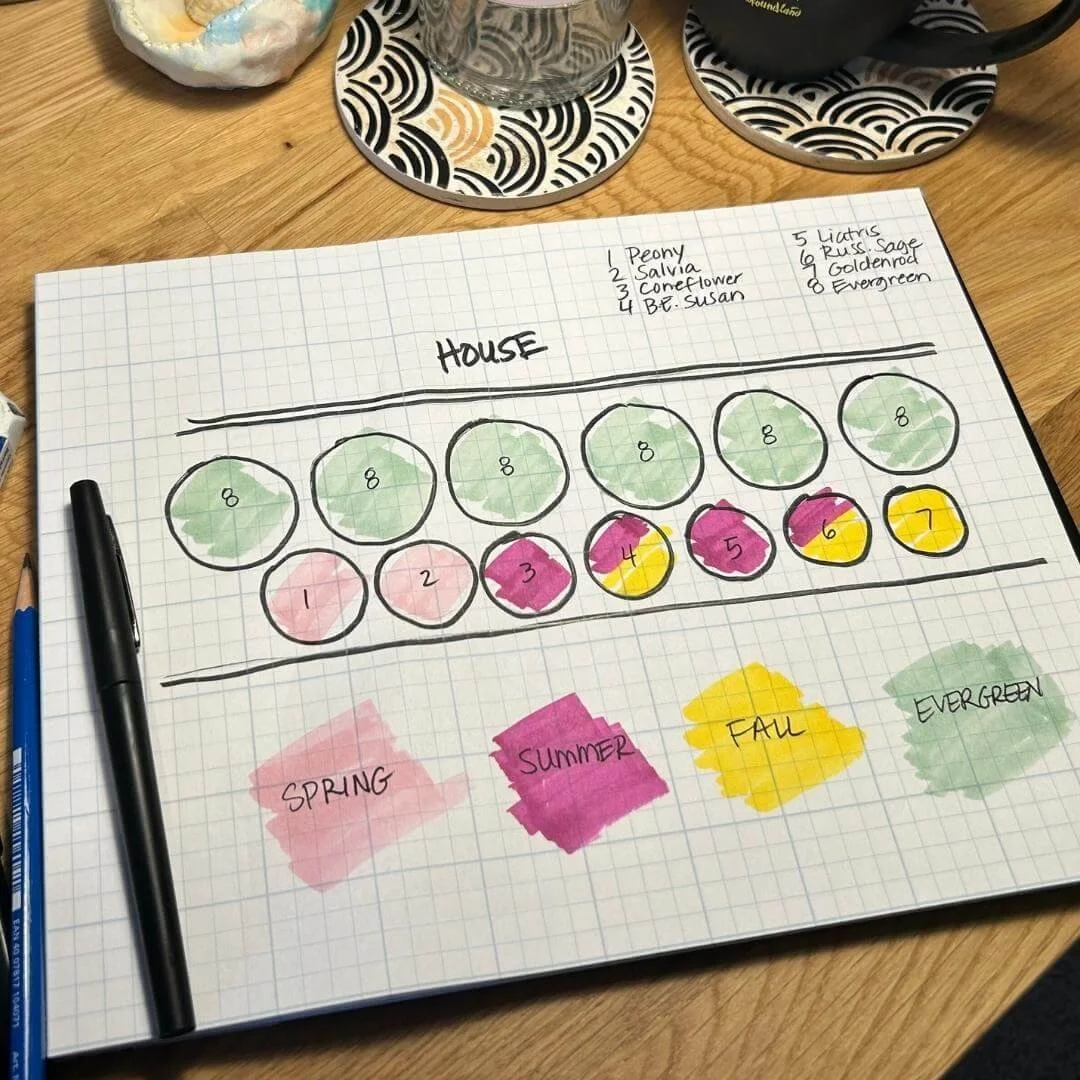
This simple sketch of a garden border makes it easier to visualize perennial plant bloom times. Image © Plant and Bloom Design Studio
One more thing: most of these perennials have been cultivated into numerous varieties with different colors, sizes, and growing habits. Always double-check plant descriptions when buying online and read those plant tags carefully at the nursery.
If attracting pollinators is important to you, know that not all cultivated varieties are created equal in the eyes of bees and butterflies. Some perform significantly better than others. Head over to the Mount Cuba Center website to check out their amazing plant trials.
Spring Bloomers
These perennials for full sun kick off the growing season with gorgeous early color!
1. Baptisia (False Indigo)
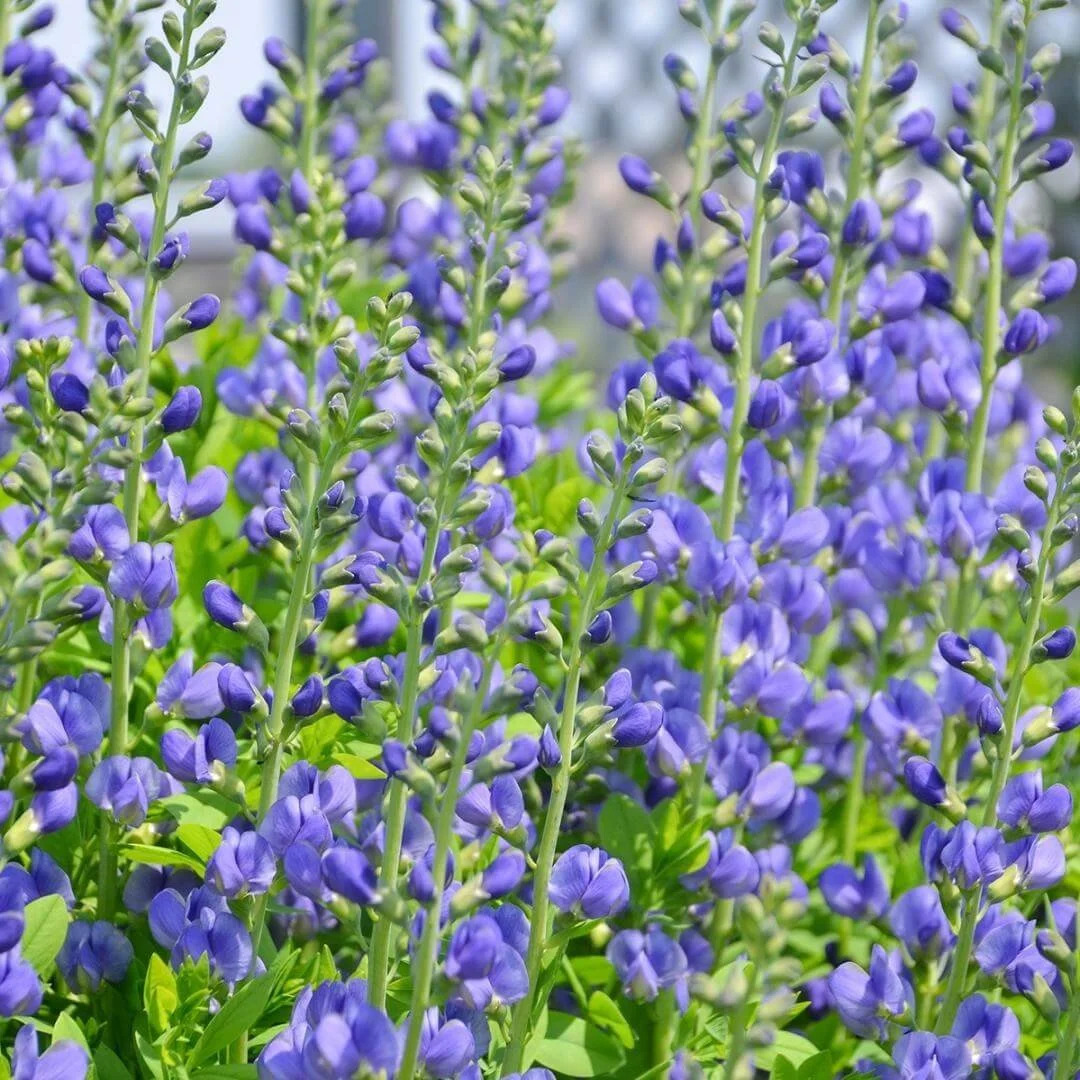
Baptisia australis (Blue False Indigo). Image courtesy of Walters Gardens, Inc.
If you're looking for a truly tough, long-lived perennial for full sun, Baptisia should be at the top of your list. These shrub-like beauties handle drought, poor soil, clay soil, and even erosion like champions. The stunning flowers create a gorgeous contrast against the grey-green foliage, and the variety of flower colors available means there's a Baptisia for every garden palette.
I love planting it at the back of the border in drought-tolerant or native gardens. It pairs beautifully with so many other perennials like black-eyed Susans, coneflowers, and yarrow, creating combinations that look professionally designed with minimal effort.
Here's what you need to know: Baptisia is slow to get started. It puts most of its energy into developing a deep taproot system in the first couple of years, so don't expect heavy flowering right away. But trust me, it's one of the best full sun plants and it’s worth the wait!
The native species has stunning purple-blue flowers, and newer cultivars have expanded the color palette dramatically. To name a few: ‘Sparkling Sapphire’ offers striking violet-blue flowers, ‘Lemon Meringue’ brings yellow blooms atop charcoal-colored stems, and ‘Pink Truffles’ has soft lavender-pink flowers over blue-green foliage, with a naturally compact form perfect for smaller spaces.
Common name: False Indigo
Botanical name: Baptisia species
Native range: Eastern and Central North America
Zones: 3-9 (varies by cultivar, so check tags)
Flowering time: Late spring to early summer
Flower colors: Blue, yellow, white, brown, purple, pink, bicolor
Size range: 2-4 feet tall and wide
2. Carpet Phlox
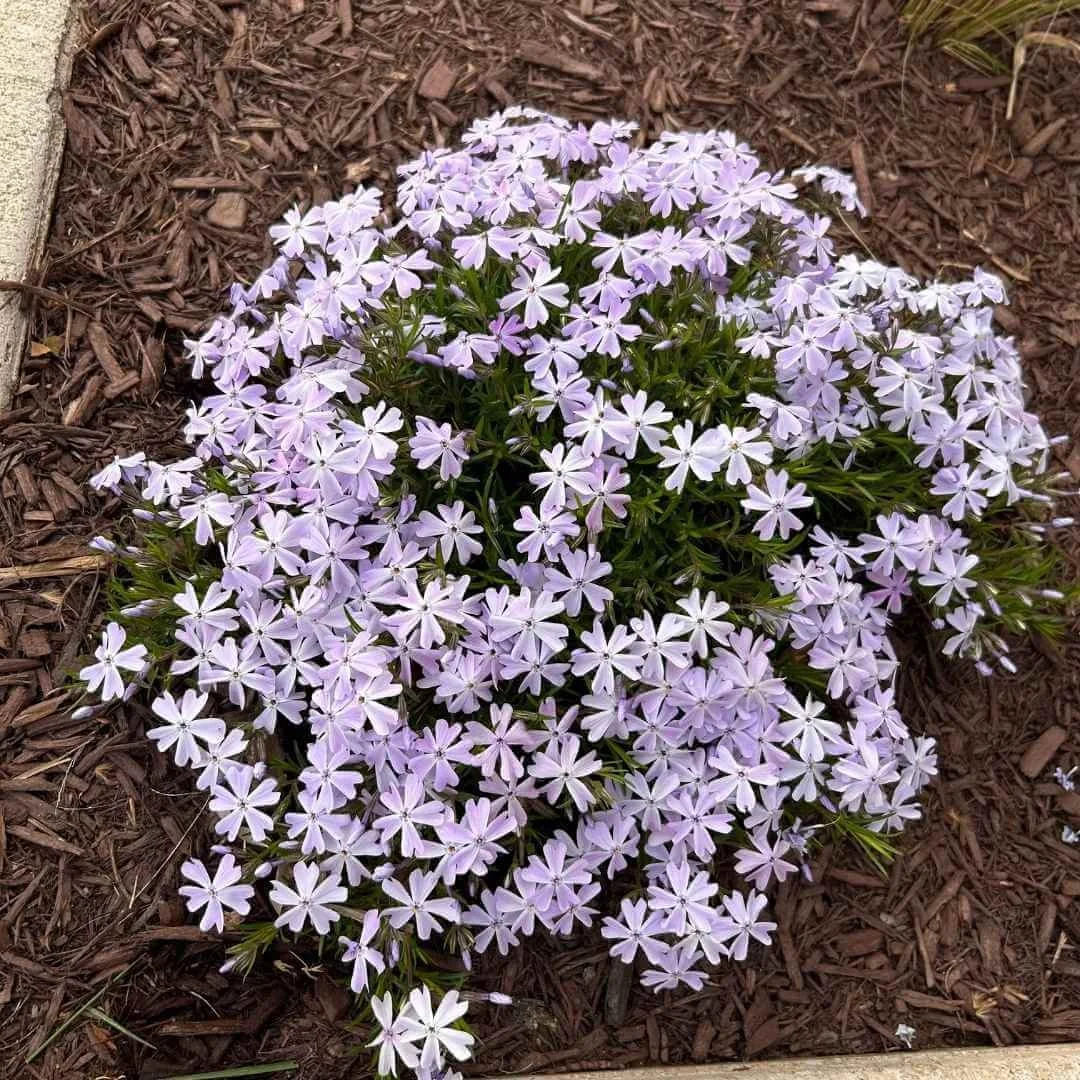
Emerald Blue Carpet Phlox. Image © Plant and Bloom Design Studio
Talk about a showstopper! Carpet phlox is a groundcover with a creeping habit that puts on an absolutely stunning floral display. The fragrant, cheery flowers create bright carpets of color in spring, and they bloom for a satisfyingly long time.
I love planting this full sun perennial on stone walls, where it spills over the edges and softens hard lines. It's also fantastic on slopes where you want a no-mow groundcover solution. Who wants to push a mower up and down a hillside anyway? 😉
Popular cultivars include ‘Emerald Blue’ with its true blue flowers and ‘Fort Hill’ with deep pink blooms. ‘North Hills’ has unique white flowers with a streak of purple in the center. All are reliable performers that will spread into gorgeous drifts over time.
Common name: Carpet phlox, creeping phlox, moss phlox
Botanical name: Phlox subulata
Native range: Eastern and Central US & Canada
Zones: 3-9
Flowering time: Spring
Flower colors: Blue, pink, purple, white, bicolor
Size range: 4-6 inches high and 2-3 feet wide
3. Dianthus (Pinks)
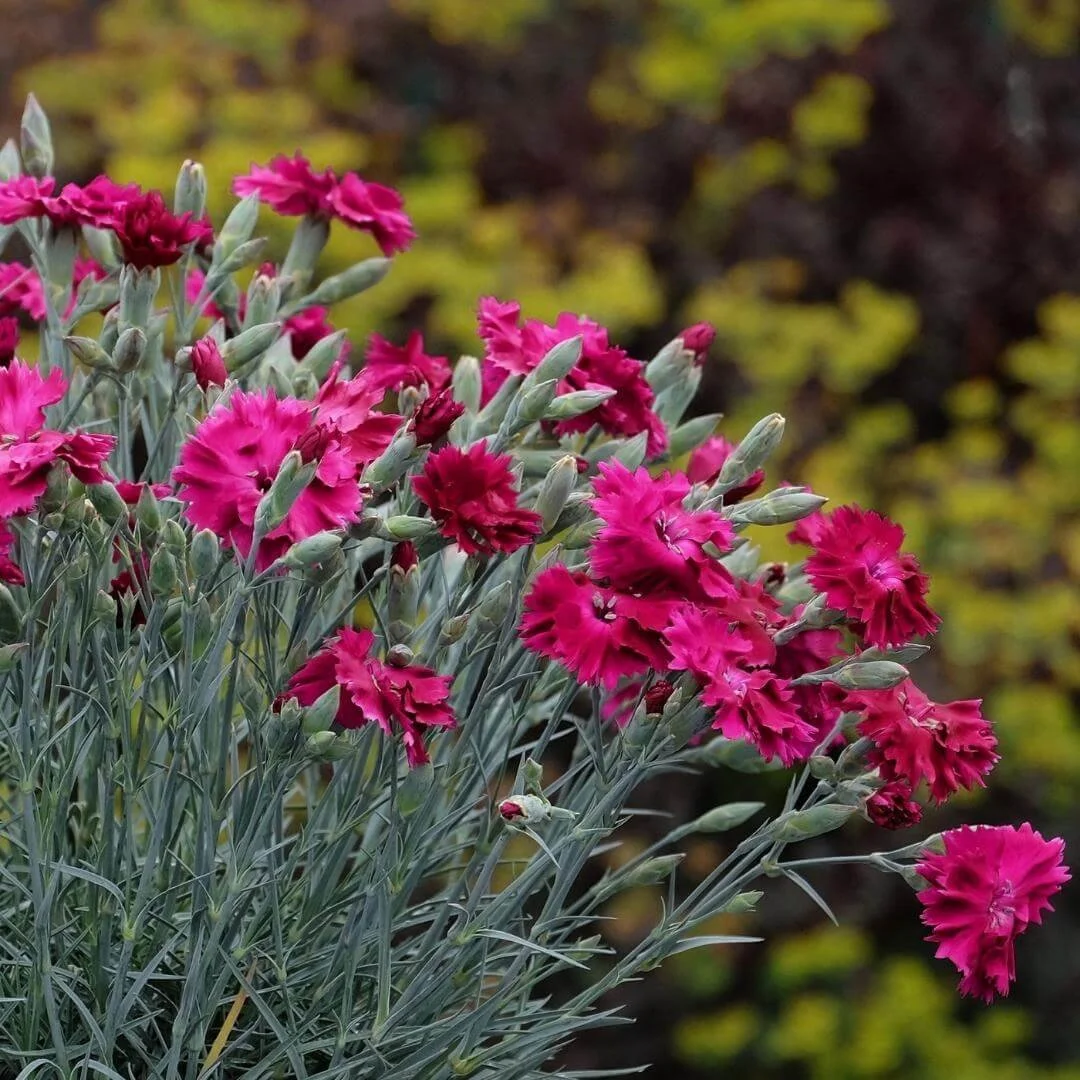
ColorPop Pickables™ Dianthus. Image courtesy of Plant Development Services via National Garden Bureau.
Dianthus brings old-fashioned charm to the garden with its fragrant, fringed flowers that look like tiny carnations (they're actually related!). These long-blooming, sun-loving beauties offer continuous color from spring through summer, and their tidy, blue-green foliage looks great even when plants aren't flowering.
I'm a big fan of that icy blue foliage. It creates a beautiful contrast in rock gardens and along pathway edges where you can appreciate the fine texture up close.
A few favorite varieties include ‘Firewitch’, a classic choice with bright pink, cheerful flowers that practically glow. ‘Neon Star’ has fringed electric pink flowers, while ‘Starburst’ reminds me of peppermint candy with its red, pink, and white flowers.
Common name: Pinks
Botanical name: Dianthus species
Native range: Europe and Asia
Zones: 3-9 (varies by cultivar)
Flowering time: Spring through summer
Flower colors: Pink, lilac, purple, white, orange, red
Size range: 6-36 inches tall and 1-2 feet wide
4. Iris Versicolor
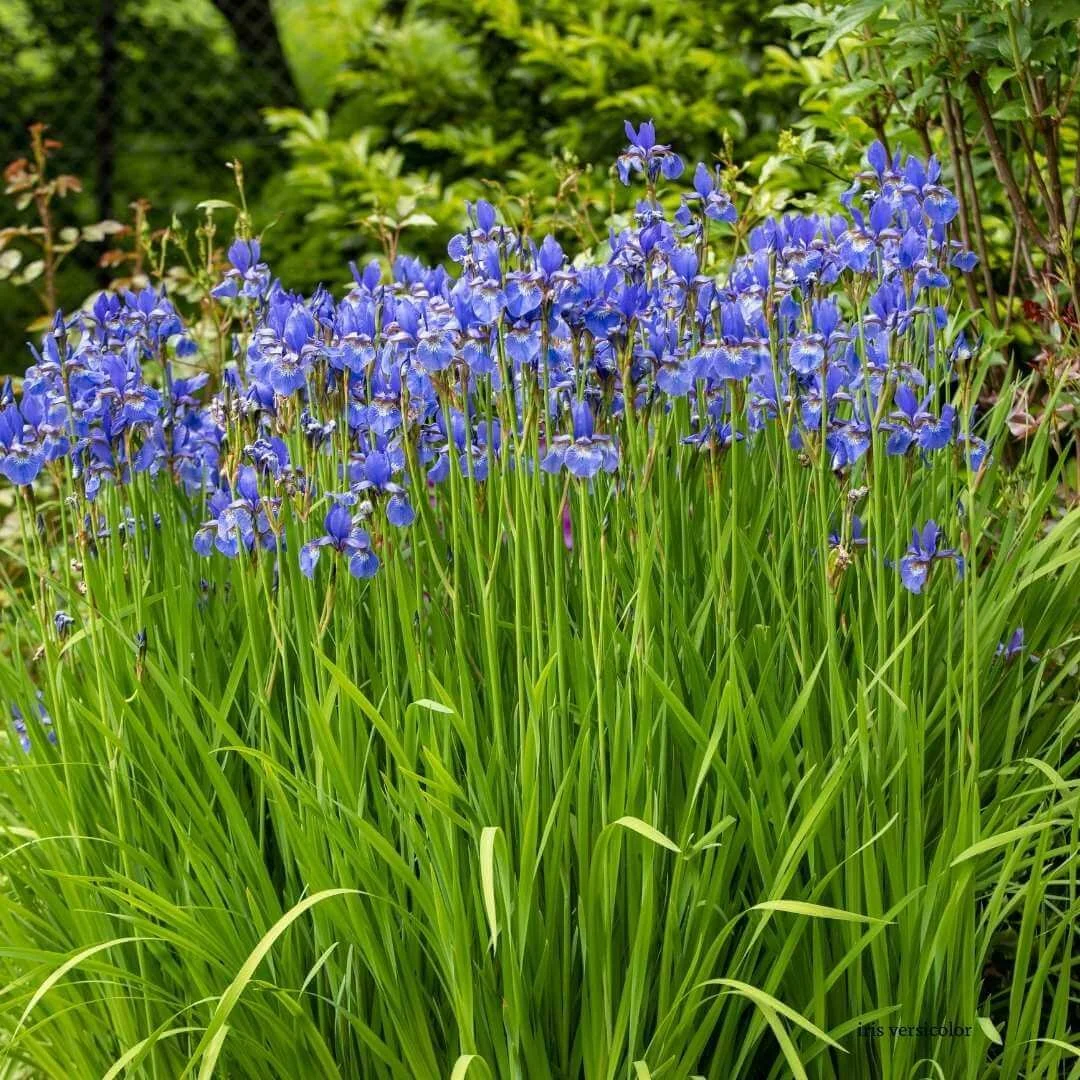
Iris versicolor (Blue flag iris). Image credit @wjarek via Canva.com
With their iconic flowers and vibrant purple-blue color, blue flag iris brings drama to any sunny garden. But it's not just the flowers that make this perennial for full sun special. Those sword-shaped leaves bring a completely different architectural element to perennial beds, providing strong vertical interest even after flowering finishes.
Here's what makes blue flag iris particularly valuable: it loves wet spots and areas with frequent standing water. If you have a rain garden or poorly draining area that drives you crazy like at the bottom of a downspout, this is your plant. Plus, it's very deer-resistant because the leaves are toxic and completely unpalatable to wildlife.
I love how those sword-like leaves create such a strong presence in the landscape. They look fantastic next to other moisture-loving plants like cardinal flower, swamp milkweed, and Joe Pye weed.
There aren’t many cultivars on the market, and you can't go wrong with the native species. If you want something different, ‘Purple Flame’ is a fascinating mutation discovered in Delaware with foliage that emerges dark purple.
Common name: Blue Flag Iris, Northern Blue Flag
Botanical name: Iris versicolor
Native range: Eastern & Central US and Canada
Zones: 3-9
Flowering time: Late spring to early summer
Flower colors: Purple to blue
Size range: 2-3 feet high and wide
5. Peony
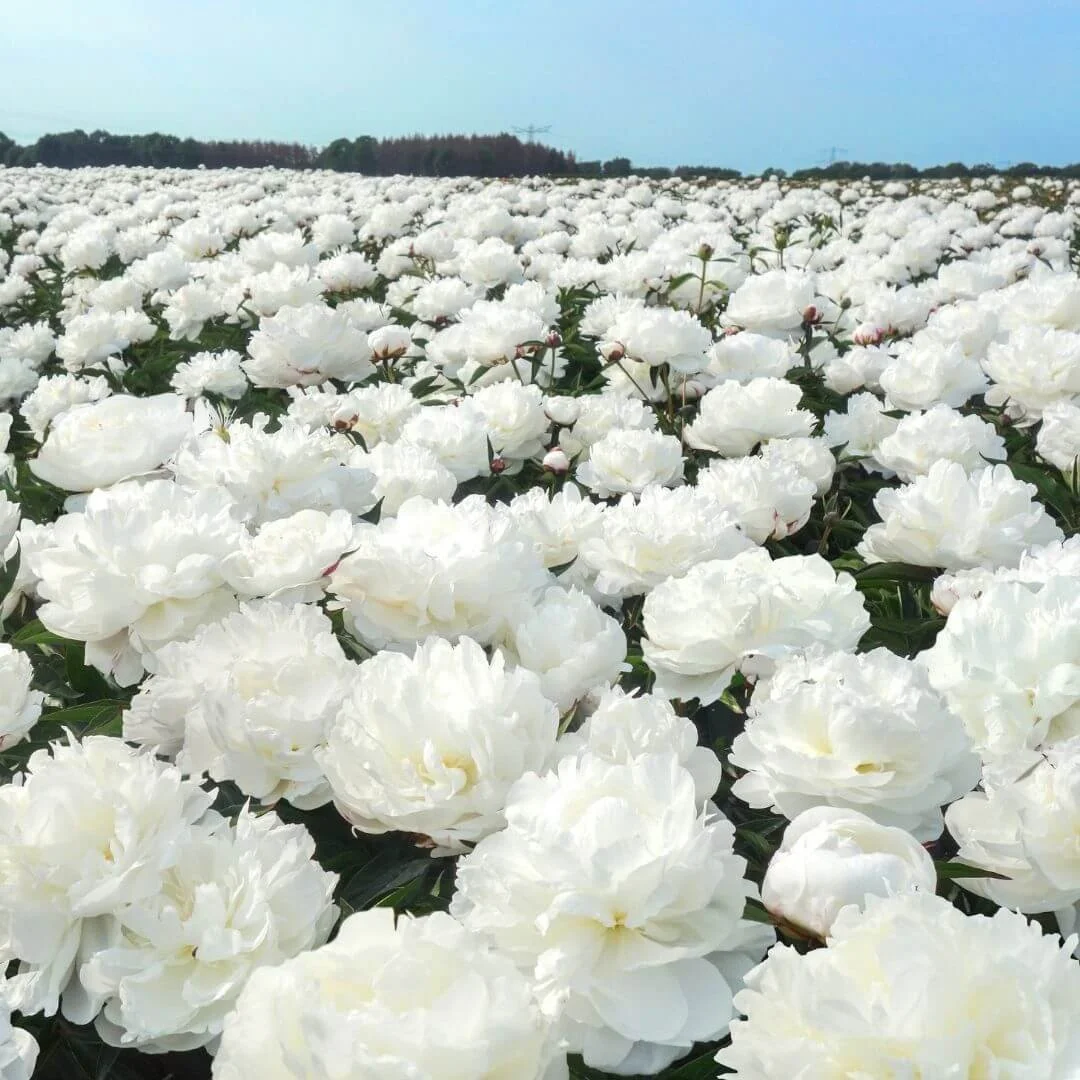
A grower’s field of ‘Shirley Temple’ peonies in full bloom. 😍 And yes, this photo is real! Image courtesy of Ball Horticultural Company
Peonies have a relatively fleeting bloom time of just 1-2 weeks, but oh my goodness, it's absolutely worth it for that gorgeous display of cloud-like, romantic blooms. The stuff dreams are made of. And the colors? Simply gorgeous. Plus, that glossy green foliage looks beautiful all season long.
Peonies prefer deep, fertile, well-draining soil with a bit of afternoon shade and regular moisture. They may take a couple of years to establish and produce abundant flowers, but once they do, they're extremely long-lived. I'm talking decades of beauty.
Here's my advice: place peonies somewhere you'll notice them every single day when they're in bloom. Near a walkway or entry you use frequently, or visible from your sliding glass door or living room window. You'll want to savor every moment of those gorgeous flowers.
Quick note: herbaceous peonies are perennials that die back completely in winter. Tree peonies are shrubs with woody stems, and Itoh peonies are hybrids between the two with woody stems that produce new leaves each spring. People tend to lump them all together and just call them peonies.
And there are so many different peonies to choose from! Here are a few examples to inspire you: ‘Sarah Bernhardt’ is a personal favorite with classic shell-pink flowers; ‘Shirley Temple’ has heavenly, frilly blush-pink flowers that age to white; ‘Pineapple Fizz’ offers light and airy lemony-yellow blooms that are an absolute delight.
Common name: Peony
Botanical name: Paeonia species
Native range: Asia, Europe, and Western North America
Zones: 3-8 (varies by cultivar)
Flowering time: Spring and summer
Flower colors: White, pink, red, purple, coral, yellow
Size range: 1-3 feet high and wide
6.Salvia
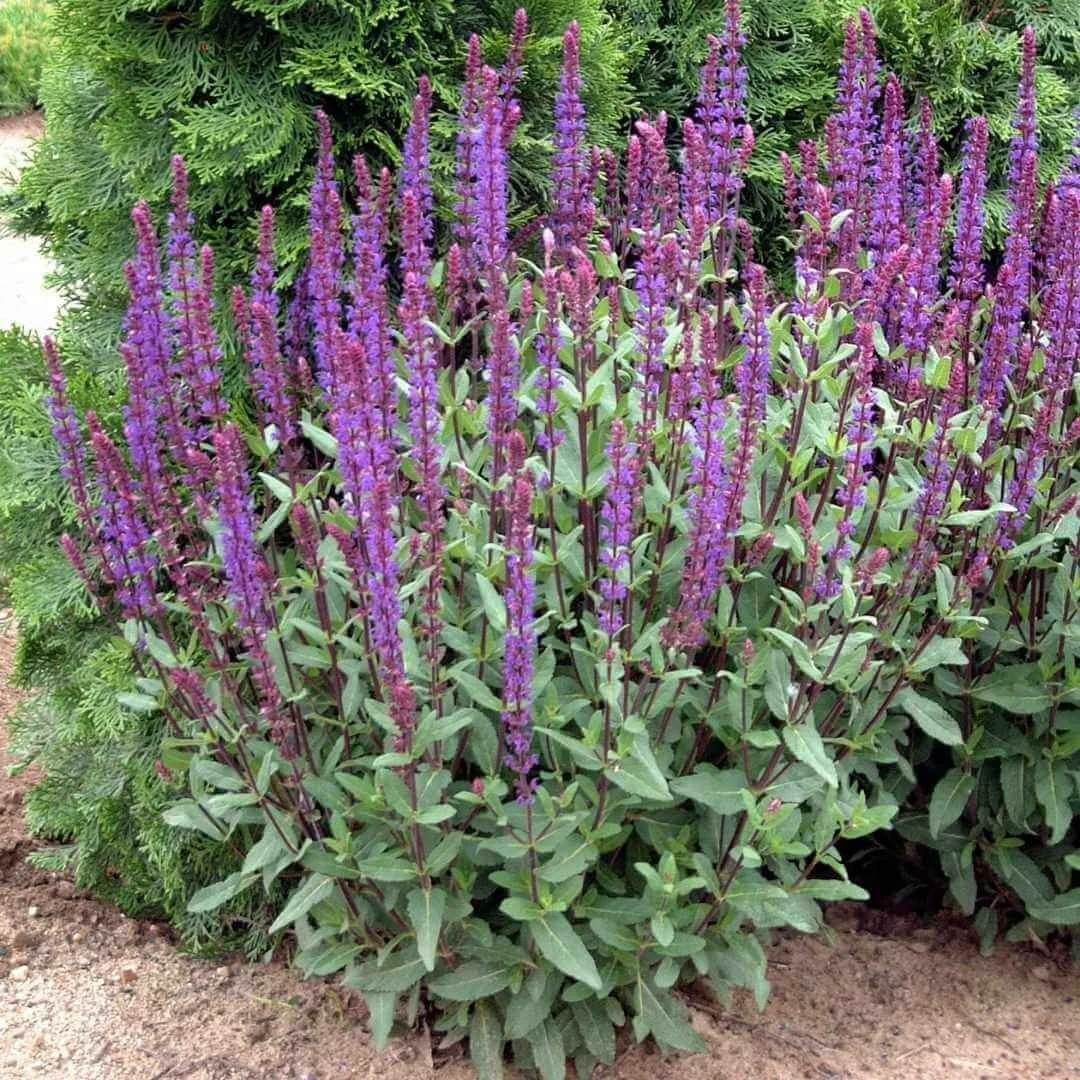
Salvia ‘Caradonna’. Image courtesy of Walters Gardens, Inc.
Salvia is an absolute workhorse in the full sun garden. Long-blooming with spiky flowers, it combines beautifully with so many other perennials like coneflowers and yarrow. It's super easy to grow, making it perfect for beginners, and it's deer-resistant, drought-tolerant, fragrant, and fantastic for pollinators. What's not to love?
Here's a design tip I use all the time: plant salvia alongside peonies. Since peonies have a short bloom time, the long-blooming salvia extends the season of interest in that area of your garden bed. They look gorgeous together and you get weeks more of color.
Important note: when buying salvia, make sure you're getting the perennial types, not the annual salvias that will only last one season. The perennials are in a different section at nurseries.
A few standouts include ‘May Night’, a classic variety that's easy to find, with deep purple flowers. ‘Caradonna’ has blue-violet flowers and deep purple stems. If you want something different, check out pink-flowering ‘Rose Marvel’ or ‘Azure Snow’ with its bicolor blue and white flowers.
Common name: Sage, meadow sage
Botanical name:Salvia species
Native range: Worldwide
Zones: 5-10 (varies by cultivar)
Flowering time: Spring through fall
Flower colors: Purple, pink, blue, white, red
Size range: 1-3 feet tall and wide
7. Veronica
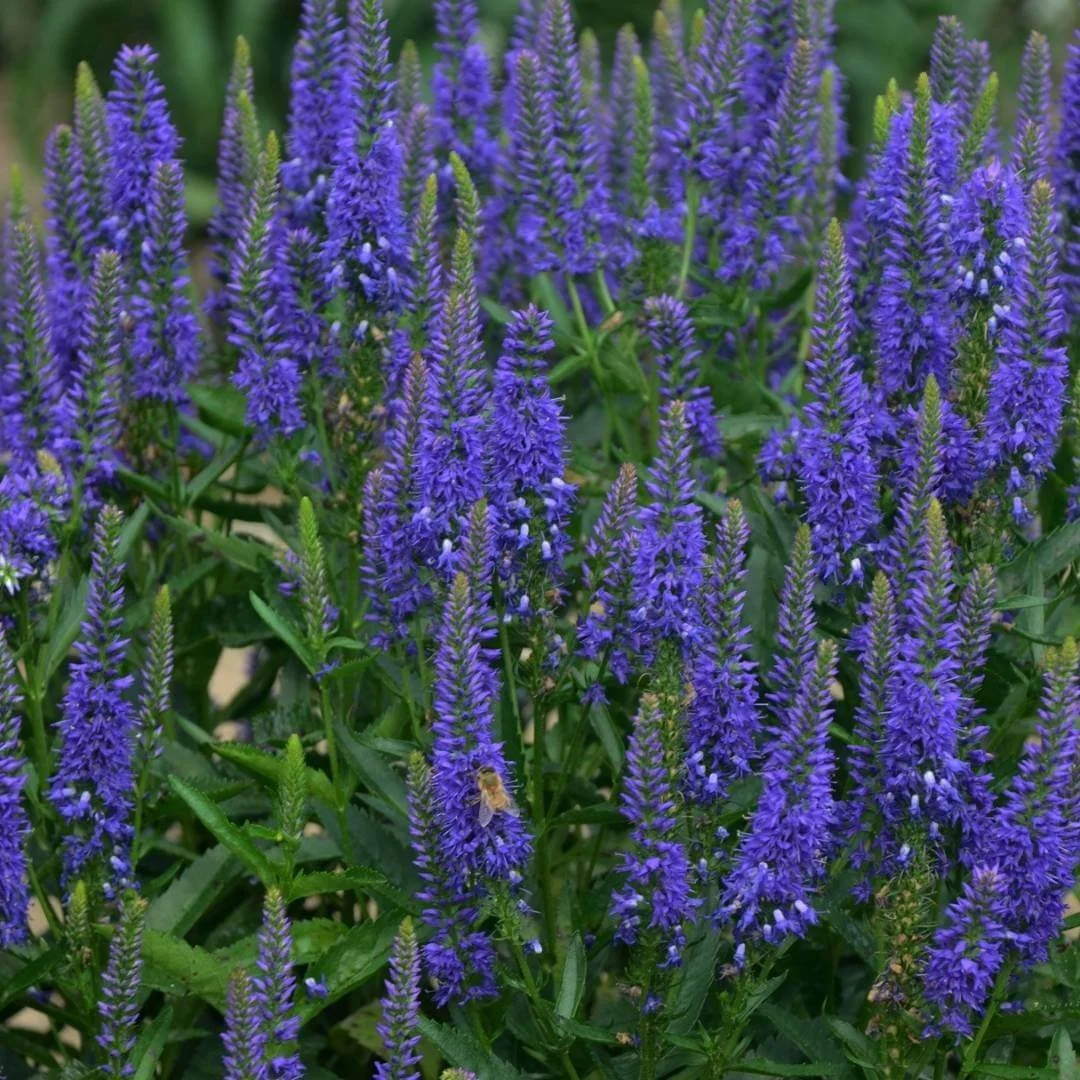
Veronica ‘Royal Rembrandt’. Image courtesy of Walters Gardens, Inc.
Carefree and easy to grow, veronica produces abundant flowers on compact plants that are perfect for the front of the border or along walkways. These full sun perennial plants like regular moisture and will reward you with vertical spikes of flowers that add structure to your garden design.
I love using veronica as a strong vertical accent at the front of the border. Try planting it along side the fleshy green leaves of ‘Autumn Joy’, ‘Autumn Fire’, or ‘Carl’ sedum. The contrast in texture and form is stunning.
As for Veronica varieties, there are quite a few to choose from. To give you an idea, ‘Royal Candles’ has deep purple flowers, while ‘Purpleicious’ features bright purple blooms that look amazing next to ‘Zagreb’ coreopsis. ‘Moody Blues Pink’ has soft pink flower spikes that combine well with dark purple salvias.
Common name: Spike speedwell
Botanical name: Veronica species
Native range: Russia, Europe
Zones: 3-9 (varies by cultivar)
Flowering time: Late spring to late summer
Flower colors: Purple, pink, blue, white
Size range: 1-4 feet high and 1-2 feet wide
Summer Bloomers
Summer is when sunny garden perennials really shine with abundant blooms and vibrant colors!
8. Achillea
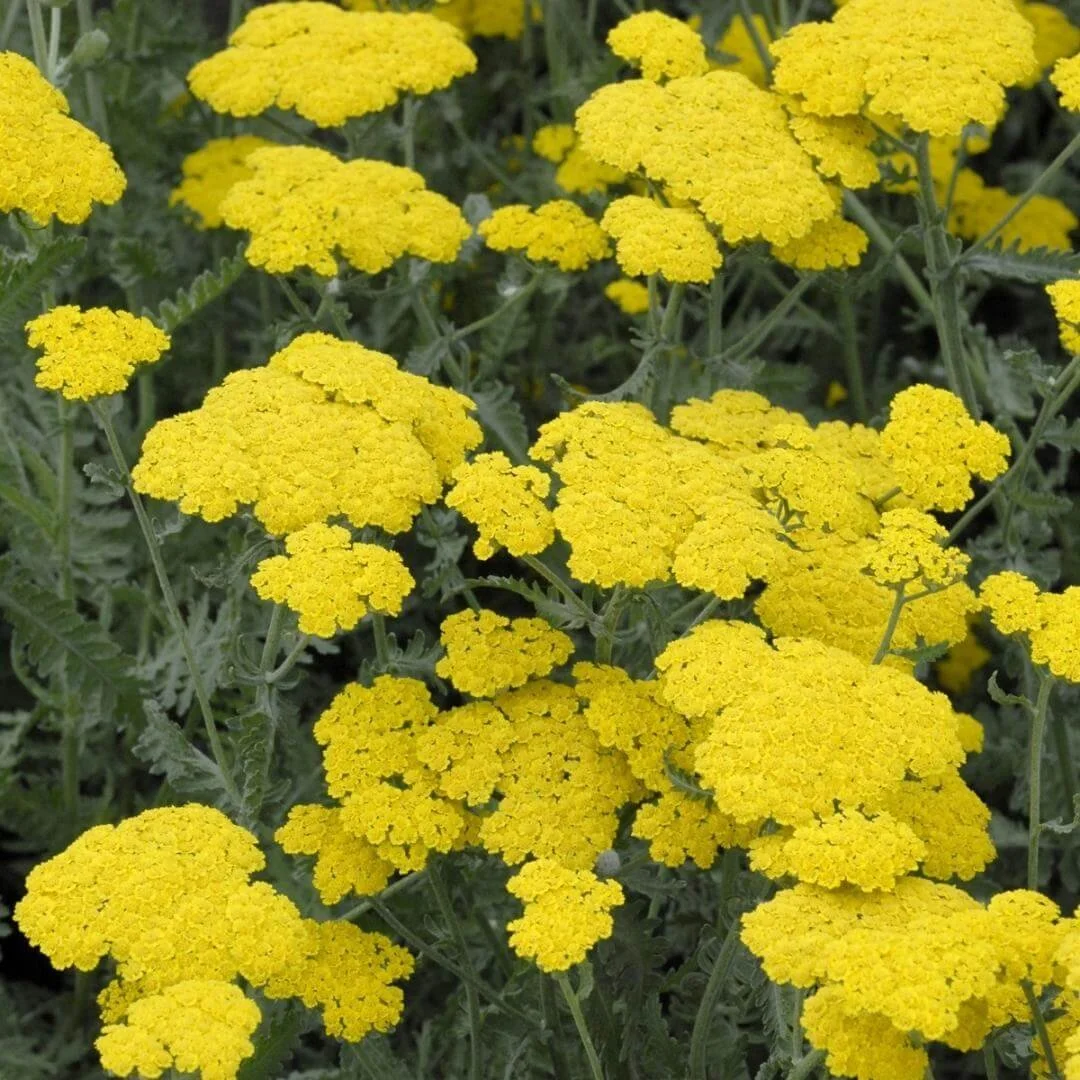
Achillea ‘Moonshine’. Image courtesy of Ball Horticultural Company.
With a long season of bloom, lacy flat-topped flowers, and soft fern-like foliage, yarrow brings an old-fashioned charm to any landscape. The huge variety of colors available lets you get really creative with your plant combinations, and it's deer and rabbit-resistant to boot.
I love yarrow as part of a cottage garden design, and it makes an excellent cut flower for arrangements. Fair warning though: it will multiply freely. This makes it best suited for garden beds where you don't mind that happening and actually welcome those "bonus" plants, like in chaos gardens or lawn replacement perennial beds.
There are so many different varieties available on the market! To name a few, ‘Moonshine’ is a classic with gorgeous lemon-yellow flowers that pair beautifully with Russian sage. ‘Paprika’ has spicy red flowers, and ‘Strawberry Seduction’ has velvety red flowers with golden centers.
Common name: Yarrow
Botanical name: Achillea species
Native range: Europe, Western Asia, North America
Zones: 3-9
Flowering time: Summer to fall
Flower colors: Yellow, pink, red, white, orange, cream
Size range: 1-4 feet high and 2-4 feet wide
9. Agastache
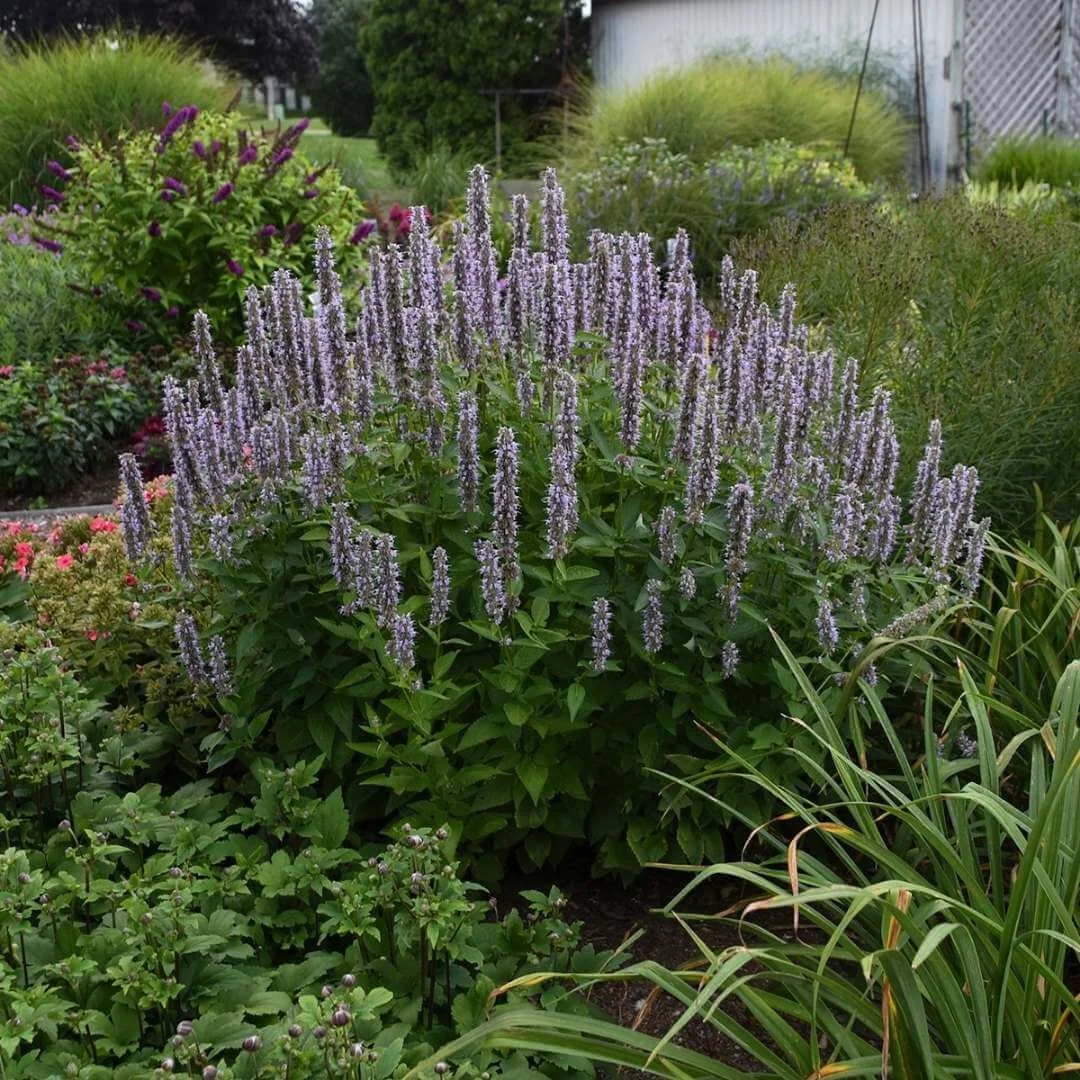
Agastache ‘Blue Fortune’. Image courtesy of Walters Gardens, Inc.
I have to confess: agastache is one of my absolute favorite full sun plants. I love bees, and agastache is a bee favorite, however, in my experience the ability to attract bees varies significantly by cultivar. I've noticed that the native species and 'Blue Fortune' brought them in droves, but when I had 'Guava Lava' in my garden, the bees completely ignored it. Just something to keep in mind.
Peggy Riccio, horticulturist and creator of PegPlant, a fantastic resource and newsletter for Mid-Atlantic gardeners, offers this insight into the native species: "Anise hyssop (Agastache foeniculum) is a summer-blooming, native perennial that attracts bees, butterflies, and hummingbirds. What most people don't know is that anise hyssop is a culinary herb. The anise-scented leaves lend a licorice flavor to baked goods plus they make a great herbal tea." Read more about anise hyssop on her blog.
The native species is easy to find online and in garden centers, and it has a long season of bloom from early summer through fall. Hybrids include ‘Blue Boa’ with long-lasting violet-blue spikes and ‘Kudos Yellow,’ a bright, compact variety that stays under 2 feet tall.
One critical requirement: agastache needs well-draining soil, particularly in winter. This is non-negotiable.
Common name: Anise hyssop, hummingbird mint
Botanical name: Agastache species
Native range: Eastern and Central North America
Zones: 5-10 (varies by cultivar)
Flowering time: Summer
Flower colors: Purple, blue, pink, orange, red, yellow, white
Size range: 1-5 feet tall and 2-4 feet wide
10. Black-Eyed Susan
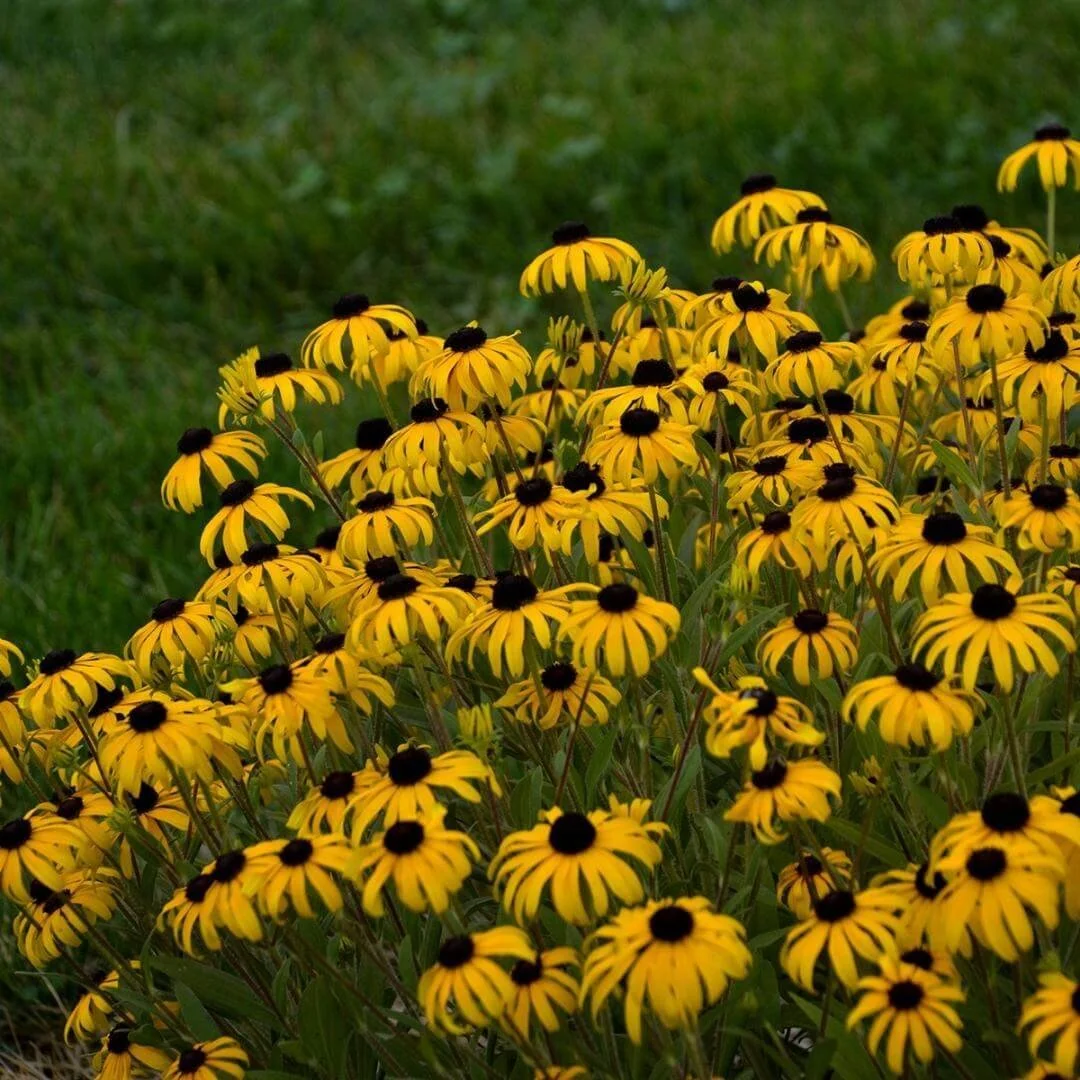
‘American Gold Rush’ Black-eyed Susan. Image courtesy of Walters Gardens, Inc.
With their long season of bloom and cheery flowers that are easy to combine with other sunny garden perennials, black-eyed Susans are landscaping staples for good reason. They make excellent cut flowers and are pollinator magnets.
I love placing a large, cheerful grouping of 3-5 plants in front of houses with dark grey or dark blue siding. The yellow flowers really pop against those colors! Black-eyed Susans also look fantastic combined with purple flowers like Blue Boa agastache, salvia, and Hummelo betony.
‘Goldsturm’ was a longtime favorite, but ‘American Gold Rush’ is becoming the new go-to because it's longer-lived, resistant to fungal diseases, and has a neat dome-shaped habit with abundant flowers from summer into fall. ‘Indian Summer’ has huge flowerheads, and ‘Little Suzy’ is small and compact, growing only 12-18 inches tall.
Common name: Black-Eyed Susan
Botanical name: Rudbeckia hirta, Rudbeckia fulgida
Native range: Eastern and Central North America
Zones: 3-9 (varies by cultivar)
Flowering time: Summer to early fall
Flower colors: Yellow, gold, rust, bicolor
Size range: 1-7 feet tall and 2-4 feet wide (varies by variety)
11. Coneflower
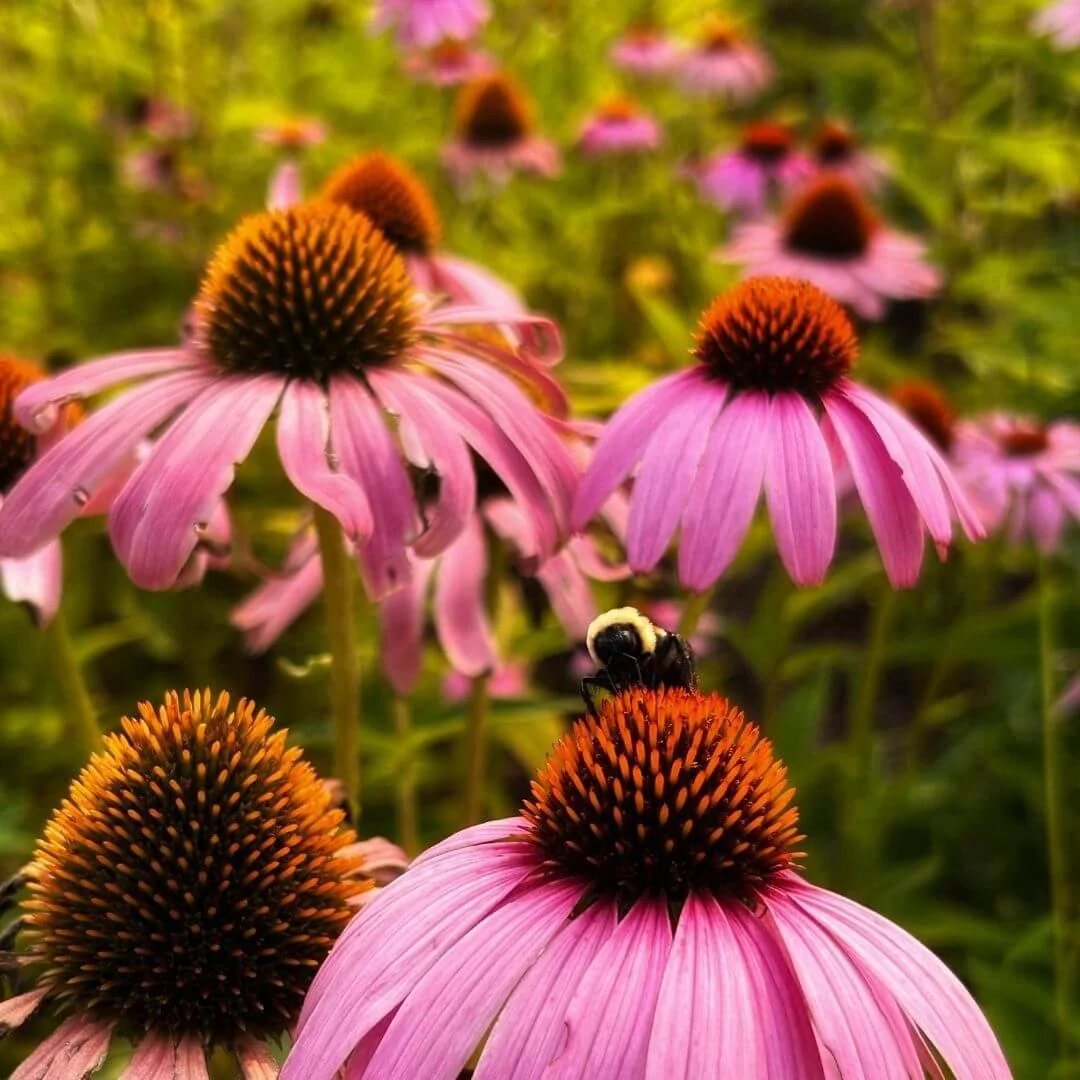
Purple coneflower. Image © Plant and Bloom Design Studio
Coneflowers are full sun plants that deliver a long season of bloom with distinct daisy-like flowers featuring prominent cone-shaped centers full of seeds. Birds and pollinators absolutely love them!
Here's an important tip: stick with the straight species or single-flowering types for the greatest pollinator appeal. There are so many kinds and colors on the market now that it can be overwhelming. Check out my list of different types if you need help choosing.
The straight species Echinacea purpurea offers unbeatable wildlife appeal, and ‘Pow Wow White’ is a white-flowering variety that blooms heavily on strong stems. ‘Magnus’ is a classic purple variety with large flowers, coppery-brown centers, and flowers that age to pale rose.
Common name: Coneflower
Botanical name: Echinacea purpurea and hybrids
Native range: North America
Zones: 3-9 (varies by cultivar)
Flowering time: Summer to early fall
Flower colors: Purple, red, orange, yellow, green, cream
Size range: 1-5 feet high and 1-2 feet wide
12. Coreopsis (Threadleaf Tickseed)
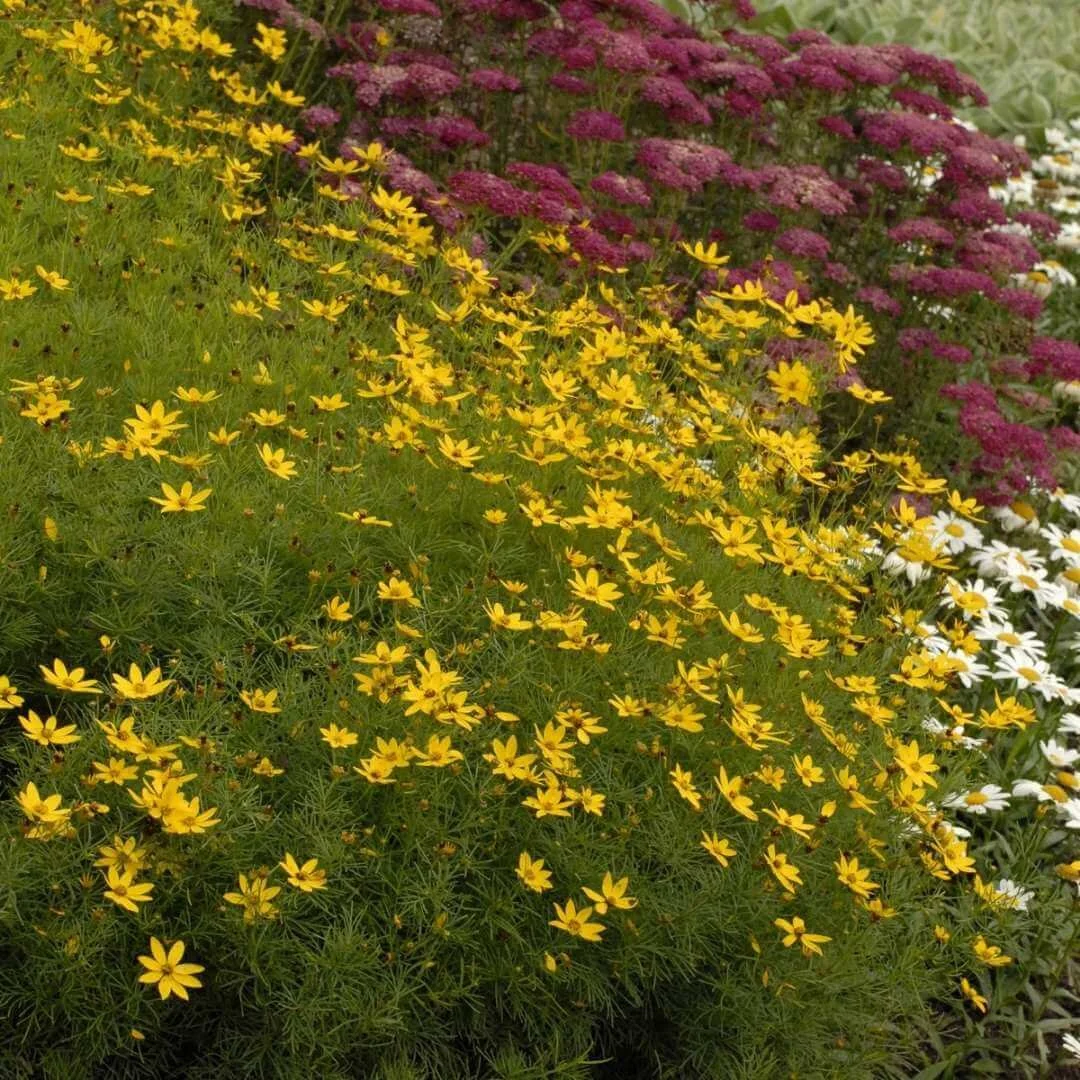
Coreopsis ‘Zagreb’. Image courtesy of Walters Gardens, Inc.
Threadleaf coreopsis is a compact sunny garden perennial topped with small, daisy-like flowers that feature contrasting centers and rise above dense, fine-textured foliage. It’s also very easy to grow! It tolerates infertile soil, sandy soil, rocky soil, drought, heat, and humidity. Basically, it laughs in the face of adversity 🤣.
I love how this plant brings both texture and color to the garden. It makes a great companion for other summer-blooming perennials like salvia, coneflower, and Russian sage. The fine foliage mimics grass and brings wonderful textural diversity to perennial beds.
Among the many cultivated varieties, ‘Zagreb’ (golden yellow flowers) and ‘Moonbeam’ (pale lemon yellow flowers) are both enduring favorites. ‘Red Elf’ has velvety red flowers with bright yellow centers, and ‘Creme Caramel’ has creamy peach-colored blooms.
Common name: Threadleaf coreopsis, tickseed
Botanical name: Anacis verticillata (formerly Coreopsis)
Native range: Eastern and Central North America
Zones: 3-10 (varies by cultivar)
Flowering time: Summer
Flower colors: Yellow, pink, red, cream
Size range: 1-3 feet tall and 2-3 feet wide
13. Daylily
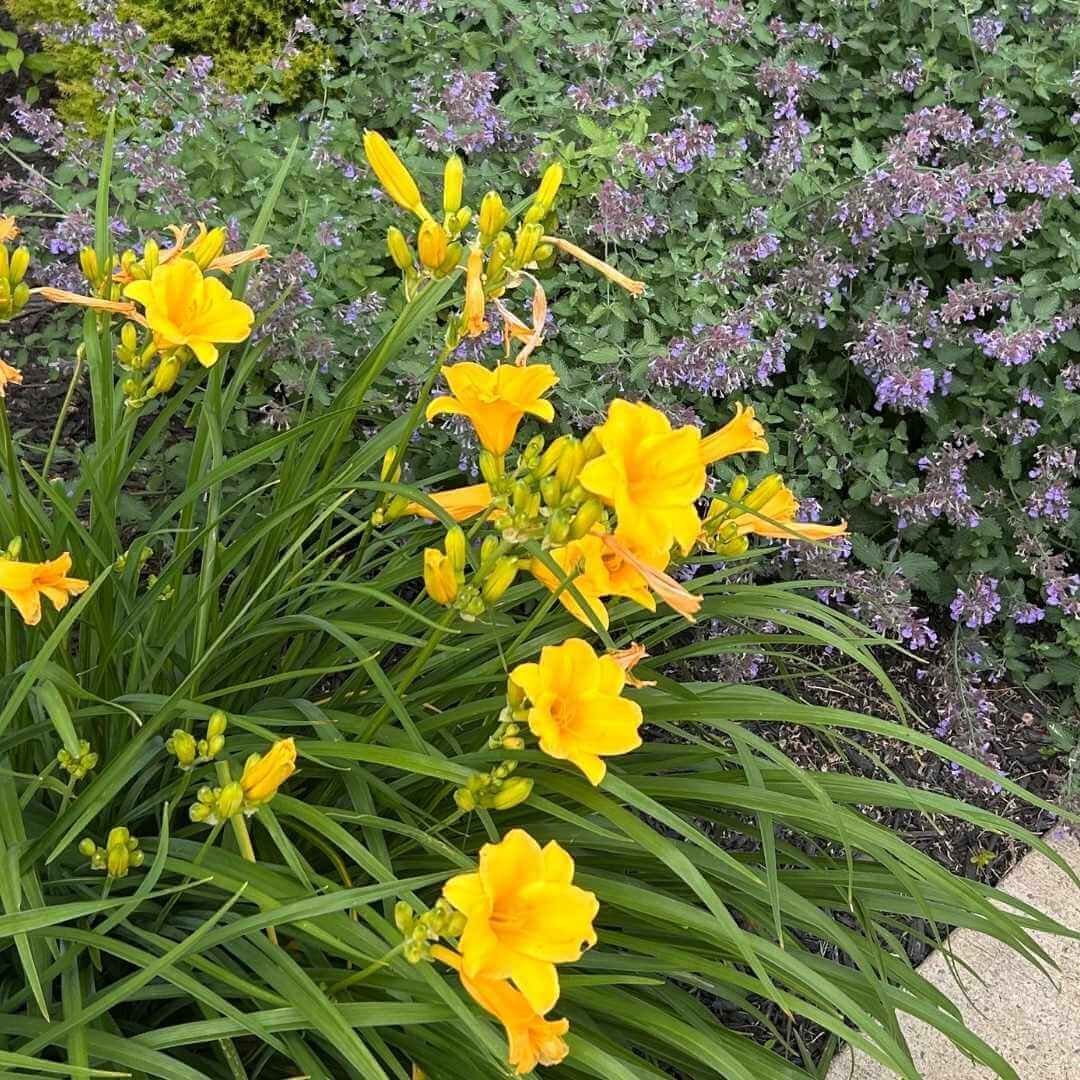
Stella D’Oro daylilies and catmint - a classic perennial plant combination. Image © Plant and Bloom Design Studio
Daylilies bring cheerful, bright flowers to the garden and have been widely hybridized, giving you a huge selection of varieties to choose from. The flower forms of this full sun plant range from simple to ruffled to spider-shaped, and the color palette is incredibly diverse.
(Btw, when I pulled this picture of daylilies and catmint to add to this article, I thought how on earth could I forget to include catmint on this list? It's a landscaping staple. What is wrong with me? But, I couldn't bear to eliminate any of the other plants from this list! That would feel like saying you don't love all your children. So I’ll just say that catmint absolutely deserves a spot in your perennial garden. You can read more in my article about catmint.)
Fair warning: daylilies are frequently eaten by deer. If deer pressure is high in your area, you might want to choose other options from this list.
‘Stella d'Oro’ and ‘Happy Returns’ are the yellow varieties you’ll see most often at garden centers, but there are plenty of other kinds available as well.
Common name: Daylily
Botanical name: Hemerocallis species
Native range: Asia
Zones: 3-9 (varies by cultivar)
Flowering time: Summer
Flower colors: Gold, yellow, cream, pink, red, purple
Size range: 1-1.5 feet high
14. Gaillardia (Blanket Flower)
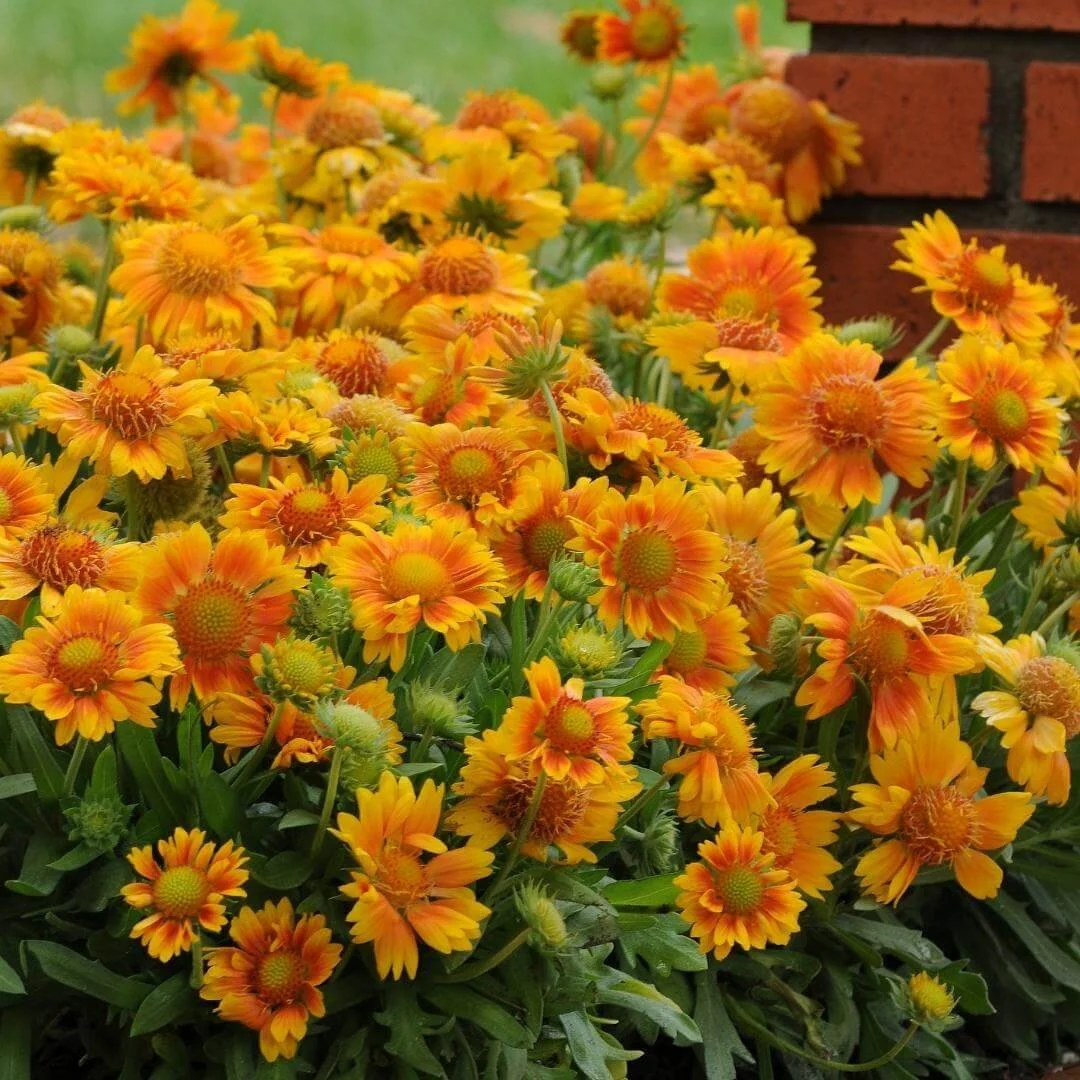
Gaillardia Mesa™ Peach. Image courtesy of Ball Horticultural Company.
Long-blooming full sun plants with a festive, warm color palette, blanket flowers are favorites of bees and butterflies. They're also deer and rabbit-resistant, which is always a bonus.
Gaillardia works beautifully as part of a warm red-orange-yellow color scheme alongside black-eyed Susans and red coneflowers. Or, create a striking color contrast by pairing gaillardia with purple flowering plants like salvia or Russian sage.
Popular Gaillardia choices include varieties with vibrant bicolor blooms in shades of red, orange, and yellow like the Spin Top™ series and ‘Arizona Sun’.
Common name: Blanket flower
Botanical name: Gaillardia species and hybrids
Native range: North and South America
Zones: 3-10 (can vary by variety)
Flowering time: Summer through early fall
Flower colors: Yellow, orange, red, burgundy
Size range: 1-3 feet tall and wide
15. Gayfeather
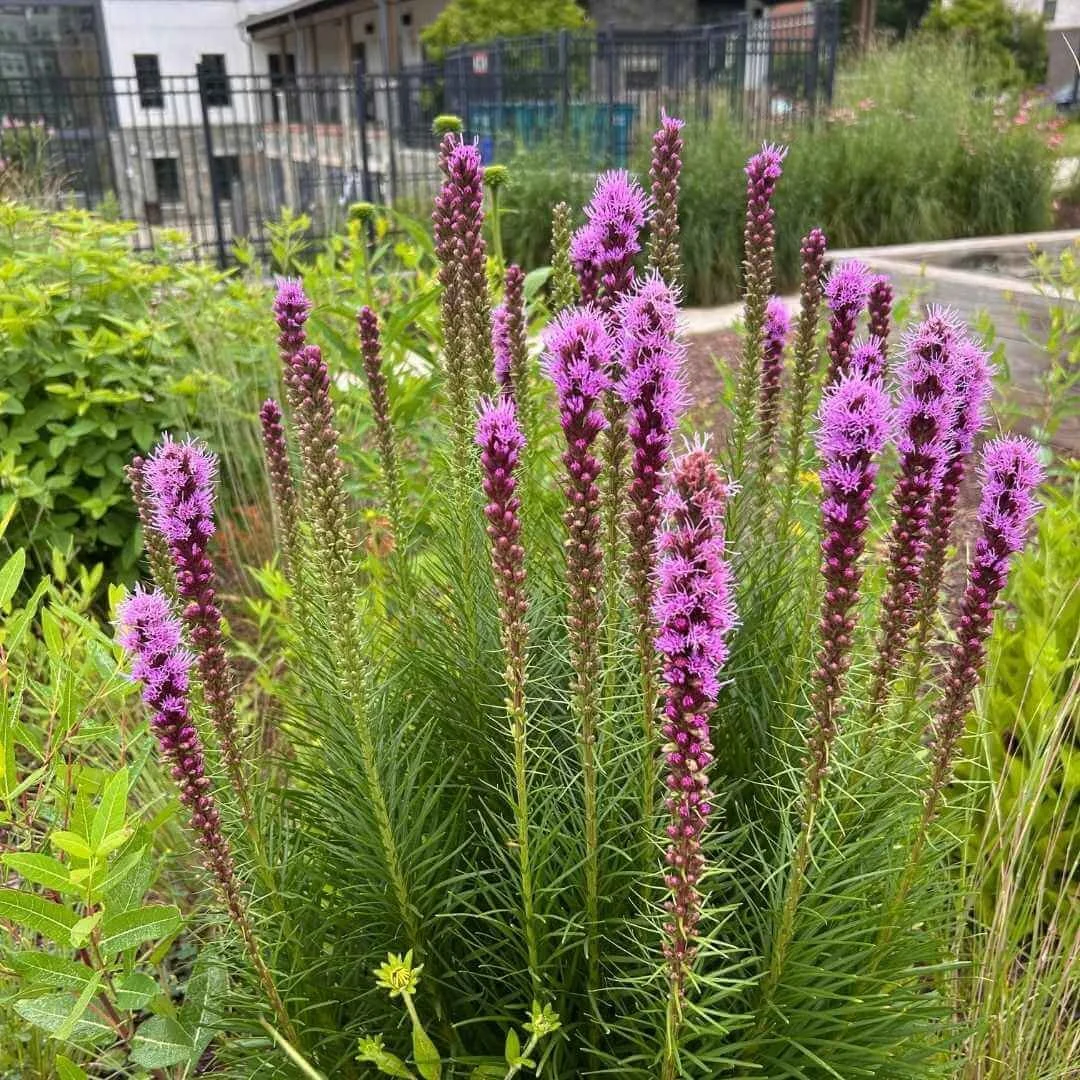
Gayfeather. Image © Plant and Bloom Design Studio
Gayfeather features spiky flowers that bloom from the top down (fascinating to watch!). It's a pollinator favorite as both a host plant and nectar source, and it's easy to grow with few disease problems. The interesting linear leaf shape brings nice contrast when planted next to other perennials like black-eyed Susans and milkweed.
This was one of the first sunny garden perennials I ever grew, and I was amazed that something so beautiful could be so effortless to care for. I paired it with cutleaf coneflower (Rudbeckia laciniata), purple coneflower, and butterfly weed and we had nonstop butterflies all summer long.
Gayfeather is perfect for pollinator gardens or bringing a spiky vertical accent to perennial borders. One note: gayfeather flowers for 3+ weeks, so be sure to plant it alongside other perennials to extend the season of interest in that area.
The most common varieties you’ll see are the native Liatris spicata, with 2-3 foot purple flower spikes, and ‘Kobold,’ which offers deep purple blooms on a more compact 1-3-foot plant, perfect for smaller garden beds.
Common name: Gayfeather, blazing star
Botanical name: Liatris spicata
Native range: Eastern and Central US
Zones: 3-9 (varies by cultivar)
Flowering time: Summer
Flower colors: Pink, purple, white
Size range: 3-6 feet high and 1-1.5 feet wide
16. Lavender
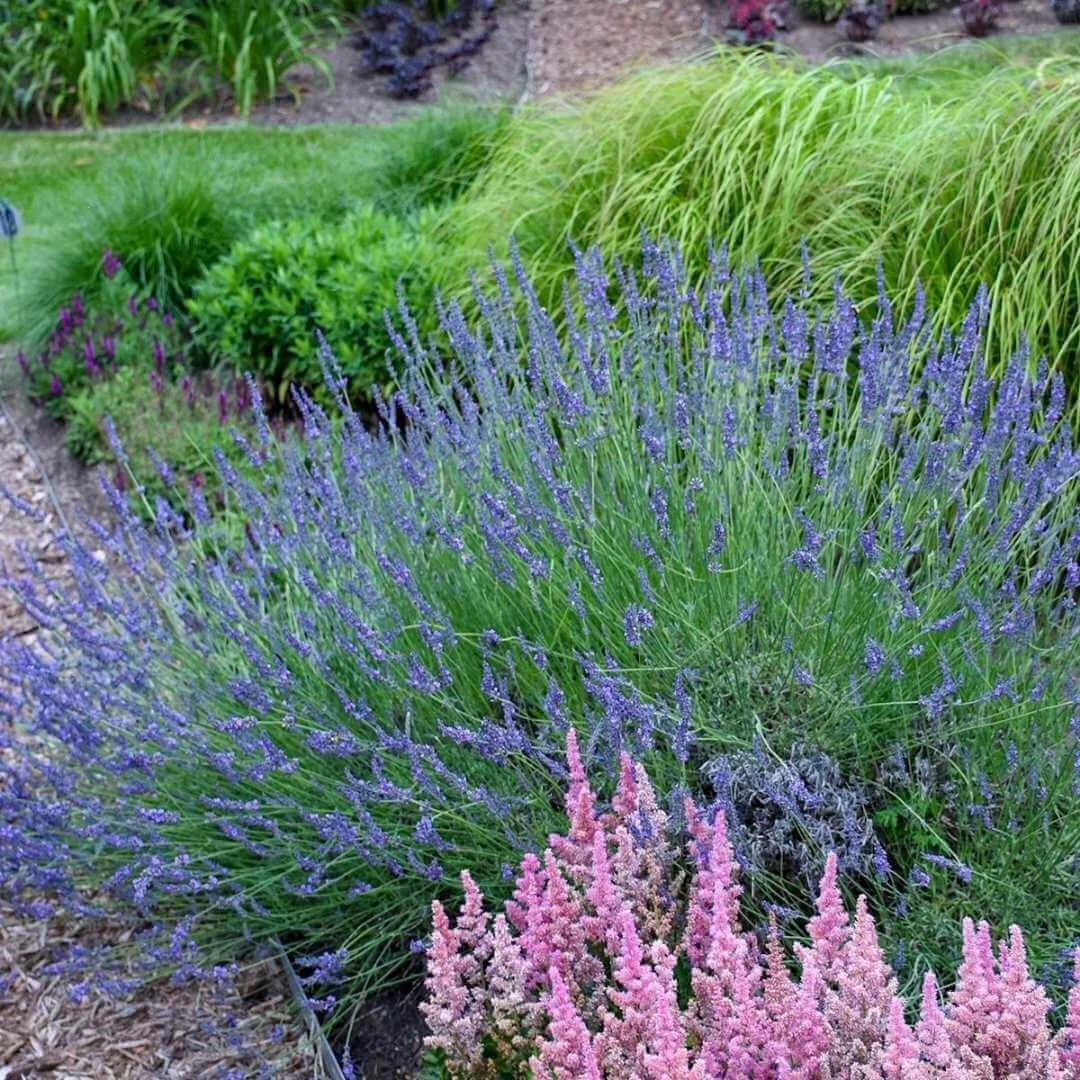
Phenomenal® Lavender. Image courtesy of Walters Gardens, Inc.
Ah, lavender. The fragrance, the spiky purple flowers, the gorgeous fine-textured silvery foliage. It's garden magic. Lavender can be picky about heat, humidity, and soil drainage, but cultivated types have been developed specifically to solve those problems.
Bumblebees absolutely adore this perennial for full sun, and certain varieties like the popular ‘Phenomenal’ offer a notably long season of bloom for pollinators as well as increased disease resistance.
Here's important advice: there are actually a few different types of lavender (English, Spanish, and French), plus the lavandin hybrids, each with different characteristics. Don't just grab any lavender you see at the nursery or online. I wrote an entire article called "Which Lavender Plant is Best for My Garden?" to help you navigate the options and find the right one for your particular garden situation.
Common name: Lavender, English lavender, Spanish lavender, French lavender, lavandin
Botanical name: Lavandula angustifolia (English), Lavandula stoechas (Spanish), Lavandula dentata (French), Lavandula x intermedia (lavandin hybrids)
Native range: Europe and North Africa
Zones: 5-10 (depends on variety, so check tags)
Flowering time: Varies greatly by variety
Flower colors: Lavender, purple, blue, white, pink
Size range: 1-3 feet tall and wide (varies by cultivar and type)
17. Monarda (Bee Balm)
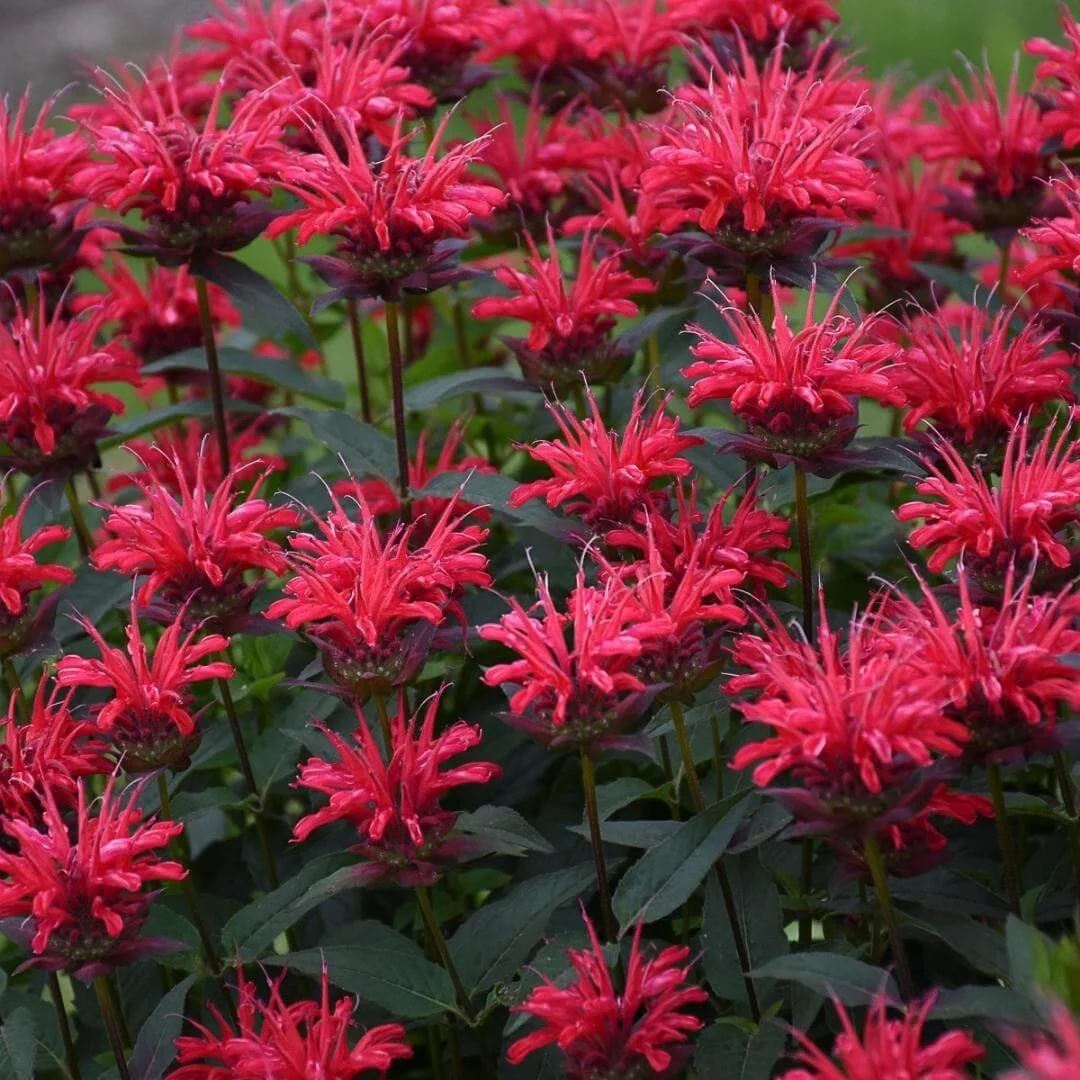
Bee Balm Red Velvet. Image courtesy of Walters Gardens via National Garden Bureau
Monarda (bee balm) has showy, uniquely shaped flowers that contrast beautifully with other blossoms in the garden. It attracts hordes of bees (thus the name 😉), and its leaves are wonderfully aromatic.
Here's another fantastic insight from Peggy Riccio at PegPlant: "I am currently growing several species of Monarda in my Northern Virginia garden, all of which are perennials. Monarda plants are fascinating – many of them can be used as either a medicinal or culinary herb (for flavor, color, or tea). Plus they are native plants with beautiful, unusual flower structures, and they attract pollinators and hummingbirds." Read more about Monarda on her blog.
This plant looks amazing in naturalized settings. Give it space in a pollinator garden or cottage garden because when bee balm is happy, it will spread vigorously. This will either make you extremely happy or drive you a little crazy, depending on your gardening personality!
There are many types of Monarda on the market. To name a few: ‘Jacob Cline’ is a tried-and-true favorite with bright red flowers; ‘Raspberry Wine’ offers improved mildew resistance and raspberry-colored blooms; and the native Monarda fistulosa (wild bergamot) is excellent for planting near bee hives.
Common name: Bee balm, bergamot, Oswego tea
Botanical name: Monarda species
Native range: North America
Zones: 4-9
Flowering time: Summer
Flower colors: Pink, purple, lavender, red
Size range: 2-4 feet high and 2-3 feet wide (varies by cultivar)
18. Mountain Mint
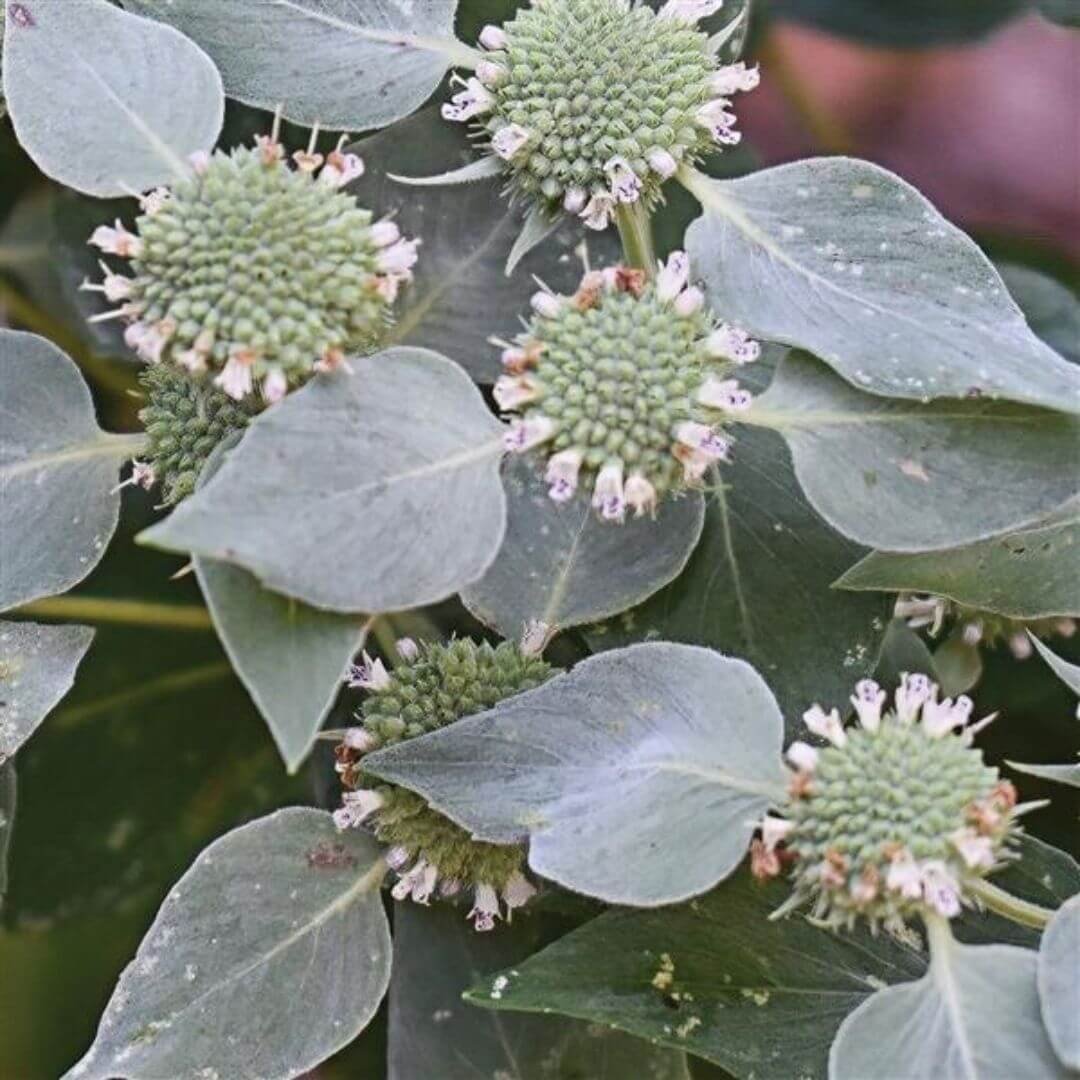
Blunt Mountain Mint. Image courtesy of Ball Horticultural Company.
If you want to attract pollinators to your full sun garden beds, mountain mint is probably one of the best plants you could choose. 🐝 Seriously. Loads of bees, butterflies, and beneficial insects love the small white flower clusters, and the leaves have a wonderful minty fragrance.
Mountain mint can get a bit aggressive when it's happy, but it's very easy to pull out if it spreads beyond where you want it to grow. It has a somewhat wild, naturalistic look, so it's most at home in layered, nature-inspired garden beds, pollinator gardens, or side yards and backyard areas rather than formal front yards.
You’ll most often see the native species blunt mountain mint, with its broader leaves, or narrowleaf mountain mint, which has a finer texture. Another option, ‘Smokey’, features gray-green foliage dusted in powdery silvery tones.
Common name: Mountain mint
Botanical name: Pycnanthemum species
Native range: Eastern and Central US
Zones: 3-9
Flowering time: Summer to early fall
Flower colors: White
Size range: 1-3 feet high and wide
19. Tall Garden Phlox
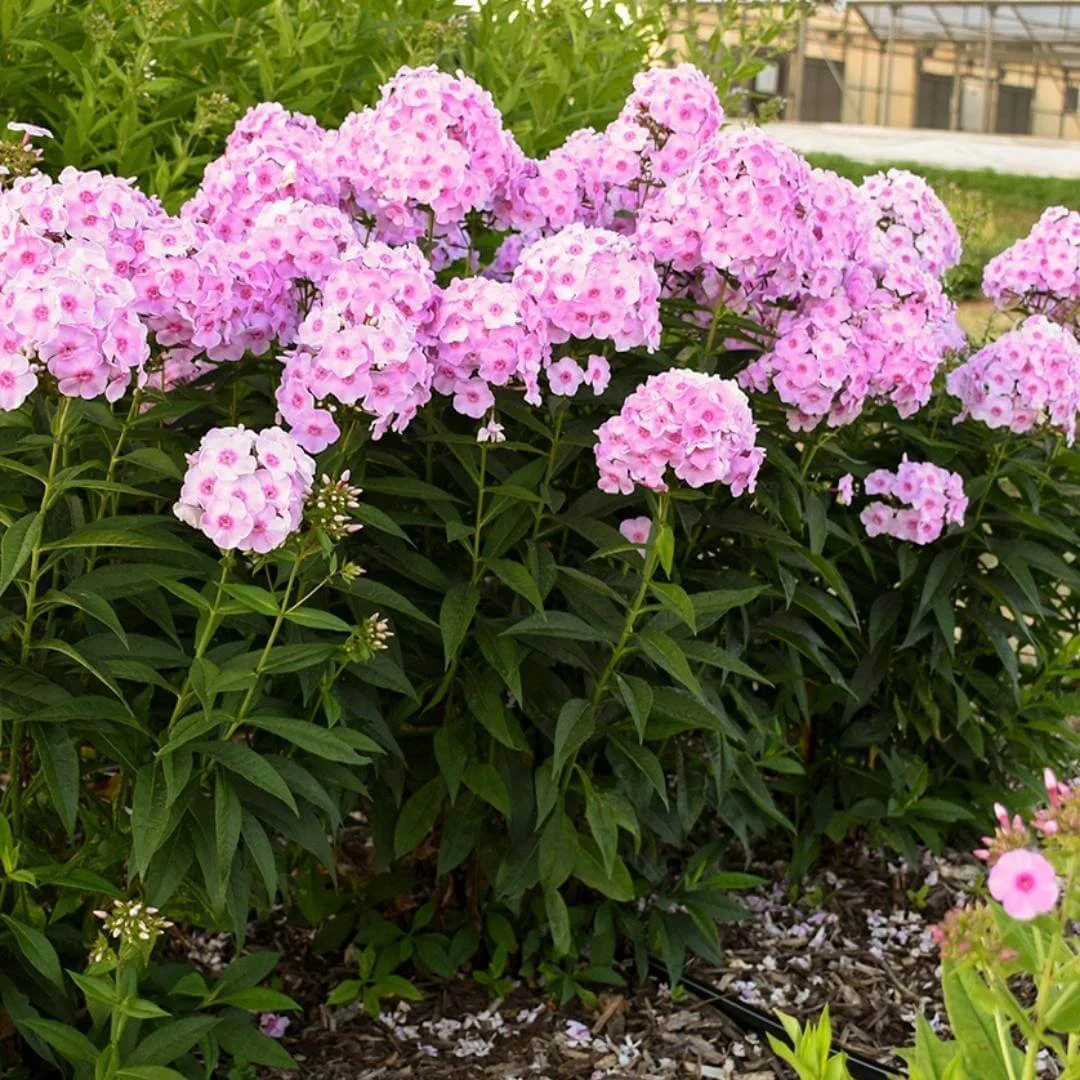
Phlox Luminary™ ‘Opalescence’. Image courtesy of Walters Gardens, Inc. via National Garden Bureau.
Tall garden phlox is a clump-forming, full sun plant that comes in a wide range of flower colors and is an absolute magnet for butterflies and hummingbirds. It prefers moist, fertile, well-drained soils, and deadheading prolongs blooming.
Garden phlox can be prone to diseases and pests, but it's totally worth seeking out, especially if you choose newer cultivars developed to stay healthier and perform better.
When shopping for these perennials for full sun, look for disease-resistant cultivars like ‘Jeana’ (pink flowers) and the Luminary™ series, including ‘Opalescence’ (pictured above). ‘Flame Pro Baby Doll’ has striking white flowers with pink centers.
Common name: Tall phlox, garden phlox
Botanical name: Phlox paniculata
Native range: Eastern and Central US
Zones: 4-8
Flowering time: Summer
Flower colors: Pink, lavender, purple, blue, red, burgundy, white, variegated
Size range: 2-4 feet tall and 2-3 feet high
20. Lamb’s Ears and Betony
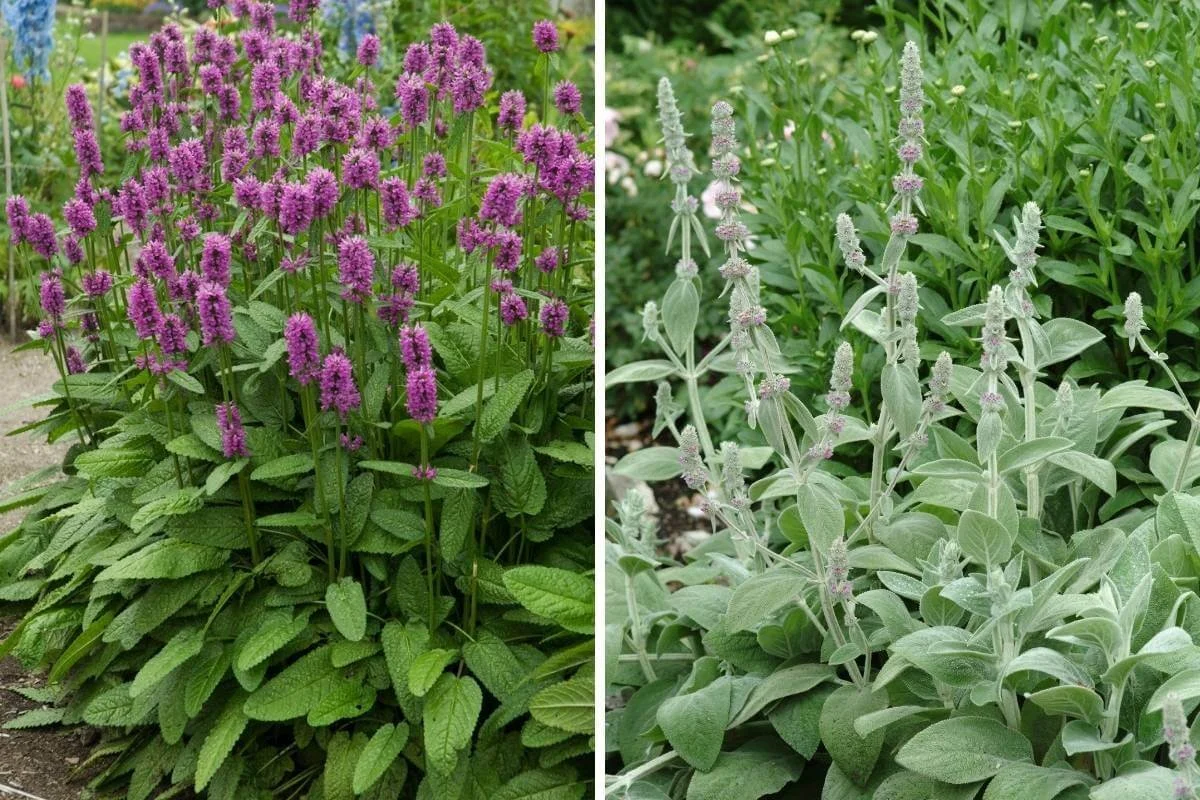
Stachys ‘Hummelo’ (L) and Stachys ‘Silver Carpet’ (R). Images courtesy of Ball Horticultural Company.
Okay, here's where things get interesting. When I started writing this article, I included Stachys in this list, which historically encompassed two types of amazing perennials: lamb's ears (Stachys byzantina) and betony (Stachys officinalis). Lo and behold, as I'm doing my research, I discover that betony has been reclassified as Betonica officinalis. Sigh. These botanical name changes keep us on our toes, don't they?
I'm keeping both of these full sun plants under the same heading on my list because you'll still encounter Hummelo betony as “Stachys” at garden centers or online nurseries. So consider this a bonus discovery! I love these two plants so much that I couldn’t leave either one out.
Lamb's ears are grown for their soft, silvery foliage. Plant them beside purple or pink flowers or even dark green boxwoods, and those colors will really pop. Betony is grown for vibrant, striking flower spikes that pollinators adore.
Online and in garden centers, ‘Hummelo’ is the go-to betony variety you’ll see most often. For lamb’s ears, my favorite picks are ‘Helen von Stein,’ known for its large leaves and minimal flowering, and ‘Silver Carpet’, which forms a thick, dependable groundcover.
Common name: Betony, lamb's ears
Botanical name: Stachys officinalis (Betonica officinalis), Stachys byzantina
Native range: Europe, Western Asia, North Africa
Zones: 4-9 (varies by type)
Flowering time: Summer
Flower colors: Purple, pink
Size range: 1-2 feet high and 1-2 feet wide (varies by type)
Fall Bloomers
These best full sun plants extend your garden's beauty into autumn when many other perennials are winding down.
21. Aster
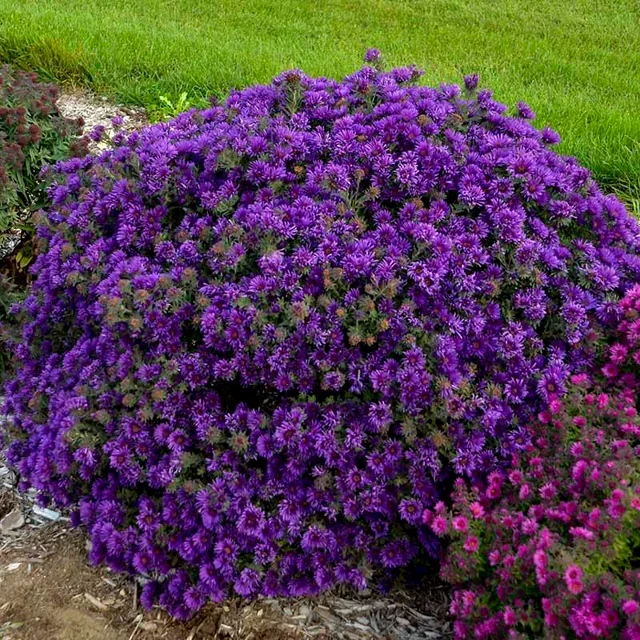
Grape Crush New England Aster. Image courtesy of Walters Gardens via National Garden Bureau.
Asters add a splash of color to your garden in the fall when many other plants are fading. These full sun plants attract pollinators and keep your yard lively late in the season.
Here’s the deal with these sunny garden perennials, there are three main types: American asters, Stokes asters, and woodland asters, plus many cultivated varieties developed for gardens. The native species work best in pollinator gardens and naturalistic settings, while cultivated varieties tend to be more compact and mounded, making them perfect for neat garden beds.
Here are a few of my favorite varieties: ‘Pink Crush’ and ‘Grape Crush’ form tidy mounds and bloom heavily; white wood aster (Eurybia divaricata) is a native standout that thrives in the dry shade beneath trees; and the native New England aster (Symphotrichum novae-angliae) fits beautifully into a naturalized pollinator garden.
Common name: Aster
Botanical name: Symphotrichum novae-angliae, Stokesia laevis, Eurybia divaricata, and hybrids
Native range: North America
Zones: 3-9 (depending on variety)
Flowering time: Late summer to fall (depending on variety)
Flower colors: Purple, pink, blue, white, yellow
Size range: 1-6 feet tall (depending on variety)
22. Goldenrod
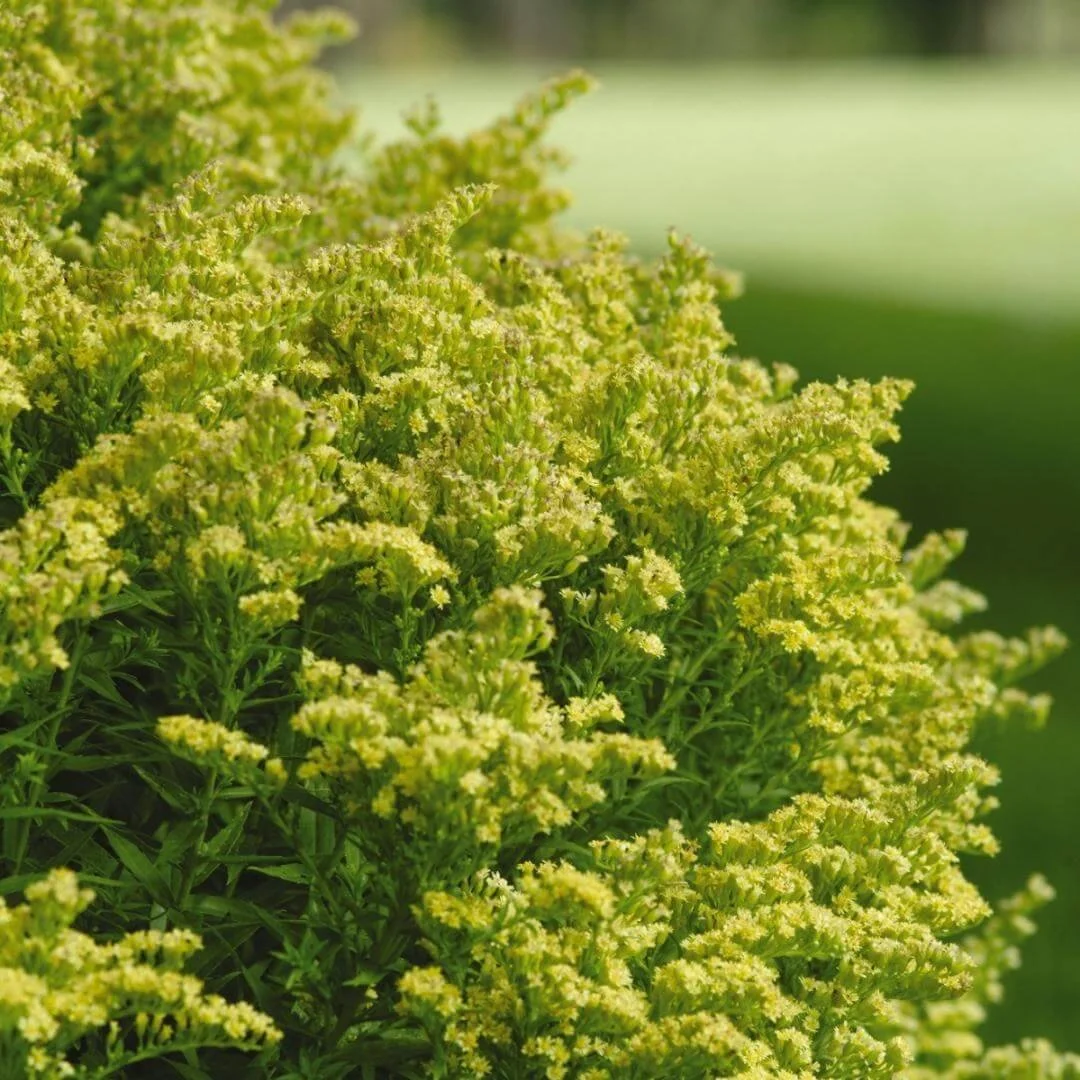
Little Lemon Goldenrod. Image courtesy of Ball Horticultural Company.
Goldenrod is an essential full sun plant for fall color and a powerhouse for supporting late-season pollinators. It’s deer-resistant, handles everything from wet to clay to poor soil, and looks incredible when its bright yellow blooms light up the garden alongside autumn foliage. So, why don’t more people grow it? 🤷♀️
Here’s the reason: many gardeners mistake goldenrod for ragweed. Important PSA: they’re not the same plant at all. Goldenrod doesn’t cause ragweed allergies, but it gets unfairly blamed simply because it blooms at the same time.
Check tags carefully because there's huge variation in plant sizes amongst the different types. Native straight species can be weedy and very tall, so stick with cultivated varieties if you don't have tons of space or prefer a more controlled look.
‘Fireworks’ is my favorite for home gardens. It has electric yellow, arching flower plumes that resemble exploding fireworks and is a well-behaved 2-3 feet tall and wide. ‘Little Lemon’ is great for the front of borders at only 12-18 inches tall.
Common name: Goldenrod
Botanical name: Solidago species
Native range: North America
Zones: 2-9 (depending on variety)
Flowering time: Late summer to fall
Flower colors: Yellow
Size range: 1-8 feet high and 1-6 feet wide (depending on variety, check tags)
23. Joe Pye Weed
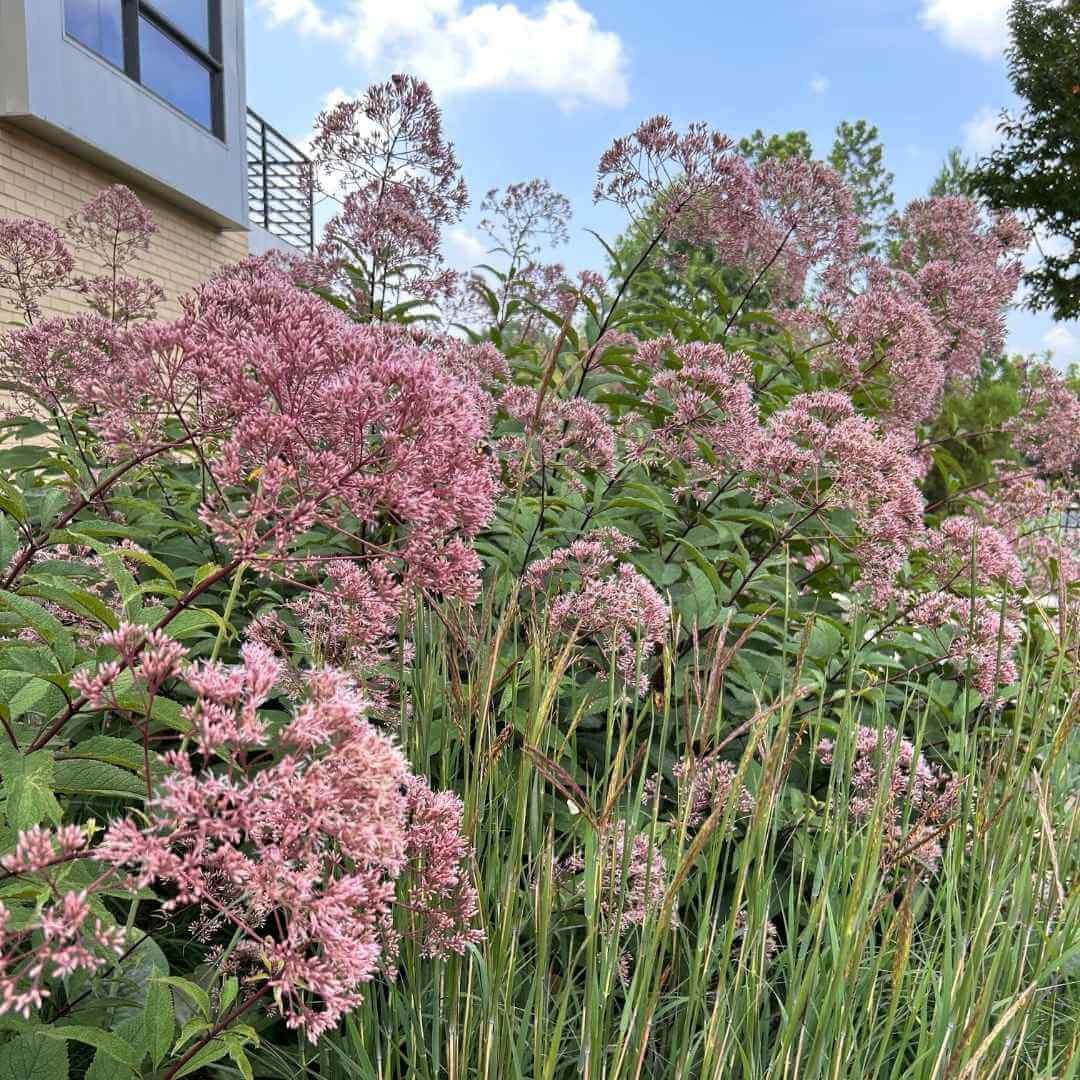
Joe Pye Weed and Big Bluestem Grass. Image © Plant and Bloom Design Studio
With dusky mauve-purple flowers and a late-season bloom time, Joe Pye weed is a pollinator favorite that brings height and drama to the fall garden.
I love putting a clump at the back or corner of a border garden. It's also incredibly useful for filling up little-used or awkward areas of the yard in sunny spots along fences or property lines.
The straight species can be quite tall and somewhat sparsely flowering, but there's a size and type for every garden situation now. ‘Gateway’ is a popular variety that’s shorter, bushier, and more floriferous than the species. ‘Little Joe’ is only 3-4 feet tall and 1-3 feet wide, making it perfect for smaller gardens.
Common name: Joe Pye weed
Botanical name: Eutrochium species (formerly Eupatorium)
Native range: Eastern North America
Zones: 3-9
Flowering time: Midsummer to fall
Flower colors: Pink, mauve, purple
Size range: 3-9 feet tall and 2-4 feet wide (varies by cultivar, so check tags)
24. Russian Sage
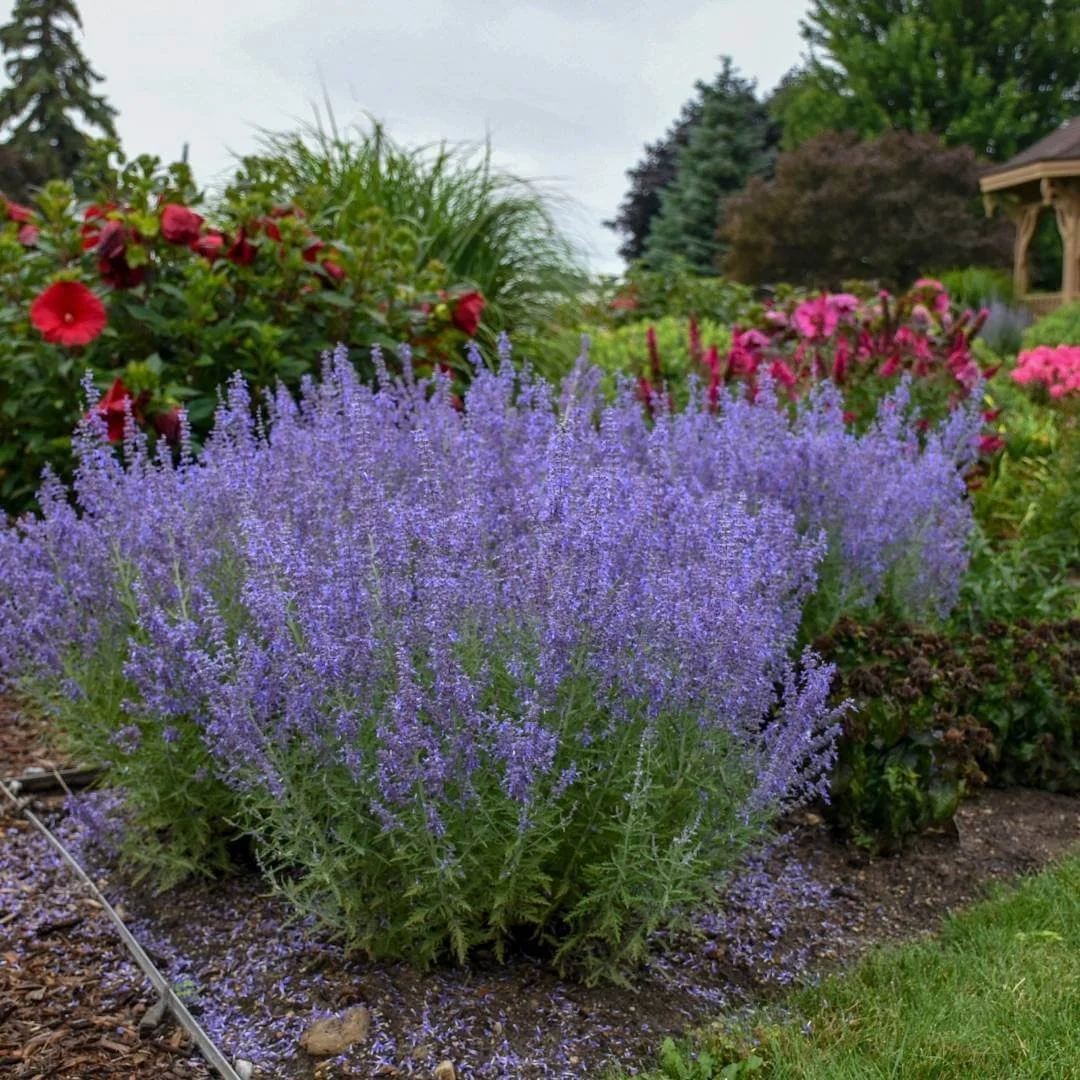
Denim’n’Lace Russian Sage. Image courtesy of Walters Gardens, Inc.
Russian Sage is one of my absolute favorite perennials for full sun. It has a long bloom time with an airy look, silvery stems, and purple to blue flowers. It's a bumblebee favorite that pairs well with so many other types of perennials. There's a size for every garden, though it does need good drainage and handles heat beautifully.
If there's a space for Russian sage in a design I'm working on, I will definitely use it. I even have Russian sage growing in my own garden, and I can spend all day watching bumblebees visit the flowers.
The straight species is wonderful with its silvery, airy appearance and delicate flowers, but it's quite large and needs room. Many cultivated types are on the market now. ‘Denim 'n Lace’ has strong upright stems, blue flowers, and a very full flowering look. ‘Little Spire’ is a compact go-to for small spaces, growing just 24 inches tall.
Common name: Russian sage
Botanical name: Salvia yangii
Native range: Central and Southwestern Asia
Zones: 4-9
Flowering time: Midsummer to fall
Flower colors: Purple, blue
Size range: 2-4 feet tall and wide (depending on cultivar, check tags)
25. Sedum
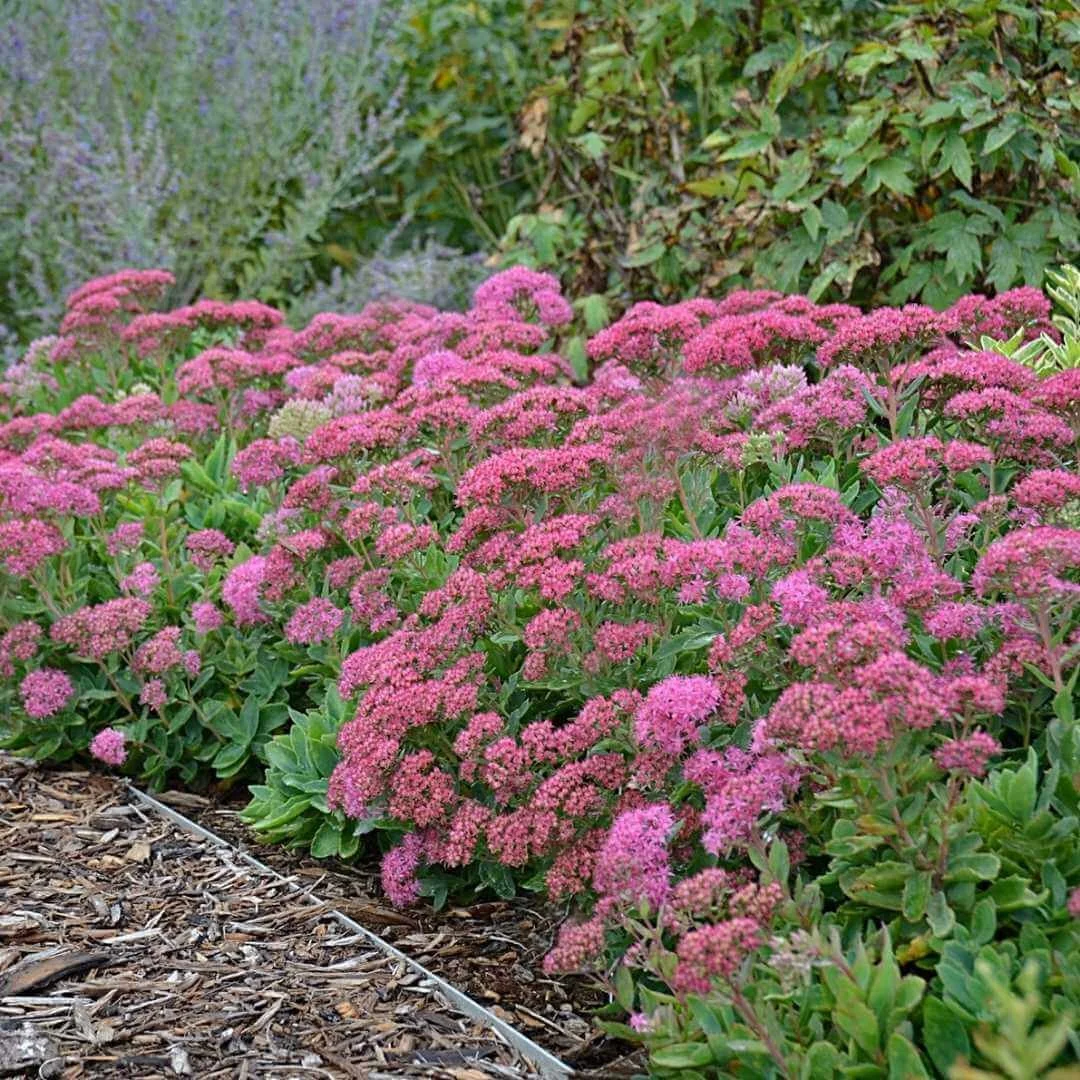
Sedum ‘Carl’. Image courtesy of Walters Gardens, Inc.
Sedum adds incredible value to garden beds because the fleshy leaves bring wonderful contrast when planted next to airier perennials like Russian sage and coreopsis. Plus, pollinators love the flowers. There are so many sedum sizes, leaf shapes, and leaf colors to choose from!
‘Autumn Joy’ sedum was one of the first garden plants I ever planted. It's incredibly easy to grow and divide, doesn't need much water once established, and I've spread it around the neighborhood by giving away divisions to friends and neighbors.
‘Carl’ is one of my favorites with vibrant pink flowers and a dense, upright, mounded clump. ‘Autumn Fire’ is a classic with rosy pink flowers that turn deep crimson red in fall, and ‘Angelina’ is a nice low-maintenance groundcover grown for its bright lime-green foliage. Newer dark-leaved varieties like ‘Night Embers’ bring fantastic contrast to garden beds and are very on-trend right now with their almost-black leaves.
Common name: Stonecrop
Botanical name: Sedum species
Native range: North America, Europe, Asia, Africa
Zones: 3-11 (varies by cultivar, check tags)
Flowering time: Summer to fall
Flower colors: Pink, purple, white, yellow
Size range: 2 inches to 2 feet tall and wide (varies by type)
Bringing It All Together
I hope this list of perennials for full sun inspires you to create a sunny garden that brings you joy throughout the growing season! Remember, successful gardening is about more than just picking pretty full sun plants. Take time to understand your USDA hardiness zone, check the US Drought Monitor for your area's water conditions, and consult resources like the Rutgers Deer Resistant Plants List if deer are an issue in your garden.
For more gardening guidance, check out my article "How to Water Your Plants: The Ultimate Guide" and "Your Guide to Understanding Full Sun for Plants" to set your new perennials up for success.
Use your creativity, experiment with combinations, and most importantly, have fun! There's no single "right" way to garden. The best garden is one that makes you happy and fits your lifestyle.
Happy gardening! 🌿🌸
Follow Plant and Bloom Design Studio for More Garden Ideas