25 Best Shade Plants for Beautiful Shade Gardens
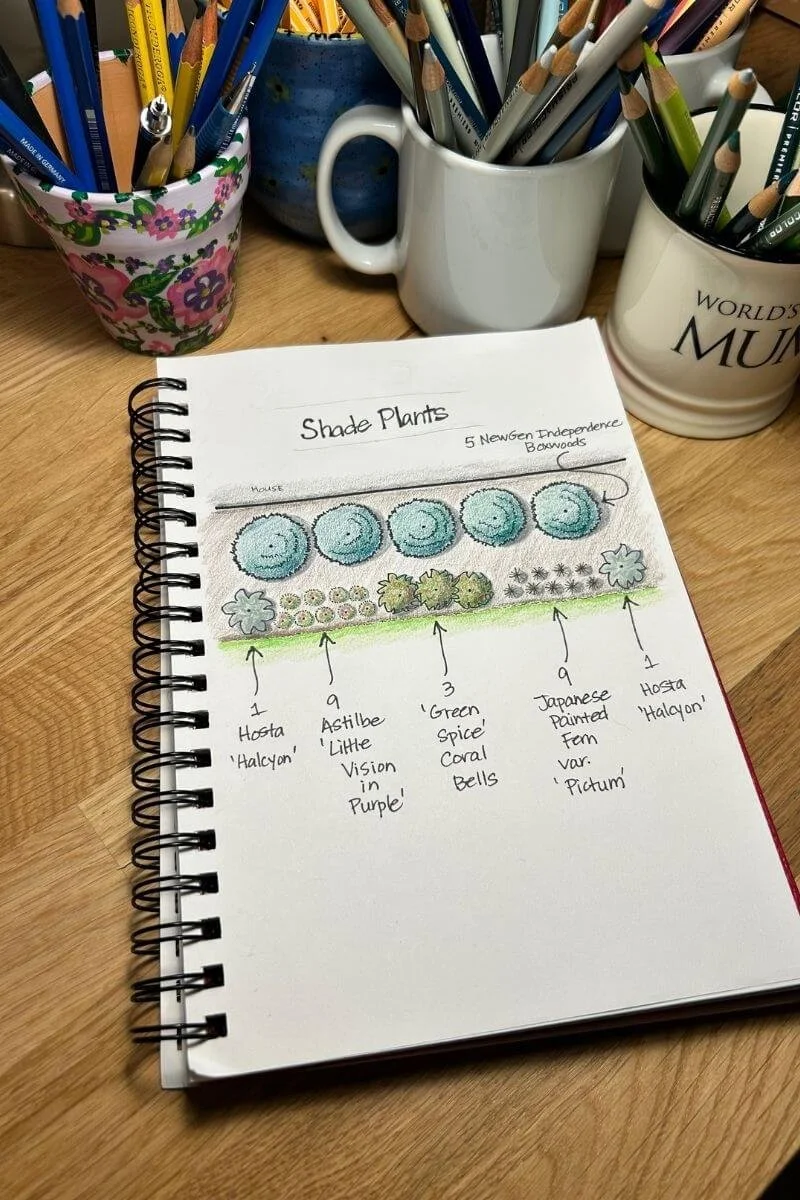
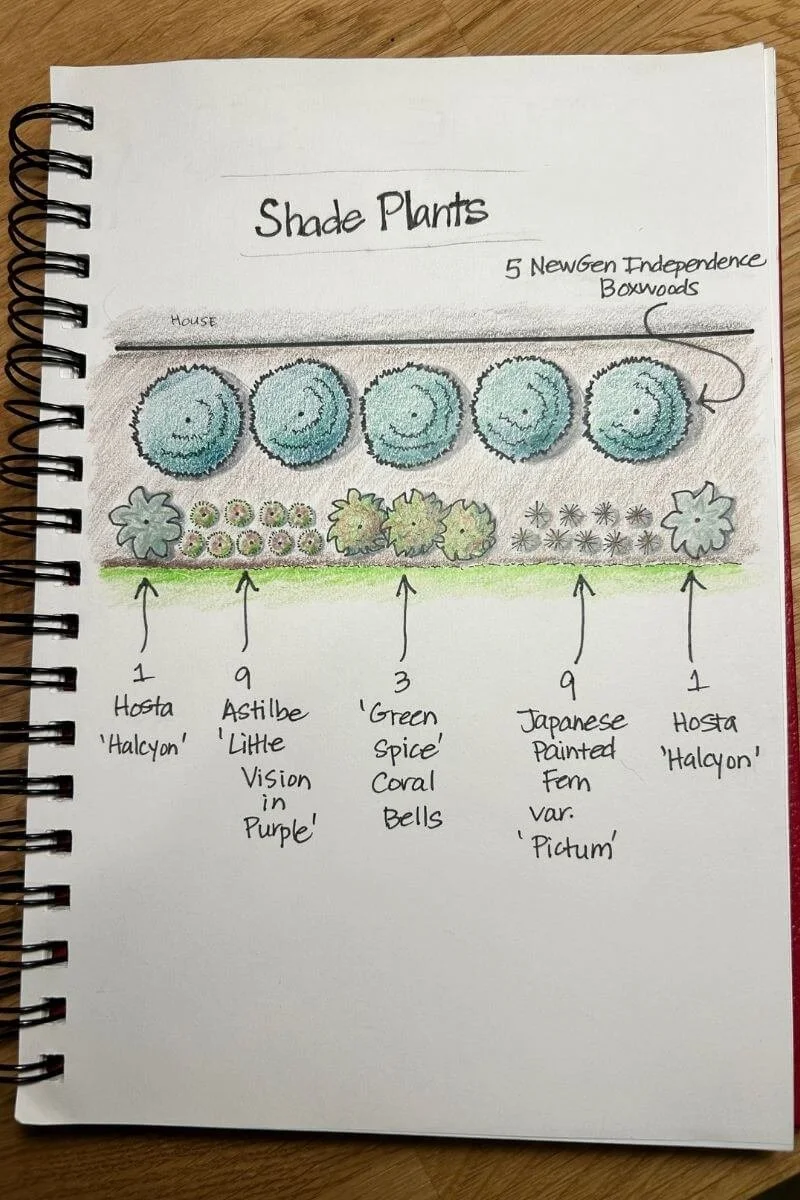
Contrast is the secret weapon behind this shade garden layout. Image © Plant and Bloom Design Studio
Feeling like your shady yard limits your gardening options? Think again! There are so many gorgeous shade plants that can transform those dim corners into stunning garden spaces. Whether you're dealing with a dense tree canopy, the north side of your house, or a dark patio area, I've got you covered with this comprehensive list of the best plants for shade.
In this guide, we'll explore 25 exceptional shade plants, highlighting their standout features and why they'll make your shade garden truly shine. I’ve included real photos for each plant, not AI-generated images. These are actual plants that have been photographed by me, sourced from trusted horticultural growers, or carefully selected from stock images. I believe it's important to see plants exactly as they are, not perfect computer-generated images that set unrealistic expectations for your garden.
This list is organized into four helpful categories to give you plenty of shade garden ideas: Evergreens, Flowers, Foliage, and Groundcovers. And if deer are munching their way through your garden, you'll be relieved to know that many of these shade plants offer excellent deer resistance (though sadly, no plant is 100% deer proof).
Design Tips for Stunning Shade Gardens
Many gardeners assume that because shade gardens can't rely on endless colorful blooms, they lack visual interest. Not true! Your secret weapon for creating beautiful shade garden ideas is using contrast. It's what makes the best plants for shade truly shine.
When designing a shade garden, I focus on layering plants that contrast in three key areas:
Texture: Think about pairing shade plants with different textures, like soft ferns against glossy camellias, or lacy astilbes next to dense, evergreen sweet box.
Leaf Shape: Plant lacy-leaved bleeding hearts next to bold hostas, or tiny-leaved boxwoods beside the heart-shaped leaves of Siberian bugloss.
Color: Place the multicolored Japanese painted fern next to golden hakone grass, or lavender astilbe flowers beside silver-leaved lungwort. The possibilities are truly endless!
One more thing to keep in mind: most of these plants have been cultivated into many different varieties with vastly different flower colors, growth habits, and sizes. Always double-check the website description when buying online and read those shade plant tags carefully when shopping in person.
What Kind of Shade Do You Actually Have?
Understanding your type of shade helps you choose the right plants:
Part Shade: 3-6 hours of direct sun. Many plants prefer morning sun with afternoon shade.
Full Shade: Less than 3 hours of direct sun daily.
Dappled Shade: Filtered sunlight that comes through the tree canopy, creating moving patterns of light and shadow.
A Word About Dry Shade Under Trees
If you're searching for shade garden ideas for dry shade underneath mature trees, you're facing one of gardening's toughest challenges. The reality is that established trees will always outcompete smaller plants for moisture, especially shallow-rooted trees like maples.
But don't give up! The 'Prostrata' creeping Japanese plum yew (see #2) can work with frequent initial watering. Himalayan sweet box (#4 on this list) forms a tight, dense groundcover that can handle dry shade. At the end of this list, you'll find groundcovers that are some of the best plants for shade and proven performers underneath trees: golden star (#21), white wood aster (#22), barrenwort (#23), and sedge (#24).
The key with all of these is keeping them well-watered during establishment so they can gain a foothold.
Now let's explore the shade plants that will bring your garden to life!
1. Boxwood
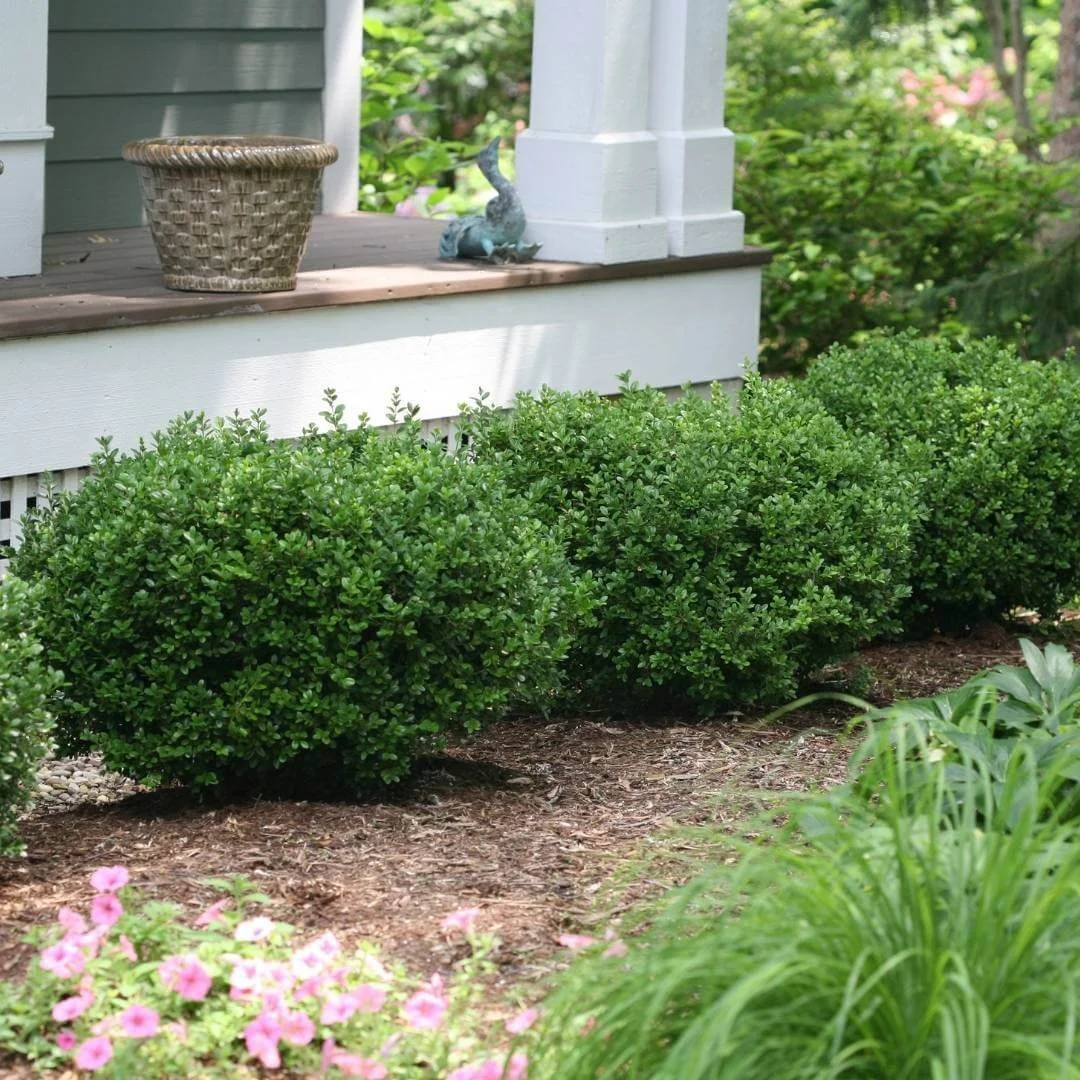
Sprinter Boxwood. Image courtesy of Spring Meadow Nursery.
Boxwood adds essential structure to shade gardens with small, dense leaves and a compact habit. Available in different shapes from perfect globes to elegant cones, it’s a foundational plant that makes other shade plants look intentional rather than shapeless masses of green. And it offers a high level of deer resistance, too!
I love how those small, dark green leaves provide the perfect backdrop for contrasting shapes and colors. Whether in a shaded foundation planting or formal border, boxwoods are like the little black dress of landscape design: classic, versatile, and making everything else shine.
My Top Picks: For full shade tolerance and disease resistance, you can't go wrong with newer cultivars like 'Sprinter' and 'Neatball'. The NewGen series ('Independence' and 'Freedom') also thrives in full shade and works beautifully against the house. If you have a bit more light, 'Dee Runk' and 'Green Mountain' offer cone shapes but need at least some sun. Always check tags, because size, shade tolerance, and zones vary significantly within the genus.
Common name: Boxwood
Botanical name: Buxus species
Native range: Europe, Asia, Africa
Zones: 4-9
Light requirement: Full sun to full shade
Size range: 1-20 feet tall and 1-8 feet wide
2. Yews and Plum Yews
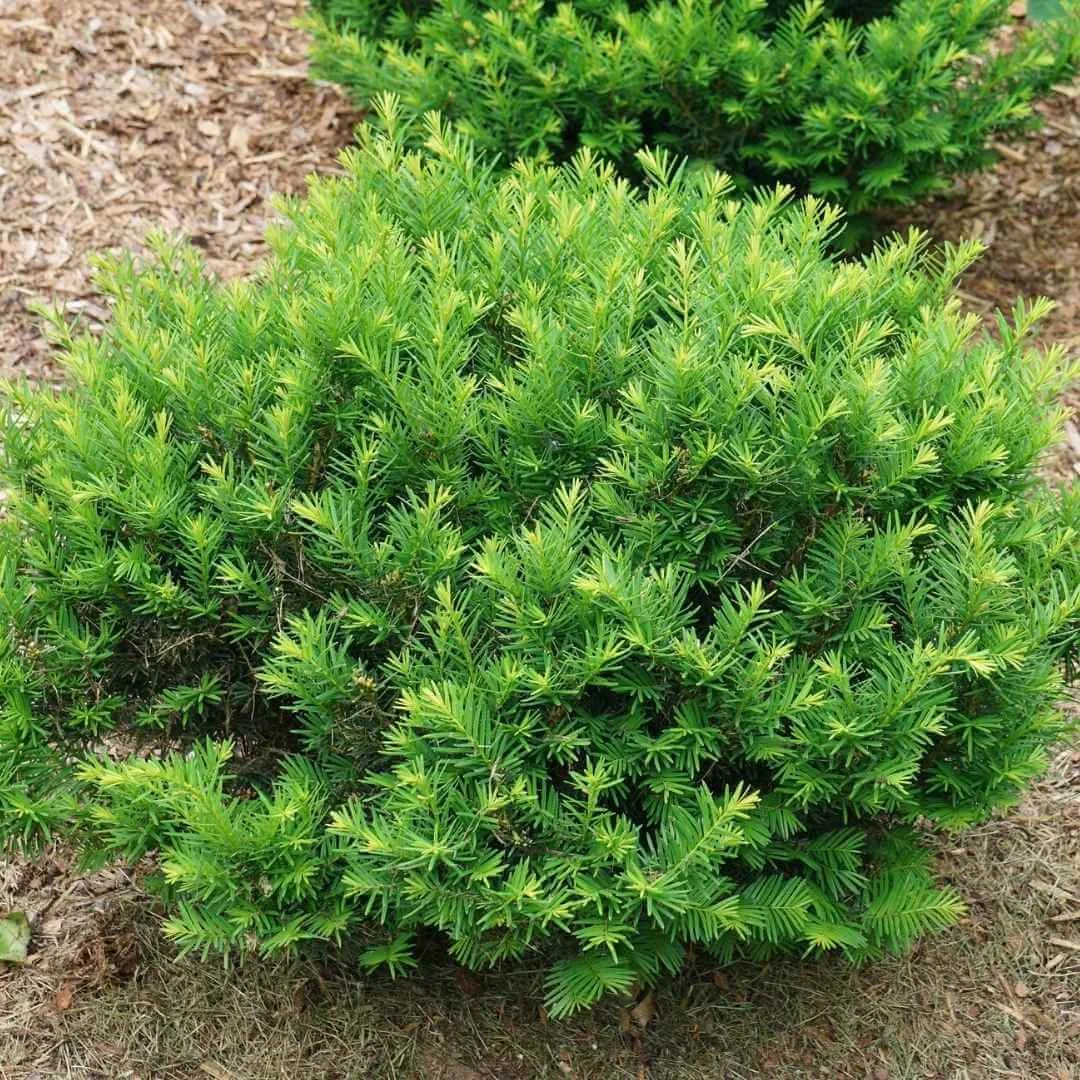
Stonehenge Dark Druid® Yew. Image courtesy of Proven Winners, provenwinners.com.
This section covers two plants: true yews and plum yews. They serve similar roles in the landscape, so I’ve grouped them together. Both provide fine-textured, needled evergreen foliage in a variety of shapes and sizes. Thought you couldn’t have a needled evergreen in your shade garden? Think again, you absolutely can!
People call both “yews,” but they’re very different plants. True yews (Taxus species) grow in zones 4-7, need at least 2 hours of sun each day, struggle in humid climates, and are highly favored by deer. Plum yews (Cephalotaxus species), on the other hand, thrive in zones 6-9, tolerate deep shade, handle heat and humidity well, and are deer resistant. Choose the right one for your garden based on your climate, sun exposure, and deer pressure.
My Top Picks: For yews (Taxus): Stonehenge Dark Druid® forms small, dense mounds perfect for foundation plantings; 'Densiformis' also works well for foundation plantings, with a dense and spreading form growing up to 4 feet tall; Stonehenge Skinny® creates a tall, narrow screen ideal for covering air conditioning units or blocking unsightly views.
For plum yews (Cephalotaxus): 'Duke Gardens' has a spreading, mounded habit and slowly grows 4-6 feet tall and wide, making it great for foundation plantings and low hedges; 'Prostrata' works beautifully for mass plantings in shade with its creeping habit (plant a bit more densely than recommended if you don't want to wait years for it to fill in).
Common name: Yew and Plum Yew
Botanical name: Taxus and Cephalotaxus
Native range: Europe, Asia, North Africa, North America
Zones: 4-8 (yew) and 6-9 (plum yew)
Light requirements: Full sun to full shade
Size range: 3-30+ feet tall and 1-10 feet wide
3. Camellia
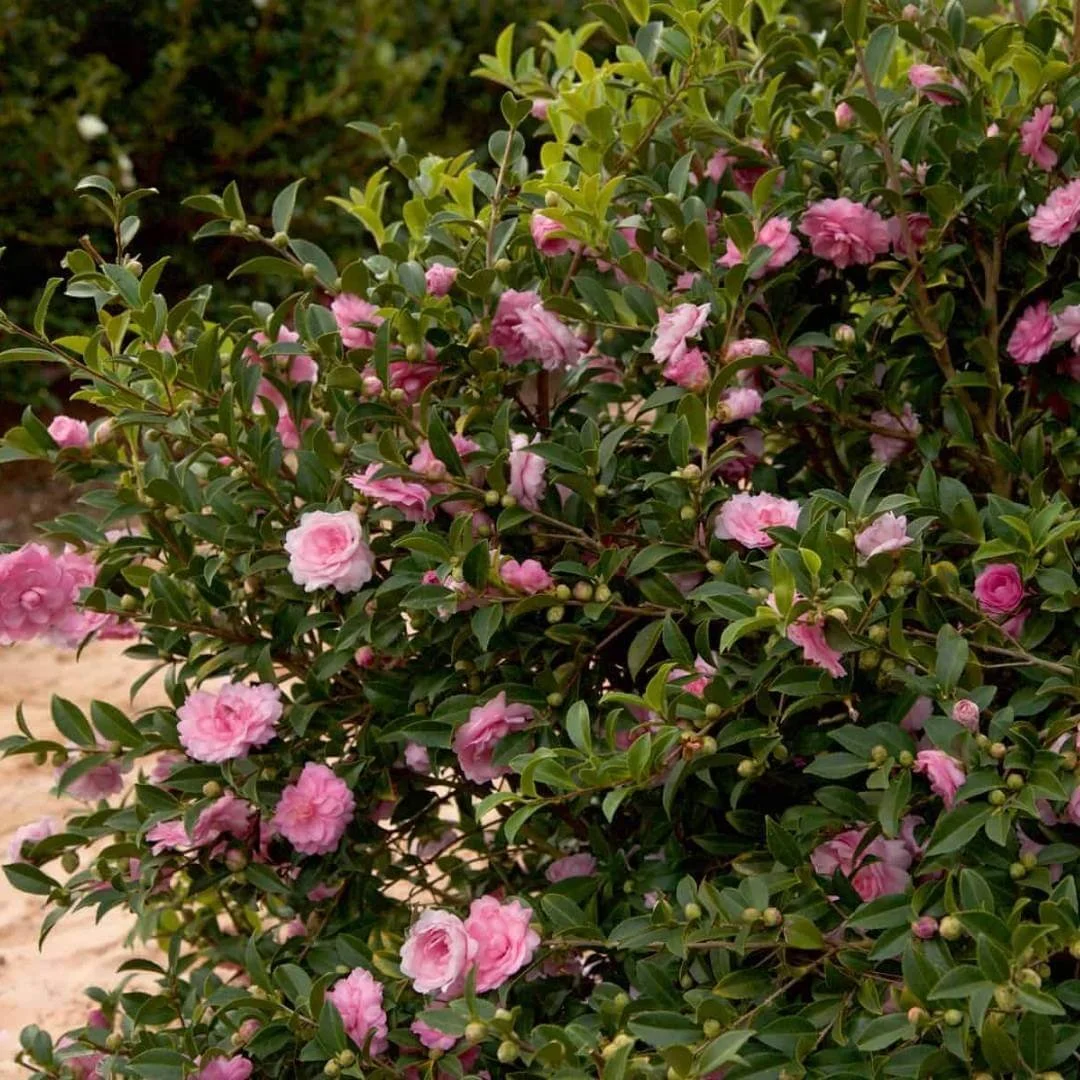
October Magic® Pink Perplexion™ Sansaqua Camellia. Image courtesy of Southern Living Plant Collection, Plant Development Service
Camellias are versatile shade plants that grow as small trees or shrubs in a variety of shapes and sizes. They offer glossy evergreen leaves and showstopping blooms in white, pink, red, and yellow for shade gardens. There are two main types: Sasanqua camellias bloom in fall, while Japanese camellias flower from winter through spring. They thrive in deep, moist, rich soil and offer moderate deer resistance (protect young plants).
I love using Japanese camellias in my designs for their winter blooms, which always feel like a surprise when the rest of the garden is quiet. They’re true garden treasures, offering beauty when it’s needed most. Try pairing them with hellebores for an especially beautiful late-winter combination.
My Top Picks: With so many cultivars to choose from, pay attention to your shade type and note that most camellias prefer part shade to dappled shade. If you have full shade, avoid the Sasanqua camellias and stick with these Japanese camellia cultivars known to tolerate full shade: 'Nuccio's Gem', 'Nuccio's Pearl', and 'Yuletide'. While flowering may be somewhat reduced in deep shade, you'll still enjoy those gorgeous glossy evergreen leaves year-round.
Common name: Camellia
Botanical name: Camellia sasanqua and Camellia japonica
Native range: Asia
Light requirements: Part shade, especially in the afternoon
Zones: 6-10 (varies by cultivar)
Flowering time: Fall (Sasanqua) and winter-spring (Japanese)
Flower colors: White, pink, red, yellow
Size range: 2 feet tall and up to 25 feet tall
4. Sweet Box
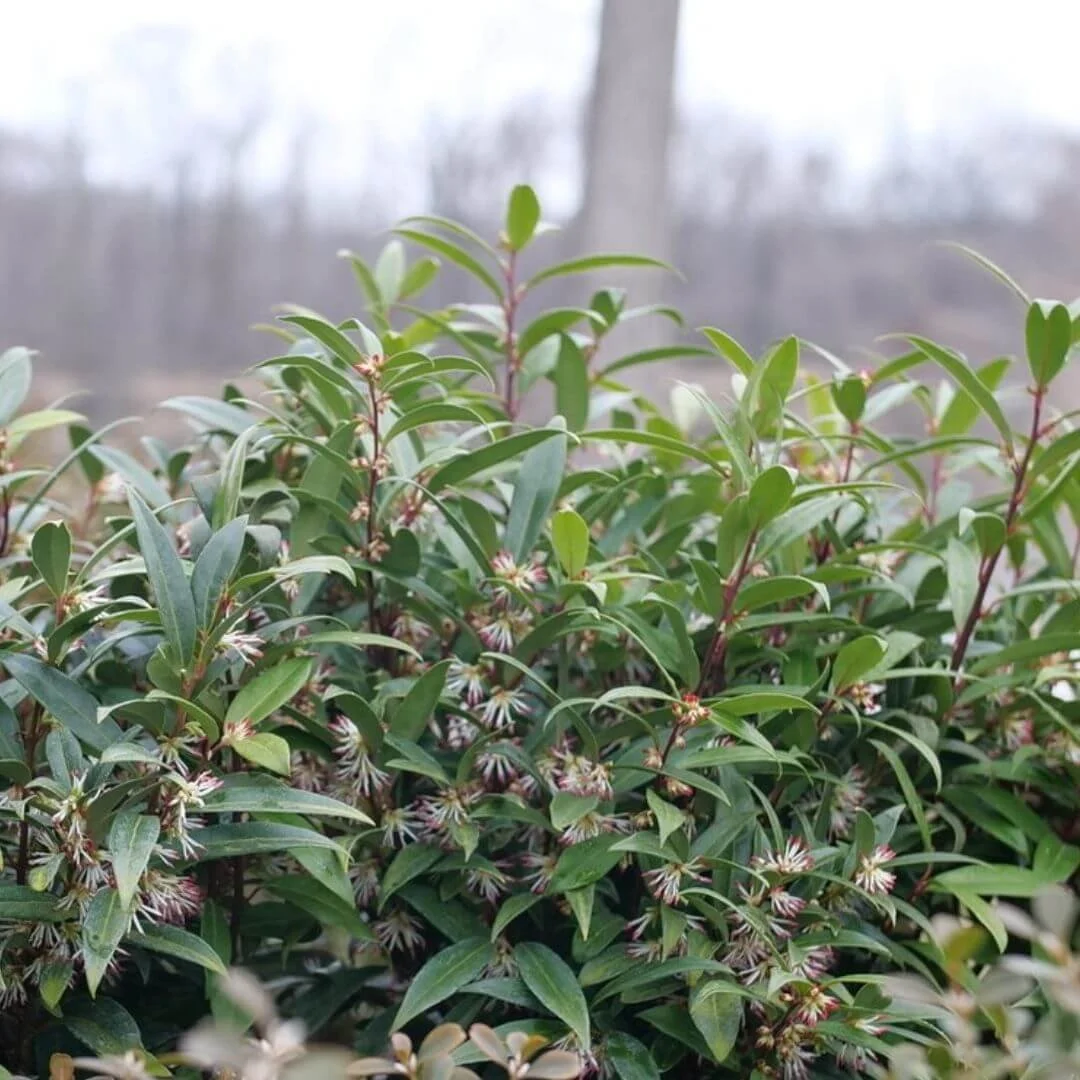
Sweet & Lo™ Sweet Box. Image courtesy of Proven Winners, provenwinners.com
This evergreen shrub is a hardworking shade plant with glossy leaves and a delightful sweet fragrance in late winter. While the tiny flowers hide beneath the foliage, their perfume is unmistakable. Sweet box offers attractive year-round foliage, high deer resistance, and minimal maintenance needs.
Sweet box is unknown to many gardeners, but it's a designer's secret weapon for filling problem shaded areas with lush, glossy foliage. It's perfect for those ugly shaded side yards where nothing else will grow! Since it's slow-growing, you may want to plant more densely if you're trying to fill an area quickly. It's also lovely near foundations and entryways where you can appreciate that delicate fragrance as you come and go.
My Top Picks: You'll most likely encounter two types: Himalayan sweet box (Sarcococca hookeriana var. humilis → phew, that's a mouthful of a plant name 😉) forms a tight groundcover that spreads by underground roots. It’s incredibly versatile and excellent for stabilizing shady slopes and eroded areas. It can also tolerate dry shade under trees. The Sweet & Lo™ cultivar has lovely two-toned pink and white flowers. Fragrant sweet box (Sarcococca ruscifolia) is a larger plant, forming dense 3-5 foot mounds.
Common name: Sweet Box
Botanical name: Sarcococca species
Native range: Asia
Light requirements: Part to full shade
Zones: 6-9
Flowering time: Late winter to early spring
Flower colors: White, white and pink
Size range: 1-6 feet tall and wide
5. Japanese Andromeda (Pieris)
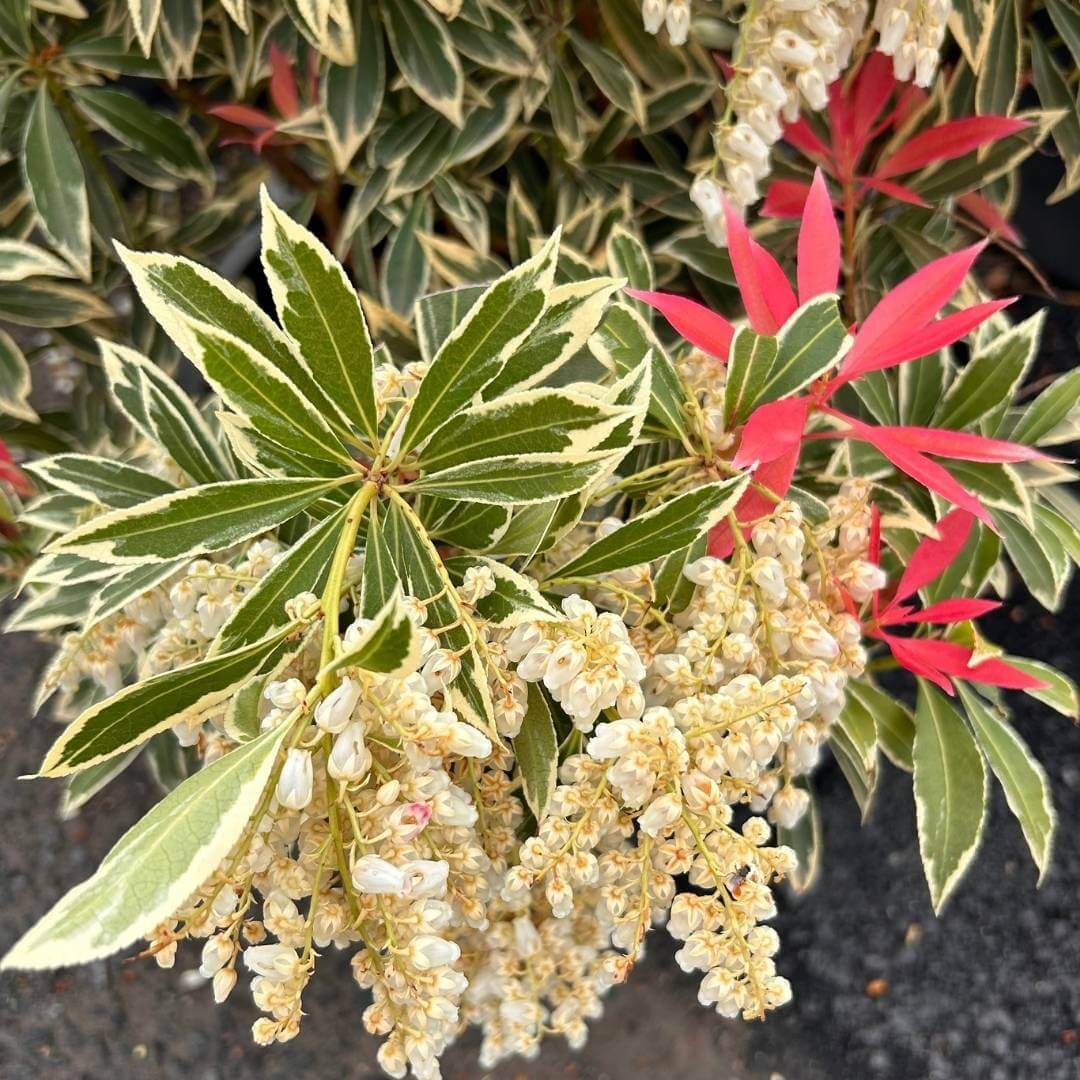
Flaming Silver Japanese Andromeda (Pieris). Image © Plant and Bloom Design Studio
Japanese andromeda, also known as pieris, is a spring showstopper with fragrant, drooping flower clusters that mimic lily-of-the-valley bells. The foliage is just as striking, with some cultivars producing new leaves in silver, pink, copper, or red against a deep evergreen backdrop. It’s deer resistant and appreciates protection from harsh winter winds.
Perfect for woodland gardens and foundation plantings, this shade plant thrives in partial or dappled shade and prefers the same rich, moist, acidic soil as azaleas, camellias, and rhododendrons, making them ideal planting companions. Full shade is tolerated, though flowering will be reduced.
My Top Picks: ‘Flaming Silver’ and 'Mountain Fire' are striking plants, both with fire-engine red new growth and white flowers. If you need something compact, 'Cavatine' is perfect for small shade gardens. And if you want drama, 'Katsura' delivers with wine-red new growth and lilac-pink flowers.
Common name: Japanese Andromeda, Pieris, Lily-of-the-Valley Bush
Botanical name: Pieris japonica
Native range: Asia
Light requirements: Part shade, dappled shade
Zones: 5-8
Flowering time: Spring
Flower colors: White, cream, pink
Size range: 1-15 feet high and wide
Flowers
6.Astilbe
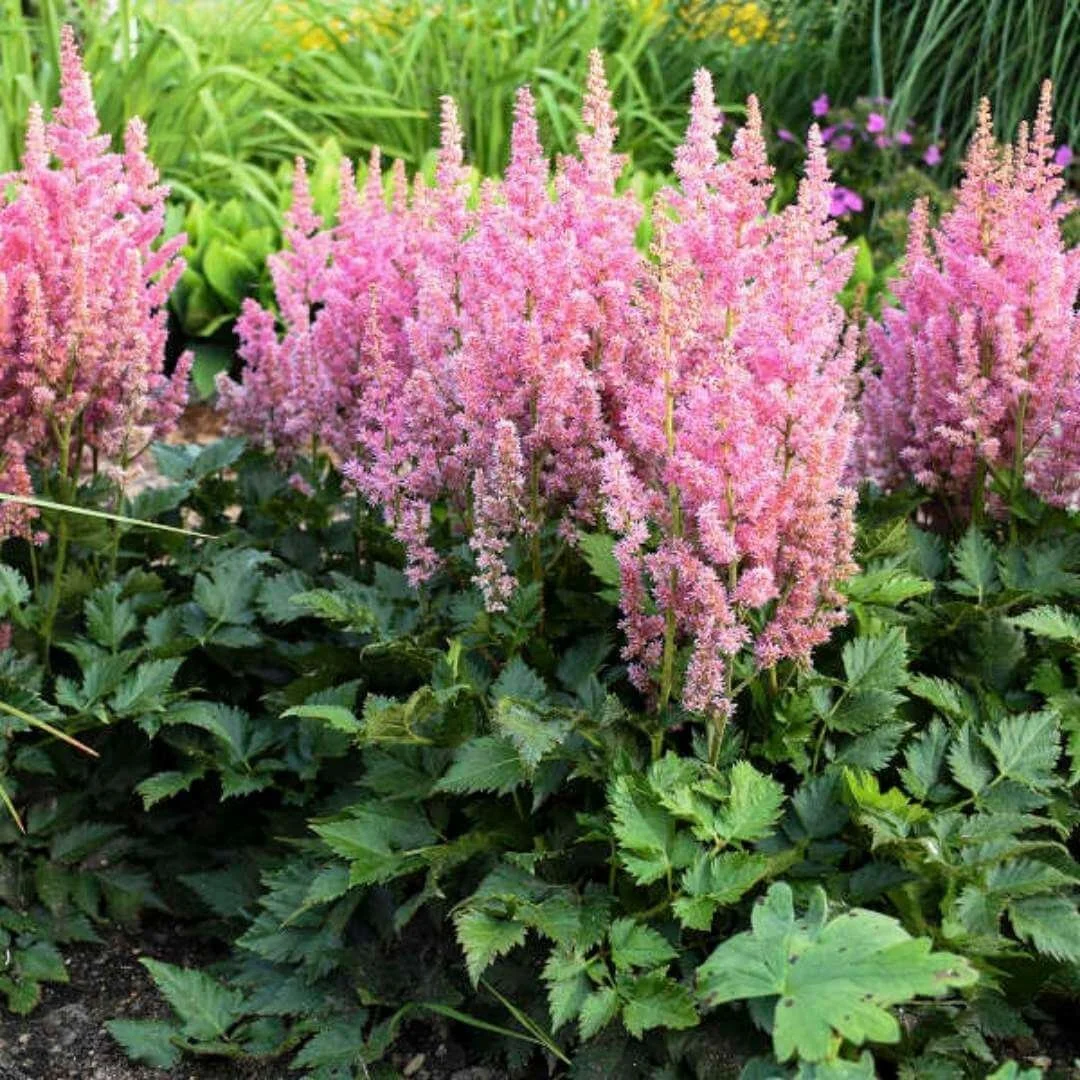
Astilbe Little Vision in Pink. Image courtesy of Proven Winners, provenwinners.com
Astilbe brings soft drama to the shade garden, with airy, plume-like flowers floating above mounds of finely textured, fern-like foliage. These low-maintenance perennials are a go-to choice for shade gardeners, with flowers ranging from pink and peach to white, red, and different shades of purple. They’re also highly deer resistant. You can read more in my article about astilbe.
Exceptionally adaptable, astilbe works just as well when naturalized in generous drifts as it does anchoring refined borders and foundation plantings. It’s also a smart choice near black walnut trees, since it tolerates juglone toxicity.
Create a timeless summer display by massing white astilbes like ‘Deutschland’ alongside hostas with creamy white edges, such as ‘Patriot’. It’s an elegant, cooling shade plant combination that will elevate your design.
My Top Picks: With so many excellent cultivars to choose from, a few truly stand out. ‘Fanal’ is a rich garnet red; ‘Peach Blossom’ offers warm, airy pink plumes; and ‘Amethyst’ has elegant lavender blooms. Some varieties have standout foliage, such as the dark-leaved ‘Chocolate Shogun’ and ‘Dark Side of the Moon. One of my personal favorites is ‘Delft Lace,’ with two-toned pink flowers rising above deep blue-green foliage for extra visual interest.
Common name: Astilbe, False Spirea
Botanical name: Astilbe japonica, Astilbe chinensis, Astilbe x arendsii
Native range: Asia
Light requirements: Part to full shade (flowering may be reduced in full shade)
Zones: 3-8
Flowering time: Late spring to late summer (varies by cultivar). For continuous color, plant a succession of early, mid, and late season bloomers.
Flower colors: Pink, peach, white, red, lavender, purple
Size range: 6-48 inches high
7. Goat’s Beard
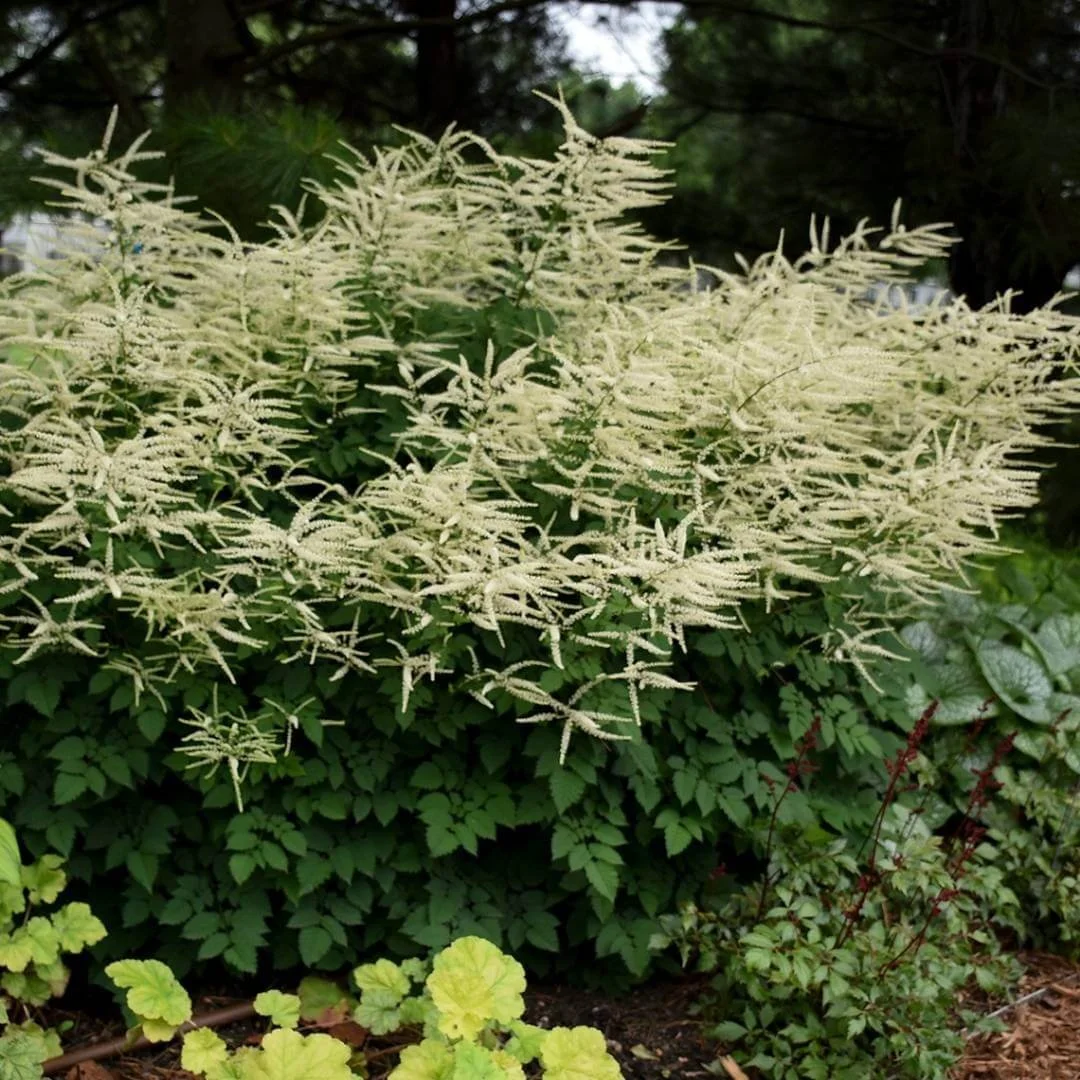
Misty Lace Goat’s Beard. Image courtesy of Walters Gardens, Inc.
Goat’s beard is a bold, architectural perennial. From late spring through mid-summer, it produces feathery plumes of creamy white flowers above its fern-like foliage. Male plants typically display showier blooms than females.
Because of its size, goat’s beard needs room to spread. It performs best in naturalized, consistently moist locations with dappled sunlight, where it can fully stretch out and make a statement.
This shade plant excels in wildlife gardens, thanks to its pollinator appeal and high deer resistance. It’s ideal for mass plantings along streams, woodland edges, or backyards bordering creeks and damp forests.
My Top Picks: The native species is a lovely plant and widely available, while ‘Chantilly Lace’ offers a more compact option, reaching about 32 inches tall. ‘Misty Lace’ tops out at 18-24 inches high and is highly tolerant of heat and humidity.
Common name: Goat's Beard, Bride's-Feathers
Botanical name: Aruncus dioicus
Native range: North America, Europe, Asia
Zones: 3-7
Light requirements: Part to full shade
Flowering time: Late spring to late summer
Flower colors: Creamy white
Size range: 18 inches-6 feet tall and 18 inches-4 feet wide
8. Summersweet
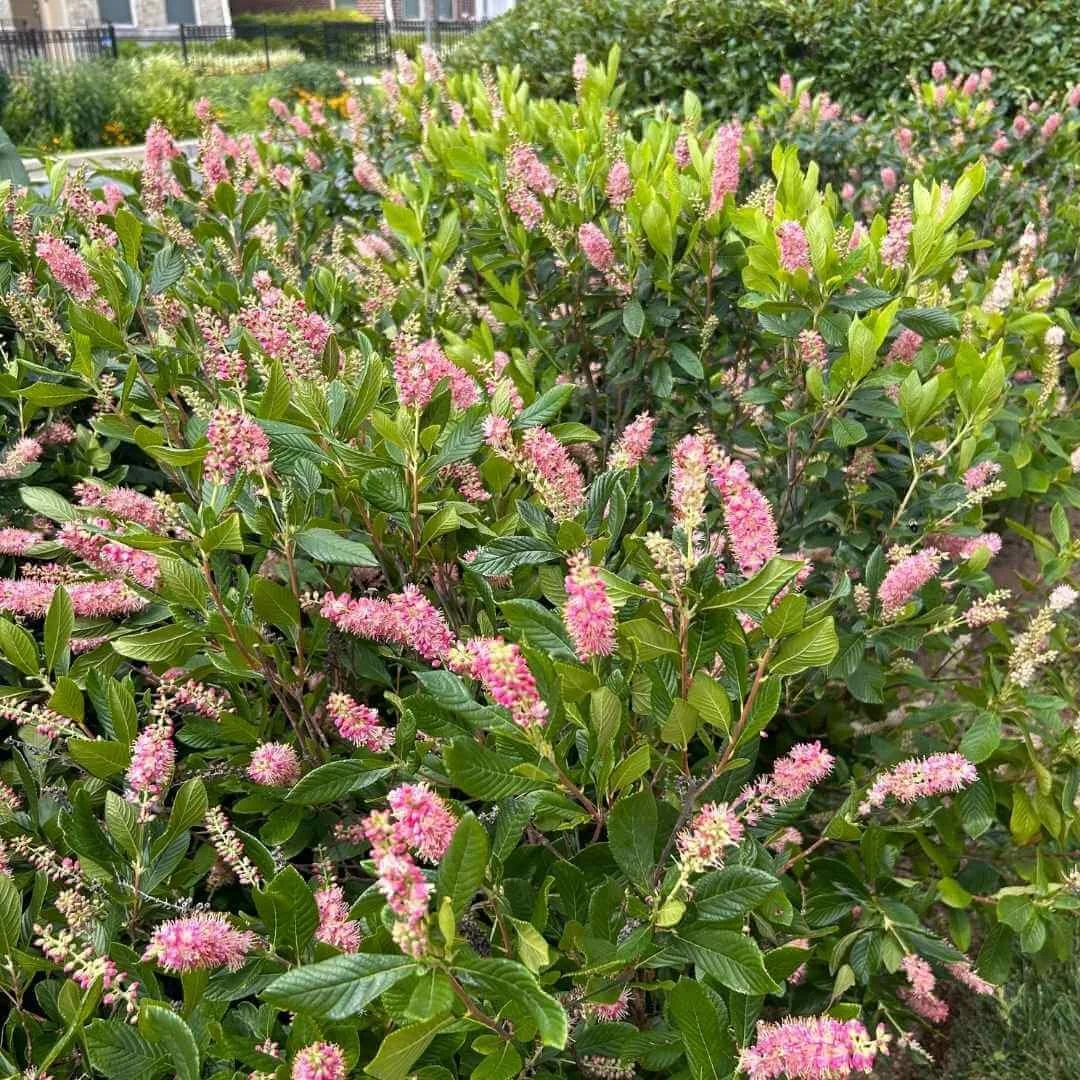
Ruby Spice Summersweet. Image © Plant and Bloom Design Studio
Summersweet is a standout for shade gardens, offering fragrant, spiky summer flowers, glossy green leaves, golden fall color, and striking dried seed capsules that bring winter interest. It blooms even in full shade (though flowers may be reduced), thrives in wet soils but tolerates drought once established, and is both pollinator-friendly and deer resistant.
I love using summersweet in dark, moist foundation areas, especially at the ends of downspouts, where it soaks up water and thrives in spots where other shrubs struggle. Discover more about this adaptable shade plant in my article.
My Top Picks: The native species is gorgeous, growing 6-10 feet tall. For smaller spaces, try ‘Hummingbird’ or ‘Crystalina’ (2-4 feet tall). Pink-flowered ‘Ruby Spice’ is a favorite, while ‘Sixteen Candles’ has a very upright habit, making it perfect for planting next to the house or near an air conditioners. ‘Vanilla Spice’ is especially fragrant and a true garden showstopper.
Common name: Summersweet
Botanical name: Clethra alnifolia
Native range: Eastern United States
Light requirements: Full sun to full shade
Zones: 4-9
Flowering time: Summer
Flower colors: White, pink
Size range: 2-10 feet tall and 2-8 feet wide (size varies by type; check tag)
9. Bergenia
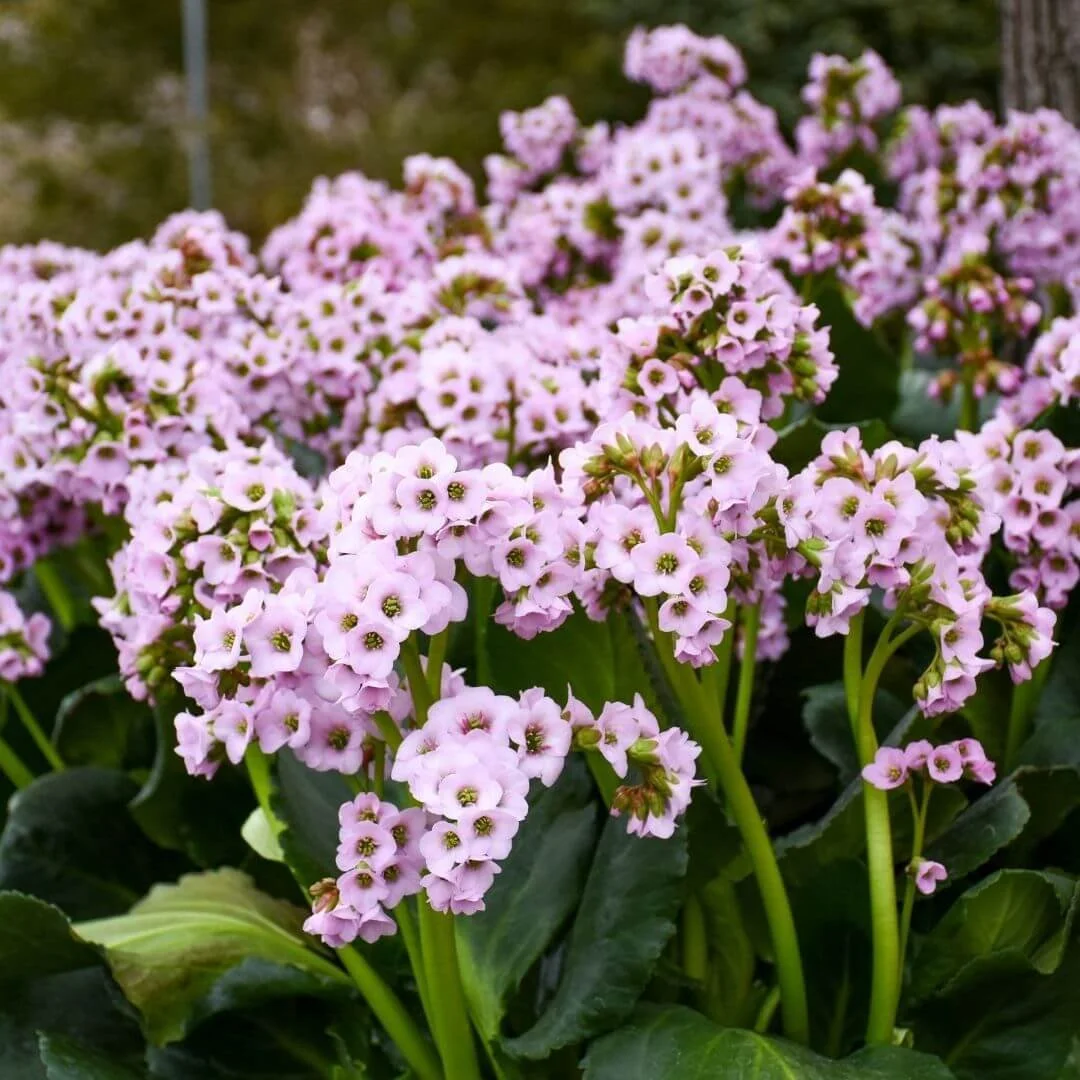
Fairytale Romance Bergenia. Image courtesy of Walters Gardens, Inc.
Bergenia is actually a triple threat shade plant: it's flowering, semi-evergreen, and a groundcover all in one! With large, glossy leaves growing in low spreading clumps, it's a versatile, deer resistant choice for your shade garden.
This plant has a nice, old-fashioned cottage garden look. It works beautifully as part of a shady perennial border or woodland garden and is useful for planting on slopes or banks to stabilize soil. However, it's slow to establish as a groundcover in my experience. Foliage can look a bit rough after harsh winters, so don't count on it for pristine winter interest. It performs best in moist, rich soil and needs protection from cold, drying winds.
My Top Picks: ‘Early Brilliance™ Magenta’ features dark foliage and vivid magenta flowers; ‘Fairytale Romance’ offers soft pink blooms; and ‘Fire and Ice’ stands out with white flowers atop bold red stems.
Common name: Bergenia, Pigsqueak
Botanical name:Bergenia
Native range: Asia
Light requirements: Part shade to full shade
Zones: 4-9
Flowering time: Spring
Flower colors: White, cream, pink, purple, red
Size range: 1-2 feet high and wide
10. Bleeding Heart
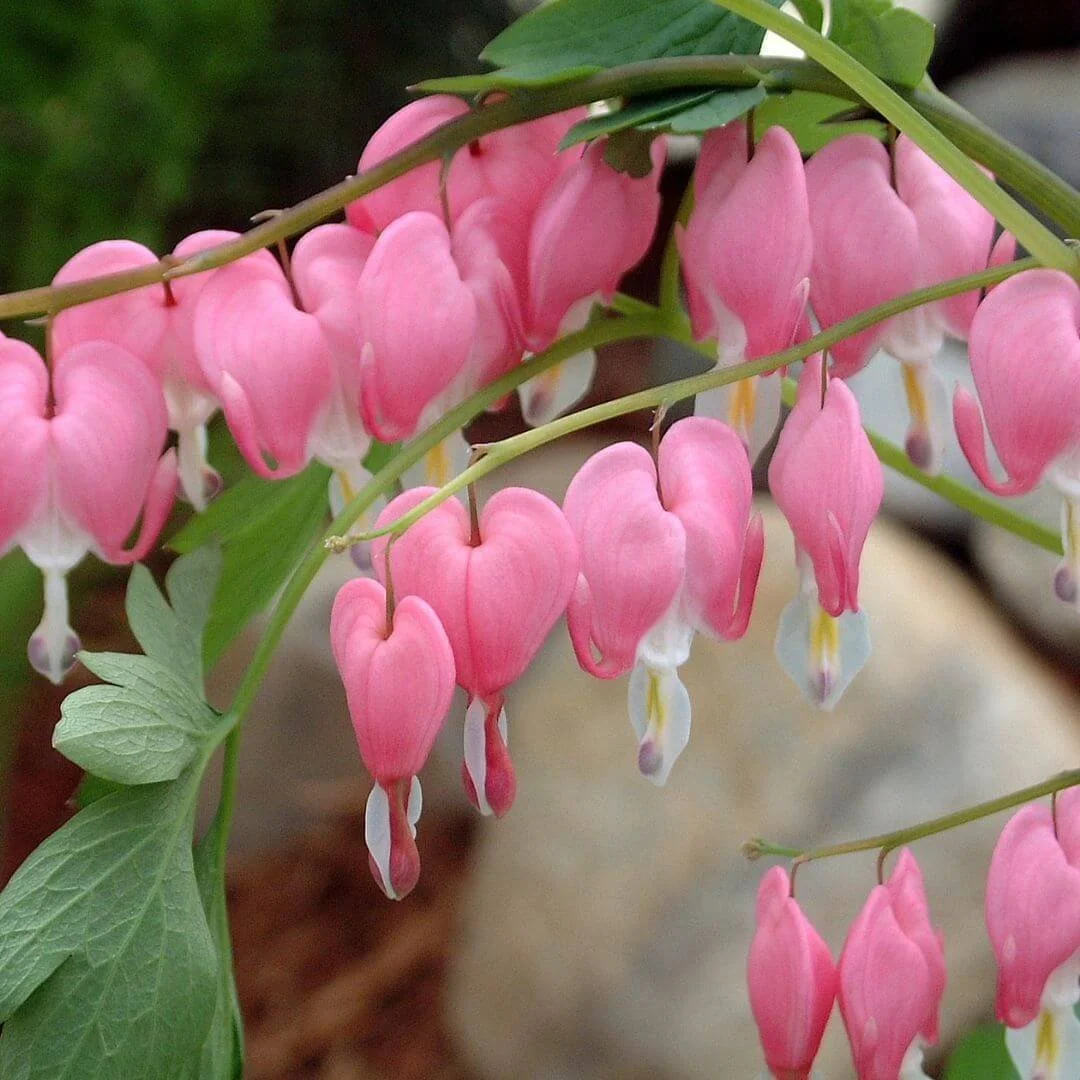
Old-fashioned bleeding heart (Lamprocapnos spectabilis). Image courtesy of Walters Gardens, Inc.
Bleeding heart is a charming, old-fashioned favorite plant. In spring, loose clumps of arching stems are adorned with delicate, pink-and-white heart-shaped flowers. Its compound leaves bring a soft, lacy texture to the garden, and it’s highly deer resistant, thriving in moist, deep, rich soil.
This shade plant is definitely one of my sentimental favorites, perfect for woodland gardens and cottage-style borders. I love pairing it with Solomon’s seal, a fantastic shade companion plant (another one of the best plants for shade, I really should have included it in this list, consider it a bonus! 😉). The classic old-fashioned bleeding heart, with its iconic red and white blooms, pairs beautifully with the white-flowering bleeding heart ‘Alba’.
My Top Picks: For native gardens, Fringed bleeding heart (Dicentra eximia) offers delicate pink flowers and heat tolerance. ‘Valentine®’ is a striking red-and-white option, while Old-Fashioned bleeding heart (Lamprocapnos spectabilis, formerly Dicentra spectabilis) delivers the classic pink-and-white blooms we all love.
Common name: Bleeding Heart
Botanical name: Dicentra, Lamprocapnos
Native range: North America and Asia
Light requirements: Part to full shade
Zones: 3-9
Flowering time: Spring, summer
Flower colors: Pink, white, red
Size range: 1-3 feet tall and wide
11. Sweetspire
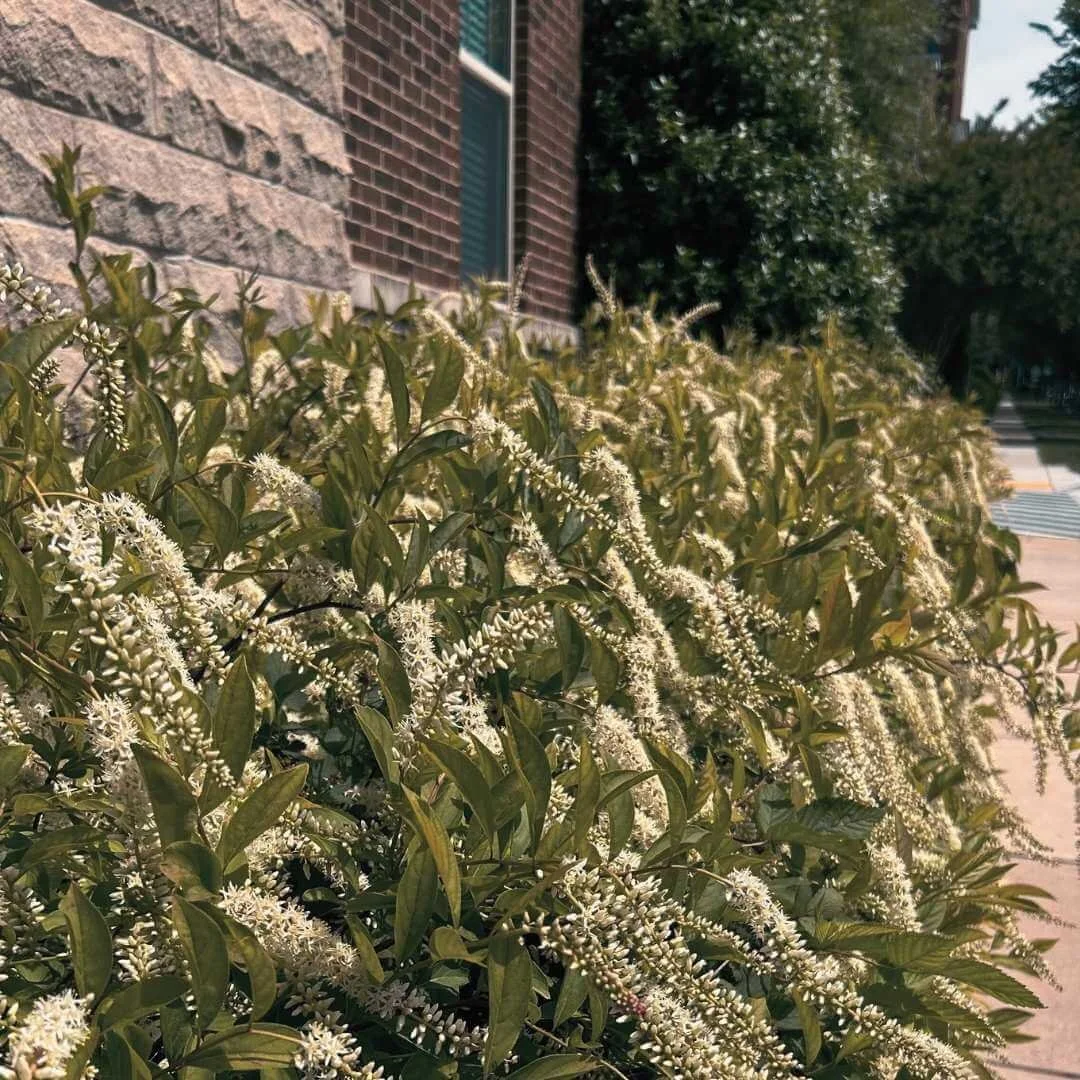
Virginia Sweetspire. Image © Plant and Bloom Design Studio
Virginia sweetspire is a deciduous shrub that delights with fragrant, bottlebrush-shaped white flowers blooming for several weeks from spring into summer. Its fiery fall color, pollinator appeal, and adaptability to a wide range of soils and light conditions make it a top pick for any gardener. Virginia sweetspire thrives in full sun to full shade, producing the most abundant blooms in sunnier spots. It loves moisture, tolerates occasional standing water, and is deer resistant, too!
I love planting Virginia sweetspire in moist, shady side yards to form low hedges or line fences. Massed in a row, its naturally arching form creates a stunning effect. The ‘Fizzy Mizzy’ variety is ideal for foundation plantings, with a compact, upright habit that stays tidy and won’t encroach on the house. Learn how to style this versatile plant in my dedicated article.
My Top Picks: 'Henry's Garnet' is popular choice with reddish-purple fall leaves, growing 4-6 feet tall and wide. Little Henry® is a more compact choice, reaching 3-5 feet tall. 'Scentlandia®' is a great choice for small yards, growing 2-3 feet tall and wide with heavily fragrant flowers.
Common name: Virginia Sweetspire
Botanical name: Itea virginica
Native range: Eastern United States
Light requirements: Full sun to full shade
Zones: 5-9
Flowering time: Late spring to summer
Flower colors: White
Size range: 3-8 feet tall and wide
12. Lenten Rose (Hellebores)
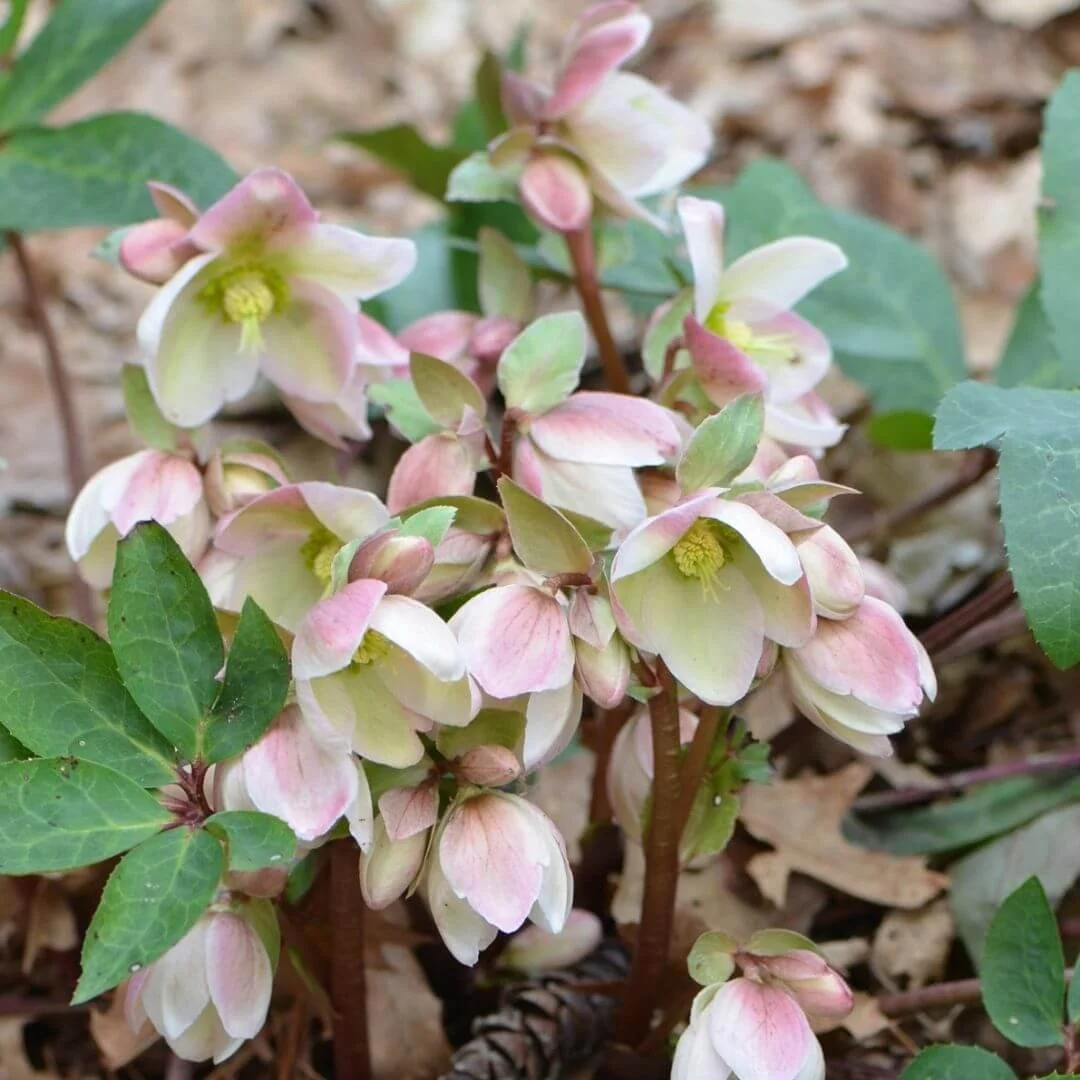
Ivory Prince Hellebore. Image courtesy of Walters Gardens, Inc.
Lenten rose is a shade plant superstar, blooming from late winter into spring with nodding, cup-shaped flowers in shades of pink, purple, red, and white. Its rich, dark evergreen foliage lasts long after flowering. Deer, disease, and pest resistant, it also provides an early food source for pollinators.
I love Lenten rose for bringing a dash of spring hope when winter drags on. Its delicate blooms pair beautifully with Christmas ferns and early bulbs like snowdrops. With so many varieties to choose from, Lenten roses bring color and interest to any shade garden.
My Top Picks: 'Dorothy's Dawn' is one of my favorites, with gorgeous light pink flowers atop striking marbled green foliage. 'Ivory Prince' is a classic, with cream-colored flowers tinged with pink. Goth gardeners will love Stinking Hellebore (Helleborus foetidus). Its creamy white to green blooms and dark green leaves pair beautifully with black-foliage plants. The foliage only smells when crushed.
Common name: Lenten Rose, Hellebore
Botanical name: Helleborus
Native range: Asia and Europe
Light requirements: Partial to full shade
Zones: 4-9
Flowering time: Late winter to spring
Flower colors: White, pink, purple, maroon, yellow, green, black
Size range: 1-2 feet tall and wide
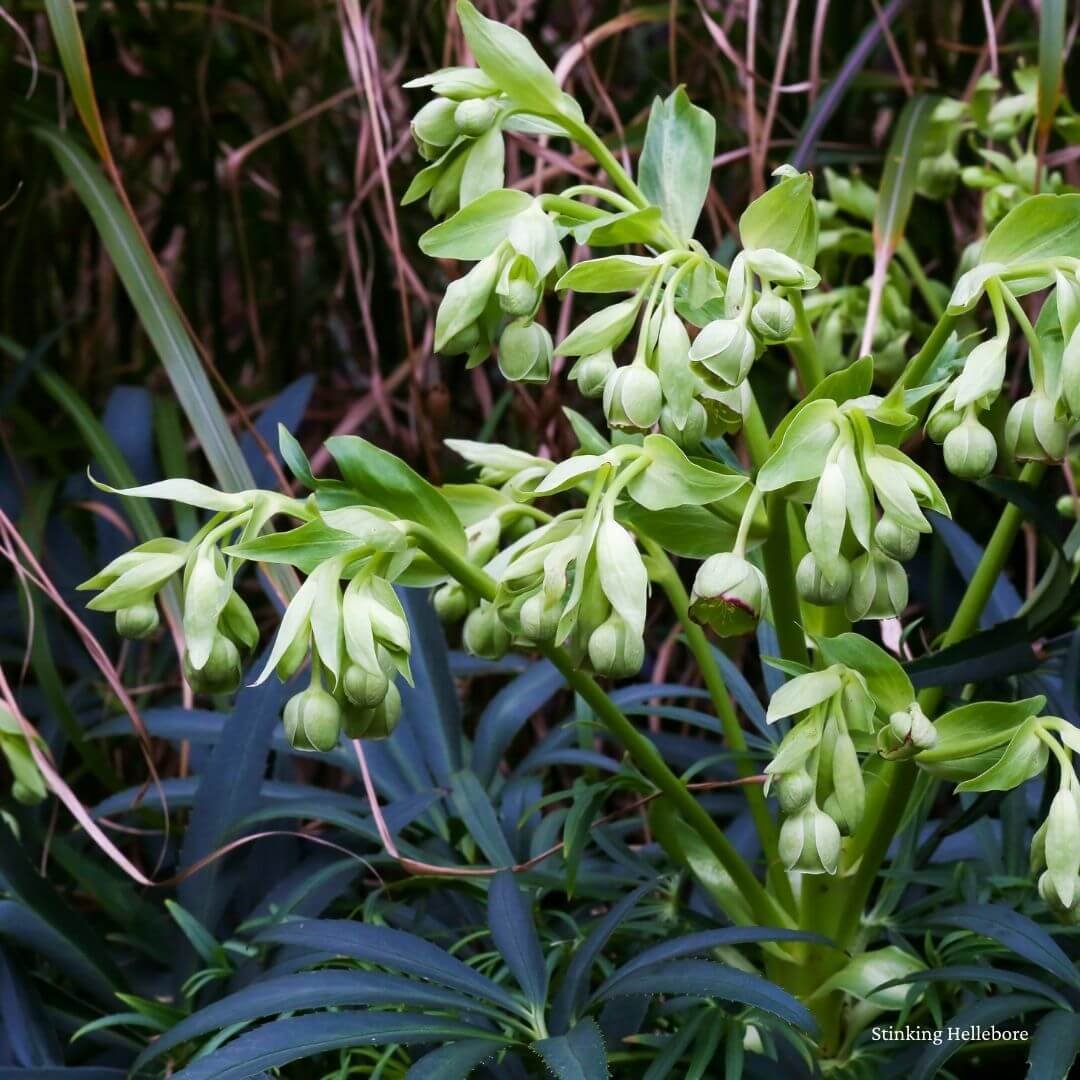
Stinking Hellebore. Image credit @MarjanCermelj via Canva.com.
Foliage
13. Autumn Fern Brilliance
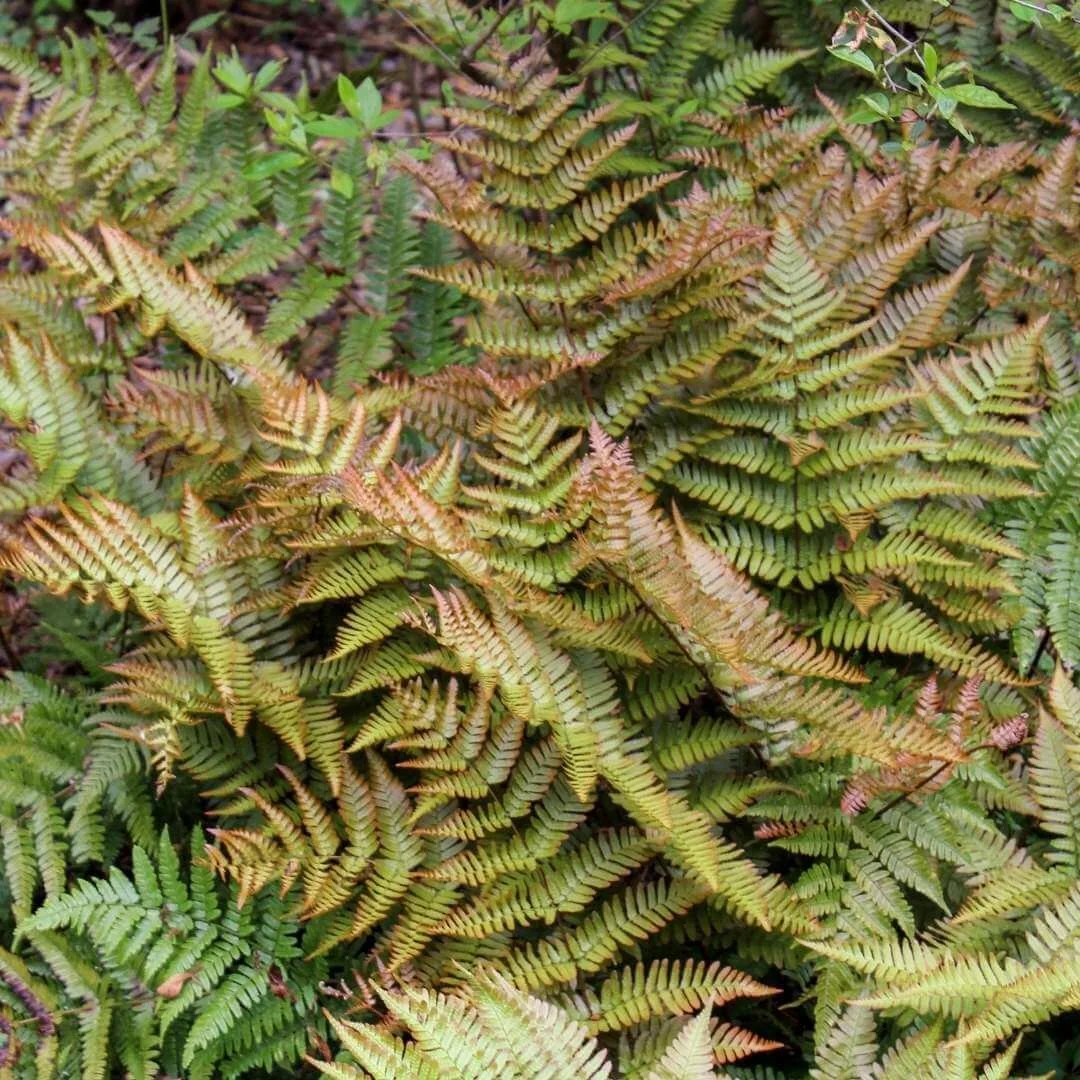
Autumn Fern Brilliance. Image courtesy of Walters Gardens, Inc.
Brilliance autumn fern lights up the shade garden with coppery-red new growth that matures to a deep, glossy green. This easy-to-grow, highly adaptable, semi-evergreen fern is also very deer resistant, making it as practical as it is beautiful.
I love the rich texture and color contrast it brings to shaded spaces, with soft fronds that add movement and depth. This shade plant really shines when massed beneath small trees or naturalized in woodland gardens, and it pairs beautifully with hostas, Lenten roses, and variegated Solomon’s seal.
Common name: Brilliance Autumn Fern
Botanical name: Dryopteris erythrosora 'Brilliance'
Native range: Asia
Light requirements: Part to full shade
Zones: 4-9
Size range: 18-24 inches high and 18 inches wide
14. Siberian Bugloss
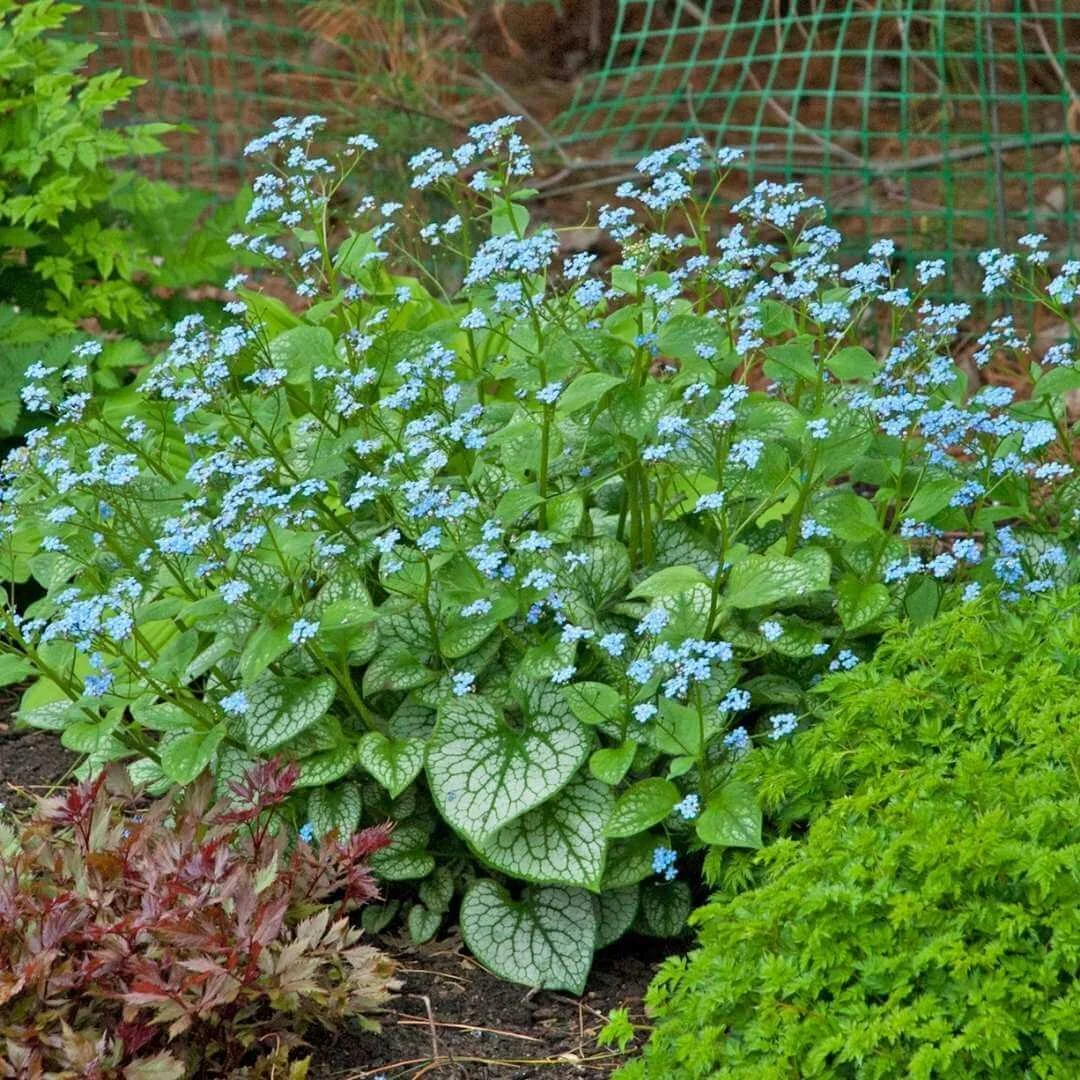
Jack Frost Siberian bugloss. Image courtesy of Walters Gardens, Inc.
Siberian bugloss is a showstopper in the shade garden, with large, dark green, heart-shaped leaves and clouds of vivid, electric-blue flowers each spring. Some varieties of this shade plant even feature eye-catching variegated foliage. Deer and rabbit resistant, it thrives in cool, moist soil and benefits from a layer of mulch to keep roots happy.
Those brilliant blue blooms light up shady corners, and when flowering fades, the lush foliage carries the season. Pair it with Japanese painted ferns and foamflower for a sophisticated woodland garden effect.
My top picks: 'Jack Frost' is a tried-and-true classic with frosty silver leaves. 'Emerald Mist' has large silver streaks on the leaves (it reminds me of a Satin pothos house plant 😍). 'Silver Heart' features large, thick silver leaves with showy green veining.
Common name: Siberian Bugloss, Heartleaf Brunnera, False Forget-Me-Not
Botanical name: Brunnera macrophylla
Native range: Turkey, Russia, Asia
Light requirements: Part sun to full shade
Zones: 3-8
Flowering time: Spring
Flower colors: Blue, white
Size range: 12-18 inches high and 18-30 inches wide
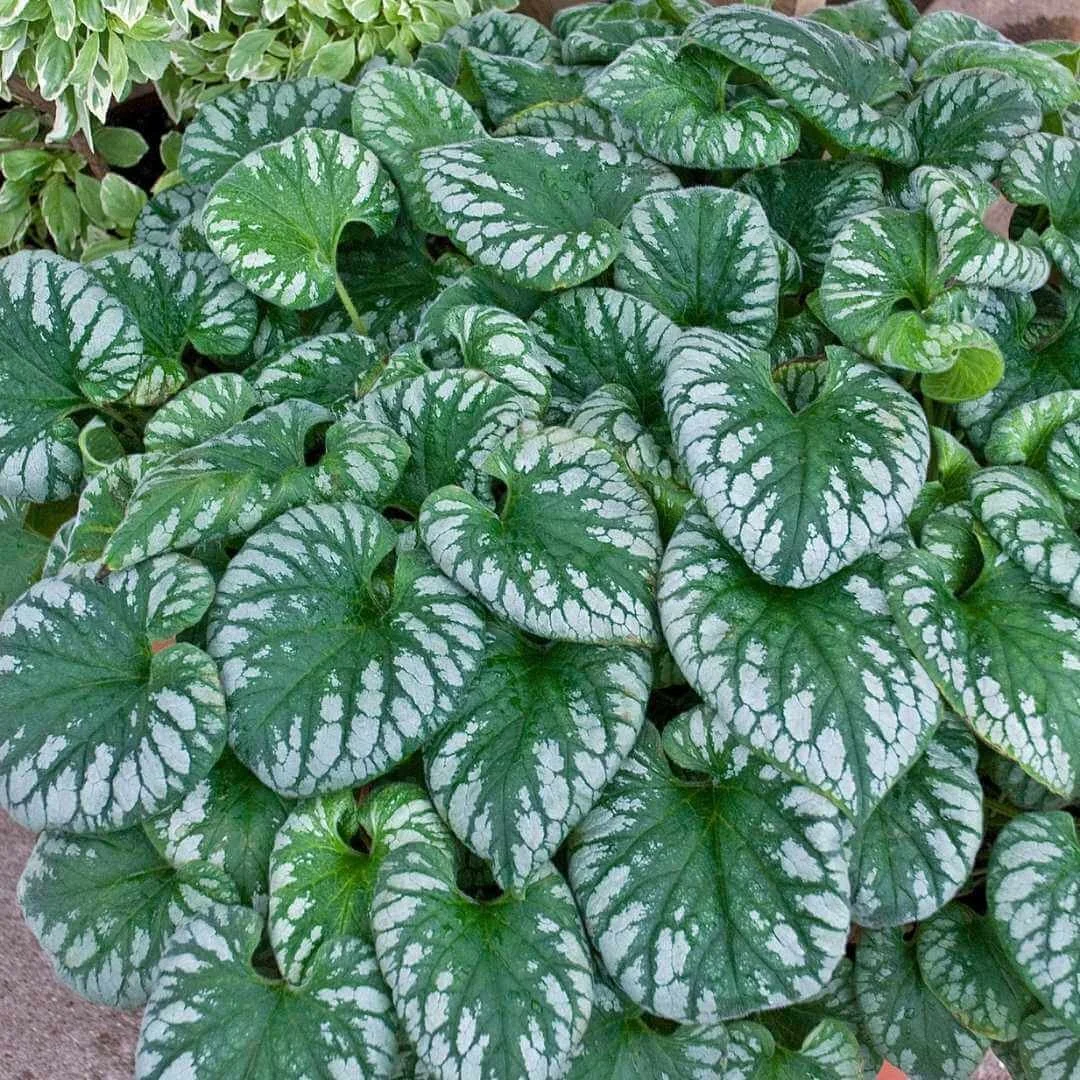
Emerald Mist Siberian Bugloss. Image courtesy of Walters Gardens, Inc.
15. Coral Bells & Foamy Bells
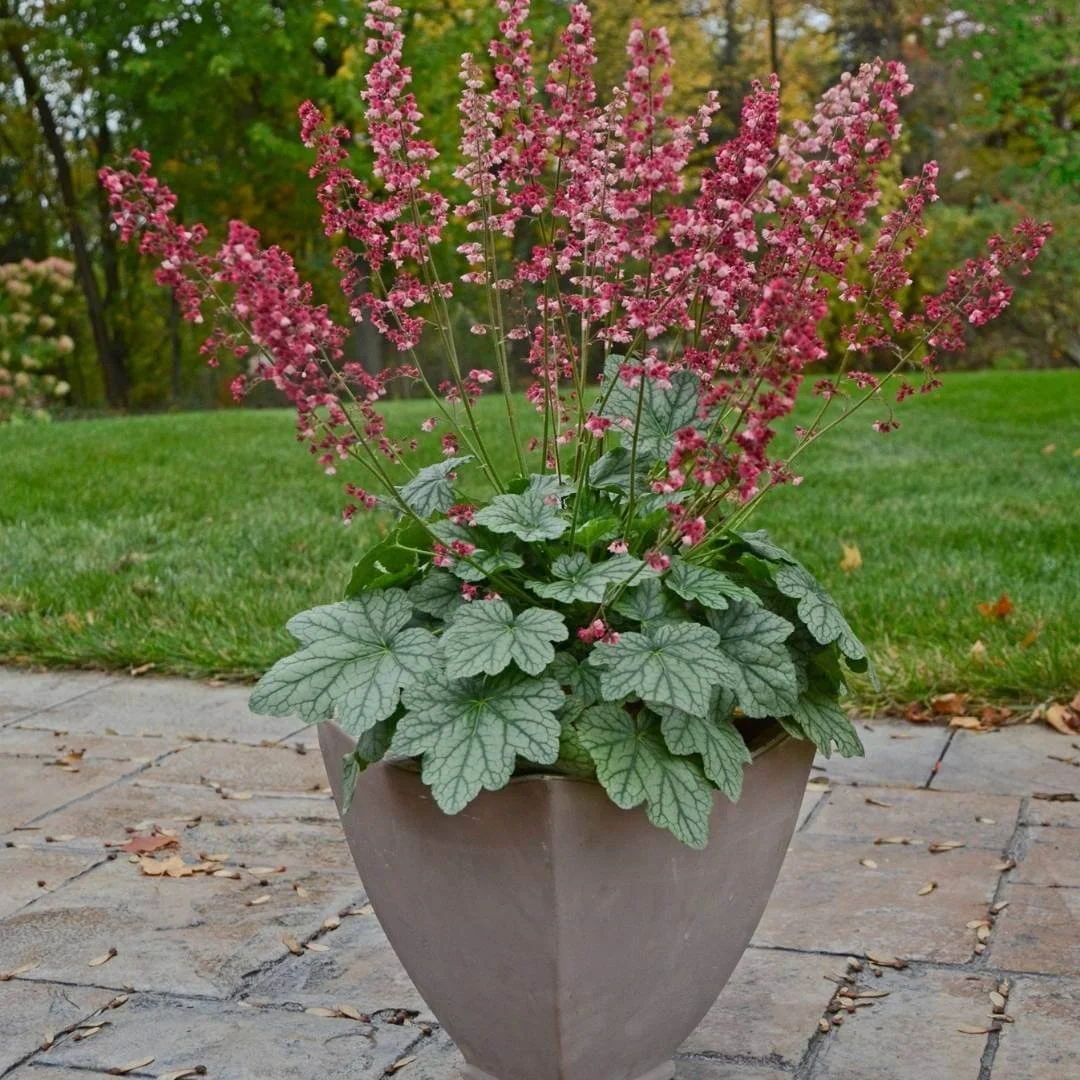
Berry Timeless Coral Bells. Image courtesy of Walters Gardens, Inc.
Coral bells (Heuchera) are mounded, clump-forming perennials prized for their colorful foliage, which can range from purple or orange to brown and yellow. In late spring, airy stalks of coral-colored flowers appear, adding a delicate touch to the shade garden. Evergreen to semi-evergreen depending on climate, they’re grown mainly for their foliage.
Foamy bells (Heucherella), a cross between coral bells and foamflower, offer similarly striking leaves with delicate pink or white blooms and a low, compact habit. They’re also evergreen to semi-evergreen.
I grouped these two shade plants together because they’re closely related and look fantastic in woodland gardens, along walkways, in shade containers, at the front of borders, or massed for impact. Both prefer moist, rich, well-draining soil and are not suited to dry shade or clay. Foamy bells perform best in full shade, while most coral bells need at least a couple of hours of sunlight. Both types are deer resistant.
My Top Picks: ‘Green Spice’ remains a personal favorite for its green leaves with deep purple veining. ‘Georgia Peach’ has bold orange-pink color and heat tolerance, while ‘Berry Timeless’ has impressive flowers. For foamy bells, ‘Solar Eclipse’ features dramatic burgundy leaves edged in lime green, and ‘Eye Spy’ offers maple-like leaves that shift from yellow and pink in spring to rich green, silver, and purple as the season progresses.
Common name: Coral Bells, Alum Root, Foamy Bells
Botanical name: Heuchera (Coral Bells) and Heucherella (Foamy Bells)
Native range: North America
Light requirements: Coral bells - full sun to part shade (at least 2 hours of sun); Foamy bells - part shade to full shade
Zones: 4-9
Flowering time: Spring, summer
Flower colors: Pink, white, cream
Size range: 1-3 feet high and 1-2 feet wide
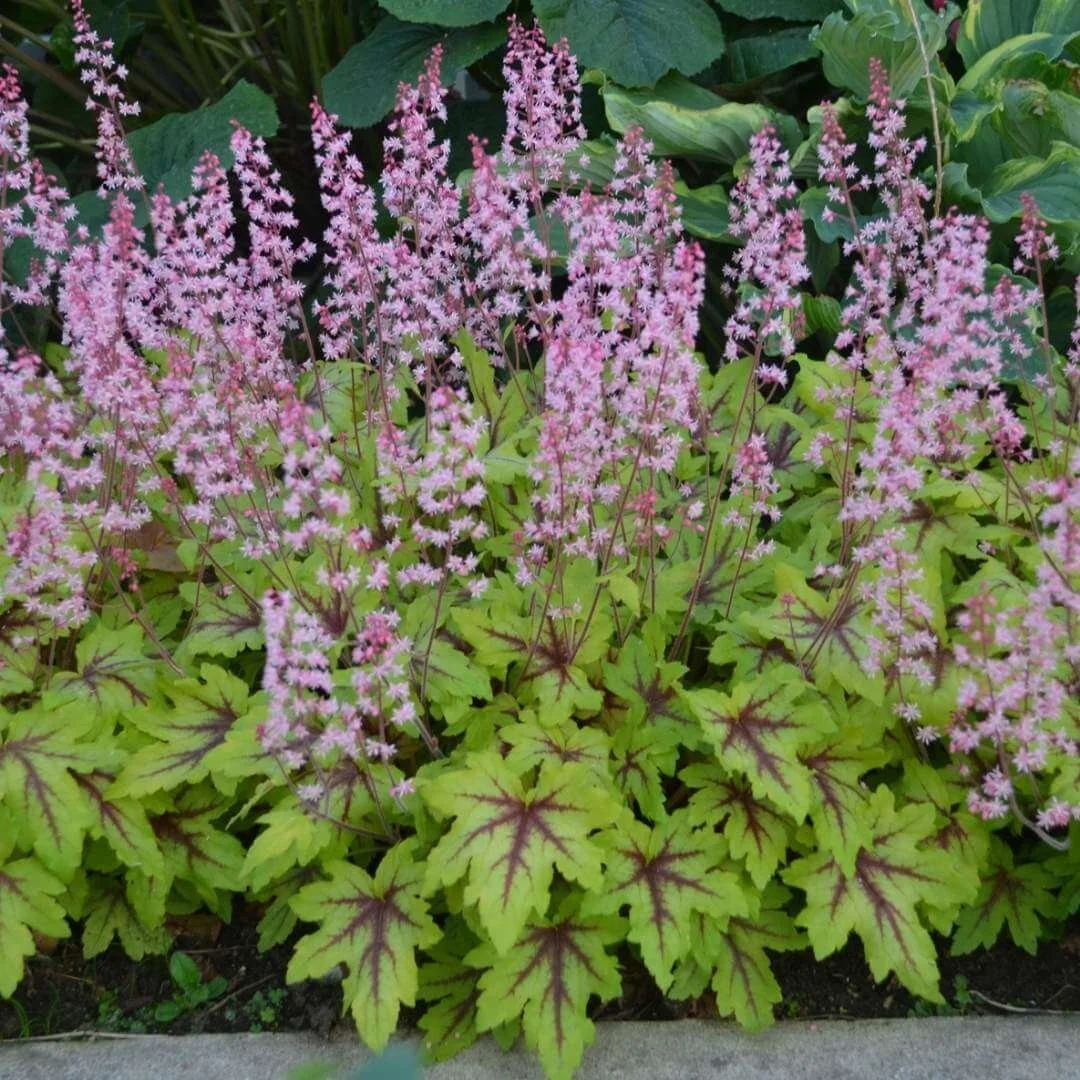
Eye Spy Foamy Bells. Image courtesy of Walters Gardens, Inc.
16. Foamflower
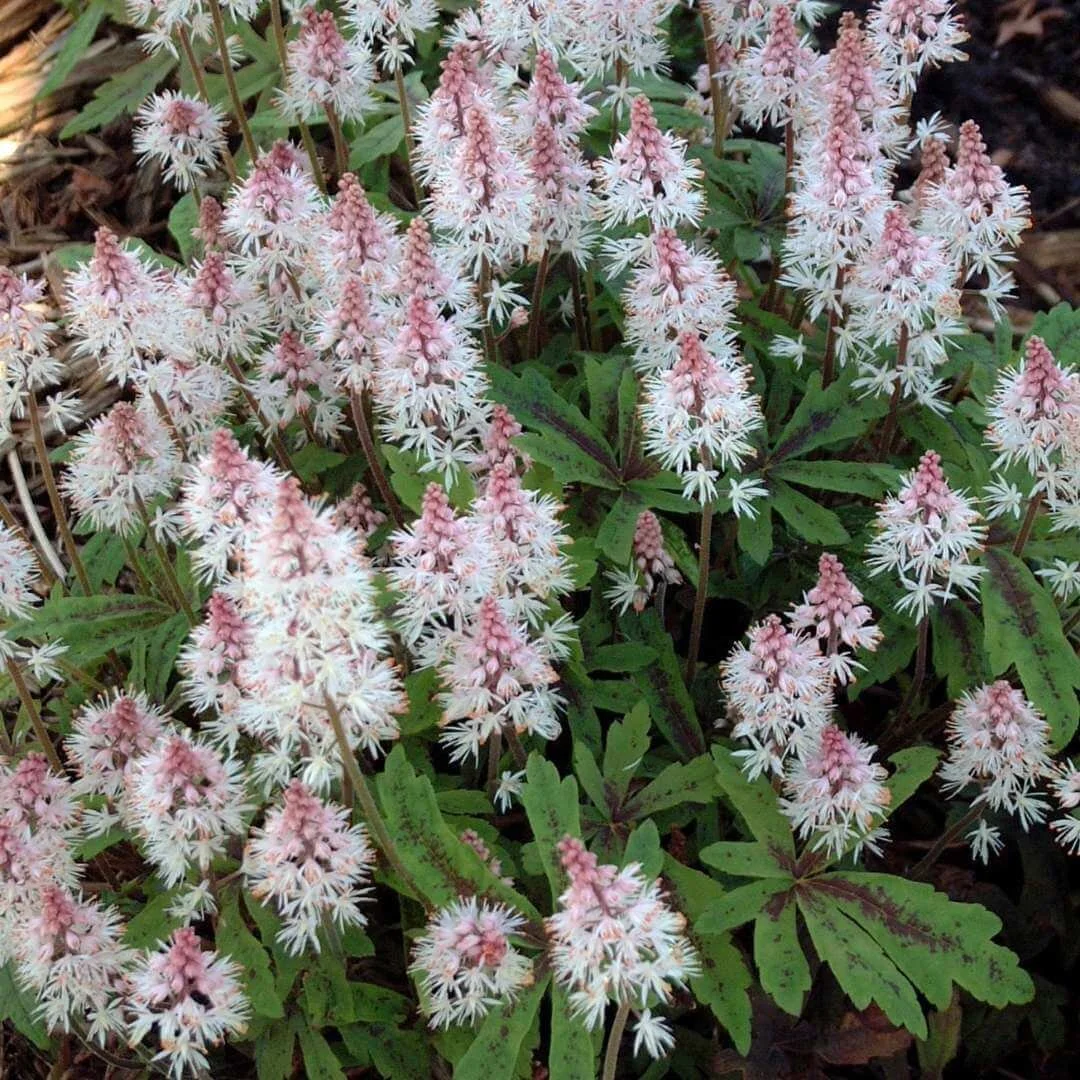
Spring Symphony Foamflower. Image courtesy of Ball Horticultural Company.
Foamflower is a moisture-loving perennial shade plant that produces frothy, whitish-pink spring flowers atop delicate, wiry stems. Its heart-shaped foliage, often marked with dark, intricate veining, adds season-long interest, and it’s deer resistant and benefits a wide range of early season pollinators.
I’ll be honest, foamflower can be tricky 😩. I tried growing it several times in my Mid-Atlantic garden and kept failing, until a hike in Montana made everything click. I saw threeleaf foamflower thriving in a deeply shaded, consistently moist woodland that felt like a rainforest. Its soil was enriched by a thick layer of decomposing leaves and fallen branches, under a canopy of humid, shaded trees.
That’s the key: foamflower needs more than shade. It requires a combination of shade, steady moisture, high humidity, and very rich soil that my backyard border garden could not provide. Compost and leaf mulch can help, but without moisture and humidity, it’s not a good fit.
If you have a damp, shady side yard with moss and consistently moist soil, foamflower could be exactly what you’re looking for. It’s stunning in mass plantings or woodland gardens and pairs beautifully with coral bells, hostas, and Christmas ferns.
My Top Picks: ‘Sugar and Spice’ is a longtime favorite, with frothy pink-white flowers and lacy green foliage streaked in deep burgundy. ‘Spring Symphony’ features pink-to-white blooms and pointed green leaves with bold black markings, while ‘Cutting Edge’ has green leaves veined in deep maroon.
Common name: Foamflower, Wherry's Foamflower
Botanical name: Tiarella cordifolia (formerly Tiarella wherryi)
Native range: North America
Light requirements: Dappled to full shade
Zones: 3-8
Flowering time: Spring
Flower colors: Pink, white
Size range: 6-12 inches high and 12-18 inches wide
17. Japanese Forest Grass
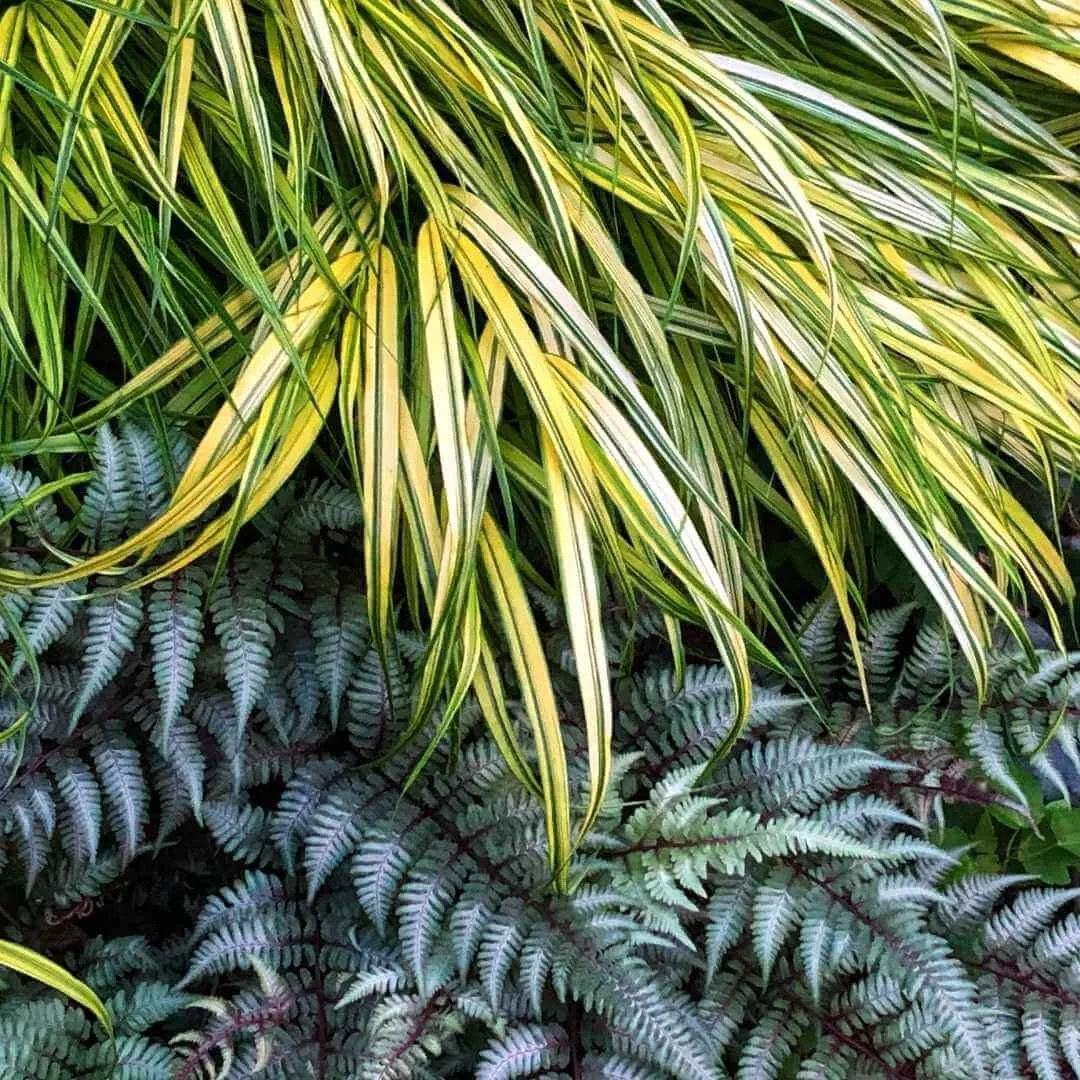
‘Aureola’ Golden Variegated Japanese Forest Grass (top) and Japanese Painted Fern (bottom). Image © Plant and Bloom Design Studio
Japanese forest grass brightens shady spots with graceful mounds of arching blades. This deer-resistant perennial shade plant brings soft texture and fluid movement to the garden, plus subtle winter interest when dried.
I love using Japanese forest grass to add motion to shade gardens, creating the effect of a quiet river flowing through the landscape. It’s a natural fit for Asian-inspired gardens and pairs beautifully with lenten roses, coral bells, hostas, ferns, and astilbes.
Japanese forest grass thrives in containers and looks stunning along walkways, where its arching blades spill over hard edges to soften and define them. It performs best in moist, well-drained soil, and too much sun will bleach the foliage variegation.
My Top Picks: The golden variegated ‘Aureola’ is a classic favorite, with gorgeous yellow-and-green foliage that adds a glowing, dynamic presence. For smaller spaces, ‘All Gold’ stays compact with a tidy, mounded form and rich golden leaves.
Common name: Japanese Forest Grass, Hakone Grass
Botanical name: Hakonechloa macra
Native range: Japan
Light requirements: Part to full shade
Zones: 5-9
Size range: 1-2 feet tall and 2-3 feet wide
18. Lungwort
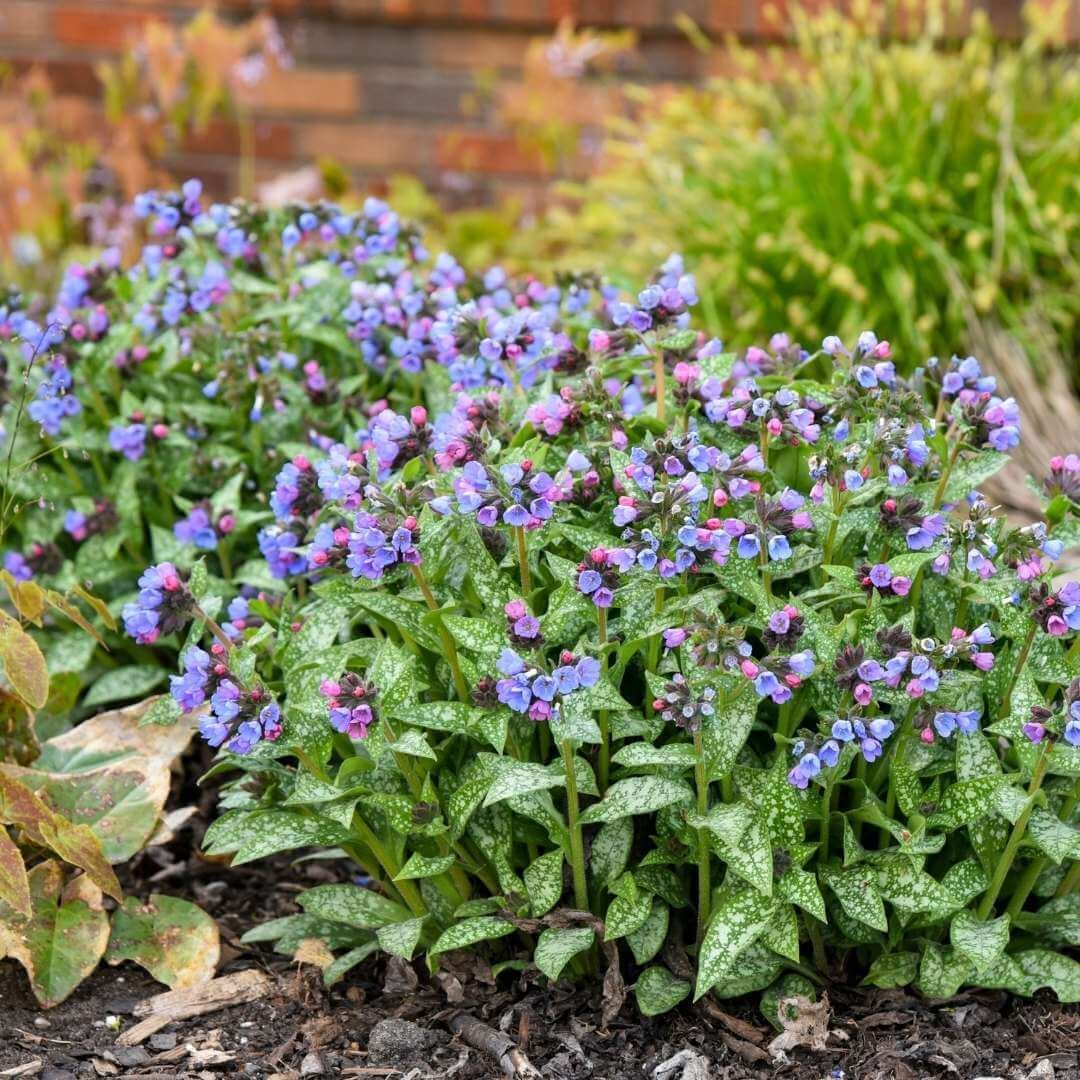
Pink-a-Blue Lungwort. Image courtesy of Walters Gardens, Inc.
Lungwort is a low-growing perennial plant for shade with fuzzy green leaves speckled with silvery-white spots. In spring, it produces small funnel-shaped flowers in shades of blue, purple, and pink. Semi-evergreen and deer resistant, it needs cool shade with rich, moist soil.
This plant is especially well suited to damp, protected areas along the north side of a house. Like foamflower, lungwort struggles in dry conditions and needs consistently moist, fertile soil to thrive.
My Top Picks: ‘Mrs. Moon’ is a longtime favorite, with bright pink flowers maturing to blue, and dark green foliage dotted with silver. ‘Raspberry Splash’ offers pink and purple blooms with heavily silver-spotted leaves. ‘Pink-a-Blue’ features charming bicolor flowers, while ‘Twinkle Toes’ is a unique shade plant with clear periwinkle-blue blooms.
Common name: Lungwort, Bethlehem Sage
Botanical name: Pulmonaria
Native range: Europe
Light requirements: Partial to full shade
Zones: 3-9
Flowering time: Spring
Flower colors: Blue, pink, purple
Size range: 6-12 inches high and 12-24 inches wide
19. Hosta
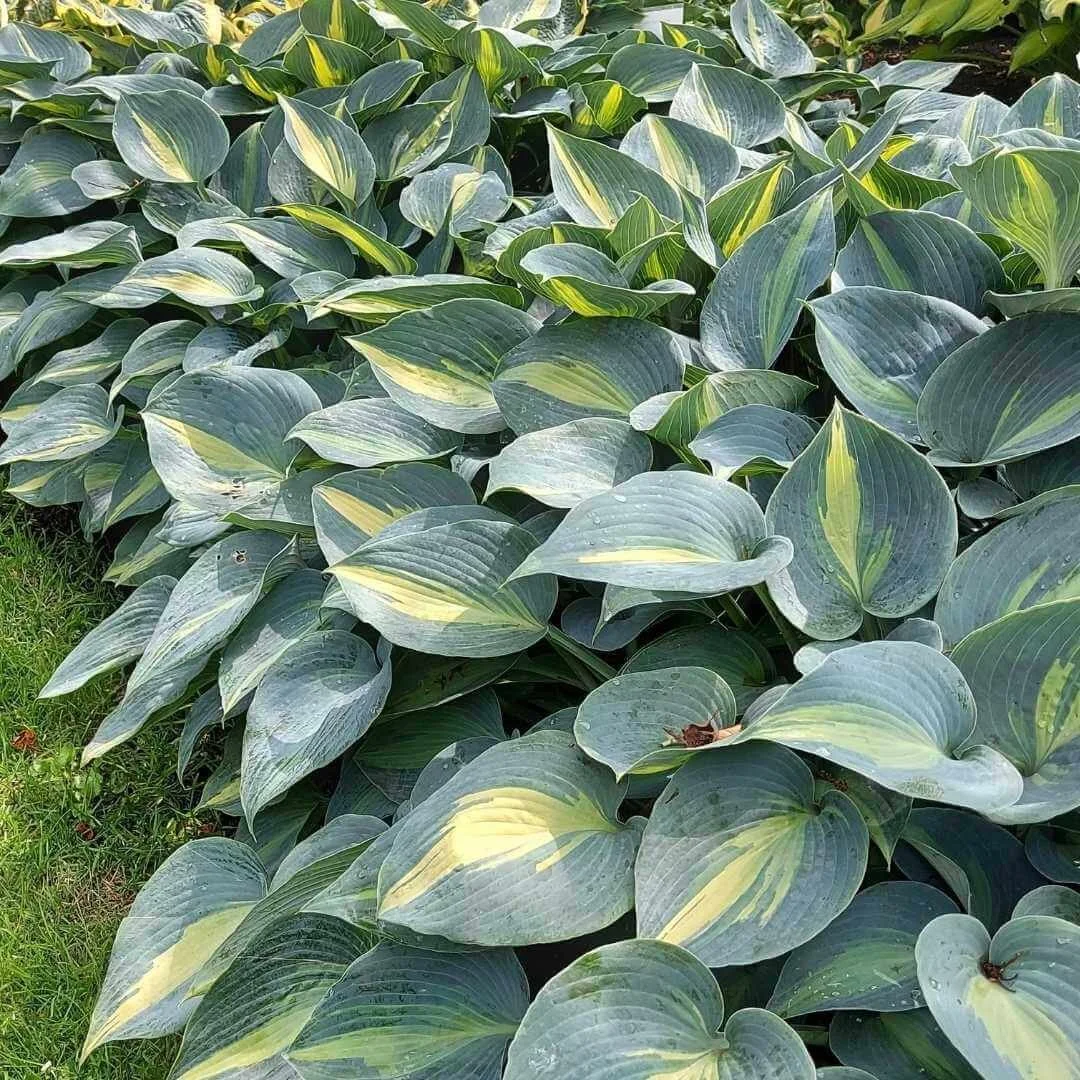
Hosta ‘Catherine’. Image courtesy of Ball Horticultural Company.
Hostas are perennial shade plants grown primarily for their bold, beautiful foliage rather than their flowers, though most do bloom. This hugely diverse, widely hybridized group offers nearly endless options, from tiny varieties like ‘Blue Mouse Ears’ at just 5-10 inches tall to giants like ‘Empress Wu,’ which can reach 4-5 feet tall and 6-9 feet wide.
Foliage colors range from green, blue-green, and lime to gold, pale yellow, and white, often with striking variegation. Leaf shapes include pointed, heart-shaped, and round, while textures can be smooth, rippled, waxy, or thick.
One important caveat: hostas are not deer resistant. If deer are present, they’ll treat a hosta bed like an all-you-can-eat salad bar 🥬, so consider picking another plant from this list!
My Top Picks: With so many choices, my go-to cultivars are: 'Big Daddy', a large blue hosta with somewhat slug-resistant leaves; 'Patriot', which has glossy green leaves with large white margins that create a cooling effect in summer shade gardens; and 'June', an exceptionally tidy plant with bright green leaves.
Common name: Hosta, Plantain Lily
Botanical name:Hosta
Native range: Asia
Light requirements: Partial to full shade
Zones: 3-9
Flowering time: Summer
Flower colors: White, purple
Size range: 6 inches-4 feet high and 6 inches-9 feet wide
20. Japanese Painted Fern
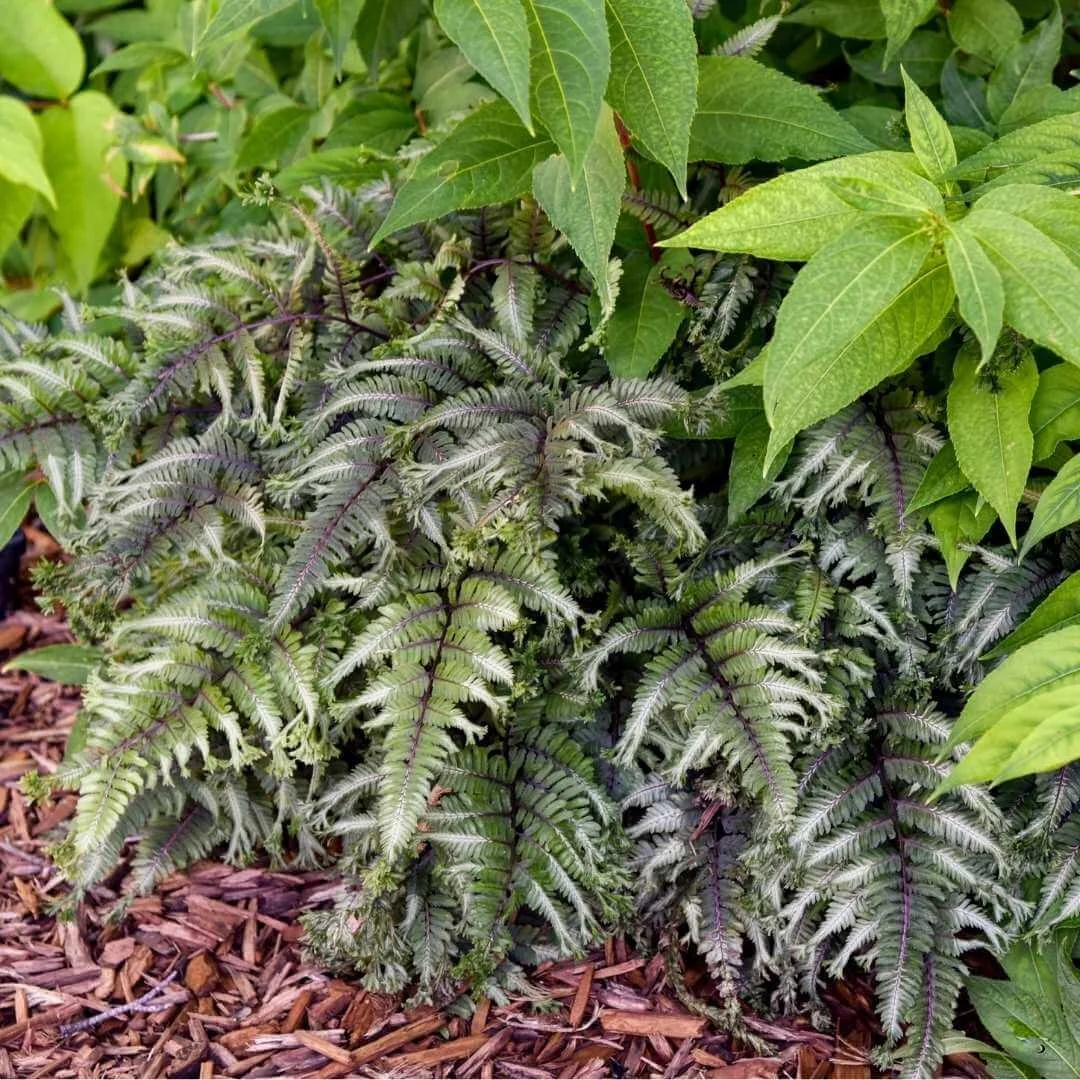
Crested Surf Japanese Painted Fern. Image courtesy of Walters Gardens, Inc.
Japanese painted fern is an absolute showstopper shade plant, with elegant lacy fronds in silver, green, maroon, and purple. It brings lush texture to shade gardens and thrives in moist, dappled shade. Deer resistant and gorgeous - what's not to love?
This fern is excellent for providing textural contrast with large-foliage perennials like hostas. It's perfect for filling in dark, shady areas along the north side a house. For those with part shade, this fern looks absolutely amazing planted next to weeping Japanese maples like 'Crimson Queen' or 'Tamukeyama'.
My Top Picks: Var. pictum is the most popular, with silver-green fronds that have purple-maroon streaks along the midribs. 'Crested Surf' is slightly taller with double-crested tips that give it extra texture. 'Burgundy Lace' is a colorful choice with vivid purple and silver leaf color.
Common name: Japanese Painted Fern
Botanical name:Athyrium niponicum
Native range: Asia
Light requirements: Partial to full shade
Zones: 4-8
Size range: 18-24 inches tall and wide
Groundcovers
An important note about groundcovers: When they're happy and the conditions are exactly right, these plants will really cover ground by leaps and bounds.
This is both a blessing and a curse! It could be fantastic if you want to cover an ugly area as quickly as possible or stabilize soil, but it can be problematic if you were expecting a well-behaved plant. So use judiciously!
21. Golden Star
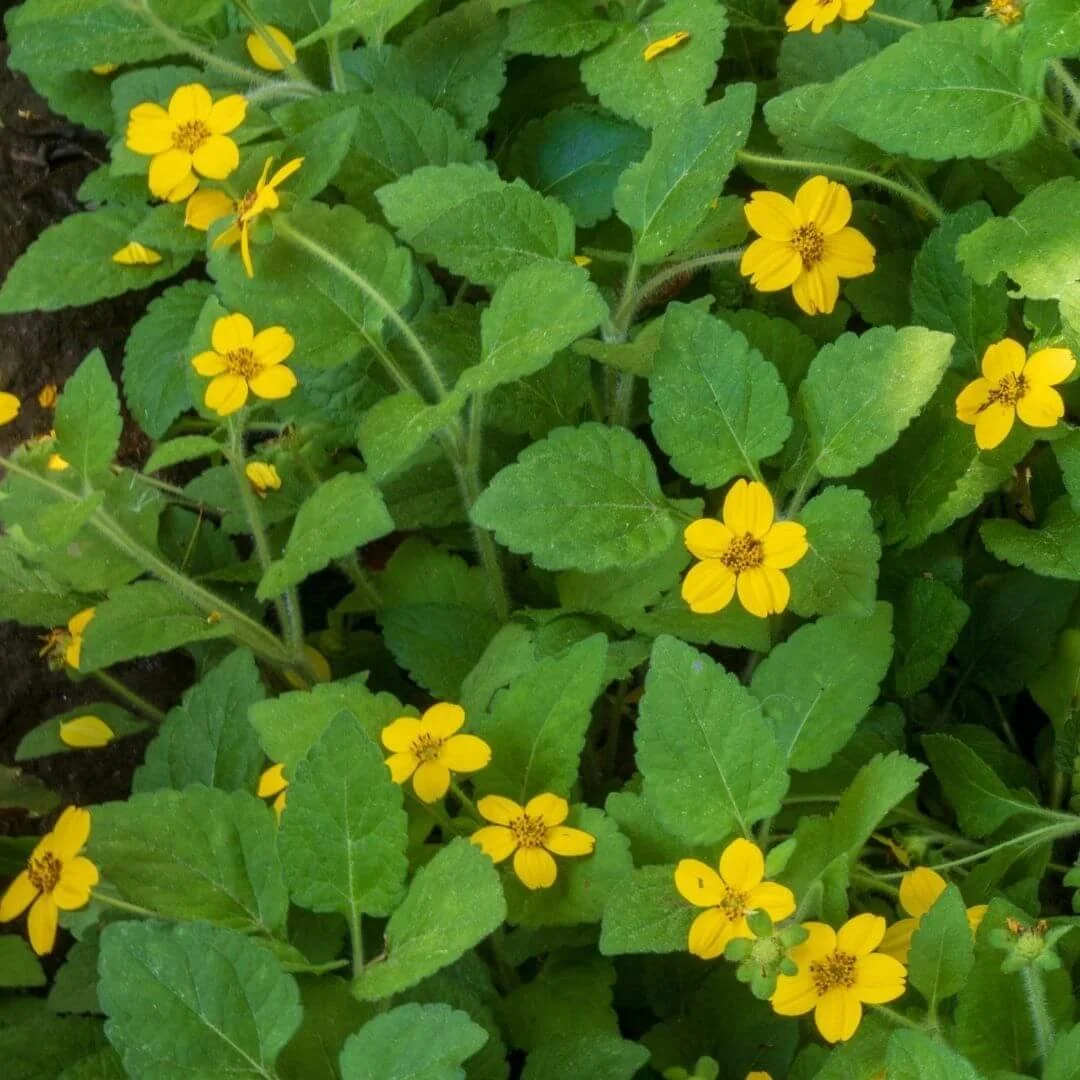
Golden Star. Image courtesy of American Meadows via National Garden Bureau.
Golden star (also called green-and-gold) is a problem-solver for shade gardens. This low-growing, highly deer-resistant semi-evergreen spreads by rhizomes to form a carpet of foliage up to 12 inches tall.
Easy to grow in average soil, Golden Star thrives in part to full shade or dappled areas. It’s perfect as a groundcover under tall trees, for stabilizing shady hillsides, or creating a no-mow slope. When this shade plant is happy, it spreads quickly, but it's easy enough to pull out when it oversteps its bounds.
My Top Picks: The native species is wonderful and worth seeking out online or at nurseries. 'Pierre' grows in tighter clumps and has a longer bloom time than the native species.
Common name: Golden Star, Green-and-Gold, Golden Knee
Botanical name: Chrysogonum virginianum
Native range: Eastern US
Light requirements: Part shade to full shade
Zones: 5-9
Flowering time: Early summer to late fall
Flower colors: Yellow
Size range: 12 inches tall and 12-24 inches wide
22. White Wood Aster
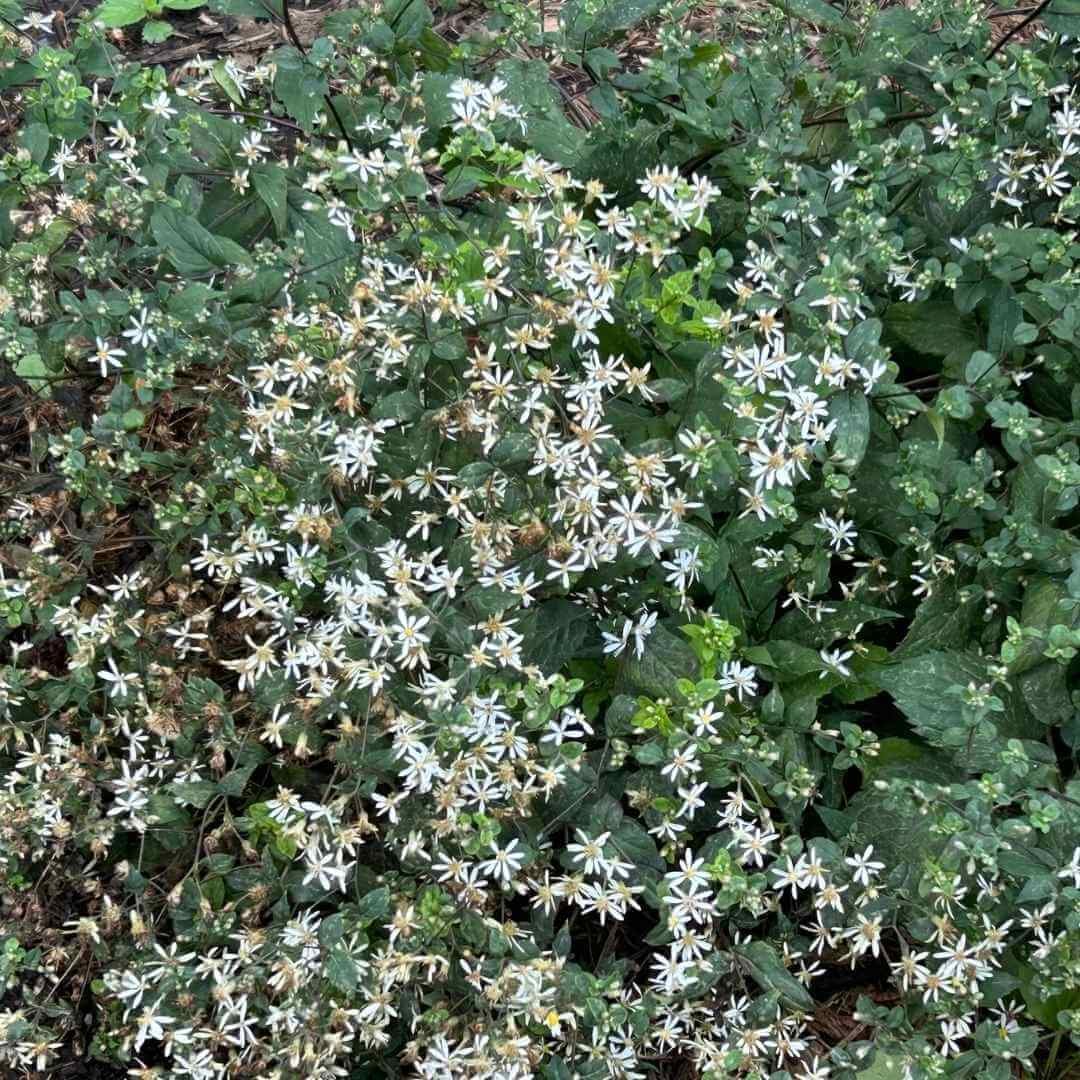
White Wood Aster. Image © Plant and Bloom Design Studio
White wood aster is another excellent plant for those struggling with dry shade. This tough, deer-resistant, no-fuss perennial forms a carpet of heart-shaped leaves with delicate flowers.
It spreads quickly, and the small white fall flowers are pollinator favorites. I find this shade plant so useful that I wrote a dedicated article about it.
Excellent for woodland and native shade gardens, it tackles those awkwardly shaped or ugly spots with ease. Plus, pollinators flock to it because it's both a host plant and nectar source, making it a pollinator garden MVP.
My Top Picks: The native species can take a bit of searching to find, but it’s well worth seeking out. ‘Eastern Star’ is another excellent option, offering a more compact habit topping out at 12-18 inches tall.
Common name: White Wood Aster
Botanical name: Eurybia divaricata (formerly Aster divaricatus)
Native range: Eastern North America
Light requirements: Part shade to full shade
Zones: 3-8
Flowering time: Late summer to fall
Flower colors: White
Size range: 1-3 feet high and wide
23. Barrenwort
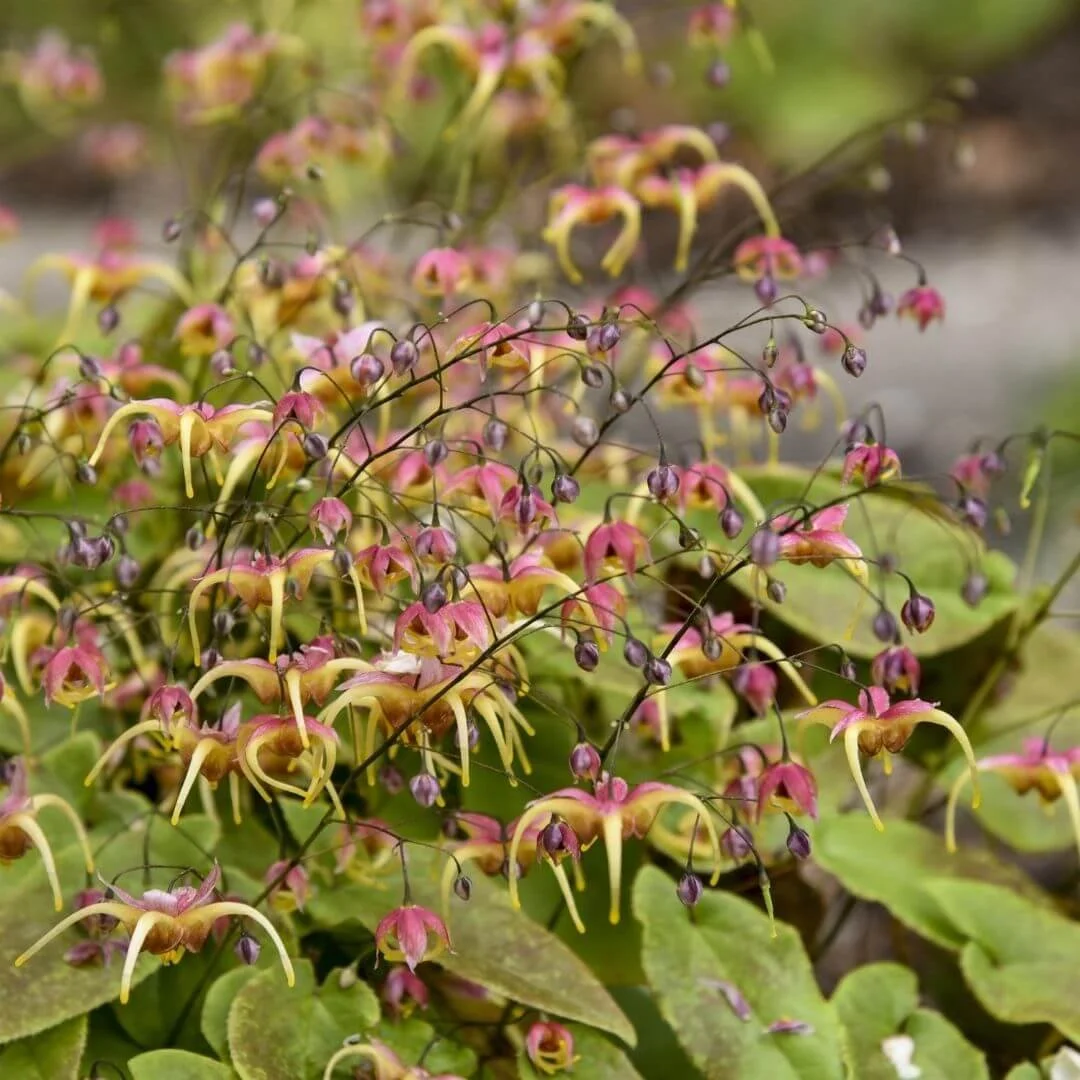
Dream Catcher Barrenwort. Image courtesy of Ball Horticultural Company.
Barrenwort is a beautiful, foliage-forward groundcover that thrives in the shade beneath trees. In spring, airy clusters of dainty flowers float above the foliage on delicate, wiry stems. It’s slow growing, well behaved, highly deer resistant, and one of the most reliable solutions for tough shade.
This perennial shade plant truly shines in dry shade under tall trees, where many others struggle. Once established, it’s easy to grow and remarkably hardworking, making it an excellent choice for low-maintenance landscapes and woodland gardens. There are many varieties to choose from, each with different flower hues, leaf shapes, and foliage colors.
My Top Picks: My go-to picks include red barrenwort (Epimedium × rubrum), prized for leaves that emerge pink-tinged, mature to deep green, and finish the season in rich bronzy red. I also love ‘Sulphureum’ (Epimedium × versicolor ‘Sulphureum’) for its soft yellow flowers and foliage that shifts from reddish in spring to green, then red again in fall.
Common name: Barrenwort, Epimedium
Botanical name: Epimedium species
Native range: Asia, Europe, North Africa
Light requirements: Part to full shade
Zones: 4-9
Flowering time: Spring
Flower colors: White, yellow, pink, red, orange, purple
Size range: 8-18 inches tall and 1-3 feet wide
24. Sedge
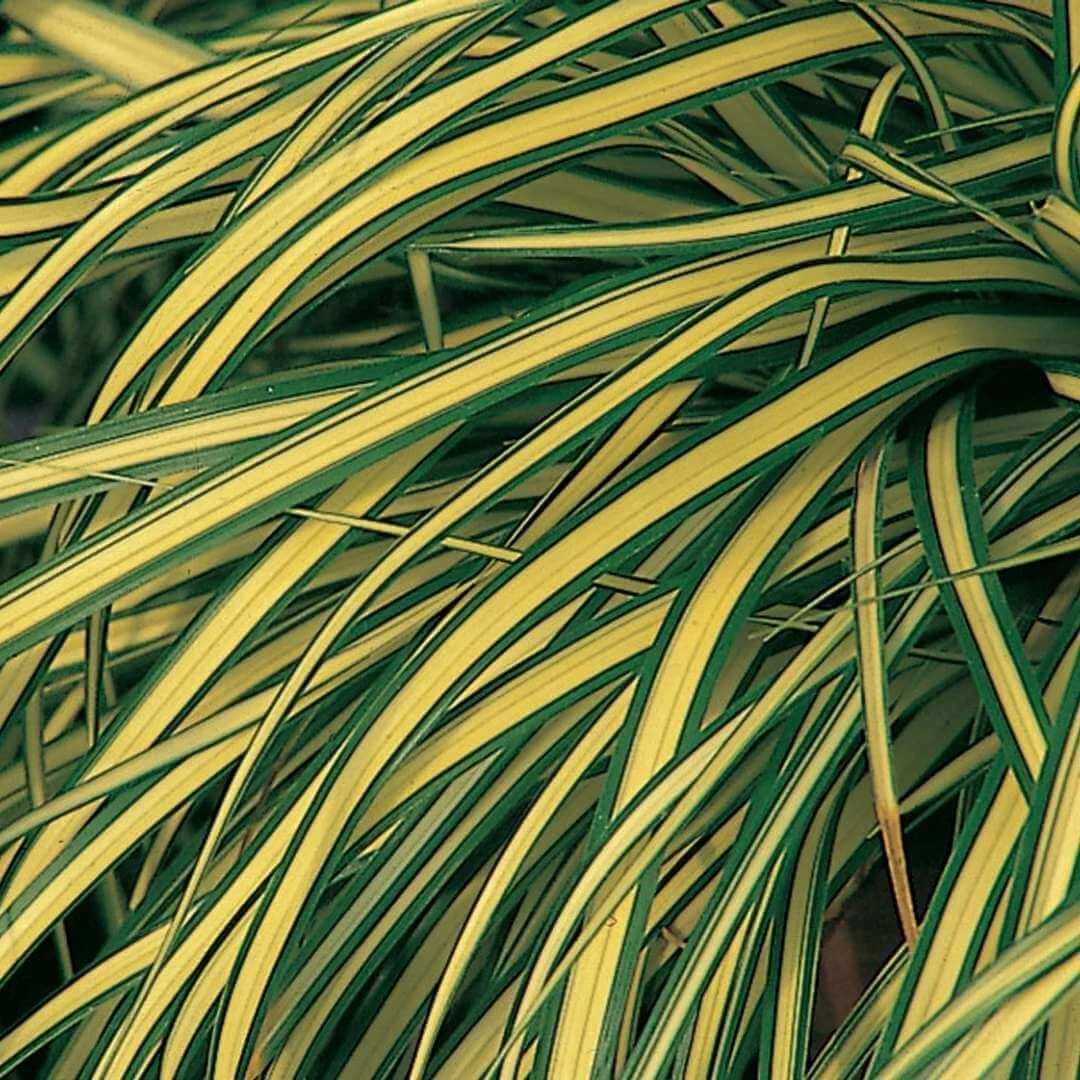
Evergold Sedge. Image Courtesy of Proven Winners, provenwinners.com
Sedge is a perennial shade plant with grass-like foliage that thrives as groundcover in shady and woodland settings. It also performs beautifully in shade containers. Some varieties produce flowers, but they're insignificant and barely noticeable - it's all about those leaves adding texture and movement. Most sedges are deer resistant and virtually maintenance-free.
Perfect as a lawn alternative or for controlling erosion on slopes and under trees, sedges offer incredible variety. Some mimic fine turf grass while others bring bold, architectural drama in colors from deep green to golden yellow.
My Top Picks: Bunny Blue® (Carex laxiculmis ‘Hobb’) is a longtime favorite of mine, forming tidy clumps of wide, blue-gray leaves. The native Pennsylvania sedge (Carex pensylvanica) has a fine texture and excels as a grass-like lawn replacement or groundcover in dry shade. For bold color, ‘Everillo’, ‘Evergold’, and ‘Everglow’ bring bright, eye-catching foliage to shade gardens and containers.
Common name: Sedge
Botanical name: Carex species
Native range: Northern Hemisphere
Light requirements: Part to full shade
Zones: 3-10 (varies, check tags)
Flowering time: Spring to early summer
Flower colors: Light to dark brown, straw-colored, purple-tinged
Size range: 6 inches to 3 feet tall and wide
25. Sweet Woodruff
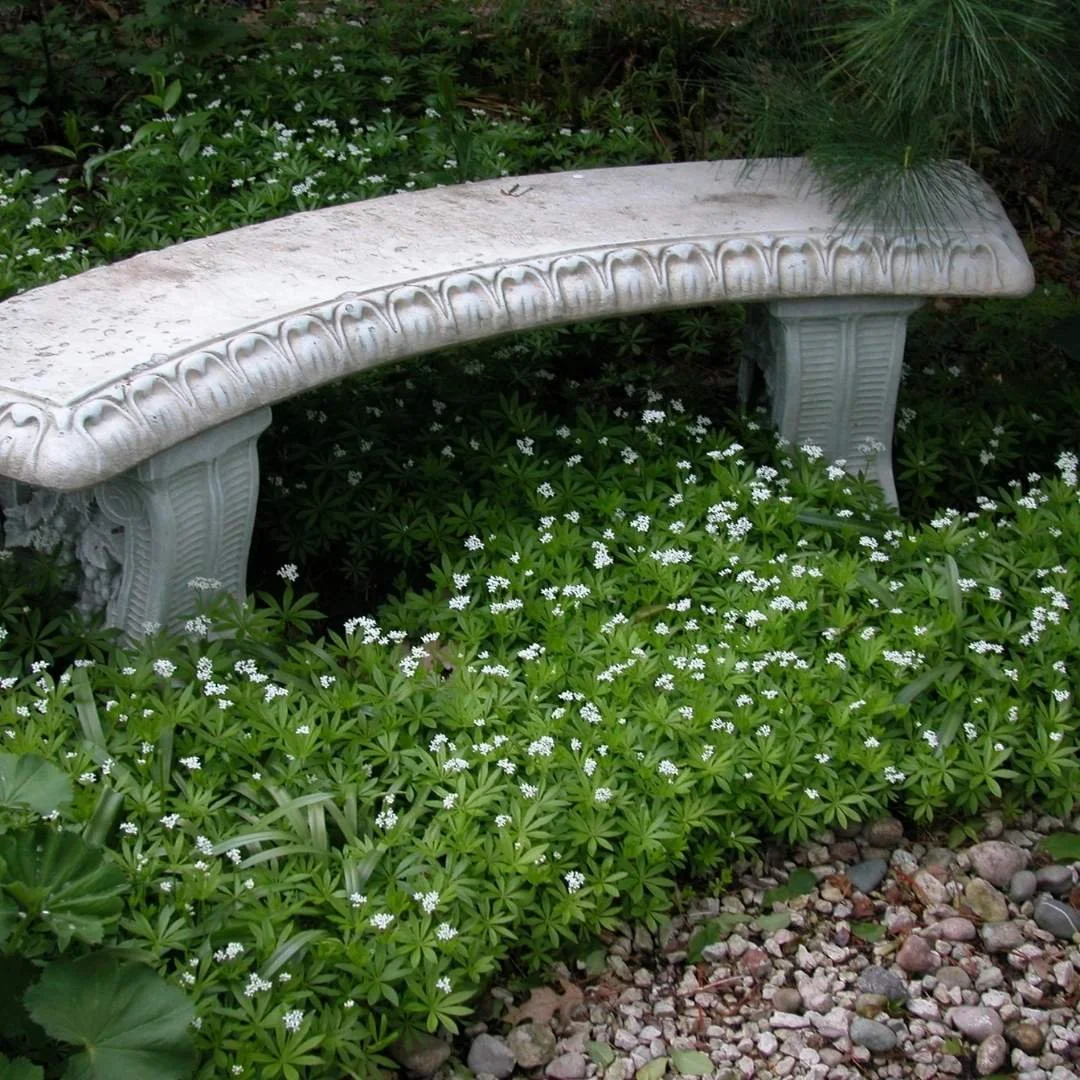
Sweet Woodruff. Image courtesy of Walters Gardens, Inc.
Sweet woodruff is a low-growing, creeping groundcover with dainty white spring flowers and attractive whorls of narrow, lance-shaped leaves.
This shade plant spreads quickly and can cover a lot of ground in a short time, which can be a bonus or a drawback depending on your goals 😜. It’s also deer resistant.
This vigorous plant can smother others, so it’s best suited to woodland gardens or isolated beds where it can spread freely.
My Top Picks:Galium odoratum is the primary species you’ll encounter and a classic choice for shady landscapes.
Common name: Sweet Woodruff
Botanical name: Galium odoratum
Native range: Europe
Light requirements: Part to full shade
Zones: 4-8
Flowering time: Late spring to early summer
Flower colors: White
Size range: 6-8 inches tall, spreads indefinitely
Bringing It All Together
I hope this list inspires you with shade garden ideas to create a beautiful space that brings you joy throughout the growing season!
Remember, choosing the best plants for shade is about more than just picking pretty plants. Take time to understand your USDA hardiness zone, check the US Drought Monitor for your area's water conditions, and consult resources like the Rutgers Deer Resistant Plants List if deer are an issue in your location.
For more shade garden ideas and guidance, check out my articles:
How to Water Your Plants: The Ultimate Guide
10 Low Maintenance Plants that Like Shade
10 Front of the House Shade Landscaping Shrubs
Use your creativity, experiment with combinations, and most importantly, have fun! There's no single "right" way to garden. The best garden is one that makes you happy and fits your lifestyle.
Happy shade gardening! 🌿🌸😎
Follow Plant and Bloom Design Studio for More Garden Ideas