
Mountain Hydrangea: Varieties, Care Guide, and Landscape Uses
Published: April 15, 2024 | Updated: June 19, 2026
Tiny Tuff Stuff™ Mountain Hydrangea. Image courtesy of Proven Winners, provenwinners.com
If late spring frosts keep killing your hydrangea blooms before they even open, you are not alone, and you are not doing anything wrong. You may just be growing the wrong type of hydrangea.
Meet the mountain hydrangea (Hydrangea serrata), one of the most underrated shrubs in the garden world. Native to the mountains of Korea and Japan, this compact, cold-tough beauty is built differently from the popular bigleaf hydrangeas (Hydrangea macrophylla) most of us know.
Thanks to a longer dormancy period and a naturally later bloom time, mountain hydrangeas shrug off late frosts and cold spring snaps that would devastate a bigleaf. The result? Reliable, consistent blooms every summer, year after year. And that's just the beginning of what makes this plant special.
Mountain hydrangeas offer gorgeous lacecap flowers that shift from pink to blue depending on your soil pH, rich burgundy and red fall foliage, and a naturally compact habit that fits beautifully into smaller gardens, foundation plantings, and containers. They thrive in partial shade, tolerate a wide range of conditions, and rarely give you trouble with pests or disease.
In this guide, I'm covering everything you need to know: the best mountain hydrangea varieties available today, how to grow and care for them, how to use them in your landscape, and how they compare to bigleaf hydrangeas. Whether you're planting your first one or looking to expand your collection, you're in the right place.
All photos in this article are either my own field photography, images sourced directly from growers, or carefully selected stock photos. No AI-generated imagery, ever.
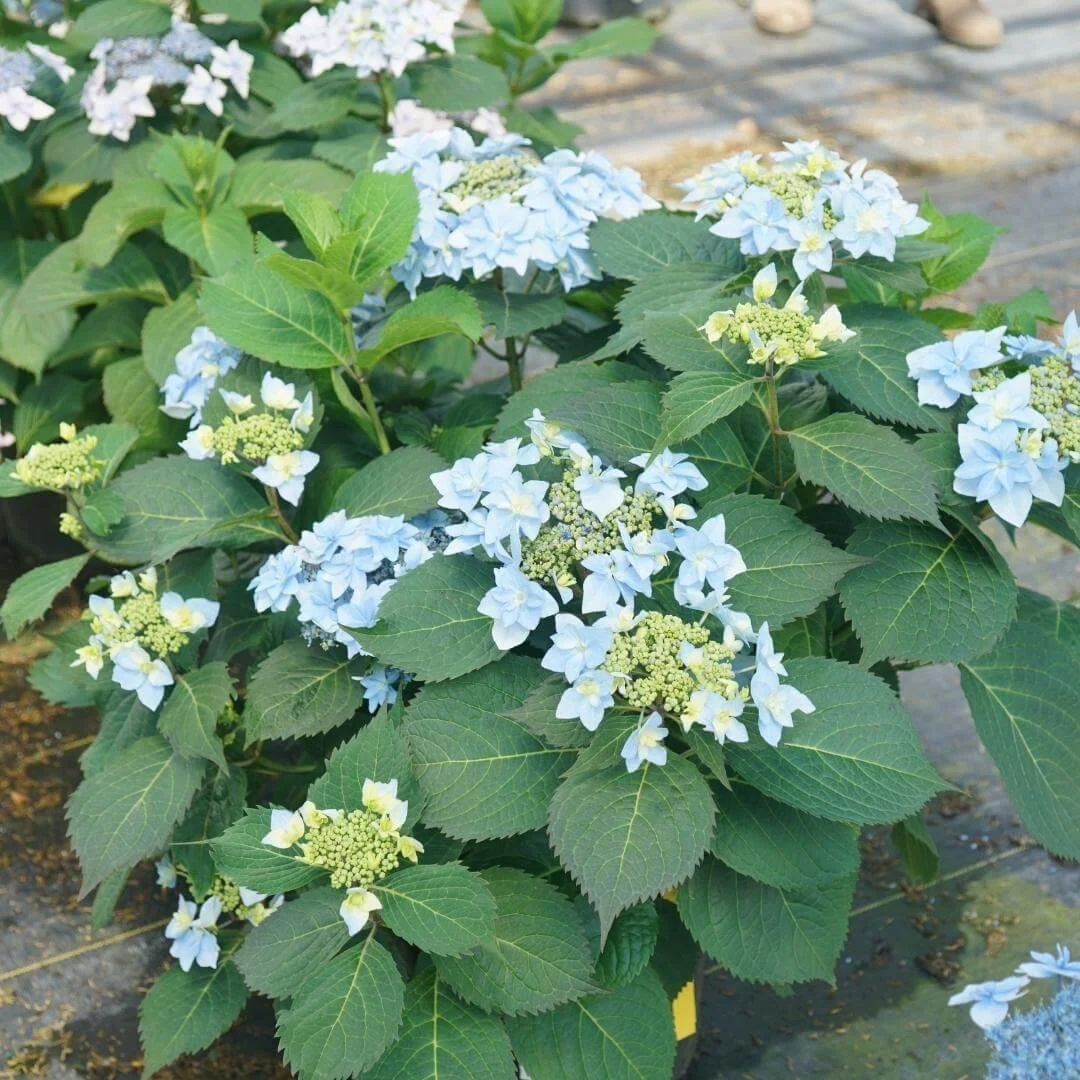
Mountain hydrangea flowers can be either blue or pink, depending on soil pH. Tuff Stuff Ah-Ha® Reblooming Mountain Hydrangea image courtesy of Spring Meadow Nursery, Inc. - Proven Winners, provenwinners.com
Quick Reference: Mountain Hydrangea
Common name: Mountain hydrangea, Tea of Heaven, Sawtooth hydrangea
Botanical name: Hydrangea serrata
Native range: Korea and Japan
Hardiness zones: 5 to 9
Mature size: 2 to 5 feet high and wide (varies by cultivar)
Light: Partial shade
Bloom time: Summer; reblooming cultivars bloom summer through fall
Flower type: Lacecap
Flower color: Blue or pink, depending on soil pH
Fall color: Deep burgundy to red on many cultivars
Deer resistant: No
Mountain Hydrangea Varieties
If you've been searching for the perfect mountain hydrangea, the good news is that breeders have done some incredible work with this species over the past decade.
From ultra-compact reblooming selections to bold, saturated flower colors, there's a Hydrangea serrata for almost every garden situation.
Here are my favorites, widely available at well-stocked garden centers and online nurseries.
Tuff Stuff™
(Hydrangea serrata 'MAK20')
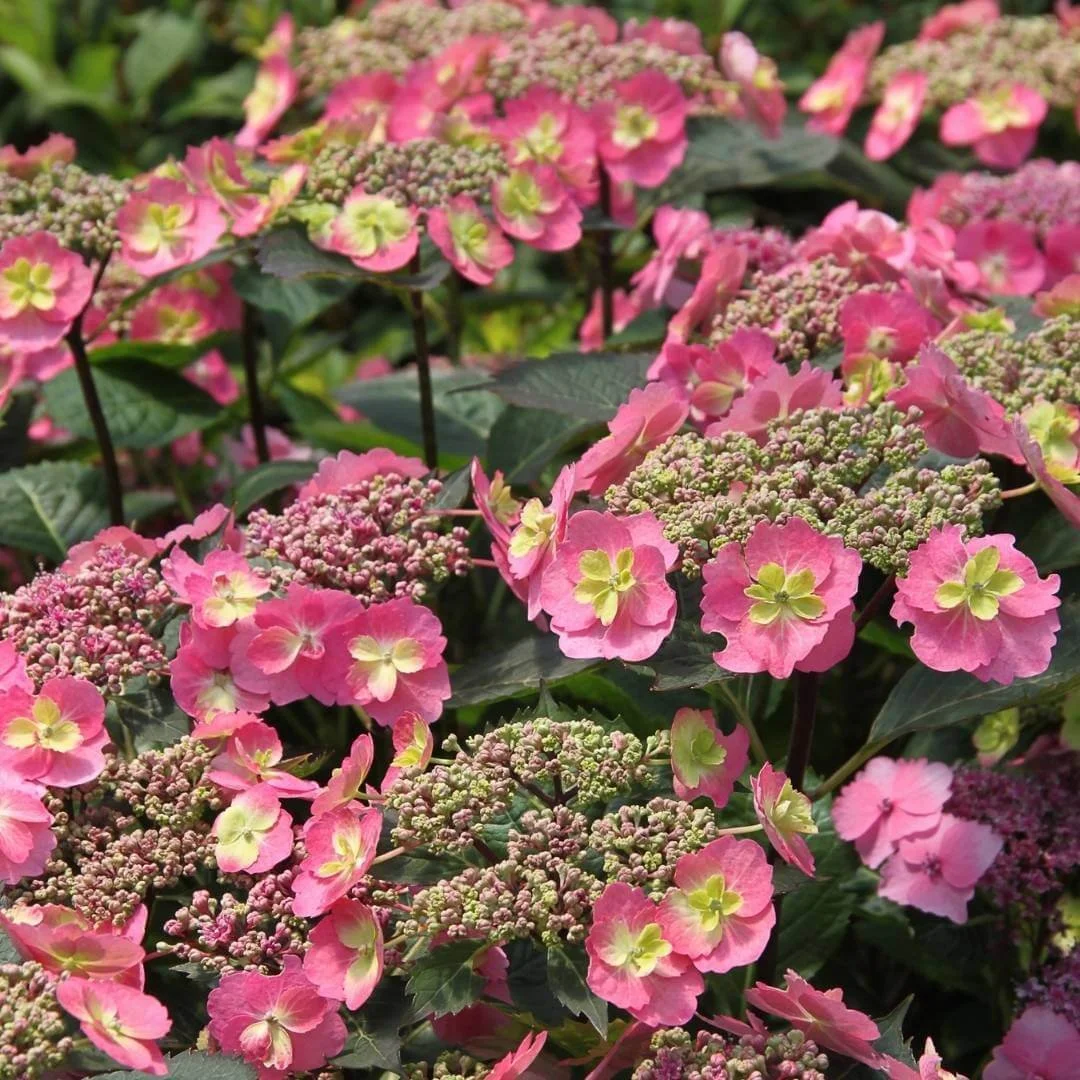
Tuff Stuff™ Reblooming Mountain Hydrangea. Image courtesy of Proven Winners, provenwinners.com
If you're new to mountain hydrangeas, Tuff Stuff is a great place to start. This Proven Winners selection was bred specifically for cold hardiness and reliable reblooming. Because it flowers on both old and new wood, a late frost that damages old growth won't wipe out your entire season of blooms.
Semi-double lacecap flowers open in shades of reddish pink to soft blue depending on your soil pH, and the compact 2 to 3 foot habit fits neatly into borders, foundation plantings, and containers.
Size: 2 to 3 feet high and wide
Zones: 5 to 9
Flower color: Pink to blue (soil pH dependent)
Tuff Stuff Ah-Ha®
(Hydrangea serrata 'SMNHSDD')
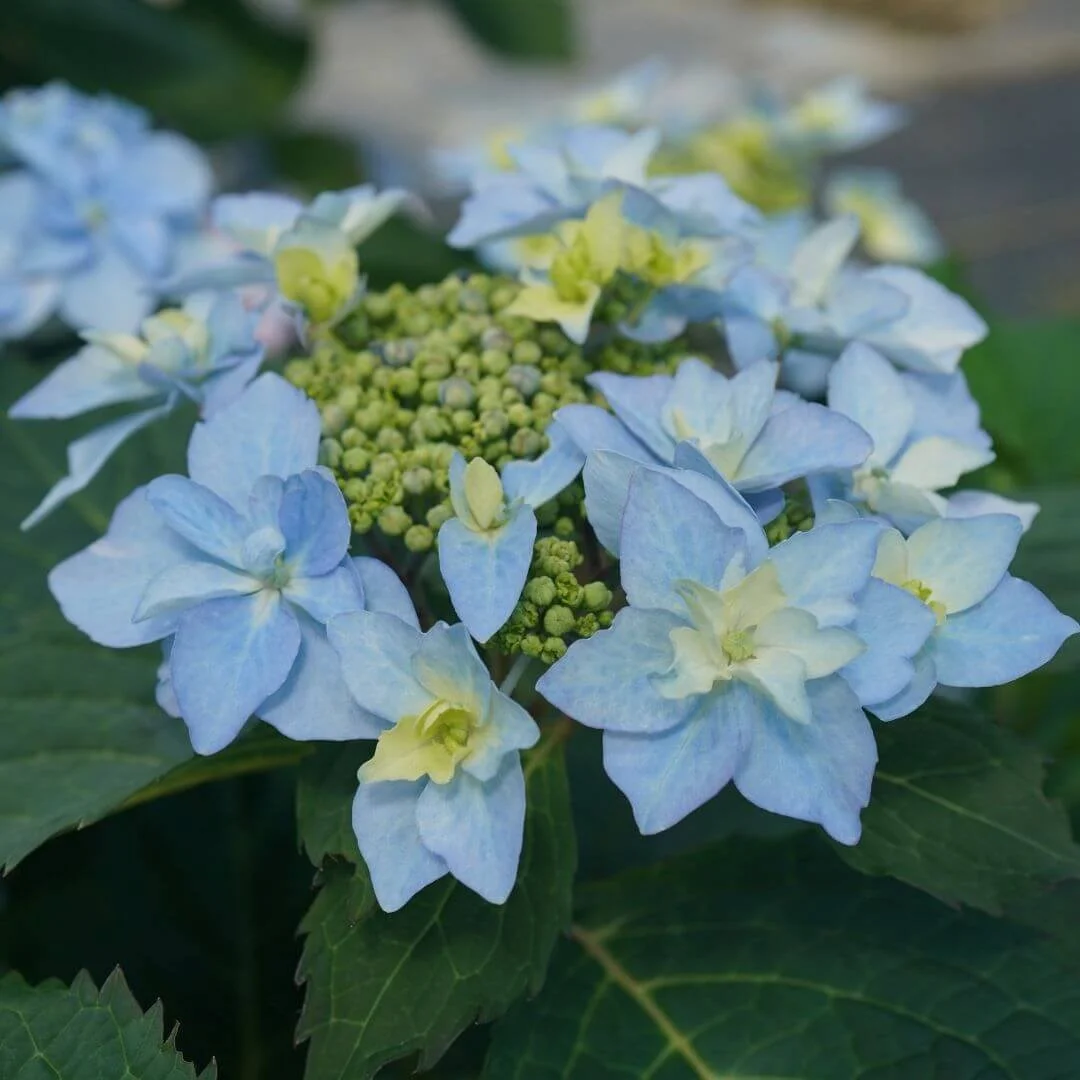
Tuff Stuff Ah-Ha® Reblooming Mountain Hydrangea.Image courtesy of Spring Meadow Nursery, Inc. - Proven Winners, provenwinners.com
Tuff Stuff Ah-Ha is one of the most distinctive mountain hydrangeas available, with lacecap florets that resemble tiny waterlilies.
It's a prolific rebloomer with improved cold resistance, flowering on both old and new wood, and the blooms shift beautifully from soft pink to blue depending on the soil pH. A tidy 2 to 3 foot plant that earns every inch of garden space it takes up.
Size: 2 to 3 feet high and wide
Zones: 5 to 9
Flower color: Pink to blue (soil pH dependent)
Tuff Stuff Red™
(Hydrangea serrata 'SMNMAKTSR')
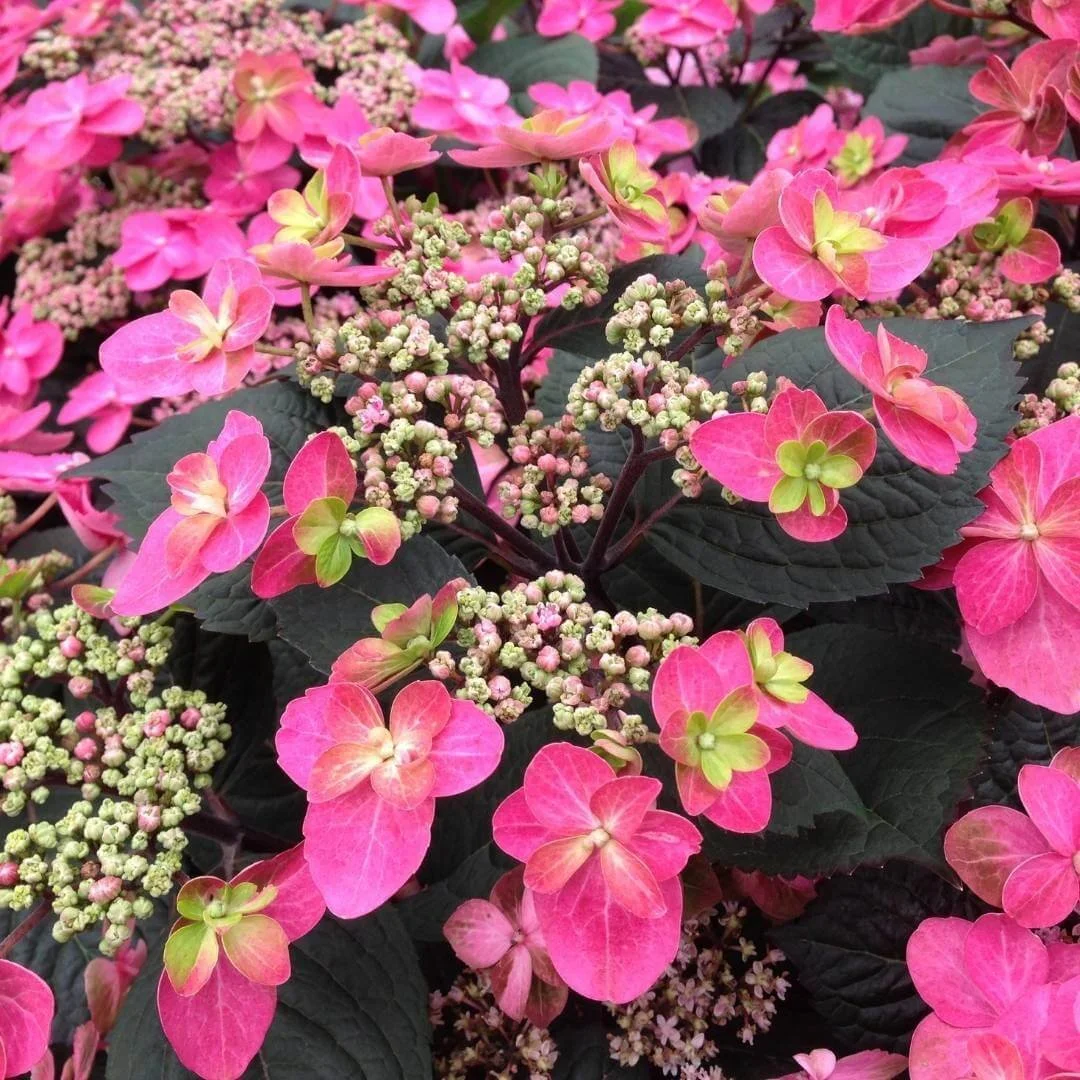
Tuff Stuff Red™ Mountain Hydrangea. Image courtesy of Proven Winners, provenwinners.com
For gardeners who want something with a little more drama, Tuff Stuff Red delivers. Deep pink to true red double lacecap flowers bloom on both old and new wood over a long season, and the deep green foliage makes that rich flower color really pop.
It stays a manageable 2 to 3 feet tall and wide, making it a great fit for smaller gardens and mixed borders.
Size: 2 to 3 feet high and wide
Zones: 5 to 9
Flower color: Deep pink to red
Tuff Stuff Top Fun™
(Hydrangea serrata 'SMNHSG')
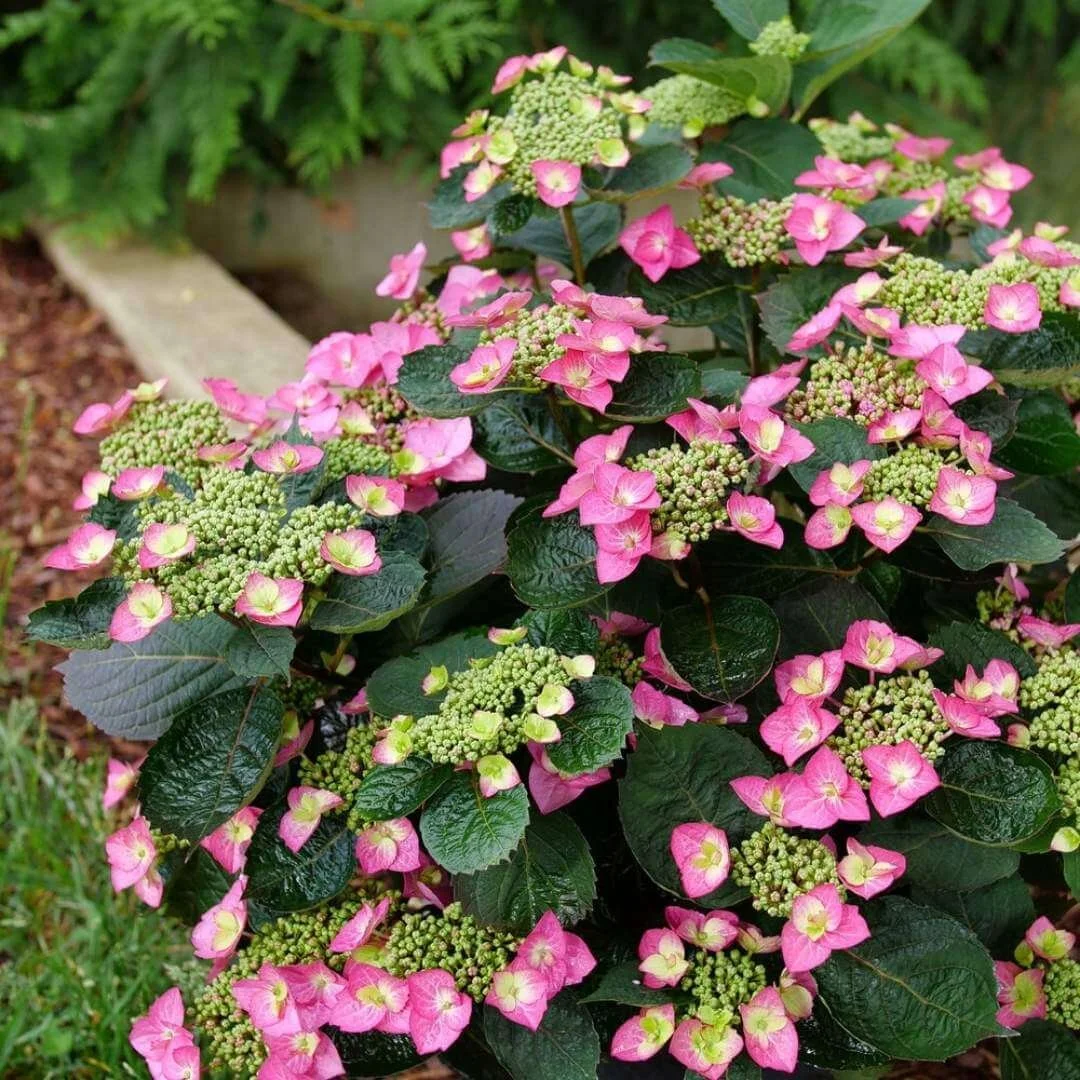
Tuff Stuff Top Fun™ Mountain Hydrangea. Image courtesy of Proven Winners, provenwinners.com
Tuff Stuff Top Fun lives up to its name with prolific, showy lacecap flowers in hot pink or purple that put on a long season of color atop dark green foliage and deep burgundy stems.
A rebloomer with improved cold resistance, it stays a tidy 2 to 3 feet tall and wide and brings some of the boldest color in the entire Tuff Stuff series. A great choice if you want maximum visual impact in a compact package.
Size: 2 to 3 feet high and wide
Zones: 4 to 9
Flower color: Hot pink to purple
Tiny Tuff Stuff™
(Hydrangea serrata 'MAKD')
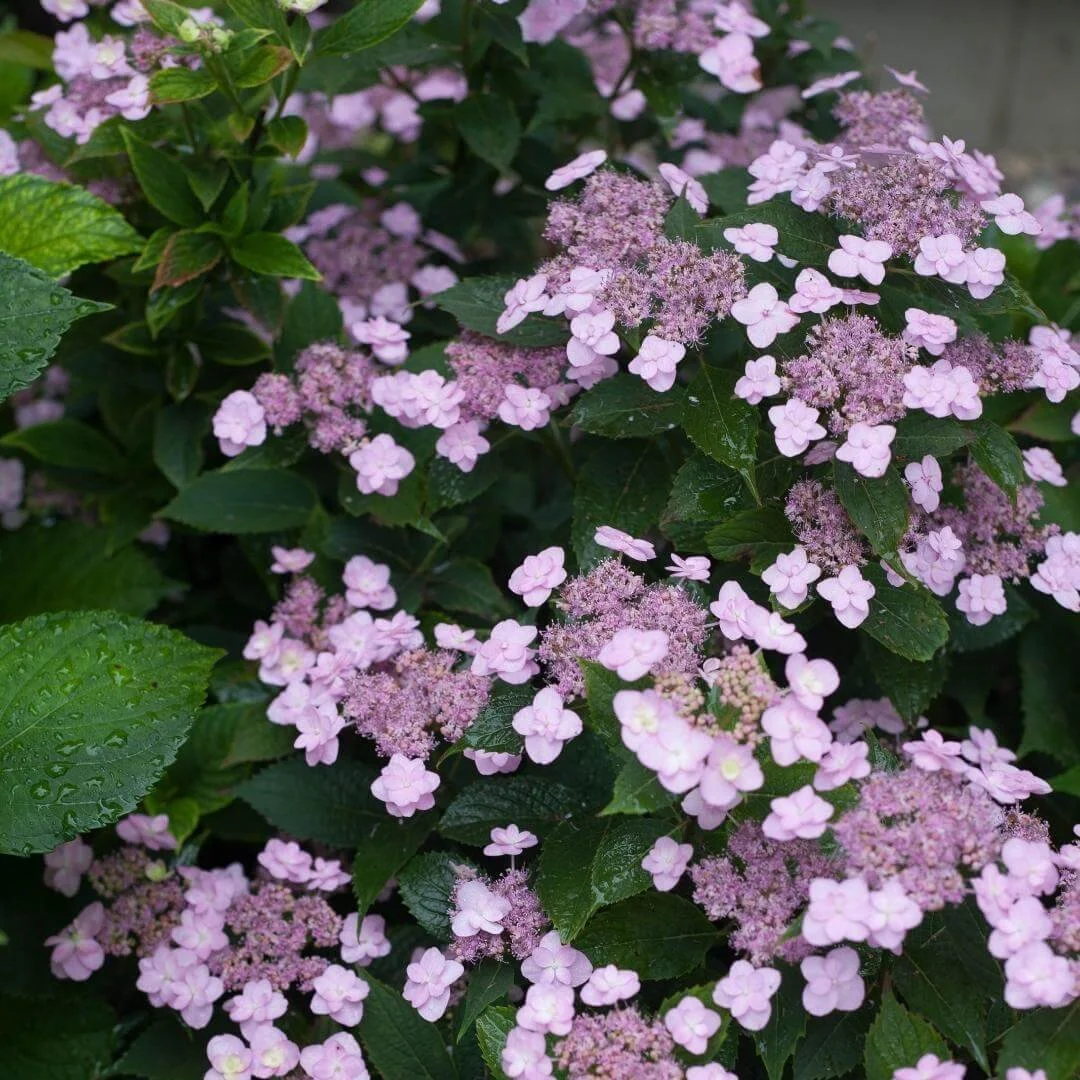
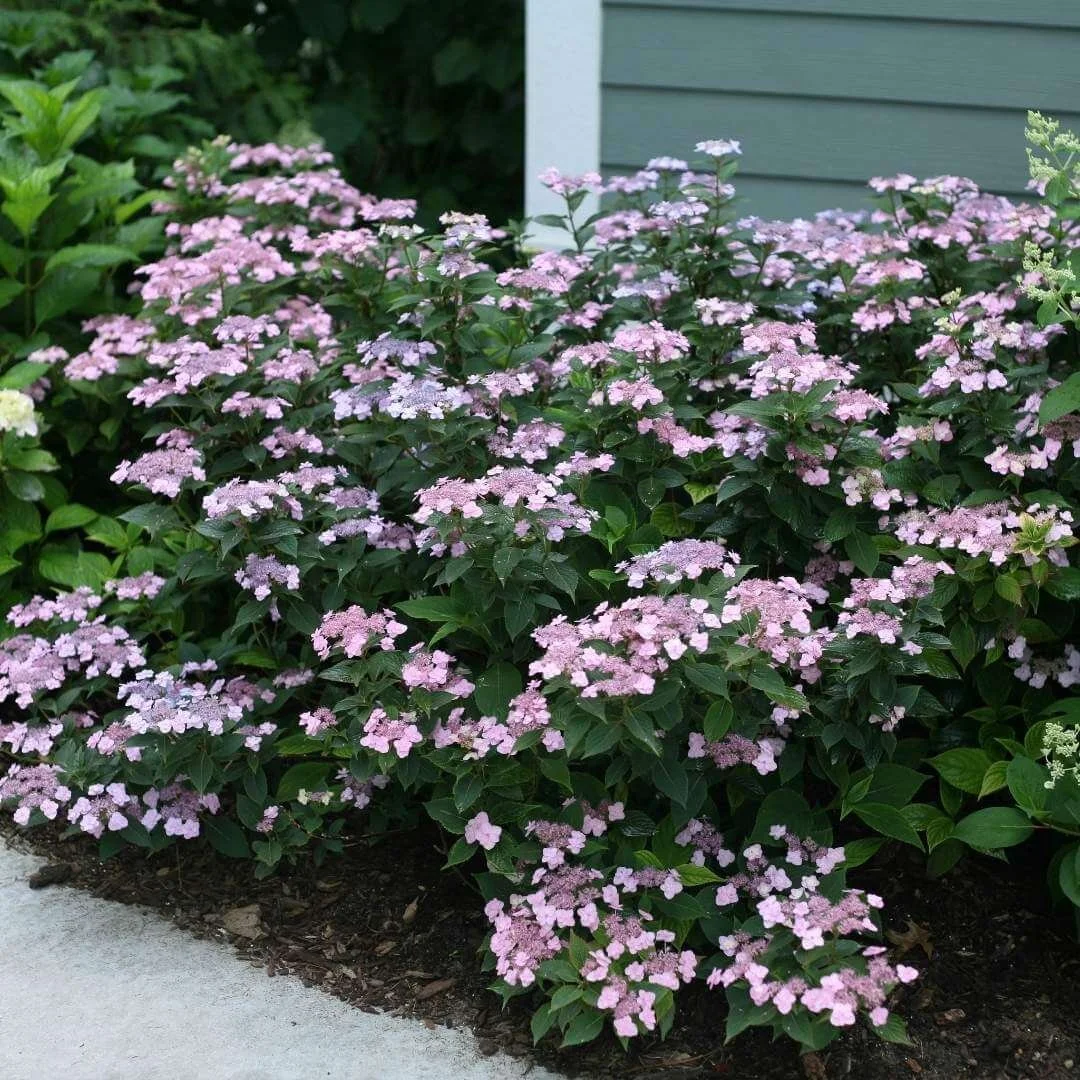
Tiny Tuff Stuff™ Mountain Hydrangea. Image courtesy of Proven Winners, provenwinners.com.
Don't let the size fool you. Tiny Tuff Stuff may top out at just 1 to 2 feet tall and wide, but it blooms with the same enthusiasm as its larger cousins, producing a profusion of soft pink or blue lacecap flowers all summer long.
This is the one to reach for when you need a front-of-border plant, a small container hydrangea for a shady patio or porch, or a tidy edging plant along a woodland path. It’s truly one of the most charming compact shrubs I've come across.
Size: 1 to 2 feet high and wide
Zones: 5 to 9
Flower color: Soft pink to blue (soil pH dependent)
Container tip: Tiny Tuff Stuff is perfectly suited to container gardening. Use a pot at least 12 inches wide with excellent drainage, and site it in a spot that gets morning sun and afternoon shade.
Pink Dynamo®
(Hydrangea serrata 'JPD01')
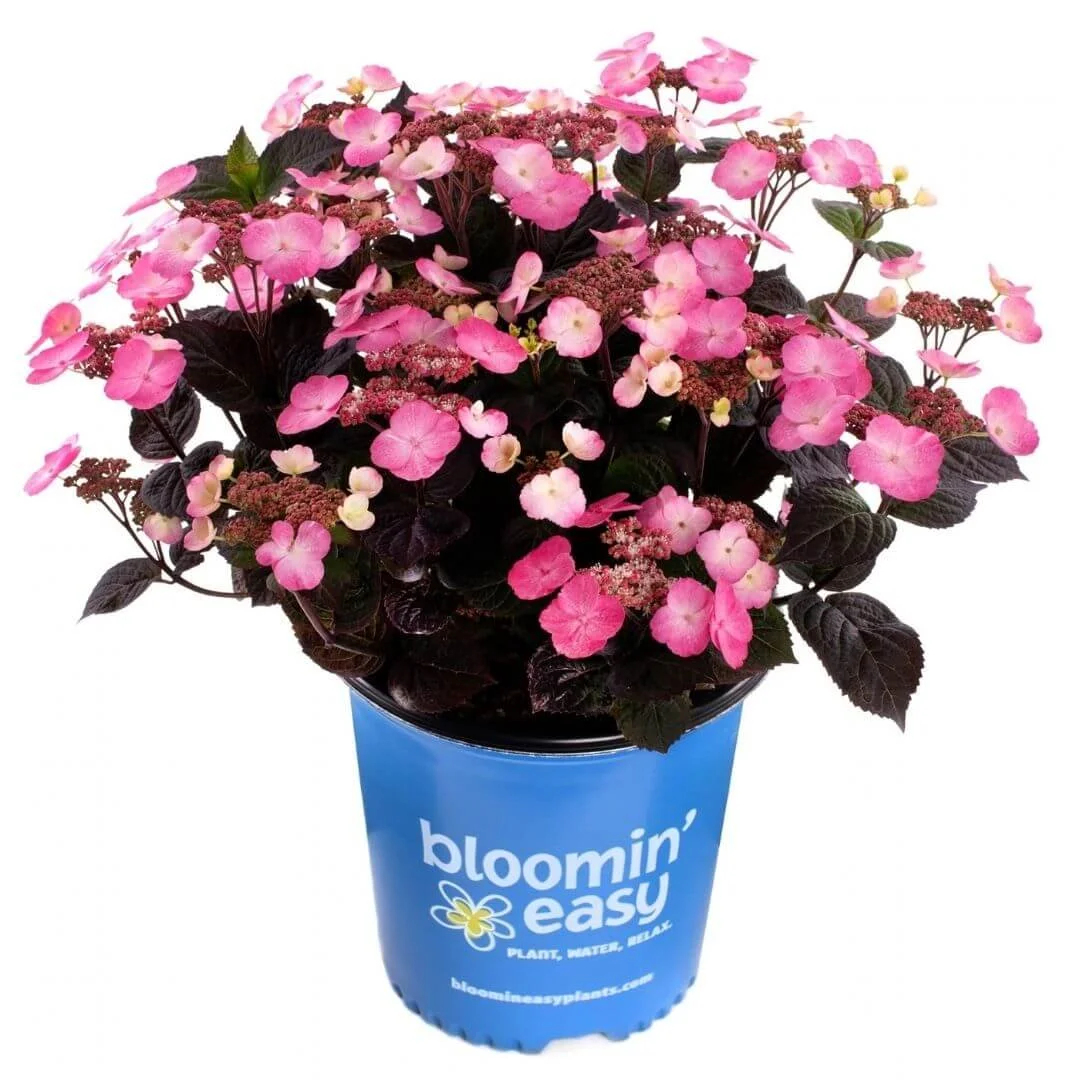
Pink Dynamo® Mountain Hydrangea. Image courtesy of Van Belle Nursery/Bloomin’ Easy, National Garden Bureau
Pink Dynamo is a showstopper in the shade garden, producing bold, flat-topped lacecap flowers in vivid, high-wattage hot pink above unusually dark, almost greenish-black foliage. The contrast between the intense flower color and the deep green leaves is striking, and unlike anything else in the shade garden palette.
At 3 feet high and wide it's a neat, well-behaved shrub that delivers maximum drama in a compact package. A great choice for gardeners who want bold color contrast rather than soft, pastel tones.
Size: 3 feet high and wide
Zones: 5 to 9
Flower color: Hot pink
Blue Billow
(Hydrangea serrata 'Blue Billow')
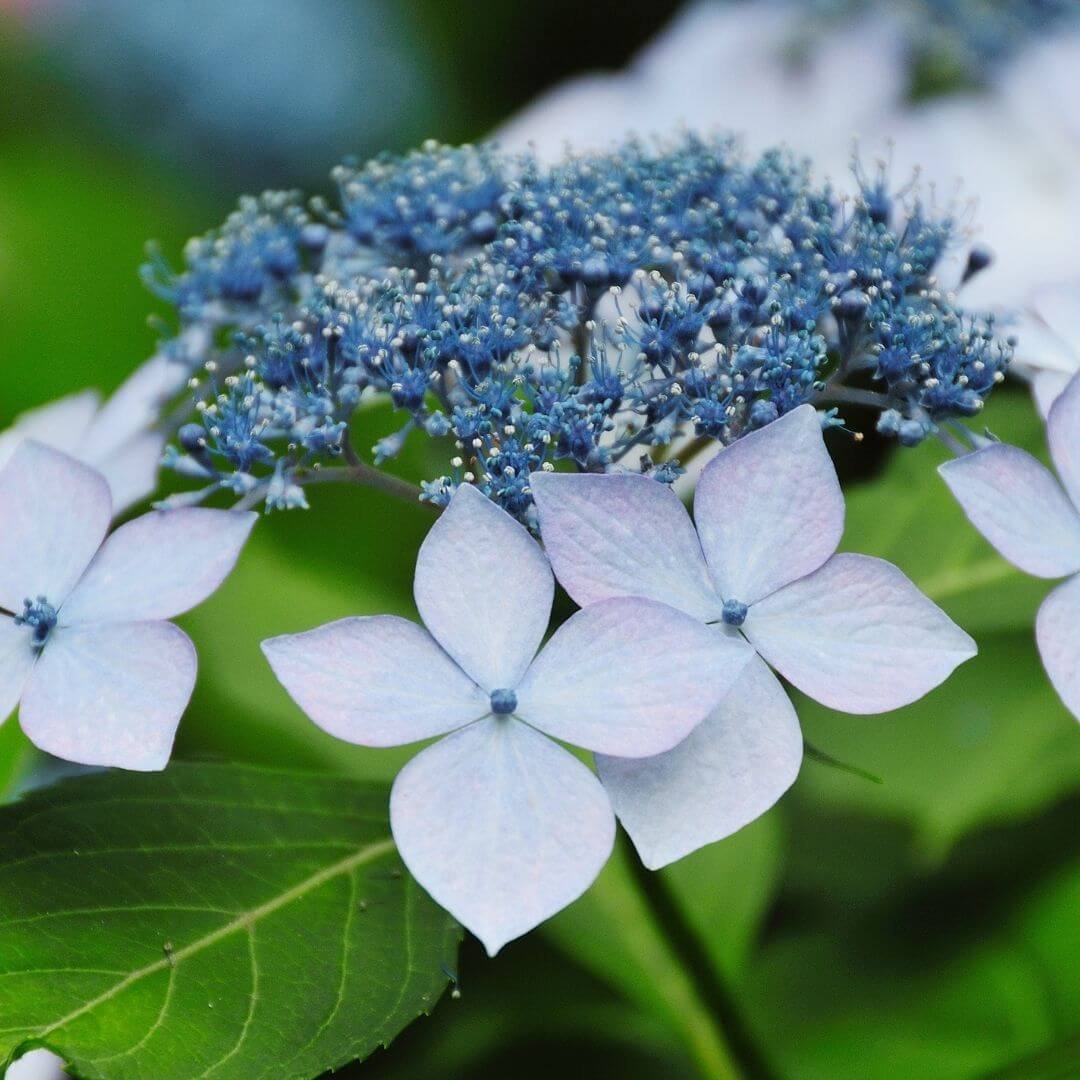
Blue Billow Mountain Hydrangea. Image credit @gyro via Canva.com
Blue Billow is a classic cultivar worth knowing, with delicate clusters of light blue lacecap flowers that have a particularly airy, graceful quality. It's a compact selection at 4 feet tall and 5 to 6 feet wide, with vivid burgundy red fall color that rivals any shrub in the autumn garden.
With its wider spreading habit, Blue Billow is a great choice for filling in shaded corners of a large backyard or a shaded side yard where you need a shrub with some presence. It’s also a lovely choice for a partly shaded border or woodland edge planting in zones 5 to 9.
Size: 4 feet tall, 5 to 6 feet wide
Zones: 5 to 9
Flower color: Light blue
Bluebird
(Hydrangea serrata 'Bluebird')
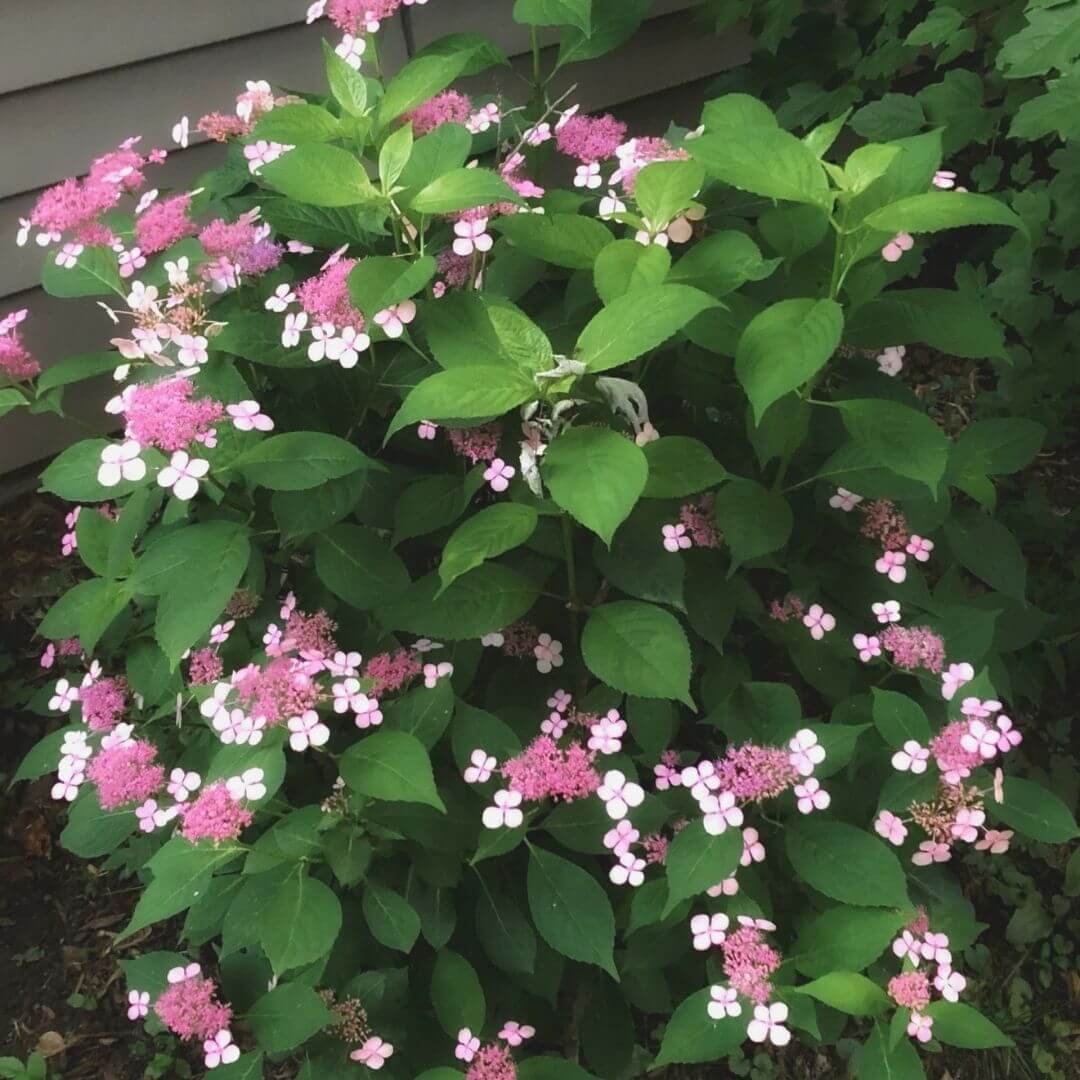
Bluebird Mountain Hydrangea. Image © Plant and Bloom Design Studio
Bluebird is another classic mountain hydrangea cultivar, beloved by gardeners for its delicate blue to purple-pink lacecap flowers and vigorous, upright habit. It grows larger than the Tuff Stuff series at up to 6 feet tall and wide, making it a better fit for the back of a border or as a specimen shrub in a woodland garden or larger backyard.
Brilliant red fall color makes it a standout in the autumn garden as well. If you love the look of a more traditional, full-sized shrub, Bluebird is a beautiful choice.
Size: Up to 6 feet high and wide
Zones: 6 to 9
Flower color: Blue to purple-pink (soil pH dependent)
How Mountain Hydrangea Flowers Work
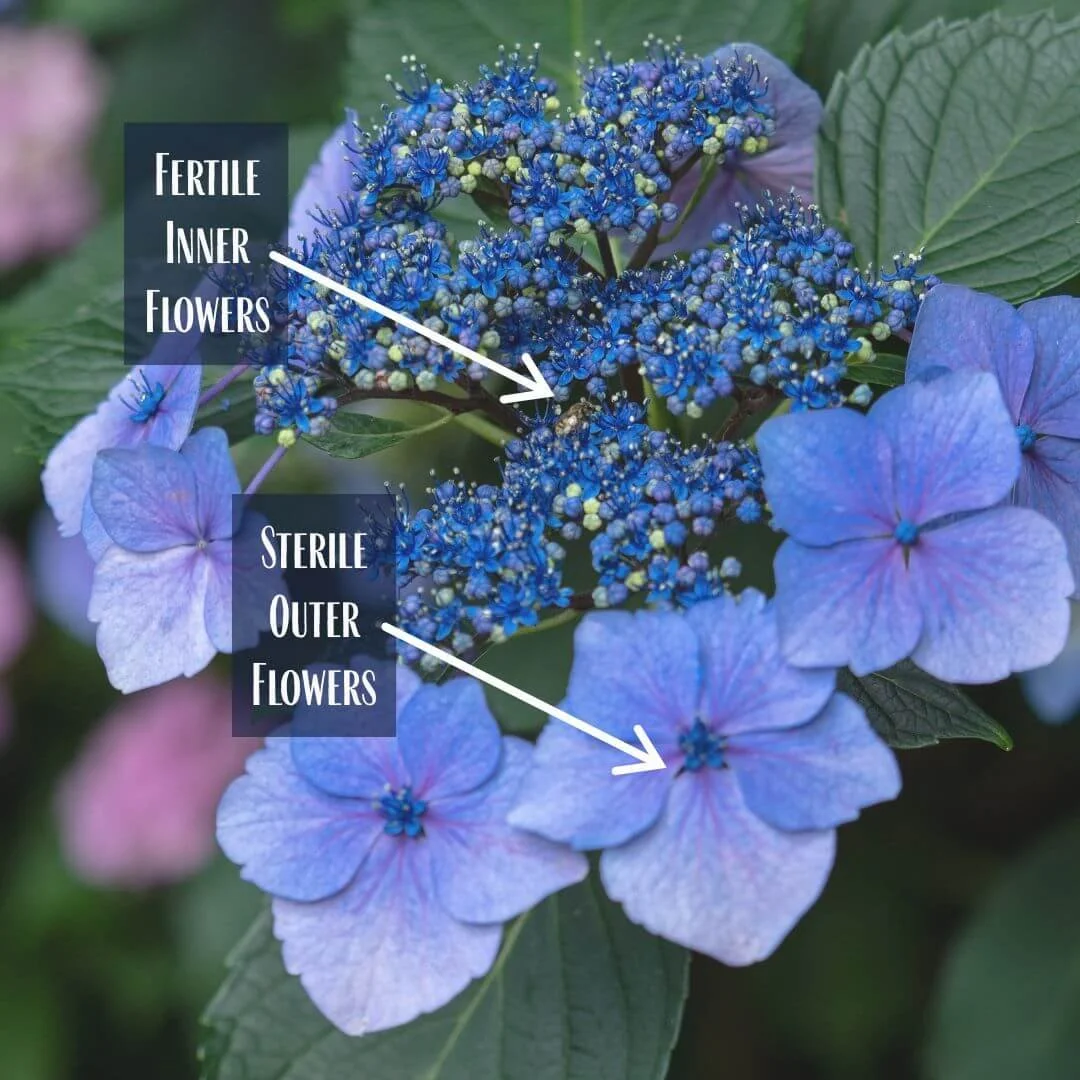
If you're used to the large, ball-shaped mophead blooms of bigleaf hydrangeas, mountain hydrangea flowers may look a little different at first glance.
All Hydrangea serrata varieties produce lacecap blooms, a flower form that offers greater accessibility for pollinators because bees and butterflies can easily reach the fertile flowers at the center of each cluster.
What we commonly think of as a lacecap flower is actually a corymb, a flat-topped cluster made up of two distinct flower types.
The center is filled with tiny fertile flowers that produce nectar and pollen. Surrounding them is a ring of larger, lacy sterile flowers that give the bloom its delicate appearance and distinctive lacecap form.
The result is a flower that feels perfectly at home in a woodland or shade garden. While mountain hydrangeas are not among the most heavily visited pollinator plants, the fertile flowers can provide a valuable summer nectar source in partially shaded landscapes.
How to Change the Color of Mountain Hydrangea Flowers
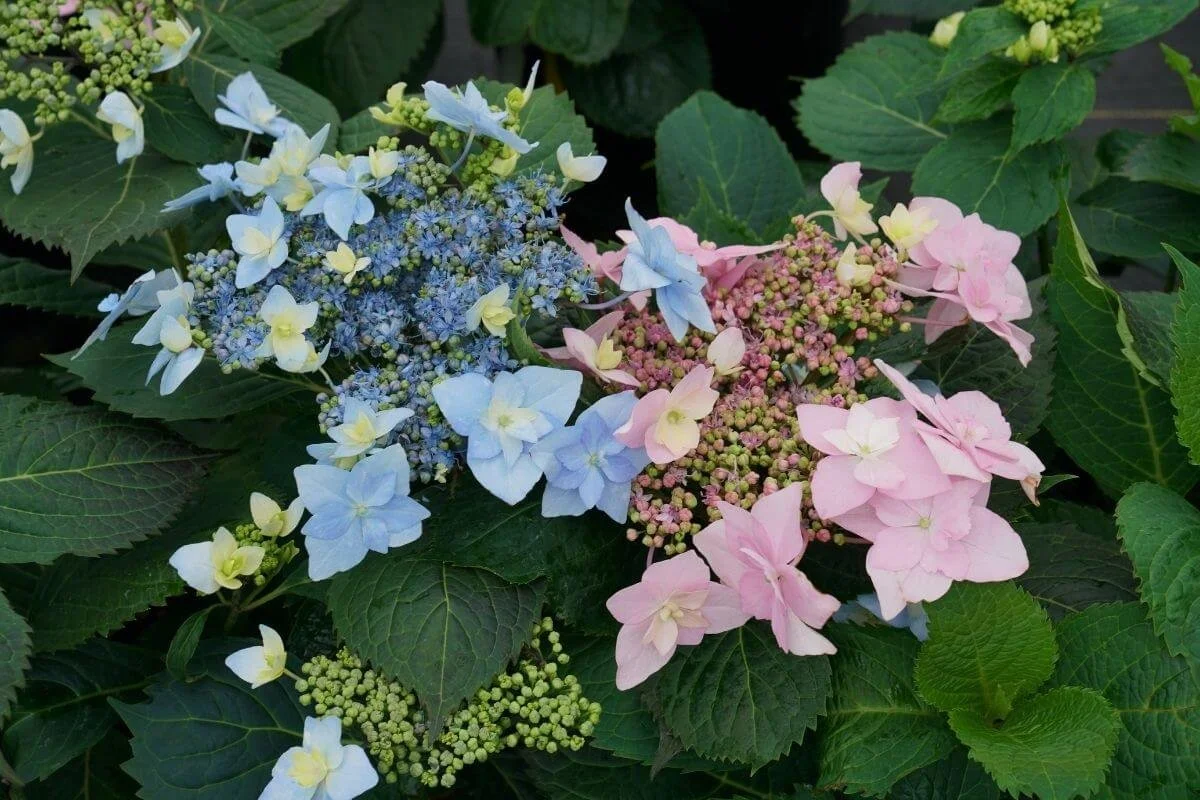
The same mountain hydrangea can produce pink or blue flowers depending on soil pH. Tuff Stuff Ah-Ha® Reblooming Mountain Hydrangea image courtesy of Spring Meadow Nursery, Inc. - Proven Winners, provenwinners.com
One of the most fascinating things about mountain hydrangeas is that you can influence the color of their blooms by adjusting your soil pH. The same plant can produce soft pink flowers in one garden and cool blue flowers in another, depending on the chemistry of the soil.
The science behind it is surprisingly simple. Soil pH affects the availability of aluminum in the soil, and aluminum plays a key role in flower color.
In acidic soil, aluminum becomes more available for the plant to absorb, which encourages blue flower coloration. In neutral to alkaline soil, aluminum is less available, and flowers tend to develop shades of pink.
Not every mountain hydrangea cultivar will change color dramatically, but many can display a range of pink, lavender, and blue tones depending on soil conditions.
To encourage blue flowers: Lower your soil pH by adding aluminum sulfate or elemental sulfur. Aluminum sulfate also provides aluminum, which can enhance blue coloration. Blue flowers are most likely to develop in acidic soils, generally below a pH of about 6.0.
To encourage pink flowers: Raise your soil pH by adding garden lime. Pink flowers are more common in neutral to alkaline soils, typically above a pH of about 6.0.
A few things are worth knowing before you start adjusting your soil. First, get a soil test before adding any amendments so you know your starting point. Second, be patient. Color changes can take several months to become visible, and results are usually gradual rather than dramatic.
Finally, not all cultivars respond equally. Tuff Stuff Red, for example, tends to maintain its deep pink to red tones regardless of soil pH, while varieties such as Tuff Stuff Ah-Ha and Tiny Tuff Stuff often show a more noticeable shift between pink and blue.
How to Grow a Mountain Hydrangea
Mountain hydrangeas are rewarding, low-maintenance shrubs once they're established in the right spot. Here's everything you need to know to get them off to a great start.
When and How to Plant
The best time to plant a mountain hydrangea is in spring or fall, when cooler temperatures give the roots time to establish before the stress of the summer heat or winter cold. Dig a hole twice as wide as the root ball and the same depth as the root ball. Set the plant so the top of the root ball sits level with or slightly above the surrounding soil, backfill with the original soil, and water deeply immediately after planting.
Soil
Mountain hydrangeas prefer rich, well-drained soil with plenty of organic matter. They like consistent moisture but will not tolerate waterlogged conditions, so good drainage is essential. If your soil is heavy clay, incorporate plenty of compost into the planting area before planting to improve soil structure and drainage. If you're planning to adjust the soil pH to influence flower color, get a soil test first so you know your starting pH before adding any amendments.
Sun and Shade
Mountain hydrangeas thrive in partial shade, generally defined as two to four hours of direct sunlight per day, with dappled or filtered light for the remainder. Morning sun with afternoon shade is the ideal situation, especially in warmer climates where intense afternoon sun can scorch leaves and cause wilting. In cooler regions they can tolerate a bit more sun, but protection from harsh afternoon light is still recommended. Avoid deep shade, which will reduce flowering significantly.
Watering
Keep the soil consistently moist, especially during the first growing season while the plant is establishing its root system. Deep, infrequent watering is preferable to frequent shallow watering, as it encourages roots to grow deeper into the soil. During periods of drought, check the soil regularly and water thoroughly when the top inch or two feels dry. Mountain hydrangeas resist wilting better than bigleaf varieties, but they will still show stress in prolonged dry conditions.
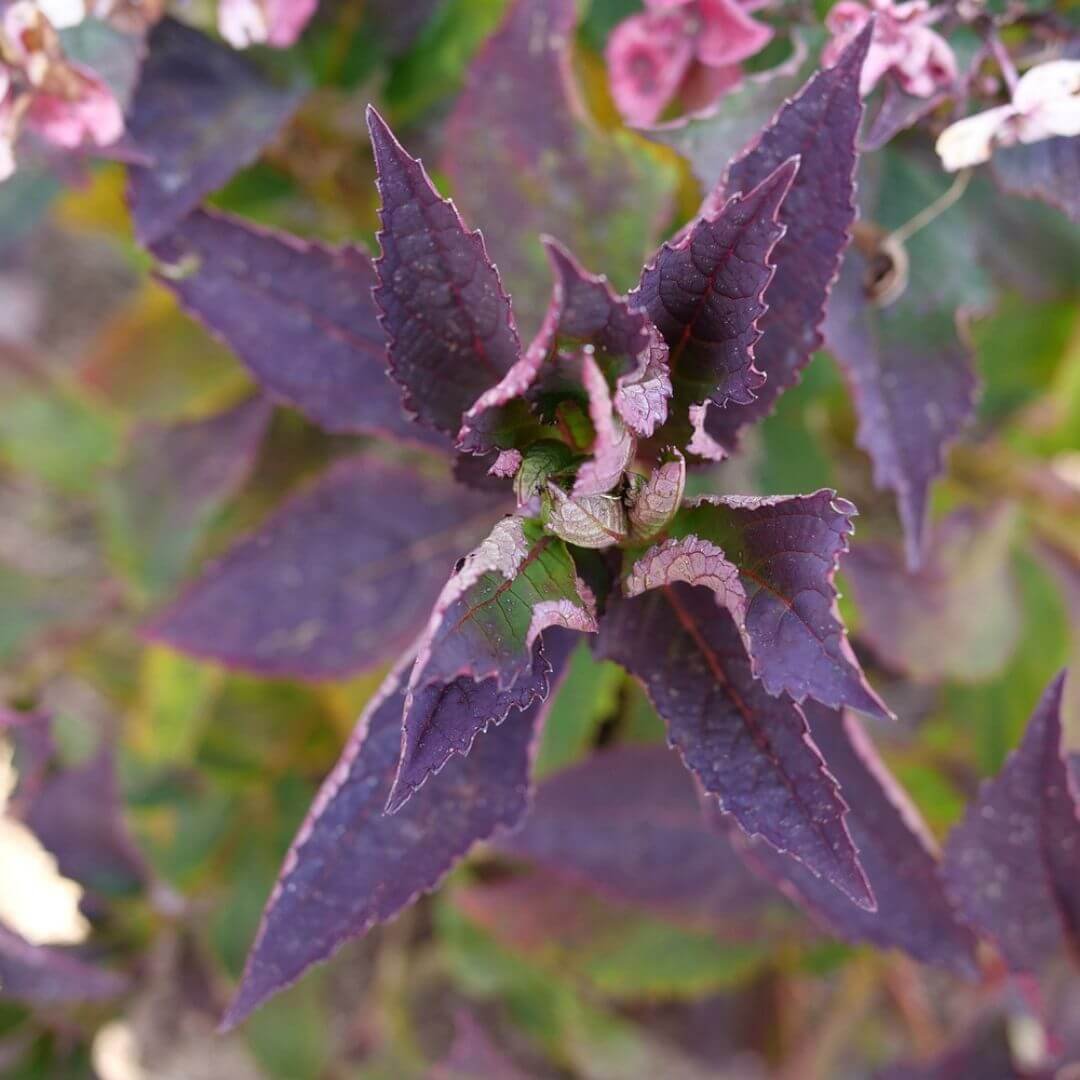
Mountain hydrangeas put on a beautiful show in autumn, with foliage turning rich shades of burgundy and red. Tuff Stuff Top Fun™ Mountain Hydrangea image courtesy of Proven Winners, provenwinners.com
Mulching
Apply a two to three inch layer of organic mulch, such as shredded leaves, wood chips, or bark, around the base of the plant, keeping it a few inches away from the stems. Mulch helps retain soil moisture, regulate soil temperature, and suppress weeds. It also breaks down over time and adds organic matter back into the soil, which mountain hydrangeas love.
Fertilizing
Mountain hydrangeas growing in rich, organically amended soil generally don't need much fertilizing. Each spring, top dress around the base of the plant with a layer of compost or shredded leaves to replenish organic matter and give the plant a gentle nutrient boost. Avoid high-nitrogen fertilizers, which can push lush leafy growth at the expense of flowers. If you do use a granular fertilizer, choose one formulated for shrubs or acid-loving plants and apply according to package directions.
Pruning
Pruning is where many gardeners go wrong with mountain hydrangeas, so let's clear this up. Most Hydrangea serrata varieties bloom on old wood, meaning the flower buds for next year's blooms are set on the current season's growth in late summer and early fall. If you prune in fall, winter, or early spring, you risk removing those buds and ending up with a shrub full of leaves and very few flowers.
The safest approach is to prune immediately after the main flush of flowers finishes, removing spent blooms and any dead or damaged branches. Beyond that, mountain hydrangeas have a naturally tidy habit and rarely need heavy pruning. Resist the urge to cut them back hard in fall, winter, or early spring.
The exception is reblooming cultivars, such as the Tuff Stuff series, which flower on both old and new wood. These are more forgiving of light pruning, but they still perform best with minimal pruning done shortly after the main bloom period.
Pests and Disease
Mountain hydrangeas are relatively trouble-free in the right conditions. Aphids are an occasional nuisance but rarely cause serious damage and can usually be dislodged with a strong spray of water. Powdery mildew and leaf spot are the most common disease issues, and the risk of both can be minimized with good air circulation and proper watering practices.
Water at the base of the plant rather than overhead, and avoid wetting the foliage in the evening. If your plant has struggled with disease in the past, choose a planting site with better airflow and consider thinning a few interior branches to improve air circulation.
Where to Plant Mountain Hydrangea
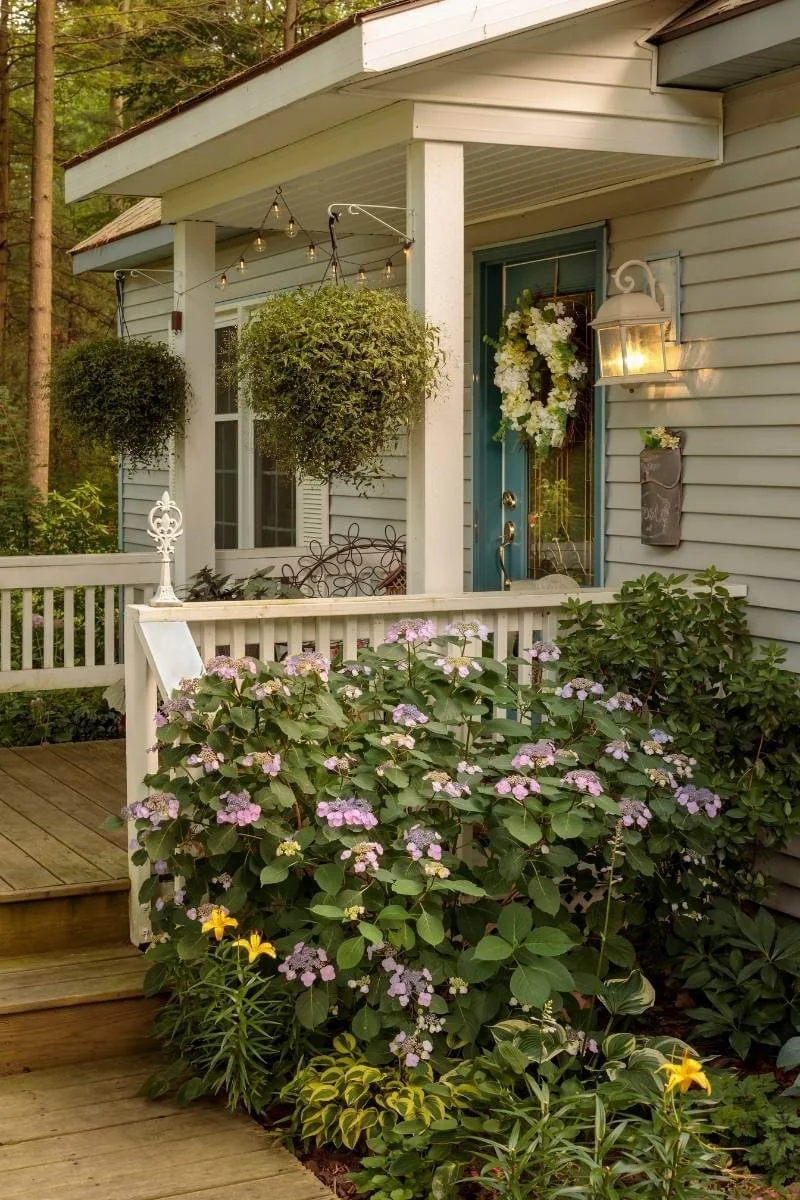
Tuff Stuff™ Mountain Hydrangea planted next to a front porch. Image courtesy of Proven Winners, provenwinners.com
Mountain hydrangeas are versatile shrubs that slot beautifully into a wide range of landscape situations. Their compact habit, shade tolerance, and long season of interest make them truly useful plants, not just pretty ones. Here are some of my favorite ways to use them in the garden.
Mixed Border Planting
Mountain hydrangeas are wonderful in a mixed border alongside other shade-loving plants. Try pairing them with astilbe, ferns, Japanese forest grass, or hostas for a layered planting with contrasting textures. The lacecap flowers add a delicate, airy quality that plays beautifully against bolder foliage plants.
Foundation Planting
The compact habit of most mountain hydrangea cultivars makes them excellent foundation plants, especially for partially shaded spots on the north or east side of a house. They soften the lines of a home beautifully and pair well with partial shade evergreen shrubs like Himalayan sweetbox (Sarcococca hookeriana var. humilis) or spreading Japanese plum yew for year-round structure.
Woodland Garden
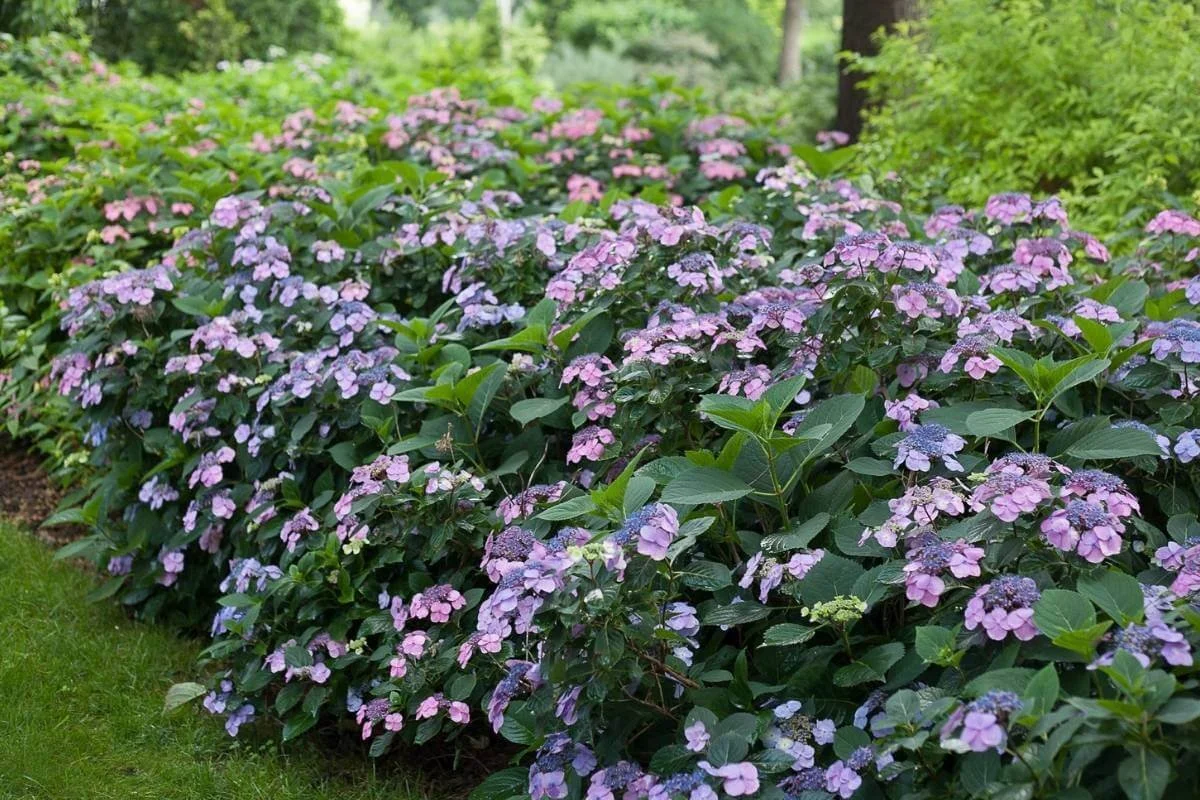
Tuff Stuff™ Mountain Hydrangea in a woodland garden setting, Image courtesy of Proven Winners, provenwinners.com
This is where mountain hydrangeas truly feel at home. Under the dappled shade of deciduous trees, with cool, moist, organically rich soil, these shrubs thrive and bloom reliably all summer long. The airy lacecap flowers have a delicate quality that suits a woodland setting perfectly, and the deep burgundy fall color adds a lovely seasonal note as the garden winds down in autumn.
Container Gardening
For a shadier corner of a patio, deck, or front porch, mountain hydrangeas in containers are a beautiful solution. Tiny Tuff Stuff is the obvious choice for containers given its petite size, but any of the compact Tuff Stuff series cultivars will work well in a generously sized pot. Use a high quality potting mix, ensure excellent drainage, and be diligent about watering since containers dry out much faster than garden beds.
Mass Planting
For a bold, cohesive landscape statement, consider mass planting mountain hydrangeas along a shaded slope, property line, or the length of a wooden fence. A single cultivar planted in a drifting mass creates a stunning summer display. This approach works especially well with the taller selections like Bluebird or Blue Billow, which have the presence to carry a larger space.
Mountain Hydrangea vs. Bigleaf Hydrangea
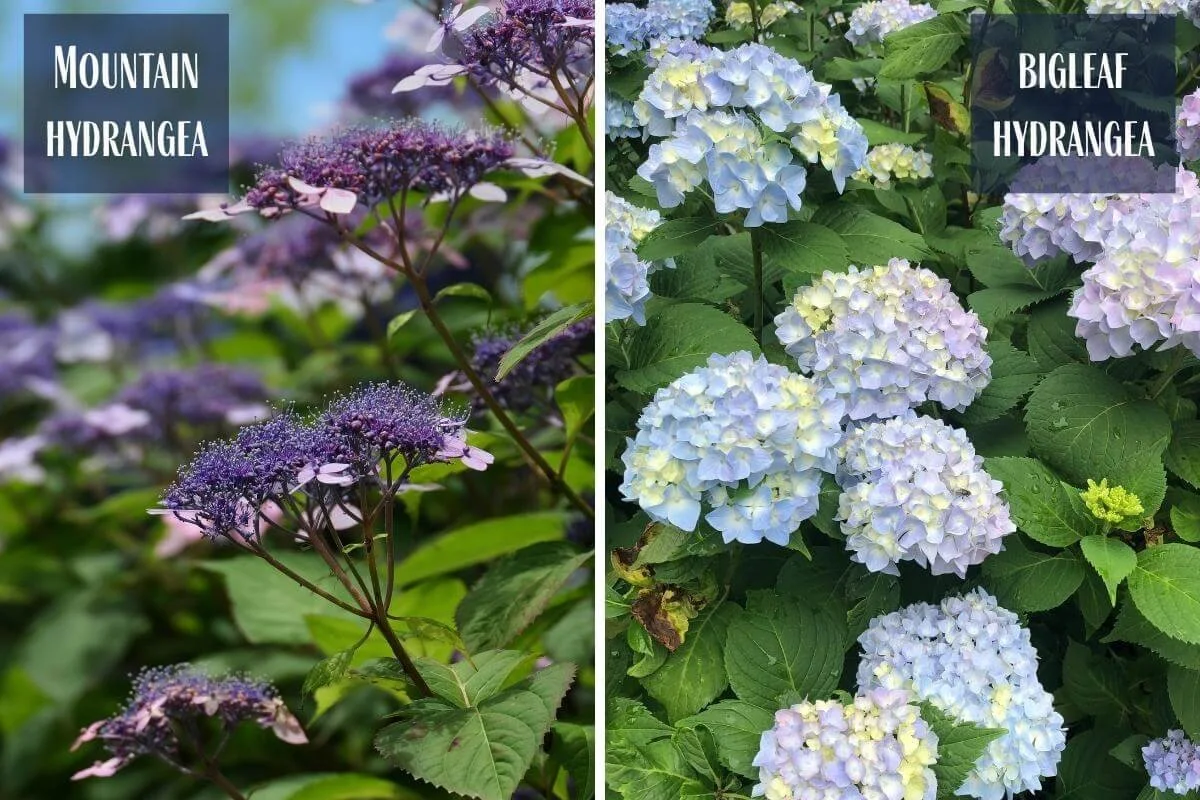
Mountain hydrangeas (Hydrangea serrata) produce delicate lacecap flowers, while bigleaf hydrangeas (Hydrangea macrophylla) are available in both lacecap and mophead forms.
If you've ever grown bigleaf hydrangeas (Hydrangea macrophylla) and watched a late spring frost wipe out an entire season of blooms, this section is for you.
Bigleaf hydrangeas are undeniably beautiful, and they remain one of the most popular flowering shrubs in American gardens. But many traditional cultivars come with a significant weakness: they bloom primarily on old wood, meaning the flower buds for the coming season are formed in late summer and must survive the winter intact.
In climates with unpredictable late frosts, those buds are vulnerable, and a single cold snap in spring can leave you with a shrub full of healthy green leaves and very few flowers.
Mountain hydrangeas have an important advantage here. Native to the mountainous regions of Japan and Korea, they are generally more cold-tolerant than bigleaf hydrangeas, particularly when it comes to flower bud survival.
Their buds are often more resistant to late spring frost damage, making them more reliable bloomers in regions where late frosts are a recurring issue.
Beyond frost reliability, here’s how the two species compare:
Frost hardiness: Mountain hydrangeas are generally more dependable bloomers in areas with unpredictable late spring frosts because their flower buds are more cold hardy. Bigleaf hydrangeas are more likely to lose buds after a late cold snap.
Size: Most mountain hydrangea cultivars are more compact than bigleaf hydrangeas, typically reaching 2 to 5 feet tall and wide. Bigleaf hydrangeas often mature at 4 to 6 feet or more, depending on the cultivar.
Flower form: Most mountain hydrangeas produce lacecap flowers, while bigleaf hydrangeas are available in both lacecap and mophead forms.
Shade tolerance: Both species thrive in partial shade, although mountain hydrangeas often perform well in slightly shadier garden conditions without losing vigor.
Fall color: Mountain hydrangeas often develop attractive burgundy, red, or purple fall foliage. Fall color in bigleaf hydrangeas is generally less pronounced.
Hardiness zones: Both species are generally hardy in USDA Zones 5 to 9, although mountain hydrangeas tend to have better flower bud hardiness and more reliable blooming after cold winters. Some newer selections of both groups may perform outside this range depending on cultivar and site conditions.
If you garden in an area where late frosts are a recurring problem, or if you've given up on bigleaf hydrangeas after too many bloomless summers, mountain hydrangeas are worth a serious look. They offer the elegant, pH-responsive blooms gardeners love in bigleaf hydrangeas, but in a tougher and often more reliable package.
Are Mountain Hydrangeas Deer Resistant?
Unfortunately, mountain hydrangeas are not deer resistant. Deer will browse the flower buds, leaves, and tender new growth, especially in spring and early summer when other food sources are limited.
If deer pressure is a serious problem in your garden and you love the look of a summer-blooming shrub, Ruby Spice summersweet (Clethra alnifolia 'Ruby Spice') is a beautiful deer-resistant alternative that thrives in similar partial shade conditions. You can read more about it in my summersweet growing guide.
Frequently Asked Questions About Mountain Hydrangea
What is the difference between mountain hydrangea and bigleaf hydrangea?
Mountain hydrangea (Hydrangea serrata) and bigleaf hydrangea (Hydrangea macrophylla) are closely related but have some important differences. Mountain hydrangeas are generally more compact, produce mostly lacecap flowers, and are more reliable bloomers in gardens where late spring frosts are a recurring problem. See the full comparison section above for a detailed breakdown.
Do mountain hydrangeas prefer sun or shade?
Mountain hydrangeas thrive in partial shade with protection from intense afternoon sun. Morning sun with afternoon shade is the ideal situation in most climates. See the care guide above for full sun and shade guidance by region.
When should I prune my mountain hydrangea?
Timing is everything with mountain hydrangeas, and pruning at the wrong time of year is the most common reason they fail to bloom. See the pruning section in the care guide above for the full explanation.
Why isn't my mountain hydrangea blooming?
The most common culprit is pruning at the wrong time of year, but there are a few other possibilities worth considering. See the pruning and care sections above for a full troubleshooting guide.
What are the best mountain hydrangea varieties?
Some of the most widely available and garden-worthy selections include the compact, reblooming Tuff Stuff series, along with classic cultivars like Bluebird and Blue Billow for larger spaces. See the full variety guide above for images and details on all eight cultivars covered in this article.
Can mountain hydrangeas grow in containers?
Yes, especially compact cultivars like Tiny Tuff Stuff. See the varieties section and the where to plant section above for container tips and cultivar recommendations.
Recommended Resources
A few trusted resources to help you get the most out of your mountain hydrangeas:
USDA Plant Hardiness Zone Map: Find your hardiness zone to confirm mountain hydrangeas are a good fit for your climate.
Ask Extension: Get free gardening advice from your local cooperative extension service, staffed by Master Gardeners and university horticulture experts.
U.S. Drought Monitor: Check current drought conditions in your area to help guide your watering schedule.
Rutgers University Landscape Plants Rated by Deer Resistance: A comprehensive and reliable deer resistance rating system available, organized by plant genus and species.
More Hydrangea Guides
Which Hydrangea Should I Plant? 15 Best Hydrangeas for Every Garden Situation