
Hydrangea Care Guide: Planting, Pruning & Color Changes
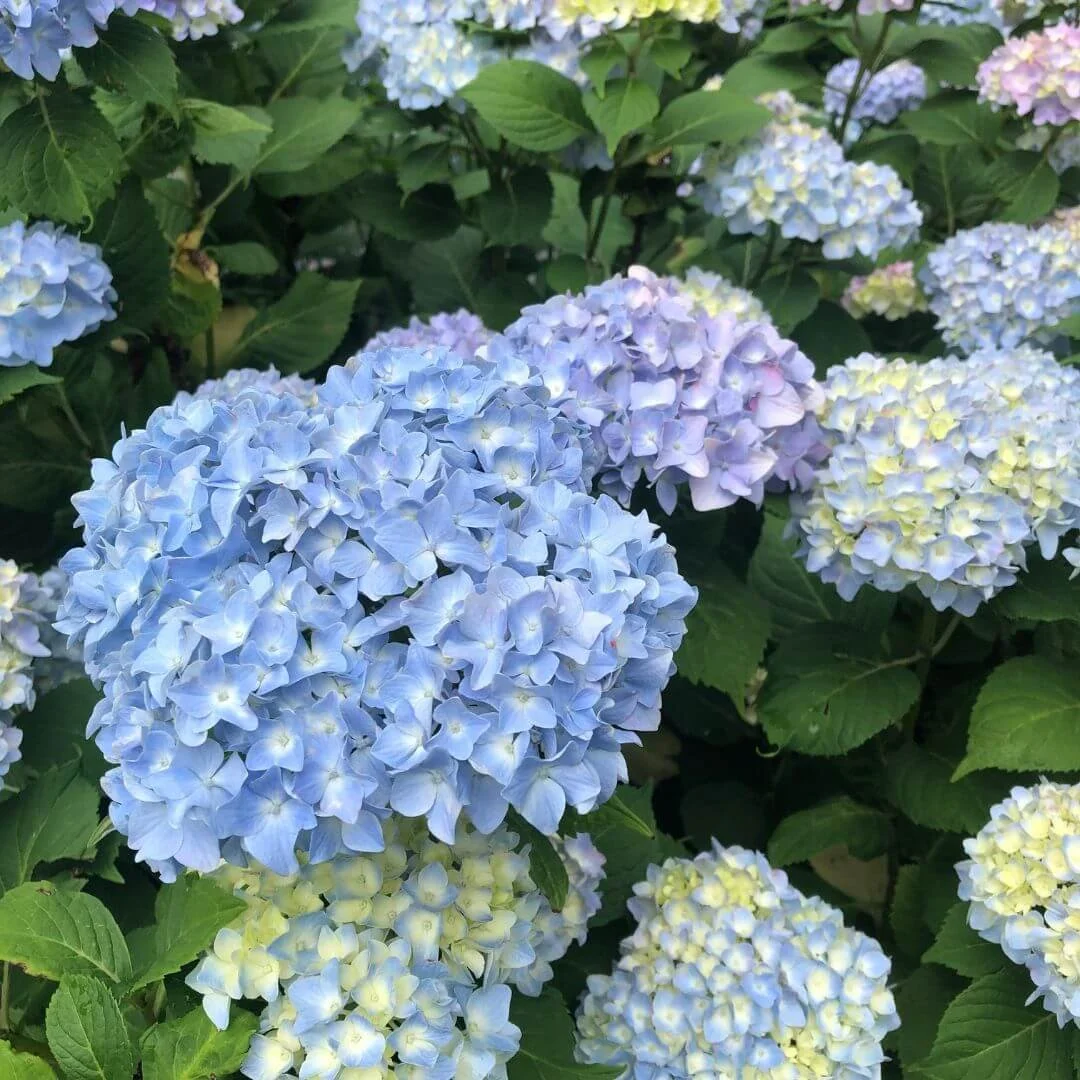
Nikko Blue Bigleaf Hydrangea. Image © Plant and Bloom Design Studio
Hydrangeas are one of the most beloved shrubs in the American garden, and one of the most misunderstood. If you've ever wondered how to grow hydrangeas successfully, you're in the right place. Whether you're a first-time grower or you've got an established plant that just won't bloom, the secret isn't complicated. But there's one thing you absolutely need to know first: not all hydrangeas are the same.
Different types of hydrangeas have different sun requirements, different pruning rules, and respond differently to soil chemistry. Once you understand your specific plant, everything else clicks into place. In this hydrangea care guide, I'm walking you through everything you need to know. We'll cover planting, watering, pruning, and color changes across the four most popular types: bigleaf, panicle, oakleaf, and smooth hydrangea.
Every photo here is real, either taken by me or sourced from trusted growers and nurseries in the horticultural industry. I believe it's important to see plants exactly as they are, not perfect computer-generated images that set unrealistic expectations for your garden.
New to the world of hydrangeas? Start with my Hydrangea Types Explained guide to figure out which type you're working with before you dive in here.
This article may contain affiliate links. If you make a purchase through one of these links, I may earn a commission at no additional cost to you.
Know Your Type First
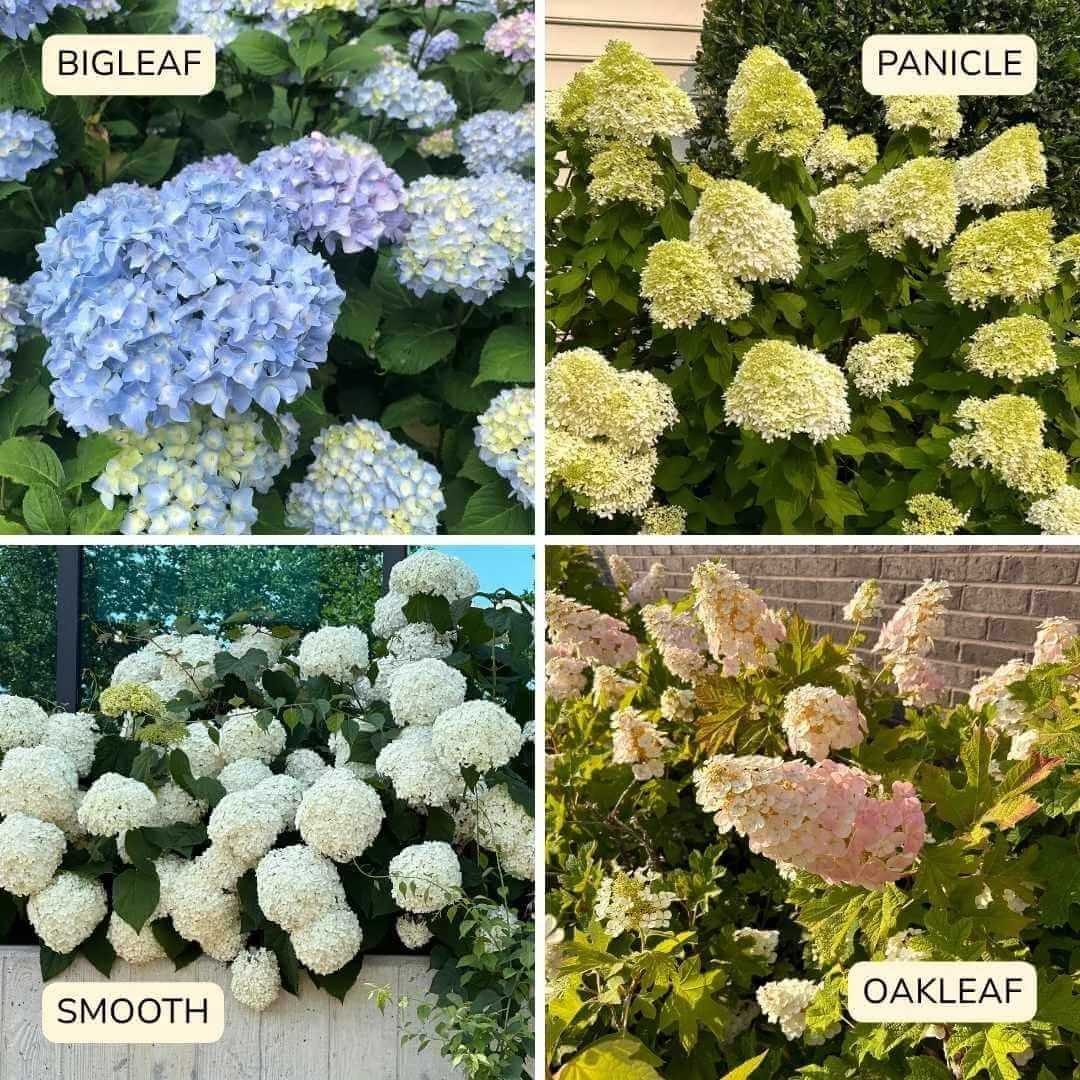
Image © Plant and Bloom Design Studio
Before we get into care specifics, here's a quick snapshot of the four most popular hydrangea types and the most important things to know about each one:
Bigleaf (Hydrangea macrophylla): Needs some shade; flower color changes with soil pH
Panicle (Hydrangea paniculata): Most sun, heat, and drought tolerant of the bunch
Oakleaf (Hydrangea quercifolia): Four seasons of interest including amazing fall color; blooms on old wood; don't over-prune
Smooth (Hydrangea arborescens): Incredibly cold-hardy and fast growing; can be cut to the ground each spring
Growing something different? Visit my mountain hydrangea guide for Hydrangea serrata, or my Hydrangea Types Explained article for a full breakdown including climbing hydrangea. I'll be calling out type-specific differences throughout, so keep your hydrangea type in mind as you read!
How to Plant Hydrangeas
When to plant
Hydrangeas can be planted in either spring or fall, and both seasons have real advantages.
Spring planting means you'll have the widest selection at garden centers, and with the right care, your plant will reward you with blooms that very same season. Wait until the danger of frost has passed and your soil is workable. If you're unsure of your last frost date, NOAA's interactive map is a great resource.
Fall planting takes advantage of cooler temperatures, which makes it easier for roots to establish before winter dormancy sets in. Aim to get your hydrangea in the ground at least six weeks before your average date of first frost. You can look up that date on the Farmer's Almanac website. Selection may be more limited in fall, but prices are often discounted, so it’s a win if you can resist buying all of them because they are on sale (I speak from experience on this one). 😉
Sunlight by type
Hydrangea sun requirements vary more than most people expect, and getting this wrong is one of the biggest sources of struggle I see.
Sun requirements at a glance:
Bigleaf: part shade; needs protection from hot afternoon sun
Panicle: full sun; the most sun-tolerant of all hydrangeas
Oakleaf: full sun to part shade; adaptable
Smooth: full sun to part shade; at least 3 hours of direct light for strong stems
Planting a bigleaf hydrangea in full blazing sun is one of the most common mistakes I see. They will wilt dramatically, even when the soil is moist, because they're just not built for it.
Soil and spacing
All hydrangeas prefer well-draining soil that's been amended with compost. They don't like wet feet, so avoid low-lying areas where water pools after rain.
When it comes to spacing, give them room to breathe. Most hydrangeas reach their mature size within a few years, and crowding leads to poor air circulation and disease. Check the mature spread on your specific cultivar and give it the room it needs from the start.
Watering, Soil & Fertilizing
Watering
Hydrangeas are thirsty plants. The name itself comes from the Greek word for water! During the first season after planting, consistent moisture is critical for root establishment. Water newly planted hydrangeas deeply and frequently, checking the soil regularly to make sure it doesn't dry out.
Once established, hydrangeas still appreciate regular deep waterings. During periods of drought or extreme heat, keep a close eye on them and give them supplemental water as needed. A wilting hydrangea is telling you something, so don't ignore it!
A 2 to 3 inch layer of mulch around the base of your plant is one of the best things you can do for your hydrangea. It retains soil moisture and helps moderate soil temperature.
Soil pH and why it matters
Soil pH affects more than just nutrient availability. For two hydrangea types, it actually determines what color your flowers will be. More on that in the next section, but it's worth noting here that a basic soil test is a smart first step before you plant. Your local cooperative extension office is a great first call. They may offer soil testing directly, or can recommend a reputable testing service near you.
Fertilizing
A balanced, slow-release hydrangea fertilizer applied in spring is generally all they need, if that. Holly Tone and Rose Tone are both popular organic options, just be sure to follow the package directions for application rates. Hydrangeas also love compost; sprinkle it around the base of the plant and work it lightly into the soil for a natural nutrient boost.
A few things to keep in mind:
Avoid high-nitrogen fertilizers, especially later in the season. Too much nitrogen pushes leafy green growth at the expense of flowers.
Stop fertilizing and composting by midsummer so your plant can start hardening off for winter.
How to Change Hydrangea Color
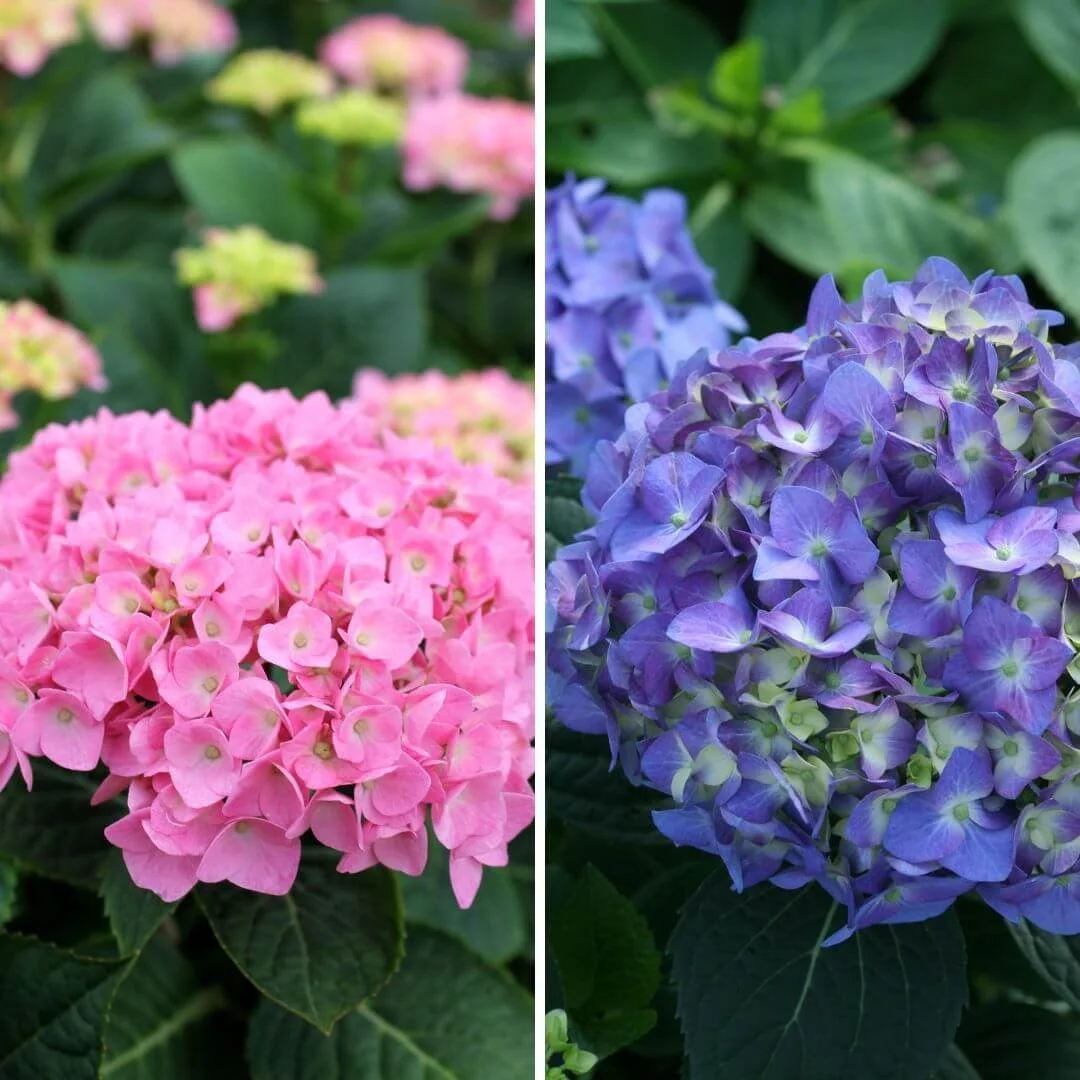
Let's Dance® Blue Jangles™ Bigleaf Hydrangea: the same plant, completely different flower color. It's all down to soil pH. Photo courtesy of Spring Meadow Nursery, Inc. - Proven Winners, provenwinners.com
This is one of my favorite topics to talk about, because so many gardeners don't realize it's even possible, and just as many don't realize it only works on certain types of hydrangeas.
The short answer: color change only works on bigleaf hydrangea (Hydrangea macrophylla) and mountain hydrangea (Hydrangea serrata). If you're growing panicle, oakleaf, or smooth hydrangea, no amount of soil tweaking will change your flower color. Their color is determined by the variety, not your soil.
For bigleaf hydrangeas specifically, here's the science in plain terms: aluminum availability in the soil determines whether your flowers turn blue or pink. Aluminum is more available to hydrangeas in acidic soil, producing blue flowers. In alkaline soil, aluminum becomes less available to hydrangeas, and flowers turn pink.
For blue flowers: Lower your soil pH to 5.5 or below using a soil acidifier like Espoma Organic Soil Acidifier.
For pink flowers: Raise your soil pH above 6.5 by adding a garden lime product like Espoma Organic Garden Lime.
A few things worth knowing: the shift doesn't happen overnight and can take a full growing season or more, especially in older established plants. If you're growing in containers, you have much more control over soil pH. And if you're growing mountain hydrangea, the same principles apply. Visit my mountain hydrangea guide for the specifics.
When and How to Prune Hydrangeas
If there is one topic that generates more gardening heartbreak than any other, it's knowing when to prune hydrangeas. I can't tell you how many times I've heard "I pruned it and now it won't bloom!". Consider this your hydrangea pruning guide. Once you understand old wood vs. new wood, you'll never make that mistake again.
The key concept: old wood vs. new wood
Old wood refers to stems that grew during the previous year. Some hydrangeas set their flower buds on these older stems in fall, and those buds overwinter and bloom the following summer. If you cut those stems down, you cut off your flowers.
New wood refers to stems that grow in the current season. Some hydrangeas produce new stems each spring and flower on those fresh stems. These types are much more forgiving of heavy pruning.
Pruning by type
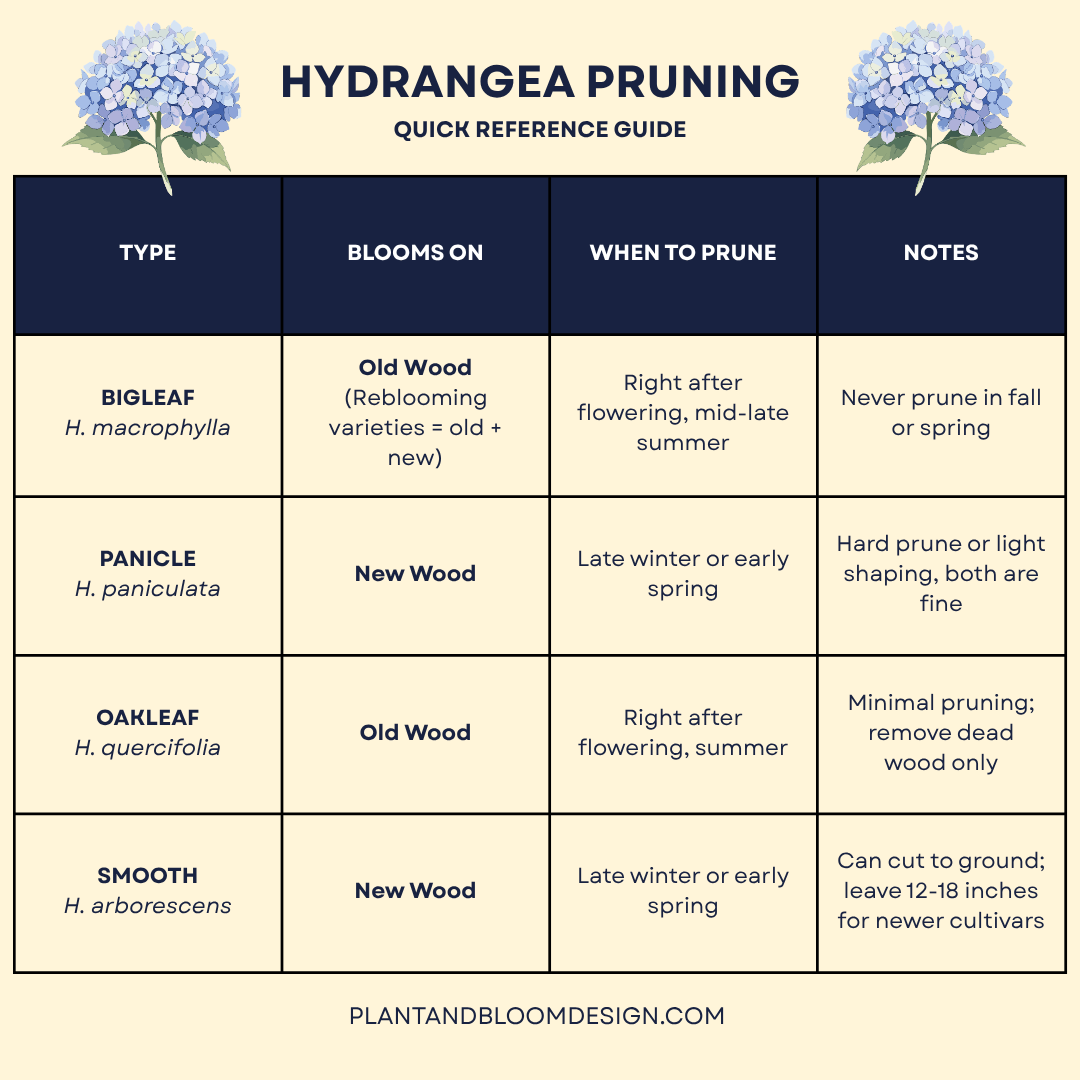
Bigleaf hydrangea: Blooms on old wood (or old + new wood for reblooming cultivars). Prune right after flowering in mid-to-late summer. Never prune in fall or spring or you'll remove next year's flower buds. Reblooming varieties like the Endless Summer® series are more forgiving.
Panicle hydrangea: Blooms on new wood. Prune in late winter or early spring before new growth begins. This is the most pruning-friendly of all hydrangeas; you can cut it back hard or just lightly shape it.
Oakleaf hydrangea: Blooms on old wood. Prune right after flowering in summer, if needed. Oakleaf hydrangeas need very little pruning other than removing dead wood.
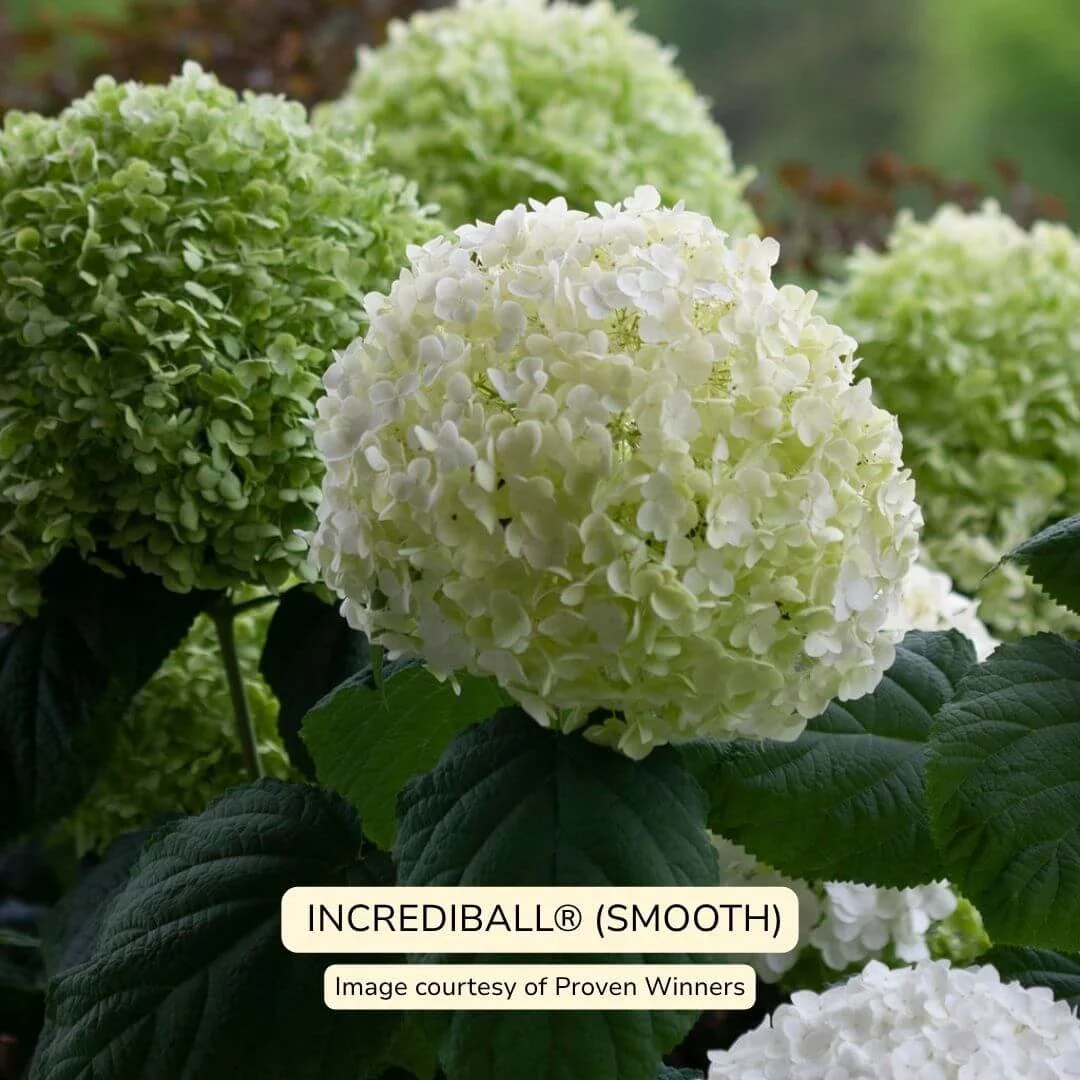
Smooth hydrangea: Blooms on new wood. Prune in late winter or early spring. Traditional advice says you can cut it to the ground, but with newer cultivars like Incrediball®, I recommend leaving 12 to 18 inches of stem to support those big flower heads.
Pruning technique
When pruning, always use clean, sharp bypass pruners, because a clean cut heals faster and reduces disease risk. Cut just above a healthy bud or node, at a slight angle so water runs off. Remove any dead, damaged, or crossing stems first, then assess what else needs shaping.
A good pair of bypass pruners is one of the most useful tools in any gardener's toolkit. It makes a real difference.
Winter Care
Hydrangea winter care is simpler than most people think, and these plants are tougher than many gardeners give them credit for. However, a little winter preparation goes a long way, especially in colder climates.
Mulch generously. Apply a 3-4 inch layer of mulch around the base of your plant before the ground freezes. This insulates the roots and helps retain moisture through the cold months. One important note: keep mulch a few inches away from the stems themselves, since mounding it directly against the plant can cause rot.
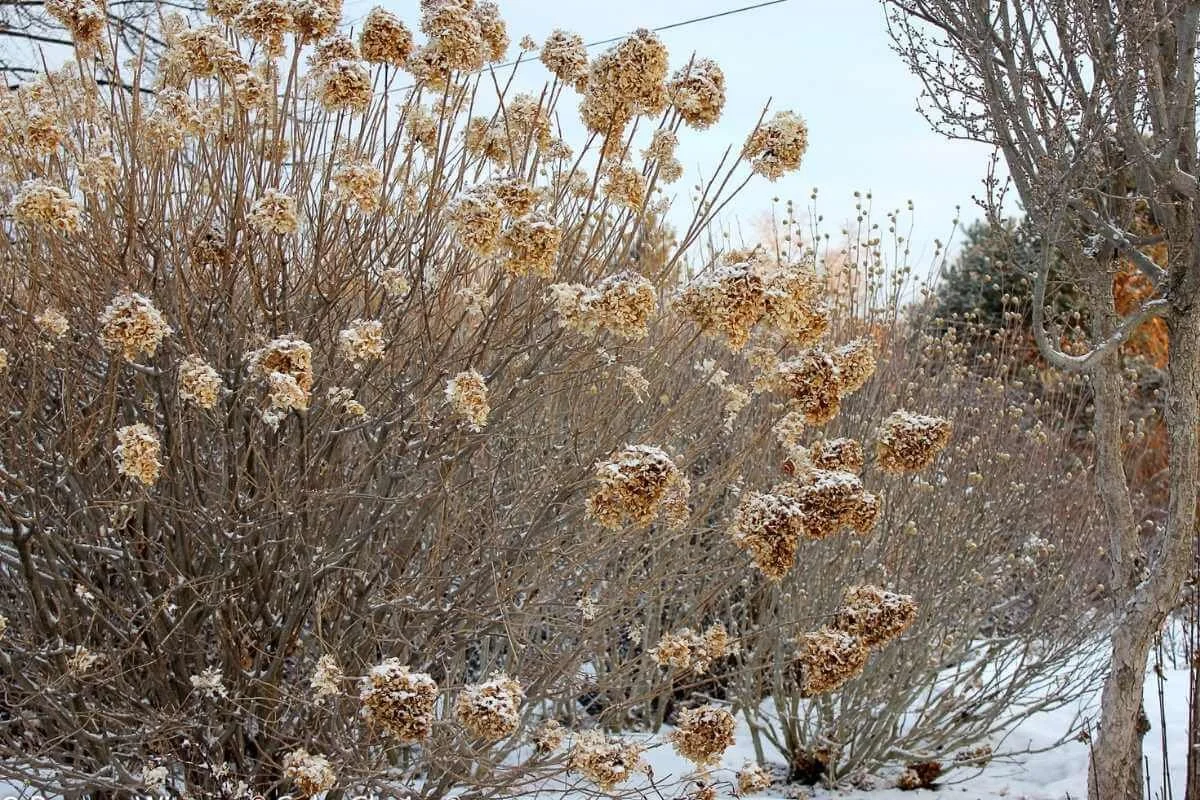
Limelight panicle hydrangea in winter. The dried flower heads add beautiful structure to the garden long after the growing season ends. Image courtesy of Spring Meadow Nursery, Inc. - Proven Winners ColorChoice
Bigleaf hydrangeas are the most cold-sensitive of the four types, particularly the older cultivars. In zones 5 and colder, consider wrapping them loosely in burlap bags to protect the overwintering flower buds. Reblooming cultivars are bred to be more resilient, but a little extra protection never hurts.
Resist the urge to cut back your bigleaf and oakleaf hydrangeas in late winter or early spring when you're tidying up the garden. Those stems may look dead, but they are holding this year's flower buds. Leave them alone until you see new growth emerging, and only then remove any stems that are truly dead.
Panicle and smooth hydrangeas are exceptionally cold-hardy (most panicle hydrangeas grow in zones 3-8, and smooth hydrangeas grow in zones 3-8 as well) and need minimal winter intervention. Leave the dried flower heads on through winter. They add beautiful structure to the garden and provide a small degree of insulation to the buds below.
Hydrangea Lookbook
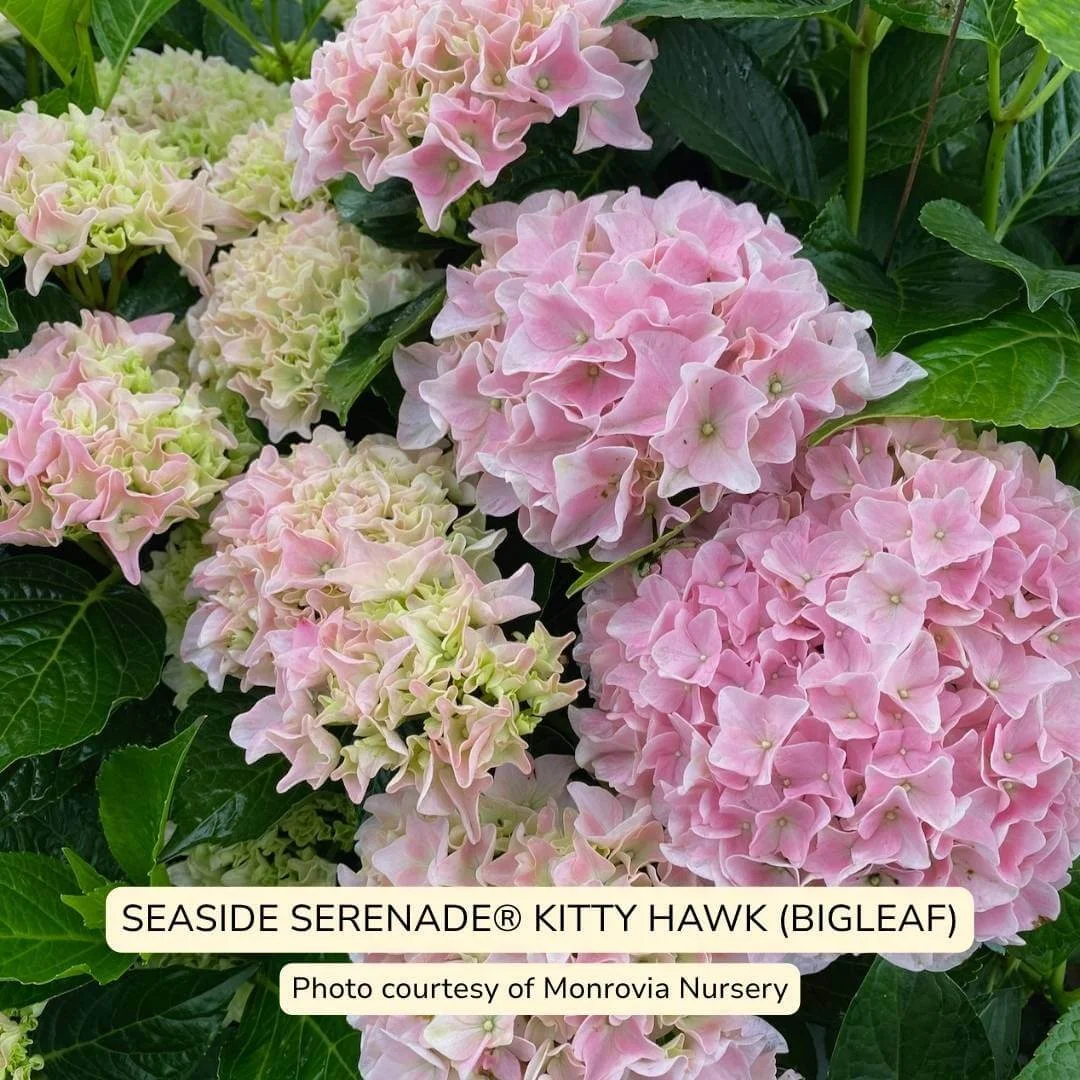
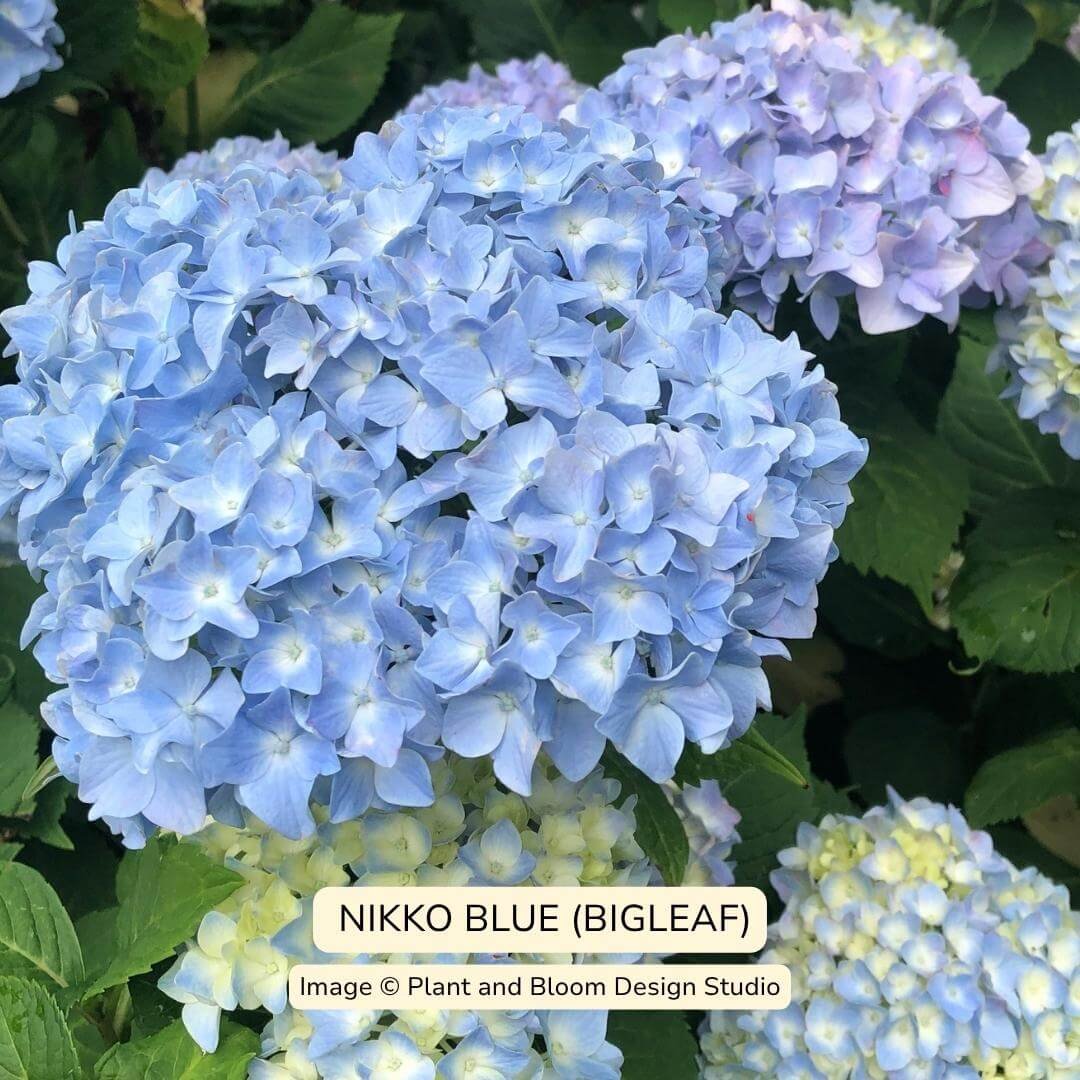
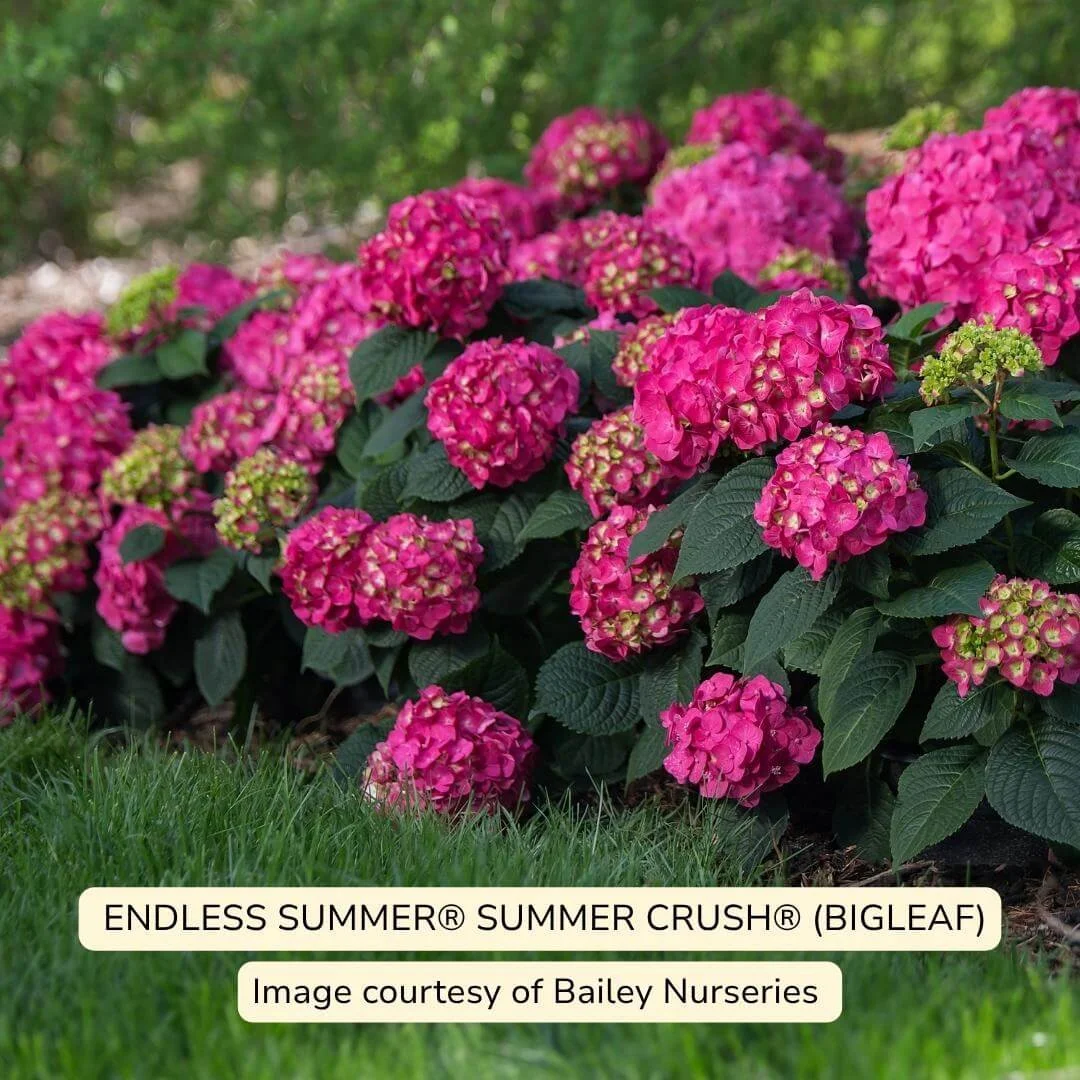
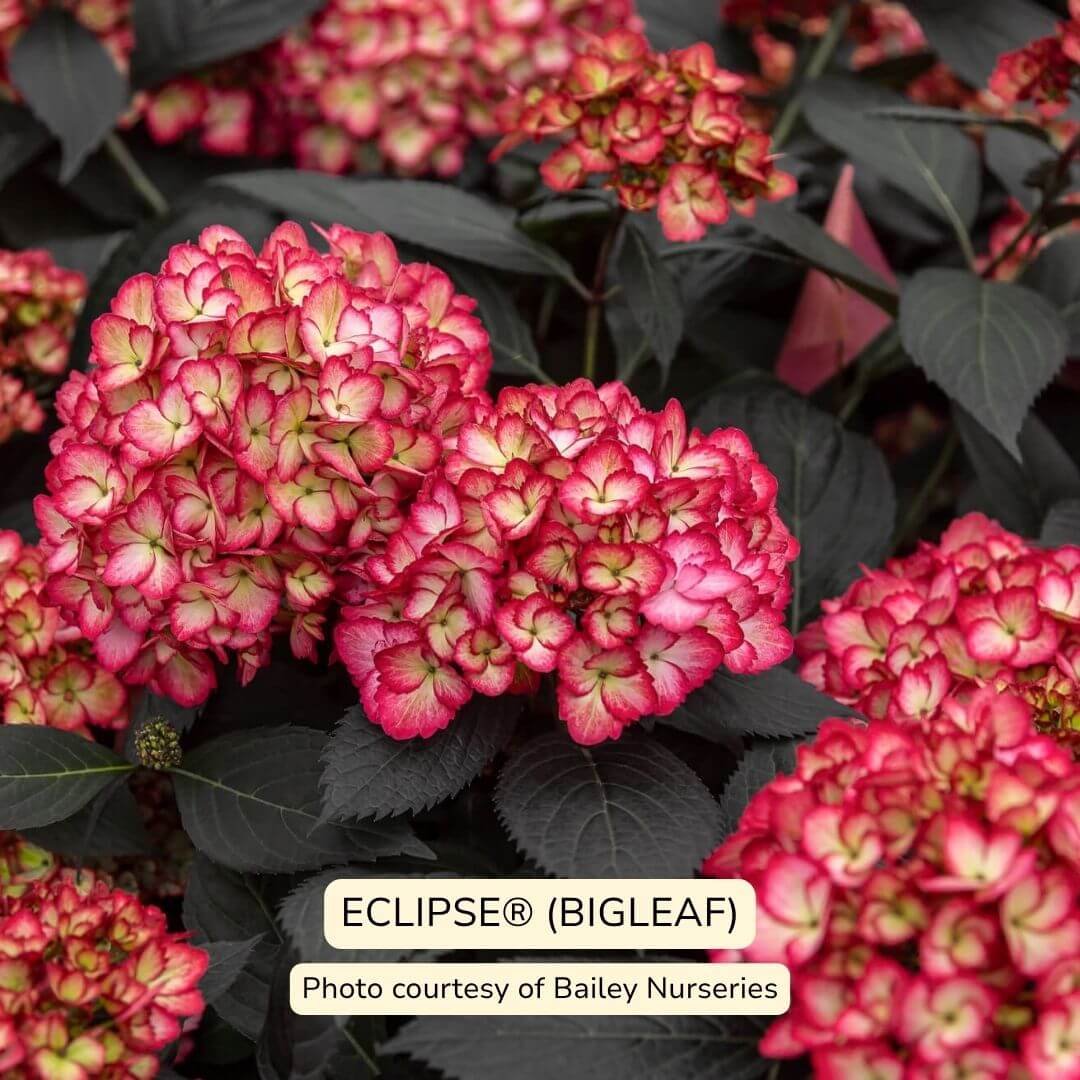
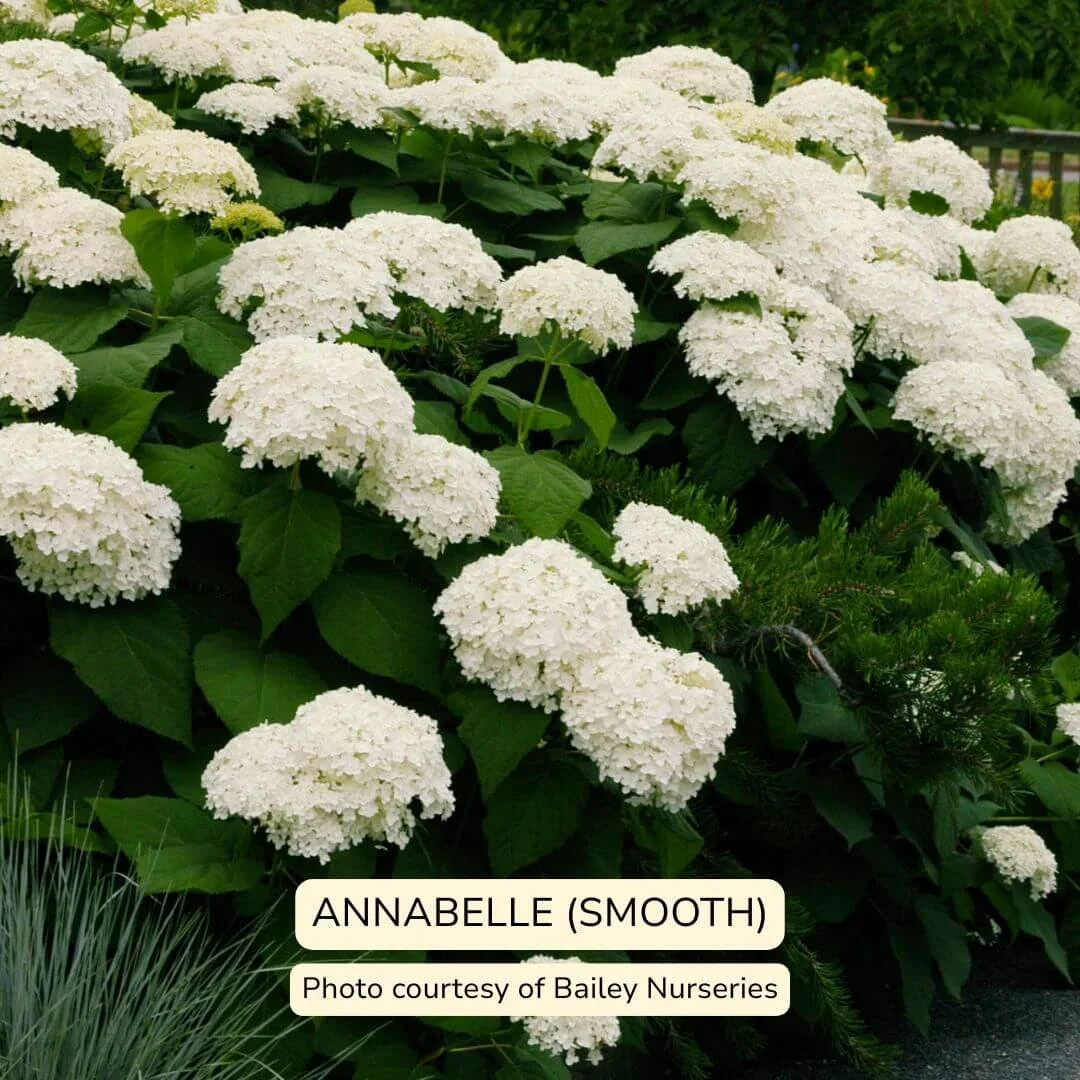
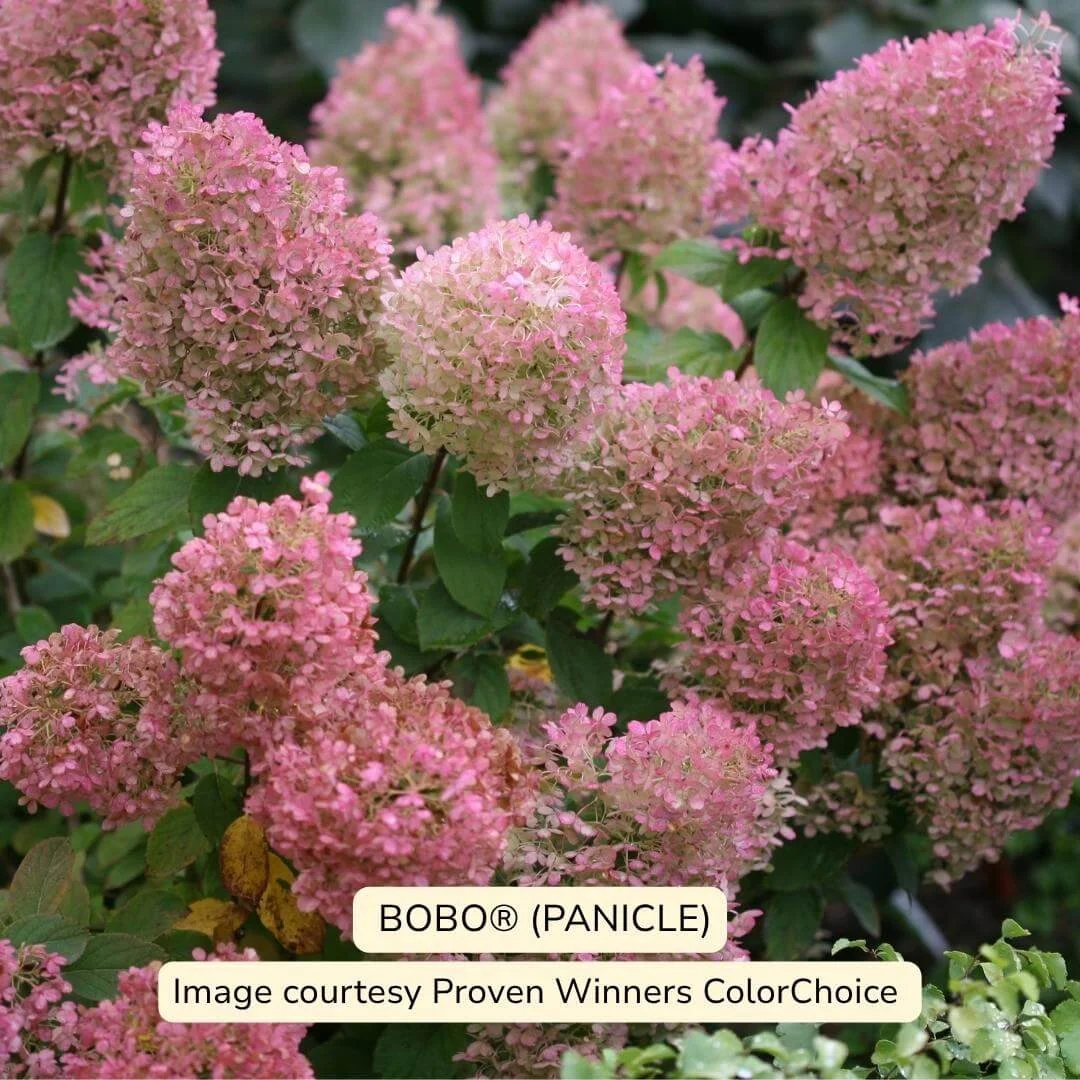
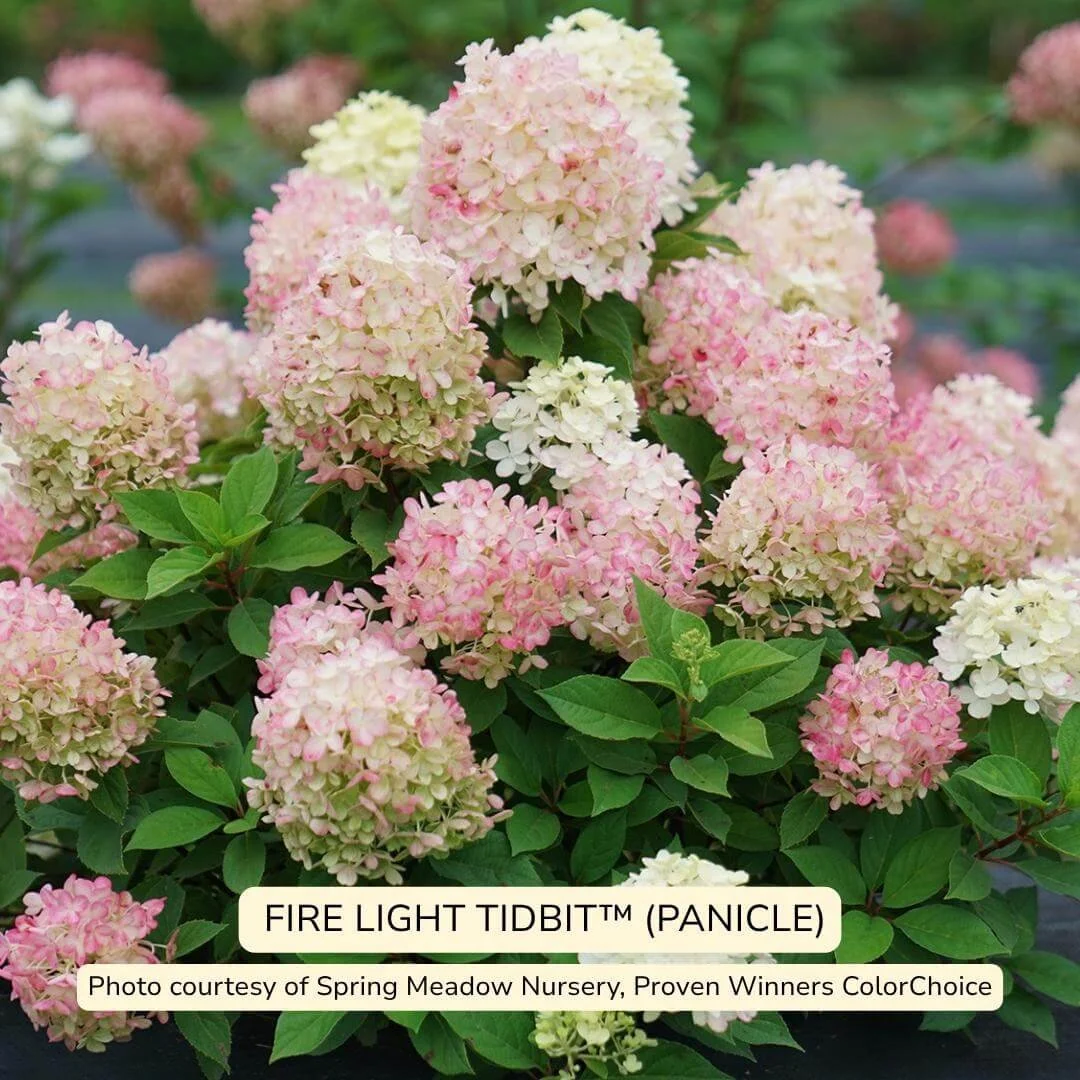
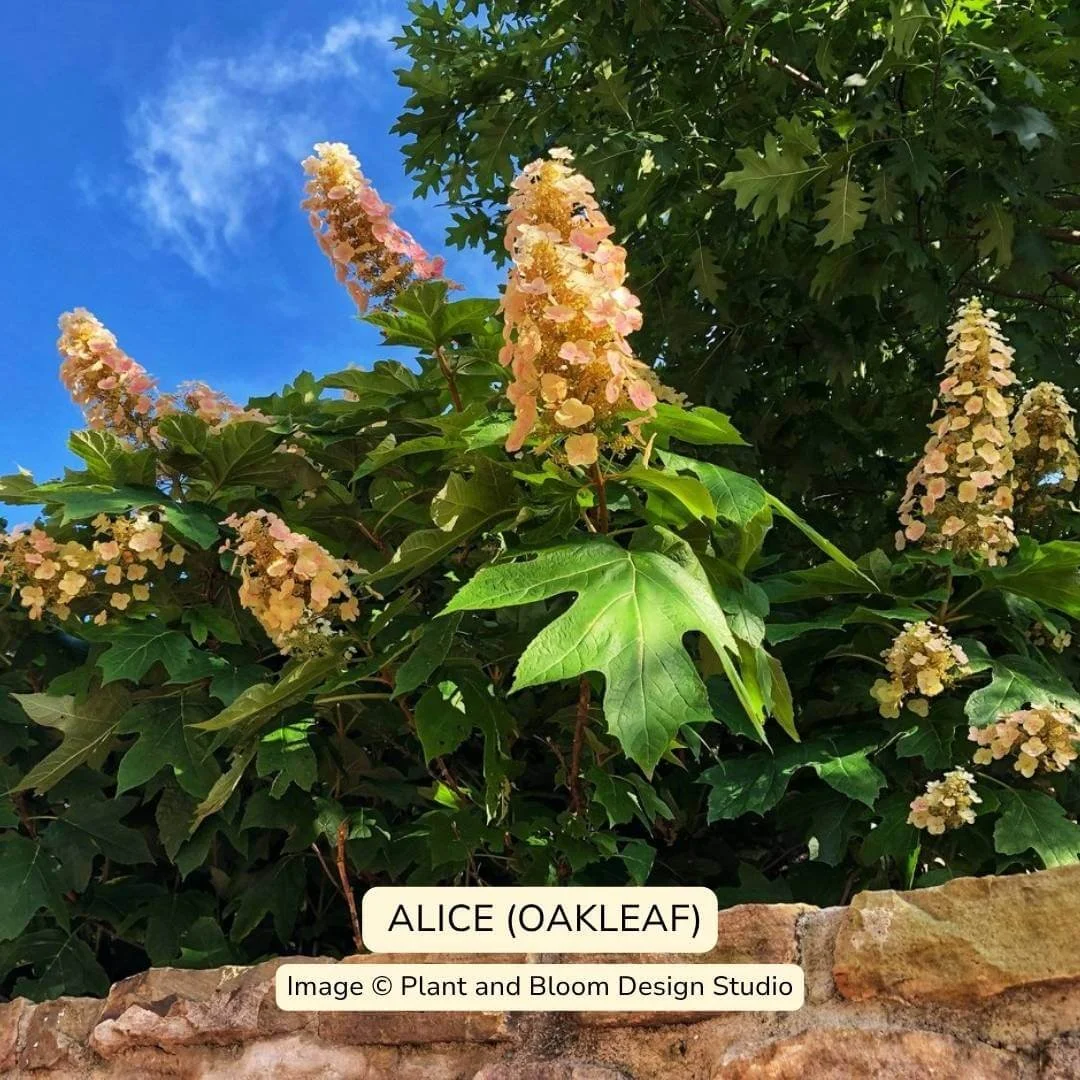
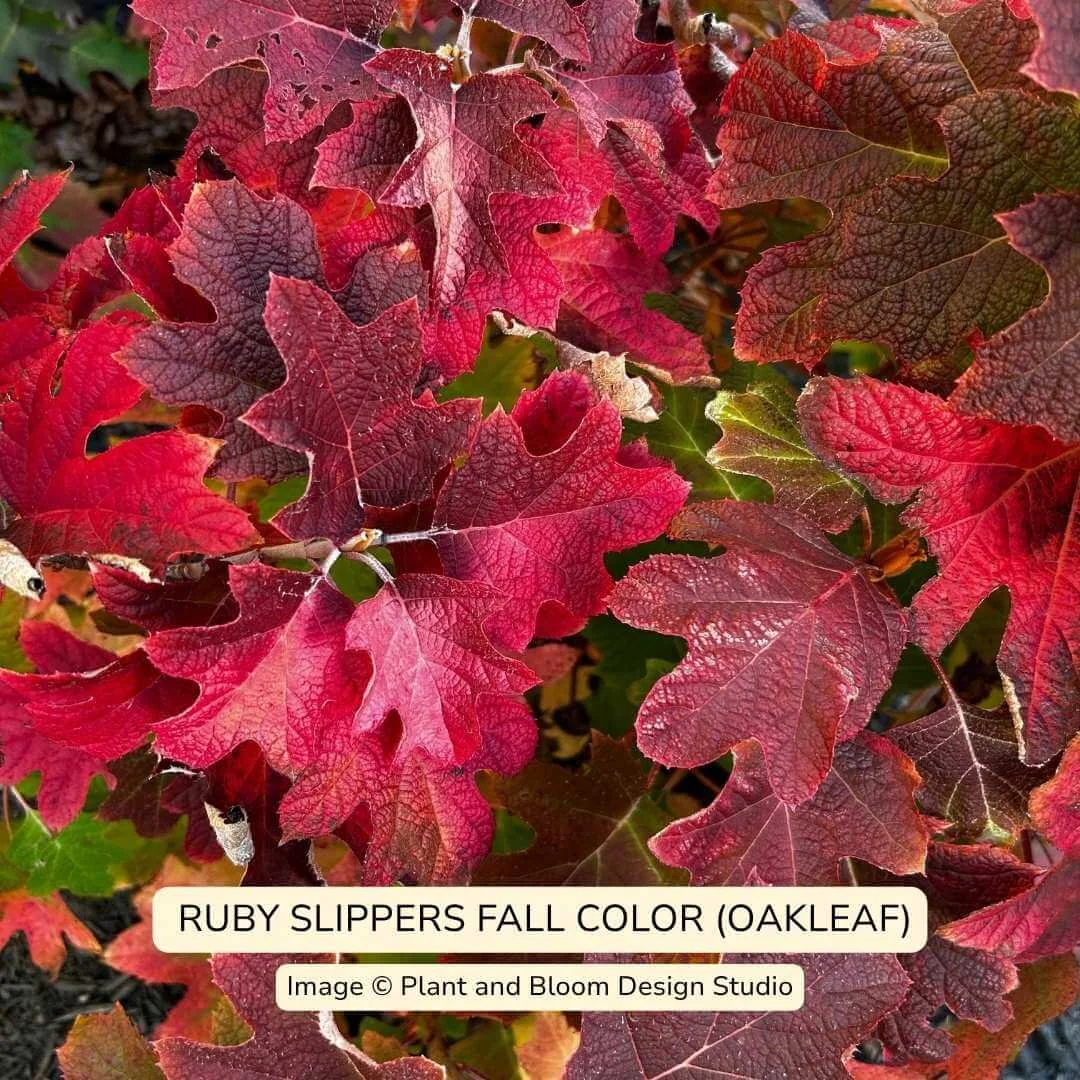
Browse the gallery below for hydrangea inspiration. Click the arrows to scroll through.
Final Thoughts
Once you understand your hydrangea type and what it needs, growing these beautiful shrubs becomes genuinely enjoyable rather than stressful. The most important rules to keep in your back pocket: know whether your plant blooms on old or new wood before you pick up the pruners, give it the right amount of sun from the start, and water consistently, especially in that first year.
There's a reason hydrangeas have been beloved in gardens for generations. They're spectacular, long-blooming, and incredibly versatile in the landscape. Good hydrangea care really does come down to knowing your plant. And once you do, these gorgeous shrubs will reward you for years. You've got this!