
Summersweet: The Native Shrub That Solves Your Hardest Gardening Problems
Published: July 24, 2023 | Updated: May 8, 2026
If someone told you there was a native shrub that flowers in shade, thrives in wet soil, survives drought, feeds bees, butterflies, and hummingbirds, and deer won't touch, you'd probably say that sounds too good to be true. Turns out, it's completely real. 😃
Summersweet (Clethra alnifolia) is one of those plants that makes me look like a genius at client consultations. I add it to almost every design I do, and it earns its place every single time. Got a damp, shady side yard where nothing wants to grow? Summersweet. A low spot where the downspout drains? Summersweet. A client who wants to garden for pollinators but has more shade than sun? You already know the answer.
What makes this shrub so special is that it thrives in the exact conditions most gardeners are trying to work around. Part shade, wet soil, tricky drainage spots. It doesn't just tolerate these things, it prefers them. It's native to eastern North America, easy to grow, and it blooms in mid to late summer when most other shrubs have already called it a season. And that sweet, light fragrance when it's in bloom? Just another reason to love it.
If summersweet isn't on your radar yet, it's about to be.
All images in this article are real photos, either taken by me or sourced directly from trusted growers, because you deserve to see exactly what you're planting.
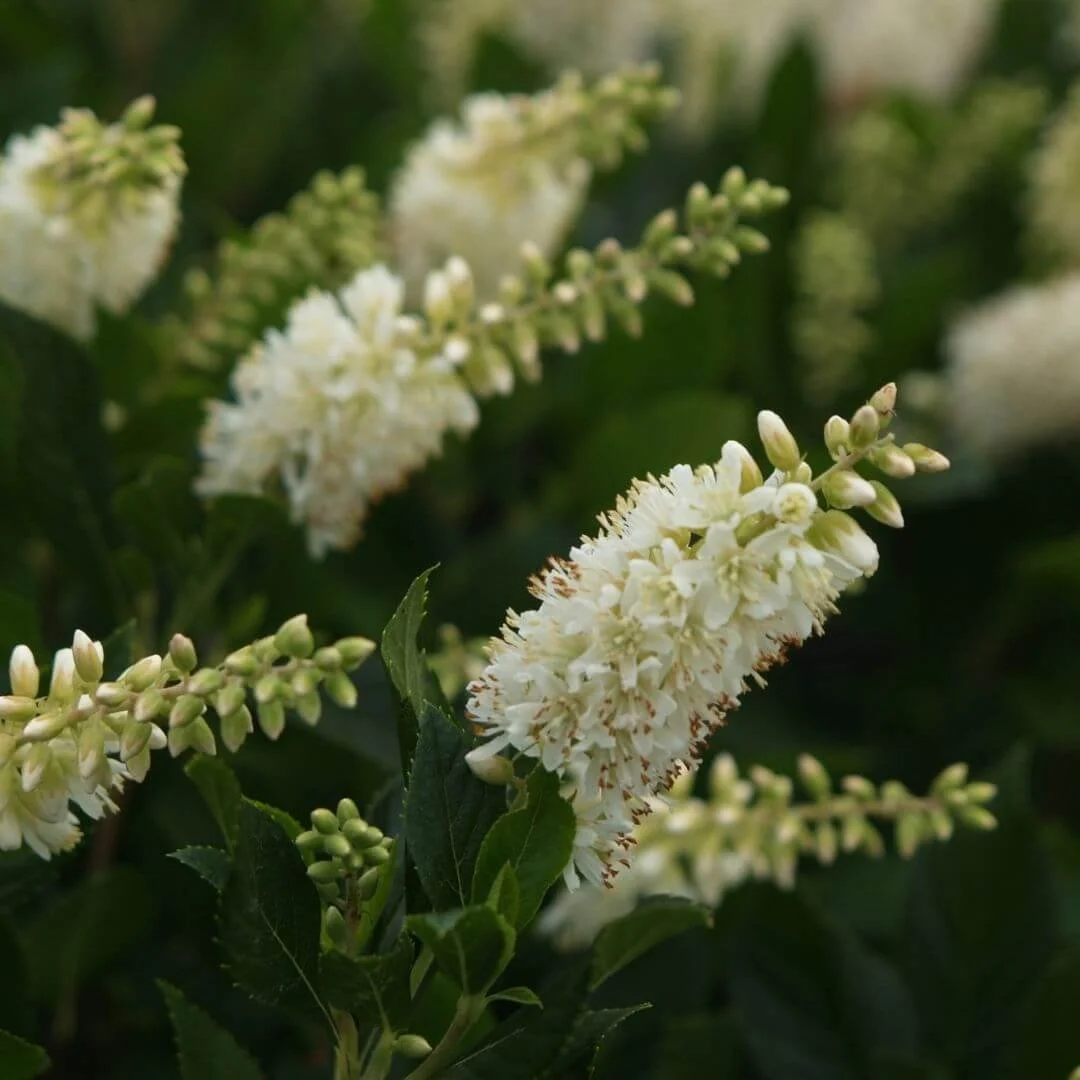
Sugartina® Crystalina summersweet (Clethra alnifolia), a compact native cultivar with fragrant white flowers, and just one of the many reasons this hardworking shrub belongs in your garden. Image courtesy of Spring Meadow Nursery, Inc. - Proven Winners
Summersweet Solves Your Toughest Garden Problems
Not every plant can do it all. Summersweet can. Here's why it earns a spot in so many different kinds of gardens.
You have a wet, shady spot where nothing will grow. That damp side yard, the low spot where water pools after a storm, the area at the end of a downspout. These are the places most plants quietly give up, but summersweet was made for them. Native to swampy woodlands and stream banks, it doesn't just survive wet, shady conditions, it thrives in them. It's one of the few shrubs that can solve a drainage problem, and it works beautifully in a rain garden too.
You want flowers in the shade. Finding a shrub that blooms in part shade is harder than it sounds. Most flowering shrubs want full sun, which makes summersweet something of a unicorn. It produces its fragrant flower spikes reliably in part shade, though blooms will be a little sparser in deeper shade. If your garden skews shady and you're tired of foliage-only plants, this one is a game changer.
You garden for wildlife. Few shrubs deliver for wildlife the way summersweet does. Its late summer blooms are a magnet for bees and native pollinators at a time of year when nectar sources are starting to thin out, making it an excellent choice for a pollinator garden. Butterflies flock to it too, so if you're building a butterfly garden, it absolutely belongs on your list. Hummingbirds will visit the flowers for nectar, and summersweet is also a host plant for at least 11 species of moths, adding another layer of ecological value for wildlife gardeners. As the season winds down, birds feed on the dried seed heads through fall and winter. It checks every box: pollinator garden, butterfly garden, bird garden, native plant garden.
You're dealing with deer. According to Rutgers University's research on deer-resistant landscape plants, summersweet is rated as seldom severely damaged by deer. No plant is completely deer-proof when food is scarce, but summersweet's fragrant foliage and flowers are generally unappealing to browsing deer, making it one of the more reliable choices for landscapes where deer pressure is a real problem.
You want a low-maintenance native plant. Summersweet (Clethra alnifolia) is native to eastern North America, which means it evolved to thrive in regional soils and climate conditions without a lot of intervention. It supports local ecosystems, requires minimal care once established, and brings genuine ecological value to your landscape. Not just visual appeal.
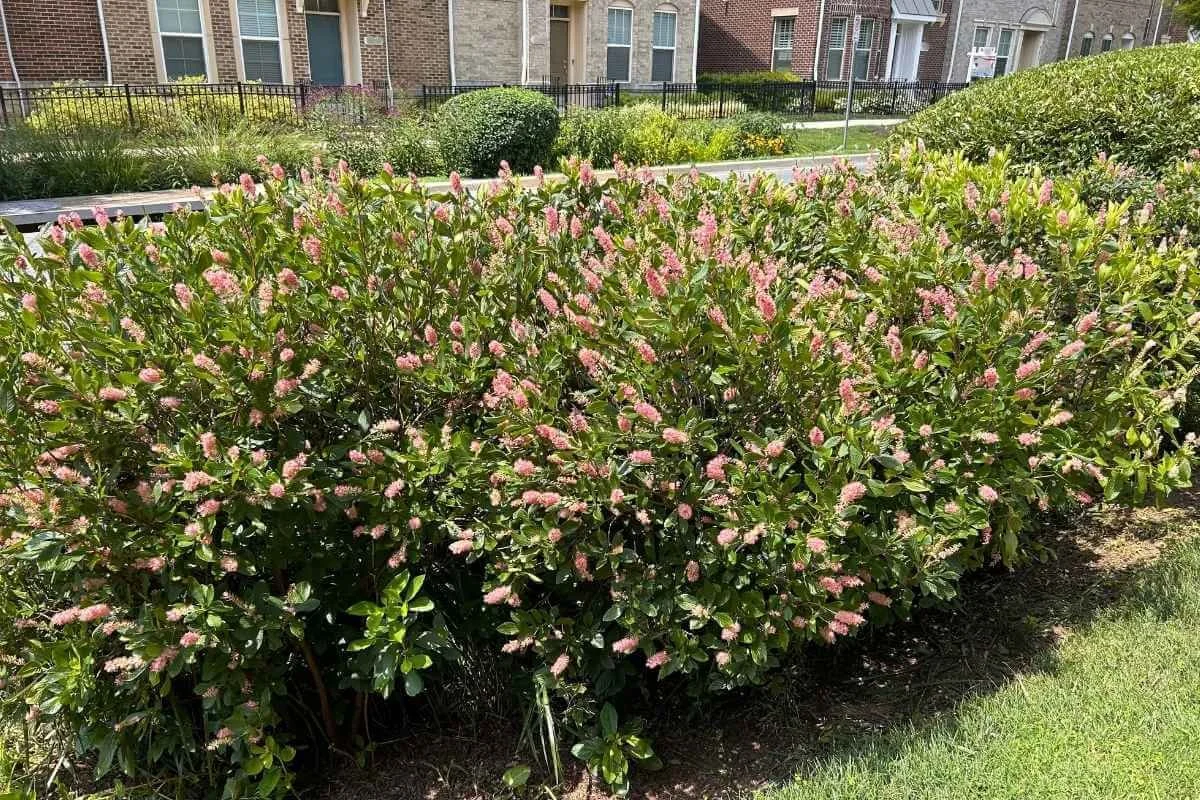
Ruby Spice summersweet makes a stunning mass planting in a rain garden setting, proving that problem-solving plants can be beautiful ones too. Image © Plant and Bloom Design Studio
Where Summersweet Comes From
Summersweet (Clethra alnifolia) is native to eastern North America, where it grows naturally along stream banks, in swampy woodlands, and in damp coastal thickets from Maine all the way down to Florida. If you've ever hiked through a wet woodland in summer and caught a sweet fragrance in the air, there's a good chance summersweet was nearby.
Understanding where it comes from helps explain why it performs so well in the kinds of difficult garden conditions we talked about above. It didn't develop those traits because someone bred them in. It developed them because that's what its native habitat required.
Most summersweet varieties are hardy in Zones 3 to 9, though some cultivars are rated for Zones 4 to 9. Always check the tag or plant description before you buy.
The Straight Species vs. Cultivated Varieties
The straight species is the plant exactly as it grows in the wild. At a nursery, you'll recognize it by its label, which will read simply Clethra alnifolia with no additional cultivar name or trademark. It grows 5 to 10 feet tall and wide, spreads over time through a suckering habit (meaning it sends up new shoots from its roots, gradually forming a larger colony), and has white flowers. It's a wonderful plant for naturalized areas, rain gardens, and larger landscapes where it has room to do its thing.
If native plants are important to you and you want the straight species, keep in mind that it isn't always easy to find at a general garden center. You may need to seek it out at a specialty native plant nursery, a native plant society swap, or through an online native plant retailer.
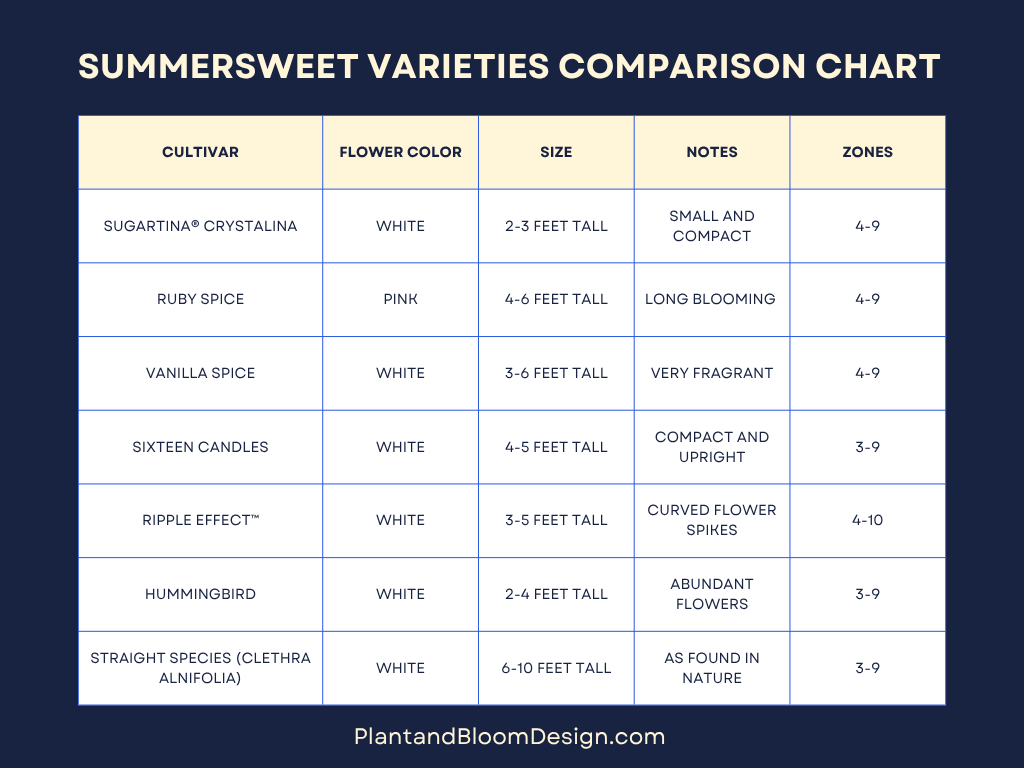
Over time, horticulturists have developed cultivated varieties, or cultivars, by selecting plants with particularly desirable traits: a more compact size, showier flowers, or stronger color. These cultivars are still Clethra alnifolia at heart, but they've been refined to work in a wider range of garden situations. A compact cultivar like Sugartina® Crystalina, for example, stays just 2 to 3 feet tall, making it a great fit for foundation plantings where the straight species would quickly outgrow its welcome.
We'll cover all the best cultivars in detail in the next section.
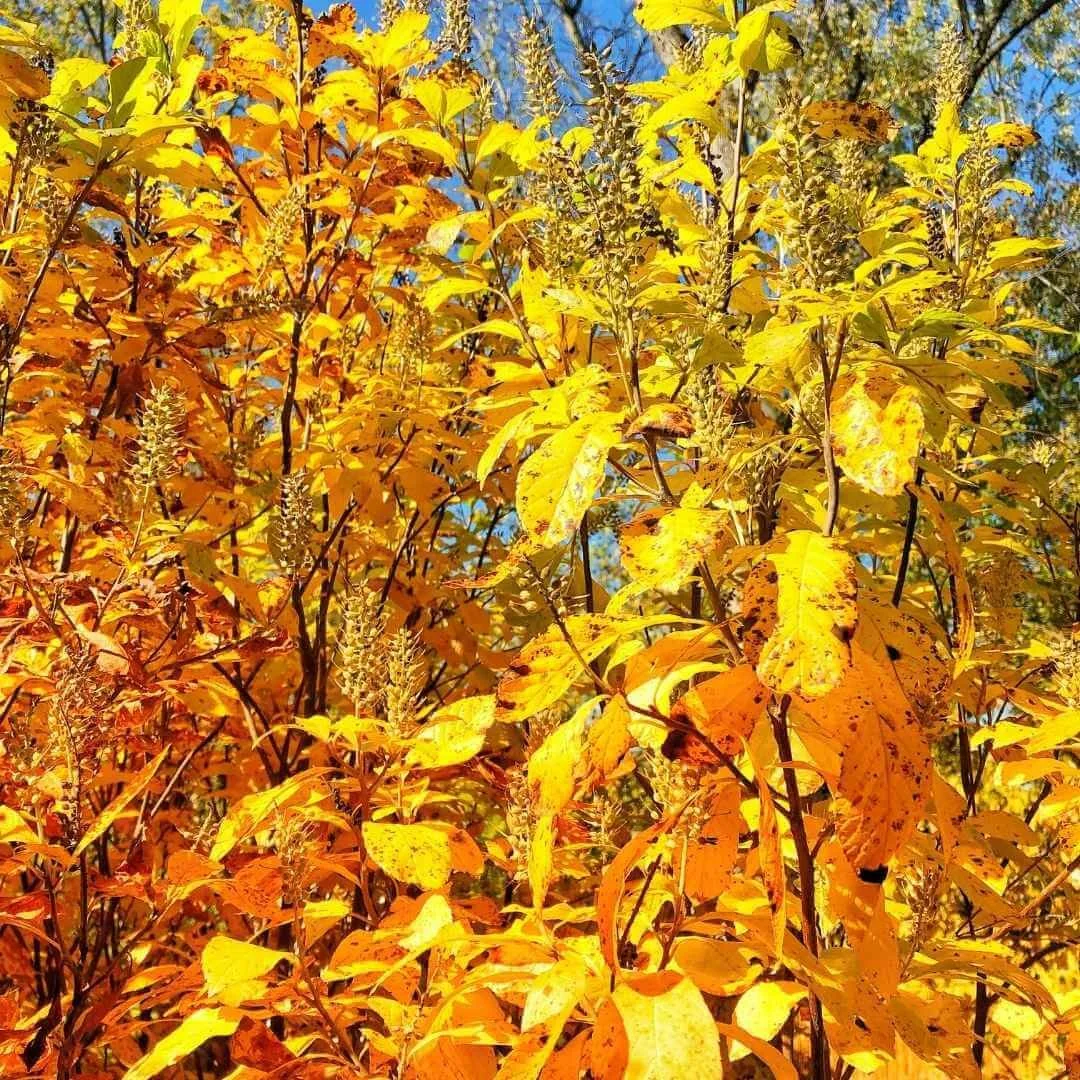
Don't overlook summersweet in fall. The straight species puts on a beautiful golden yellow show before the season ends. Image © Plant and Bloom Design Studio
Summersweet Varieties
Sugartina® Crystalina Summersweet
(Clethra alnifolia 'Crystalina')
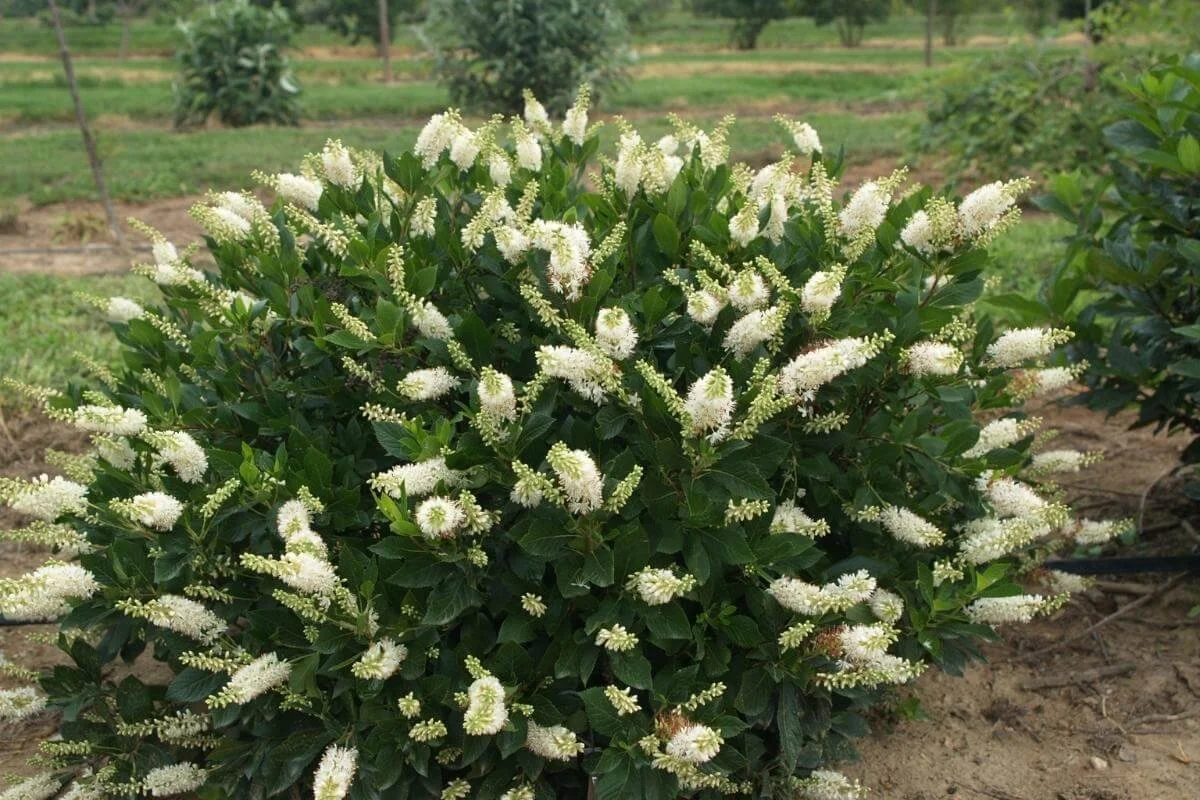
Sugartina® Crystalina summersweet showing its tidy, compact form and fragrant white flower spikes. It’s a perfect fit for foundation plantings and smaller garden spaces. Image courtesy of Spring Meadow Nursery, Inc. - Proven Winners
If you've ever struggled to find a flowering shrub that stays small enough for a foundation planting, works in part shade, and doesn't demand perfect soil, Sugartina® Crystalina is your answer. This compact cultivar tops out at just 2 to 3 feet tall and 3 to 5 feet wide, making it one of the most versatile summersweet varieties for designed landscapes.
It produces the same fragrant white flower spikes as the straight species in mid to late summer, and its tidy, rounded form means it rarely needs pruning to look good. The glossy green leaves turn golden yellow in fall, giving you three seasons of interest in a plant that asks very little in return.
Best characteristics:
Compact size, 2 to 3 feet tall and 3 to 5 feet wide
Fragrant white flowers in mid to late summer
Golden yellow fall color
Tolerates part shade and wet soil
Deer resistant
Why you'd choose it over other varieties: You want the full summersweet package in a smaller footprint. Sugartina® Crystalina delivers all the wildlife value, fragrance, and fall color of the straight species without the size or suckering habit that makes larger varieties unsuitable for tighter spaces.
Designer's notes: This is one of my go-to foundation plants for shaded front yards. It stays low enough to keep windows clear, looks polished without a lot of fuss, and blooms when most other foundation shrubs have nothing to offer. I also love it as a low informal hedge along shaded side yards, or planted along a street-side ditch where drainage is an issue and nothing else wants to grow.
Ruby Spice Summersweet
(Clethra alnifolia 'Ruby Spice')
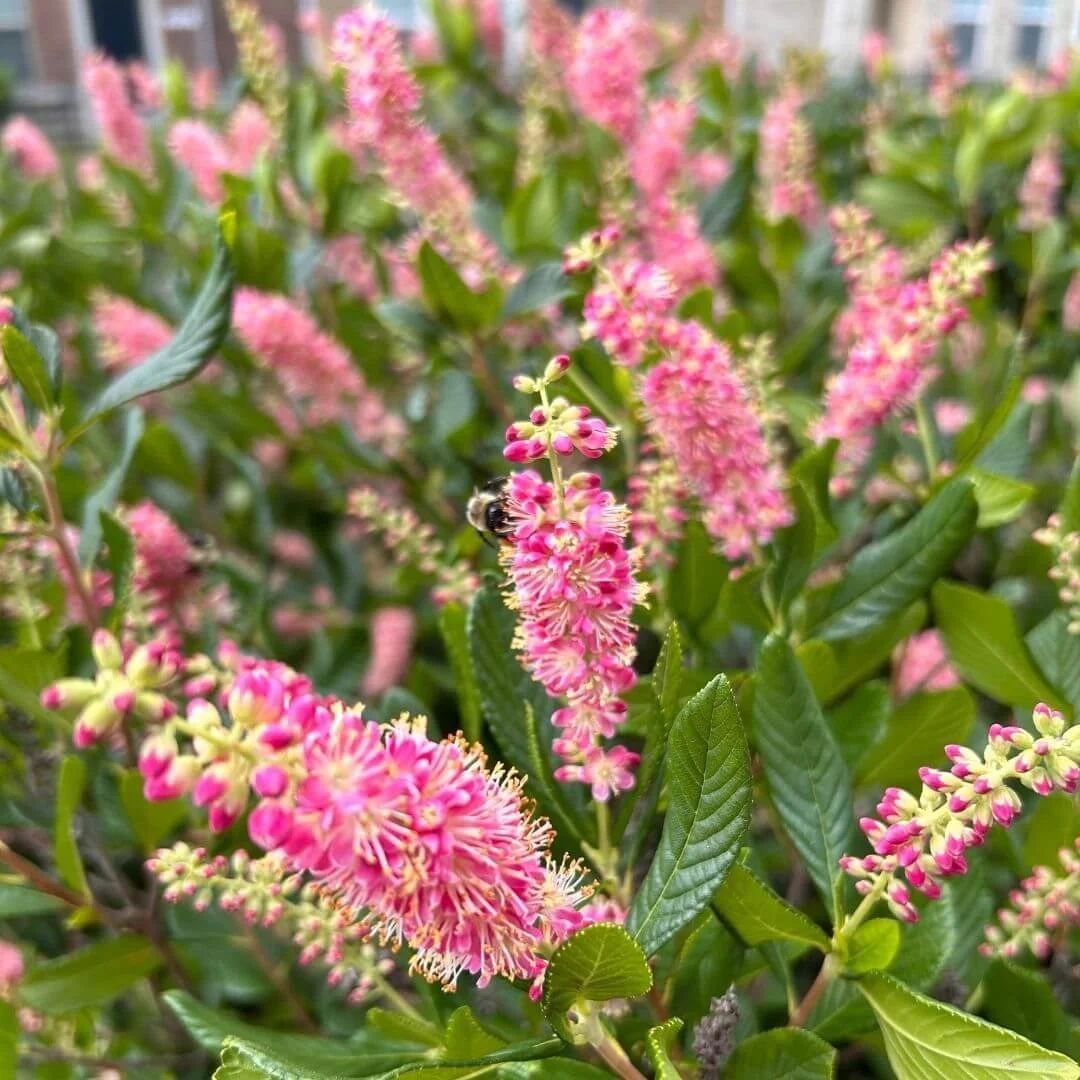
Ruby Spice summersweet in full bloom, and right on cue, the bees show up. This is exactly why it earns a spot in every pollinator garden. Image © Plant and Bloom Design Studio
If you've been searching for a flowering shrub that brings real color to a shady spot, Ruby Spice is the one. While most summersweet varieties flower in white, Ruby Spice produces deep rosy pink flower spikes in mid to late summer, bringing an unexpected pop of color to a shade garden where bright blooms are hard to come by.
It grows 4 to 6 feet tall and 3 to 5 feet wide, making it a medium sized shrub that fits comfortably into most landscapes without overwhelming a space. Like all summersweet, it thrives in part shade and wet soil, is deer resistant, and draws pollinators in droves when it blooms.
Best characteristics:
Deep rosy pink fragrant flowers in mid to late summer
Long blooming, flowers persist a couple of weeks longer than many other summersweet cultivars
Grows 4 to 6 feet tall and 3 to 5 feet wide
Thrives in part shade and wet soil
Deer resistant
Strong wildlife value for bees, butterflies, and hummingbirds
Why you'd choose it over other varieties: You want summersweet's problem solving qualities but you also want color. Ruby Spice is the standout choice for shade gardens where most flowering shrubs simply won't perform, and the pink blooms are gorgeous in a low light setting. It also keeps its flowers a couple of weeks longer than many other cultivars do.
Designer's notes: This is my go-to for clients who feel like their shade garden is missing something, and that something is usually color. Ruby Spice delivers a bright, cheerful pink at a time of year when most shade gardens are running low on interest. I also love planting it near an air conditioning unit. It's happy to soak up condensate from the AC line, and at 3 to 5 feet tall it provides just enough screening to tuck that equipment out of sight.
Want to go deeper on this one? We have an entire article dedicated to Ruby Spice summersweet, including care tips and design ideas. Read the full Ruby Spice guide here.
Vanilla Spice® Summersweet
(Clethra alnifolia 'Caleb')
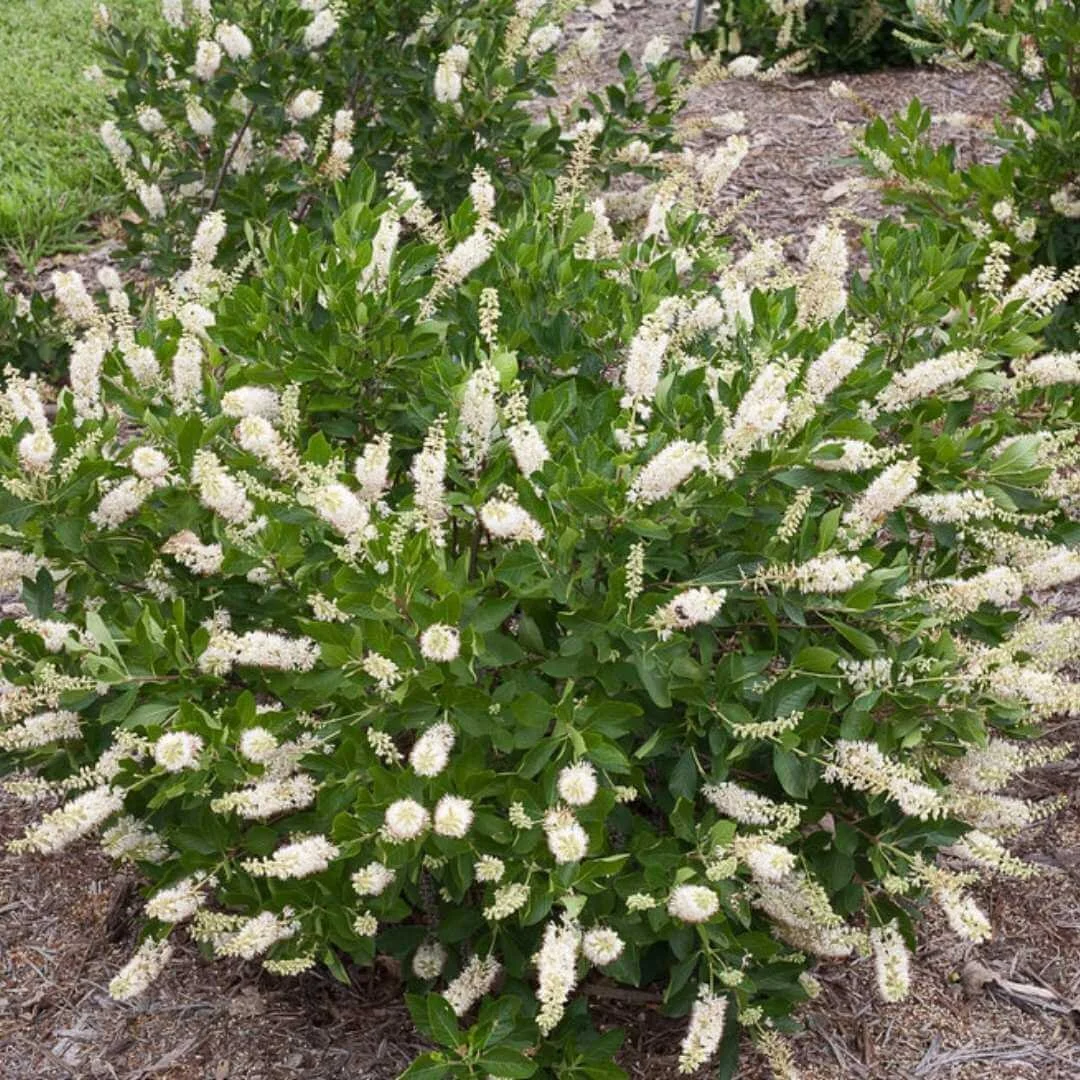
Vanilla Spice® summersweet in full bloom. Larger flowers than most summersweet varieties, and a fragrance that makes it worth planting near every patio and doorway. Image courtesy of Proven Winners, provenwinners.com
If fragrance is what you're after, Vanilla Spice® is your summersweet. While all summersweet varieties carry some scent, Vanilla Spice® turns it up considerably, producing an intoxicating sweet fragrance when it blooms in mid to late summer. It's also notable for its flowers, which are larger than most other summersweet varieties and up to twice the size of the straight species, making for a showier display overall.
It grows 3 to 6 feet tall and wide, thrives in part shade and wet soil, and like all summersweet it's deer resistant and a magnet for pollinators when in bloom.
Best characteristics:
Exceptional fragrance, stronger than most summersweet varieties
Large white flower spikes, up to twice the size of the straight species
Grows 3 to 6 feet tall and wide
Thrives in part shade and wet soil
Deer resistant
Strong wildlife value for bees, butterflies, and hummingbirds
Why you'd choose it over other varieties: You want summersweet's problem solving qualities plus a fragrance that stops you in your tracks. Vanilla Spice® delivers a sensory experience that most shrubs simply can't match, especially in a shady garden where fragrant flowering shrubs are hard to find.
Designer's notes: When a client wants their garden to feel like an experience rather than just something to look at, this is the variety I reach for. I love tucking it into a shady corner near a backyard patio where the fragrance drifts on warm summer evenings. It's equally wonderful planted near a door you use frequently, so you catch the fragrance every time you come and go.
Sixteen Candles Summersweet
(Clethra alnifolia 'Sixteen Candles')
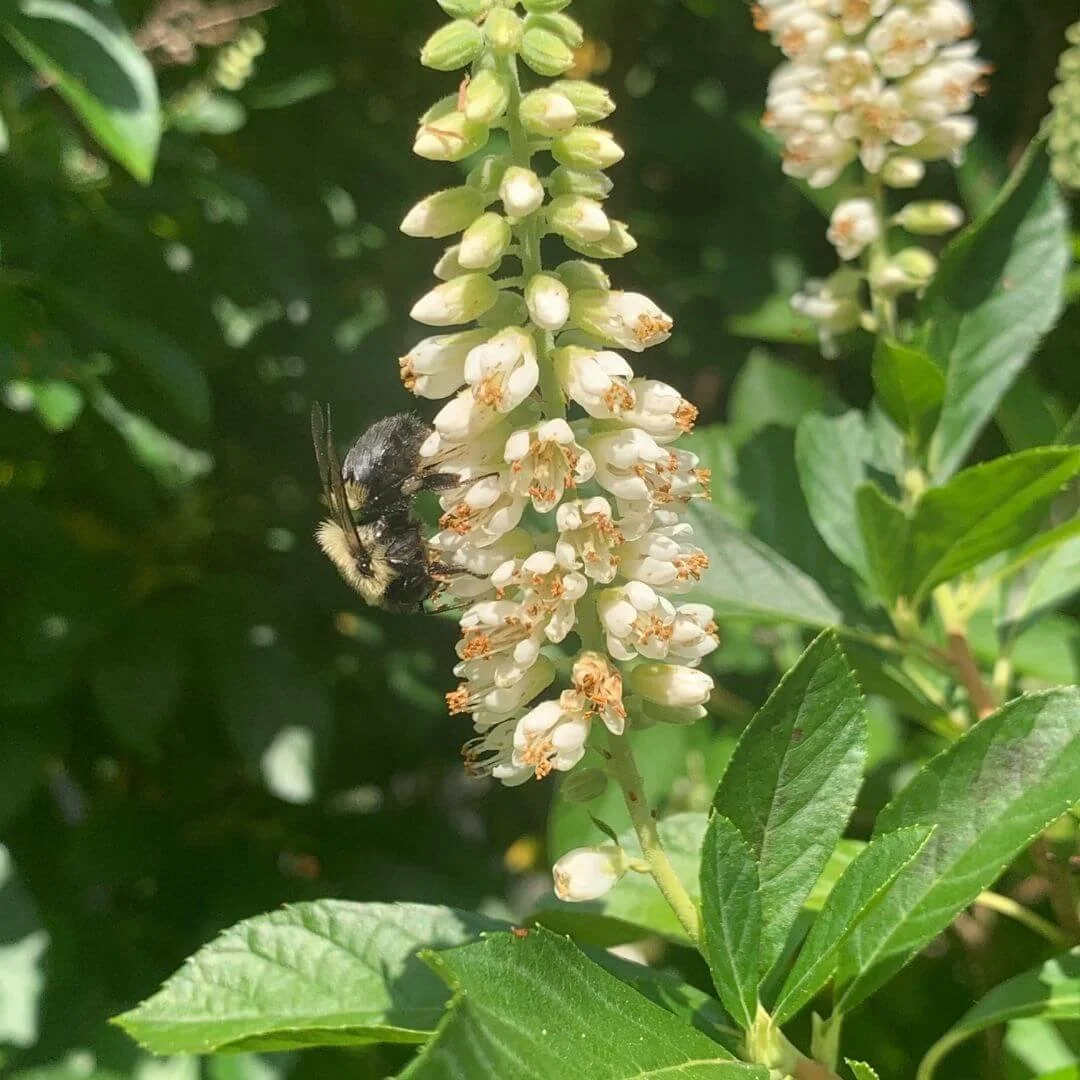
Sixteen Candles summersweet doing what summersweet does best: putting on a fragrant white flower show and feeding the bees. Image © Plant and Bloom Design Studio
If you're working with a tight space, Sixteen Candles is the summersweet variety to reach for. While most summersweet cultivars have a rounded, mounding form, Sixteen Candles grows in a distinctly upright, narrow shape — 4 to 5 feet tall and just 2 to 3 feet wide — making it one of the most useful varieties for spots where width is limited but you still want height and flower power.
It produces upright white flower spikes in mid to late summer, thrives in part shade and wet soil, and like all summersweet it's deer resistant and attractive to pollinators.
Best characteristics:
Upright, narrow form, 4 to 5 feet tall and 2 to 3 feet wide
Fragrant white flower spikes in mid to late summer
Thrives in part shade and wet soil
Deer resistant
Strong wildlife value for bees, butterflies, and hummingbirds
Why you'd choose it over other varieties: You love summersweet but you're working with a narrow or confined space. Sixteen Candles gives you the full summersweet experience in a footprint that fits where other varieties simply won't.
Designer's notes: This is my go-to when a client has a narrow side yard, a tight walkway, or a small urban garden where every inch of width counts. That upright form is extremely useful, it tucks in close to the house without crowding windows or pathways, and it works beautifully in spots where a rounded shrub would feel cramped or out of place. If you're planting along a narrow passage and want something that blooms, handles shade, and won't take over, Sixteen Candles is your plant.
Ripple Effect™ Summersweet
(Clethra alnifolia 'SMNCAC')
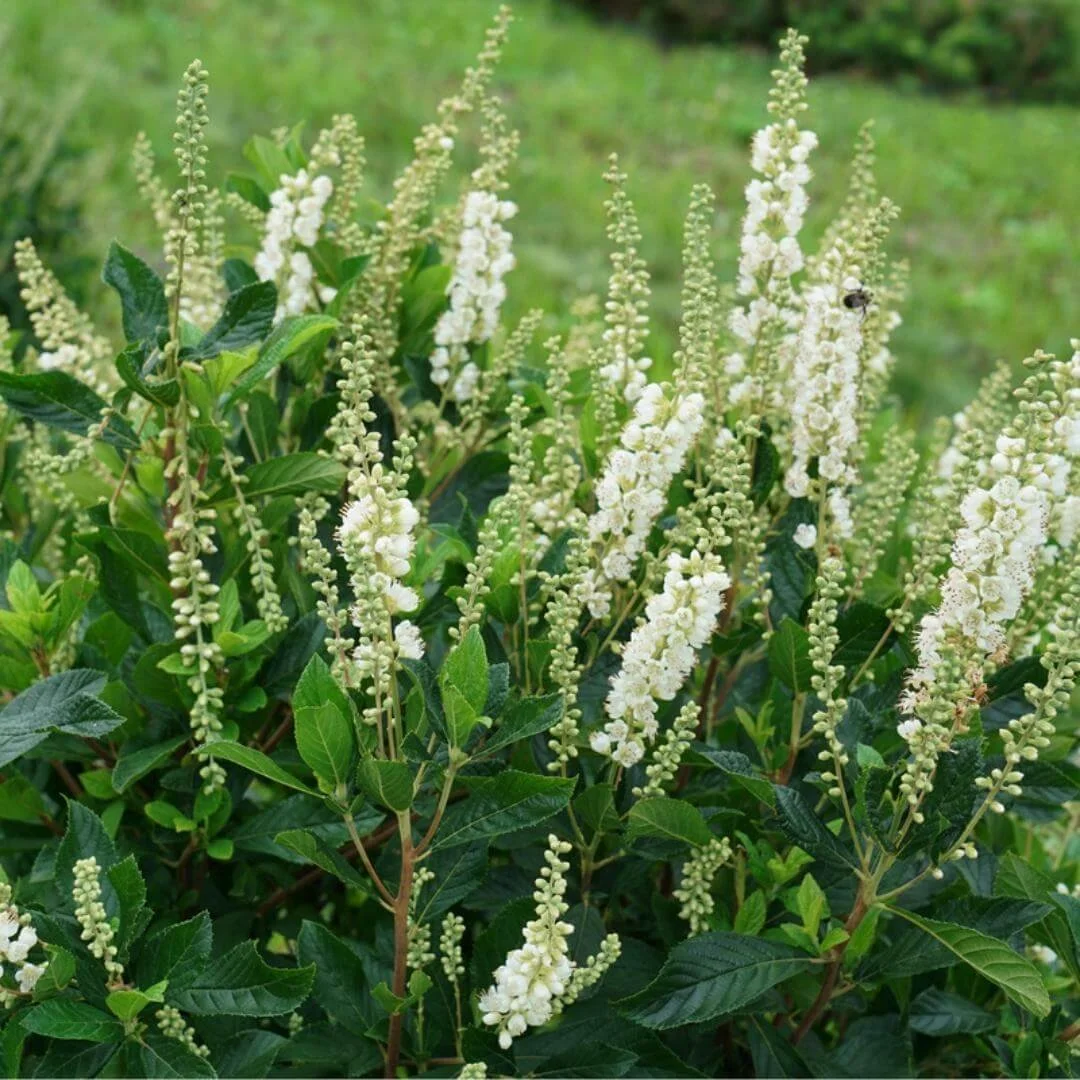
Ripple Effect™ summersweet up close. These uniquely curved flower spikes are what set this newer cultivar apart from every other summersweet in the garden. Image courtesy of Spring Meadow Nursery, Inc. - Proven Winners
Ripple Effect™ is one of the newer summersweet cultivars on the market, and it's already turning heads. What sets it apart is its flowers. Instead of the straight upright spikes you see on most summersweet varieties, Ripple Effect™ produces abundant flower spikes that curve and twist in different directions, creating a dynamic, almost fluid effect in the garden.
Like all summersweet it thrives in part shade and wet soil, is deer resistant, and is a magnet for pollinators when in bloom in mid to late summer.
Best characteristics:
Uniquely curved and twisting flower spikes that create a rippling effect
Abundant blooms in mid to late summer
Hardy in Zones 4 to 10, one of the most heat tolerant summersweet varieties available
Manageable size, 3 to 5 feet tall and 3 to 4 feet wide, fits comfortably in most yards
Thrives in part shade and wet soil
Deer resistant
Strong wildlife value for bees, butterflies, and hummingbirds
Why you'd choose it over other varieties: You want summersweet's problem solving qualities plus something genuinely distinctive to look at. Ripple Effect™ has all the performance of the species with a flower form that stands out from every other shrub in the garden.
Designer's notes: What I love about this variety is the movement it brings to a planting. Those curved, twisting flower spikes give the impression of rippling in a breeze even on a still day, which adds a relaxed, naturalistic quality that works beautifully in informal garden designs. It's a newer cultivar so you may not find it at your local garden center just yet, but it's absolutely worth seeking out online.
Hummingbird Summersweet
(Clethra alnifolia 'Hummingbird')
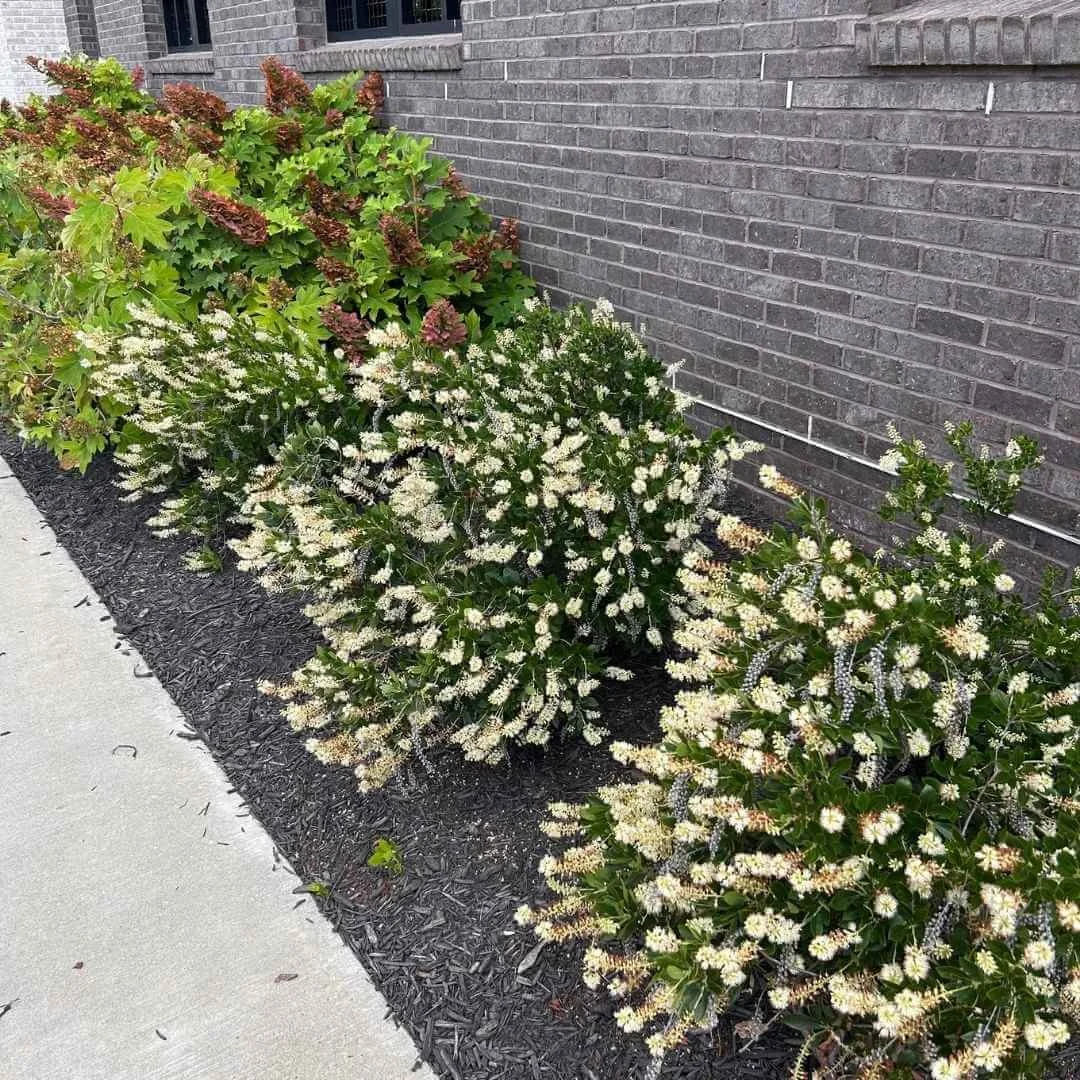
Hummingbird summersweet and oakleaf hydrangea make natural companions. Both are native, shade tolerant, and together they create a polished, low maintenance border that looks intentional all season long. Image © Plant and Bloom Design Studio
If a neat, tidy, well-behaved shrub is what you're after, Hummingbird is your summersweet. This compact cultivar has a distinctly mounded, rounded form that stays naturally tidy without much pruning, growing 2 to 4 feet tall and 3 to 5 feet wide. It's one of the most floriferous summersweet varieties, producing an abundance of fragrant white flower spikes in mid to late summer despite its small size.
Like all summersweet it thrives in part shade and wet soil, is deer resistant, and is a reliable magnet for pollinators when in bloom.
Best characteristics:
Compact, naturally mounded and rounded form
Abundantly floriferous for its size
Grows 2 to 4 feet tall and 3 to 5 feet wide
Fragrant white flowers in mid to late summer
Thrives in part shade and wet soil
Deer resistant
Hardy in Zones 3 to 9
Why you'd choose it over other varieties: You want a compact summersweet with a naturally tidy shape that won't require constant pruning to look polished. Hummingbird has the most refined, mounded form of all the summersweet cultivars, making it the go-to choice for gardeners who prefer a neat, manicured look.
Designer's notes: This is the variety I reach for when a client wants things to look tidy. The naturally mounded shape is useful in a foundation planting because it holds its form without a lot of intervention, which is exactly what you want close to the house. It also makes a lovely low informal hedge along a shaded boundary, where its compact shape creates a cohesive, finished look without demanding much maintenance. If most summersweet varieties feel a little wild for your taste, Hummingbird is the one that meets you in the middle.
Straight Species Summersweet
(Clethra alnifolia)
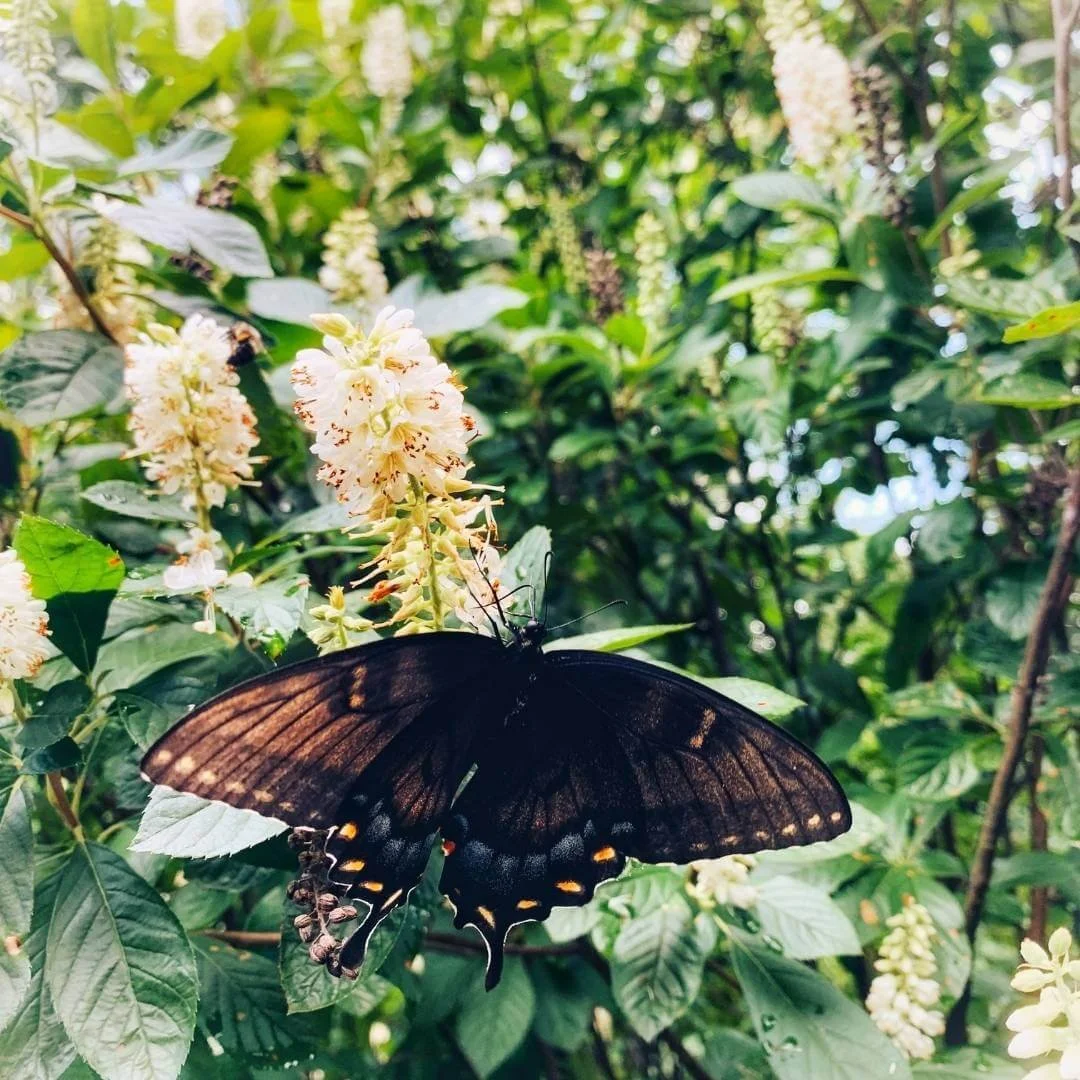
A swallowtail butterfly visiting my own backyard summersweet in peak bloom. This is exactly the kind of event we looked forward to every July. Image © Plant and Bloom Design Studio
This is the plant exactly as nature made it. No cultivar selection, no size refinement, no modifications. Just Clethra alnifolia in its original, wild form. It grows 6 to 10 feet tall and wide, spreads over time through its suckering habit, and produces fragrant white flower spikes every mid to late summer without asking much of you in return.
I'll be honest with you: this is my favorite plant. Not my favorite summersweet. My favorite plant, full stop.
Years ago I planted a straight species summersweet in my backyard. It was a tiny little thing in a one gallon pot from Behnke's Nursery (DMV gardeners, you know exactly what we lost when Behnke's closed). Over the next 15 years it grew, and suckered, and spread until it was a magnificent 10 foot shrub covered in white flowers every July. The activity around it during bloom time was something else entirely: butterflies, bees, and ruby throated hummingbirds visiting every single day. My whole family would gather outside every day just to watch. We looked forward to it every year like a summer ritual.
When we moved, I had to leave that shrub behind. It was propagated around the neighborhood and amongst master gardener friends, as well as passed along to family in New Jersey. That's the thing about a plant you love: it has a way of spreading.
If you have the space and you're not planting near a foundation, the straight species is the one I'd put in every time.
Best characteristics:
The original wild form of summersweet, exactly as found in nature
Fragrant white flowers in mid to late summer
Exceptional wildlife value for bees, butterflies, and hummingbirds
Grows 6 to 10 feet tall and wide
Thrives in part shade and wet soil
Suckering habit makes it ideal for naturalizing, rain gardens, and damp slopes
Deer resistant
Hardy in Zones 3 to 9
Why you'd choose it over other varieties: You have the space, you want a native plant, and you're gardening for wildlife as much as for aesthetics. The straight species delivers an ecological experience that no cultivar can fully replicate, and it only gets better with age.
Where to find it: The straight species isn't always available at general garden centers. Look for it at specialty native plant nurseries, native plant society sales and swaps, or through online native plant retailers.
How to Grow Summersweet
Summersweet is easy to grow, but like any plant it has preferences. Give it what it loves and it will reward you with heavy blooms, brilliant fall color, and a garden full of wildlife every summer. Here's what you need to know.
A note on water: Summersweet is happiest in consistently moist, rich soil. It loves compost, and if you can work some into your planting hole and use it as a top dressing annually, your shrub will thank you. Yes, it's drought tolerant once established, but drought tolerant doesn't mean drought proof. An established summersweet will survive a dry spell, but it won't look its best and flowering will be lighter if it's ignored during extended dry periods. Water deeply and regularly through the first full year after planting, because this is the most important thing you can do for long term success. After that, consistent moisture will always get you a better performing shrub than benign neglect.
Quick care stats:
Common name: Summersweet, Sweet Pepperbush
Botanical name: Clethra alnifolia
Native range: Eastern North America, Maine to Florida
Hardiness zones: Zones 3 to 9 for most varieties; some cultivars are Zones 4 to 9. Always check your specific variety.
Mature size: 6 to 10 feet tall and wide for the straight species; cultivars vary from 2 to 6 feet. Check your specific variety before planting
Spacing: 2 to 5 feet on center, depending on variety
Light requirements: Full sun to part shade; blooms most heavily in full sun to part shade
Form: Mounded, clump forming deciduous shrub with a suckering habit
Growth rate: Moderate, 1 to 2 feet per year
Flowering time: Mid to late summer
Flower color: White for most varieties; pink for Ruby Spice
Flower form: Cylindrical spikes of small, fragrant flowers
Leaves: Alternate, simple green leaves with serrated edges
Fall color: Golden yellow
Soil preference: Moist, fertile, slightly acidic soil; tolerates clay and periodic flooding; loves compost
Deer resistant: Yes
Wildlife value: High. Attracts bees, butterflies, hummingbirds, moths, and birds.
A few more care tips:
Mulch generously around the base to retain moisture, but keep mulch at least 3 inches away from the base of the shrub to avoid rot and disease problems.
Prune in late winter or early spring to remove any dead or damaged branches and shape lightly if needed. Summersweet blooms on new growth, so late winter pruning won't cost you flowers.
Be patient in spring because summersweet is one of the last shrubs to leaf out. Don't panic and don't assume it's dead. It will come, and it's worth the wait.
Expect suckering. Over time summersweet will send up new shoots from its roots and gradually spread. This is a feature in a naturalized area or rain garden, but something to manage if you're growing it in a more formal setting. Cultivars sucker less aggressively than the straight species.
Use the USDA Zone Finder to confirm your hardiness zone before purchasing, especially if you're considering a cultivar with a narrower zone range.
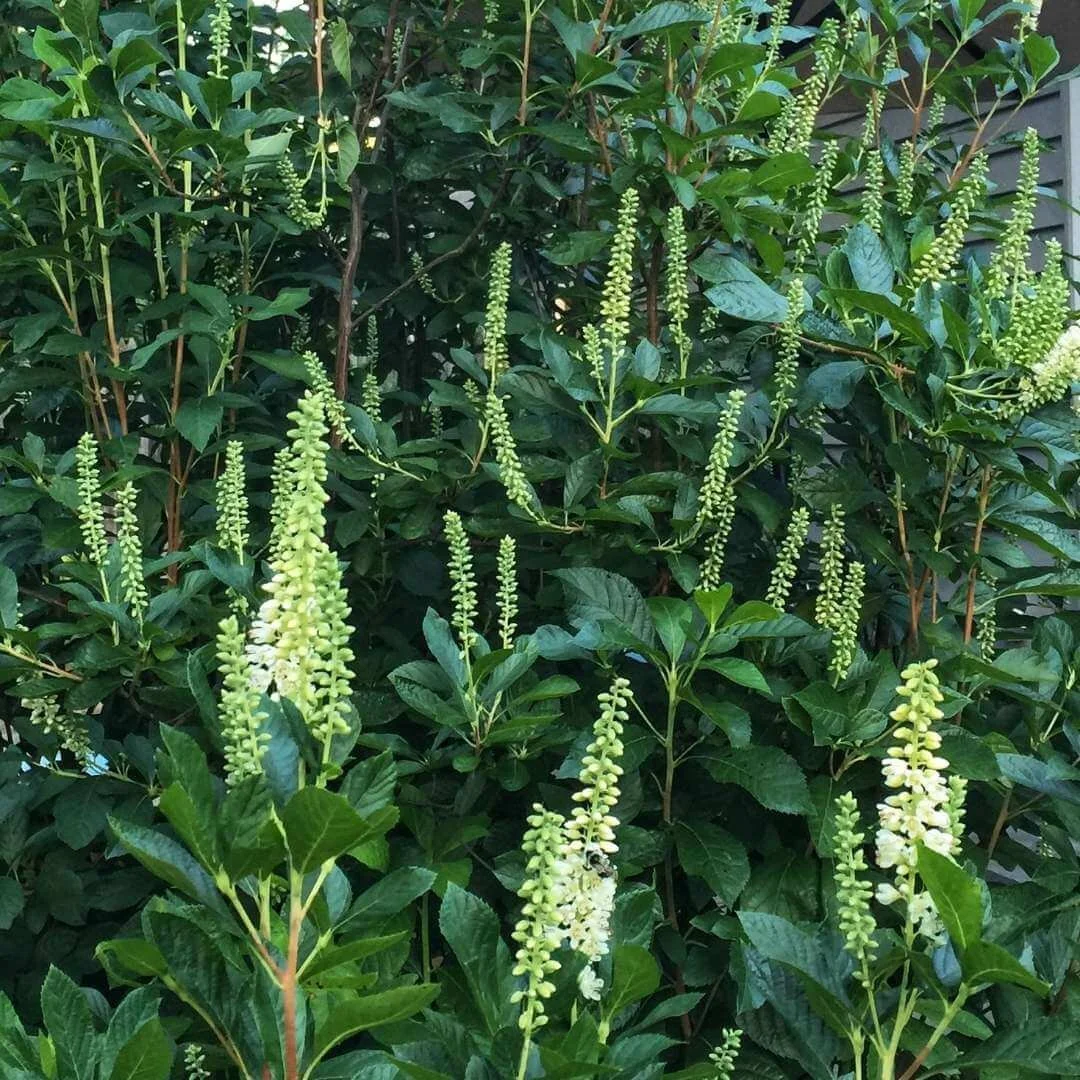
Those glossy, lush leaves are a sign of a happy summersweet. Evenly moist, rich soil is the secret — give it what it loves and it will look like this all season long. Image © Plant and Bloom Design Studio
Summersweet Design Ideas
Plant it where drainage is a problem. Low spots, damp side yards, the area at the end of a downspout, slow draining corners of the yard, summersweet thrives in all of them. Instead of fighting your drainage problem, plant into it.
Use it as a foundation planting. Compact cultivars like Sugartina® Crystalina and Hummingbird are excellent foundation shrubs for shaded front yards. They stay low enough to keep windows clear, require minimal pruning to look tidy, and bloom at a time of year when most foundation shrubs have nothing to offer.
Build a rain garden around it. Summersweet is one of the best native shrubs for rain gardens, handling periodic flooding without complaint while looking beautiful doing it. Ruby Spice makes a particularly stunning mass planting in a rain garden setting.
Create a pollinator garden. Few shrubs attract as much wildlife as summersweet in bloom. Plant it as an anchor in a pollinator garden alongside native perennials and watch the bees, butterflies, and hummingbirds arrive right on schedule every mid to late summer.
Plant it for a butterfly garden. Summersweet is a reliable nectar source for a wide range of butterfly species and a host plant for at least 11 species of moths. If you're building a butterfly garden, it belongs at the top of your shrub list.
Use it as an informal hedge. A row of summersweet along a fence line, property boundary, or shaded side yard creates a soft, naturalistic hedge that flowers in summer and turns golden in fall. Sixteen Candles works beautifully for a narrower hedge, while Ruby Spice adds a punch of pink color.
Tuck it near a patio or doorway for fragrance. Vanilla Spice® in particular has an intoxicating summer fragrance that drifts beautifully on warm evenings. Plant it near a seating area, a back patio, or a door you use frequently and enjoy the scent all season long.
Screen an air conditioning unit. Medium sized varieties like Ruby Spice are tall enough to provide gentle screening of outdoor equipment while happily soaking up condensate from the AC line. Functional and attractive.
Stabilize a damp slope. Summersweet's suckering habit, often seen as a challenge in formal gardens, becomes a genuine asset on a damp or erosion prone slope. Over time it will spread and knit together, stabilizing the soil while providing wildlife value.
Mass plant for impact. A mass planting of summersweet in bloom is a showstopper. Choose a single variety for a cohesive look, or mix white and pink flowering varieties for a more naturalistic effect.
Use it in a woodland garden. Summersweet is perfectly at home in a woodland setting alongside native ferns, oakleaf hydrangeas, and shade perennials. It mimics its natural habitat and creates a layered, naturalistic planting that supports local ecosystems.
Plant it for winter interest. The dried seed heads of summersweet persist through fall and winter, providing food for birds and subtle textural interest in the winter garden when most other shrubs have nothing to offer.
Companion Plants for Summersweet
These plants make natural partners for summersweet in the garden. Keep in mind that many of these are available in a wide range of sizes and shapes, so always check the tag and plan accordingly before you plant.
Winterberry (Ilex verticillata)
Inkberry (Ilex glabra)
Bayberry (Morella caroliniensis)
Elderberry (Sambucus canadensis)
Black Chokeberry (Aronia melanocarpa)
Carolina Allspice (Calycanthus floridus)
Cardinal Flower (Lobelia cardinalis)
Siberian Bugloss (Brunnera macrophylla)
Ferns (various species)
Astilbe (Astilbe species)
Ligularia (Ligularia species)
Coral Bells (Heuchera species)
Foamflower (Tiarella species)
Hosta (Hosta species)
Variegated Solomon's Seal (Polygonatum odoratum 'Variegatum')
Frequently Asked Questions About Summersweet
Does summersweet grow in full shade? Summersweet thrives in part shade and will tolerate full shade, but flowering will be noticeably sparser the deeper the shade gets. For the best balance of blooms and easy care, part shade is the sweet spot. See our care section above for full light requirements.
Is summersweet deer resistant? Yes. Rutgers University rates Clethra alnifolia as seldom severely damaged by deer, making it one of the more reliable deer resistant shrubs for shade gardens. No plant is completely deer proof, but summersweet is a solid choice where deer pressure is a real concern.
How big does summersweet get? It depends on the variety. The straight species can reach 6 to 10 feet tall and wide, while compact cultivars like Sugartina® Crystalina top out at just 2 to 3 feet. See our varieties section for size details on each cultivar before you buy.
Does summersweet spread? Yes, summersweet has a suckering habit, meaning it gradually sends up new shoots from its roots and spreads over time. The straight species is the most vigorous spreader. Most cultivars sucker much less aggressively, making them a better fit for more formal or contained garden spaces.
Can summersweet grow in wet soil? Absolutely, wet soil is where summersweet genuinely thrives! It's native to swampy woodlands and stream banks, making it one of the few flowering shrubs that actually prefers consistently moist to wet conditions. It's an excellent choice for rain gardens, low spots, and drainage problem areas.
When does summersweet bloom? Summersweet blooms in mid to late summer, typically July through August depending on your zone and the specific variety. This makes it especially valuable in the garden since very few shrubs flower that late in the season.
What are the best summersweet varieties? The best variety depends entirely on your garden situation. Need something compact for a foundation planting? Sugartina® Crystalina or Hummingbird. Want pink flowers for a shade garden? Ruby Spice. After serious fragrance? Vanilla Spice®. See our full varieties section above for a complete guide to choosing the right cultivar for your needs.
How fast does summersweet grow? Summersweet grows at a moderate pace, typically 1 to 2 feet per year under good conditions. Give it consistent moisture, rich soil, and a little compost and it will establish quickly and reward you for years to come.
Helpful Resources
These are the tools and references I rely on and recommend to my clients and readers.
USDA Plant Hardiness Zone Finder: Not sure what zone you're in? Enter your zip code here for an accurate zone reading before you buy any plant.
US Drought Monitor: A helpful tool for keeping an eye on drought conditions in your area, especially useful for knowing when your established summersweet needs extra water.
Ask Extension: Have a specific plant question for your region? Ask Extension connects you with local Master Gardener and university extension experts for free, research backed answers.
Rutgers University Deer Resistant Plant List: The most reliable deer resistance ratings available, organized by plant and damage level. Bookmark this one.
Our Complete Watering Guide: Everything you need to know about watering your garden deeply and effectively, including how to get newly planted shrubs established in their first season.
More from Plant and Bloom Design Studio
If you enjoyed this guide, here are a few more articles you might find helpful:
Ruby Spice Summersweet: The Ultimate Guide to Growing This Fragrant Shade Shrub. A deep dive into our favorite pink summersweet cultivar, including care tips, design ideas, and why it's one of our most recommended shrubs.
Soak Up Water with These 10 Wet Soil Loving Shrubs. Summersweet is just the beginning. Here are more shrubs that thrive in moist and poorly drained spots.
12 Deer Resistant Plants (And What that Really Means for Your Garden). A comprehensive guide to landscaping where deer pressure is a real challenge.
Top 10 Butterfly Nectar Plants for Your Garden. Ready to go deeper on gardening for butterflies? Here are the best nectar plants to pair with your summersweet.
Four Seasons of Interest: The Elegant Oakleaf Hydrangea. A beautiful native companion for summersweet that delivers four seasons of interest.