
12 Deer Resistant Plants (And What That Really Means for Your Garden)
There is nothing quite like spending a whole weekend gardening, carefully picking out plants at the nursery, hauling them home, digging every hole, tucking each one in just so...and then stepping back on Sunday evening feeling genuinely proud of yourself. Your garden looks beautiful. You did that.
Then you wake up the following weekend and half of it is chewed down to nubbins.
If you've lived this particular gardening heartbreak, this list is for you. Whether you're looking for the best deer resistant plants for a sunny border, a shaded corner, or a front yard that actually survives the night, this guide has you covered. These 12 picks span perennials, shrubs, trees, and ground covers, and all are plants deer tend to skip right over. Beautiful enough that you'd want them even without the deer problem.
I'll walk you through 12 of the best deer resistant landscape plants, with real photos for each one, either my own images or photos sourced from reputable growers and nurseries. No AI-generated images of impossible perfection here. These are real plants photographed in real gardens and growing conditions, so you can see exactly what you're getting.
One important thing to keep in mind: most of these plants have been cultivated into many different varieties with vastly different sizes, habits, and features. Always read the tag carefully when shopping in person and double-check the website description when buying online. Size, zone hardiness, and light requirements can vary significantly within the same genus.
Why "Deer Resistant" Isn't the Same as Deer Proof
Plants used to be referred to as deer proof, but that was never really true, and the horticultural industry has largely moved away from the term. “Deer resistant” is more accurate: it means deer prefer these plants less than others and will generally pass them by, but may still eat them under pressure. Pressure refers to times when their normal food sources are scarce, such as during a drought, a harsh winter, or when new construction and development have displaced them from their natural habitat and pushed them into neighborhoods where they have to make do with whatever is growing in your garden.
This list is cross-referenced with Rutgers University's research (linked below) and built from my own experience as a landscape designer and Master Gardener. I didn't ask the deer directly. But I've been watching what they skip for a long time. 😉
One other thing most plant lists never mention: during the fall rut, male deer rub their antlers against tree trunks and woody stems to mark territory. This has nothing to do with eating and everything to do with deer being deer, and it can strip bark, snap stems, and kill a young tree regardless of how deer resistant the species is. I'll flag where this matters as we go through the list.
This article may contain affiliate links. If you make a purchase through one of these links, I may earn a commission at no additional cost to you.
What Makes a Plant Less Appealing to Deer?
Deer are creatures of preference, not principle. They're not out to get you, though I understand why it feels personal when you're staring at the nubbins where your new plants used to be. They're just hungry and opportunistic. Understanding what repels deer naturally helps you make smarter choices across your whole landscape, not just with the 12 plants on this list. Deer resistant plants tend to share one or more of these qualities:
Aromatic foliage: Strongly scented leaves signal something deer would rather not eat. Catmint and agastache smell wonderful to us and terrible to them. Everybody wins.
Mild toxicity: Deer instinctively avoid plants that don't agree with them, like bleeding heart and boxwood.
Tough or prickly texture: Spiny or leathery foliage is simply unpleasant to browse. American Holly is a good example.
Maturity: Established plants with tough fibrous growth are far less appealing than tender new shoots.
Protect new plantings with chicken wire or a wire cage for the first season regardless of species. And for areas with serious deer pressure, consider pairing physical barriers with a systemic repellent like Repellex. Unlike spray-on products, systemic repellents are absorbed through the roots and build up inside the plant itself, making foliage taste unpleasant to deer from the inside out. Follow package directions carefully for timing and application.
Now let's talk plants. 🌿
12 Deer Resistant Plants for Your Garden
1. Agastache
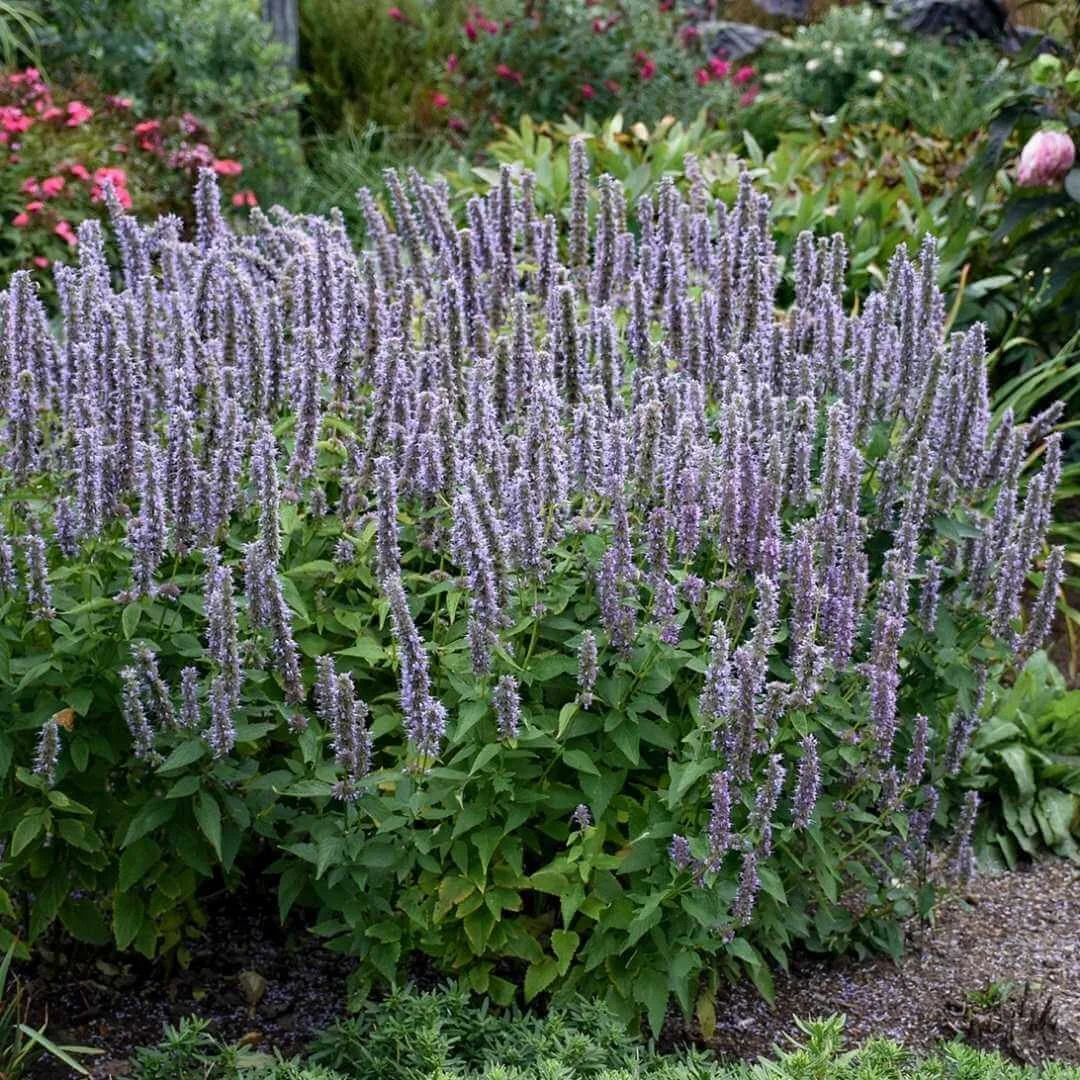
Blue Fortune Agastache. Image courtesy of Walters Gardens, Inc.
Agastache is a sun-loving, deer resistant perennial that pulls double duty beautifully: it keeps the deer away with its strongly aromatic foliage while attracting every butterfly, bee, and hummingbird in the neighborhood with its tall flower spikes. Long blooming, drought tolerant once established, and gorgeous in a vase too.
My Top Picks: 'Blue Fortune' is classic, with soft lavender-blue flower spikes and a vigorous habit. 'Blue Boa' offers deeper purple-blue flowers with a slightly more compact habit, and Anise Hyssop (Agastache foeniculum) is a North American native variety with showy lavender flowers. For warm tones, 'Kudos Mandarin' brings bright orange blooms that hummingbirds adore, and 'Kudos Ambrosia' offers a soft peachy-pink. As a group, agastache cultivars are some of the toughest deer resistant flowering plants for a sunny border. Always check tags because size and zone hardiness vary among cultivars.
Common name: Agastache, Hyssop
Botanical name: Agastache species
Native range: North America, Asia
Zones: 5–9 (varies by species and cultivar)
Light: Full sun
Size: 18 in. to 4 ft. tall, 1–2 ft. wide
2. Catmint
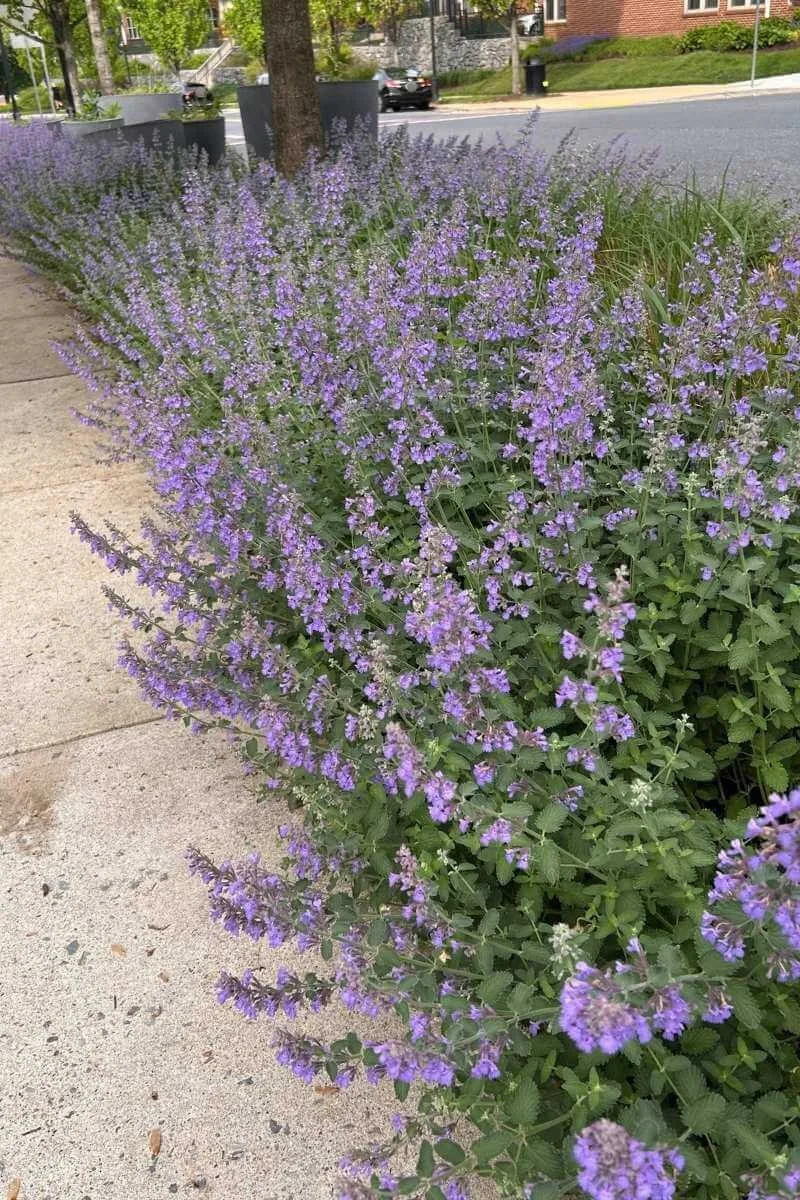
A mass planting of Cat’s Meow Catmint. Image © Plant and Bloom Design Studio
Catmint is one of those deer resistant perennials that earns its place in the garden ten times over. It produces billowing mounds of lavender-blue flowers in late spring and early summer, reblooms reliably in early fall with a quick cutback, and the strongly aromatic foliage keeps deer away all season long. One of the best deer resistant plants for the front yard, it softens edges and spills beautifully over walls and edges of pathways.
My Top Picks: 'Walker's Low' is a Perennial Plant of the Year winner and a very popular choice, growing 24–30 in. tall with a generous arching habit. ‘Junior Walker’ is great for smaller spaces, growing a compact 14-16 inches tall. 'Cat's Meow' is tidy with less flopping, and 'Six Hills Giant' is bold and large at up to 3 ft. tall, perfect for a big sunny slope. 'Purrsian Blue' is compact with vivid violet-blue flowers, excellent in containers. Check tags carefully, there are many different varieties available and sizes vary significantly.
Common name: Catmint
Botanical name: Nepeta species
Native range: Europe, Asia, Africa
Zones: 3–8 (sometimes to 9, depending on species)
Light: Full sun to part shade
Size: 15 in. to 3 ft. tall and wide
3. Bluebeard
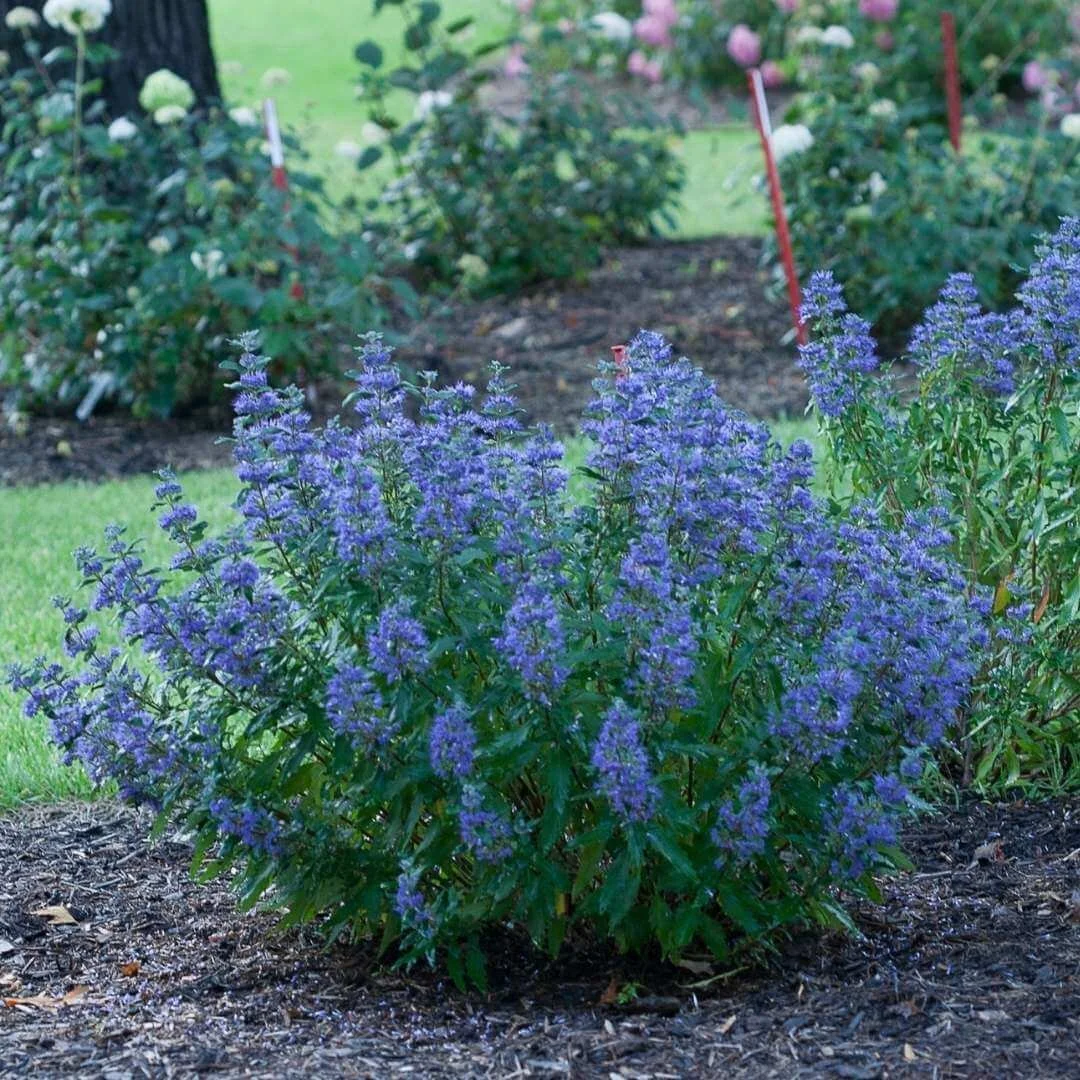
Beyond Midnight® Bluebeard. Image courtesy of Proven Winners, provenwinners.com
If your late-summer garden is crying out for color and you are tired of fighting deer for it, Bluebeard is your answer. This compact deer resistant shrub blooms in deep violet-blue right when most other shrubs are done for the season, and its strongly aromatic foliage tends to keep deer away. Butterflies and bees absolutely cannot get enough of it, making it one of the best deer resistant plants for sun with serious late-season pollinator value.
My Top Picks: ‘Beyond Midnight’ is a top pick, with deep blue-violet flowers against dark green foliage, 2–3 ft. tall and wide. ‘Lemon Purrfection’ and ‘Sunshine Blue II’ both offer golden foliage with blue flowers for striking color contrast even before bloom, and ‘Petit Bleu’ is perfect for small yards. Check tags carefully, since foliage color and size vary among cultivars.
Common name: Bluebeard, Blue Mist Shrub, Caryopteris, Blue Spirea Shrub
Botanical name: Caryopteris x clandonensis (some cultivars, like ‘Sunshine Blue II’, are sometimes listed as Caryopteris incana)
Native range: East Asia
Zones: 5–9
Light: Full sun
Size: 2–4 ft. tall and wide
4. Arrowwood Viburnum
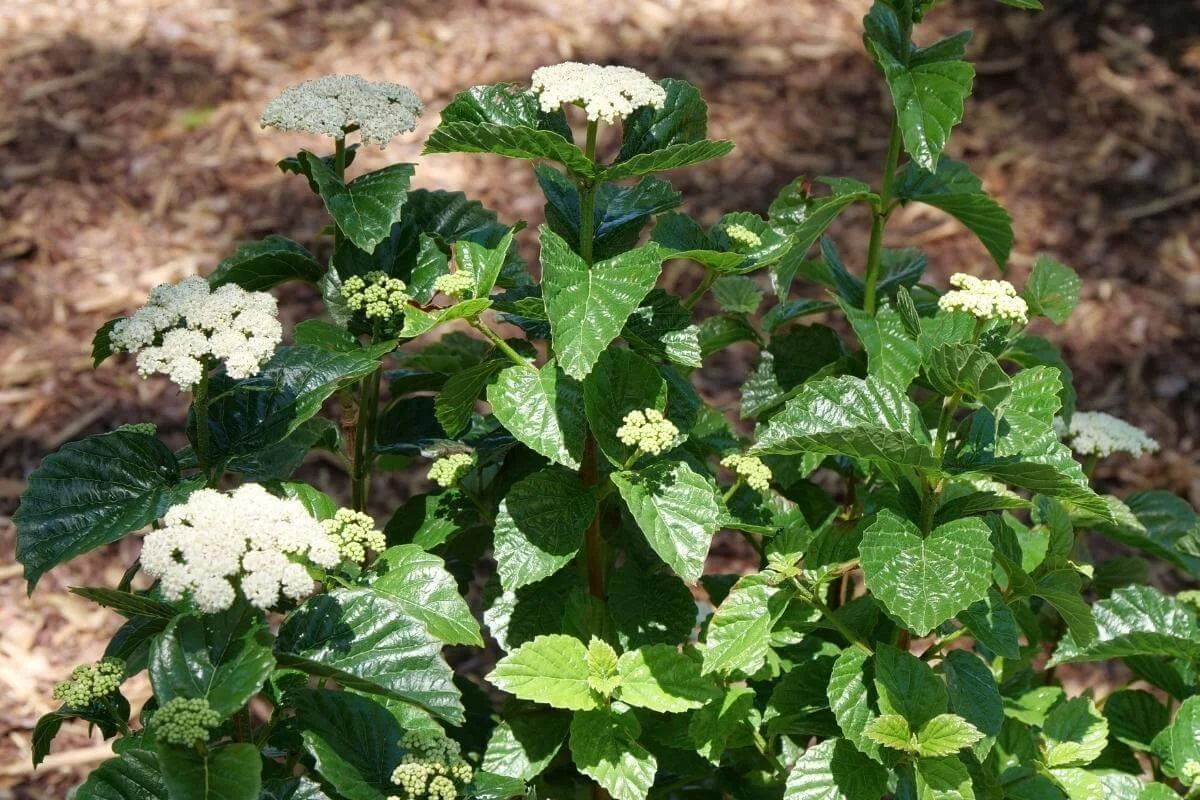
Glitters & Glows® Arrowwood Viburnum. Image courtesy of Spring Meadow Nursery, Inc.
Want a deer resistant shrub that earns its keep in all four seasons? Arrowwood Viburnum delivers spring flowers, glossy green summer foliage, spectacular fall color in reds and oranges, and blue-black berries that birds adore. Deer find the foliage unappealing, making this one of the most reliable native deer resistant garden plants available.
One thing to know about berry production: most arrowwood viburnums need a second different cultivar planted nearby for cross-pollination. So for example you would need both 'Chicago Lustre' and 'Blue Muffin' to get reliable berries. ‘Glitters & Glows' is a smart solution to that problem. It is actually sold with two compatible plants together in the same pot, so berry production is guaranteed right out of the box. If attracting birds while repelling deer is a priority for you, this is the cultivar to choose.
Arrowwood viburnum works beautifully as a screen, hedge, foundation plant, or specimen shrub. For wildlife it is genuinely invaluable, providing critical nesting cover, shelter, and food that migrating birds return to year after year.
My Top Picks: ‘Blue Muffin' and 'Chicago Lustre' are a classic pairing, with each pollinating the other for a heavy berry set. 'Glitters & Glows' is the easy button for smaller yards because it comes with two compatible plants already together in one pot, so berry production is built in from day one. Sizes vary significantly by cultivar, so always check tags.
Common name: Arrowwood Viburnum
Botanical name: Viburnum dentatum
Native range: Eastern North America
Zones: 3–9
Light: Full sun to partial shade (berries and fall color best in sun)
Size: 4–10 ft. tall and wide
5. Boxwood
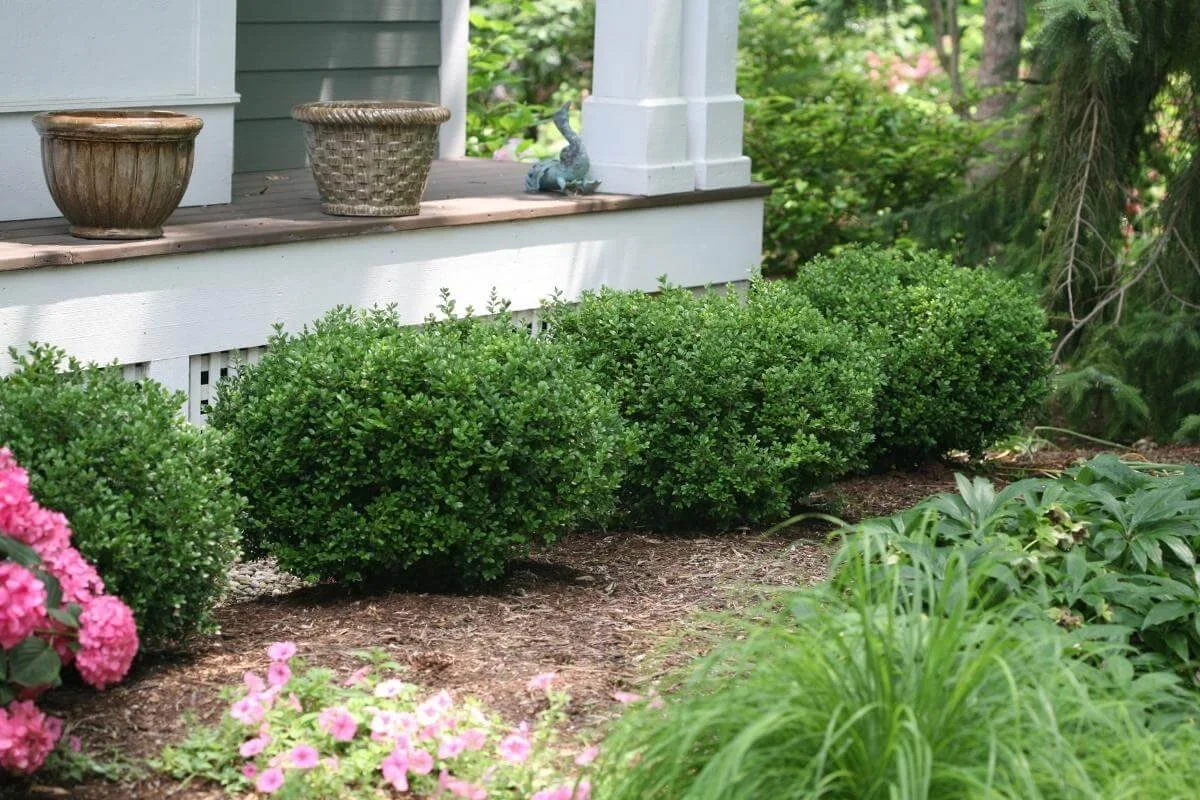
Sprinter® Boxwood lining a shaded porch foundation. Image courtesy of Spring Meadow Nursery, Inc.
Boxwood adds essential structure to any landscape with its dense evergreen foliage and naturally tidy habit. As a deer resistant evergreen shrub, boxwood tends to be one of the last plants deer choose. The foliage contains alkaloids mildly toxic to deer, and the dense compact growth simply isn't inviting to nibble on. As a deer resistant plant for the front yard flanking an entry, lining a path, or anchoring a border, it is virtually unmatched for year-round evergreen presence.
I think of boxwood as the little black dress of landscape design. It’s classic, versatile, and making everything around it look more intentional.
My Top Picks: 'Sprinter' is fast-growing with good cold hardiness, 3–4 ft. tall and wide. 'Neatball' forms a naturally tidy globe with minimal shearing needed, 2–3 ft. tall and wide. Where boxwood blight is a concern, 'NewGen Independence' and 'NewGen Freedom' offer strong resistance. Always check tags because size, shade tolerance, and blight resistance vary significantly.
Common name: Boxwood
Botanical name: Buxus spp.
Native range: Europe, Asia
Zones: 4–9
Light: Full sun to full shade (varies by species and cultivar)
Size: 2–8 ft. tall and wide
6. American Holly
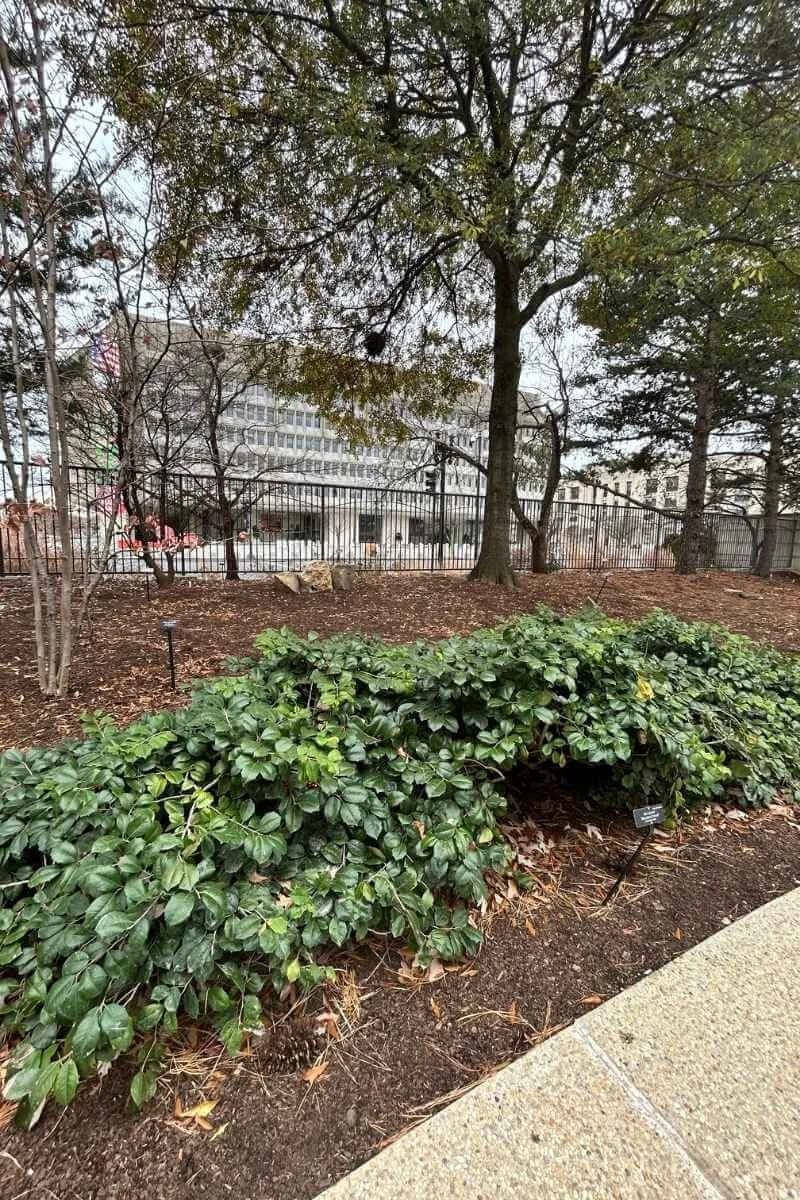
Proof that American holly is one tough, deer-resistant plant. This ‘Maryland Dwarf’ specimen is thriving in one of the most challenging spots imaginable: dry shade, tree-root competition, and urban conditions. If it can grow here, it can grow almost anywhere! Image © Plant and Bloom Design Studio
American Holly is one of the most valuable deer resistant trees you can plant. Its spiny leaves are a consistent physical deterrent, the dense evergreen habit provides year-round privacy, and the red berries that persist through winter are beautiful and beloved by birds. It comes in forms ranging from a full-sized specimen tree to a low spreading ground cover shrub, so there is a size for almost every landscape situation.
Important note: American holly produces berries on female plants only, and all female selections require a compatible male plant nearby for pollination. When purchasing, ask your nursery which male pollinator is recommended for the female selection you choose.
My Top Picks: The straight species is a magnificent pyramidal tree reaching 15–30 ft. tall. ‘Greenleaf’ and ‘Jersey Princess’ are reliable female selections with excellent berry production at 15–25 ft. tall. ‘Maryland Dwarf’ is an all-female cultivar, ideal for smaller spaces, growing 3–5 ft. tall and spreading 6–8 ft. wide. Sizes vary enormously, so always check tags.
Common name: American Holly
Botanical name: Ilex opaca
Native range: Eastern North America
Zones: 5–9
Light: Full sun to part shade
Size: 3–30 ft. tall depending on cultivar
7. Siberian Cypress
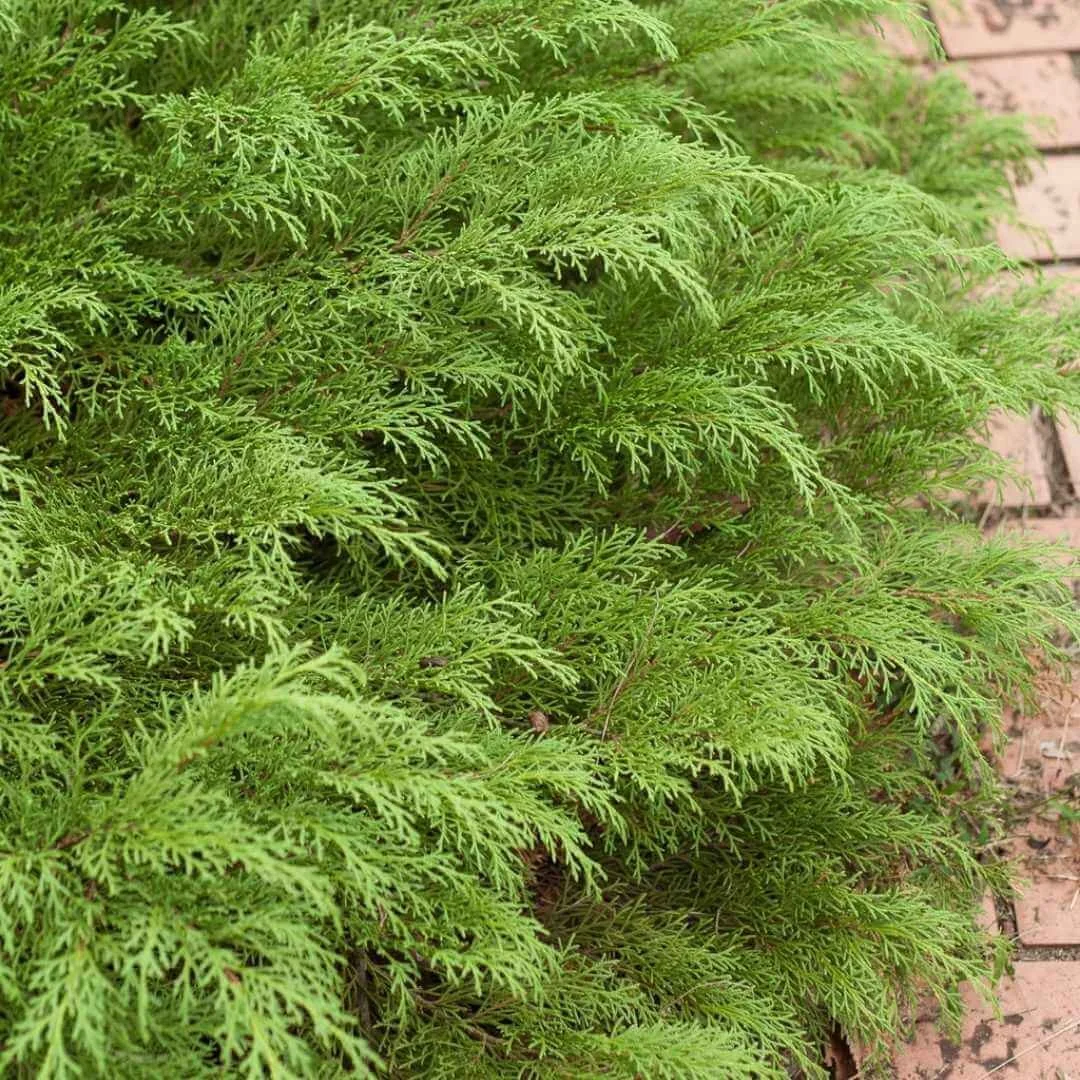
Celtic Pride® Siberian Cypress. Image courtesy of Proven Winners, provenwinners.com
If you have a shady slope, a dry spot under trees, or a bank that needs covering, Siberian Cypress deserves a serious look. This deer resistant evergreen ground cover has a soft, feathery texture. It’s bright green in summer and turns a stunning bronzy-purple in winter, giving you four seasons of interest without any fuss. It tolerates shade better than almost any other conifer-like plant, handles dry soil and root competition with ease, and asks for almost nothing once established.
Mass it under deciduous trees, use it to hold a shaded bank, or let it cascade over a wall for a beautiful four-season effect.
My Top Picks: In garden centers and online you will mostly encounter the 'Celtic Pride' variety. It has particularly vivid winter bronzing, grows 18–24 in. tall and spreads up to 12 ft. wide. Other cultivars exist but can be difficult to track down, so don't worry too much about hunting for them because ‘Celtic Pride’ has everything you need to create a deer-resistant evergreen carpet.
Common name: Siberian Cypress, Siberian Carpet Cypress, Russian Arborvitae
Botanical name: Microbiota decussata
Native range: Siberia
Zones: 3–7
Light: Full sun to part shade
Size: 12–24 in. tall, 6–12 ft. wide
8. River Birch
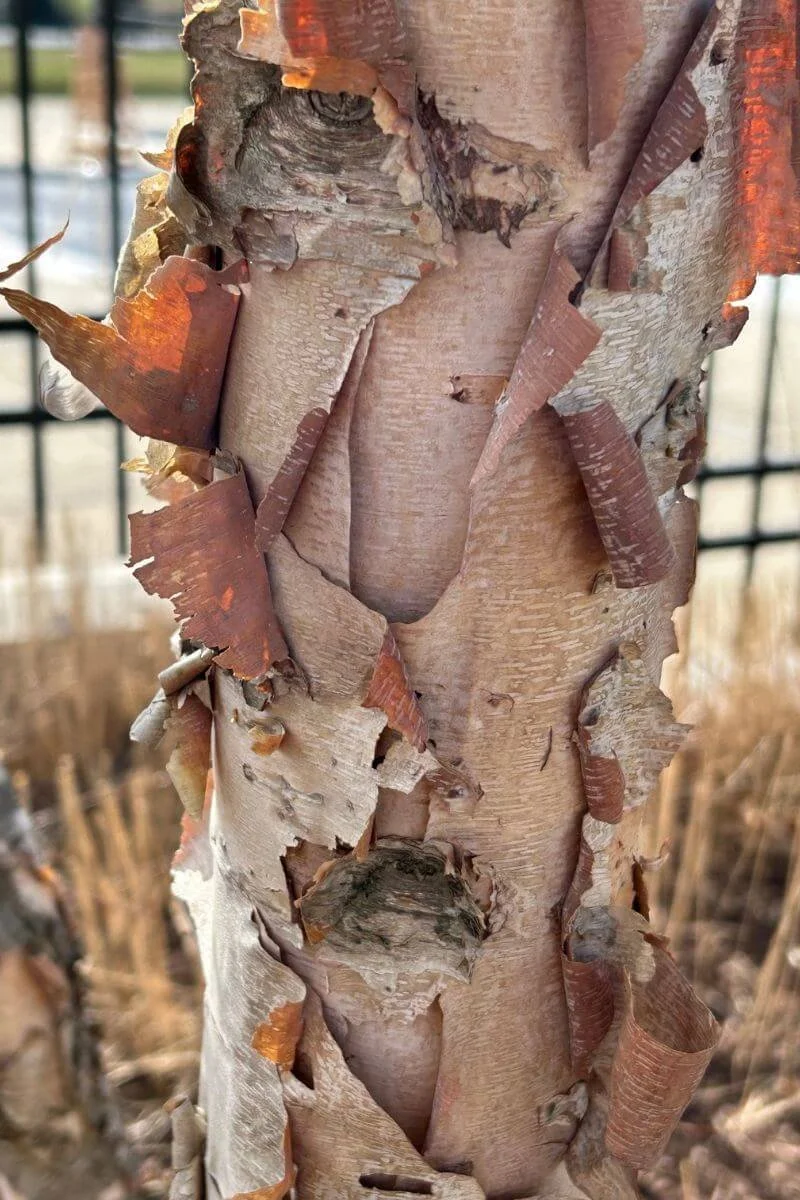
The peeling bark of Dura Heat® River Birch. Image © Plant and Bloom Design Studio
River Birch is one of the most beautiful native and deer resistant trees available, with peeling bark in shades of creamy white, salmon, and cinnamon that brings striking winter interest. Deer generally leave it alone, but here is something most plant lists never mention: during fall rut, male deer rub their antlers against smooth-barked young trees and can damage, girdle and even kill them regardless of deer resistance. Protect newly planted trees with a wire cage around the trunk for the first few years.
River Birch thrives in low wet areas and rain gardens where other trees struggle, making it a brilliant solution for a soggy spots. It also makes a beautiful front yard specimen tree, where the stunning multi-stem habit and exfoliating bark can be appreciated year-round from the street as well as from inside the house.
My Top Picks: ‘Heritage’ stands out with lighter bark and high disease resistance, growing 40–60 ft. tall. ‘Dura-Heat’ is ideal for warmer climates, reaching 30–40 ft. tall. Fox Valley ‘Little King’ is a dwarf selection, 10–12 ft. tall, perfect for smaller yards. Mature sizes vary, so always check tags and descriptions before buying.
Common name: River Birch
Botanical name: Betula nigra
Native range: Eastern North America
Zones: 4–9
Light: Full sun to part shade
Size: 10–70 ft. tall depending on cultivar
9. Hakone Grass
If you have a shady spot that needs something soft, graceful, and beautiful, Hakone grass (also known as Japanese Forest Grass) is the plant you are looking for. The flowing, gracefully arching foliage practically glows in a shaded garden, taking on gorgeous pink, purple and red tones in fall before going dormant. For shade gardens with deer pressure, it is one of the finest deer resistant ornamental grasses you can plant. And paired with Japanese painted fern (pictured below), it creates a shade combination that looks like a professional designer pulled it off. Because one did, and now you know the secret. 😜
My Top Picks: 'Aureola' has vivid green and gold striped leaves, while 'All Gold' has solid bright golden foliage; both are luminous in shade and grow up to 2 feet high and wide. ‘Lemon Zest’ is a new variety with lemon yellow and ivory variegated foliage, growing 1-2 feet high. Too much sun bleaches the foliage of any variety, so be sure to give this plant some shade.
Common name: Hakone Grass, Japanese Forest Grass
Botanical name: Hakonechloa macra
Native range: Japan
Zones: 5–9
Light: Part shade to full shade
Size: 10–18 in. tall, 18–24 in. wide
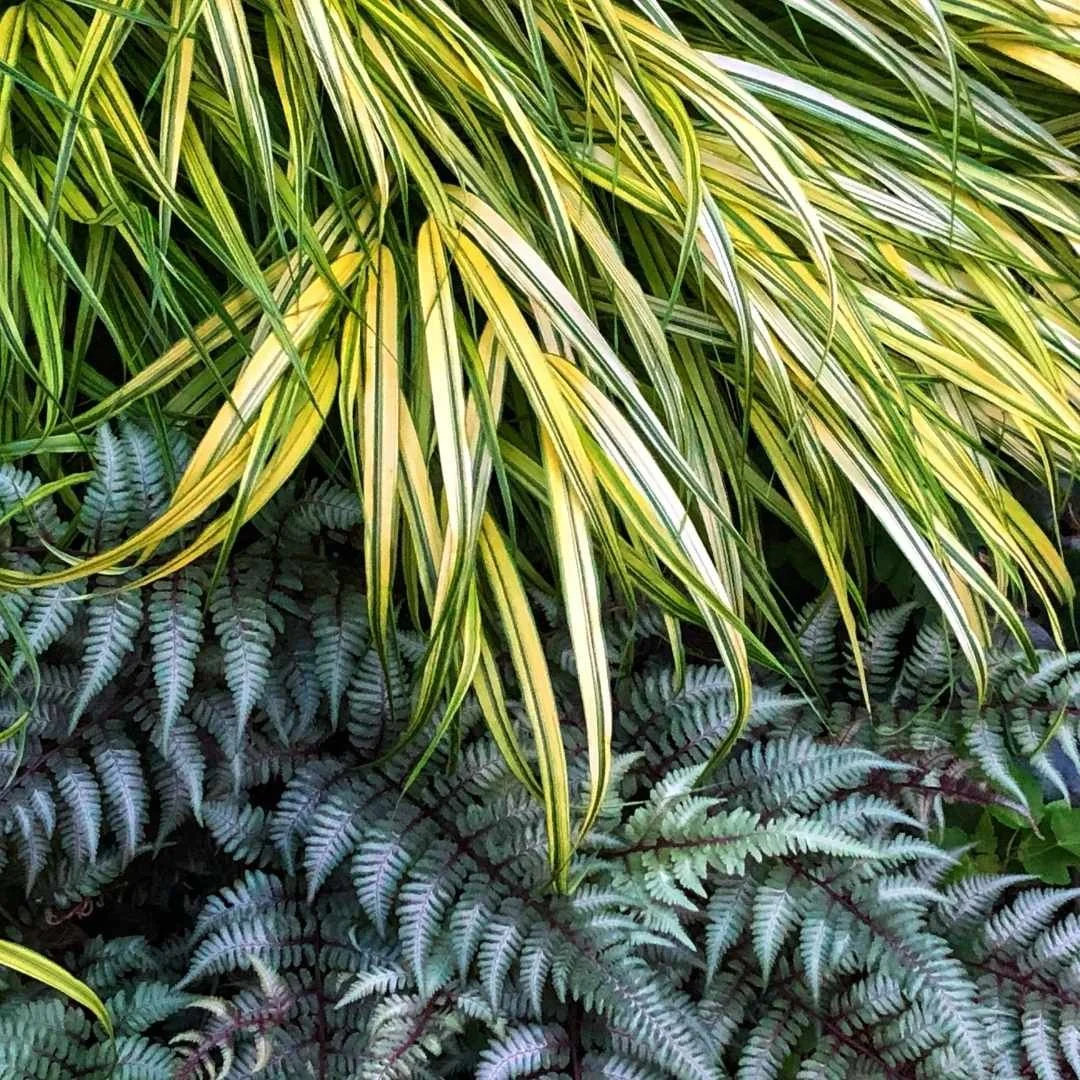
The shade garden dream team: 'Aureola' Hakone grass (top) and 'Pictum' Japanese painted fern (bottom). Beautiful, low maintenance, and reliably avoided by deer. Image © Plant and Bloom Design Studio
10. Japanese Painted Fern
I challenge you not to fall in love with Japanese Painted Fern. The silvery green and burgundy fronds genuinely look painted, bringing a level of color and sophistication to a shaded garden that is hard to match with anything else. This deer resistant fern is also one of the best companion plants you can choose for a shaded garden, with a soft delicate texture that makes everything growing around it look better.
It pairs beautifully with bleeding heart and Hakone grass for a layered deer resistant shade planting that looks effortlessly designed. And astilbe. Wait, how did I leave astilbe off this list? It is another amazing deer resistant perennial that is practically made to grow alongside Japanese painted fern. You can read all about it in my Ultimate Guide to Growing Astilbe Shade Flowers. Use Japanese painted fern as a ground cover under deciduous trees, edge a shaded path with it, or weave it through a mixed shade border.
My Top Picks: 'Pictum' is the classic silvery-gray selection with a deep burgundy center vein. 'Ghost' is a luminous silver-white variety that glows in deep shade and stops people in their tracks. 'Burgundy Lace' and 'Regal Red' both offer deeper, more saturated burgundy coloring. Note that Japanese Painted Ferns are slow to emerge in spring, so you may want to mark their location to avoid accidentally disturbing them.
Common name: Japanese Painted Fern
Botanical name: Athyrium niponicum var. pictum
Native range: Asia Zones: 4–9
Light: Part shade to full shade
Size: 12–24 in. tall and wide
11. Bleeding Heart
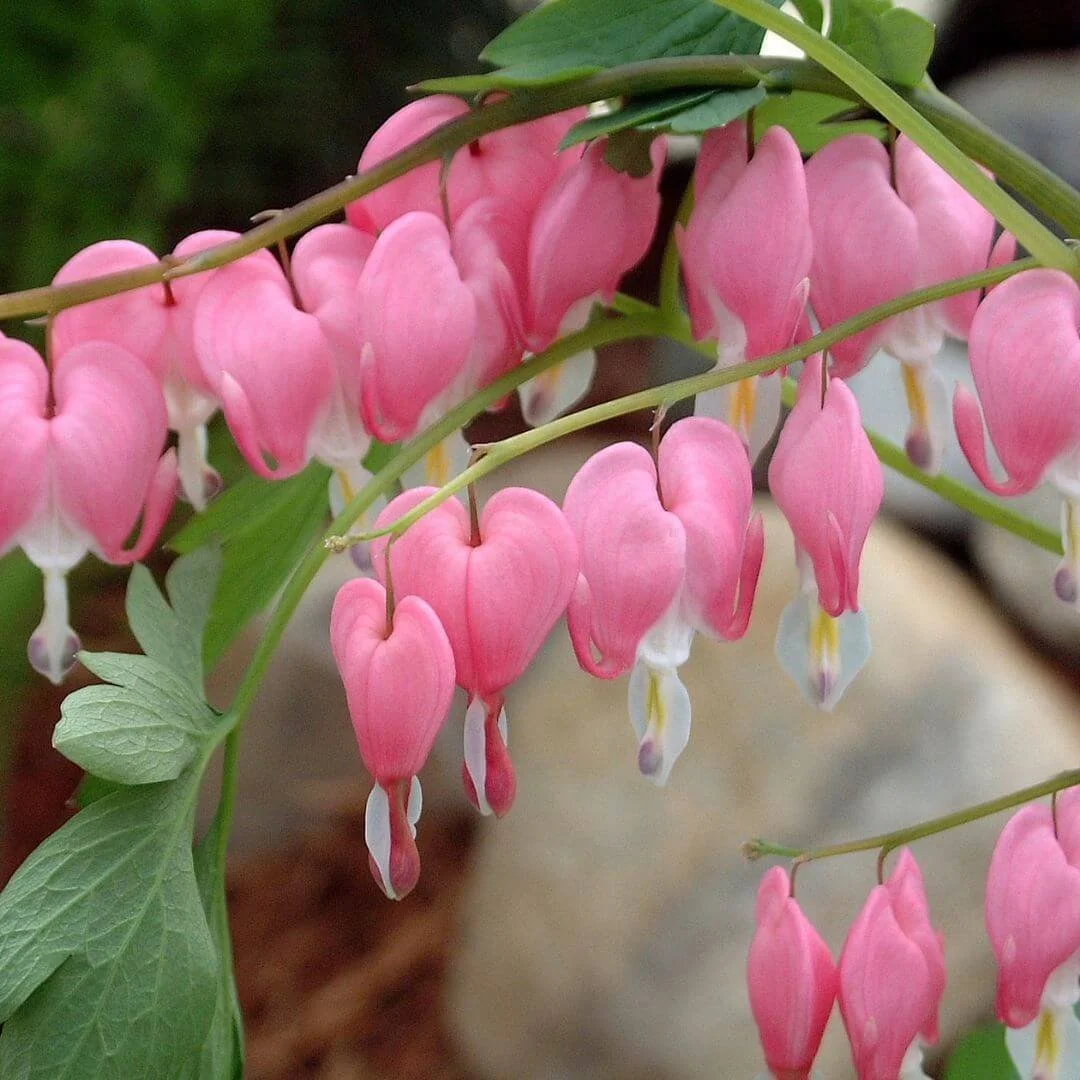
Old-fashioned Bleeding Heart. Image courtesy of Walters Gardens, Inc.
Bleeding heart is one of the most romantic, old-fashioned plants in the spring garden. Those arching stems strung with perfectly heart-shaped flowers are genuinely enchanting, and deer tend to leave bleeding heart alone thanks to the plant’s mildly toxic alkaloids. They may not know the chemistry, but they know what they don't want to eat.
One thing to plan for: bleeding heart is a spring ephemeral, meaning it goes dormant and disappears by midsummer. Plant it alongside ferns or Hakone grasses that will fill in as bleeding heart fades.
My Top Picks: Classic pink and white old-fashioned bleeding hearts (Lamprocapnos spectabilis) naturalize beautifully in a woodland garden. ‘Gold Heart’ pairs classic flowers with stunning golden foliage. ‘Alba’ offers pure white blooms, and ‘King of Hearts’ is a low-growing selection at 8–12 in. tall.
Common name: Bleeding Heart
Botanical name: Lamprocapnos spectabilis (formerly Dicentra spectabilis)
Native range: Asia (China, Korea, Japan)
Zones: 3–9
Light: Part shade to full shade (morning sun tolerated)
Size: 8 in. to 3 ft. tall and wide depending on cultivar
12. Epimedium (Barrenwort)
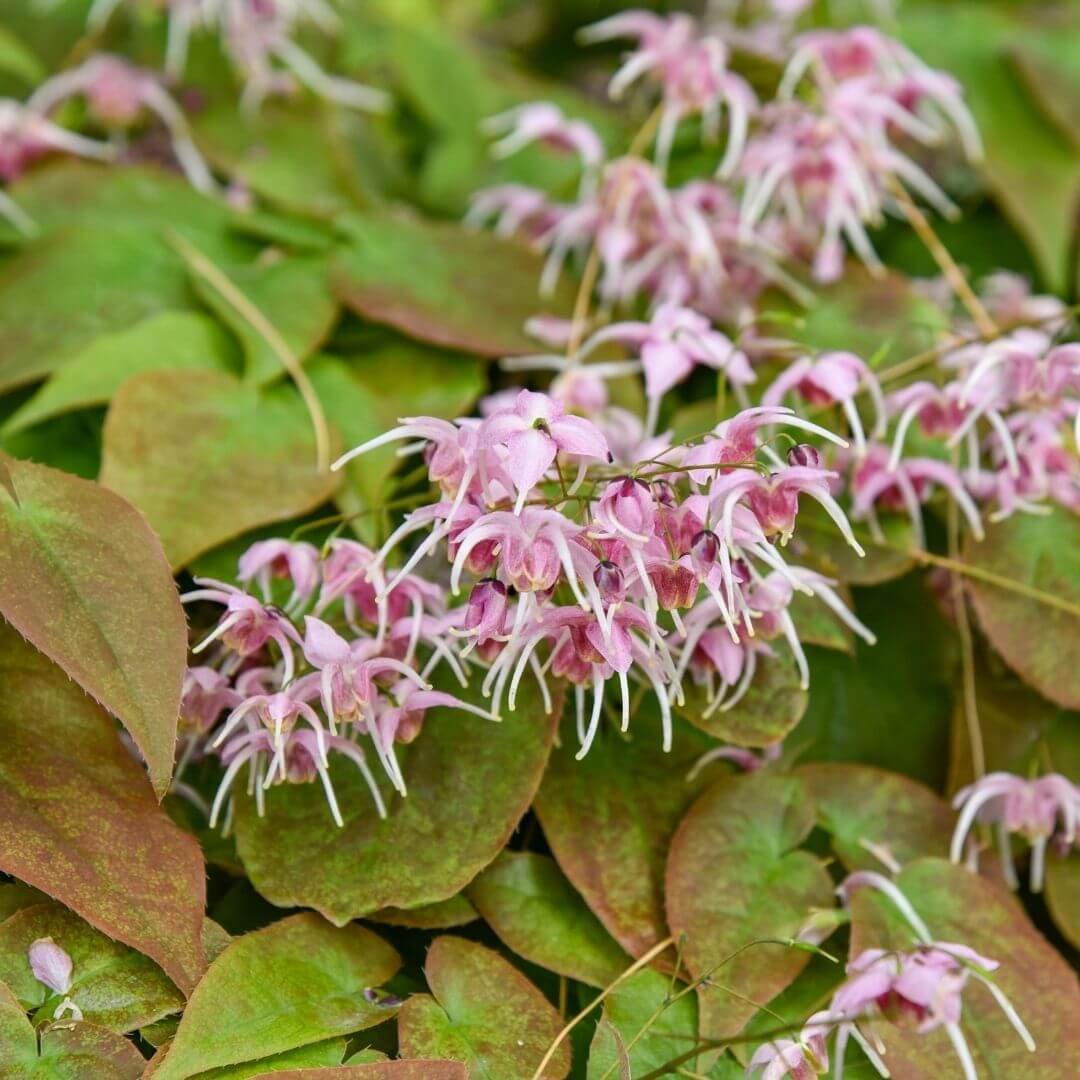
Pretty in Pink Epimedium. Image courtesy of Walters Gardens, Inc.
I saved epimedium for last because I want you to leave this article with this plant firmly on your radar. Dry shade under trees with deer pressure on top? This is your answer. As a deer resistant ground cover for shade it is virtually unmatched. It’s tough, semi-evergreen, adaptable, and completely unfazed by root competition and neglect, yet it still produces the most delicate little fairy-garden flowers in early spring. Give it 1-2 seasons to establish and it will reward you for decades.
My Top Picks: 'Pretty in Pink’ has dainty pink and white flowers, and ‘Lilafee' has soft lavender blooms. 'Sulphureum' is the most vigorous spreader with bright yellow flowers, a great choice for covering large areas quickly. 'Frohnleiten' has yellow flowers with attractive mottled foliage. 'Roseum' is a well-behaved rosy-pink selection, good for smaller areas. Spread rates and mature sizes vary by cultivar, so check tags carefully.
Common name: Epimedium, Barrenwort, Bishop's Hat
Botanical name: Epimedium species
Native range: Asia, Mediterranean
Zones: 4–9
Light: Part shade to full shade
Size: 8–15 in. tall, spreading to form a dense weed-suppressing mat
Plants Deer Love (Avoid These if You Have Deer Pressure)
Just as important as knowing what to plant is knowing what not to plant. These are some of the deer favorites that gardeners get fooled by regularly:
Hostas: basically a deer salad bar. Beautiful, but when grown in an area with heavy deer pressure they need protection or they will be eaten to the ground.
Daylilies: another deer favorite, despite being sold everywhere as easy, carefree perennials. Some varieties fare better than others.
Arborvitae: frequently marketed as a screening solution but heavily browsed by deer, particularly in winter when food is scarce.
Azaleas: deer find the new spring growth and buds irresistible.
Hydrangeas: most hydrangeas are moderately to heavily browsed. Panicle hydrangeas (Hydrangea paniculata) are your best bet if you can't resist them.
Tulips: essentially deer candy. Stick to daffodils, which deer avoid.
Yews: a deer favorite and heavily browsed in most landscapes. If you are in Zones 6–9, consider planting plum yew (Cephalotaxus harringtonia) instead. It has a similar look and feel but deer tend to leave it alone.
Ready to Outsmart the Deer?
Gardening in deer country is not always easy, but it is absolutely worth it. The plants on this list have proven themselves in real landscapes under real deer pressure, and more importantly, they are genuinely beautiful plants you would want in your garden regardless of the deer situation!
Stack the odds in your favor with smart plant choices, protect your new plantings while they establish, and give yourself permission to enjoy the process. The deer may win a round occasionally. But with this list on your side, you will win a lot more than you lose. 🌿
Frequently Asked Questions About Deer Resistant Plants
What is the difference between deer resistant and deer proof plants? Deer proof implies that deer will never eat a plant under any circumstances, which simply isn't true. The horticultural industry has moved away from the term for that reason. Deer resistant is more accurate: it means deer find these plants less palatable than others and will generally pass them by. During periods of drought, harsh winters, or high deer population pressure, even the most reliable deer resistant plants may be browsed.
What plants do deer hate the most? Deer tend to avoid plants with strongly aromatic foliage, prickly or leathery texture, or mild toxicity. Reliable top avoiders include catmint, agastache, boxwood, bluebeard, and epimedium. That said, deer preferences vary by region and season, so what works reliably in one garden may be less reliable in another.
Do deer eat ornamental grasses? Deer generally leave ornamental grasses alone, making them a good choice for deer-pressured landscapes. Hakone grass is a particularly reliable deer resistant ornamental grass for shaded gardens.
What smell do deer hate most? Deer have a highly developed sense of smell and are strongly deterred by aromatic plants. Catmint, agastache, caryopteris, and lavender are among the most reliably avoided plants because of their strong scent. Systemic deer repellents like Repellex also work on the principle of smell and taste, making treated plants unpleasant from the inside out.
Are there deer resistant plants for shade? Yes, several reliable deer resistant plants thrive in shade. Top picks include Hakone grass, Japanese painted fern, bleeding heart, boxwoods, and epimedium. Many of the best deer resistant plants for shade also happen to be some of the most beautiful plants in American gardens.
How do I protect new plants from deer? New plantings are especially vulnerable because deer prefer tender young growth. Protect new plants with a wire cage or chicken wire for the first season while they establish tougher growth. For trees, use a tree guard or wire cage around the trunk to prevent antler rubbing damage during fall rut. In areas with serious deer pressure, pair physical barriers with a systemic repellent like Repellex for the best results.
Are deer resistant plants rabbit resistant too? Not always, but there is significant overlap. Plants that deer avoid because of aromatic foliage or mild toxicity (like catmint, agastache, and bleeding heart) are often avoided by rabbits for the same reasons. That said, rabbits and deer have different preferences and feeding habits, so always check both when making planting decisions.
What is the most deer resistant evergreen shrub? Boxwood is consistently rated among the most deer resistant evergreen shrubs available. The foliage contains alkaloids that are mildly toxic to deer, and the dense growth habit gives them nothing convenient to browse. American Holly is another excellent deer resistant evergreen, with spiny leaves that are physically unappealing to browse.
More Helpful Resources
You Might Also Like
Looking for more plant inspiration? Here are some articles you might enjoy: