
Endless Summer® Blushing Bride Reblooming Hydrangea
Published: February 26, 2024 | Updated: May 18, 2026
If you've been searching for a white hydrangea that's tough, one that blooms beautifully from late spring all the way through fall without giving up after the first hard freeze, let me introduce you to Blushing Bride.

The white flowers of Endless Summer® Blushing Bride Hydrangea. Image courtesy of Bailey Nurseries.
Endless Summer® Blushing Bride (Hydrangea macrophylla 'Blushing Bride') is a deciduous bigleaf hydrangea introduced in 2006 as part of the beloved Endless Summer® reblooming collection. And in the years since, it's earned a well-deserved spot in the landscape design toolkit. What makes it stand out among white hydrangeas? It blooms on both old and new wood, which means late spring freezes, the bane of so many gardeners, don't spell the end of the season. It just keeps going.
The flowers themselves are showstoppers. Large mophead blooms open a pure, creamy white in spring, then slowly blush to soft pink or a gentle lavender-blue as summer deepens, depending on your soil pH. It's that quiet color shift, white hydrangea flowers transitioning to blush, that gives Blushing Bride its name. Dark green foliage provides a crisp contrast all season long, and the upright, rounded form keeps the plant looking tidy without much effort on your part.
A quick note on the photos throughout this article: these are real images sourced from a trusted nursery, so what you see is a true representation of what you can expect from this plant in the landscape.
Read on to explore how to grow and care for this elegant white hydrangea, get landscape design ideas, and discover companion plants that pair beautifully with Blushing Bride.
What is a Reblooming Hydrangea?
A reblooming hydrangea blooms on both old and new wood, giving it the ability to produce flowers repeatedly throughout the growing season.
The Blushing Bride hydrangea produces its first flush of blooms from buds that were set in the previous year; subsequent flowers emerge later in the summer from buds that form on the current season’s growth.
Reblooming hydrangeas are also called remontant hydrangeas.
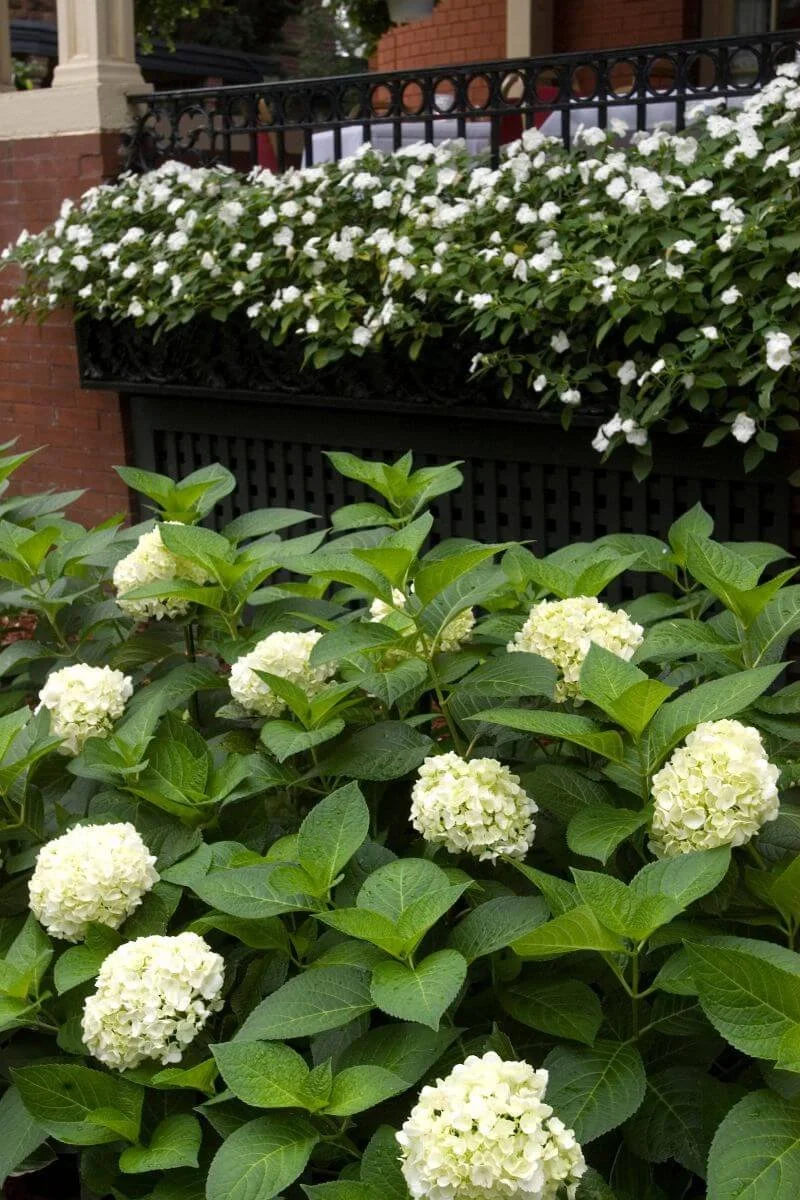
A row of Blushing Bride hydrangeas beneath a balcony planter. Their elegant white mophead flowers create a cooling effect. Image courtesy of Bailey Nurseries.
Blushing Bride Hydrangea at a Glance
Common name: Blushing Bride Hydrangea, Hortensia
Botanical name: Hydrangea macrophylla ‘Blushing Bride’
Hardiness zones: 5 - 9
Mature size: 3 - 6 feet high and wide
Spacing: 3 - 4 feet on center
Light requirements: Partial shade
Form: Upright, rounded deciduous shrub
Growth rate: Moderate (13-24 inches per year)
Flowering time: Late spring through fall
Flower color: White
Flower form: Mophead
Foliage type: Opposite, simple serrated green leaves
Deer resistant: No
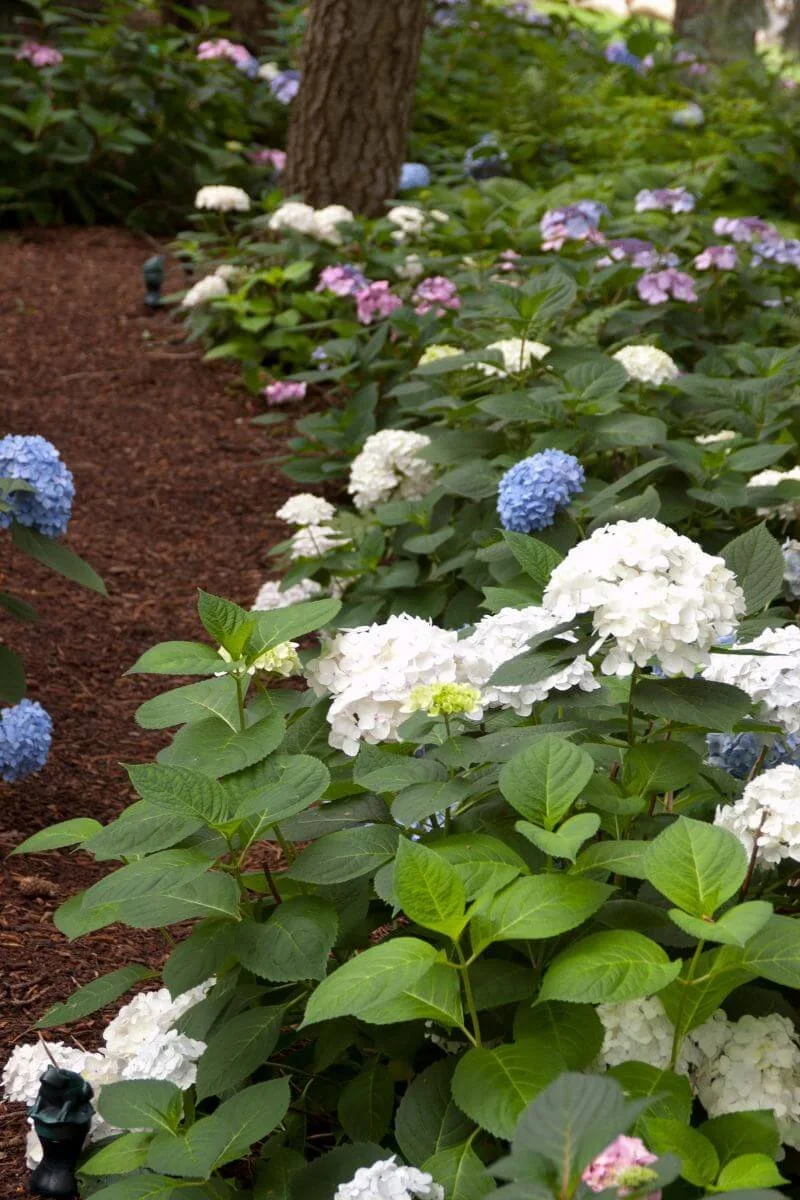
White blooms of Blushing Bride weave through a shaded woodland border planted with a colorful mix of hydrangea varieties. Image courtesy of Bailey Nurseries.
How to Plant and Grow Blushing Bride Reblooming Hydrangea
Planting
The best time to plant Blushing Bride is in spring or fall, giving the roots time to establish before extreme heat or cold sets in. Water deeply right after planting. One practical tip: Blushing Bride sells out quickly at nurseries, so shop early in spring for the best selection.
Location
Choose a spot with partial shade and protection from intense afternoon sun. Well-drained soil rich in organic matter is ideal.
Soil
Blushing Bride does best in deep, rich, evenly moist soil. Amend at planting time with compost or shredded leaves to improve both drainage and fertility. If you'd like to influence flower color, a soil test is a great starting point. Add sulfur to nudge blooms toward purple-blue, or lime to encourage a blush of pink.
Mulch
Apply a 2 to 3 inch layer of organic mulch around the base of the plant to retain moisture, regulate soil temperature, and suppress weeds. Keep mulch pulled back from the base of the stem.
Watering
Keep the soil consistently moist but not waterlogged. Deep, infrequent watering is better than shallow watering, encouraging roots to grow down rather than out.
Fertilizing
You can fertilize once in early spring as new growth emerges, and again in midsummer, using an acidic fertilizer like Holly-tone. Each spring, a top dressing of compost or shredded leaves around the base of the plant also goes a long way toward keeping the soil rich and healthy.
Pruning
Blushing Bride requires very little pruning. Over-pruning is the most common mistake, since it removes the buds that would have become flowers. In spring, simply cut out any dead canes once new growth has emerged. If you need to reduce the size of the shrub, cut back by no more than half in late summer.
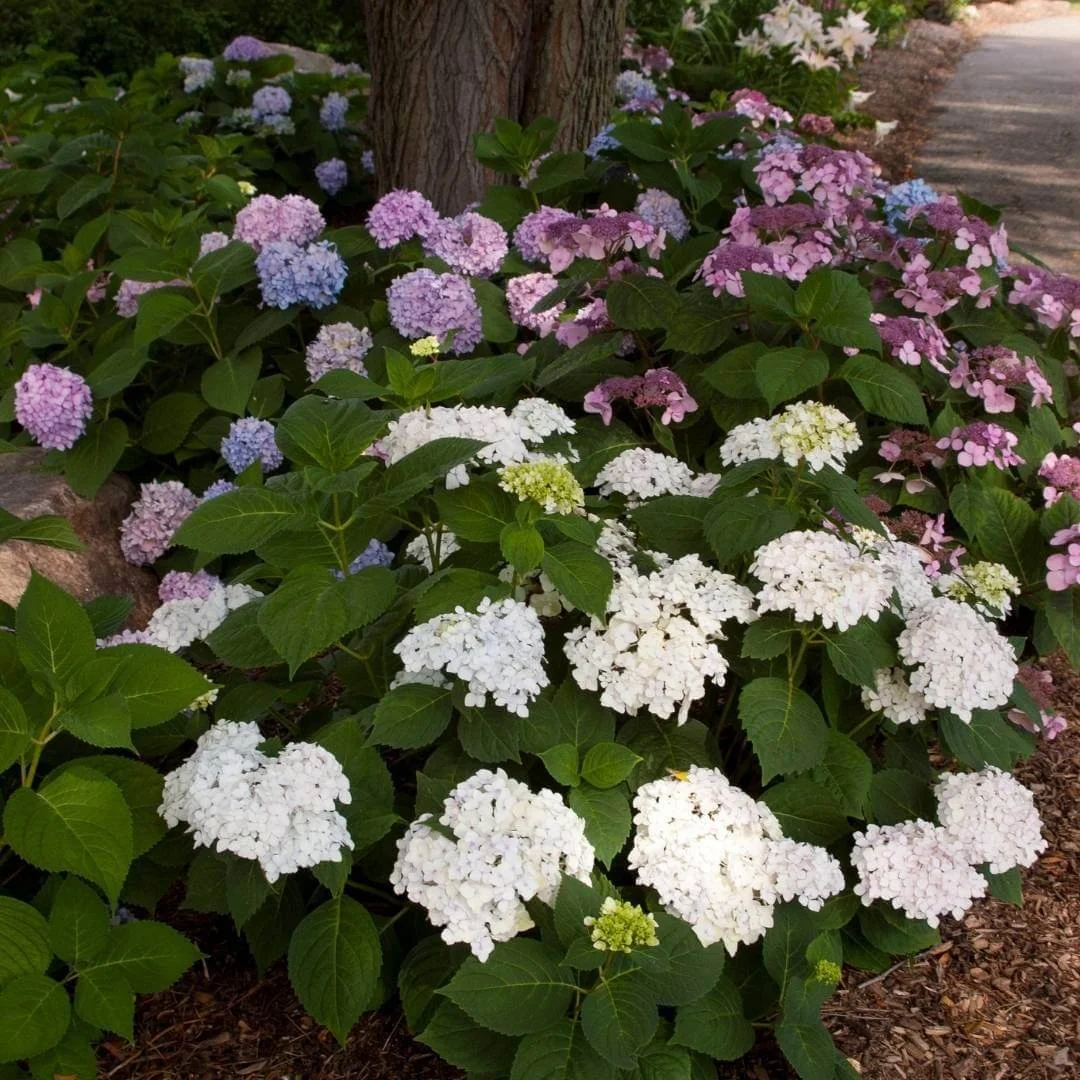
Blushing Bride mixes beautifully with other hydrangea varieties, adding bright white blooms to a colorful planting bed. Image courtesy of Bailey Nurseries.
Do Blushing Bride Hydrangeas like Sun or Shade?
The Blushing Bride Reblooming Hydrangea thrives in part shade and does best with 2-4 hours of direct sunlight per day.
Blushing Bride prefers morning sun and dappled or filtered afternoon shade with protection from the intense rays of afternoon sun, particularly in hotter climates.
Does Blushing Bride Hydrangea Stay White?
The semi-double flowers of Blushing Bride hydrangea starts out brilliant white and develop a soft, subtle tinge of blush pink or purple-blue as the flowers mature.
Flower color depends on the pH of the soil, with basic soil producing a blush pink tinge and basic soil giving blooms a purple-blue tinge.
Flowers will always start out white, and subsequent changes are very soft and muted.
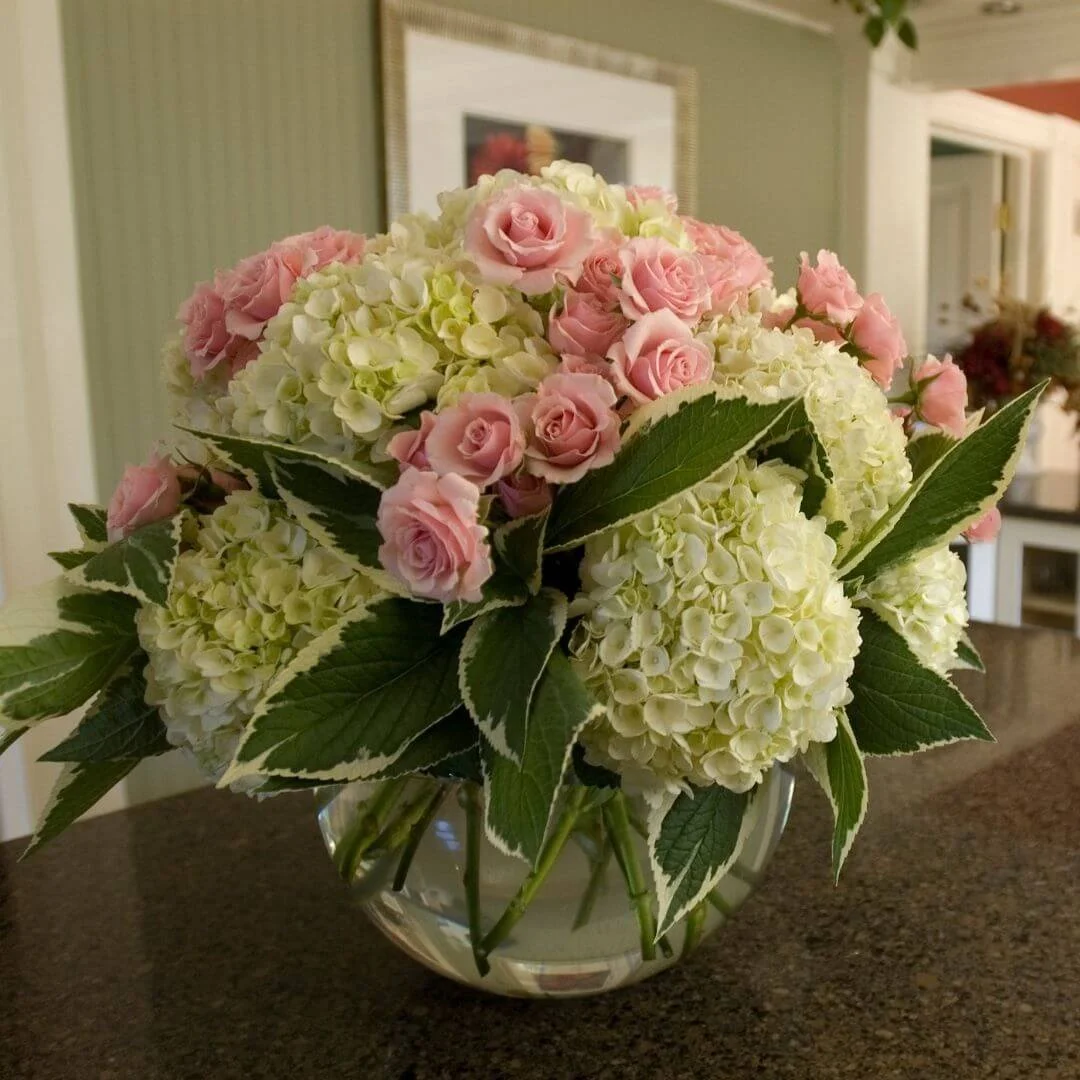
Blushing Bride hydrangea makes a stunning cut flower. Image courtesy of Bailey Nurseries.
Garden Design Ideas for Blushing Bride Reblooming Hydrangea
Fence Line Planting: A row of Blushing Bride hydrangeas planted along a fence line creates a soft, romantic backdrop that's as beautiful as it is functional. The large white hydrangea flowers pop against wood, vinyl, or iron fencing, and the shrubs fill in beautifully to create a lush, layered look through the growing season.
Foundation Planting: Plant Blushing Bride hydrangeas along side the foundation of your house. Their elegant flowers and lush green foliage will enhance the curb appeal of your home.
Mixed Borders: Create a mixed border planting by combining Blushing Bride with other complementary perennials, ornamental grasses, deciduous and evergreen shrubs for four seasons of color and texture.
Mass Planting: Plant Blushing Bride hydrangeas in groupings to create a mass of color. This approach works well in large garden beds or alongside pathways and fences, providing a striking visual impact.
Woodland Garden: The dappled shade underneath the canopy of tall trees is an ideal spot for a Blushing Bride hydrangea. Combine with other partial-shade loving plants like camellias, Japanese andromeda, azaleas, and rhododendrons.
Accent Planting: Use Blushing Bride as a focal point in the landscape. Plant strategically to draw attention to specific areas of the garden, like entryways, water features, pathways, seating areas, or garden sculptures.
Containers: With its graceful pure white flowers, Blushing Bride is a natural fit for decorative pots and planters. Pair with spillers like sweet potato vine and trailing lobelia.
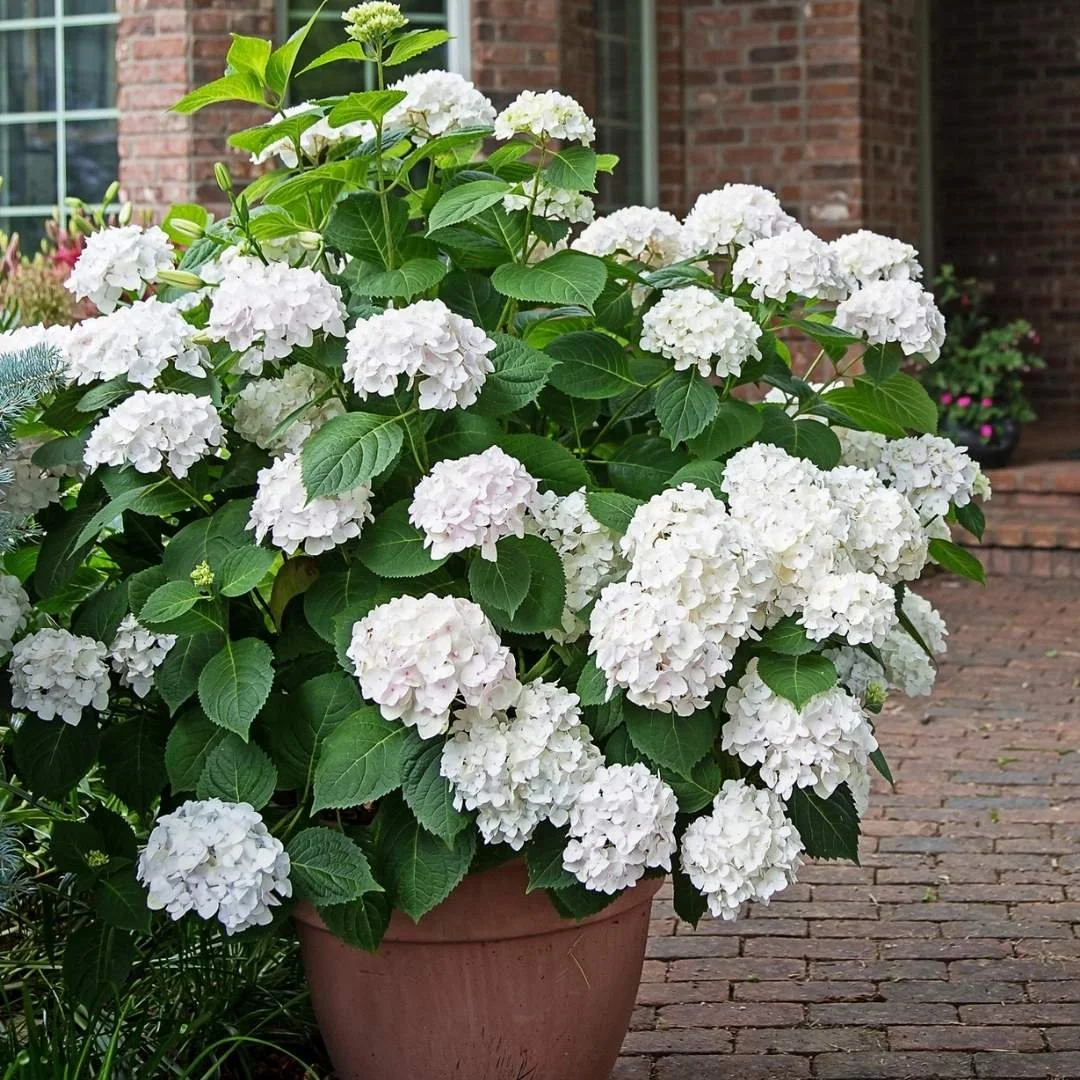
Blushing Bride's white blooms are a perfect match for brick exteriors. No color clashing, just classic curb appeal. Image courtesy of Bailey Nurseries.
Planting Companions for Blushing Bride Reblooming Hydrangea
Feeling inspired to plant a Blushing Bride hydrangea in your garden? Here are some ideas for planting companions. All favor the same partial shade conditions and moist, rich, well-draining soil that bigleaf hydrangeas love:
Dwarf Globe Blue Spruce (Picea pungens ‘Globosa’): This small, dense evergreen shrub has blue-green needles that contrast nicely with the large leaves of Blushing Bride.
Spreading Japanese Plum Yew (Cephalotaxus harringtonia ‘Prostrata’): This shade-loving, heat tolerant needled evergreen forms a carpet of green and helps to highlight the large leaves and white flowers of Blushing Bride.
Himalayan Sweet Box (Sarcococca hookeriana var. humilis): A low-growing evergreen ground cover for the shade. Its glossy dark green leaves are the perfect complement for Blushing Bride.
NewGen Freedom® Boxwood (Buxus NewGen Freedom® ‘SB 300’): The small leaves and structured shape of boxwoods are the perfect evergreen companion for bigleaf hydrangeas. Freedom® boxwoods have a uniform, tight rounded habit and improved resistance to boxwood leafminer.
Astilbe (Astilbe species.): The fine textured foliage and spiky summer flowers of astilbe are a great partner for Blushing Bride hydrangeas. Pink-tinged varieties like ‘Peach Blossom’ look particularly nice.
Variegated Solomon’s Seal (Polygonatum falcatum ‘Variegatum’): This slow-growing perennial with variegated leaves and arching stems pairs nicely with Blushing Bride.
Jack Frost Siberian Bugloss (Brunnera macrophylla ‘Jack Frost’): The silvery-green foliage and airy blue flowers of this shade-loving perennial contrast with Blushing Bride’s dark green leaves.
Japanese Painted Fern (Athyrium niponicum 'Pictum'): Dramatic blue-green-silver foliage and a short stature make this fern a great choice to use as a facer plant in front of Blushing Bride.
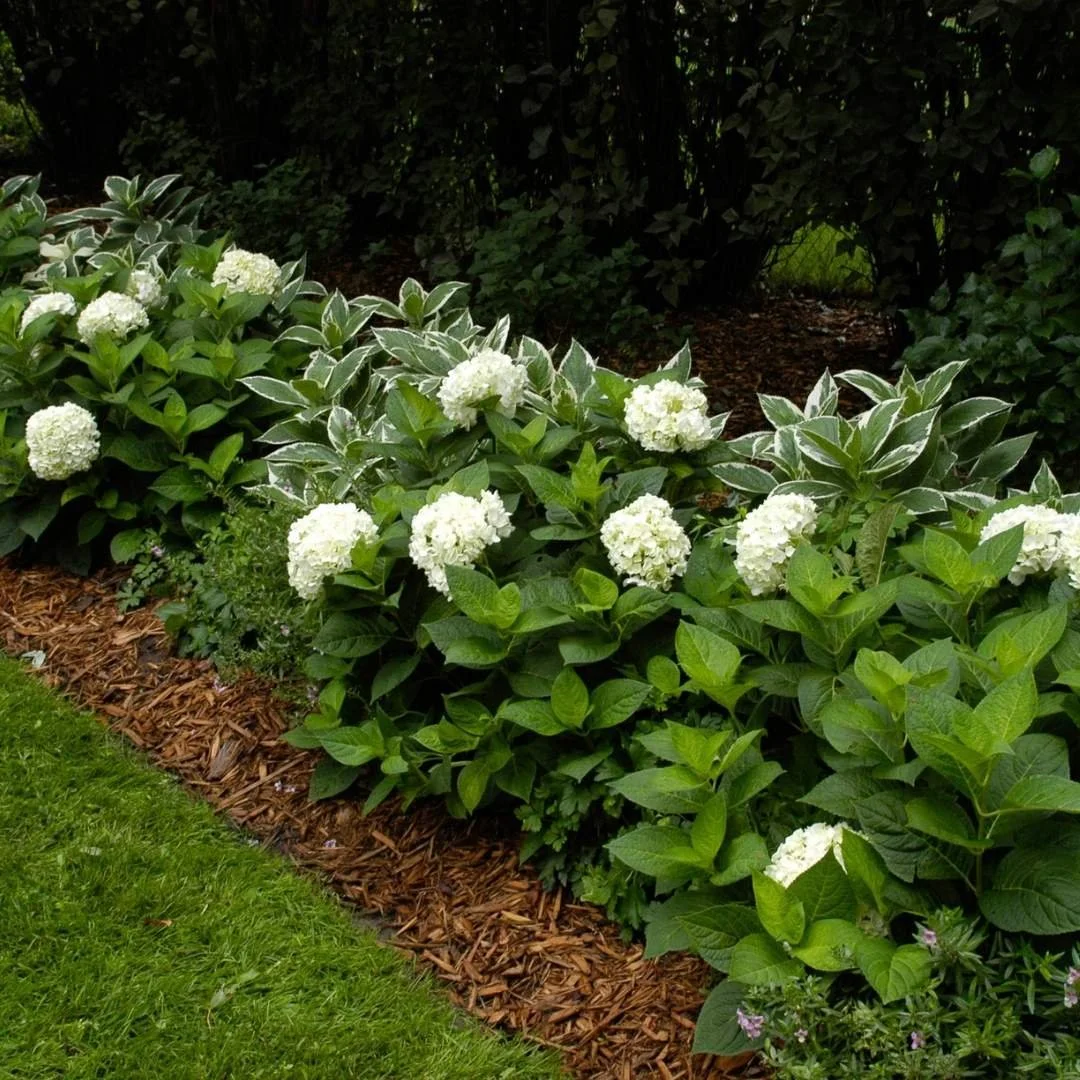
Variegated hostas make a great companion planting for the Blushing Bride hydrangea. Image courtesy of Bailey Nurseries
Why isn’t My Blushing Bride Hydrangea Blooming?
It can be quite disappointing when your hydrangea fails to bloom, especially when you've been eagerly anticipating its striking white flowers. Several factors could contribute to its lack of blooms:
Improper pruning: Did you prune your Blushing Bride hydrangea? You may have cut off flower buds that would eventually become flowers. This hydrangea requires little to no pruning. Never hard prune Blushing Bride, and never prune in the fall or you will risk losing future blooms.
Young plant: Hydrangeas may take a few years to establish before they start blooming. If your plant is still relatively young, it might just need more time to mature and establish itself - be patient!
Insufficient sunlight: For best flowering, Blushing Bride hydrangeas need at least 2-4 hours of direct sunlight per day. If they're not getting enough sunlight, they may produce fewer blooms or fail to bloom altogether.
Watering issues: Inconsistent or inadequate watering can stress the plant and affect flowering. Ensure your hydrangea receives sufficient water, especially during hot and dry periods.
Deer: Deer like the taste of hydrangeas, particularly the flowers and buds. They may visit your yard and nibble the buds off of your hydrangea, leaving no evidence of their presence other than the absence of flowers.
Are Blushing Bride Reblooming Hydrangeas Poisonous to Dogs?
Blushing Bride Reblooming Hydrangeas (Hydrangea macrophylla ‘Blushing Bride’) contain compounds that can be toxic to dogs if ingested, specifically cyanogenic glycosides.
These compounds can release cyanide when broken down in the digestive system.
However, the level of toxins in bigleaf hydrangeas are relatively low, and instances of dogs getting poisoned by consuming these plants are rare.
While the risk of severe poisoning is low, it’s important to monitor your dog's behavior in outdoor spaces.
If you suspect your dog has ingested a toxic plant, seek immediate veterinary care.
Read our article Which Plants are Toxic to Dogs for a list of plants to keep away from your canine friends.