
Say Goodbye to Wilting Flowers with Little Hottie® Hydrangea
Published: February 15, 2024 | Updated: April 27, 2026
This small, compact, heat-tolerant hydrangea is hot stuff!
The Little Hottie panicle hydrangea (Hydrangea paniculata ‘Bailpanone’) is a compact, heat-tolerant hydrangea with large, cone-shaped flowers that emerge green in early summer, quickly changing to brilliant white.
Blooms last through early fall and turn pink as temperatures begin to drop, then dry naturally on the plant, providing winter interest in the landscape.
Little Hottie has a dense, rounded form that needs no underplanting. It reaches a mature size of 3–5 feet tall and wide, making it the perfect hydrangea for small yards and containers.
Hardy in zones 3–8, it's more cold-tolerant than the bigleaf hydrangea and thrives in a variety of growing conditions.
Read on to learn how to grow and care for Little Hottie, and get some great landscaping ideas and pruning advice.

The flowers of Little Hottie® hydrangea stay a bright, crisp white all summer long. Image courtesy of Bailey Nurseries.
How to Grow Little Hottie Hydrangea
Planting: The best time of year to plant a Little Hottie hydrangea is in the spring or fall, giving the roots time to establish before the onset of extreme hot or cold weather. Water deeply immediately after planting. Read “How to Water Your Plants” for more information on watering techniques.
Location: Choose a location with rich, well-draining soil. Panicle hydrangeas prefer soil that retains moisture but does not become waterlogged. Select a spot with full sun to part shade. A little afternoon shade is ideal.
Soil: Amend the soil with organic matter, such as compost or shredded leaves, to improve drainage and soil fertility. Flower color is not affected by the pH of soil.
Mulch: Apply a layer of organic mulch around the base of the plant to retain soil moisture, regulate temperature, and suppress weeds. Make sure the mulch does not touch the base of the plant.
Watering: Keep the soil consistently moist but not waterlogged, especially during periods of drought. Deep watering is preferable to encourage the development of a strong root system. Are you in a drought? Check the U.S. Drought Monitor map.
Fertilization: Hydrangeas often do not need regular fertilizer when planted in the rich, fertile, organic soil they prefer. Each spring, spread a layer of compost, shredded leaves, or Leafgro around the base of your hydrangea, being careful to keep it a few inches away from the stems. This mulch helps feed the soil, conserve moisture, and improve soil structure over time. Some hydrangeas growing in poor soil or containers may benefit from a supplemental fertilizer like Flower-Tone.
Pruning: Panicle hydrangeas bloom on new wood. Little Hottie is a compact, well-branching shrub and needs little pruning. If needed, prune out broken branches and shape lightly in late winter or early spring.
Does Little Hottie Hydrangea Bloom on Old or New Wood?
Little Hottie Panicle Hydrangea blooms on new wood, meaning flowers develop on the current season’s growth rather than on stems produced the previous year.
In practical terms, this means the plant can still flower even after winter dieback or if it is pruned in late winter or early spring before growth resumes.
Little Hottie is a compact, well-branched shrub that typically requires little to no pruning. If needed, prune in late winter or early spring before new growth begins.
This allows you to remove dead or damaged branches from winter and lightly shape the plant for the coming season without sacrificing blooms.
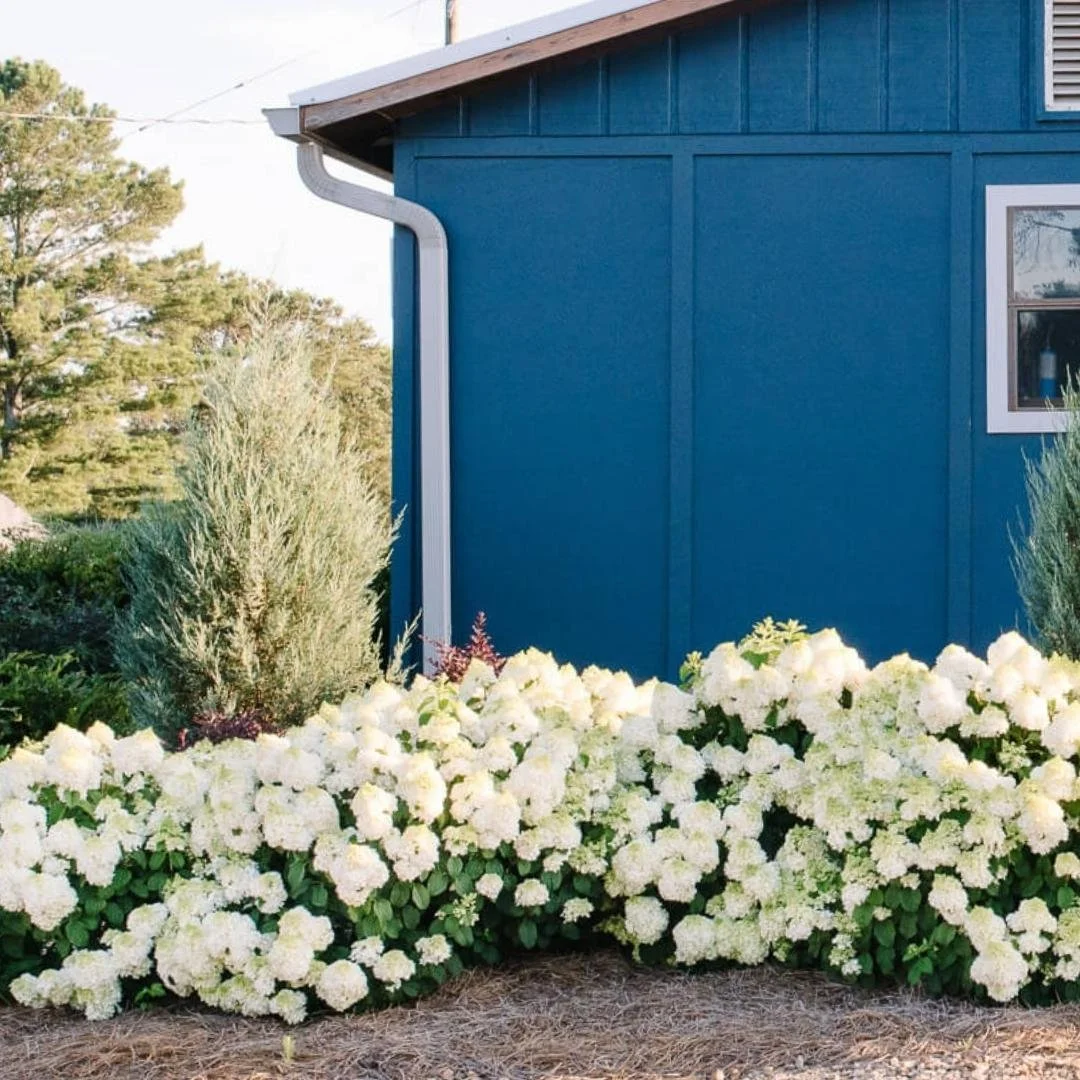
Little Hottie is small enough to be planted in front of the house. Image courtesy of Bailey Nurseries.
Landscaping Ideas for Little Hottie Panicle Hydrangea
Mixed Borders: Plant Little Hottie hydrangeas along with other flowering shrubs, perennials, and ornamental grasses to create dynamic mixed borders.
Foundation Plantings: Use Little Hottie® hydrangea as part of a foundation planting. Its compact size and round shape is perfect for using around the perimeter of a house, and the long season of bloom will enhance curb appeal.
Hedge or Screen: Plant multiple Little Hottie hydrangeas in a row to create a low, dense hedge or screen. This can be particularly effective for marking property lines or dividing different areas of the landscape.
Specimen Planting: Showcase a single Little Hottie panicle hydrangea as a focal point in the garden. Plant it in a prominent location where its beautiful blooms can be appreciated up close, such as near a patio or entryway.
Mass Plantings: Create impact by planting a large grouping of Little Hottie® hydrangeas together in a mass planting. This approach works well in larger spaces, where the abundance of blooms creates a stunning visual display.
Container Gardens: Little Hottie's compact size makes it a natural fit for containers. Dress up a sunny patio, balcony, or front entryway with those big, showy blooms all summer long.
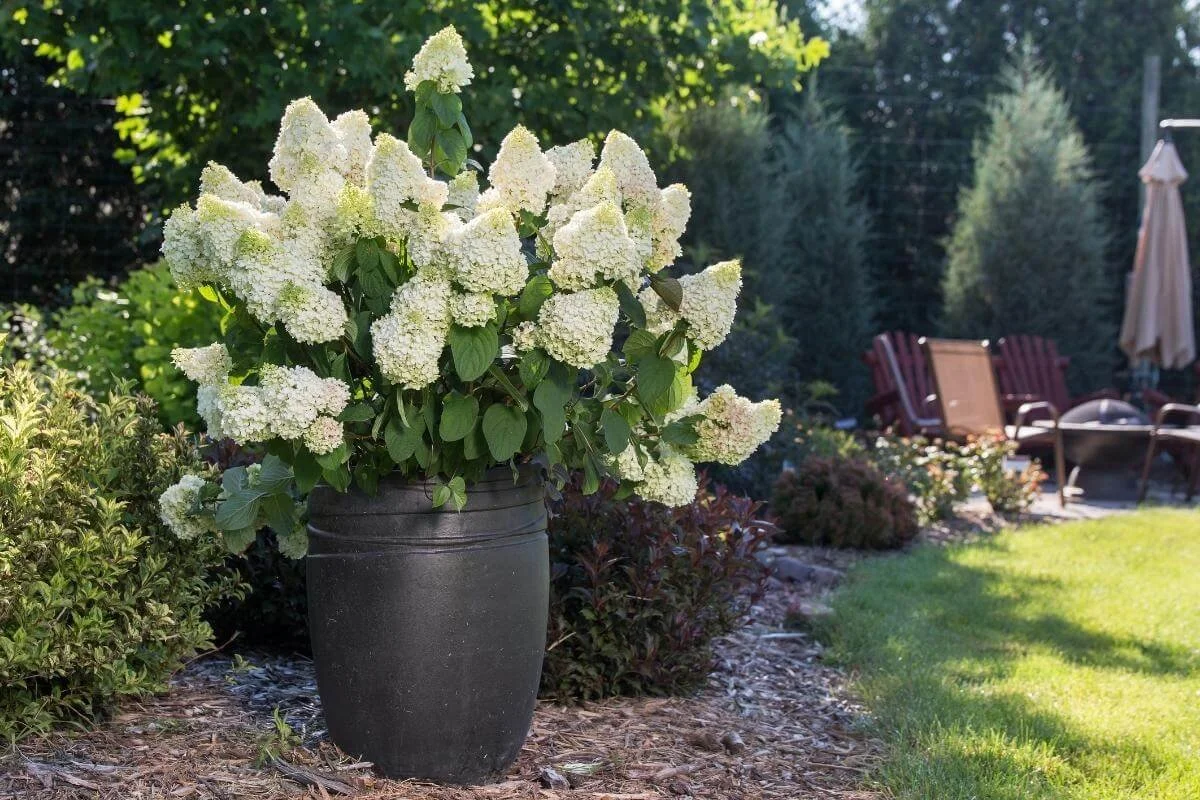
Little Hottie panicle hydrangea thriving in a container. Image courtesy of Bailey Nurseries.
Why Isn’t My Little Hottie Hydrangea Blooming?
Several factors could contribute to a Little Hottie® panicle hydrangea not blooming:
Young plant: Panicle hydrangeas may take a few years to establish before they start blooming. If your plant is still relatively young, it might just need more time to mature and establish itself - be patient!
Pruning: Pruning at the wrong time or too aggressively can remove the flower buds. Panicle hydrangeas bloom on new wood, so pruning in late winter or early spring before new growth begins is ideal.
Insufficient sunlight: For best flowering, Little Hottie® needs at least 4 hours of direct sunlight per day. Without enough sunlight, it may produce fewer blooms or fail to bloom altogether.
Watering issues: Inconsistent or inadequate watering can stress the plant and affect flowering. Ensure your Little Hottie® hydrangea receives sufficient water, especially during hot and dry periods.
Deer: Deer like the taste of hydrangeas, particularly the flowers and buds. They may visit your yard and nibble the buds off your panicle hydrangea, leaving no evidence of their presence other than the absence of flowers.

The flowers of Little Hottie® panicle hydrangea turn pink when temperatures drop in fall. Image courtesy of Bailey Nurseries.
Are Little Hottie Hydrangeas Poisonous to Dogs?
Panicle hydrangeas (Hydrangea paniculata), including the Little Hottie® cultivar, contain compounds that can be toxic to dogs if ingested, specifically cyanogenic glycosides.
These compounds can release cyanide when broken down in the digestive system.
However, the level of toxins in panicle hydrangeas are relatively low, and instances of dogs getting poisoned by consuming these plants are rare.
While the risk of severe poisoning is low, it’s important to monitor your dog's behavior in outdoor spaces. If you suspect your dog has ingested a toxic plant, seek immediate veterinary care.
Read “Which Plants are Toxic to Dogs” for more information on common plants dog owners may want to avoid.
Little Hottie Hydrangea at a Glance
Common name: First Editions® Little Hottie® Panicle Hydrangea
Botanical name: Hydrangea paniculata ‘Bailpanone’
Native range: China and Japan
Hardiness zones: 3 - 9
Mature size: 3 - 5 feet tall and wide
Spacing: 18-24 inches on center
Light requirements: Full sun to part shade
Form: Rounded, compact deciduous shrub
Growth rate: Medium (12-24 inches per year)
Flowering time: Summer - early fall
Flower color: Green, white, pink
Flower form: Dense pyramid-shaped panicles
Foliage type: Opposite, simple, dark-green serrated leaves
Deer resistant: No
Keep Exploring Hydrangeas
If you want to dig deeper, here are a few more articles to help you find the perfect hydrangeas for your landscape.