
A Guide to Smooth Hydrangeas, From Annabelle to Incrediball
Published: March 19, 2024 | Updated: August 13, 2026
This fast-growing, native hydrangea has extreme cold tolerance.
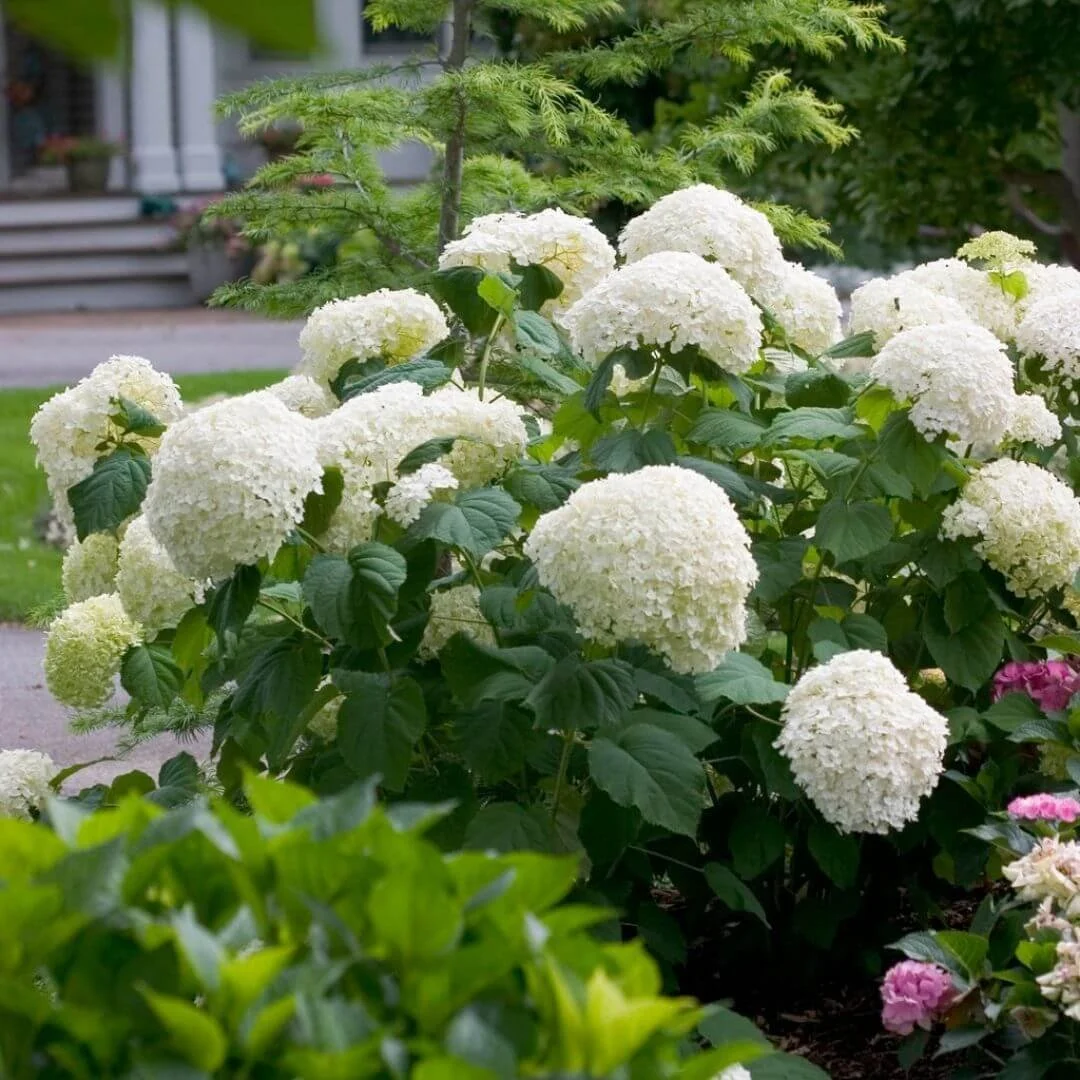
Incrediball® smooth hydrangea makes a striking addition to a front yard garden bed, with large white flower clusters held on sturdy stems. Image courtesy of Proven Winners, provenwinners.com
The smooth hydrangea (Hydrangea arborescens) is a deciduous flowering shrub native to the eastern United States, where it grows wild on stream banks and wooded slopes.
However, you won’t often see the true native smooth hydrangea gracing gardens and landscapes, and there's a reason for that.
While Hydrangea arborescens is beloved in the wild for its delicate, flat-topped clusters of greenish-white blooms, it has floppy stems and an open growth habit that make it a bit unruly in the garden, especially after a heavy rain.
What you will find at nurseries are cultivated varieties bred to solve the flopping problem.
These popular cultivars typically sport large, globe-shaped flower clusters in shades of white, green or pink, along with sturdier stems that hold up under the weight of their blooms.

Smooth hydrangeas also come in shades of pink, including Invincibelle Ruby®. Photo courtesy of Proven Winners, provenwinners.com
But here’s the catch: not all cultivars are created equal when it comes to supporting wildlife.
Many of these garden-friendly varieties don’t produce nectar or pollen for bees and other pollinators.
So, if you're planting with biodiversity in mind, look for cultivars that support insect life. You'll find a list of pollinator-friendly options below.
Smooth hydrangeas are incredibly cold-hardy and thrive in USDA zones 3 through 8. Not sure what zone you're in? You can find it using the USDA Plant Hardiness Zone Map.
They prefer full sun to part shade and rich, moist, well-draining soil. To promote the development of strong stems, site this shrub where it will receive at least 3 hours of direct sunlight per day.
Smooth hydrangeas tolerate full sun with adequate moisture, but in hotter climates, afternoon shade is recommended.
And unfortunately, they are not deer-resistant. Deer will eat hydrangea flower buds and leaves, especially the tender young growth.
If you would like to grow a flowering shrub that deer tend to leave alone, try a Ruby Spice summersweet shrub.
Keep reading to learn how to grow smooth hydrangea, explore landscaping ideas, discover standout cultivars, and see how it compares to the popular bigleaf hydrangea.
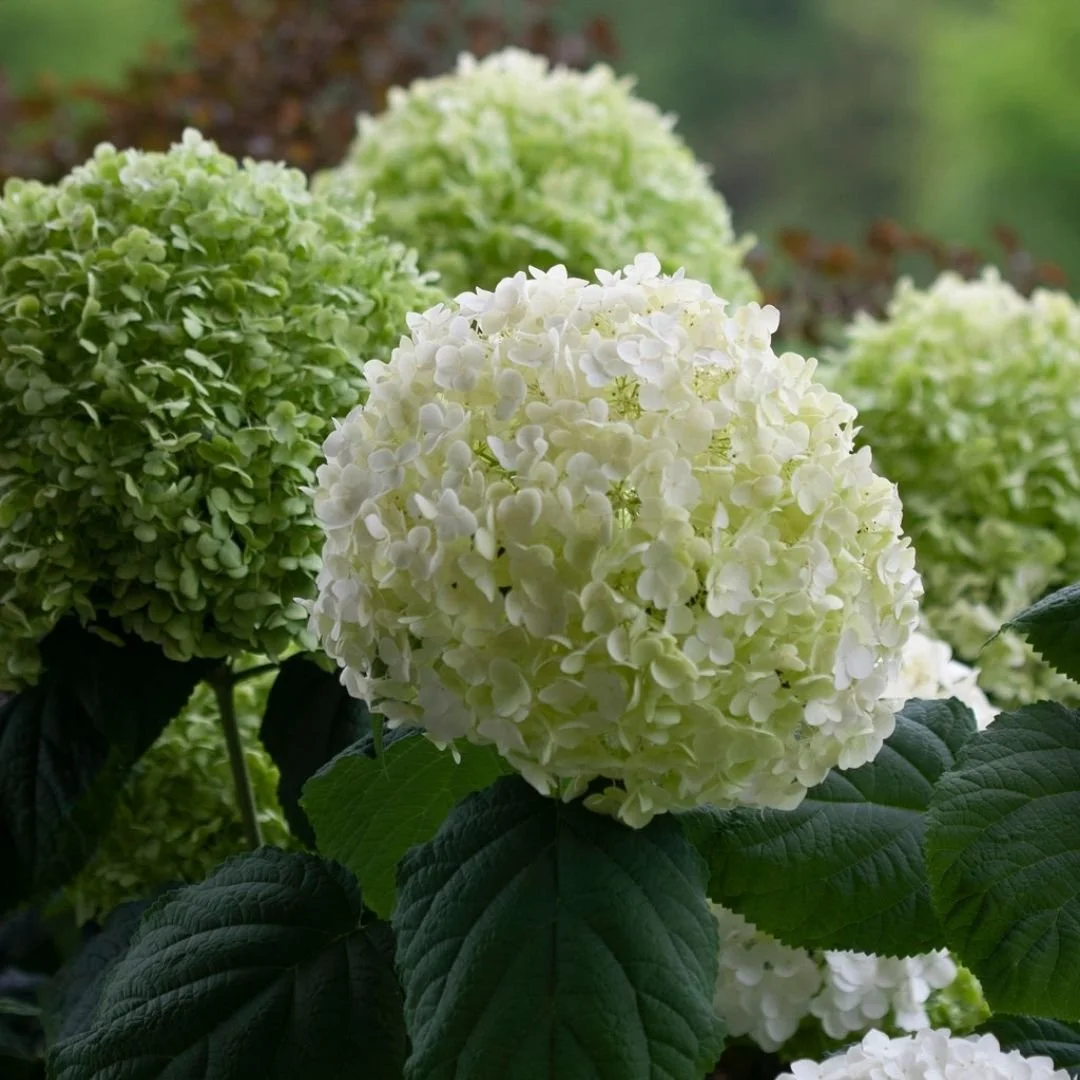
Incrediball® smooth hydrangea produces large, rounded white flower heads that make a bold statement in the garden. Image courtesy of Proven Winners Color Choice Flowering Shrubs, provenwinners.com
Smooth Hydrangea at a Glance
Common name: Smooth hydrangea, wild hydrangea, seven bark bush
Botanical/Latin name: Hydrangea arborescens
Native range: Eastern North America
Hardiness zones: 3 - 8
Mature size: 3 - 6 feet tall and wide, with smaller cultivars available
Light requirements: Full sun to part shade
Form: Upright, suckering deciduous shrub
Growth rate: Fast (25+ inches per year)
Flowering time: Late spring through summer
Flower color: White, green or pink
Flower form: Flat to globe-shaped clusters of tiny flowers
Foliage type: Opposite, simple, dark green serrated leaves
Fall color: Green to yellow
Deer resistant: No
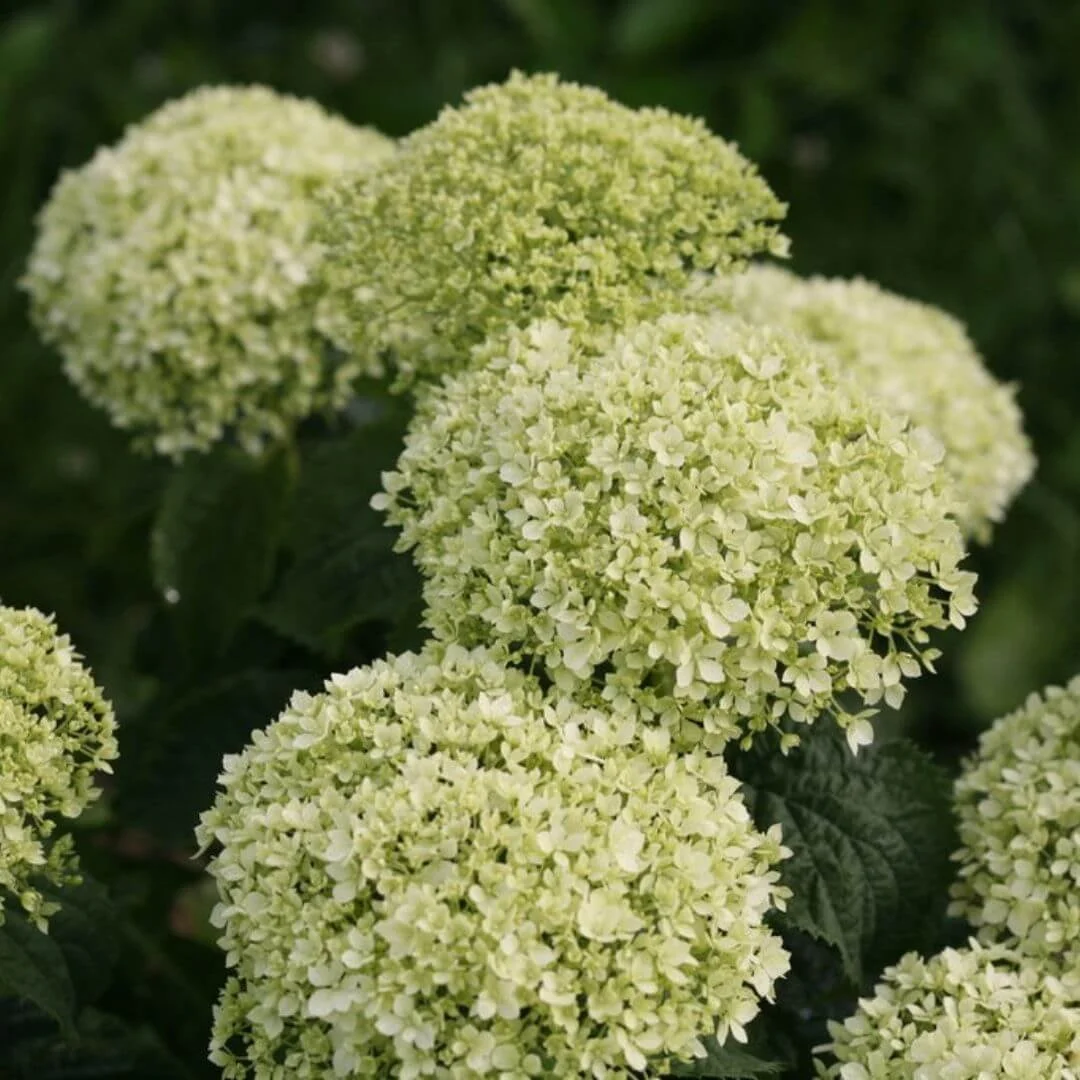
The Invincibelle Limetta® smooth hydrangea variety has soft green flowers. Image courtesy of Ball Horticultural Company
How to Plant and Grow the Smooth Hydrangea
Planting: The best time of year to plant a smooth hydrangea is in the spring or fall, giving the roots time to establish before the onset of extreme hot or cold weather. Water deeply immediately after planting. Read How to Water Your Plants for watering tips and strategies.
Location: Smooth hydrangeas grow best in rich, moist, well-draining soil. If your soil is low in organic matter, amend it with compost before planting to create the rich conditions they prefer. Choose a spot that receives at least three hours of direct sunlight. If you live in zone 6 or warmer, make sure your hydrangea has afternoon shade.
Soil: To improve drainage and soil fertility, amend the soil with organic matter like compost, shredded leaves, or Leaf-gro.
Mulch: Apply a layer of organic mulch around the base of the plant to retain soil moisture and suppress weeds. Make sure the mulch does not touch the base of the plant.
Watering: Smooth hydrangeas love moisture, so aim to keep the soil consistently moist but not waterlogged, especially during periods of drought. Are you in a drought? Check the U.S. Drought Monitor map.
Pruning: Smooth hydrangeas flower on new wood and can pruned in late winter or early spring. Plants may be hard pruned back to 12 inches, and suckers can be clipped off below the soil line.
What is an ‘Annabelle’ Hydrangea?

The ‘Annabelle’ hydrangea was discovered by Harriet Kirkpatrick in 1910. Image courtesy of Bailey Nurseries.
The ‘Annabelle’ hydrangea (Hydrangea arborescens ‘Annabelle’) is a popular cultivar of the native smooth hydrangea. It is not synonymous with the straight species, but was derived from a naturally occurring sport (mutation) discovered growing wild in southern Illinois.
‘Annabelle’ was discovered by Harriet Kirkpatrick in 1910, when she noticed an unusual hydrangea with large, rounded blooms growing alongside a horseback riding trail.
She dug up the shrub and transplanted it into her garden, where its showy flowers attracted the attention of friends and neighbors. Kirkpatrick propagated the plant and shared it locally, and over time it became a popular smooth hydrangea in the area.
In the early 1960s, Dr. Joseph McDaniel of the University of Illinois collected and propagated samples of the shrub Harriet had discovered, leading to its commercial production in 1962 under the name ‘Annabelle’.
Because ‘Annabelle’ is a cultivar derived from a native North American species, it is often described as a nativar, a cultivar of a native plant species.
‘Annabelle’ and the straight species of smooth hydrangea share many similarities, but there are some notable differences:
Both grow approximately 3–5 feet tall and wide and have an upright, suckering habit.
Both prefer partial shade and moist, well-draining soil.
Both produce clusters of small white florets that form larger flower heads.
Both can have stems that flop under the weight of their flowers, particularly after heavy rain.
Their flower heads differ in size and shape. ‘Annabelle’ produces large, rounded, ball-shaped flower heads that can reach about 12 inches across, while the straight species typically has flatter flower clusters about 6–8 inches wide.
Their value to pollinators differs. The straight species has flower heads with many small fertile florets that provide nectar and pollen for visiting insects. ‘Annabelle’ has showier flower heads with a much higher proportion of enlarged sterile florets, so it generally offers less for pollinators than the straight species.
Smooth Hydrangea vs. Bigleaf Hydrangea

The smooth hydrangea (Hydrangea arborescens) and the bigleaf hydrangea (Hydrangea macrophylla) are two distinct species of plants belonging to the Hydrangeaceae family, with several key differences:
Native Range: Smooth hydrangeas are native to the eastern United States, while bigleaf hydrangeas originate from Japan and Korea.
Hardiness: Smooth hydrangeas can tolerate colder garden temperatures, growing happily in zones 3-8. Bigleaf hydrangeas are hardy in zones 6-9, and can also grow in zone 5 when winter protection is provided.
Leaves: Smooth hydrangeas have heart-shaped, slightly rounded, matte green leaves; bigleaf hydrangeas have large, oblong, fleshy leaves that are glossier in appearance.
Flower Color: Smooth hydrangeas have white, green or pink flowers regardless of the soil pH. The flower color of the bigleaf hydrangea is influenced by soil pH, with acidic soils producing blue flowers and alkaline soils producing pink flowers.
Want to learn more? Read my complete guide to bigleaf hydrangeas for growing tips, design ideas, and everything you need to know before planting.
Smooth Hydrangea Pruning
Pruning a smooth hydrangea is simple and essential for promoting healthy growth and abundant blooms.
This shrub blooms on new wood, meaning it produces flowers on the current season’s growth, so pruning is best done in late winter or early spring before new growth begins.
Start by removing any dead, damaged, or weak stems to improve air circulation and plant health.
For a fuller, bushier appearance, cut back the stems to about 12-18 inches from the ground, leaving strong, healthy buds intact.
Regular pruning not only keeps your hydrangea bush tidy but also encourages larger, more vibrant flowers throughout the growing season.
Do Smooth Hydrangeas Like Sun or Shade?
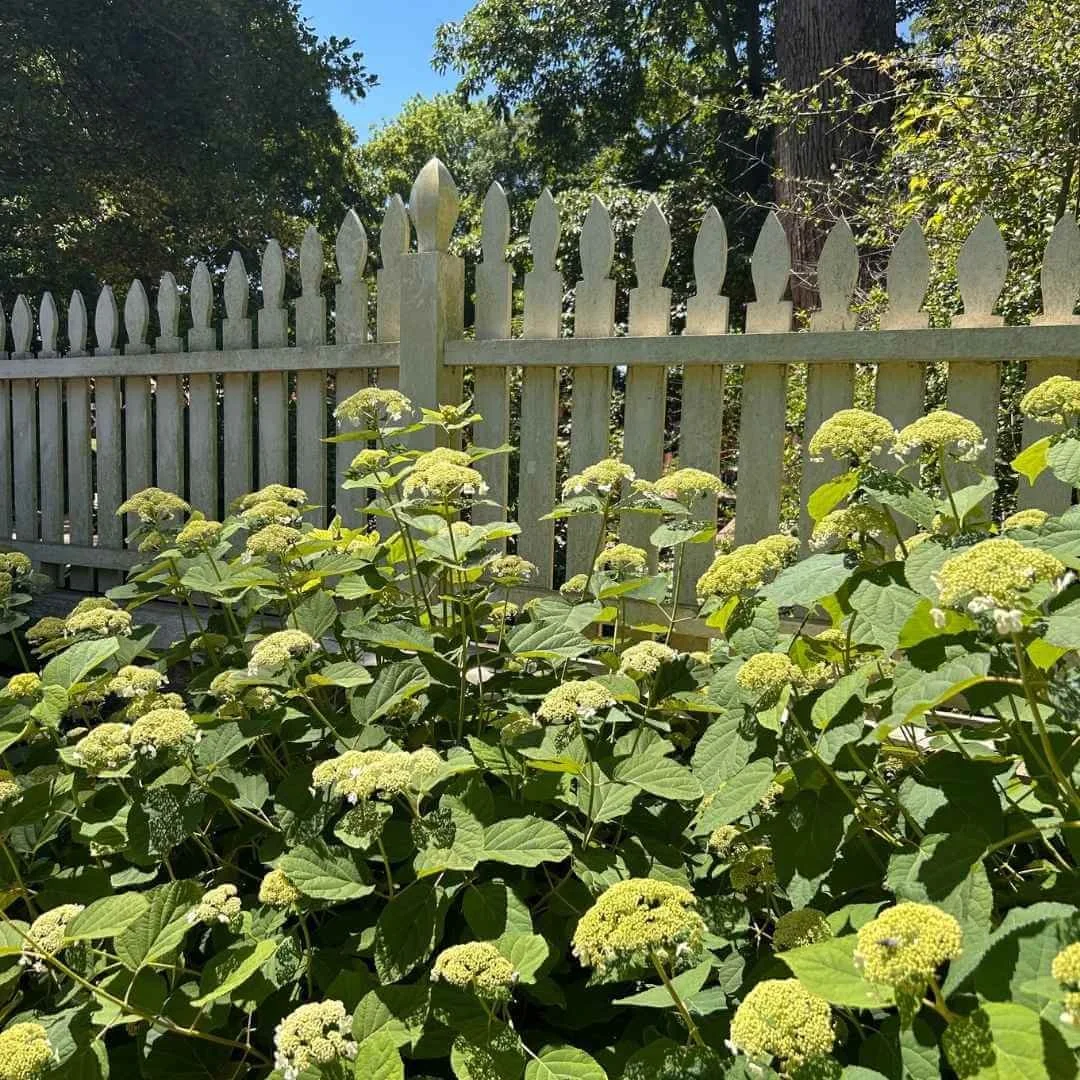
Hydrangea arborescens growing at George Washington’s Mount Vernon estate. Image © Plant and Bloom Design Studio
Smooth hydrangeas thrive in full sun to part shade, requiring at least 3 hours of direct sunlight per day to ensure strong stems and abundant flowering.
They can tolerate full sun, as long as adequate moisture is provided, and prefer protection from the intense rays of the hot afternoon sun.
In hot climates, providing them with morning sun and afternoon shade can help prevent their flowers and leaves from wilting and scorching.
In cooler regions, they may tolerate more sun, but protection from harsh afternoon sunlight is still recommended.
Landscaping Ideas for the Smooth Hydrangea
Mixed Foundation Planting: Plant smooth hydrangeas along the foundation of your home. Combine with a mix of evergreen and deciduous shrubs, creating four seasons of interest and enhancing the curb appeal of your home.
Native Garden: Plant the straight species of Hydrangea arborescens in a native garden, alongside oakleaf hydrangeas, woodland phlox, summersweet clethra, and other native plants.
Mixed Borders: Create a mixed border planting by combining the smooth hydrangea with small trees, shrubs, grasses and perennials.
Mass Planting: Plant smooth hydrangeas in large groupings to provide maximum visual impact. This approach works well in large garden beds and along pathways or fences.
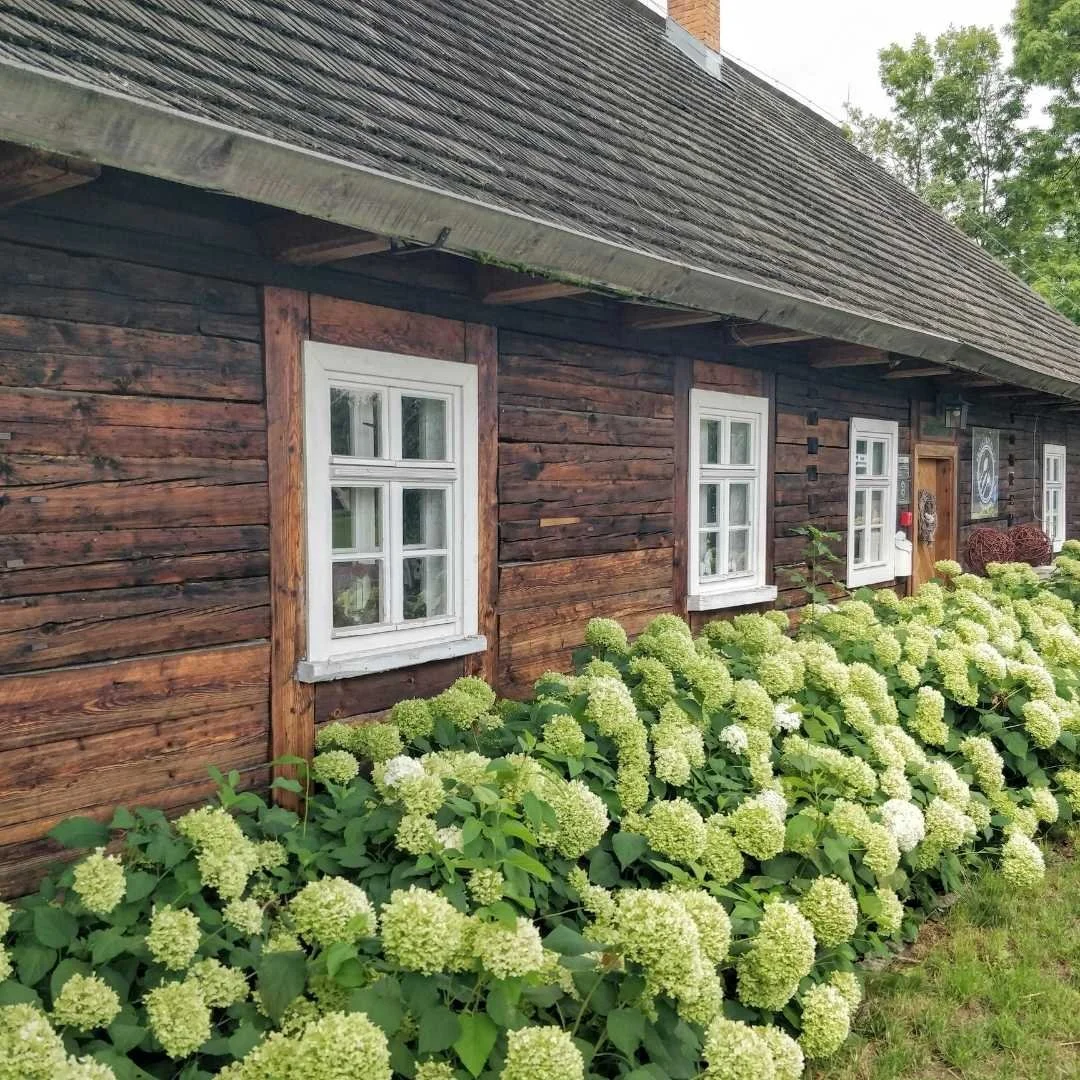
This mass planting smooth hydrangeas along a house foundation creates a lush, high-impact display. Image © @MrGajowy3 Teodor via Canva.com
Pollinator Garden or Bee Garden: Plant fertile, pollinator-favorite lacecap cultivars like ‘Haas’ Halo’ and ‘Pinky Pollen Ring’™ in the partially shaded areas of a pollinator garden.
Woodland Gardens: The partial shade underneath the canopy of tall trees is an ideal spot for the smooth hydrangea. Combine with other partial-shade loving plants like Japanese camellias, Japanese andromeda, azaleas, and rhododendrons.
Accent Planting: Use smooth hydrangeas as a focal point in the landscape. Plant strategically to draw attention to specific areas of the garden like entryways, water features, pathways, or seating areas.
Vintage Cottage Garden: For a charming, informal look, plant smooth hydrangeas alongside old-fashioned cottage garden favorites like foxgloves, garden phlox, hollyhocks, catmint, hibiscus, and roses.
Edging: Dwarf cultivars like Invincibelle Mini Mauvette® and Invicibelle Wee White® make great edging plants along walkways, sidewalks, and driveways.
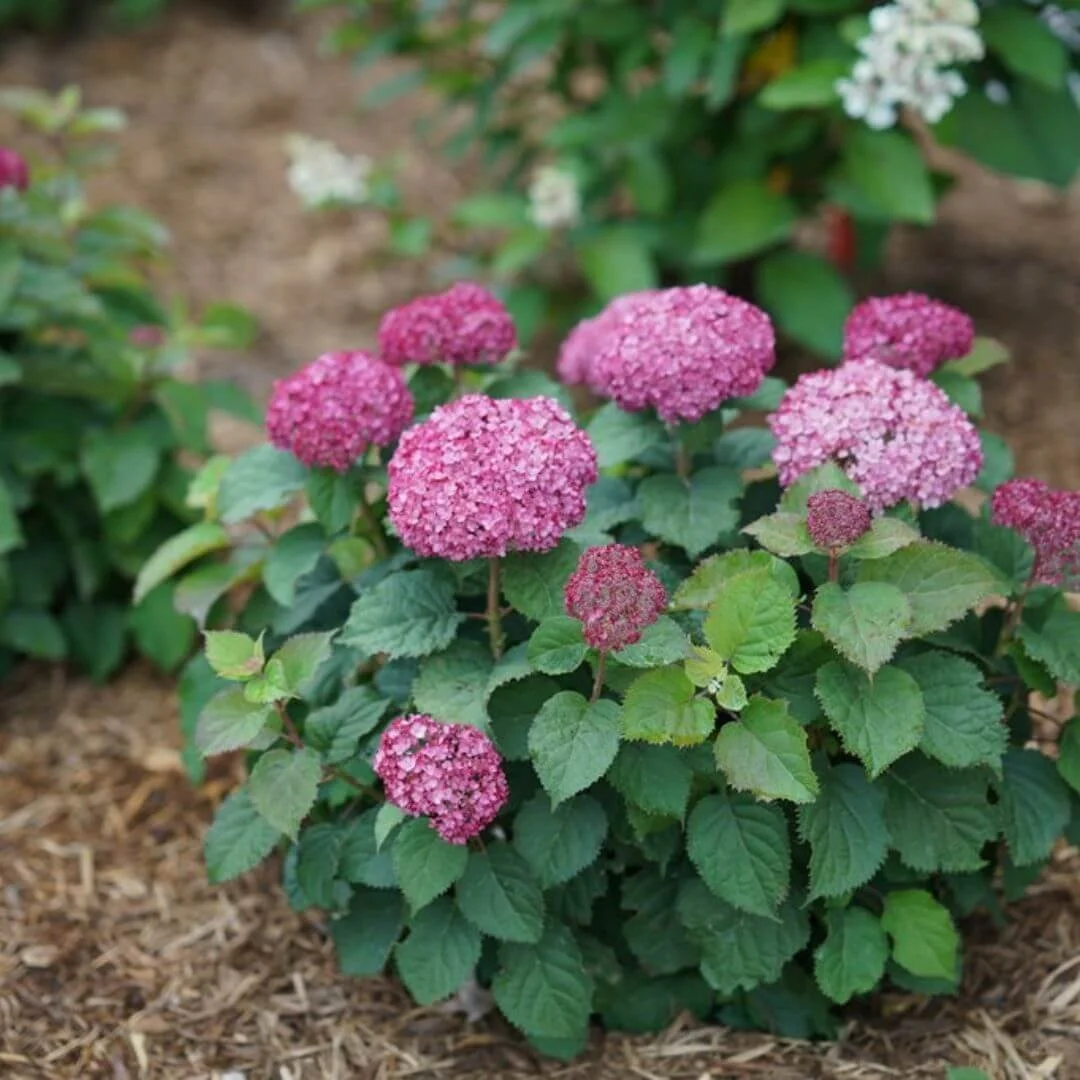
Invincibelle Mini Mauvette® is a petite smooth hydrangea, growing just 2½–3 feet tall and wide. Image courtesy of Ball Horticultural Company
Popular Smooth Hydrangea Cultivars
🐝 = cultivar that attracts pollinators
Annabelle (Hydrangea arborescens ‘Annabelle’): This popular variety has large, round flower heads growing up to 12 inches wide. Mature size is 3 - 5 feet high and wide. Stems are prone to flop, especially after a heavy rain.
FlowerFull 🐝 (Hydrangea arborescens ‘BAIful’): Improved disease resistance and flowers more heavily than other varieties, with bold white flowers held atop sturdy white stems. Grows 3-4 feet high and 4-5 feet wide.

The FlowerFull® hydrangea has abundant white flowers and strong stems. Image courtesy of Bailey Nurseries.
Haas Halo 🐝 (Hydrangea arborescens ‘Haas’ Halo’): The fertile white lacecap flowers of this cultivar were given top ratings as a pollinator favorite in the Mount Cuba Center’s trial of Wild Hydrangeas for the Mid-Atlantic Region. Not widely available, but worth seeking out for those interested in supporting wildlife.
Incrediball (Hydrangea arborescens ‘Abetwo’): An offspring of ‘Annabelle’, with large white flowers and stronger stems that resist flopping. Grows 4-5 feet tall and wide.
Incrediball Storm Proof (Hydrangea arborescens 'SMNHAGOV'): A compact smooth hydrangea with thick, sturdy stems that support its large white blooms, even after heavy rain. Smaller than the original Incrediball, it also makes an excellent cut flower.
Incrediball Blush 🐝 (Hydrangea arborescens ‘NCHA4’): Large pink flowers with fertile florets cover a compact, 4-5 foot tall and wide shrub. Does best in full sun.
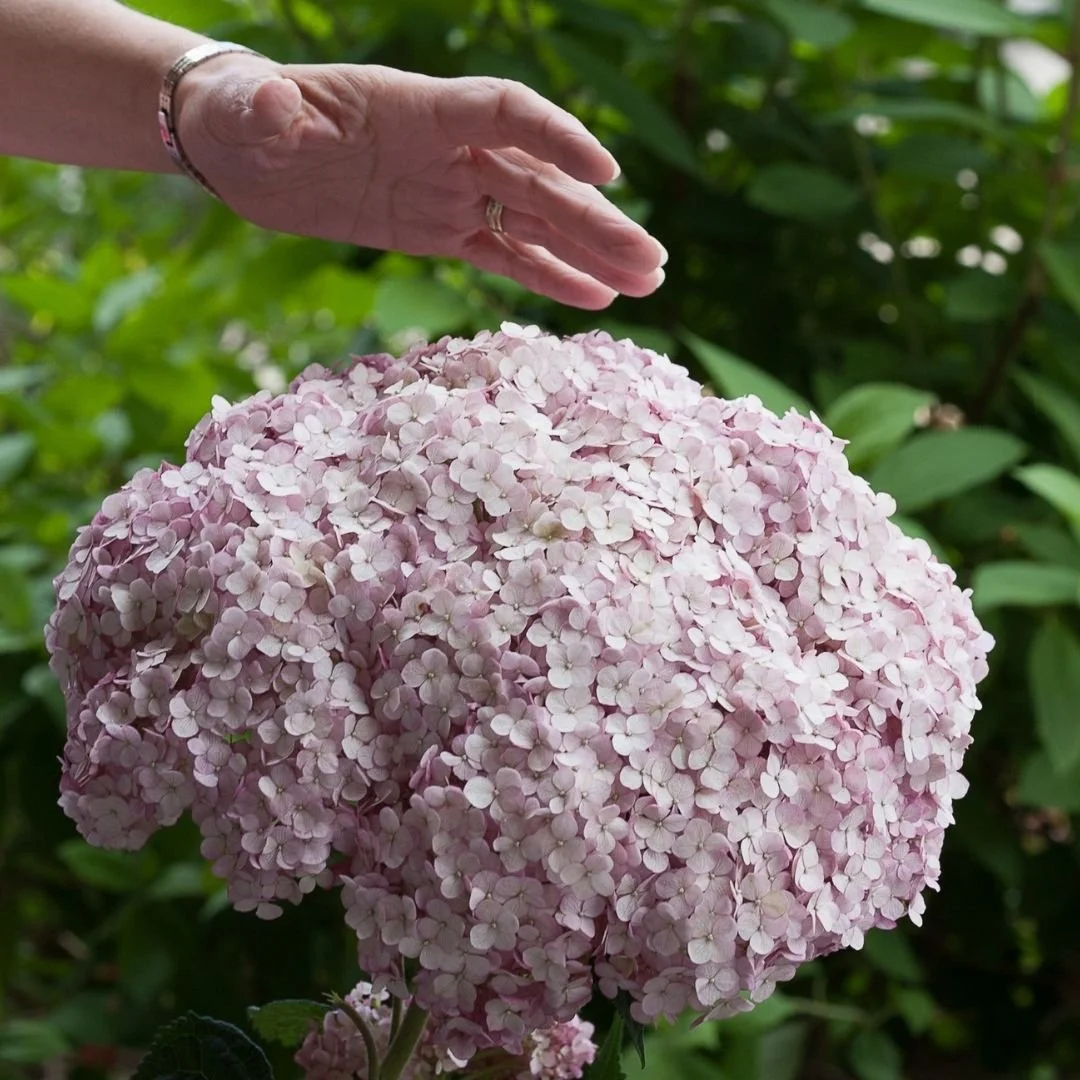
Incrediball® Blush has massive silvery-pink flowers atop strong, sturdy stems. Image courtesy of Spring Meadow Nursery, Inc. - Proven Winners
Invincibelle Limetta (Hydrangea arborescens 'NCHA8'): Soft green flowers darken as the summer progresses. Grows 3-4 feet tall and wide.
Invincibelle Mini Mauvette (Hydrangea arborescens ‘NCHA7’): A dwarf cultivar with deep mauve pink flowers atop sturdy, flop-resistant stems. Grows 2½–3 feet tall and wide.
Invincibelle Ruby (Hydrangea arborescens 'NCHA3'): Two-toned ruby red and pink flowers top darker green foliage. Grows 3-4 feet tall and 2-3 feet wide.
Invincibelle Spirit II 🐝 (Hydrangea arborescens 'NCHA2'): Dark pink mophead flowers and a robust habit. Grows 3.5-4 feet tall and wide.
Invincibelle Sublime (Hydrangea arborescens 'SMNHRL'): Green mophead flowers on a 3.5-5 foot tall and wide shrub.
Invincibelle Wee White (Hydrangea arborescens 'NCHA5'): A dwarf shrub, growing only 12-30 inches tall and wide. Large white flowers top strong stems.
Pinky Pollen Ring 🐝 (Hydrangea arborescens 'SMHALP'): This pollinator favorite has pastel pink lacecap flowers. Grows 4-5 feet tall and wide.
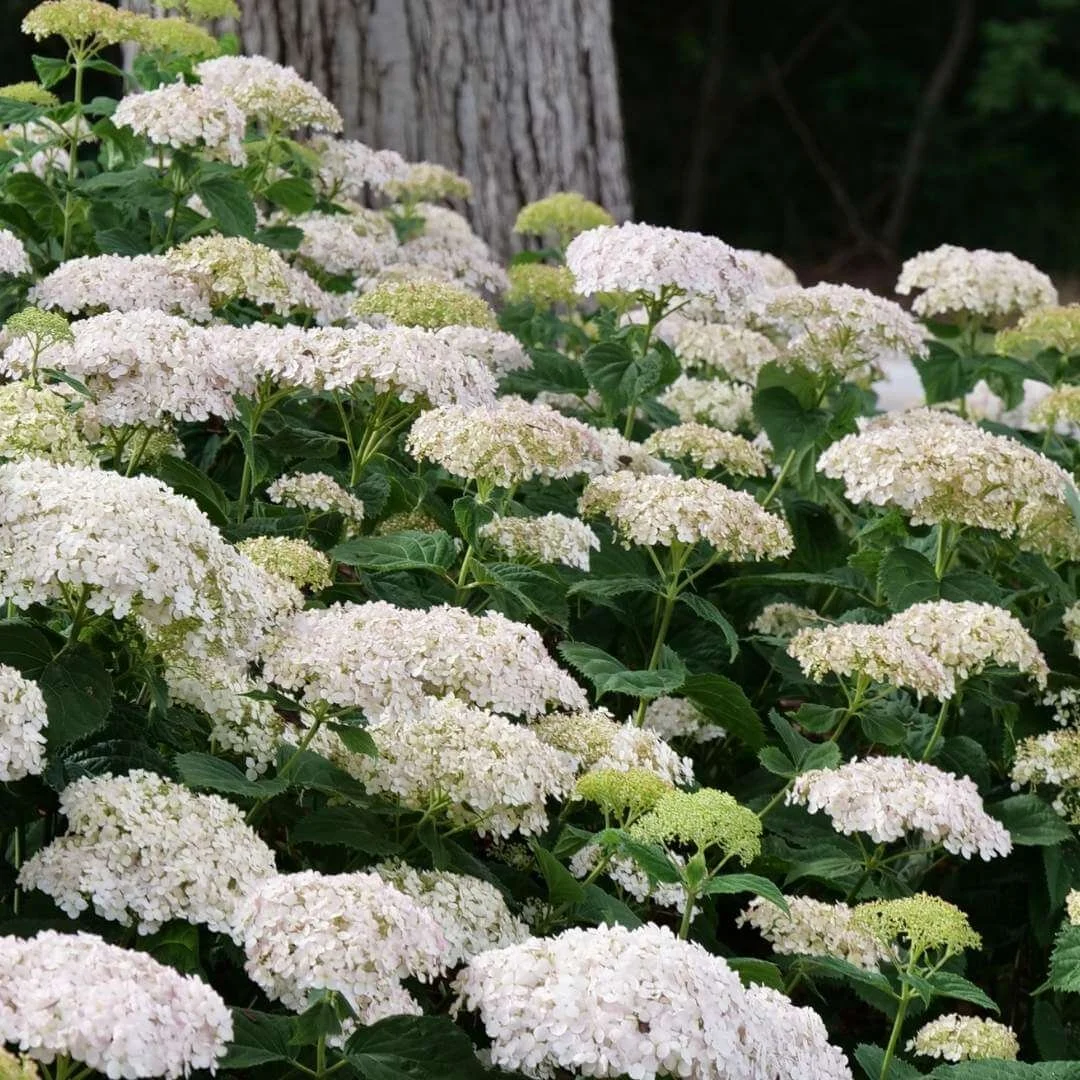
Invincibelle Wee White® is a compact smooth hydrangea variety, perfect for small yards. Image courtesy of Spring Meadow Nursery - Proven Winners, provenwinners.com