
5 Tall Narrow Houseplants for Empty Corners
Published: September 22, 2026
I love plants, and I also love filling every available corner of my house with them 😀. That means I’m always on the lookout for tall narrow houseplants that add height without taking over the entire room.
I also used to work in a plant shop, where I had a front-row seat to the plants people brought home and which ones worked best in real houses. These five are my favorite choices for filling an empty corner, whether you want something easygoing, pet-safe or worthy of an interior designer’s mood board.
I’ve also included three slightly unexpected ways to create height with houseplants at the end of this article.
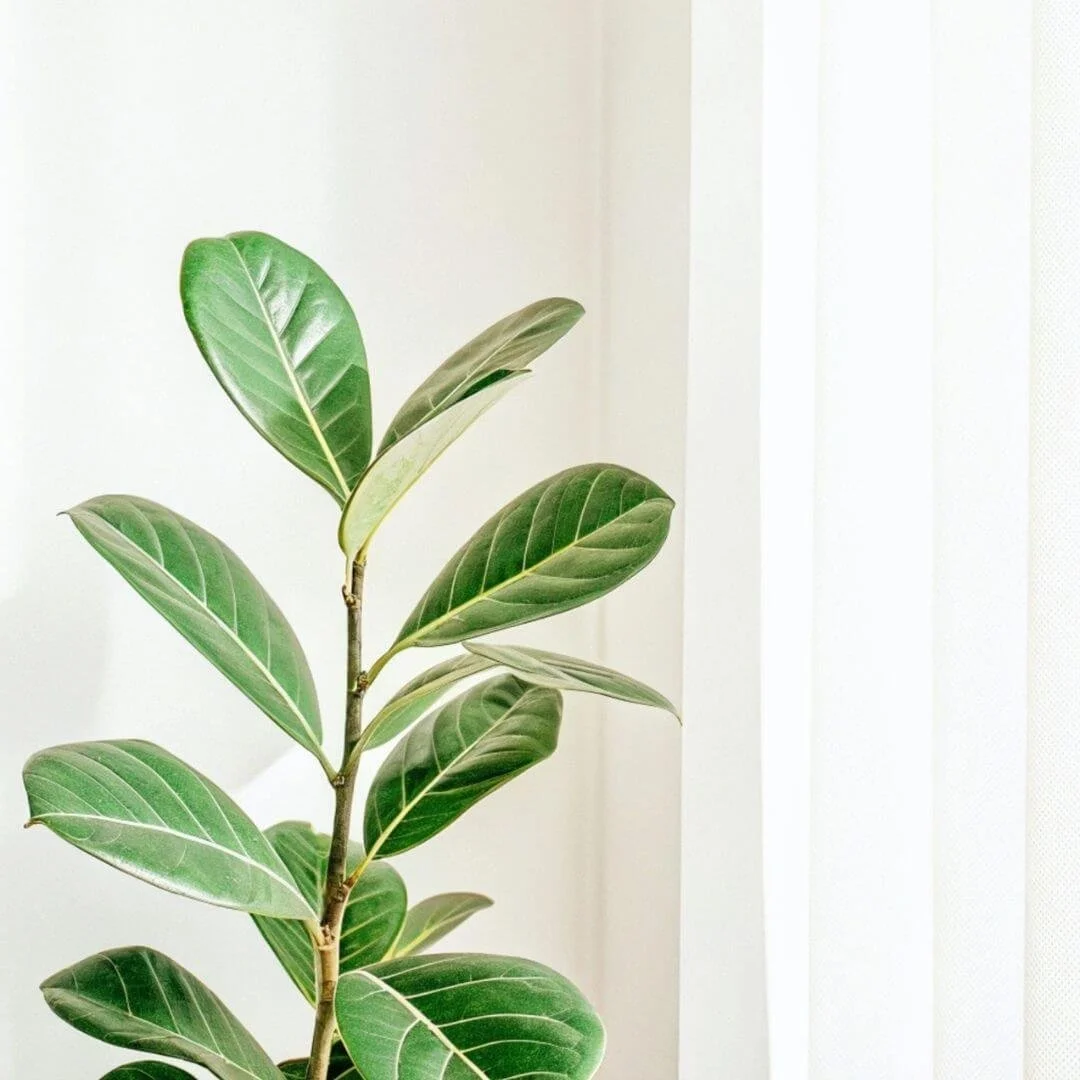
A tall, narrow houseplant brings height and life to an empty corner without taking over the room. Image © Blush Creative HQ via Canva.com
Before You Buy a Tall Narrow Houseplant
One thing to understand when shopping for tall, narrow houseplants: you’re often paying for time.
You can buy a smaller, less expensive plant and wait for it to grow, repotting it as needed along the way. Or you can splash out on a mature plant that fills the corner immediately. Neither choice is wrong.
If you’re a beginner, starting with a smaller plant can be a smart way to gain experience before investing in a very large specimen. Watching a plant grow and develop over time can be both fun and rewarding. It simply depends on whether you want to fill the space right away or enjoy the process.
This article may contain affiliate links. If you make a purchase through one of these links, I may earn a commission at no additional cost to you.
1. Snake Plant
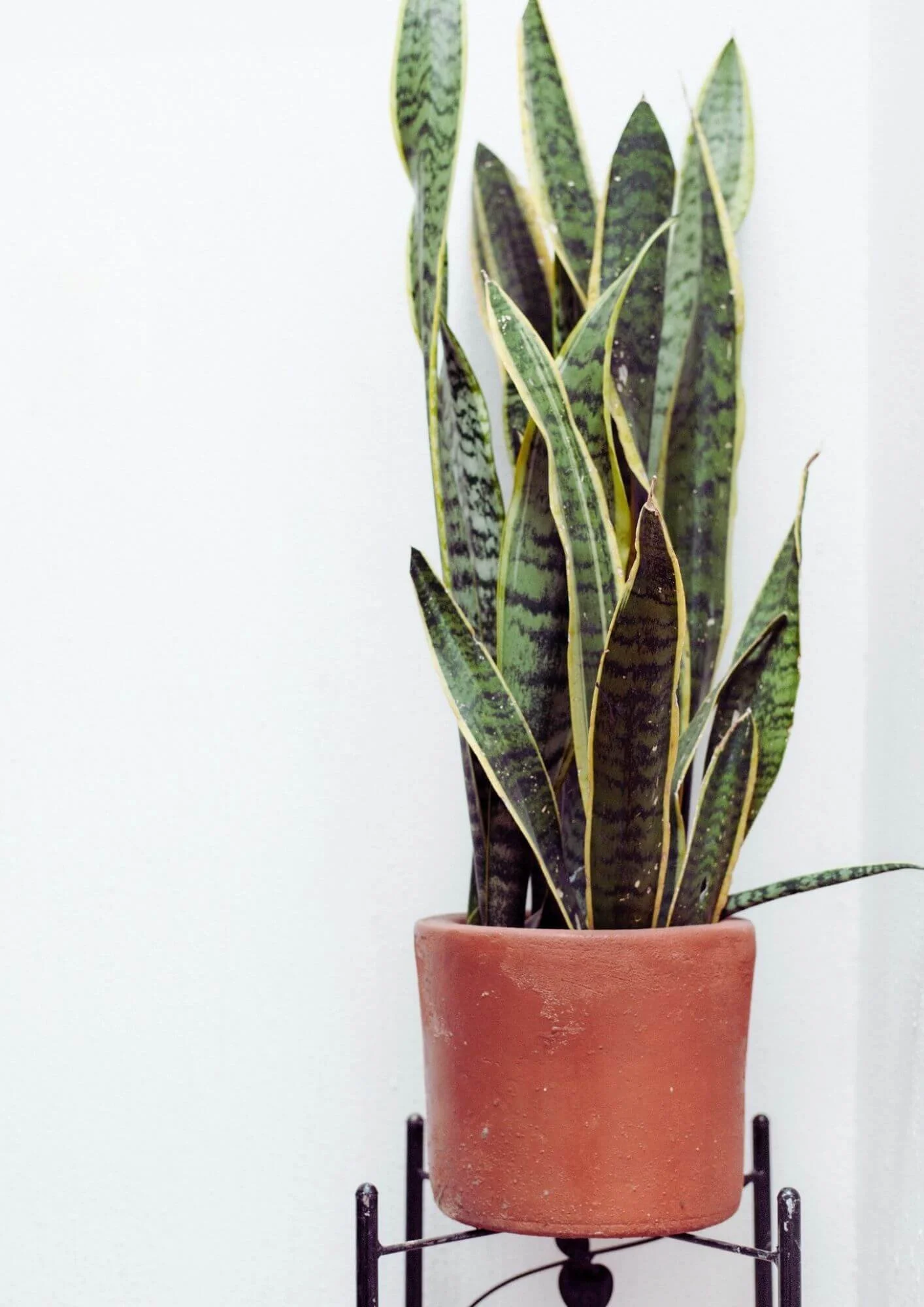
A snake plant’s upright shape makes it an ideal living accent for a narrow corner. Elevating it on a plant stand adds even more height without taking up much floor space. Image © Bruno Cervera via Canva.com
Botanical name: Dracaena trifasciata, formerly Sansevieria trifasciata
Light: Bright indirect light to low light
Water: Allow the soil to dry out completely between waterings
Pet-safe: No
Good for beginners: Yes
Snake plants check nearly every box: they’re tall, narrow, easy to find and tolerant of missed waterings.
They’re often described as houseplants that don’t need sunlight, but no living plant can grow indefinitely without light. Snake plants tolerate low-light conditions better than many other houseplants and grow more vigorously in bright indirect light.
Snake plants vary considerably in size. Some remain short and compact, while others can grow several feet tall. If you want a tall floor plant rather than a tabletop plant, look for varieties such as:
‘Laurentii,’ with yellow-edged green leaves
‘Black Coral,’ with dark horizontal markings
‘Bantel’s Sensation,’ with very narrow, white-striped leaves
‘Siam Silver,’ with silvery-green foliage
‘Fernwood Mikado,’ with slim, almost cylindrical leaves
Check the plant tag for the variety and mature height before buying. Compact varieties such as the bird’s nest snake plants in the ‘Hahnii’ group will remain much shorter, even when fully grown.
Designer’s Notes
With its strong vertical lines, a snake plant creates a living architectural accent. It adds height while taking up very little floor space, and its sturdy upright leaves won’t flop into doorways or brush against people passing by. Pair it with a streamlined planter on a stand for a crisp, modern look, or use an earthy terracotta Bergs Potter pot to create a warmer, more organic feel.
2. Corn Plant
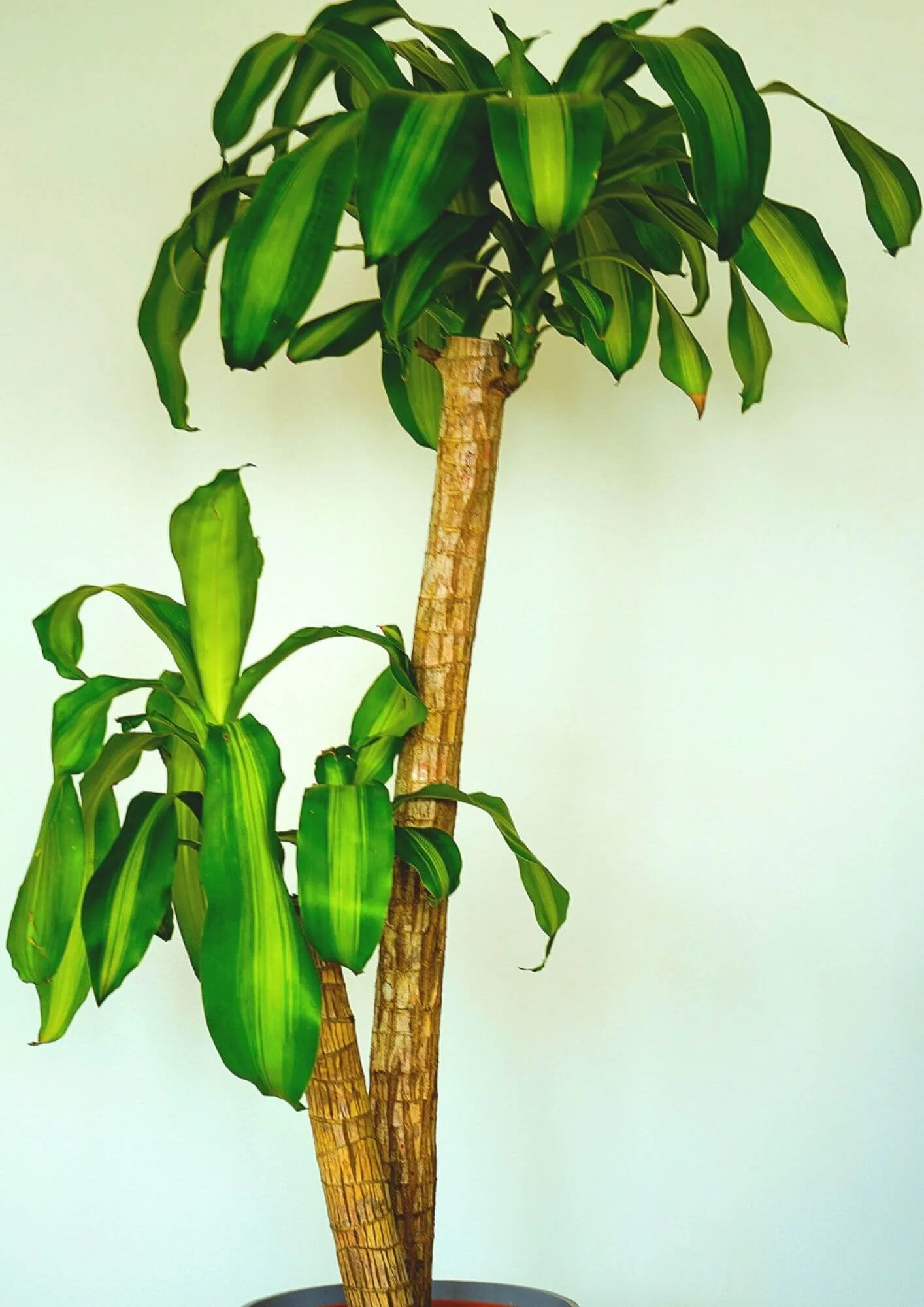
Corn plants are easy to recognize, with tall, sturdy trunks and arching foliage. Their colorful leaves provide plenty of visual interest. Image © Damir via Canva.com
Botanical name: Dracaena fragrans
Light: Medium to bright indirect light; tolerates lower light
Water: Water when the top 1–2 inches of soil feels dry
Pet-safe: No
Good for beginners: Yes
The corn plant brings height and a relaxed tropical feeling to a room without asking much in return. Its tall woody canes and arching striped leaves give it a distinctive silhouette, but it remains fairly narrow at the base.
Corn plants can also be surprisingly affordable compared with other large houseplants. They’re an IKEA staple, so if you see a healthy one there, go ahead and grab it!
Designer’s Notes
The bark and foliage already provide plenty of color and texture, so I like pairing corn plants with simple containers that don’t compete for attention. A white planter with clean lines is an easy choice.
3. Indoor Palms
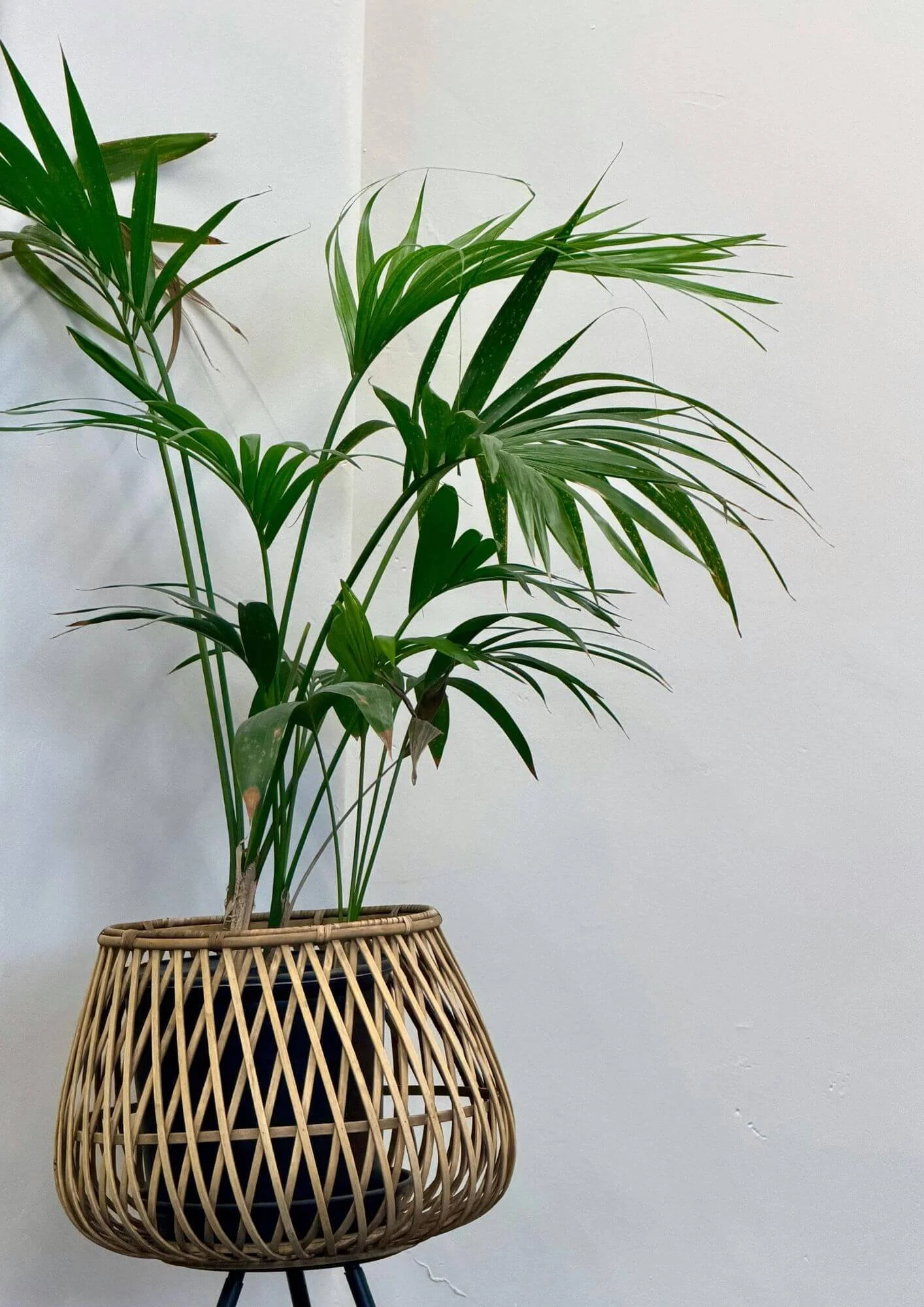
The combination of feathery palm leaves and a woven wicker basket brings a soft, natural texture to this corner. Image © Somar D via Canva.com
Botanical names: Varies by species
Light: Medium to bright indirect light, depending on the palm
Water: Water when the top inch of soil feels dry
Pet-safe: Yes, for the true palms recommended below
Good for beginners: Yes
Palms bring soft texture and movement to a corner. Depending on the variety and the container, they can create a lush tropical mood or look surprisingly tailored and formal.
The palm family is enormous, but these are some of the most popular types you’re likely to encounter as houseplants:
Lady palm (Rhapis excelsa): Upright, elegant and tolerant of somewhat lower light
Parlor palm (Chamaedorea elegans): Affordable, adaptable and beginner-friendly
Kentia palm (Howea forsteriana): Graceful and especially beautiful, although often expensive
Areca palm (Dypsis lutescens): Full and feathery, but happiest with good light and humidity
The lady palm is my favorite for its elegant, upright shape, although it can be a little harder to find.
One warning: avoid sago palm in homes with pets. Despite its common name, it isn’t a true palm and is highly toxic to cats and dogs.
Designer’s Notes
Palms are wonderful for softening a room filled with straight lines and hard surfaces. Their graceful foliage creates a beautiful contrast with clean-lined furniture, cabinetry and angular windows.
No magical thinking here: “tolerates lower light” doesn’t mean a palm will thrive in a dark corner. Some spaces are simply too dim for a living plant. In that case, add a stylish grow light, or accept that sometimes a very convincing fake plant is the only answer.
4. Ficus
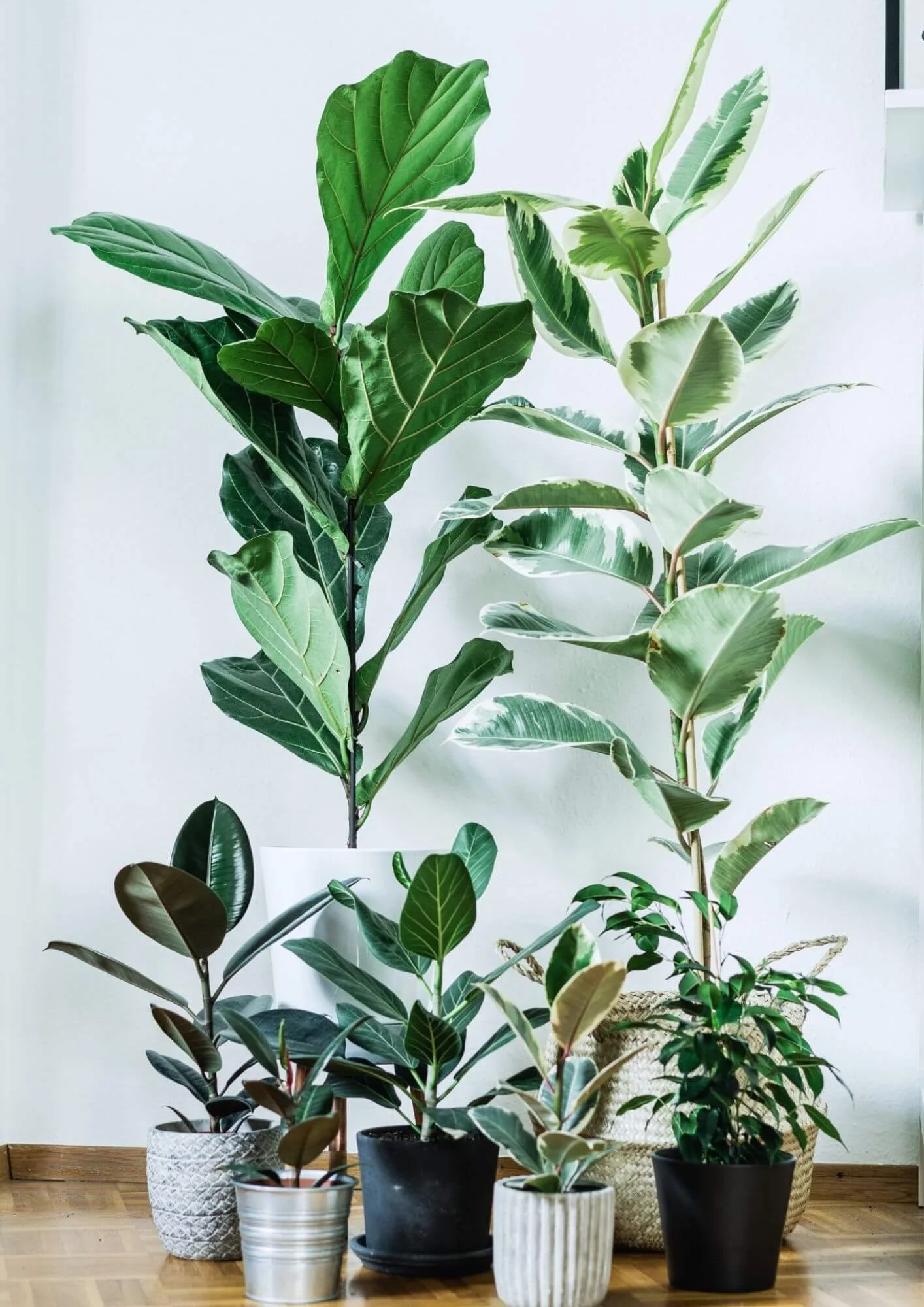
The ficus family offers many beautiful houseplants to choose from, with different leaf shapes, colors and growth habits to suit your space and style. Image © Benjamin Toegel via Canva.com
Botanical name: Ficus species
Light: Bright indirect light
Water: Water when the top 1–2 inches of soil feel dry
Pet-safe: No
Good for beginners: No
Ficus plants are the darlings of the interior design world, and it’s easy to see why. Their gorgeous foliage, distinctive trunks and upright silhouettes make them natural focal points, transforming an empty corner into an intentional design feature.
Ficus plants can be finicky about changes in light, temperature and watering, so they aren’t my first choice for beginners. Beautiful options include:
Fiddle-leaf fig (Ficus lyrata): Large, sculptural leaves and plenty of architectural drama
Rubber plant (Ficus elastica): Glossy foliage and a strong upright form
‘Tineke’ rubber plant (Ficus elastica ‘Tineke’): Variegated green, cream and pink-tinged leaves
‘Abidjan’ rubber plant (Ficus elastica ‘Abidjan’): Deep burgundy-green foliage
Weeping fig (Ficus benjamina): Fine-textured leaves and a graceful tree form, sometimes sold with braided trunks
‘Starlight’ weeping fig (Ficus benjamina ‘Starlight’): Green and creamy-white variegated foliage
Ficus Audrey (Ficus benghalensis ‘Audrey’): Velvety green leaves and, in my experience, the easiest ficus to grow
Designer’s Notes
Ficus plants pair beautifully with almost any style of container, from modern planters to textured clay or richly colored porcelain.
If you love the look of a ficus but your corner doesn’t get quite enough light, don’t give up on it. A grow light may be all you need to tip the odds in your favor. I especially like the pendant styles, which can illuminate the plant from above and look like an intentional part of the room.
5. Olive Tree
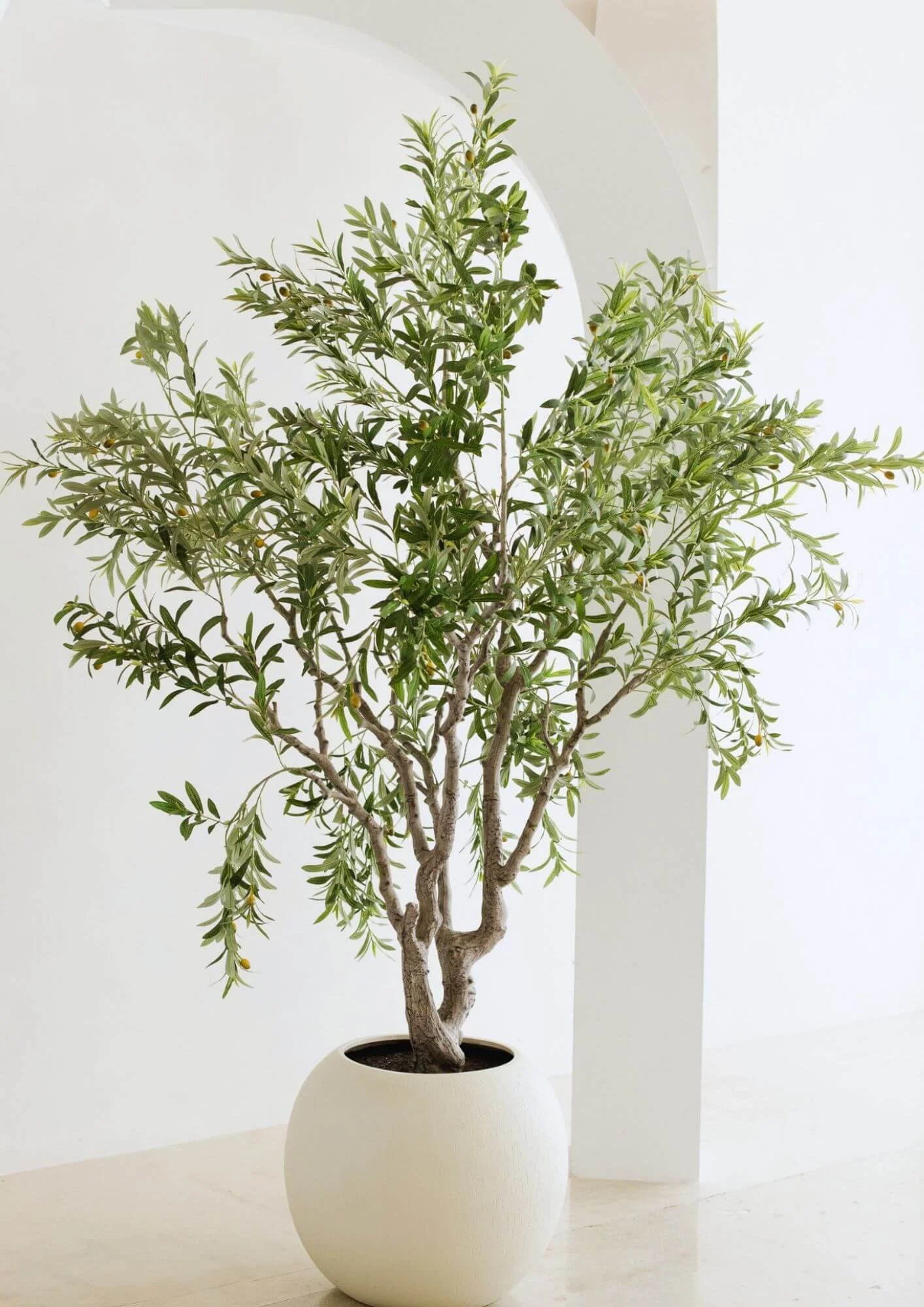
A round white planter gives an olive tree a clean, contemporary look while allowing its soft gray-green foliage to take center stage. Image © Sabri via Canva.com
Botanical name: Olea europaea
Light: Very bright light, including several hours of direct sun
Water: Water when the top 2 inches of soil feels dry
Pet-safe: Yes
Good for beginners: No
Olive trees are another interior designer favorite. Their small gray-green leaves bring soft texture and dimension to a room, while their muted color works beautifully with most interior palettes.
Olive trees hail from the sunny Mediterranean and need lots and lots of light, often more than the average room provides. I successfully grew one for several years in a corner beside a bright sliding glass door. Without a sunny spot like that, I would plan on adding a grow light.
Designer’s Notes
An olive tree instantly elevates a room. Place it in a large, rounded modern planter for a contemporary look, or lean into its Mediterranean character with a warm terracotta pot.
Which Tall Narrow Houseplants Are Pet-Safe?
The pet-safe choices on this list are olive trees and true palms, including lady, parlor, kentia and areca palms. Snake plants, corn plants and ficus plants are not pet-safe. Avoid sago palm, which isn’t a true palm and is highly toxic to pets.
Three More Ways to Add Height With Houseplants
You don’t necessarily need to purchase a large, expensive plant to fill a narrow corner. Sometimes the best solution is to think outside the box and create height with a few simple visual tricks.
1. Elevate a Smaller Plant
Place a smaller houseplant on a stool, plant stand or compact side table to create a vertical element that fills the corner.
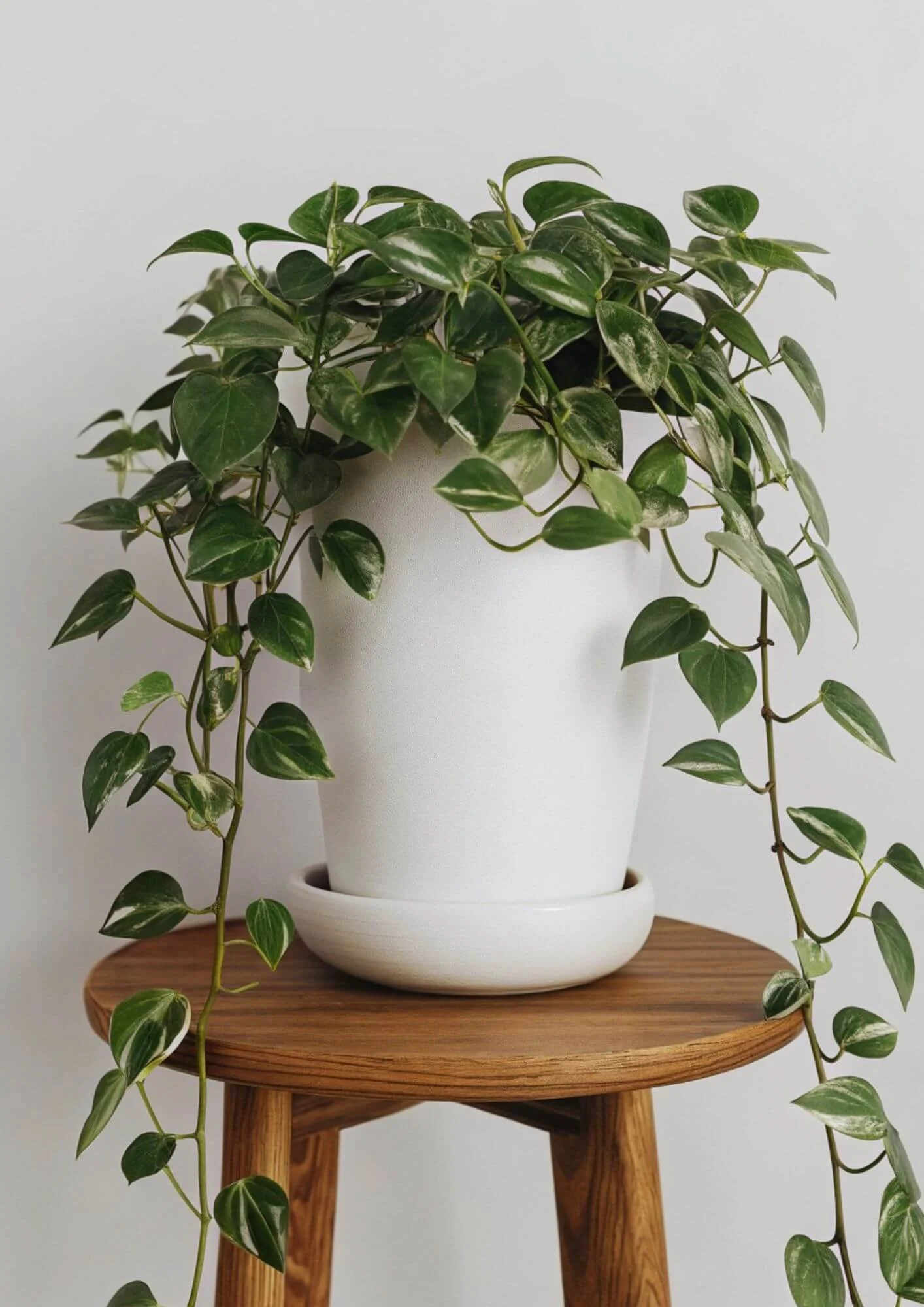
A pothos in a white pot gains instant height on a wooden stool, creating a vertical accent without the need for a large floor plant. Image © Blush Creative HQ via Canva.com
2. Add a Coir Pole
Repot a small, fast-growing plant such as a pothos or climbing philodendron into a larger pot with a coir pole. Before long, it will begin climbing upwards and filling up the corner.
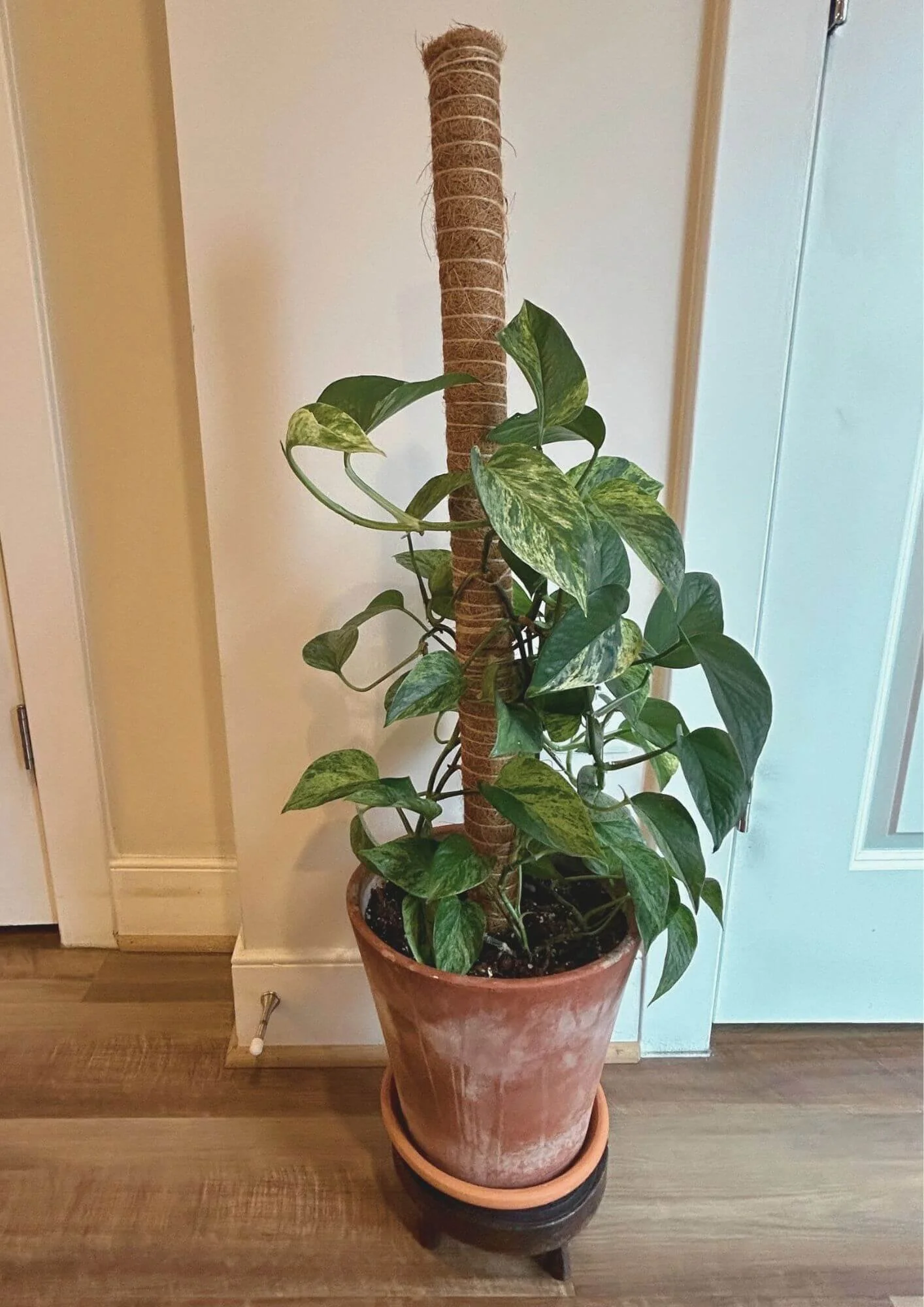
This Silver Queen pothos started in a four-inch pot. Four months after I moved it into a larger pot with a coir pole, it’s already climbing up and creating height. Image © Plant and Bloom Design Studio
3. Think From the Top Down
When floor space is limited, design from the top down. Wall-mounted planters let you layer several plants vertically without crowding the corner.
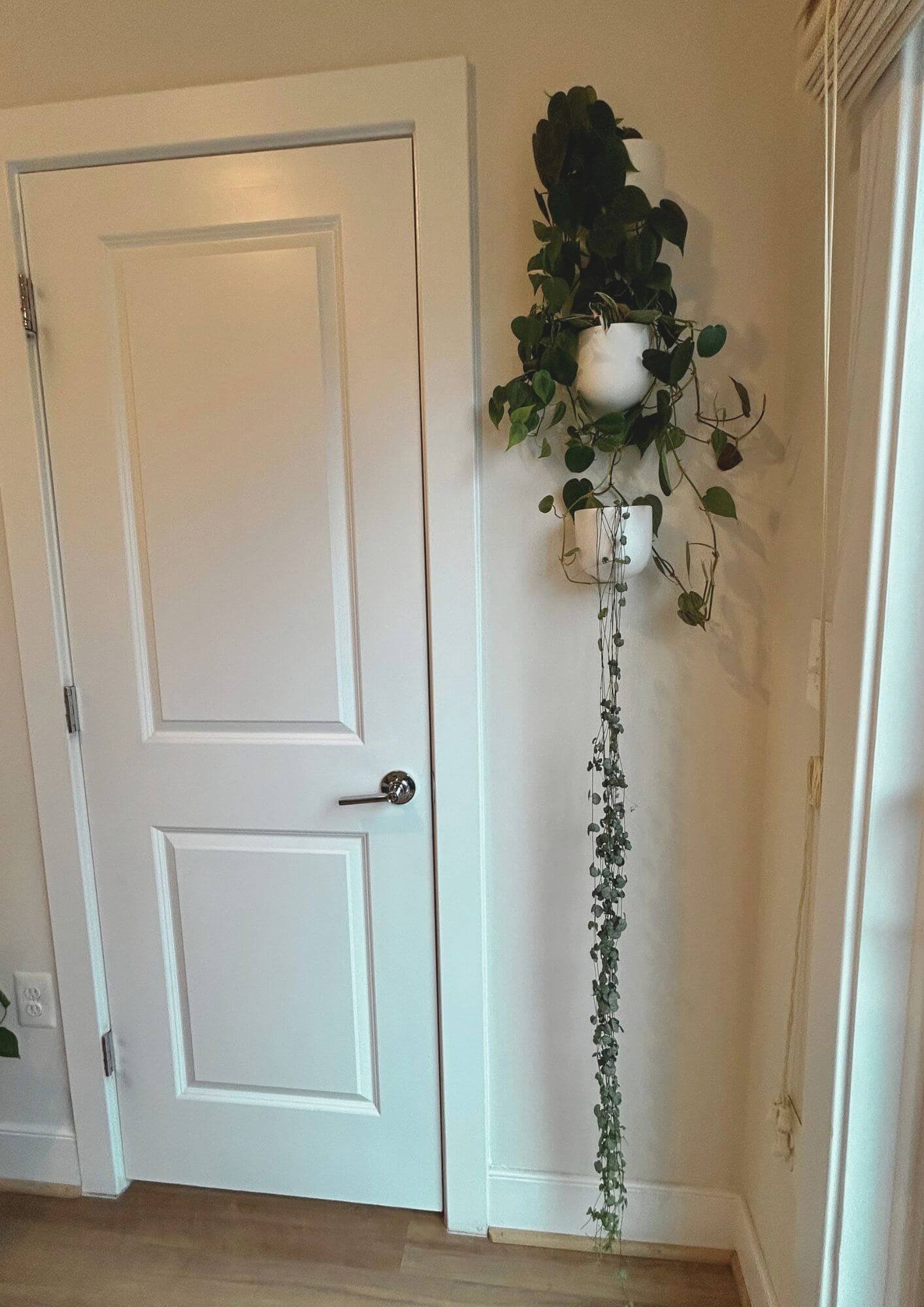
I used wall planters filled with cascading philodendron, hoya and string of hearts to create vertical interest in this narrow corner. Image © Plant and Bloom Design Studio
A Few Practical Details
Before bringing home a tall plant, pay attention to how people move through the room. If children or pets frequently rush past a tight corner, delicate foliage may be brushed, bumped or knocked over. A preserved moss wall may be a better fit.
Protect wood floors with plant stands, risers or waterproof saucers. Keep in mind that terracotta saucers are porous and can eventually leave moisture marks on the floor beneath them. You can also leave the plant in its plastic nursery pot and slip it inside a decorative cachepot. Just remove it for watering, or empty the cachepot afterward, so the roots never sit in collected water.
Finally, remember that a dark corner may not receive enough light to support a plant long-term. It may initially do well, then eventually begin to struggle. If the space is simply too dark, add a grow light or embrace a high-quality fake plant. No judgment from me. 😉🪴