
Published: November 3, 2026
I love plants. And I love books. So you can imagine that nearly every available space in my house is filled with one or the other. Usually both! 😃
As a landscape designer and former plant shop employee, I've learned a few things about choosing the best houseplants for bookshelves. Some plants make beautiful focal points, while others are perfectly happy tucked into small spaces between your favorite books.
In this article, I'll share two approaches to styling bookshelves with plants, followed by five of my favorite choices. And all the plant photos are real. No AI-generated plants here!
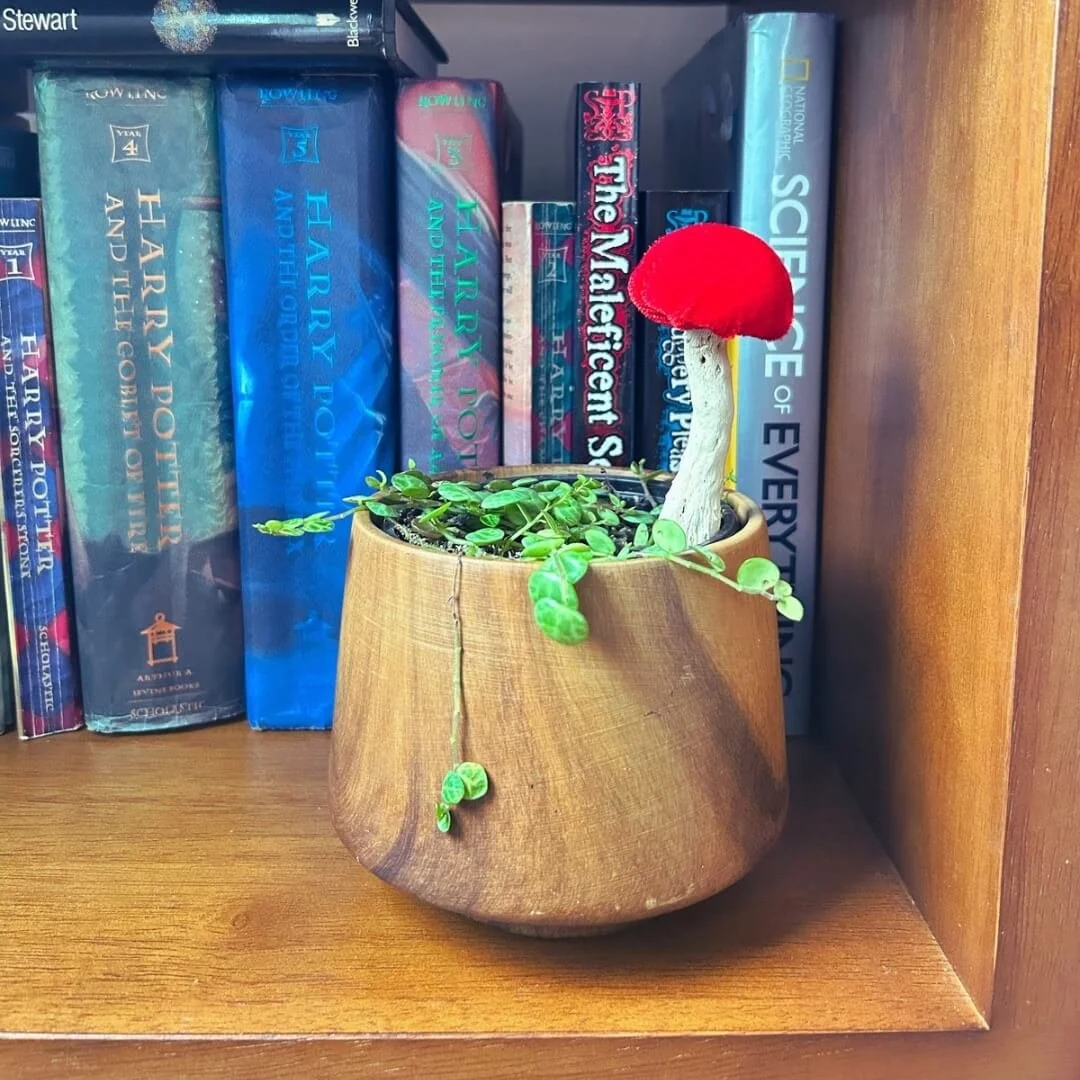
String of turtles is one of my favorite peperomias for bookshelves. Photo © Plant and Bloom Design Studio
This article may contain affiliate links. If you make a purchase through one of these links, I may earn a commission at no additional cost to you.
Before You Buy: Check Your Light
One gentle reminder before we get to the fun part: even the most beautiful plant won't thrive without the right light.
Bookshelves can be tricky. The outer edge of a shelf might receive bright indirect light, while a plant pushed just a few inches farther back gets considerably less.
Take a careful look at the light your shelves receive throughout the day before choosing your plants. I've included some low-light-tolerant houseplants in this list, so you'll have options even if your shelves aren't close to a sunny window.
Design Tips: Two Ways to Style Bookshelves With Plants
After years of arranging plants around my home, I've found that most bookshelves fall into one of two categories:
Artfully Arranged Bookshelves
These are carefully styled shelves where plants, framed photographs, decorative objects, and personal treasures take center stage, with a few books mixed in if you like.
Plants are part of the design from the beginning. Choose a beautiful houseplant as your focal point, then arrange other objects around it. Think interesting foliage, sculptural shapes, and gorgeous containers that reflect your personal style.
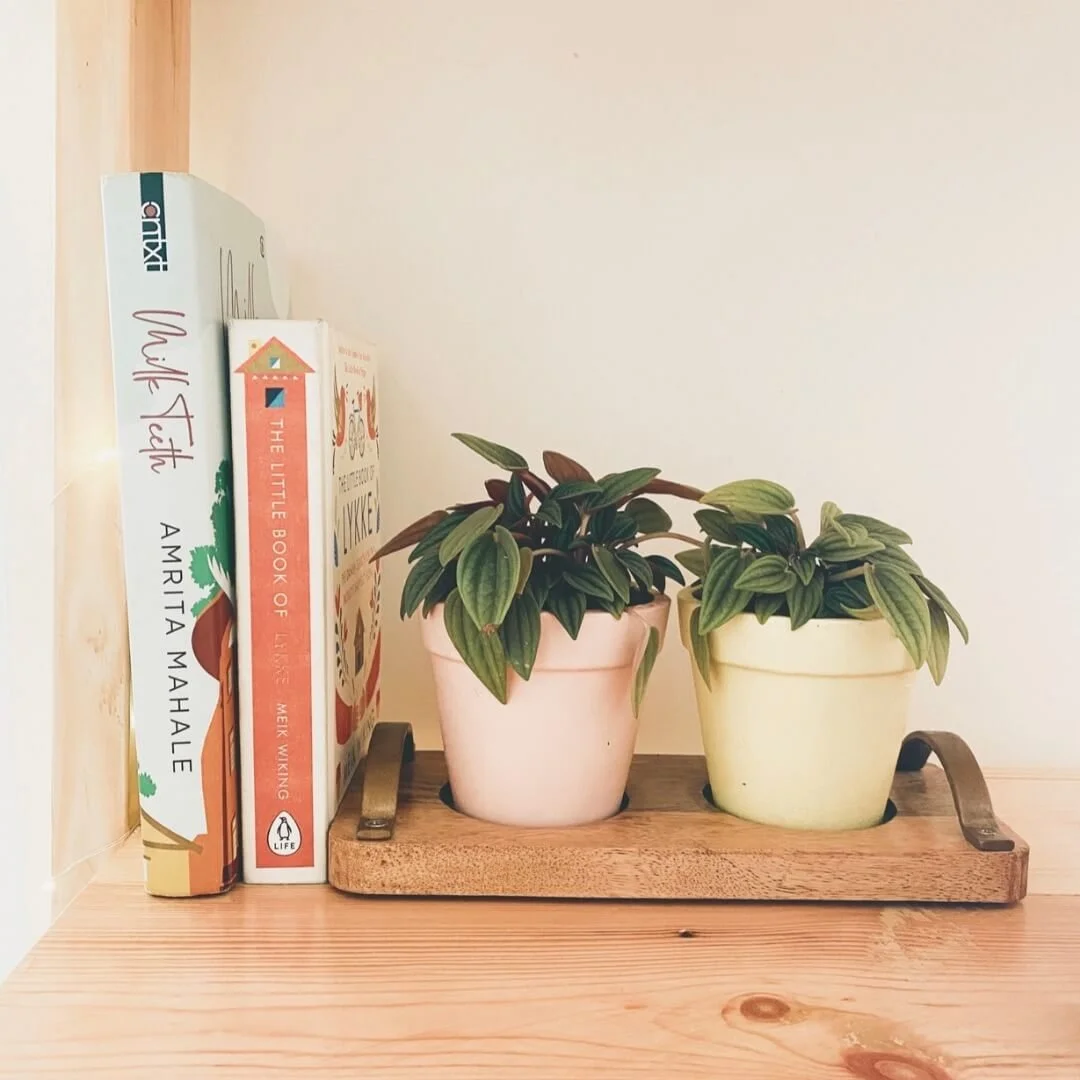
On this artfully arranged bookshelf, two Peperomia 'Rosso' plants take center stage, while the books play a supporting role. Photo © Akshata Bablad via Canva.com
Functional Bookshelves
These are hardworking shelves where books and other items are constantly being pulled out and put back.
Here, plants play a supporting role. Look for compact, slow-growing houseplants that can be tucked into small spaces without getting in the way.
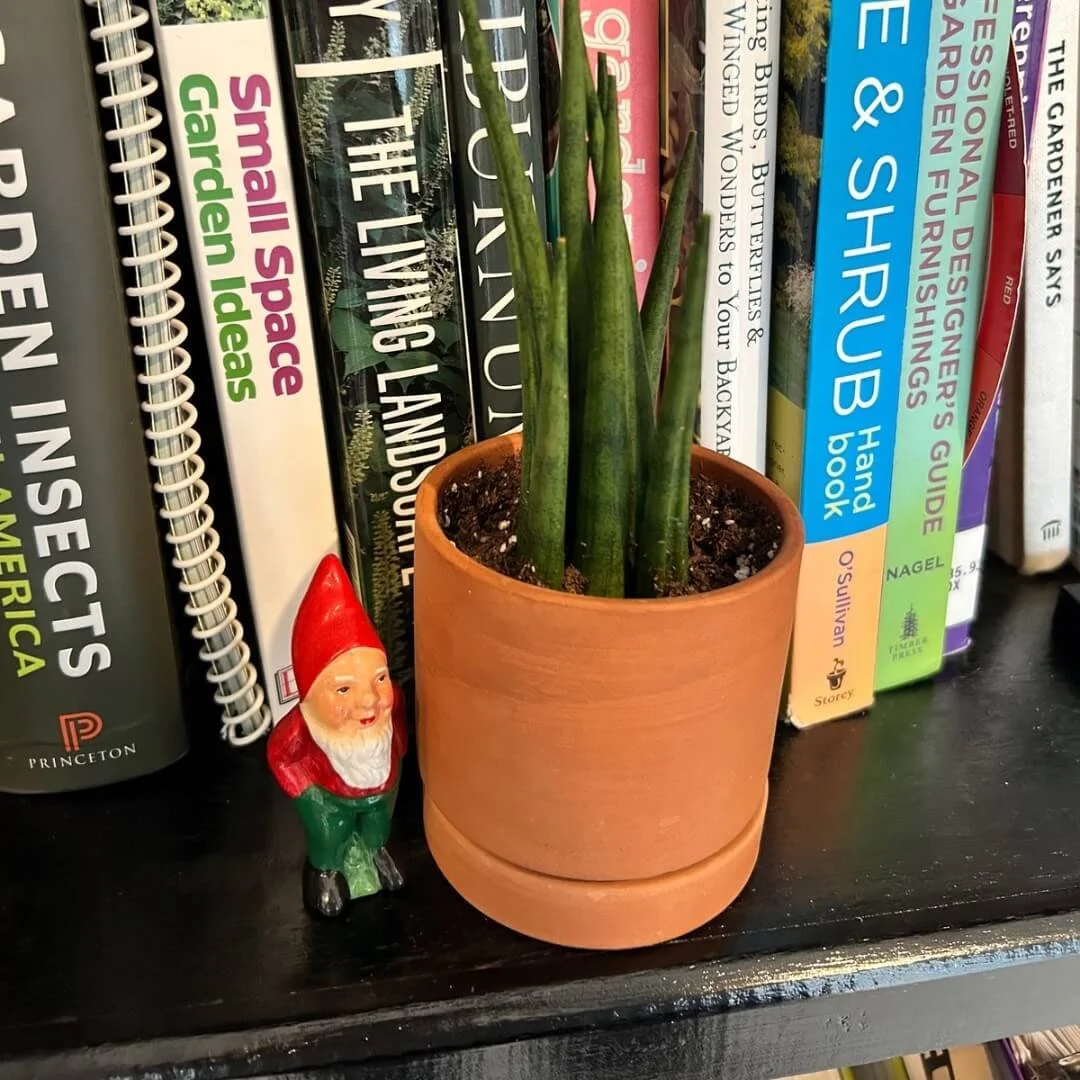
On my office bookshelves, a compact cylindrical snake plant (Dracaena angolensis) fits neatly in front of books without getting in the way. Photo © Plant and Bloom Design Studio
Neither approach is right or wrong, and you might have both in your home. I do! My living and dining areas have carefully styled shelves, while the bedrooms and office are crammed with as many books and plants as I can fit. Because 🪴 + 📚 = 😃
Now let's look at five of my favorite houseplants for bookshelves. Each works beautifully with either approach. Just think about how you use your shelves and the light they receive before deciding which plants to choose and where they should go.
1. Compact Snake Plants
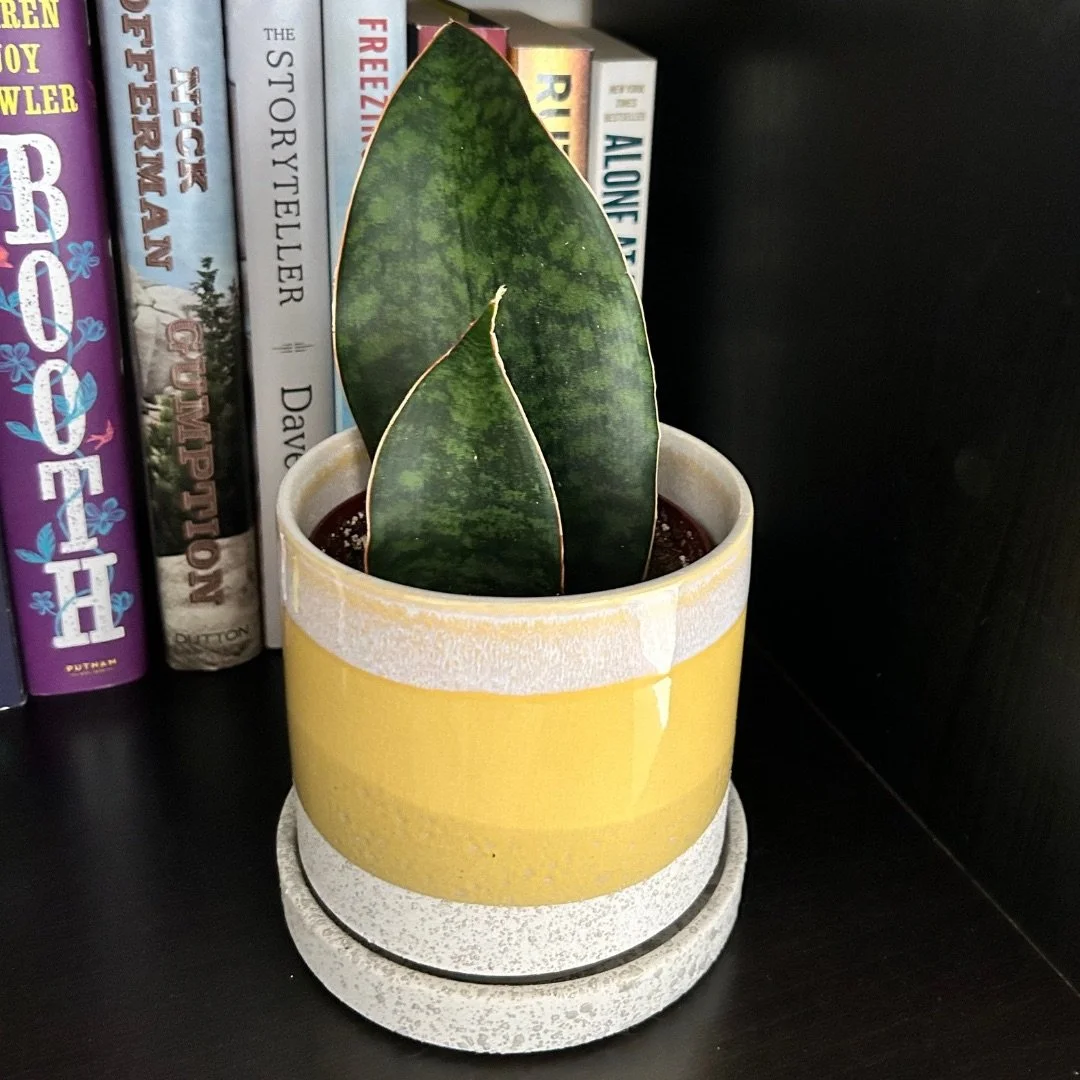
My Whale Fin snake plant (Dracaena masoniana) adds a sculptural touch to the corner of a bookshelf. Photo © Plant and Bloom Design Studio
Botanical name: Dracaena (formerly Sansevieria)
Light: Low to bright indirect light; some direct sun is fine, too
Water: Allow soil to dry completely between waterings
When I recommend snake plants for bookshelves, I'm not talking about the tall varieties that eventually take over a corner.
For bookshelves, look for smaller, shorter varieties like Bird's Nest (Dracaena trifasciata 'Hahnii'), the wonderfully chunky Whale Fin (Dracaena masoniana), or small, spiky cylindrical snake plants (Dracaena angolensis).
Snake plants tolerate a wide range of light conditions, making them one of the easiest houseplants for bookshelves. They're especially good choices for beginners or anyone who occasionally forgets to water.
Designer's Notes
Snake plants bring a strong architectural presence to bookshelves, with sculptural foliage that looks beautiful from almost any angle.
Their unique, upright forms make a striking focal point at the front of a shelf, while smaller varieties can be tucked farther back among books and decorative objects.
They're wonderfully versatile, whether your shelves are carefully styled or purely functional.
2. Peperomia
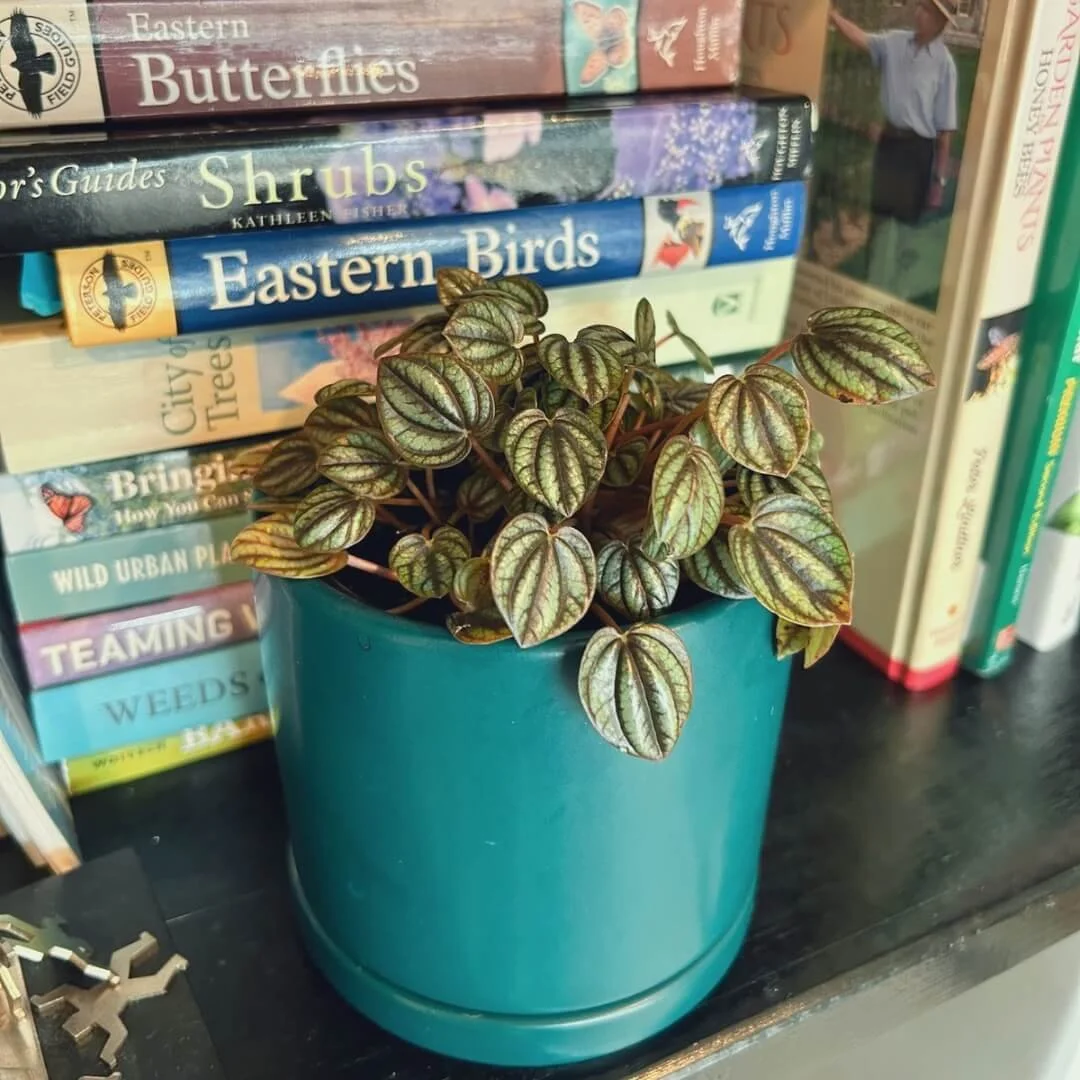
My Peperomia 'Piccolo Banda' fits neatly in front of a stack of books. Image © Plant and Bloom Design Studio
Botanical name: Peperomia species
Light: Medium to bright indirect light
Water: Allow the top 1–2 inches of soil to dry between waterings
Oh, the foliage choices! 😍 Peperomias are some of my favorite small houseplants because there's so much variety in their leaf shapes, colors, and textures.
Watermelon peperomia (Peperomia argyreia) has beautifully striped, silvery-green leaves. Peperomia 'Rosso' (Peperomia caperata 'Rosso') features deeply ridged green leaves with rich red undersides, while 'Hope' (Peperomia 'Hope') has charming little rounded leaves on trailing stems.
And don't forget String of Turtles (Peperomia prostrata), with its tiny, turtle-shell patterned leaves that spill delicately over the edge of a container. Or 'Piccolo Banda' (Peperomia albovittata 'Piccolo Banda'), with striking green and brown veined foliage. I could go on and on…and on…
Most peperomias stay relatively compact, making them easy to fit into bookshelf arrangements.
Designer's Notes
Peperomias are perfect for adding a little personality to your bookshelves.
Choose a variety with striking foliage as a focal point, or tuck a small one into the space in front of books. I especially love trailing varieties for softening the hard edges of bookshelves.
With so many leaf patterns and colors available, have fun finding one that complements your decor. I challenge you to stop at just one!
3. Haworthia
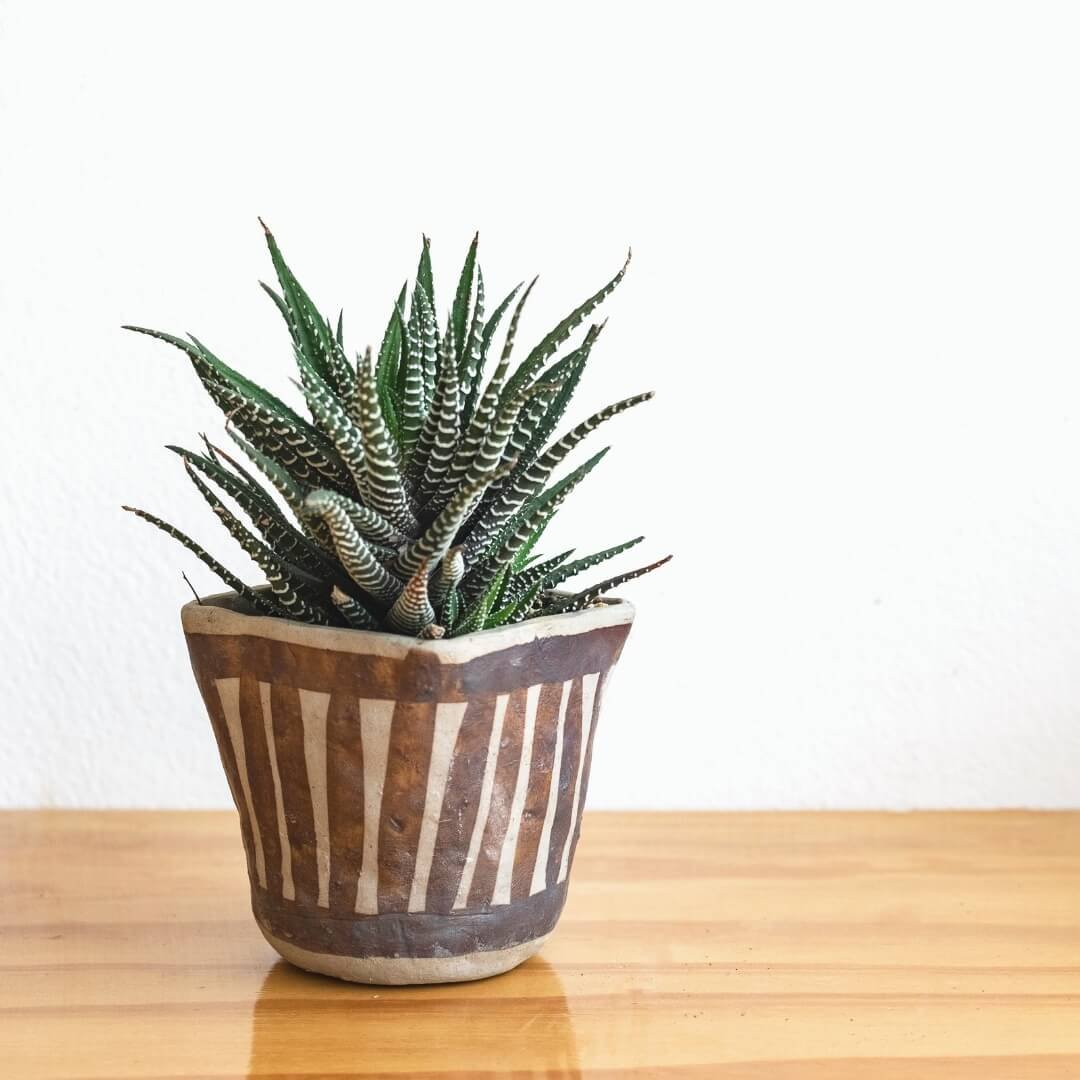
With its bold leaf striping and sculptural shape, this little Haworthia has plenty of personality. Photo © panattar via Canva.com
Botanical name: Haworthia and Haworthiopsis species
Light: Bright indirect light
Water: Allow soil to dry completely between waterings
Haworthias are wonderful little succulents with striking shapes and patterns. Some have pointed, striped leaves, like Zebra Haworthia (Haworthiopsis attenuata), while others have chunky foliage with translucent tips, like Window Haworthia (Haworthia cooperi).
They're naturally small and slow-growing, making them ideal for narrow shelves and tight spaces.
One thing to remember: although haworthias look like plants that would love intense sunshine, they actually prefer bright indirect light. Strong afternoon sun will scorch their leaves.
Designer's Notes
I love how little space haworthias need. You can perch one in a tiny spot in front of a row of books, or make it part of a carefully arranged vignette.
Their bold striping and geometric shapes make haworthias a natural fit for modern planters. I especially like pairing them with angular pots that echo the shape of their leaves.
4. Pothos
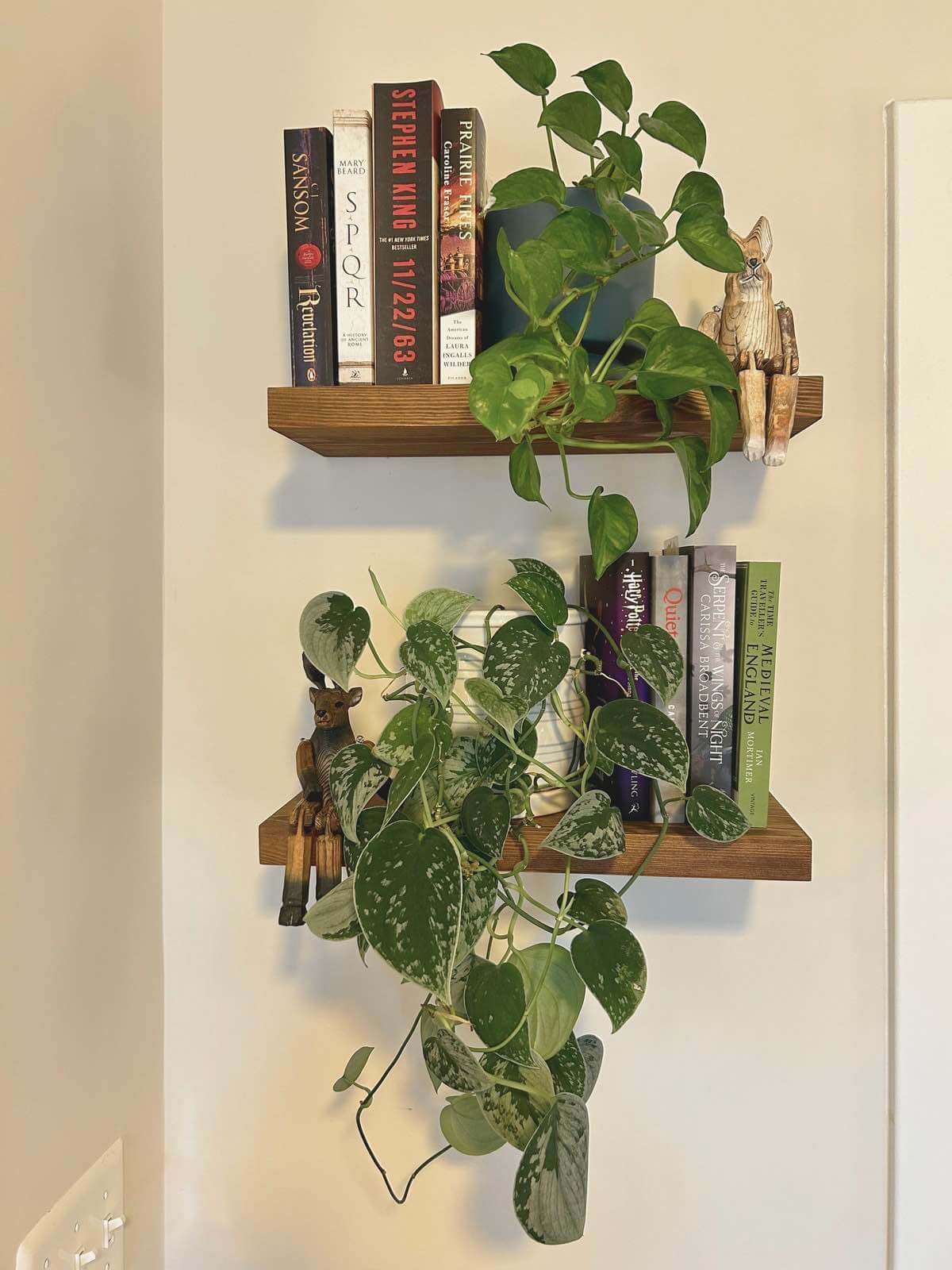
Global Green and Silver Satin pothos bring a relaxed feel to floating bookshelves with their trailing vines. Photo © Plant and Bloom Design Studio
Botanical name: Epipremnum aureum
Light: Medium to bright indirect light; tolerates lower light
Water: Allow the top 1–2 inches of soil to dry between waterings
If tidy and well-behaved isn't your thing, you might prefer a plant that spills enthusiastically over the edges of your bookshelves!
Pothos is a wonderful, easy-care houseplant for shelves. Its long, trailing vines look beautiful spilling over the edges of bookshelves, mingling with books, treasured keepsakes, and favorite tchotchkes.
Another beautiful option is Silver Satin pothos (Scindapsus pictus). Although it's not a true pothos, it has a similar trailing habit and lovely silver-patterned leaves.
Both are forgiving of an occasional missed watering and adapt to a range of light conditions. However, variegated varieties need bright light to maintain their beautiful leaf patterns.
They will eventually need a little trimming, too, but that's part of the fun. You can turn the cuttings into more plants! 😃
Designer's Notes
Pothos are my favorite choice for floating shelves and the top of bookcases, where the vines have room to cascade.
Pothos is also fun to train along the edges of shelves, up walls, or even around door frames.
I like using small, clear 3M Command hooks to gently guide the vines where I want them to grow.They're barely noticeable and let you create a beautiful display without taking up any extra shelf space.
5. Air Plants (Tillandsia)
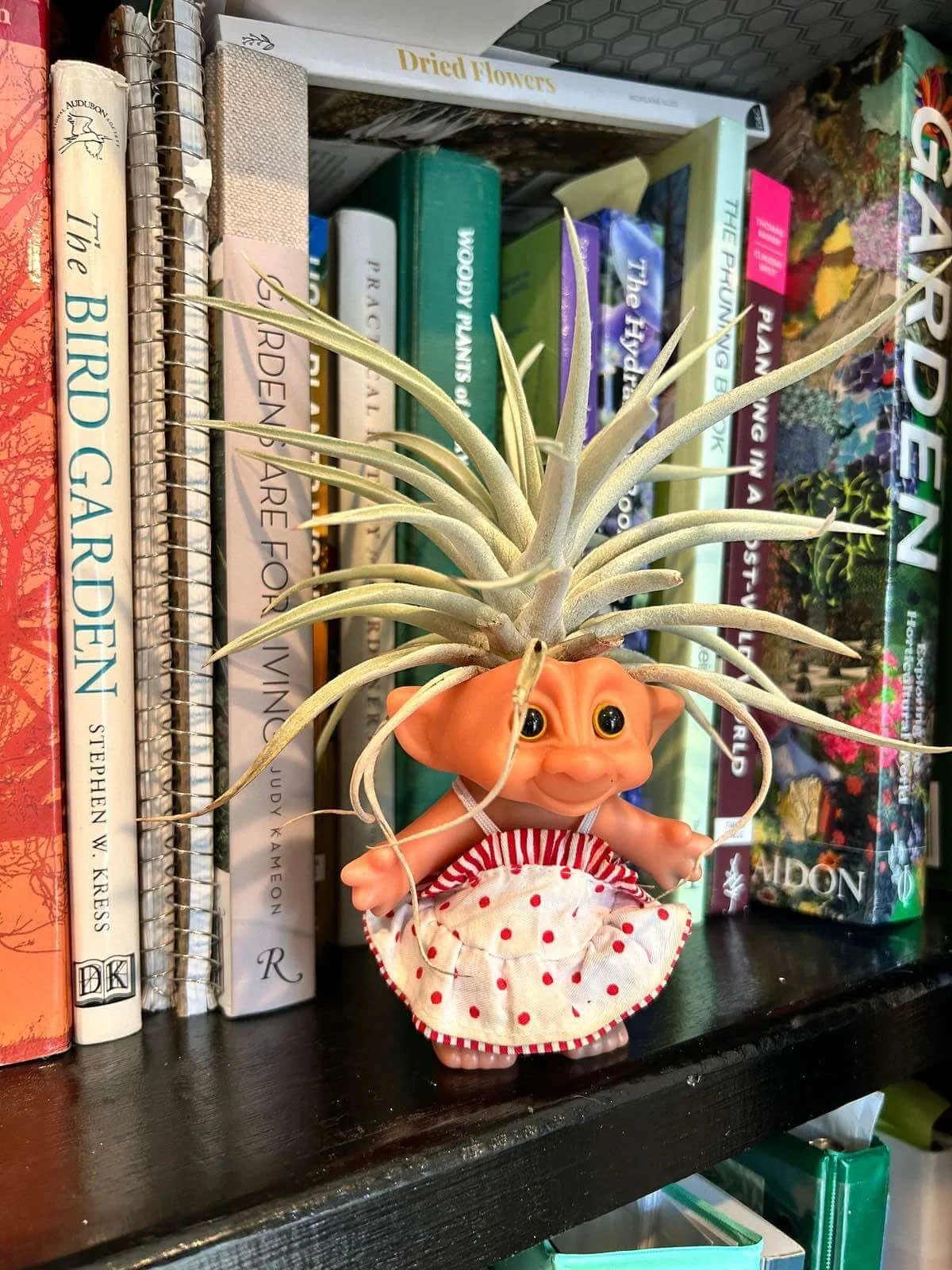
How can I not smile every time I see this little gal with fabulous air plant hair on my office bookshelf? Photo © Plant and Bloom Design Studio
Botanical name: Tillandsia species
Light: Bright indirect light
Water: Regular soaking or thorough wetting, depending on the species and growing conditions
Air plants are a fun choice for bookshelves because they don't need soil or pots.
You can display them almost anywhere, even in the little spaces where other houseplants won't fit.
But don't mistake their small size for low maintenance! Air plants need plenty of light, regular watering, and good airflow to stay healthy. I also like to mist mine with a diluted orchid fertilizer.
Designer's Notes
Tillandsias look beautiful displayed in an olive wood bowl or paired with natural materials like grape wood and seashells.
They're also fun to arrange in small groups, mixing different shapes and sizes for an interesting display. Or you could recreate my favorite troll doll hairstyle!
You can even perch one on top of a stack of books for a simple, effortless display.
A Few Final Tips for Styling Bookshelves With Plants
Whether your shelves are carefully curated or overflowing with books, a few simple details make all the difference:
Measure first. Check your available shelf space before choosing plants. Standard 2, 4, and 6-inch nursery pots are usually the easiest sizes to work with.
Think about growth. Choose compact varieties and be prepared to trim trailing plants occasionally.
Protect your books and your furniture. Use pots with drainage holes and waterproof saucers to protect your bookshelves, or choose decorative cachepots. If using a cachepot, remove the inner pot for watering, let it drain thoroughly, and never allow water to collect at the bottom.
Leave room for light. Avoid placing plants in dark corners of the shelf where they won't receive enough light to thrive.
Mix shapes and textures. Mix and match plants with different leaf colors, patterns, shapes, and textures to create a more interesting display.
And of course, plants displayed alongside books about houseplants and gardening? That's a win-win in my opinion. 😃
My Favorite Books About Plants and Garden Design
In a world increasingly filled with AI-generated images and questionable gardening advice, I think it's more important than ever to learn from knowledgeable, experienced authors.
I've put together a few collections of my favorite books about houseplants, gardening, and landscape design on Bookshop.org. Many are books I've used throughout my career and still return to for inspiration.
So, while you're making room for a few more plants on your bookshelves, why not add a few good gardening books, too?
And when you purchase through Bookshop.org, you're also supporting independent bookstores. Another win-win!