
Published: October 4, 2026
I used to work in a high-end plant shop, surrounded by gorgeous plants in beautiful containers. It was the stuff of interior design dreams, and the prices reflected it.
I loved the look, but I also love a design challenge: could I create something similar in my own home without spending a fortune?
I learned to look for plants with the same expensive appeal at grocery stores and big-box stores, then pair them with containers that suit my home’s style.
Distinctive foliage, a beautiful shape, and the right pot can make an ordinary plant purchase look expensive.
These five houseplants are my favorite choices for creating an elevated look. I’ll share what I love about each one and how I’d style it, along with a few tricks for finding or creating inexpensive, chic containers.
You don’t need to splash out on a rare plant or a designer planter. You just need a beautiful plant and thoughtful styling.
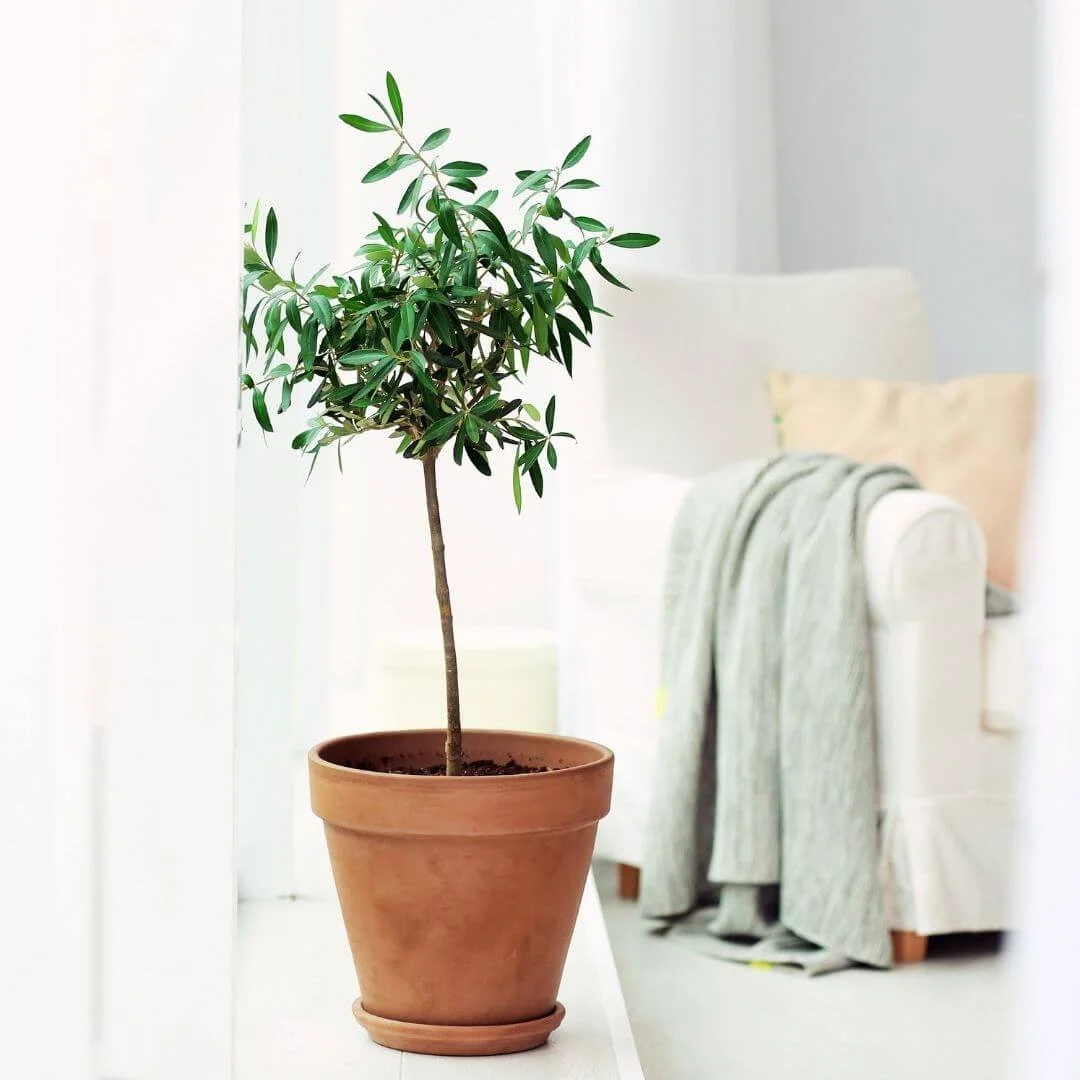
Looking for houseplants that look expensive? An olive tree in a simple terracotta pot brings soft texture and elevated style to a living room. Image © Africa Images via Canva.com
Before You Buy
A lush, healthy plant is the starting point for an expensive look. While you’re shopping, check for:
Healthy foliage: Avoid lots of yellowing, brown, or badly scarred leaves.
Pests: Check beneath leaves for fine webbing, cottony patches, or tiny insects.
A pleasing shape: Choose balanced growth that looks good right away.
I love rescuing sad cacti from big-box stores (don’t judge), but this design assignment calls for walking past the rescue shelf. Difficult, but you can do it. 😉
Make sure you have a spot with the right light, too. It’s much easier to keep a beautiful plant looking good when it’s happy where you put it.
This article may contain affiliate links. If you make a purchase through one of these links, I may earn a commission at no additional cost to you.
1. Philodendron ‘Birkin’
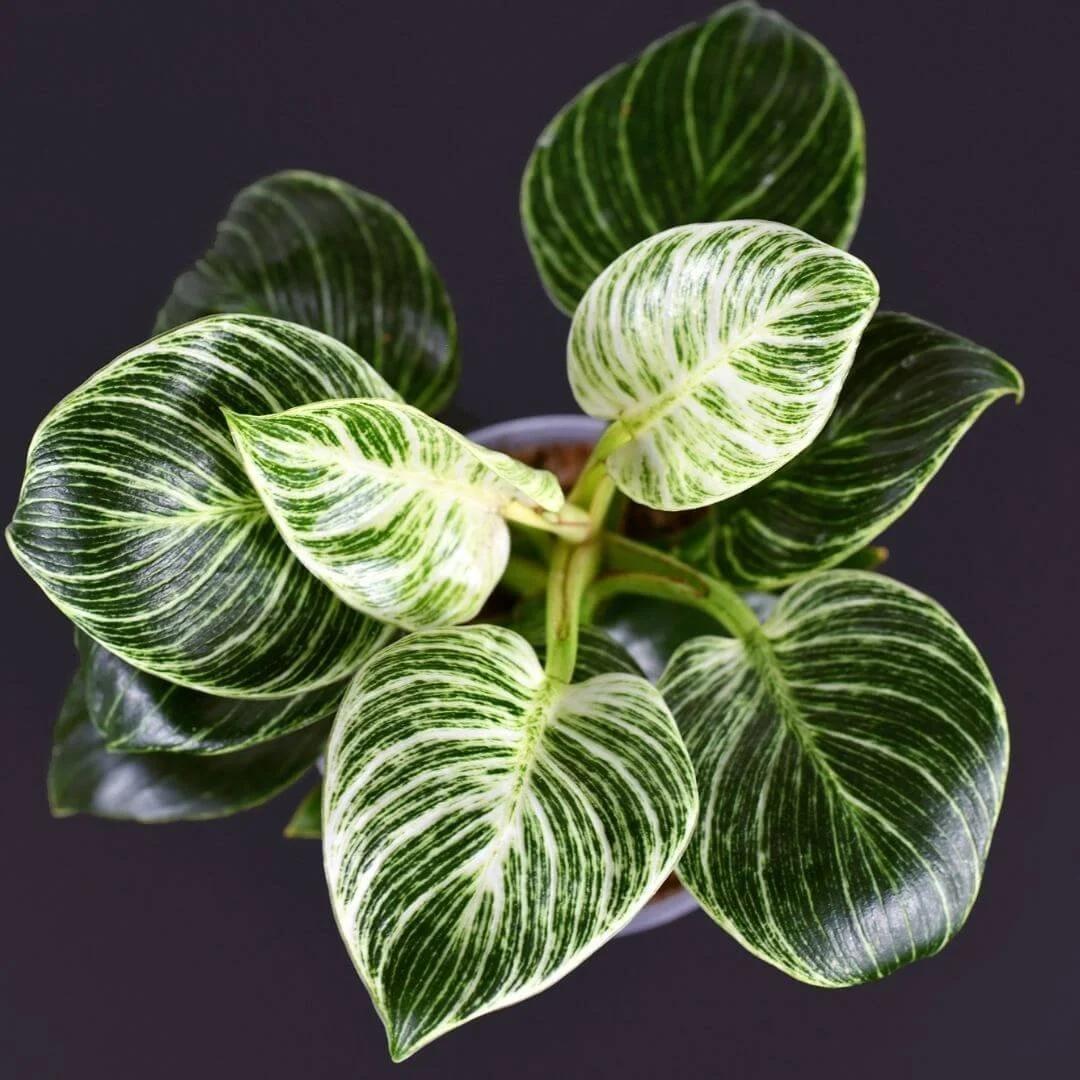
Oh, those leaves. 😍 I could stare at Birkin’s glossy green foliage and delicate creamy-white stripes for hours. Image © Firn via Canva.com
Botanical name: Philodendron ‘Birkin’
Light: Medium to bright indirect light
Water: Water when the top 1–2 inches of soil feels dry
I remember when we first got a Philodendron ‘Birkin’ at the plant shop. My coworkers and I crowded around it, admiring the dark green leaves with delicate, creamy-white stripes. There was plenty of oohing and aahing.
I still think it’s one of the most sophisticated-looking houseplants you can buy. The fine stripes give it a crisp, tailored look, and its upright, compact growth makes it easy to display on a side table or in a planter with a stand.
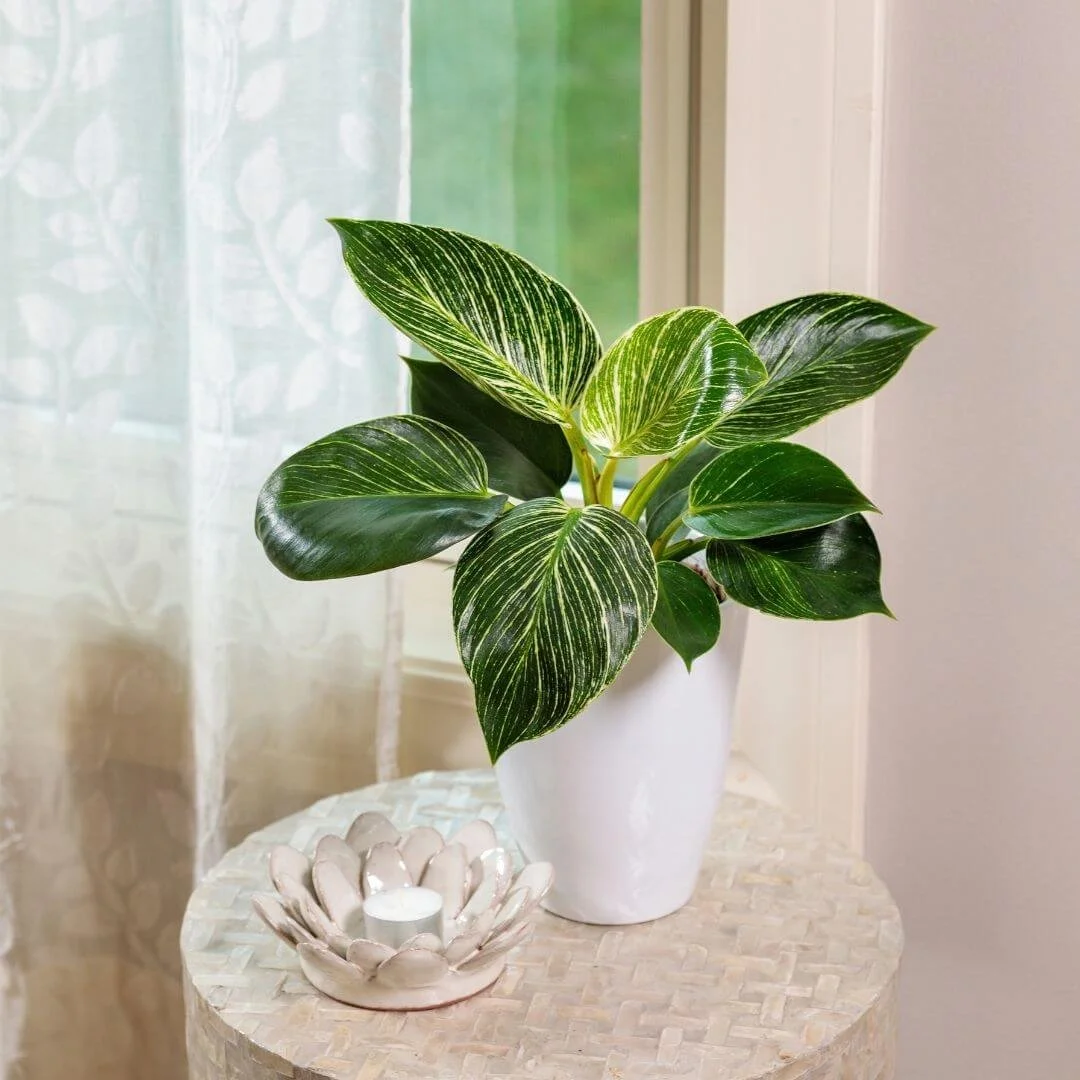
Birkin’s striking leaf pattern dresses up even a simple white pot. Prismacolor™ Philodendron Birkin image courtesy of Proven Winners, provenwinners.com
Designer’s Notes
Birkin’s green-and-cream palette works beautifully with off-white walls, warm greige, blues, and sage greens. Against a dark accent wall, the pale stripes stand out even more. It looks equally at home beside rustic wood furniture or a soft, cozy couch.
I like Birkin best in a simple, dark pot without patterns or embellishments; let the beautifully striped leaves be the star. Put one beside your IKEA Kallax shelves, and you've instantly made a familiar piece of furniture feel more polished.
2. Monstera ‘Thai Constellation’
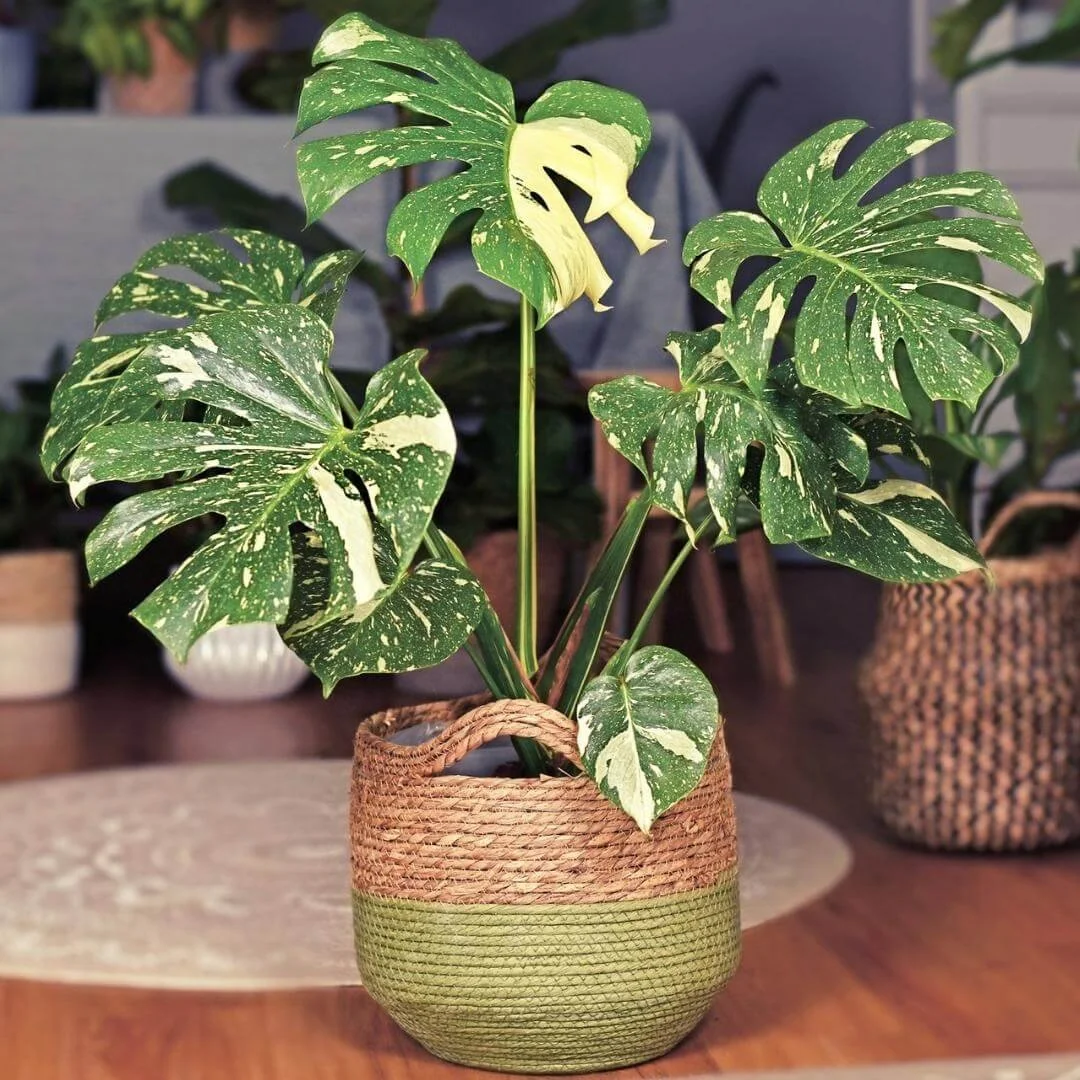
More gorgeous leaves to drool over. I love how the woven basket complements Thai Constellation’s lush, tropical look. Image © Firn via Canva.com
Botanical name: Monstera deliciosa ‘Thai Constellation’
Light: Bright indirect light
Water: Water when the top 1–2 inches of soil feels dry
Thai Constellation used to come with a price tag to match its spectacular foliage. Thanks to larger-scale propagation, it’s now easier to find at lower prices. I’ve even spotted it in grocery stores lately.
Its green leaves are speckled and splashed with cream, and mature foliage develops the dramatic splits and holes that make monsteras so distinctive. The variegation is stable, too, so it isn’t prone to reverting to an all-green plant.
If a large specimen is beyond your budget, start small. Young plants have heart-shaped leaves without the characteristic openings. With time, good light, and support as it grows, you can look forward to increasingly large, beautifully split leaves.
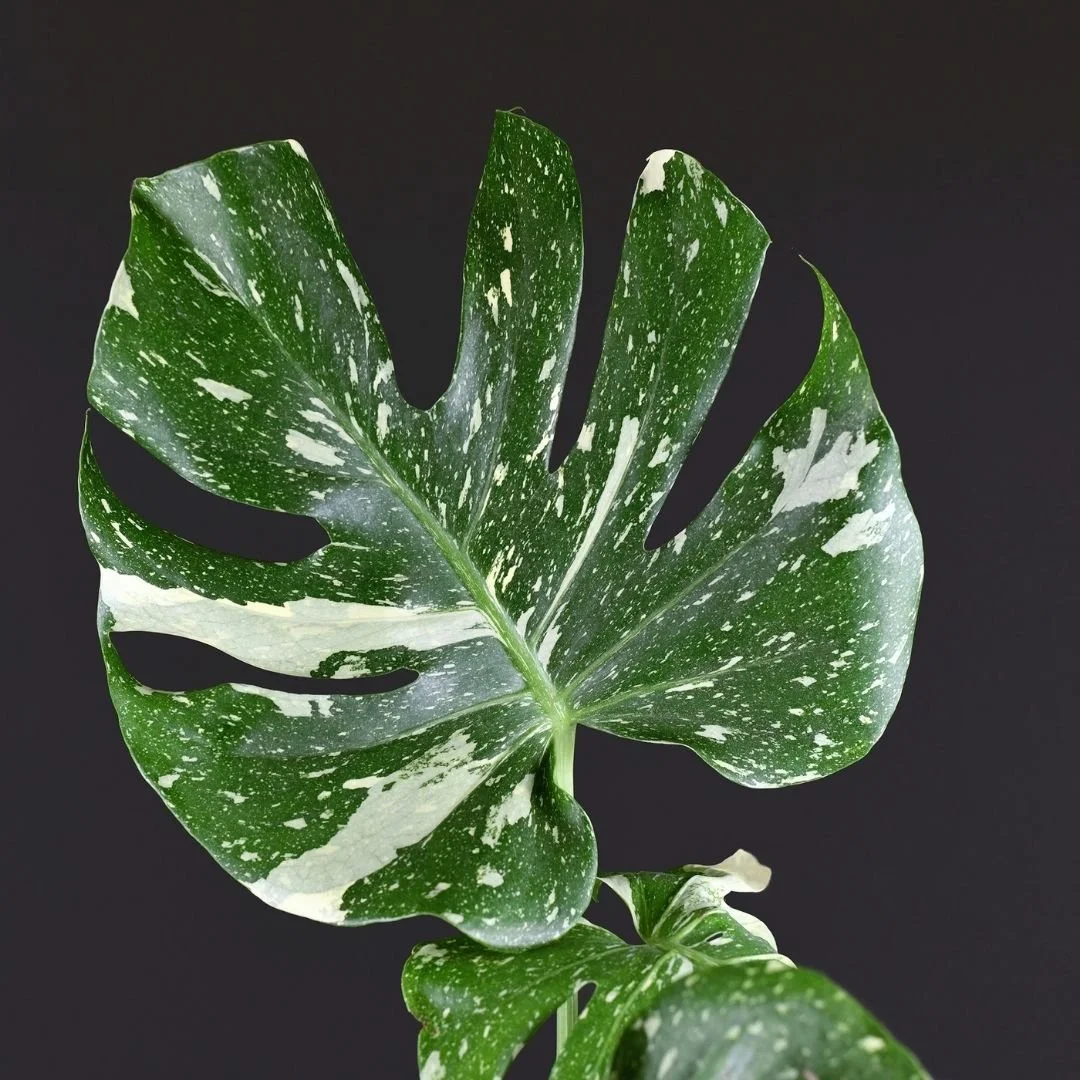
A closer look at the gorgeous creamy speckles and splashes; every leaf has its own unique pattern. Image © Firn via Canva.com
Designer’s Notes
Thai Constellation’s creamy speckles and splashes draw your eye from leaf to leaf, while the long stems hold the foliage at different angles, giving the plant a lovely sense of movement.
It’s a beautiful choice for a floor plant near a bright living room or bedroom window, where you can appreciate the leaf shapes and patterns. Against a plain wall, the sculptural outlines and creamy markings stand out even more.
3. Olive Tree
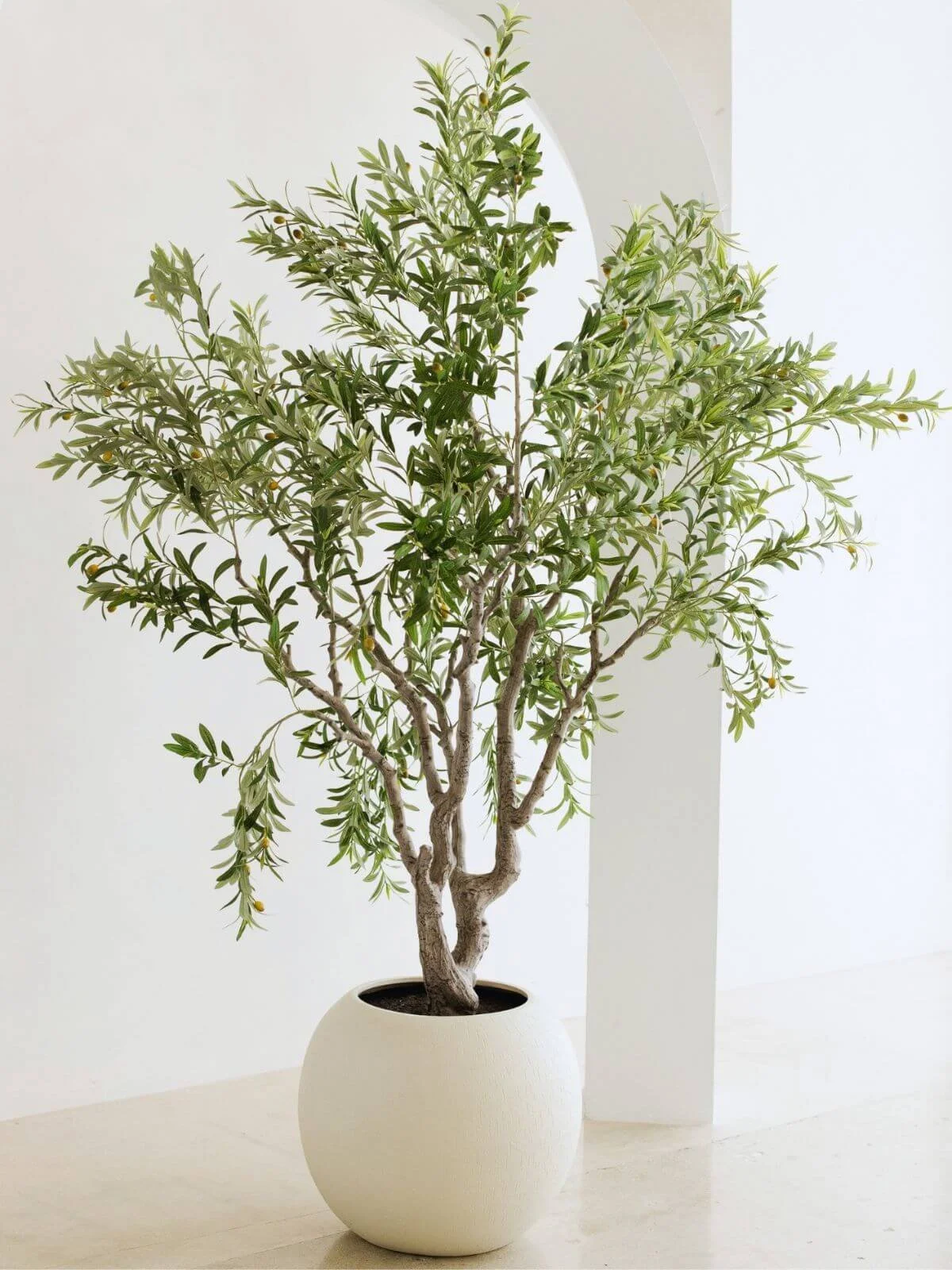
Go big or keep it small. An olive tree looks stunning as a full-size floor plant or a little windowsill topiary. Image © Sabri via Canva.com
Botanical name: Olea europaea
Light: Very bright light, including several hours of direct sun
Water: Water when the top 2 inches of soil feel dry
An olive tree has a completely different beauty from the boldly patterned plants detailed above. Its small, soft green leaves with silvery undersides bring delicate texture to a room. It’s the epitome of quiet luxury, straight out of Architectural Digest.
Finding one may require you to branch out (couldn’t resist 😉) and look at a nursery or online. That’s what I did, choosing a smaller, less expensive plant rather than splashing out on a mature tree. Mine grew fairly quickly in a bright spot beside a sliding glass door.
Abundant sunlight is key. Olive trees come from the sunny Mediterranean, so choose one only if you have a spot that can provide several hours of direct sun.
Designer’s Notes
An olive tree looks clean and contemporary in a modern planter, or you can lean into its Mediterranean character with a warm terracotta pot. A woven basket brings a softer, more relaxed look. The container helps set the mood, while the muted foliage works beautifully with all three.
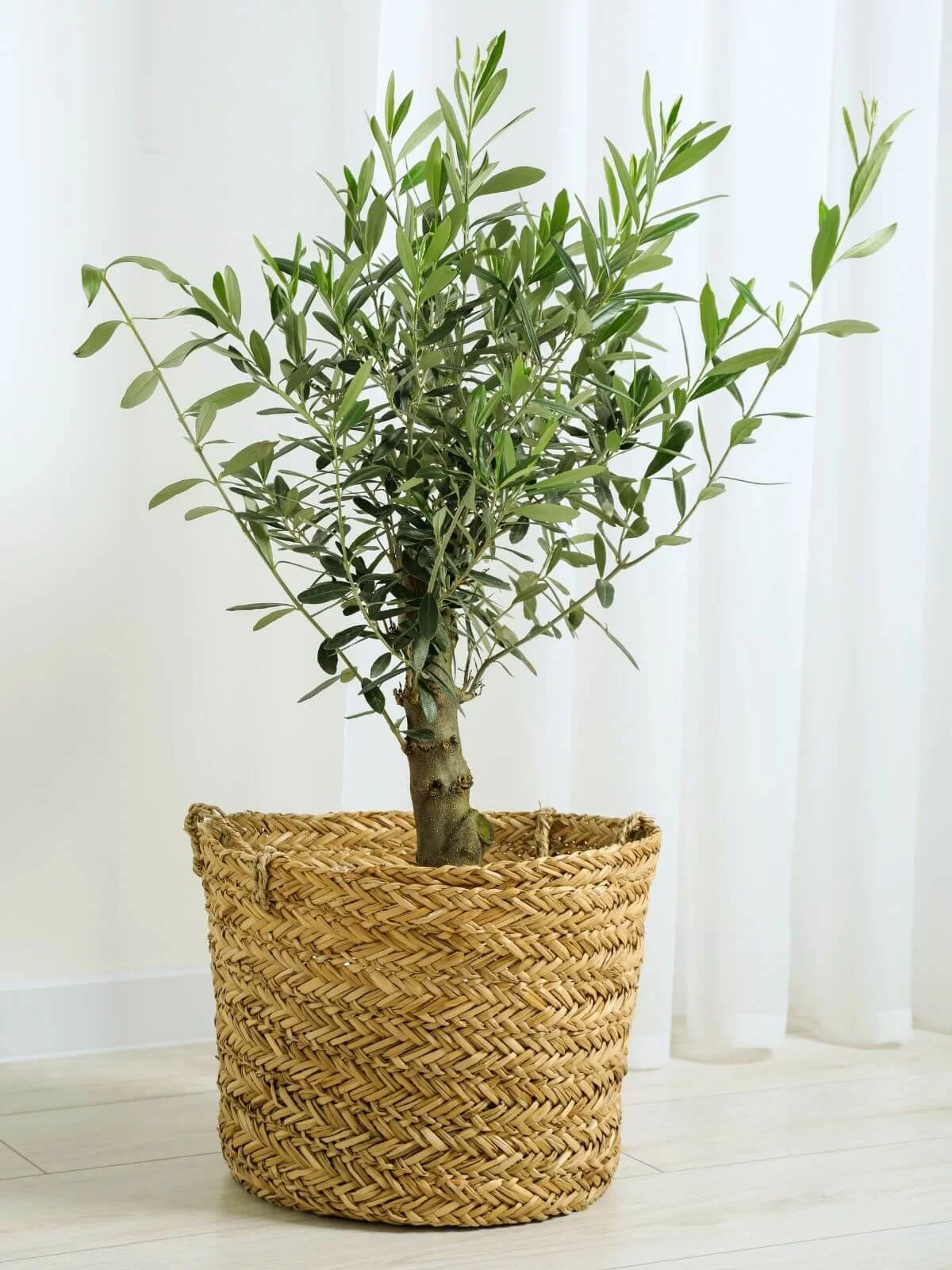
Same beautiful tree, different mood. A woven basket gives an olive tree a softer, more relaxed look. Image © Africa Images via Canva.com
I love the contrast of the small leaves against substantial furniture, whether it’s a rustic dining table or a solid wood cabinet. The slender trunk and airy canopy add height and delicate texture beside these heavier pieces.
You can get the look on a smaller scale, too. A little olive topiary in a basic terracotta pot looks beautiful on a sunny windowsill, without taking up lots of space.
4. Polka Dot Begonia
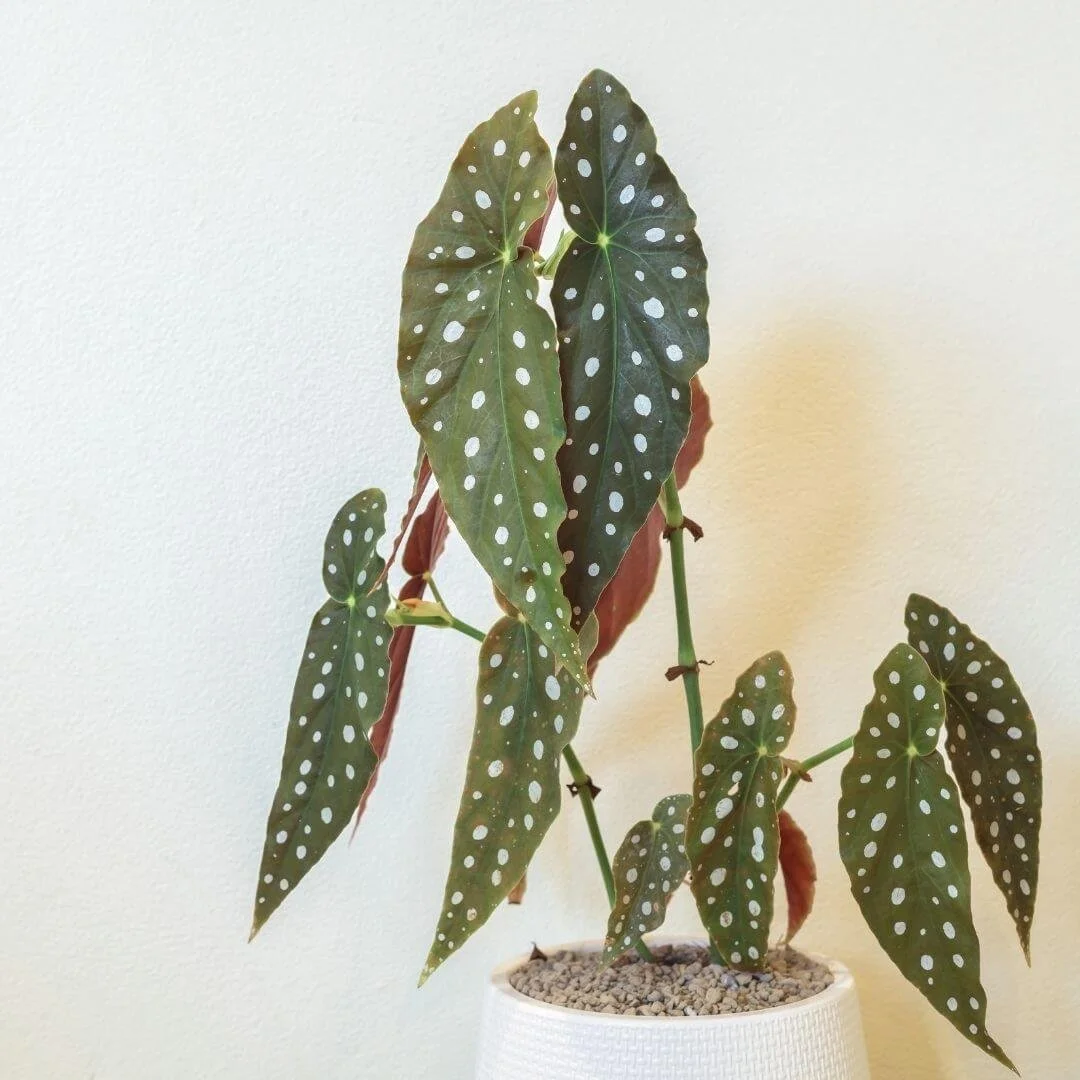
Silvery spotted leaves steal the show, while a subtly textured pot plays a beautiful supporting role. Image © Yotrak via Canva.com
Botanical name: Begonia maculata
Light: Bright indirect light
Water: Water when the top inch of soil feels dry
Polka dot begonia is a unique looking plant that makes you want to stop and take a closer look. Its dark green, angel-wing-shaped leaves are dotted with bright silvery spots that look as though someone took a paintbrush and dabbed them on. Turn a leaf over, and there’s another beautiful detail: a rich reddish underside.
I love how polka dot begonia manages to look elegant and playful at the same time. The silvery spots catch your eye, while the angel-wing-shaped leaves hang at different angles from the upright stems, giving the plant a graceful sense of movement.
Designer’s Notes
Place polka dot begonia on a side table or console where you can admire the spotted leaves and catch glimpses of their rich red undersides. It has enough personality to draw the eye and become a focal point, even on a simple side table.
I love it in a metal cachepot to highlight the silvery spots, or gray terracotta for a softer look. A crisp, modern black planter would be beautiful, too. Keep a little space around it so you can enjoy the whole plant, rather than letting the gorgeous details get lost in a crowded display.
5. Pink Princess Philodendron
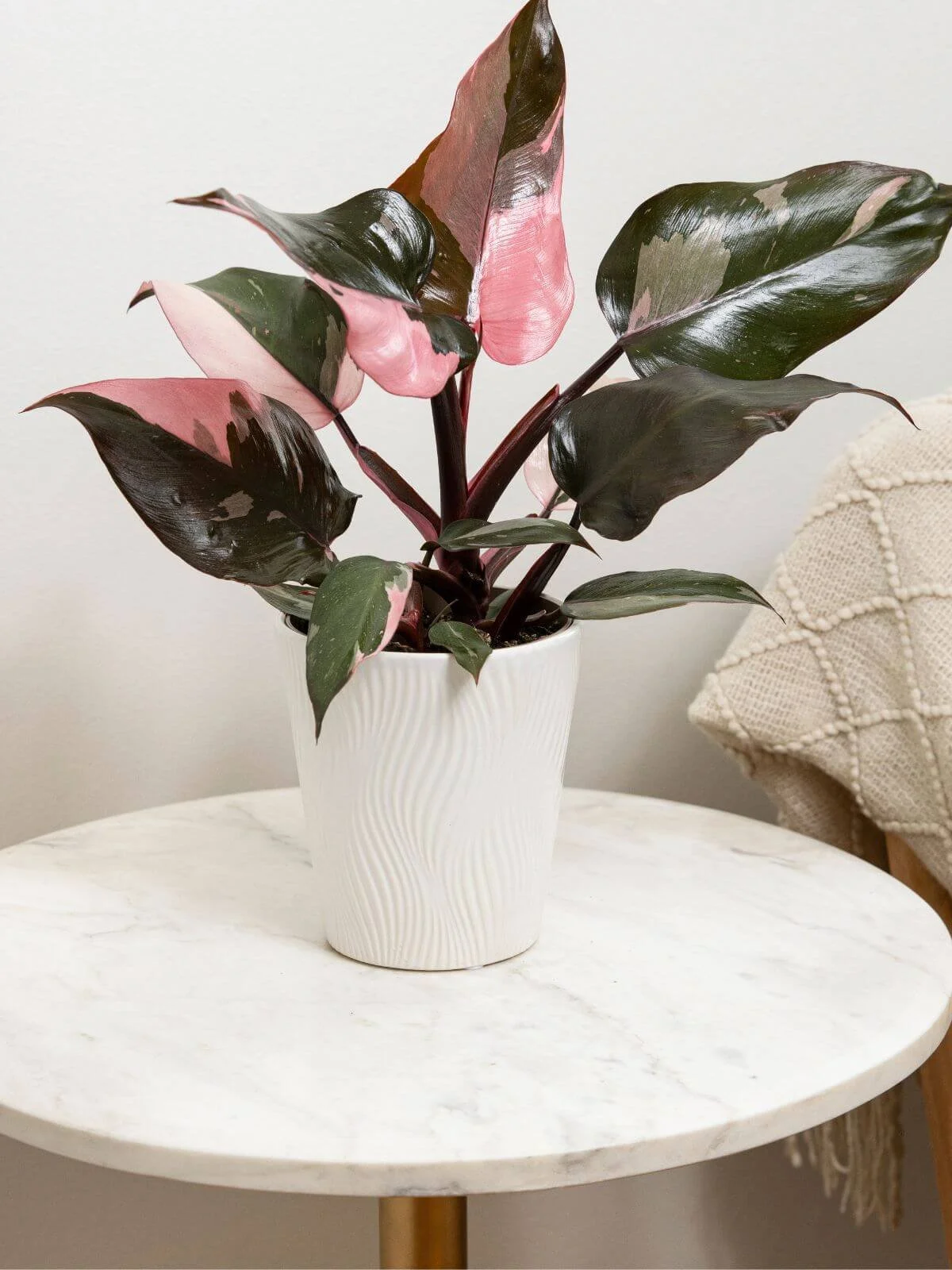
Pink Princess on marble? Now that’s a luxurious little pairing. Image courtesy of The Plant Company/Proven Winners, provenwinners.com
Botanical name: Philodendron erubescens ‘Pink Princess’
Light: Bright indirect light
Water: Water when the top 1–2 inches of soil feel dry
Pink Princess has gorgeous, glossy leaves in a rich mix of deep green, burgundy, and pink. The pink appears in both small splashes and broad streaks, an unexpectedly luxurious accent.
The elongated, heart-shaped leaves are beautiful in their own right, fanning out around the central stem to create a twisty, sculptural shape. It’s a climbing philodendron, so give it a coir pole for support as it grows, to encourage larger leaves.
Designer’s Notes
I love styling Pink Princess in a room with rich upholstery, especially deep green or burgundy velvet. Its glossy foliage and pink markings look right at home with saturated colors, sumptuous fabrics, and gold accents like lamps or picture frames.
It’s also fun to style with other plants. Pair it with a burgundy rubber plant to draw out the deeper colors, or commit to the pink and add a pink-veined fittonia. A small grouping like this can make a side table or plant shelf feel thoughtfully pulled together.
For more care tips, see my complete guide to growing Pink Princess philodendron.
Containers That Complete the Look
The container is part of your decor, so give it as much thought as the plant. A well-chosen pot highlights the foliage and makes the plant feel like a natural part of your room’s styling.
If you have the budget for a beautiful designer planter, go for it! But I learned plenty of ways to create a similar look without emptying my bank account during my years at the plant shop.
Two things guide my choices:
Gather inspiration. Browse your favorite high-end shops online or in person, or create a Pinterest mood board. Notice the shapes, colors, materials, and textures of the pots you love, then shop for similar details somewhere less expensive.
Stick with your style. Don’t settle just because a container is inexpensive and fits your plant. For example, if your room has a Scandi feel with light wood, sheer curtains, and simple furnishings, a brightly painted Mediterranean-style pot will feel out of place. Keep looking for one that complements your room.
Baskets
Baskets are one of my favorite inexpensive options for large plants. Rope baskets come in all sorts of neutrals and colors, while seagrass and water hyacinth bring natural texture. Look in the storage aisles, too, where you’ll often find larger sizes.
Keep the plant in its nursery pot and place a waterproof saucer inside the basket to protect it and the floor. Measure all three before buying so everything fits. And be mindful when you water so the saucer doesn’t overflow, and the plant isn’t left sitting in water.
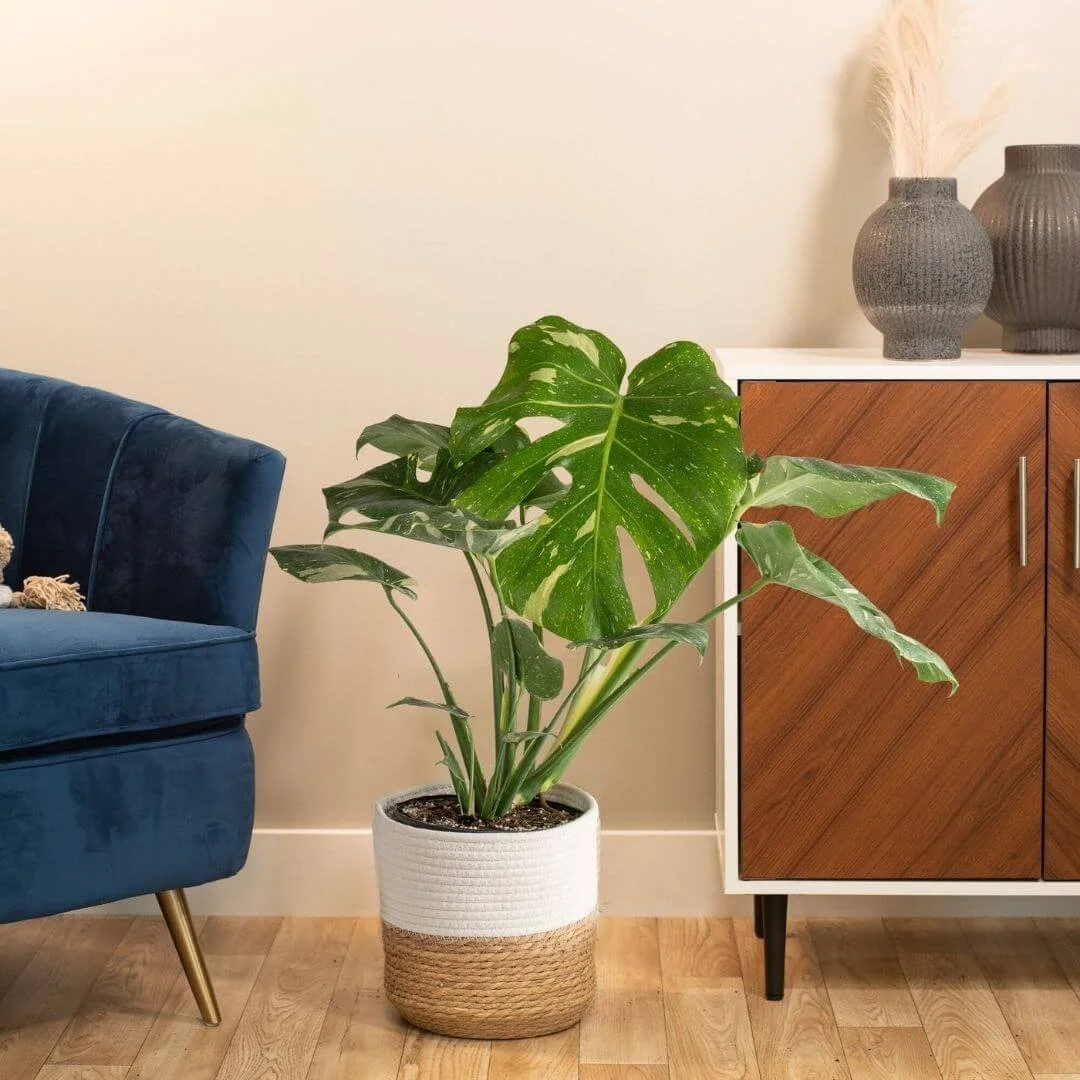
A textured basket and gorgeous foliage look right at home in this room. Monstera Thai Constellation image courtesy of Costa Farms/National Garden Bureau
Cachepots
A cachepot is a decorative container without drainage holes. Simply drop your plant in, still in its plastic nursery pot. You’ll get a finished look without a visible saucer, and you can change containers easily whenever you feel like refreshing the room.
I like browsing dollar stores and craft stores for inexpensive ones. The same watering rule applies here: don’t let water collect around the roots.
Repurposed Planters
Some of my favorite containers weren’t made for plants at all, including a vintage ceramic crock that belonged to my grandmother. The lid is long gone, but who needs a lid when you can fill it with a gorgeous plant? 😃
Think vintage ice buckets, galvanized tubs, or an old wicker hamper. Or see what’s hiding in your cupboards. Finding something unexpected is half the fun.
Keep the plant in its nursery pot and use your find as a cachepot. If needed, add a waterproof lining made from florist’s foil wrapping paper. If the container is too deep, I like to use clay pebbles (LECA) beneath the nursery pot to raise it to the right height.
If you’d rather plant directly into your found container, a carbide-tipped glass and tile drill bit can be used to add a drainage hole. I’ve used mine with ceramic, plastic, clay, and porcelain containers. Work slowly with light pressure to reduce the risk of cracking.
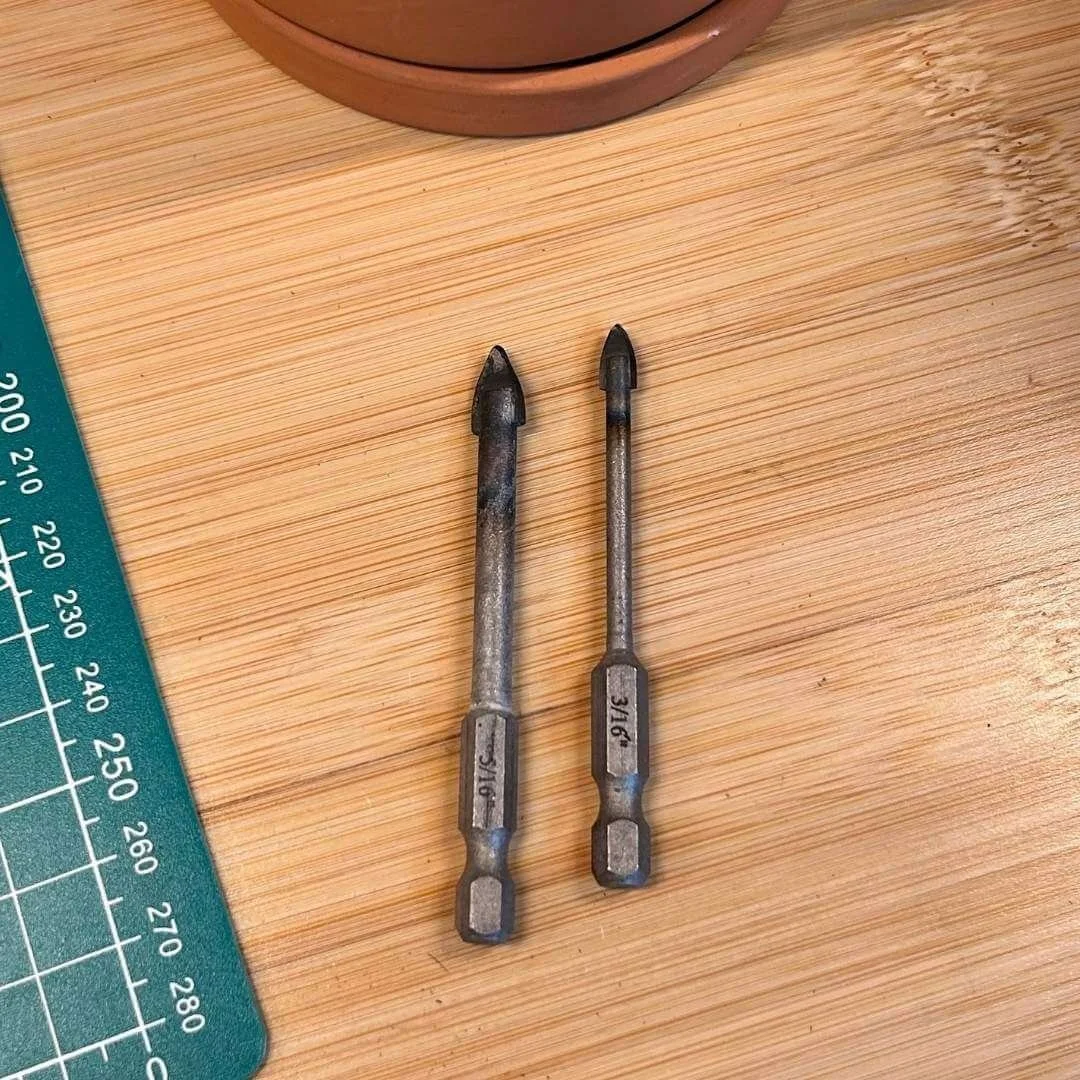
My glass and tile drill bits have helped turn all sorts of finds into plant containers. Image © Plant and Bloom Design Studio
Customized Pots
If you’re crafty, an inexpensive terracotta pot or metal container can be the starting point for something beautiful. Paint or aged finishes can give a basic pot a completely different, custom look.
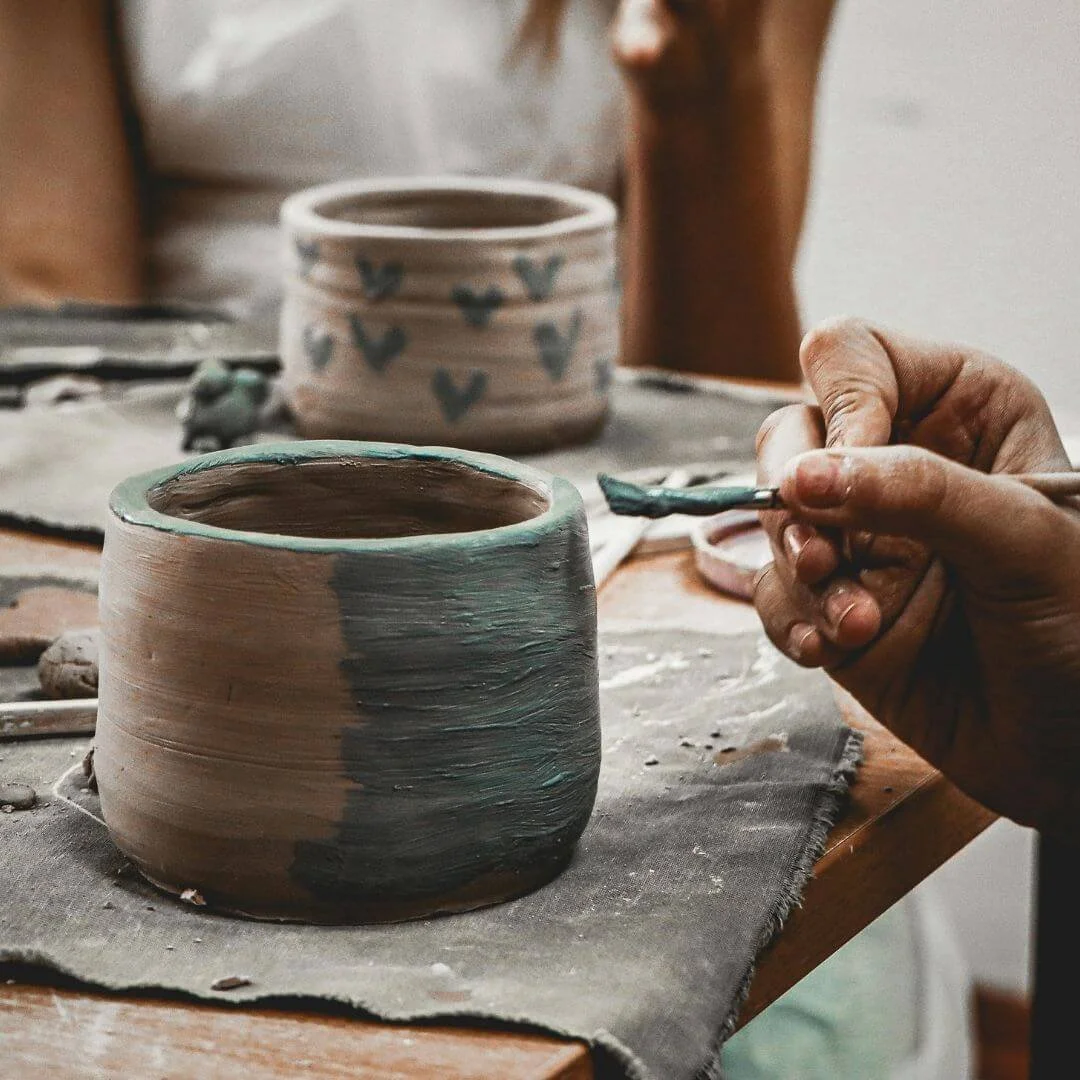
A little paint can turn a basic terracotta pot into something that feels like your own. Image © 3B Pexels via Canva.com
My Favorite Places to Find Expensive-Looking Containers
HomeGoods: My favorite for a treasure hunt. Look for pots, baskets, and unexpected containers throughout the store, including the kitchen aisles.
IKEA: I love it for inexpensive planters with thoughtful design. A great place to find simple shapes and clean lines that look more expensive than they are (and snag some houseplants while you’re there, they have great prices). 👏 More plants!
Dollar stores and craft stores: Good places to browse for small cachepots, terracotta pots, and metal buckets.
Target: I like browsing for simple planters and baskets. The selection is highly seasonal, so grab a favorite when you find it.
Lowe’s: One of my go-to places for inexpensive terracotta pots and larger, modern planters. I especially like their simple terracotta styles that develop character as they age.
Secondhand shops, salvage stores, and flea markets: Look for beautifully weathered pots or something unusual to repurpose. You never know what you’ll find. 🪴