
First Editions Eclipse Bigleaf Hydrangea
Published: April 3, 2024 | Updated: June 17, 2026
Bring drama to your garden with dark foliage and mophead blooms.

The dark foliage and mophead flowers of the First Editions® Eclipse® Bigleaf Hydrangea. Image courtesy of Bailey Nurseries.
If you've been searching for a hydrangea that actually looks different, one that brings a little mystery and drama to the garden, the Eclipse bigleaf hydrangea might be exactly what you've been looking for.
This striking cultivar (Hydrangea macrophylla 'Bailmacseven') earns its name. The foliage is a deep, rich purple-black that holds its color all season long, even in warmer climates where dark-leaved plants often fade to green by midsummer. Set against that dark backdrop, the mophead flowers are quite stunning: creamy centers edged with shades of cranberry or deep purple, deepening as the season progresses. By autumn, the dried flower heads turn a warm russet brown and they're beautiful in a completely different way.
Hardy in zones 5 through 9, Eclipse grows in partial shade with rich, well-drained soil, and it has better-than-average resistance to the fungal diseases that can plague bigleaf hydrangeas in humid climates. Eclipse® grows 3 to 5 feet tall and wide, making it a good fit for most residential landscapes. It's a distinctive choice for a foundation planting, a woodland garden, or a cottage border. And if you're leaning into the dark and moody aesthetic, it belongs in a goth garden.
In this article, you'll find landscaping ideas, companion planting suggestions, and everything you need to know about growing and caring for the Eclipse hydrangea. All photos of this purple leaf hydrangea throughout this article are real, not AI generated, sourced from a trusted horticultural grower, so what you see is exactly what you can expect to grow.
Eclipse Bigleaf Hydrangea at a Glance

The First Editions® Bigleaf Hydrangea shines in a border garden planting. Image courtesy of Bailey Nurseries.
Common name: First Editions® Eclipse® Bigleaf Hydrangea (sometimes called a cranberry hydrangea for its deep reddish blooms)
Botanical/Latin name: Hydrangea macrophylla ‘Bailmacseven’
Hardiness zones: 5-9
Mature size: 3 to 5 feet tall and wide
Spacing: 3 to 4 feet on center
Light requirements: Partial shade (2 to 4 hours of direct sunlight per day)
Form: Upright, multi-stemmed deciduous shrub
Growth rate: Fast (24+ inches per year)
Flowering time: Summer
Flower color: Cream centers with cranberry red or deep purple edge
Flower form: Mophead
Bloom habit: Reblooming; flowers on both old and new wood
Foliage type: Opposite, simple, serrated deep purple leaves
Fall color: Deep Purple
Deer resistant: No
Landscaping Ideas for Eclipse Bigleaf Hydrangea
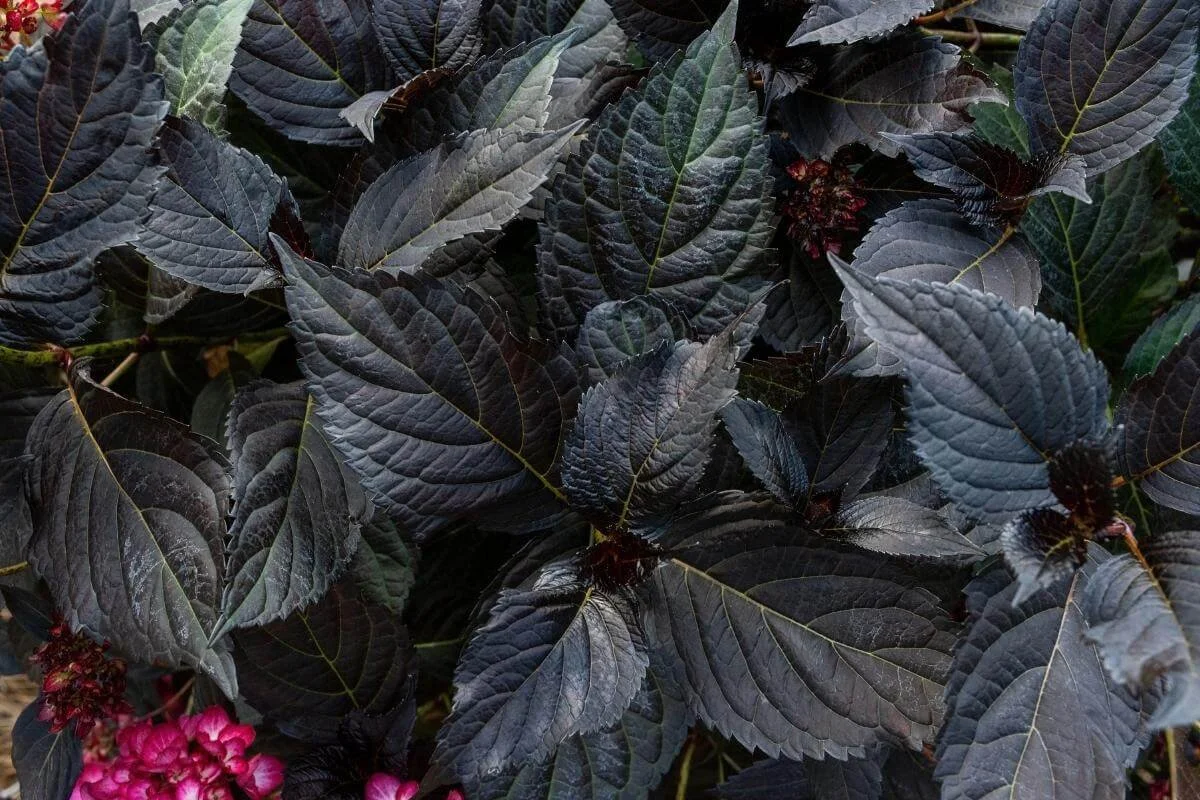
Eclipse® hydrangea leaves stay a rich, deep, dark color from spring through fall, even in warm climates. Image courtesy of Bailey Nurseries.
Specimen Planting: The dramatic dark leaves and bright flowers of the Eclipse hydrangea make it the perfect stand-alone specimen to bring drama and attention to your yard.
Foundation Planting: Plant Eclipse hydrangeas along the foundation of your home. Their dramatic dark purple foliage and colorful blooms will enhance the curb appeal of your home. The deep-purple leaves and cranberry red blossoms look particularly striking against the backdrop of a house painted in lighter tones of warm gray.
Mixed Borders: Create a mixed border planting by combining Eclipse hydrangeas with other complementary plants. Consider pairing with bulbs, perennials, ornamental grasses, and evergreen shrubs for four seasons of visual appeal.
Woodland Garden: The dappled shade underneath the canopy of tall trees is an ideal spot for an Eclipse hydrangea. Combine with other partial-shade loving plants like camellias, Japanese andromeda, azaleas, and rhododendrons.
Accent Planting: Use Eclipse hydrangeas to create a focal point in the landscape. Plant strategically to draw attention to specific areas of the garden, like entryways, water features, pathways, or seating areas.
Vintage Cottage Garden: For a charming, informal, cottagecore look, plant an Eclipse® hydrangea alongside old-fashioned cottage garden favorites like foxgloves, garden phlox, hollyhocks, catmint, hibiscus, and roses.
Goth Garden: Embrace the newest garden trend by planting an Eclipse hydrangea alongside other plants with dark foliage. The dark purple leaves of this hydrangea make it the perfect plant choice for incorporating into a romantic, mysterious, eerie Goth garden.
Looking for more dark and moody plant ideas? Read my guide to the 10 best goth garden plants for a full list of dark foliage picks.
Planting Companions for Eclipse Bigleaf Hydrangea

The First Editions® Eclipse® Bigleaf Hydrangea prefers morning sun and afternoon shade. Image courtesy of Bailey Nurseries.
Feeling inspired to plant an Eclipse hydrangea in your garden? Here are some ideas for planting companions. All favor the same partial shade conditions and moist, rich, well-draining soil that bigleaf hydrangeas love.
Japanese Painted Fern (Athyrium niponicum): A low-growing, soft fern with purple-streaked silvery foliage complements the dark color scheme of the Eclipse hydrangea.
Gem Box Inkberry Holly (Ilex glabra 'SMNIGAB17'): This compact, globe-shaped evergreen creates a pleasing contrast of color and texture when planted alongside the Eclipse hydrangea.
Jack of Diamonds Brunnera (Brunnera macrophylla ‘Jack of Diamonds’): A Brunnera with huge, heart-shaped leaves and dainty blue spring flowers. The Eclipse hydrangea highlights the dramatic dark veining pattern on the silver leaves of this Brunnera cultivar.
Little Missy Boxwood (Buxus microphylla ‘Little Missy’): A row of these petite, 24-inch high compact evergreens can be planted in front of a row of Eclipse hydrangeas, creating a contrast of structure and form.
Silver Gumdrop Coral Bells (Heuchera ‘Silver Gumdrop’ Dolce®): A heuchera hybrid with iridescent, semi-gloss silvery leaves that take on tones of blush pink. Vibrant pink flowers emerge in late spring and pair nicely with the Eclipse hydrangea.
NewGen Independence Boxwood (Buxus NewGen Independence® ‘SB 108’): The small evergreen leaves and structured shape of boxwoods are the perfect foil for the larger, deep purple leaves and loose form of the Eclipse hydrangea. NewGen Independence has a rounded habit and improved resistance to boxwood leafminer.
Glamour Girl Tall Garden Phlox (Phlox paniculata ‘Glamour Girl’): A tall perennial with green leaves and panicle-shaped flowers. The hot coral pink blooms complement the Eclipse hydrangea all summer long.
Cavatine Japanese Andromeda (Pieris japonica ‘Cavatine’): Striking evergreen leaves and delicate, bell-shaped white flowers contrast nicely with the large toothed leaves of the Eclipse hydrangea.
Delaware Valley White Azalea (Rhododendron ‘Delaware Valley White’): The white flowers and dark green foliage of this evergreen azalea won’t clash with the dark leaves and cranberry-tinged flowers of the Eclipse hydrangea.
Astilbe (Astilbe species): The fine textured foliage and spiky summer flowers of astilbe are the perfect partner for the large, serrated leaves of the Eclipse hydrangea. Scarlet red varieties like ‘Red Sentinel’ look particularly nice.
How to Plant and Grow the Eclipse Bigleaf Hydrangea
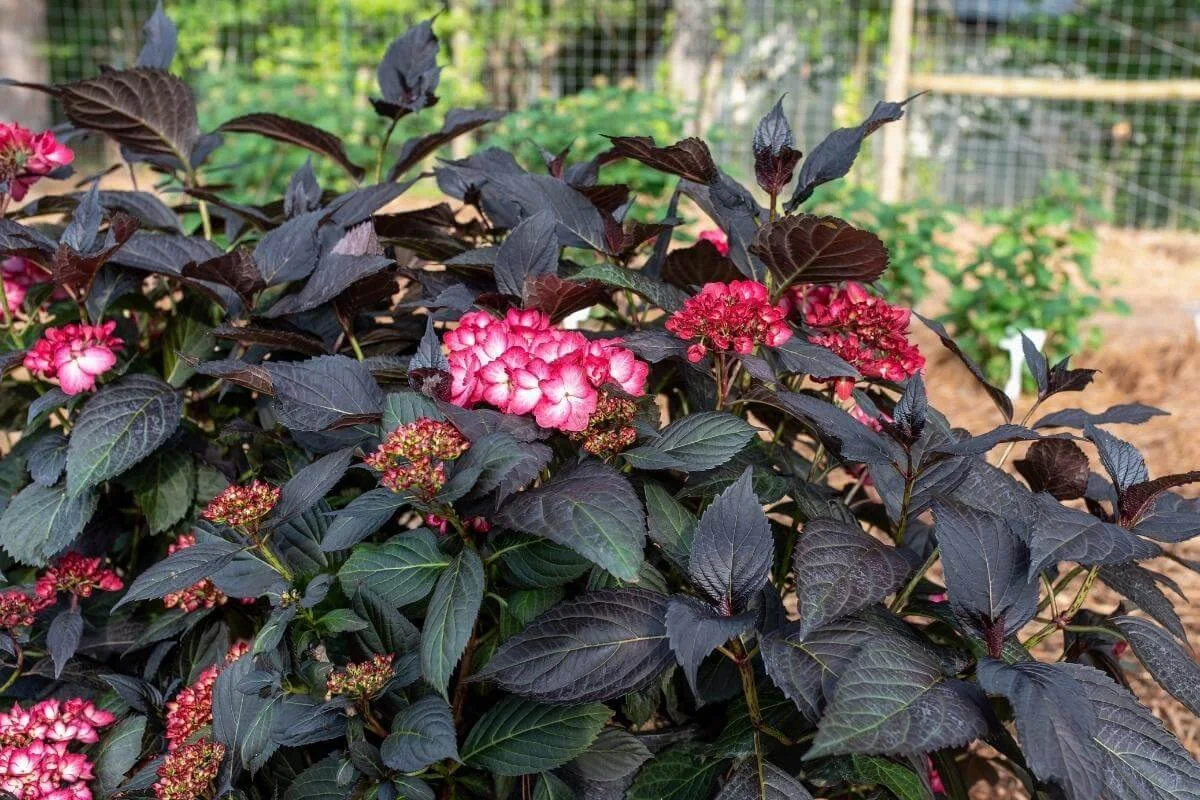
Bring drama to your landscape with the Eclipse hydrangea. Image courtesy of Bailey Nurseries.
Planting: The best time of year to plant an Eclipse hydrangea is in the spring or fall, giving the roots time to establish before the onset of extreme hot or cold weather. Water deeply immediately after planting.
Location: Choose a location with well-drained soil that is rich in organic matter. Eclipse hydrangeas prefer soil that retains moisture but does not become waterlogged. Select a spot with part shade and protection from the intense afternoon sun.
Soil: Amend the soil with organic matter, such as compost, shredded leaves, or Leaf-gro to improve drainage and soil fertility. If you would like your Eclipse hydrangea to bloom a more vibrant cranberry red, consider getting a soil test and adding lime to the soil. Add sulfur for deeper purple flower coloration.
Mulch: Apply a layer of organic mulch around the base of the plant to retain soil moisture, regulate temperature, and suppress weeds. Make sure the mulch does not touch the base of the plant.
Watering: Keep the soil consistently moist but not waterlogged, especially during periods of drought. Deep watering is preferable to encourage the development of a strong root system.
Fertilization: Hydrangeas typically do not need fertilization when they are given the rich, fertile soil they prefer. Each spring, spread a layer of compost, shredded leaves or Leaf-gro around the base of your hydrangea, being careful to keep away from the base of the shrub.
Pruning: Eclipse hydrangeas generally do not need pruning. Because Eclipse blooms on both old and new wood, avoid pruning in fall, when the buds for next year's early-season flowers are already developing. In late spring, remove only stems that are clearly dead or winter-damaged. Spent flowers can be deadheaded throughout summer by cutting just below the flower and above the next set of leaves.
Does the Eclipse Bigleaf Hydrangea Bloom on Old or New Wood?
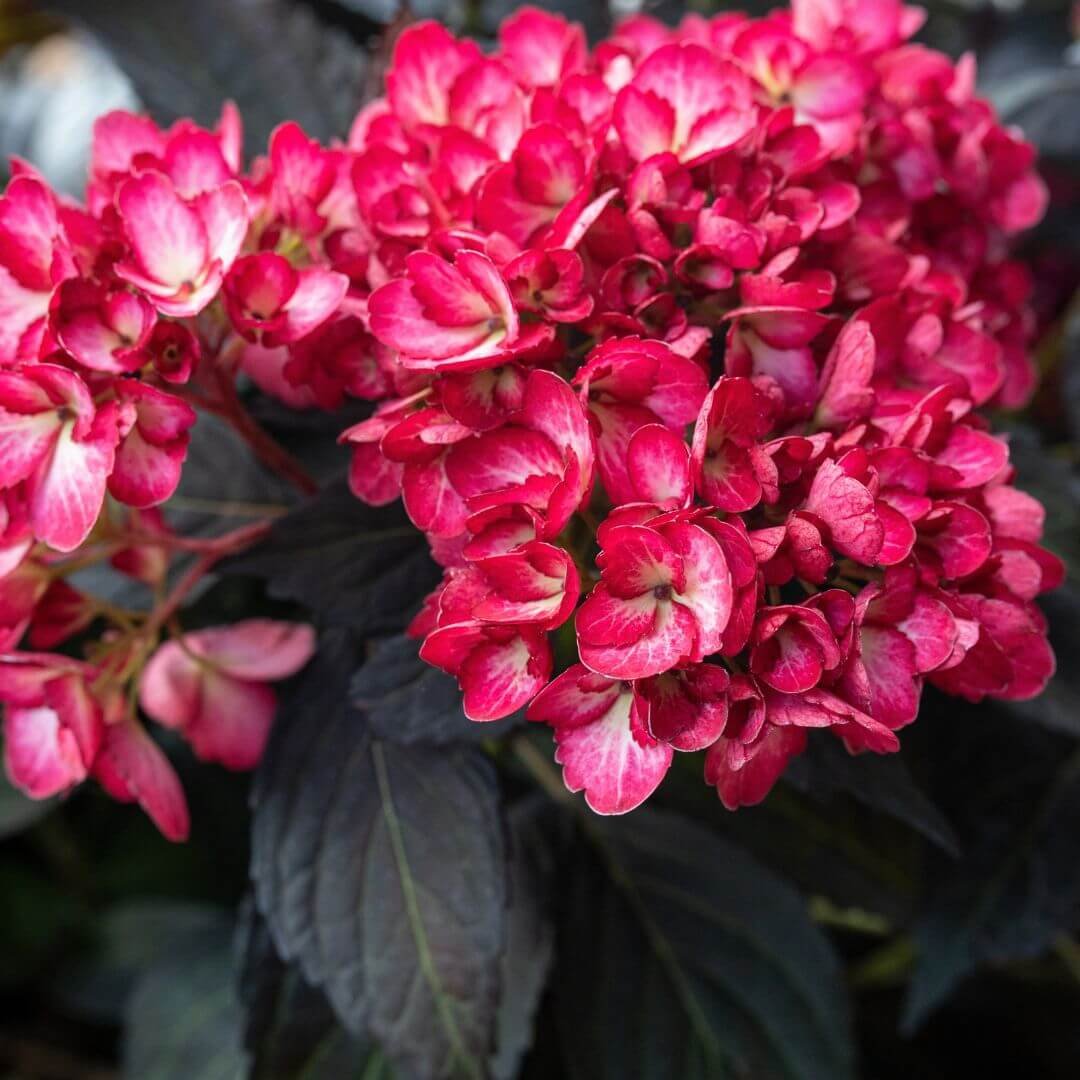
Eclipse® is a reblooming bigleaf hydrangea that flowers on both old and new wood. Image courtesy of Bailey Nurseries.
Eclipse hydrangea blooms on both old and new wood, which means it's a reblooming hydrangea. Early-season flowers develop from buds formed on the previous year's stems, while new growth can produce additional flowers later in the season.
This shrub generally does not need pruning, but if you must prune your Eclipse hydrangea, it should be done after it has finished blooming for the year and before the next season's buds begin to form.
Pruning too late can risk removing the buds, potentially affecting the plant's blooming performance for the following season. To put this in context of the seasonal gardening calendar:
Spring: Don't cut the plant back. Once it begins leafing out, remove any stems that are clearly dead or winter-damaged.
Summer: Enjoy the flowers and deadhead spent blooms if desired, cutting just below the flower and above the next healthy set of leaves.
Fall: Don't prune. Eclipse is already setting buds on old wood for next year's early flowers.
Winter: Leave the stems in place. Those old stems may be carrying next year's first flower buds.
What’s Wrong with My Eclipse Hydrangea?
Eclipse hydrangea buds, like those of many hydrangea varieties, can be susceptible to damage from extreme weather conditions. Frost damage to a hydrangea can range from minor to severe, and can look like shriveled brown or black leaves and buds and drooping, wilting flower heads.
Late Spring Frosts: Early-season Eclipse flowers develop from buds formed on old wood, so a late spring frost can damage those buds and reduce the first flush of flowers. Because Eclipse also blooms on new wood, however, healthy new growth can produce additional flowers later in the season.
Freezing Temperatures: Extremely low temperatures, especially in winter or early spring, can also damage the buds. Prolonged exposure to freezing temperatures can cause the buds to freeze and become more susceptible to damage.
Unseasonal Temperature Fluctuations: Drastic fluctuations in temperatures during the bud development stage can be harmful. Warm periods followed by sudden cold snaps can disrupt the normal development of buds, potentially leading to bud damage.
Late spring frosts can still damage Eclipse's first round of flower buds, particularly in colder climates, but its ability to bloom on new wood gives it another chance to flower later in the season. If you regularly deal with severe late frosts and want the most reliable flowering possible, panicle hydrangeas are another option because they bloom entirely on new growth.
Do Eclipse Bigleaf Hydrangeas Like Sun or Shade?
Eclipse hydrangeas thrive in partial shade and do best when they receive 2-4 hours of sunlight per day.
While they can tolerate more sun, Eclipse hydrangeas prefer dappled or filtered light, with protection from the intense hot afternoon sun.
In hot climates, providing them with morning sun and afternoon shade can help prevent their flowers and leaves from wilting and scorching.
In cooler regions, they may tolerate more sun, but protection from harsh afternoon sunlight is still recommended.
How to Change the Color of an Eclipse Bigleaf Hydrangea
You can change the color of your bigleaf hydrangea blooms by manipulating the pH of the soil. The pH level affects the availability of aluminum in the soil, in turn influencing the color of hydrangea flowers.
Adding aluminum sulfate, garden sulfur, or organic matter makes the soil more acidic and will turn the edges of Eclipse hydrangea flowers a more intense dark purple.
Adding garden lime raises the soil pH and turns the edges of blooms a more vibrant cranberry red. Be patient because it can take months for change to become evident!