
Bigleaf Hydrangea: Care, Varieties & Landscaping Ideas
Published: October 25, 2024 | Updated: August 24, 2026
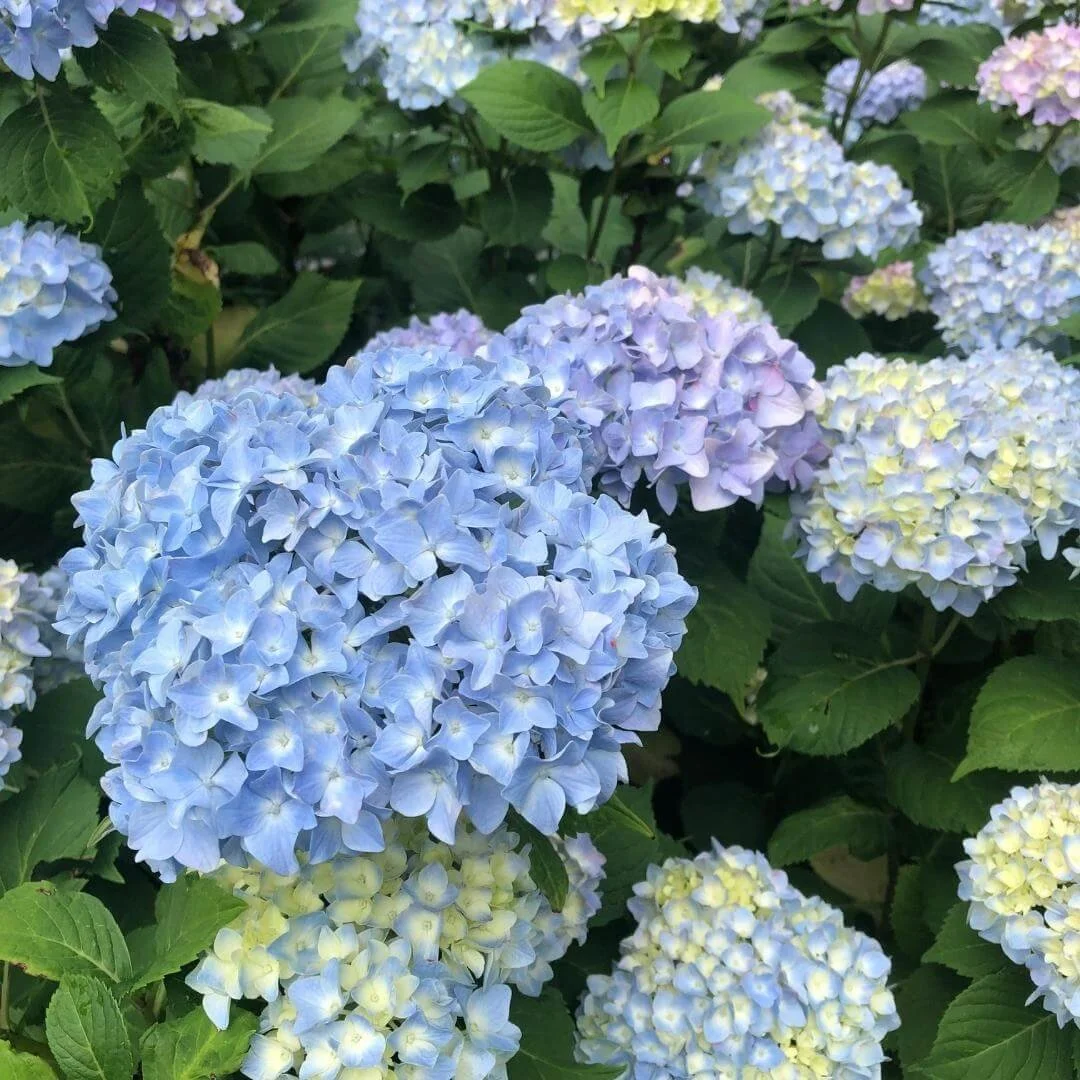
Nikko Blue is a classic bigleaf hydrangea with large mophead flowers that develop a rich blue color in acidic soil. Image © Plant and Bloom Design Studio
When I was a beginning gardener, I fell hard for a bigleaf hydrangea (Hydrangea macrophylla) covered with beautiful blue mophead flowers. I knew exactly where I wanted it: right in front of my house, where the blue blooms looked perfect next to my blue front door.
What I didn’t realize was that I'd chosen a spot baked by the hot Mid-Atlantic afternoon sun, exactly the kind of exposure bigleaf hydrangeas do not like. I spent the next decade panic-watering that poor shrub every summer afternoon as its big leaves wilted in protest.
I know a lot more about hydrangeas now, but I still understand the temptation. Bigleaf hydrangeas are hard to resist! There's something romantic and alluring about those huge flower heads, blooming in shades of blue, pink, purple, red, and white. Some cultivars can even shift color depending on soil conditions.
Bigleaf hydrangeas are also the fussiest of the six major hydrangea types. Careful siting, consistent moisture, and protection from harsh afternoon sun can make the difference between a bigleaf hydrangea that struggles and one that becomes a beautiful part of the landscape.
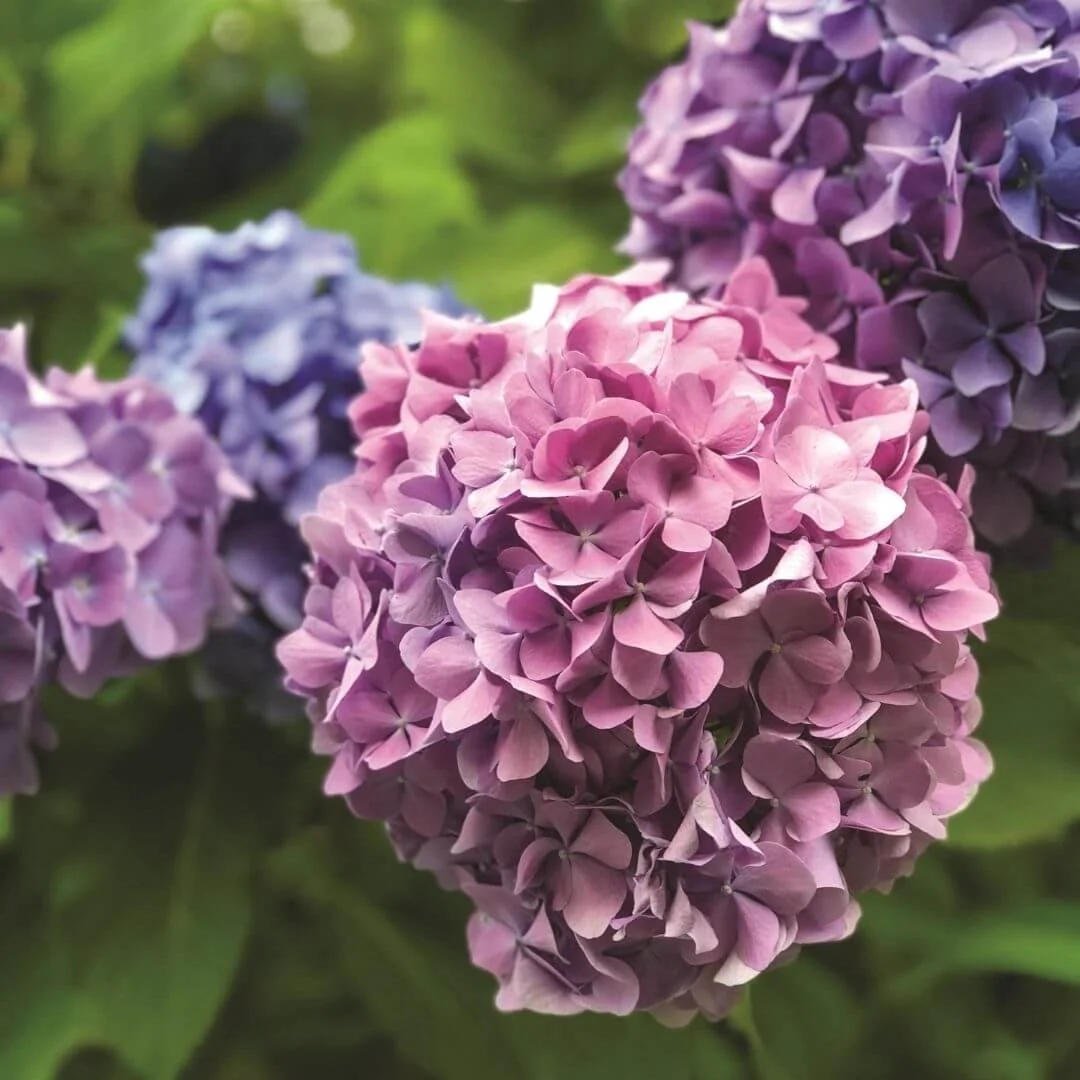
Pink, purple, and blue flowers mingle on the same All Summer Beauty bigleaf hydrangea. Image courtesy of Ball Horticultural Company
In this guide, I'll show you how to grow and care for bigleaf hydrangeas, explain old-wood and reblooming varieties, share some standout cultivars, and give you practical ideas for using them successfully in your garden.
All images in this article are real and not AI generated, either taken by me or sourced from reputable growers and breeders in the nursery industry.
Bigleaf Hydrangea at a Glance
Botanical name: Hydrangea macrophylla
Common names: Bigleaf hydrangea, mophead hydrangea, lacecap hydrangea, hortensia
Plant type: Deciduous flowering shrub
Native range: Japan
USDA hardiness zones: Generally 6–9; some cultivars are hardy to Zone 5. Plants may survive in colder areas while old-wood flower buds do not.
Mature size: Typically 3–6 feet tall and wide, depending on cultivar
Light: Part sun to part shade, ideally 4–6 hours of morning sun with afternoon shade, or bright dappled shade throughout the day
Soil: Moist, fertile, well-draining soil
Water: Consistent moisture; does not tolerate prolonged dry conditions well
Bloom time: Summer, with some reblooming cultivars continuing into fall
Flower forms: Mophead and lacecap
Flower colors: Blue, pink, purple, red, and white, depending on cultivar and soil conditions
Growth habit: Rounded, multi-stemmed shrub
Growth rate: Moderate to fast
Deer resistance: No. Deer may browse the foliage, stems, and flower buds
What Is a Bigleaf Hydrangea?
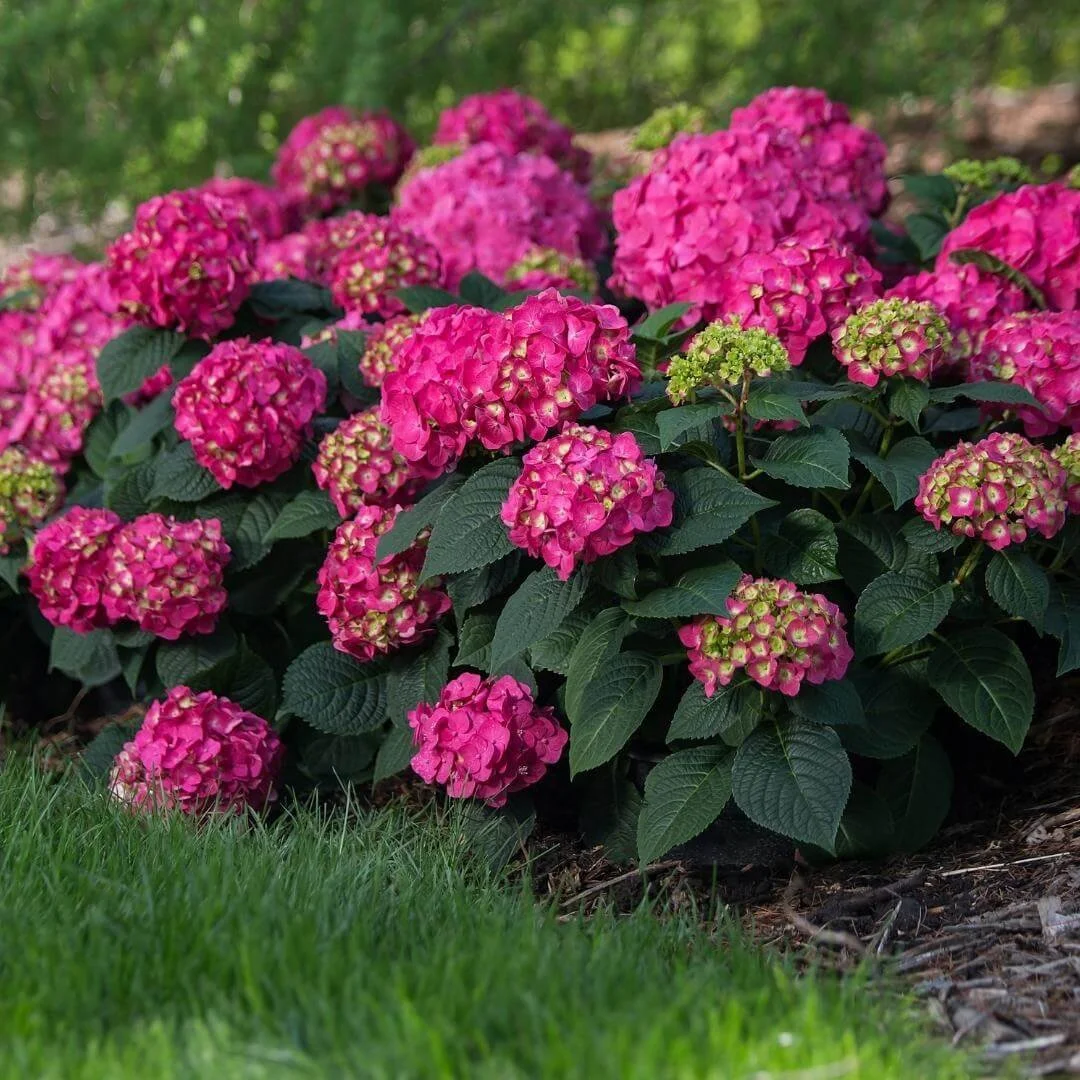
Endless Summer® Summer Crush® bigleaf hydrangea in full summer bloom. Image courtesy of Bailey Nurseries
Bigleaf hydrangea (Hydrangea macrophylla) is a deciduous, multi-stemmed shrub best known for its large leaves and showy summer flowers. Most varieties grow into a rounded form about 3 to 6 feet tall and wide, although newer cultivars include plenty of more compact choices.
If the big, round blue and pink hydrangeas you see in summer gardens are what immediately come to mind when you hear the word "hydrangea," you're probably picturing a bigleaf. They're the classic hydrangeas behind many spectacular summer flower displays, from the famous blue hydrangeas of Cape Cod to beach communities up and down the East Coast.
Bigleaf hydrangeas come in two main flower forms: mophead and lacecap (more on that below). While both belong to the same species, their flowers look surprisingly different.
One of the most fascinating things about bigleaf hydrangeas is that many cultivars can shift between shades of blue, purple, and pink depending on soil chemistry. White-flowered varieties don't undergo the same blue-to-pink color change, although their blooms may develop pink, purple, or green tints as they age.
One reason bigleaf hydrangeas can be tricky to grow is that many traditional varieties form their flower buds on old wood, meaning this year's flowers began developing on stems from the previous growing season. Those buds can be lost to winter cold, late freezes, or pruning at the wrong time. Newer reblooming cultivars can also flower on new growth, giving them another chance to bloom if old-wood flower buds are damaged.
Mophead vs. Lacecap Hydrangeas
The easiest way to tell mophead and lacecap bigleaf hydrangeas apart is by looking at the shape of their flower heads.
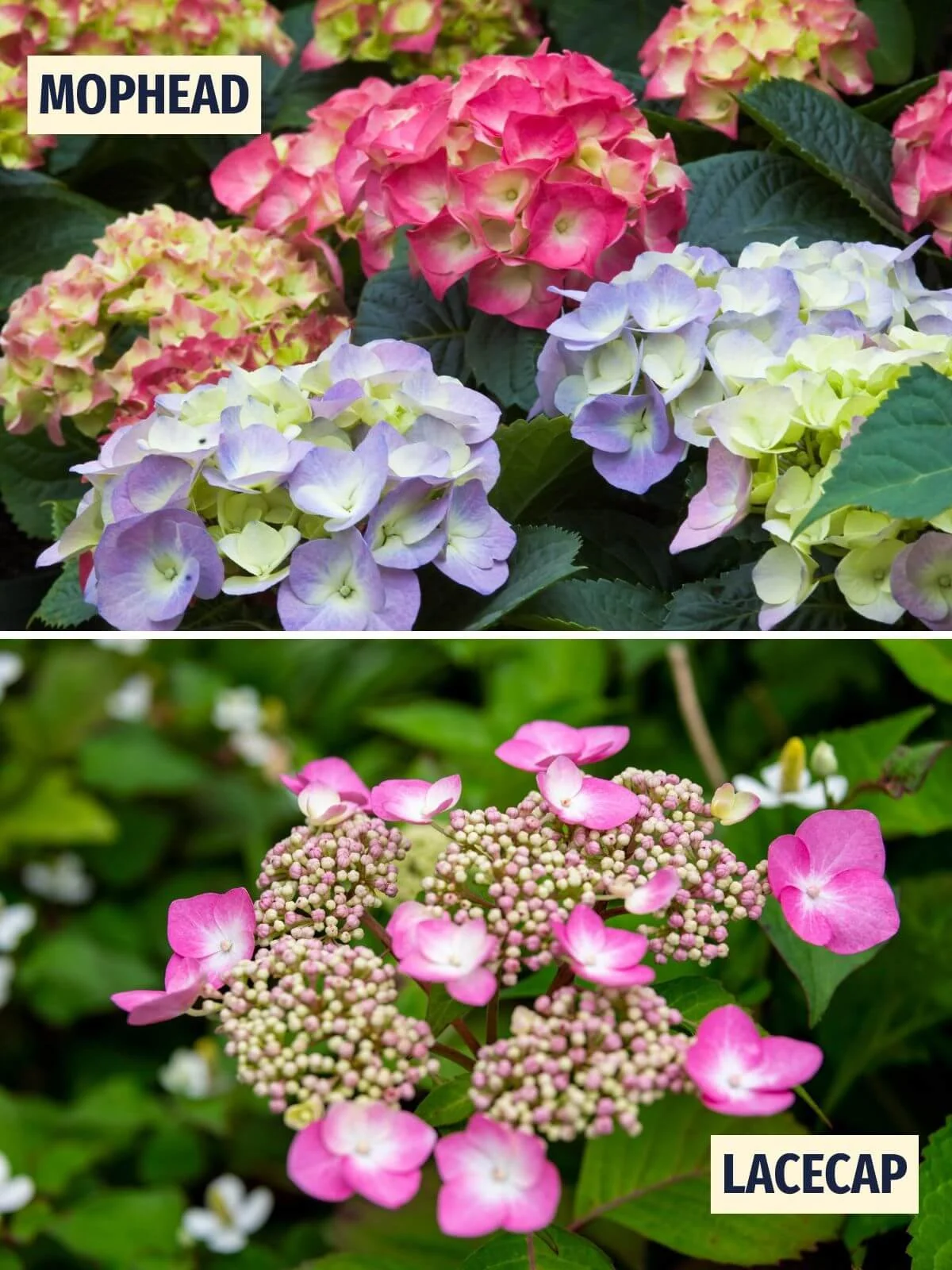
Mophead hydrangeas have the large, rounded flower clusters most people associate with bigleaf hydrangeas. Their flower heads are packed with showy florets, creating the full, almost ball-shaped blooms that make varieties like 'Nikko Blue' so recognizable.
Lacecap hydrangeas have flatter, more open flower heads. A cluster of small fertile flowers fills the center, surrounded by a ring of larger, showier florets. The effect is lighter and more delicate than a mophead, and the exposed fertile flowers are especially attractive to pollinators.
Both are forms of Hydrangea macrophylla, so "mophead" and "lacecap" describe the flower form rather than two different hydrangea species.
Bigleaf hydrangeas aren't the only hydrangeas with lacecap flowers. Mountain hydrangeas (Hydrangea serrata) also produce lacecap blooms and can sometimes be mistaken for bigleaf hydrangeas. If you're trying to tell your hydrangeas apart, visit my guide to the six different hydrangea types for a closer look at the differences.
Bigleaf Hydrangea Varieties
There are hundreds of bigleaf hydrangea cultivars on the market, with differences in flower color and form, mature size, foliage, and blooming habits. You'll find everything from old-fashioned blue mopheads to compact rebloomers, delicate lacecaps, white-flowered varieties, and newer introductions with unusually dark foliage or intense flower colors.
The varieties on my list below are just a sampling, chosen to show some of the range available and help you narrow down which type of bigleaf hydrangea might work best in your garden. Or maybe this list will have the opposite effect and make you want one of everything. 😉
Nikko Blue
Hydrangea macrophylla ‘Nikko Blue’
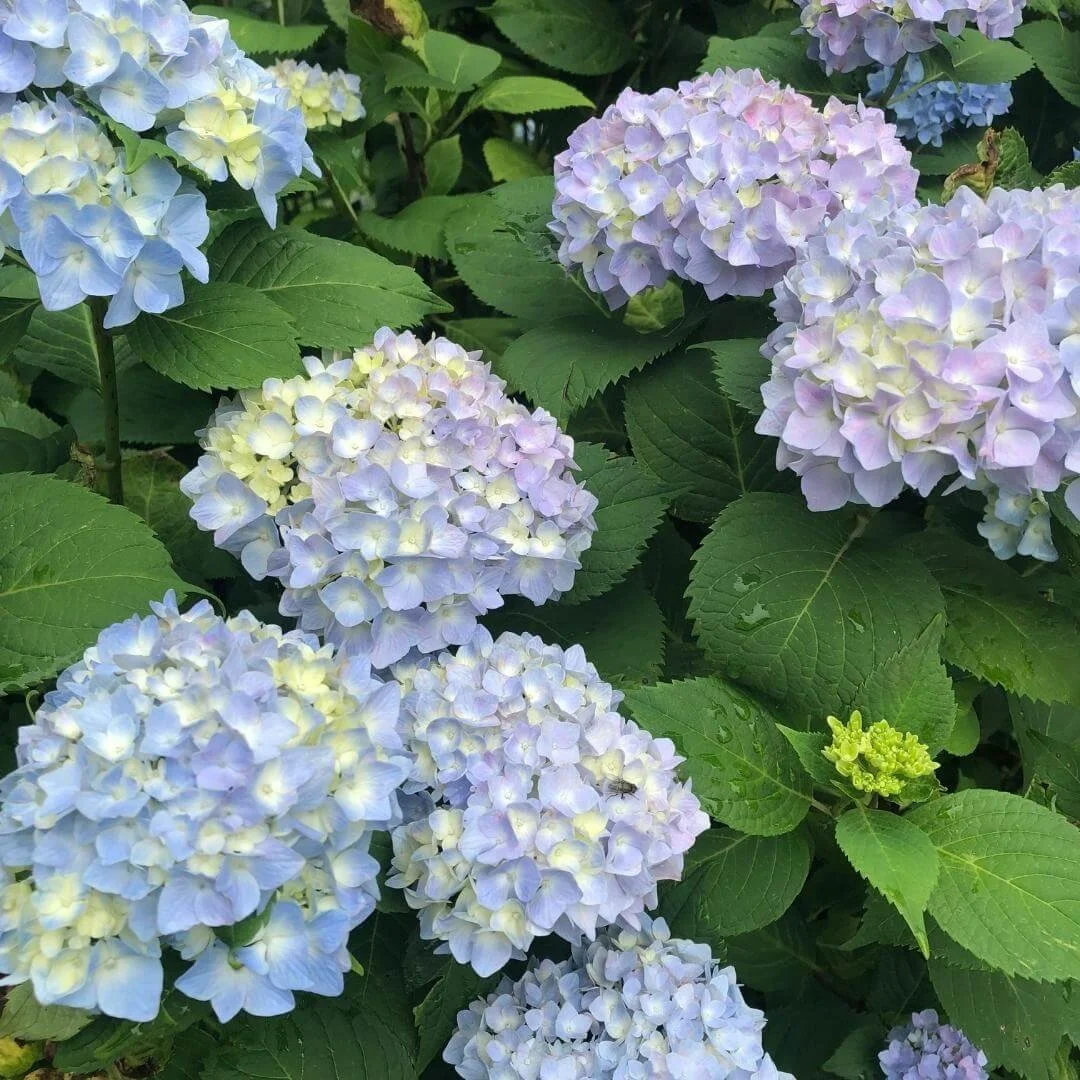
Nikko Blue is an old-fashioned cultivar that blooms on old wood, unlike many of the newer reblooming bigleaf hydrangeas. Image © Plant and Bloom Design Studio
Mature size: 4–6 feet tall and wide
Flower form: Mophead
Flower color: Blue in acidic soil; pink to purple in alkaline soil
Bloom time: Early to midsummer
Bloom habit: Blooms on old wood
Why I like it: Nikko Blue has that classic, old-fashioned bigleaf hydrangea look that feels straight out of a Nantucket summer. It's best known for its enormous blue mopheads, although the flowers can shift toward purple or pink depending on soil chemistry.
Want to know more about Nikko Blue? Visit my complete guide to Nikko Blue hydrangea care and landscaping.
Summer Crush
Hydrangea macrophylla 'Bailmacfive' | Endless Summer® Summer Crush®
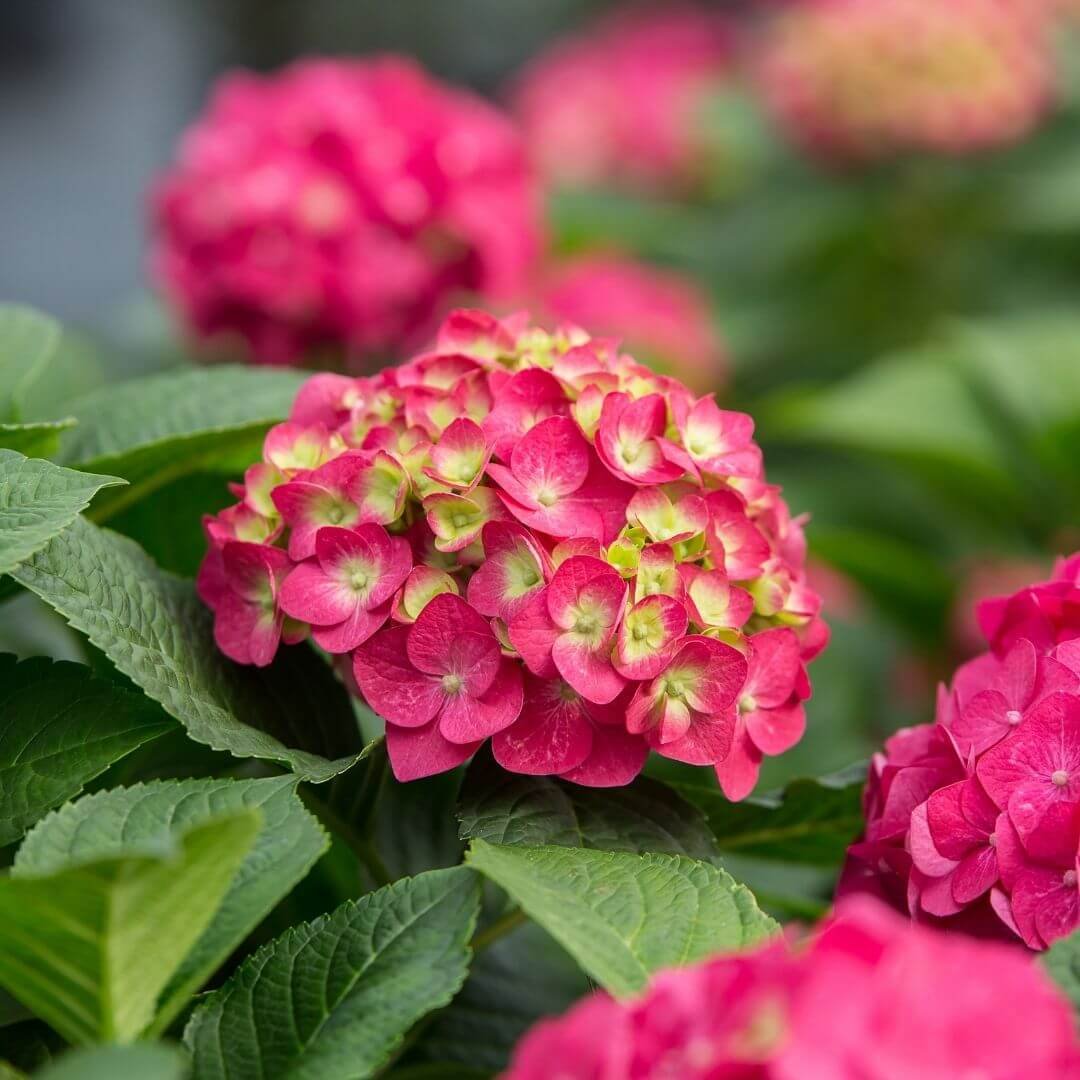
Summer Crush® is a compact reblooming bigleaf hydrangea known for its vivid raspberry-pink to purple mophead flowers. Image courtesy of Bailey Nurseries
Mature size: 18–36 inches tall and wide
Flower form: Mophead
Flower color: Purple in acidic soil; raspberry pink to red in alkaline soil
Bloom time: Summer into fall
Bloom habit: Blooms on old and new wood
Why I like it: Summer Crush packs a lot of color into a small shrub. Its compact size makes it especially useful near the front of a garden bed, along a walkway, or anywhere a full-size bigleaf hydrangea would overwhelm the space.
Blushing Bride
Hydrangea macrophylla 'Blushing Bride' | Endless Summer® Collection
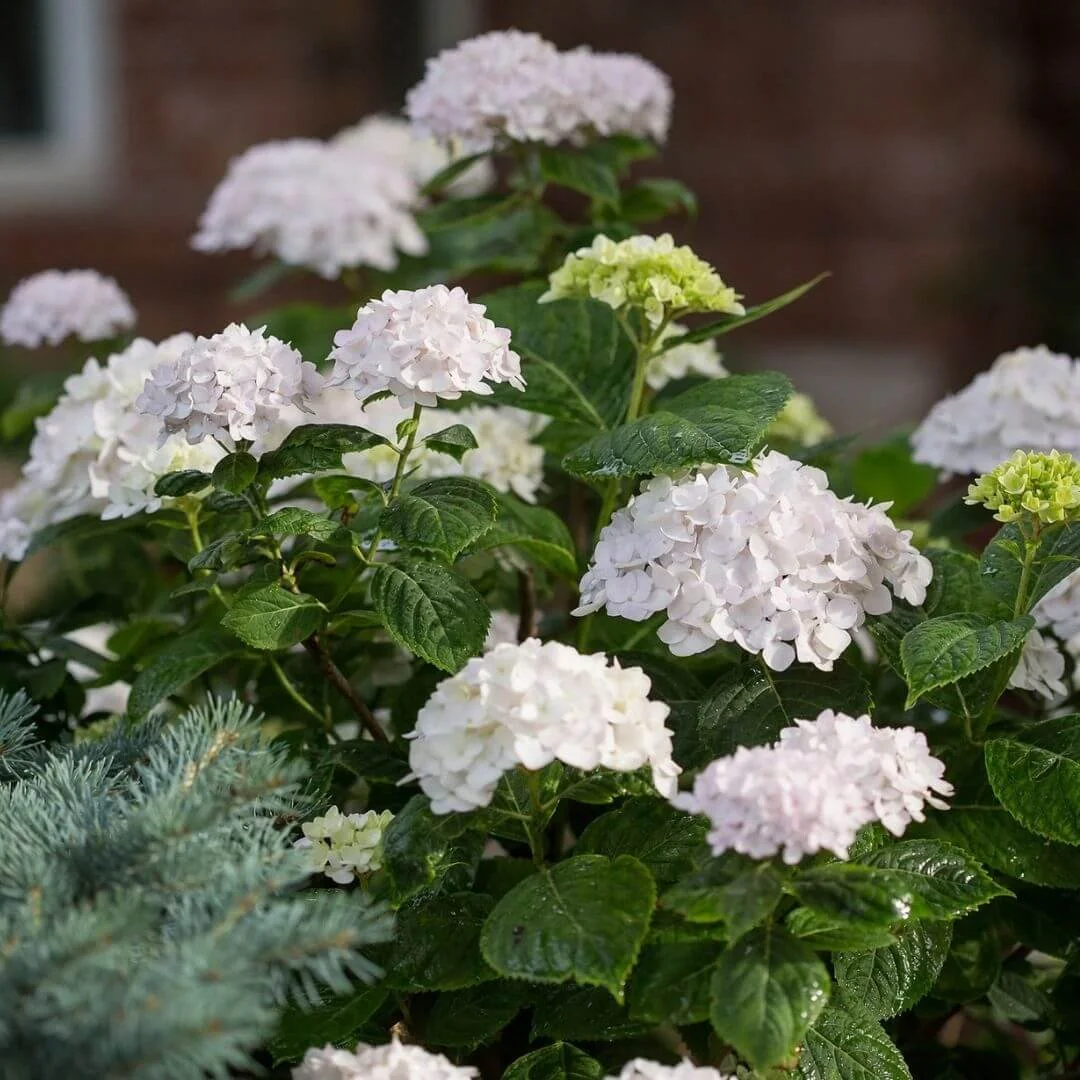
The soft white mophead flowers of Blushing Bride bigleaf hydrangea. Image courtesy of Bailey Nurseries
Mature size: 3–6 feet tall and wide
Flower form: Mophead
Flower color: White, developing soft pink or blue-purple tones as the flowers mature
Bloom time: Summer into fall
Bloom habit: Blooms on old and new wood
Why I like it: Blushing Bride is one of my favorite bigleaf hydrangeas for foundation plantings around brick homes. Its white flowers work beautifully with warm orange and red brick tones, where pink or purple hydrangeas can sometimes clash.
Want to know more about Blushing Bride? Visit my complete guide to Blushing Bride hydrangea care and landscaping.
Mathilda Gutges
Hydrangea macrophylla 'Mathilda Gutges'
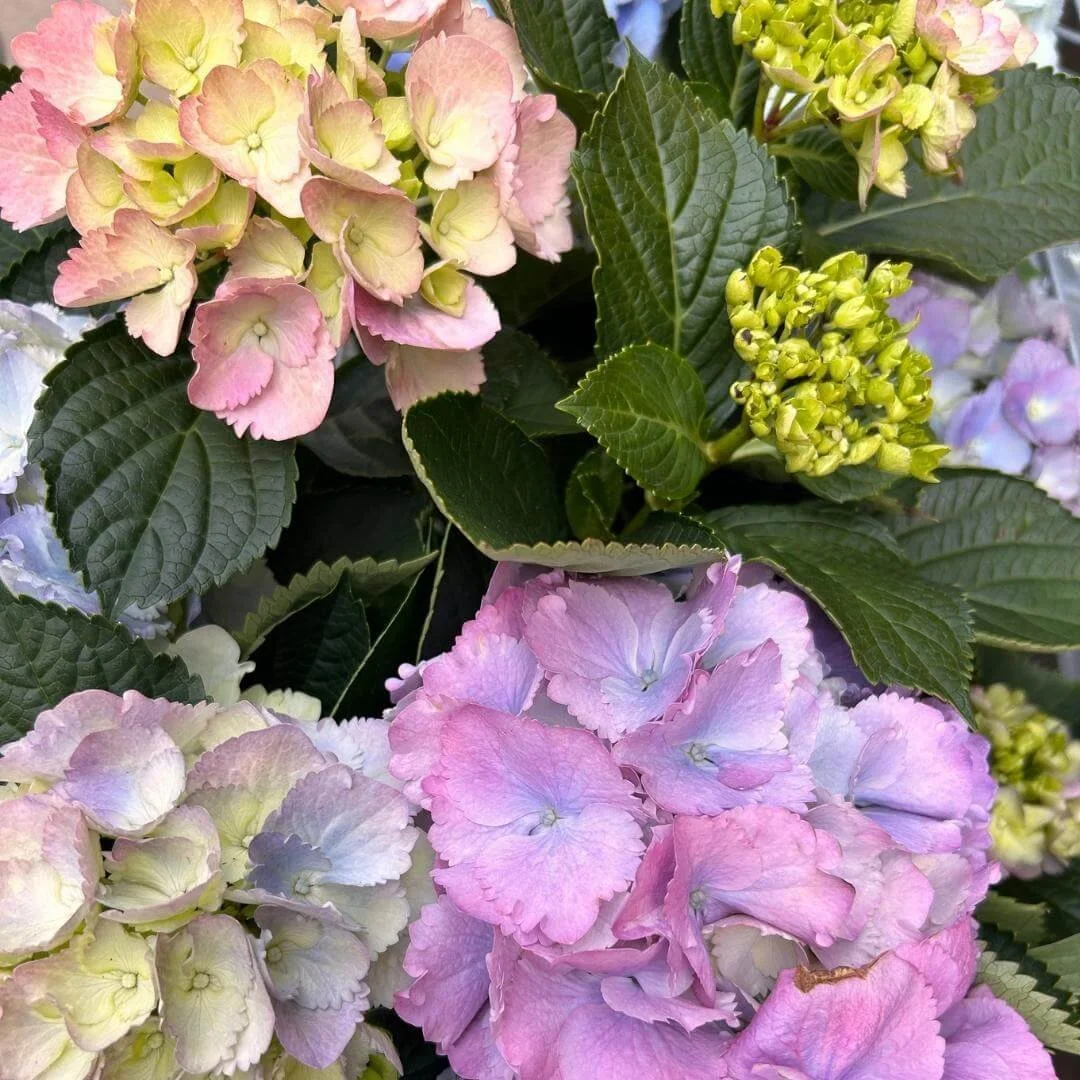
Mathilda Gutges can produce shades of blue, pink, purple, and mauve on the same plant. Image © Plant and Bloom Design Studio
Mature size: 3–5 feet tall and wide
Flower form: Mophead
Flower color: Blue to purple in acidic soil; pink in alkaline soil
Bloom time: Summer
Bloom habit: Blooms on old wood
Why I like it: Mathilda Gutges has an old-fashioned, romantic look with enormous mophead flowers. Shades of blue, pink, purple and mauve can appear on the same plant, giving it a softer, less uniform look than many newer cultivars. It's a beautiful choice for traditional and cottage-style gardens.
Want to know more about Mathilda Gutges? Visit my complete guide to the Mathilda Gutges hydrangea.
Endless Summer Pop Star
Hydrangea macrophylla 'Bailmacsix' | Endless Summer® Pop Star®
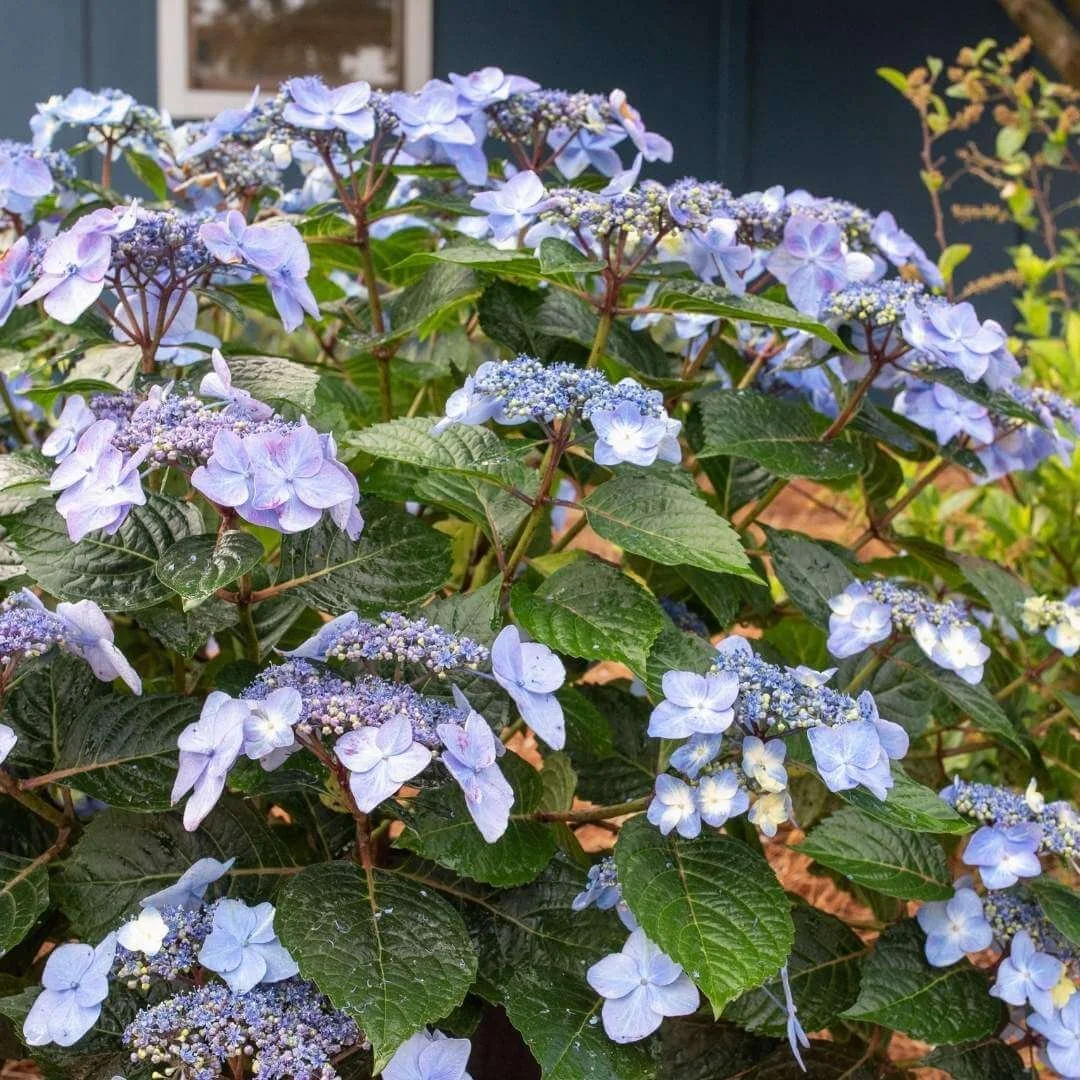
Pop Star® is a compact reblooming bigleaf hydrangea with delicate lacecap flowers that turn blue in acidic soil. Image courtesy of Bailey Nurseries
Mature size: 2–3 feet tall and wide
Flower form: Lacecap
Flower color: Blue to purple in acidic soil; pink in alkaline soil
Bloom time: Summer into fall
Bloom habit: Blooms on old and new wood
Why I like it: Pop Star gives you the delicate look of a lacecap hydrangea in a compact plant. I like it for smaller gardens and along walkways, where large bigleaf hydrangeas would take up too much space.
Eclipse
Hydrangea macrophylla 'Bailmacseven' | First Editions® Eclipse®
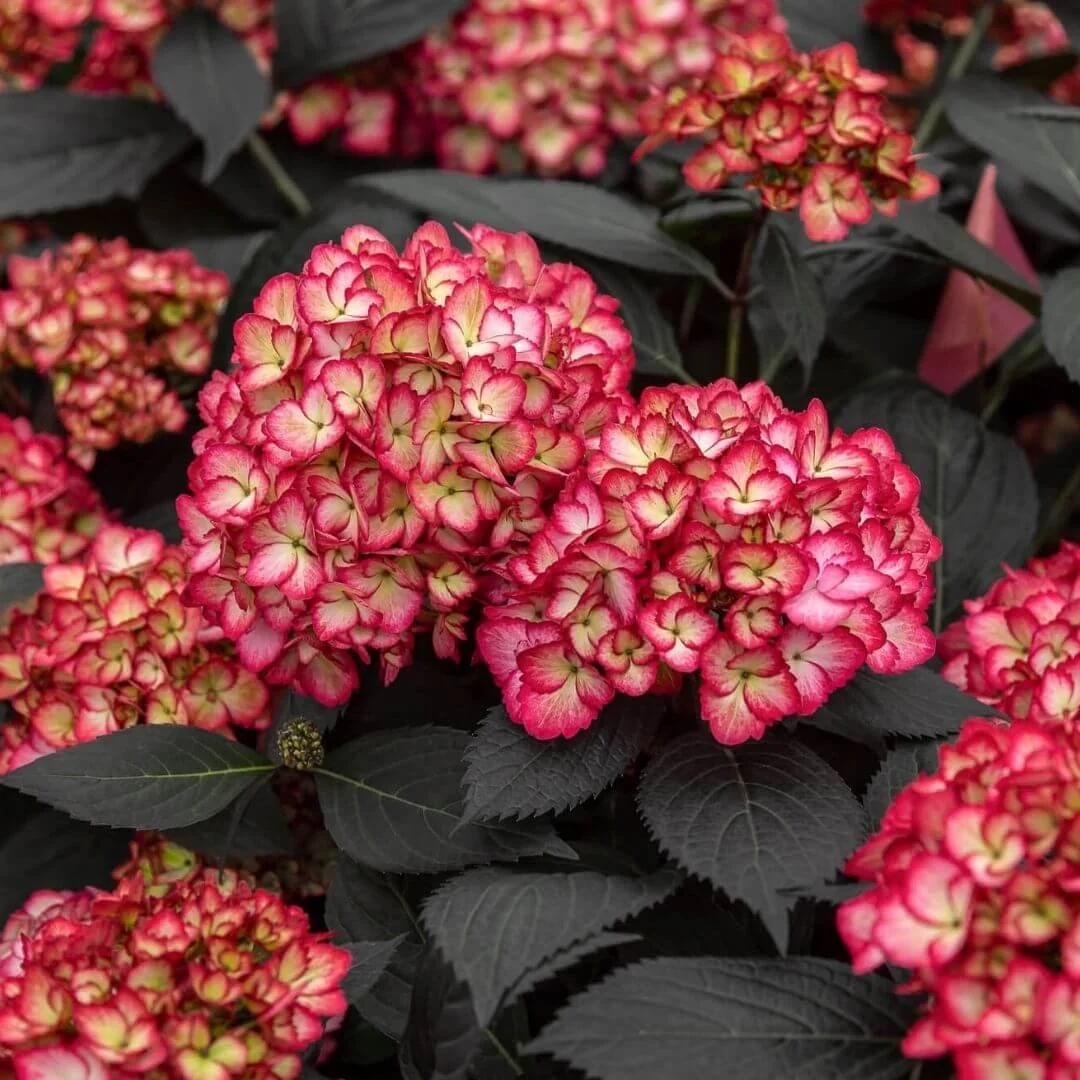
Eclipse® stands out from other bigleaf hydrangeas with its nearly black foliage and cranberry-red to deep purple mophead flowers. Image courtesy of Bailey Nurseries
Mature size: 3–5 feet tall and wide
Flower form: Mophead
Flower color: Deep purple in acidic soil; cranberry red in alkaline soil, with cream-colored centers
Bloom time: Summer
Bloom habit: Blooms on old and new wood
Why I like it: Eclipse looks nothing like a typical bigleaf hydrangea. Its nearly black foliage and deep cranberry-red flowers are perfect for dark, moody planting schemes and Goth gardens. I also love it planted near a Victorian porch, where the dramatic foliage feels right at home with the architecture.
Want to know more about Eclipse? Visit my complete guide to Eclipse hydrangea care and landscaping.
BloomStruck
Hydrangea macrophylla 'PIIHM-II' | Endless Summer® BloomStruck®
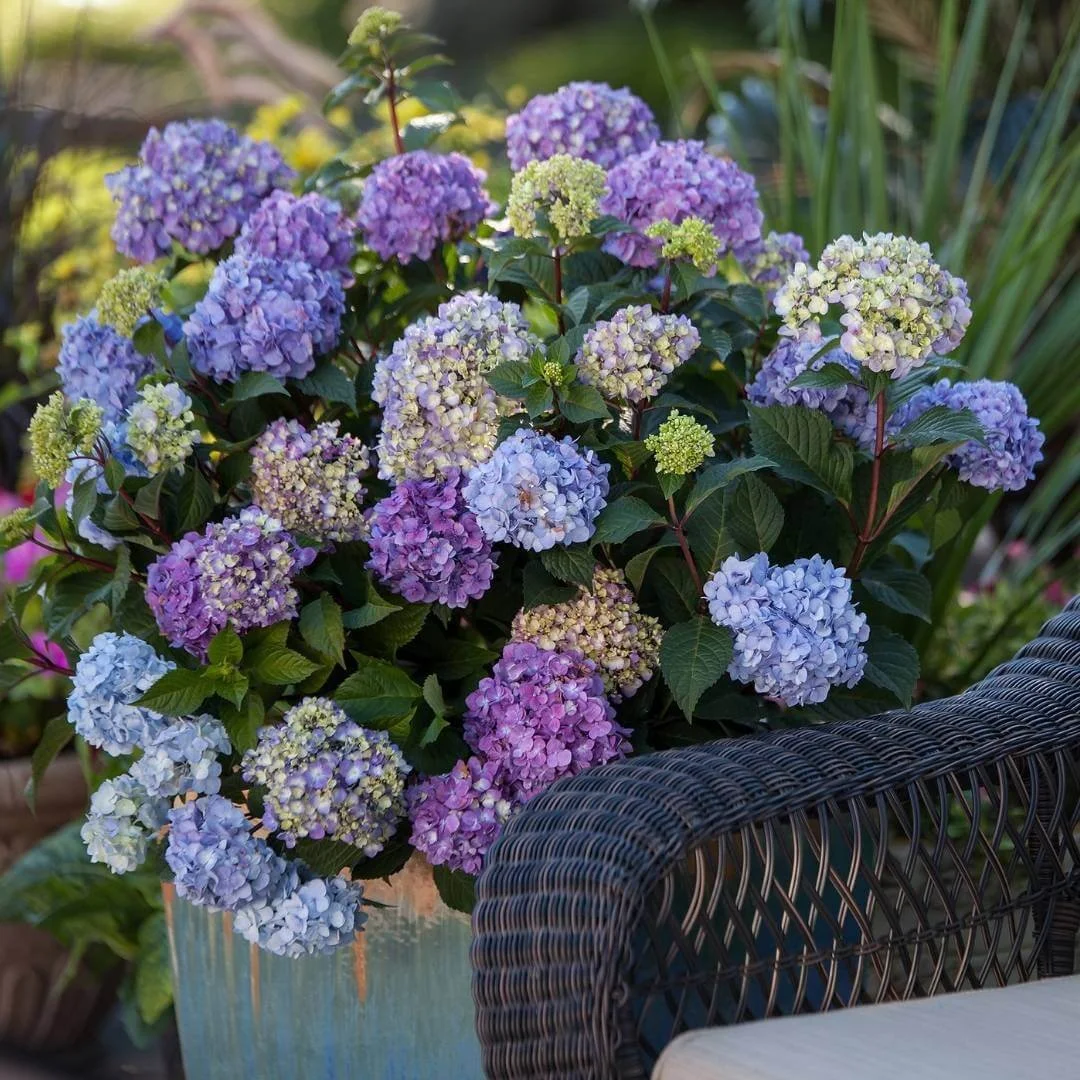
BloomStruck® flowers heavily and grows well in containers. Image courtesy of Bailey Nurseries
Mature size: 3–4 feet tall and 4–5 feet wide
Flower form: Mophead
Flower color: Rich purple in acidic soil; vivid pink in alkaline soil
Bloom time: Midsummer through fall
Bloom habit: Blooms on old and new wood
Why I like it: BloomStruck flowers heavily, with intensely colored mopheads held on sturdy red-purple stems. Red leaf stems and veining add even more color, creating a beautiful contrast with the dark green foliage.
Drama Queen
Hydrangea macrophylla 'Hokomadraq' | Bloomin' Easy® Drama Queen™
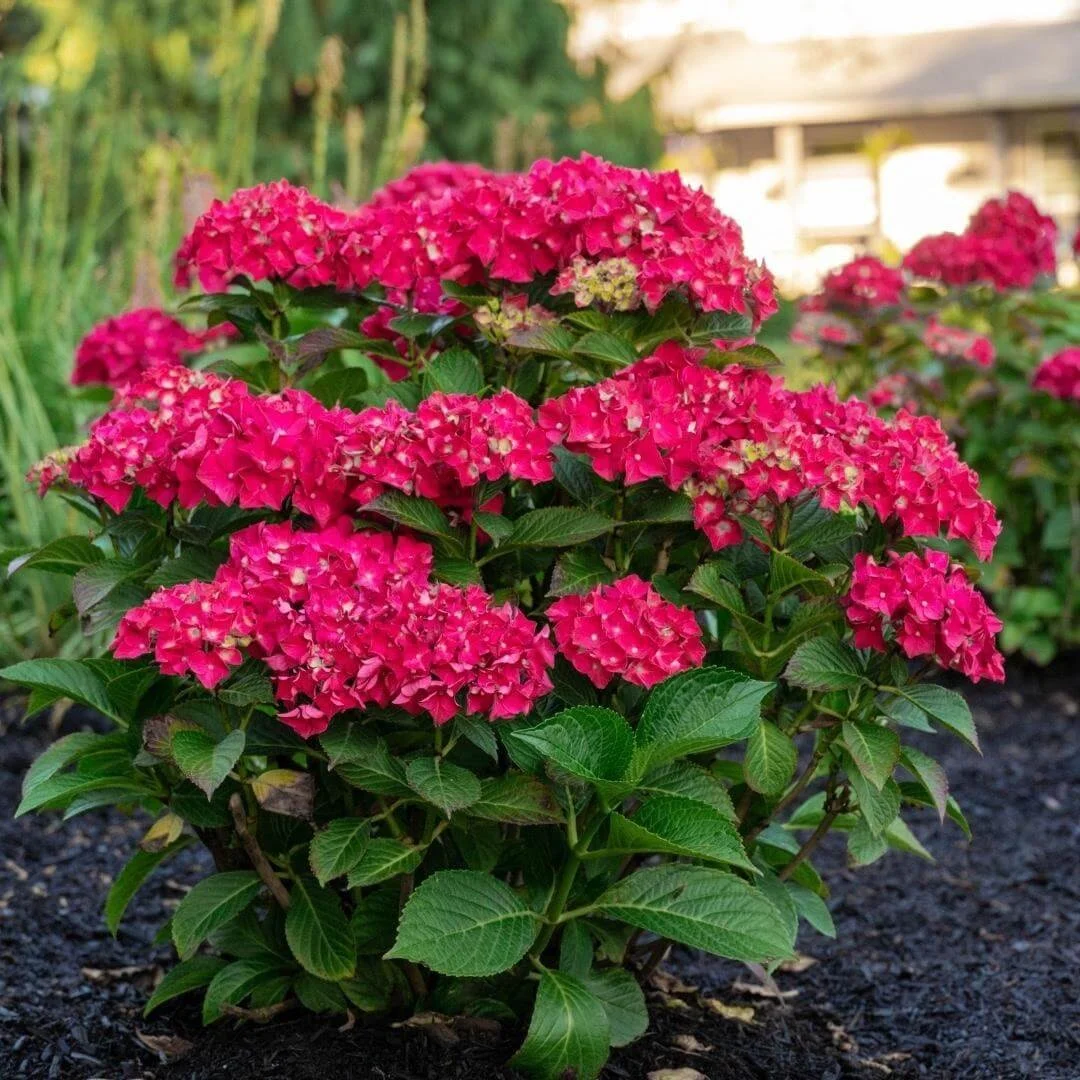
Drama Queen™ packs bold pink mophead flowers onto a compact 2- to 3-foot shrub, making it a good fit for smaller garden beds. Image courtesy of Bloomin’ Easy Plants, Inc.
Mature size: 2–3 feet tall and wide
Flower form: Mophead
Flower color: Purple-blue in acidic soil; deep pink to fuchsia in alkaline soil
Bloom time: Summer into fall
Bloom habit: Reblooming
Why I like it: Drama Queen gives you big, intensely colored mophead flowers on a surprisingly small plant. Its compact, tidy habit works well in small gardens, containers, and along walkways.
Centennial Ruby
Hydrangea macrophylla 'Hokocentennial' | Centennial Ruby™
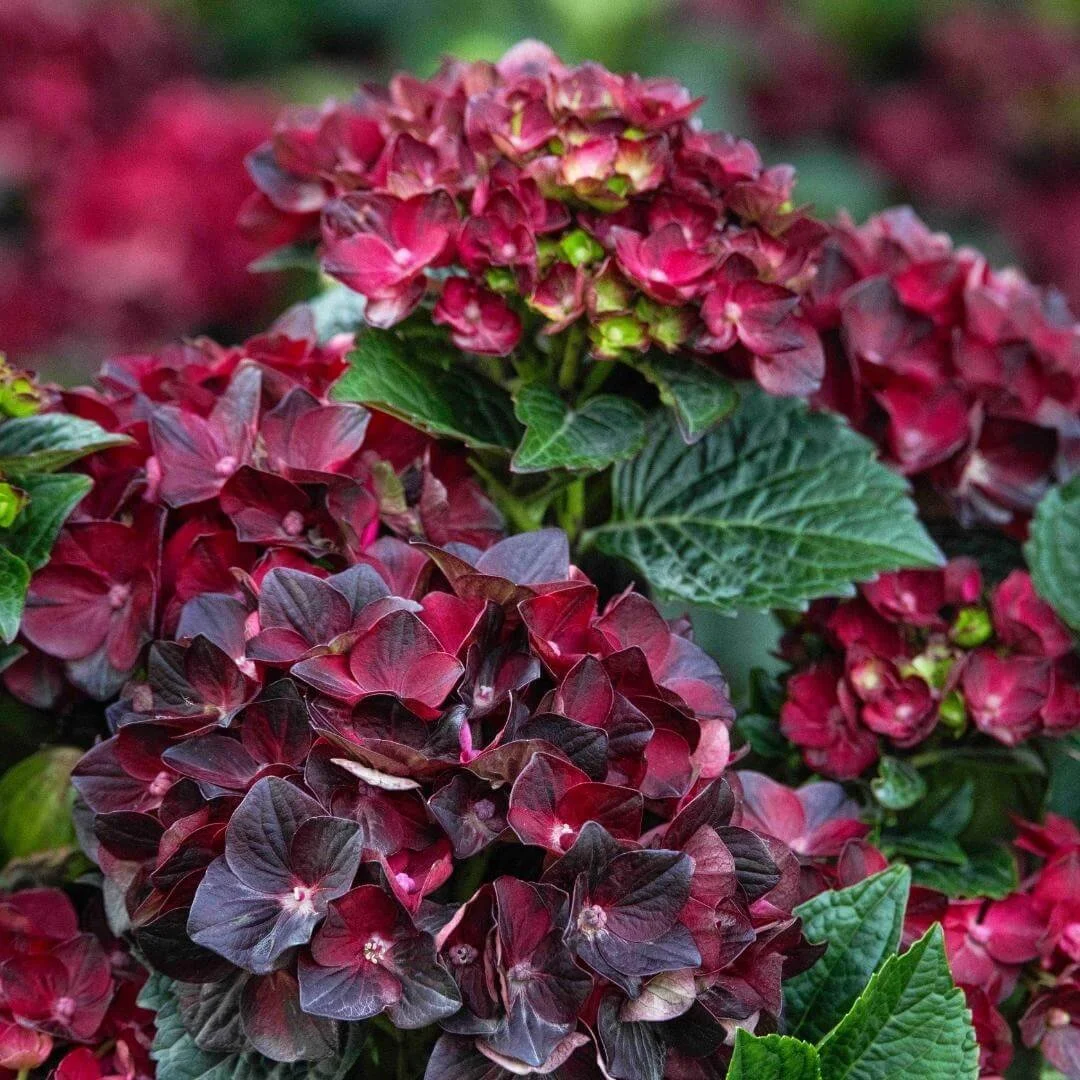
Centennial Ruby™ stands out with rich ruby-red mophead flowers that darken as they age. Image courtesy of Monrovia Nursery
Mature size: About 3 feet tall and wide
Flower form: Mophead
Flower color: Ruby red, deepening to dark red and nearly black as the flowers age
Bloom time: Late spring into early fall
Bloom habit: Reblooming
Why I like it: Centennial Ruby's deep red flowers set it apart from the typical bigleaf hydrangea. I especially like it against a sage green house, where the complementary colors make each other stand out.
Seaside Serenade Newport
Hydrangea macrophylla 'HORTMANI' | Seaside Serenade® Newport
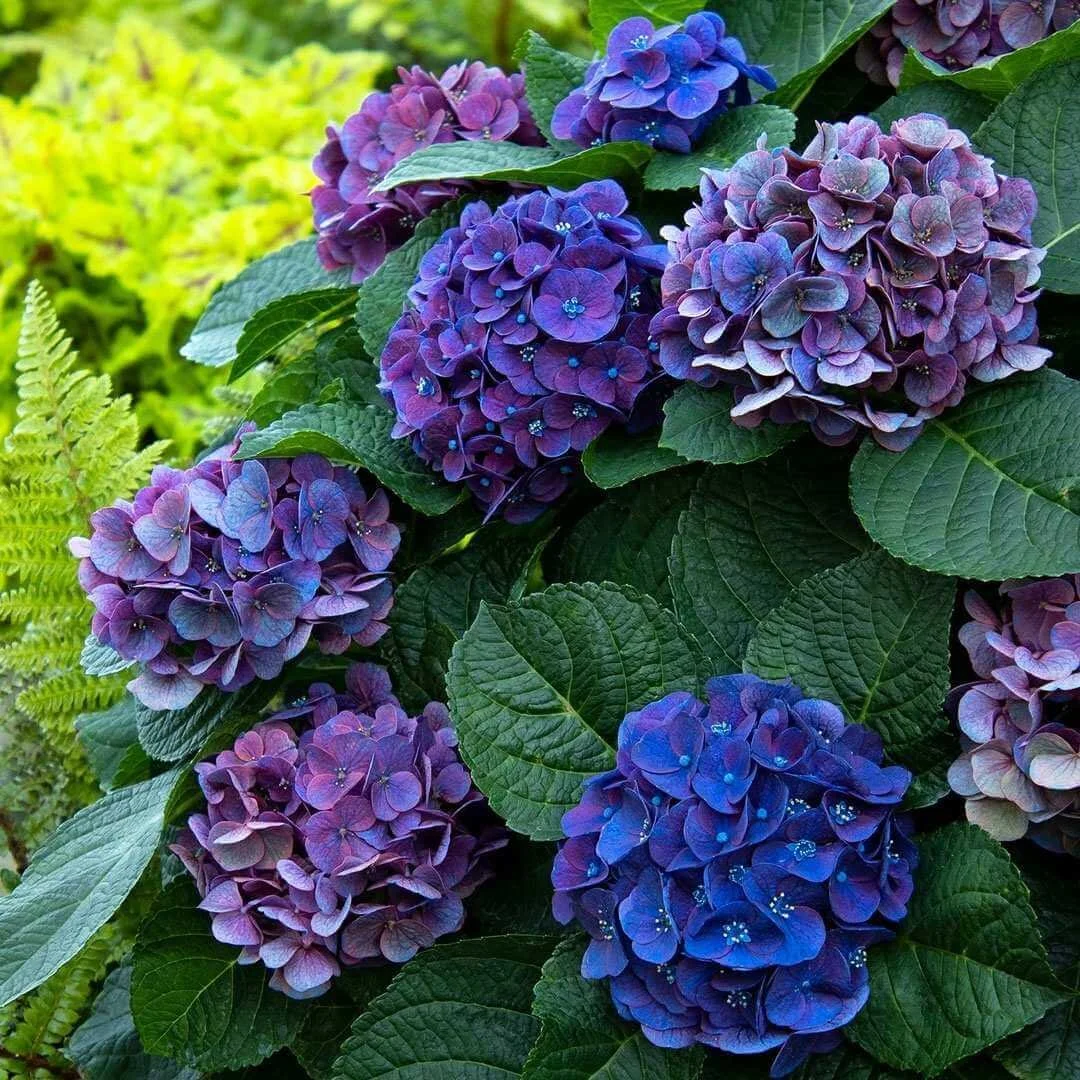
The rich blue-violet flowers of Seaside Serenade® Newport look beautiful alongside the fresh green foliage of ferns. Image courtesy of Monrovia Nursery
Mature size: 3–4 feet tall and wide
Flower form: Mophead
Flower color: Blue-violet to deep plum in acidic soil; deep pink in alkaline soil
Bloom time: Summer into fall
Bloom habit: Blooms on old and new wood
Why I like it: Newport has richly colored flowers on sturdy stems that hold up well after heavy rain. Its compact size works well in smaller gardens and containers.
How to Grow and Care for Bigleaf Hydrangeas
Bigleaf hydrangeas are particular about where they are planted. Getting the light and moisture right from the start can prevent many common problems later on.
How Much Sun Does a Bigleaf Hydrangea Need?
Bigleaf hydrangeas do best with 4–6 hours of morning sun and afternoon shade, or bright dappled shade throughout the day. Harsh afternoon sun can cause wilting, scorched foliage, and flowers that fade more quickly.
Wilting doesn't always mean your hydrangea needs water. On hot afternoons, the leaves can lose water faster than the roots can replace it, even when the soil is moist. If the plant perks back up as temperatures cool, heat is probably the culprit.
Keep bigleaf hydrangeas consistently moist, especially while they're becoming established. Water deeply at the base of the shrub rather than spraying the leaves, and use mulch to help retain moisture.
Best Soil for Bigleaf Hydrangeas
Bigleaf hydrangeas grow best in rich, well-draining soil that stays consistently moist without becoming soggy. Amend poor soil with compost or organic matter. They prefer slightly acidic soil, and soil pH can also influence flower color in many cultivars (more on that below).
Want to know more about growing hydrangeas? Read my Hydrangea Care Guide: Planting, Pruning & Color Changes.
Old Wood, New Wood, and Reblooming Bigleaf Hydrangeas
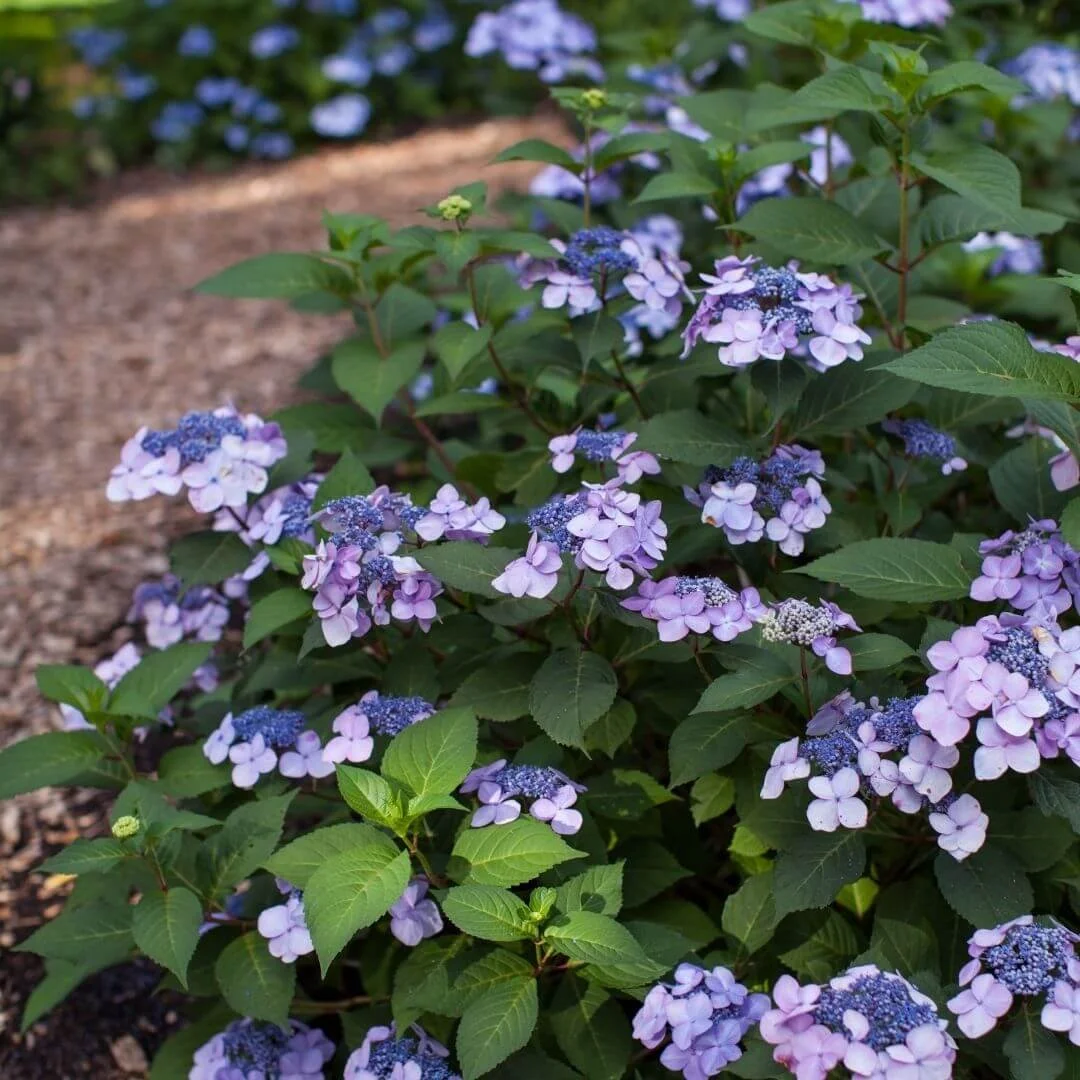
Endless Summer® Twist-n-Shout® is a reblooming bigleaf hydrangea, meaning it can produce flowers on both old stems from the previous season and new growth from the current season. Image courtesy of Bailey Nurseries.
One of the most important things to know about your bigleaf hydrangea is whether it blooms only on old wood or reblooms on both old and new wood. This affects everything from pruning to how reliably your hydrangea flowers after a cold winter.
Traditional bigleaf hydrangeas like Nikko Blue and Mathilda Gutges bloom on old wood, meaning their flower buds form on stems produced during the previous growing season. Those buds have to survive winter, late freezes, and your pruning shears in order to flower the following summer.
When the Original Endless Summer hydrangea was introduced in 2004, it brought reblooming bigleaf hydrangeas into the mainstream. Unlike traditional varieties that flower primarily on old wood, it produces flowers on new growth, giving gardeners another chance at blooms if winter cold damaged the previous year's buds.
Newer reblooming varieties like Summer Crush, BloomStruck, and Eclipse also flower on both old and new wood. If the older buds are damaged, the plant has another opportunity to flower later in the season.
That doesn't mean reblooming hydrangeas are guaranteed to flower nonstop all summer. Climate, winter damage, growing conditions, and the individual cultivar all affect how well they rebloom.
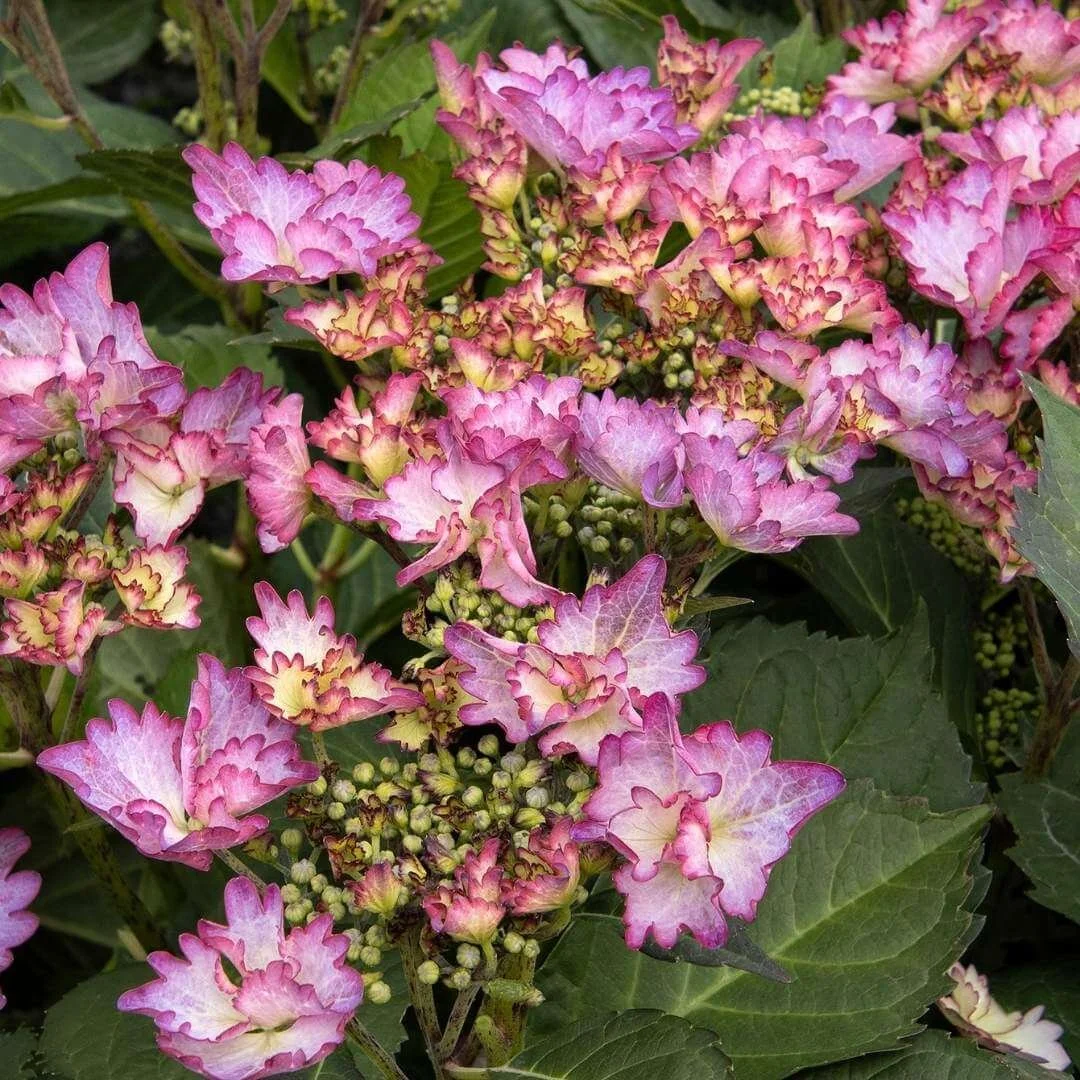
Seaside Serenade® Crystal Cove is a reblooming bigleaf hydrangea with delicate lacecap flowers, producing blooms on both old and new wood. Image courtesy of Monrovia Nursery.
How to Prune Bigleaf Hydrangeas
Bigleaf hydrangeas generally need very little pruning. In early spring, the bare brown stems left from the previous year can look dead, and it's tempting to cut everything back. Wait until the plant begins actively leafing out before reaching for the pruners. Once new growth appears, it's much easier to see which older stems are still alive and which are truly dead.
At that point, remove stems that show no signs of growth, cutting them back to the base. Leave healthy stems with new leaves or buds in place, since they carry this year's flower buds.
The simplest rule: Don't routinely prune your bigleaf hydrangea. Remove dead wood in spring. If you absolutely need to reduce its size, do it right after flowering. Pruning in fall, winter, or spring risks removing the flower buds for the following year.
Why Isn't My Bigleaf Hydrangea Blooming?
If your bigleaf hydrangea isn't flowering, here are some of the most common reasons:
Cold weather damaged the flower buds. Traditional bigleaf hydrangeas form their flower buds on old wood, and those buds can be damaged by winter cold or a late spring freeze. The shrub itself may survive and grow perfectly well but produce few or no flowers that summer.
It was pruned at the wrong time. Cutting back an old-wood blooming hydrangea in fall or spring can remove the stems carrying that year's flower buds.
It isn't getting enough light. Bigleaf hydrangeas like protection from hot afternoon sun, but deep shade reduces flowering. Part shade with morning sun is ideal.
Too much nitrogen is encouraging leaves instead of flowers. Heavy fertilizing, or even fertilizer applied to a nearby lawn, can sometimes produce lots of lush green growth at the expense of blooms.
It's a rebloomer that isn't reblooming as expected. Reblooming varieties have the ability to flower on new growth, but that doesn't guarantee nonstop flowers. Climate and growing conditions can affect how quickly and reliably the second round of blooms develops.
Deer ate the flower buds. Deer love the tender growth and flower buds of bigleaf hydrangeas, often browsing overnight or early in the morning. If your hydrangea seemed to be developing normally and the buds suddenly disappeared, deer may be the culprit. Sigh. 😔
How to Change Bigleaf Hydrangea Color
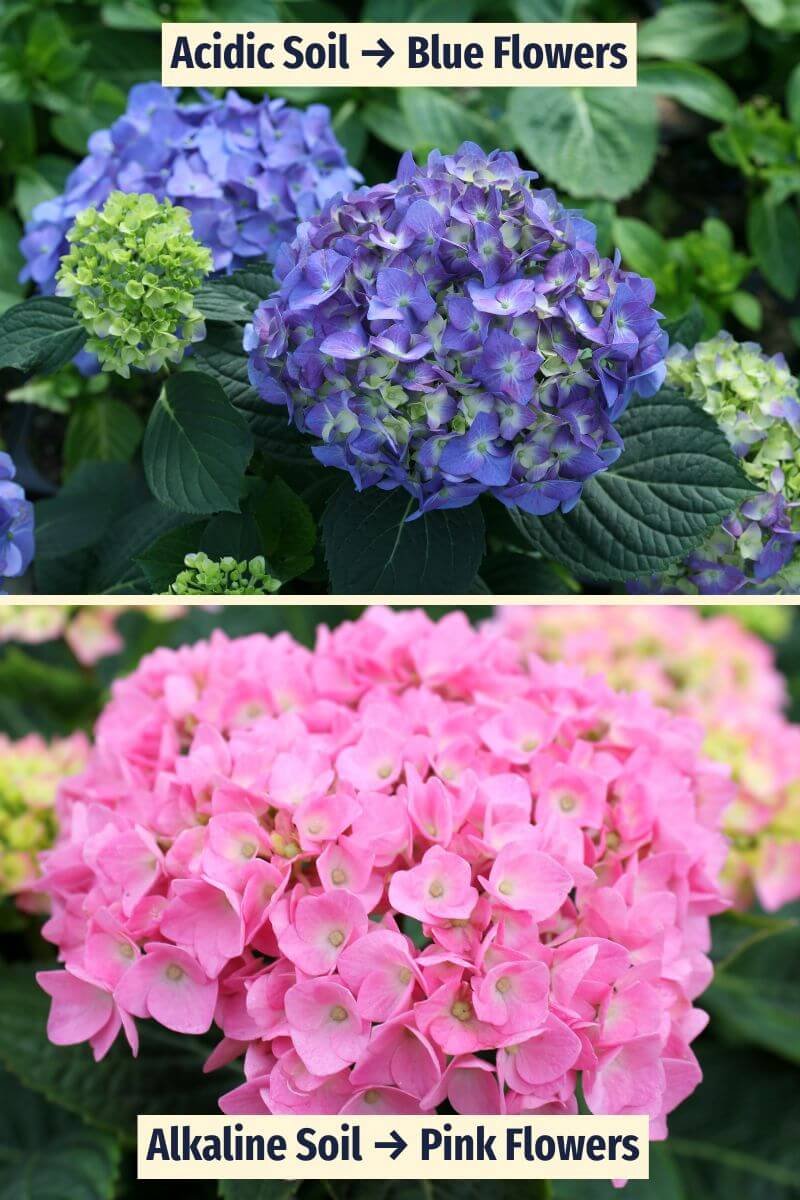
These blue and pink flowers are from the same bigleaf hydrangea cultivar, Let’s Dance® Blue Jangles®. Differences in soil chemistry affect flower color. Images courtesy of Spring Meadow Nursery, Inc.
One of the fun things about bigleaf hydrangeas is that many cultivars respond to soil pH, which affects the availability of aluminum and ultimately the color of the flowers.
For bluer or more purple flowers: Lower the soil pH and increase available aluminum using aluminum sulfate or a product formulated to turn hydrangeas blue.
For pinker flowers: Add garden lime to raise the soil pH, which makes aluminum less available to the plant.
Bigleaf Hydrangea Landscaping Ideas
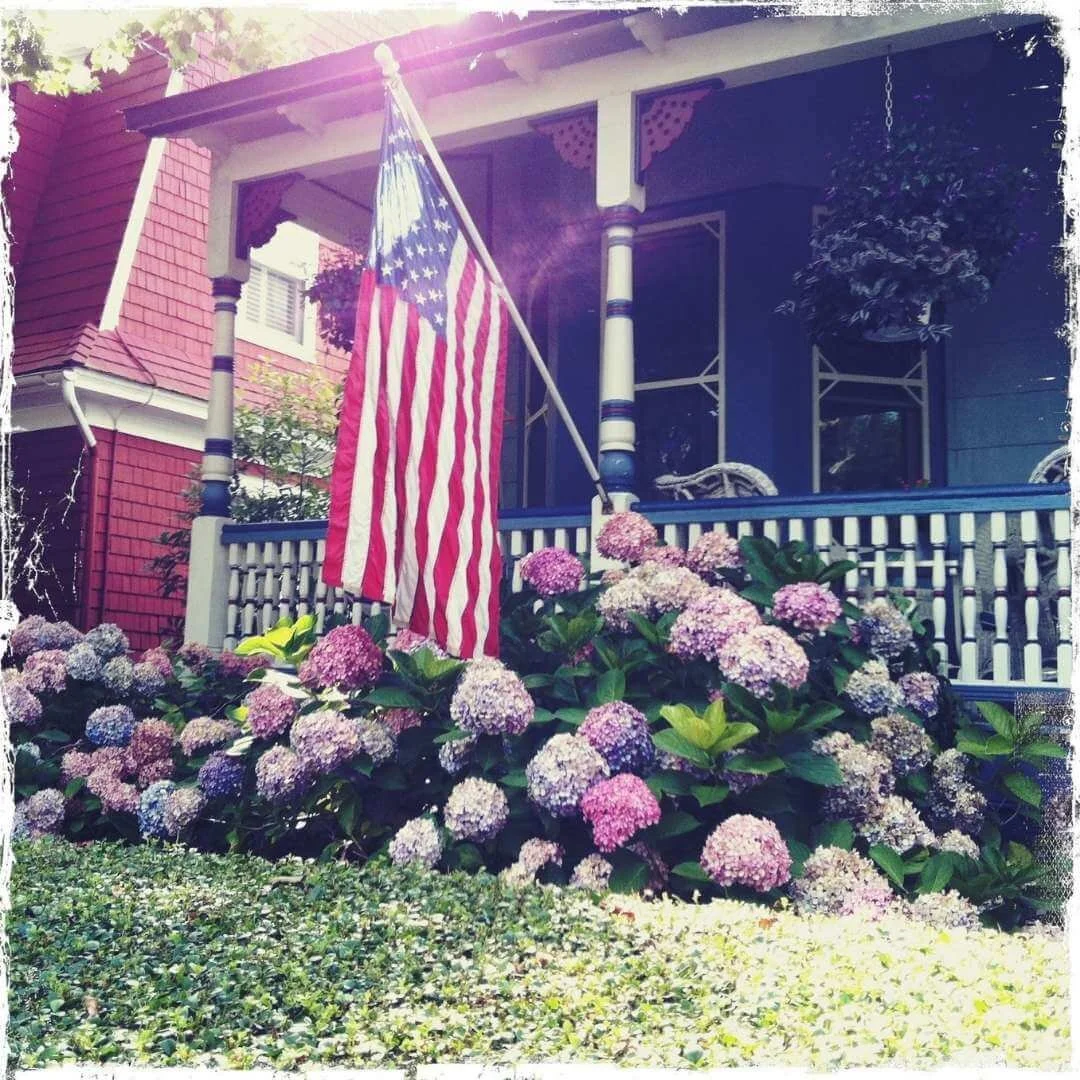
Bigleaf hydrangeas are a natural fit for vintage and cottage-style gardens. Image © Plant and Bloom Design Studio
Bigleaf hydrangeas work in many different garden styles, from traditional foundation plantings to woodland gardens. Here are some of my favorite ways to use them in the landscape:
Foundation Planting: One of the most popular ways to use bigleaf hydrangeas is in a foundation planting. Their lush foliage and colorful flowers bring instant curb appeal to the front of the house. Just be sure to choose a cultivar whose mature size fits the space.
Mixed Borders: Combine bigleaf hydrangeas with perennials, flowering shrubs, and evergreens. Variegated cultivars like Light-O-Day add foliage interest even when they're not in bloom.
Mass Planting: Plant several bigleaf hydrangeas together for a larger sweep of color. This works especially well in large garden beds or along fences and pathways.
Container Gardening: Compact bigleaf hydrangeas grow beautifully in containers on patios, balconies, and front porches. Just remember that containers dry out faster than garden beds and need more frequent watering.
Woodland Gardens: Dappled shade beneath tall trees is a beautiful setting for bigleaf hydrangeas. Pair them with Japanese camellias, Japanese andromeda, azaleas, rhododendrons, and ferns.
Accent Planting: Use bigleaf hydrangeas to create a focal point near entries, pathways, patios, or seating areas.
Vintage Cottage Gardens: Pair bigleaf hydrangeas with old-fashioned garden favorites like foxgloves, garden phlox, hollyhocks, catmint, hibiscus, and roses for a romantic, informal look.