
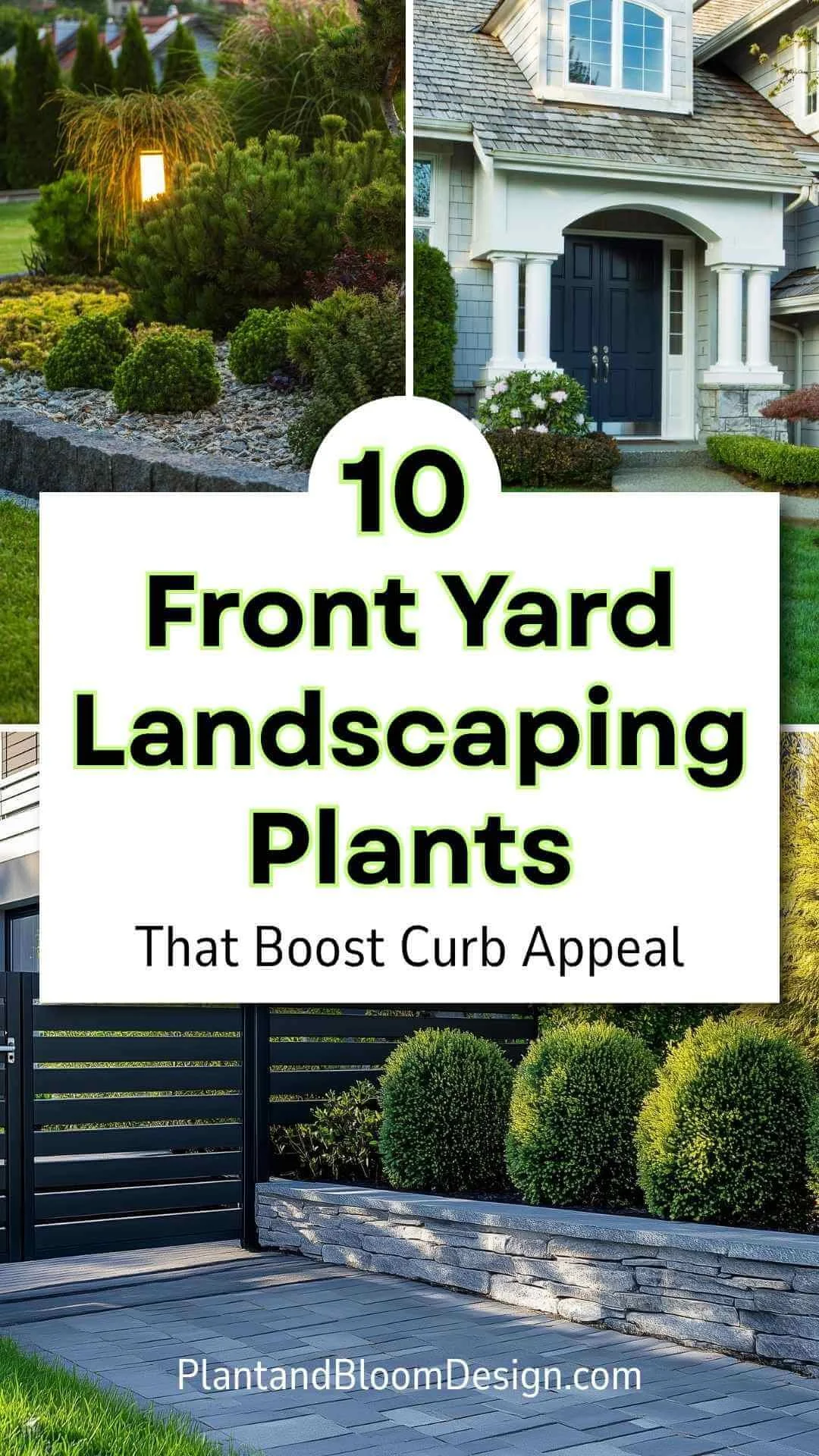
10 Front Yard Landscaping Plants That Boost Curb Appeal
Published: May 20, 2026
Need front yard landscaping ideas to make your house look its best? Keep scrolling, because this list was made for you.
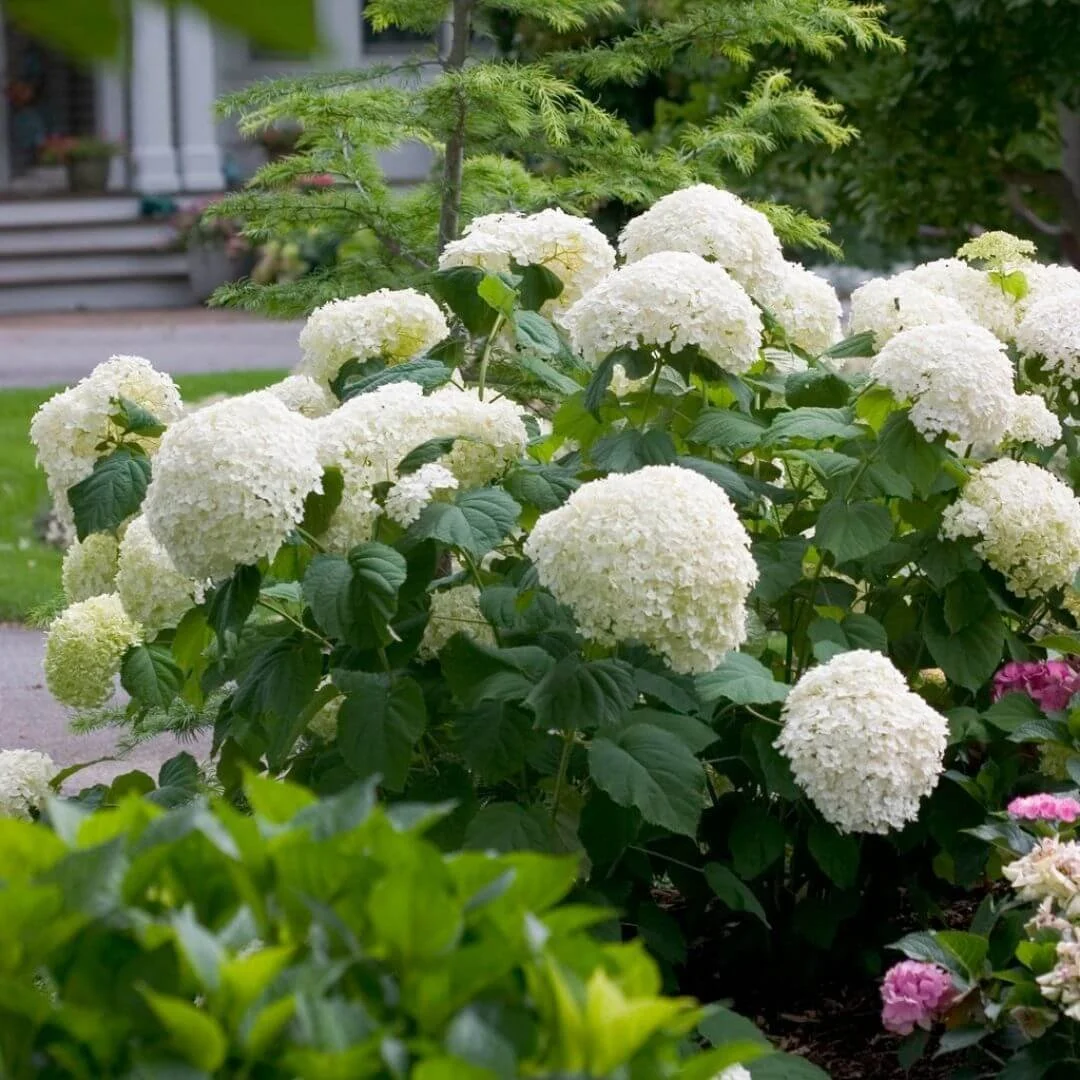
Incrediball® Hydrangea (#6 on this list) makes a bold statement in a front yard landscaping bed. Image courtesy of Proven Winners, provenwinners.com
When it comes to front yard landscaping plants, easy to grow and great-looking should always go hand in hand. Whether you're starting from scratch or filling in tired garden beds, these ten plants deliver serious curb appeal without demanding a lot of expertise or effort.
From landscape design ideas for front yards to simple front yard landscaping ideas, I've pulled together a mix of trees, shrubs, and evergreens that work beautifully as entryway accents, foundation plantings, and everything in between. Think of this as landscaping for front yards made approachable. These are tried-and-true plants that landscape designers love, and they happen to be right in line with today's landscaping trends, too.
Whether you're browsing pretty yard ideas and yard ideas for front yards online, planning a DIY weekend project, or just tired of driving up to a house that doesn't make you smile, these ten plants are a great place to start. All images in this article are real photos, either taken by me or sourced directly from trusted growers.
Kousa Dogwood
Botanical name: Cornus kousa
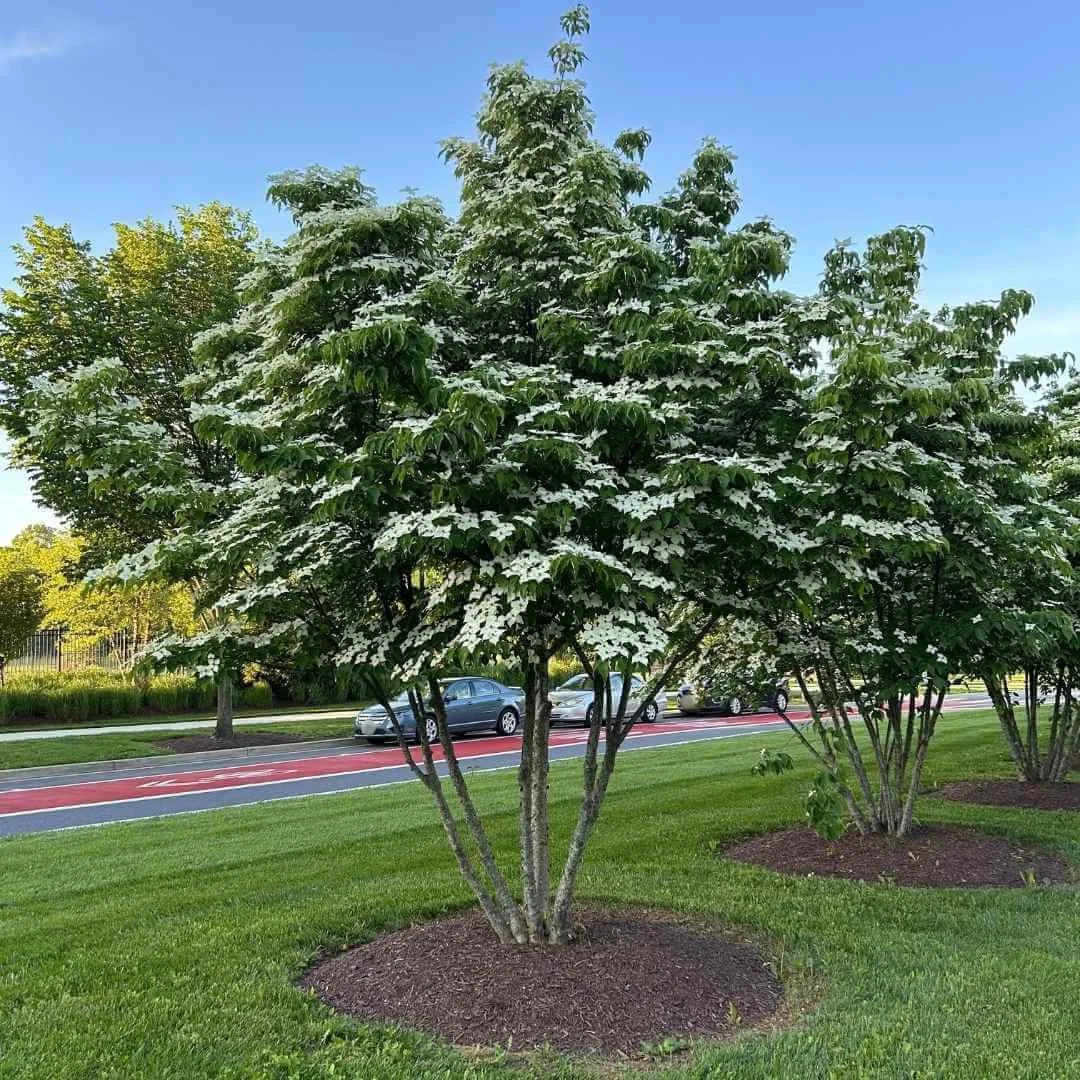
A Kousa dogwood in full spring bloom, one of the best small trees for front yard landscaping. Image © Plant and Bloom Design Studio
Type: Small deciduous tree
Zones: 5–8
Light Requirements: Full sun to part shade
Size: 15–30 feet tall and wide
Attributes: White spring flowers; attractive horizontal branching; exfoliating bark with year-round interest; brilliant red-orange fall color; red strawberry-like fruits; tidy, vase-shaped form.
Landscaping Ideas: Specimen planting, front yard focal point, small lawn tree, part of a mixed front yard bed.
Designer's Notes: If you're looking for a small tree that truly earns its spot in the front yard, the Kousa dogwood delivers. It's one of my favorite front yard trees because it offers something beautiful in every single season: white blooms in late spring, a gorgeous canopy of green in summer, brilliant fall color, and interesting exfoliating bark that adds winter character.
It's also easier to grow than the native Cornus florida, with stronger disease resistance and better adaptability. The tidy, vase-shaped form fits beautifully into front yard landscaping without overwhelming a small space. Plant one as a specimen and it will be the tree your neighbors ask about every spring when they are looking for yard ideas!
2. Ruby Falls Weeping Redbud
Botanical name: Cercis canadensis 'Ruby Falls'
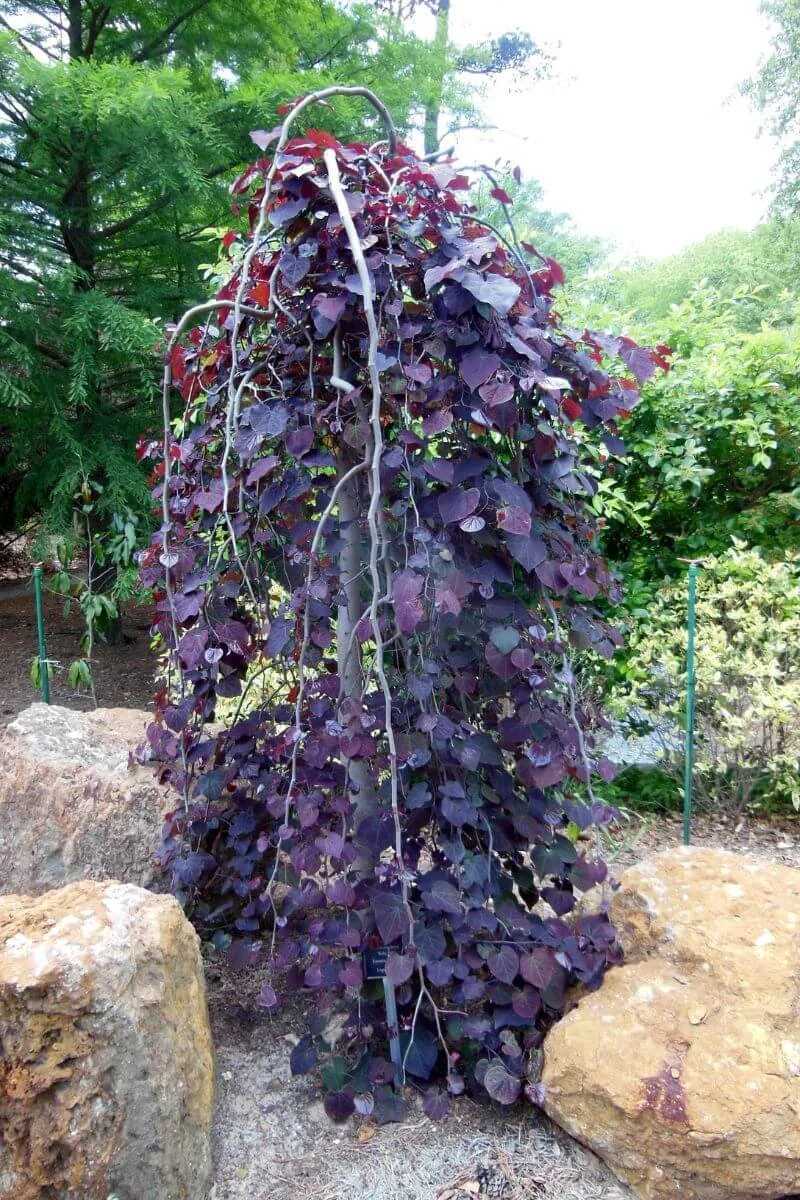
Ruby Falls weeping redbud, a stunning specimen tree for front yard landscaping. Image courtesy of PlantHaven International, Inc.
Type: Small deciduous weeping tree
Zones: 5–8
Light Requirements: Full sun to part shade
Size: 6-10 feet tall, 4–6 feet wide
Attributes: Cascading, weeping branches; bright pink spring flowers bloom on bare branches; heart-shaped dark burgundy-red leaves; yellow fall color; compact size.
Landscaping Ideas: Specimen planting, front yard focal point, corners of the house, small gardens, in front of a contrasting evergreen backdrop.
Designer's Notes: There's a reason Ruby Falls weeping redbud stops traffic. Those cascading, weeping branches dripping with hot pink flowers in early spring are showstopping, and that's before the deep burgundy heart-shaped leaves emerge. Come fall, the foliage shifts to yellow, so you're getting seasonal interest from early spring all the way through autumn.
Its compact size makes it perfect for small front yards or tight foundation areas where you want a real wow moment without a large footprint. Plant it against a background of dark evergreens and you've got a front yard focal point that looks like it was designed by a pro.
3. Metamorphosa® Japanese Maple
Botanical name: Acer palmatum 'ARJOS1'
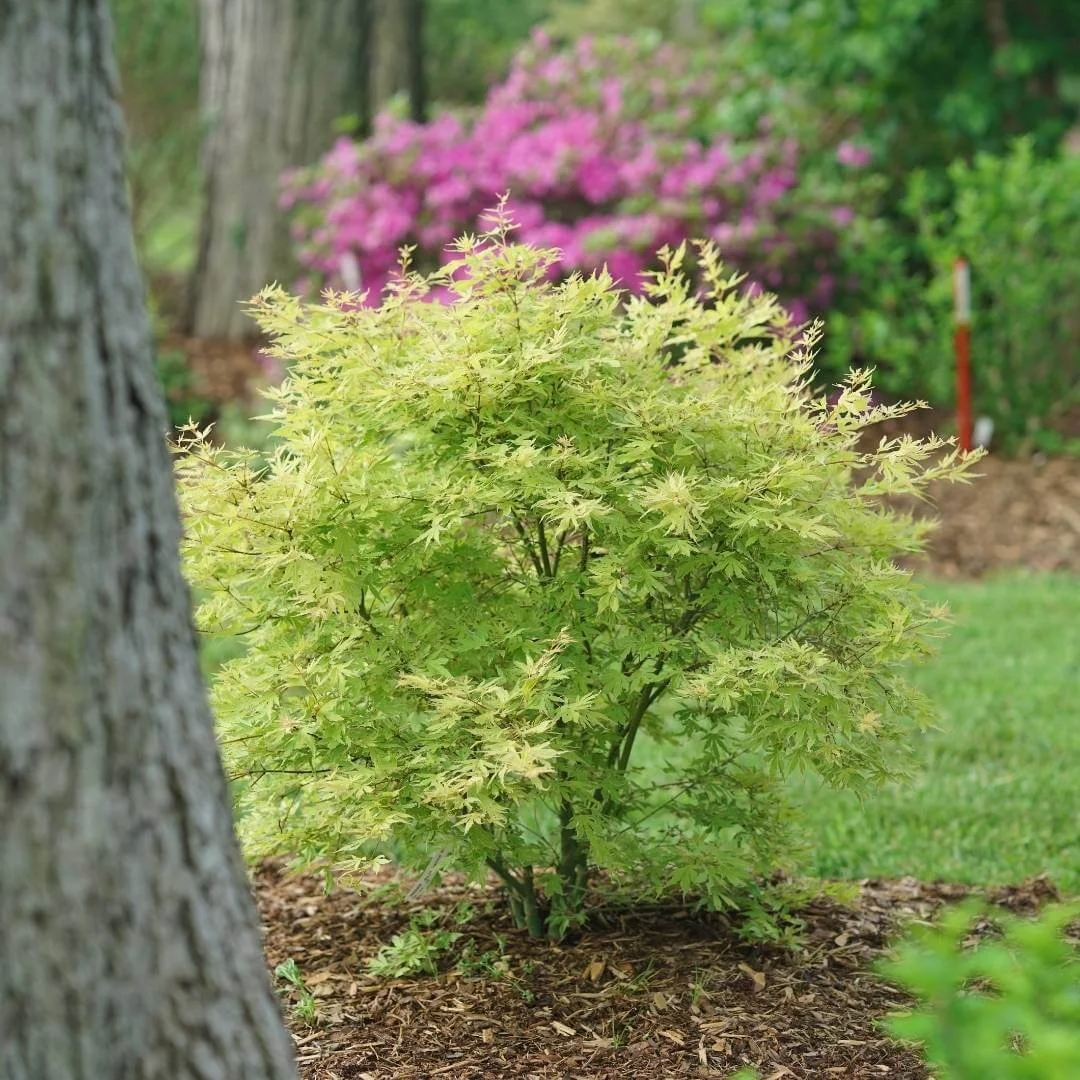
Metamorphosa® Japanese Maple in spring, Image courtesy of Proven Winners, provenwinners.com
Type: Small deciduous tree
Zones: 5–8
Light Requirements: Full sun to part shade
Size: 5–13 feet tall and 3-10 feet wide
Attributes: Dramatic seasonal color shifts, from fresh green in spring, orange-tinged white in early summer, then brilliant orange and violet-red in autumn; compact size; elegant, fine-textured foliage.
Landscaping Ideas: Front yard specimen, corners of the house, focal point in a garden bed, small front yard anchor, mixed foundation planting.
Designer's Notes: Japanese maples are hands-down one of the most requested plants I'm asked about as a landscape designer, and Metamorphosa® is a variety that definitely earns the attention. What makes it exceptional is that no two seasons look alike; this maple is constantly evolving, and every change is more beautiful than the last.
Its compact size makes it a perfect fit for front yard landscaping where you want a specimen-quality tree without worrying about it outgrowing the space. Plant it at a corner of the house, center it in a garden bed, or use it as a front yard focal point. It looks professionally designed no matter how you use it.
4. Golden Mop False Cypress
Botanical name: Chamaecyparis pisifera 'Golden Mop'
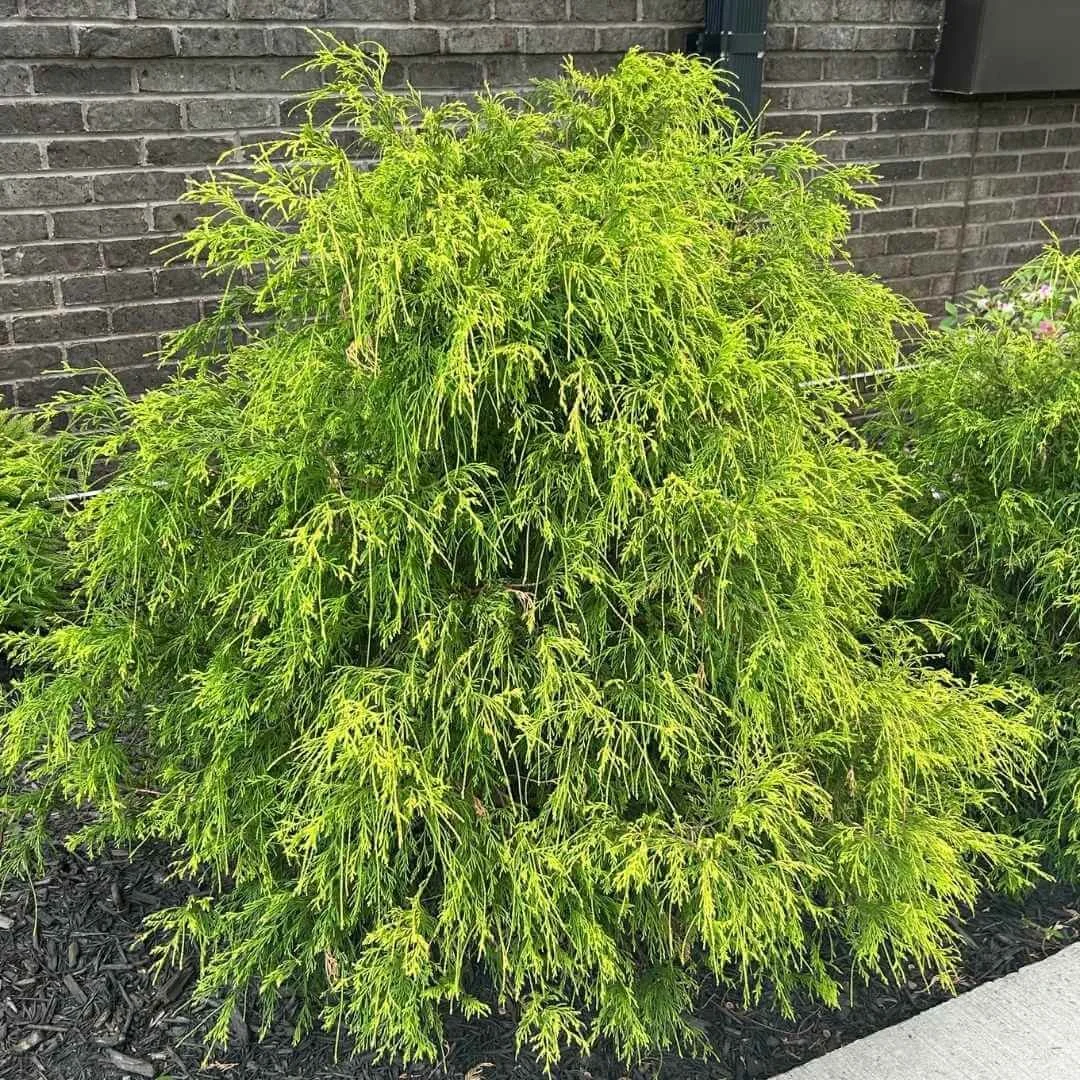
Golden Mop False Cypress makes a bright, low-maintenance addition to a foundation planting. Image © Plant and Bloom Design Studio
Type: Evergreen shrub
Zones: 4–8
Light Requirements: Full sun to part shade
Size: 5 feet tall and wide
Attributes: Bright golden-yellow threadlike foliage; soft, feathery texture; naturally mounded shape; no pruning required; year-round evergreen presence; deer-resistant.
Landscaping Ideas: Foundation planting, corners of the house, mixed shrub borders, specimen planting in front yard beds, evegreen specimen bed.
Designer's Notes: Golden Mop false cypress is a front yard landscaping plant that earns its keep all twelve months of the year. Bright, golden threadlike foliage adds a warm pop of color that you don't get from the typical dark green or blue evergreens, and the color stays vivid even in winter.
The soft, feathery texture creates a beautiful contrast next to broadleaf evergreens or flowering shrubs, and its naturally mounded habit means it holds its shape without any trimming. Plant it at the corner of your house or tuck it into a foundation bed and watch it quietly become the best thing in your front yard.
5. North Pole® Arborvitae
Botanical name: Thuja occidentalis 'Art Boe'
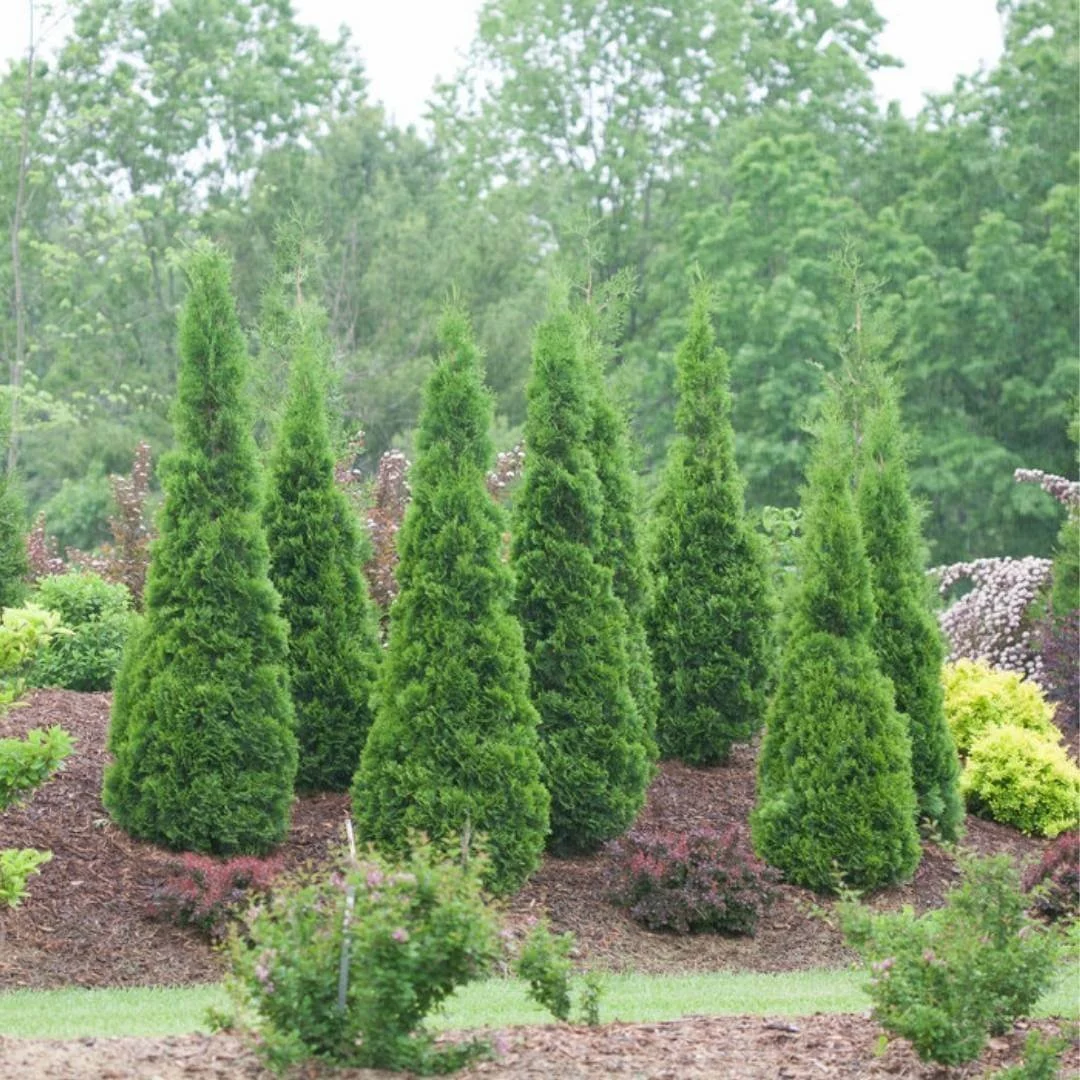
North Pole® Arborvitae makes a strong vertical statement. Image courtesy of Proven Winners, provenwinners.com
Type: Evergreen shrub/tree
Zones: 3–7
Light Requirements: Full sun
Size: 10–15 feet tall, 3–5 feet wide
Attributes: Narrow, columnar form; rich dark green foliage; resists winter burn; no pruning required to maintain shape; easy to grow; extremely cold-hardy.
Landscaping Ideas: Vertical accent at corners of the house, flanking an entryway, lining a driveway, creating a privacy screen, anchoring a foundation planting.
Designer's Notes: Sometimes what a front yard needs most is a strong vertical element, and North Pole® arborvitae delivers beautifully without taking over the whole bed. Its slim, columnar silhouette makes it one of the most practical DIY front yard landscaping plants around: plant it, enjoy it, and let it do its job year after year with almost no effort.
The dark green foliage stays rich-looking even through harsh winters with far less winter bronzing than many other arborvitae. Use it to frame an entryway, anchor the corners of your foundation planting, or line a driveway for a classic, polished look that works in almost any style of front yard.
6. Incrediball® Hydrangea
Botanical name: Hydrangea arborescens 'Abetwo'
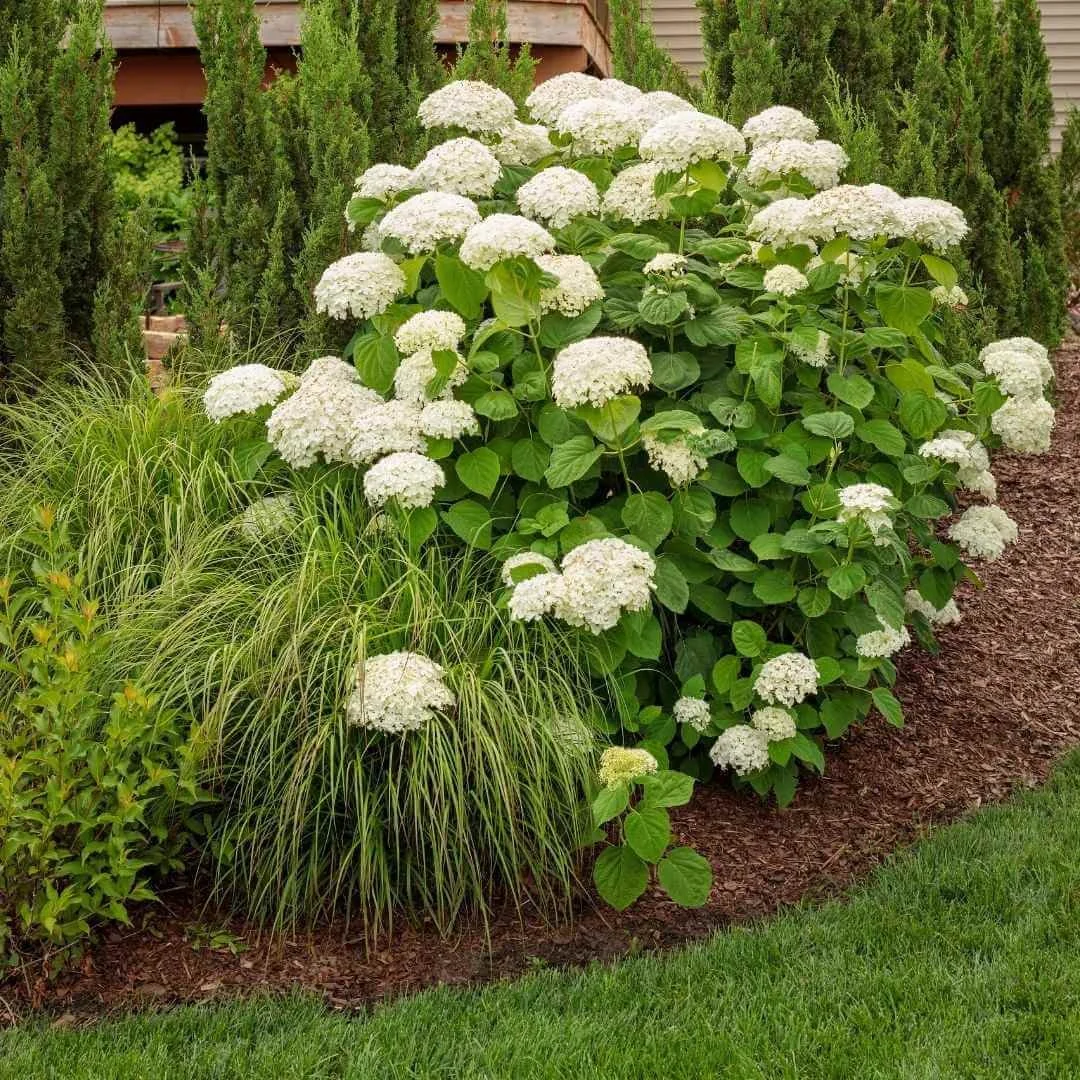
Incrediball® Hydrangea paired with Sonic Bloom® Red Weigela and Prairie Winds® Desert Plains Fountain Grass, a winning combination for a front yard garden bed. Image courtesy of Proven Winners, provenwinners.com
Type: Deciduous flowering shrub
Zones: 3–8
Light Requirements: Full sun to part shade
Size: 4–5 feet tall and wide
Attributes: Enormous globe-shaped white flower heads; strong, upright stems that don't flop; blooms midsummer through fall; easy to grow; no complicated pruning; deer-resistant.
Landscaping Ideas: Foundation planting, lining a driveway, mass planting, creating a boundary along the side of the front yard, mixed borders.
Designer's Notes: If you want a plant that makes people slow down and stare, Incrediball® Hydrangea is it. The flower heads are ginormous, sometimes the size of a basketball, and unlike some other big-blooming varieties, the strong stems hold them upright without flopping. No sad, droopy blooms here.
It's one of the most versatile front yard landscaping plants on this list. Line a driveway with a row of Incrediballs and it looks like an elegant, designed landscape. Tuck a few into a foundation planting and they fill the space beautifully. Use them to define the edge of your front yard bed and they create a soft, lush boundary that looks polished all summer long.
7. Nellie Stevens Holly
Botanical name: Ilex x 'Nellie R. Stevens'
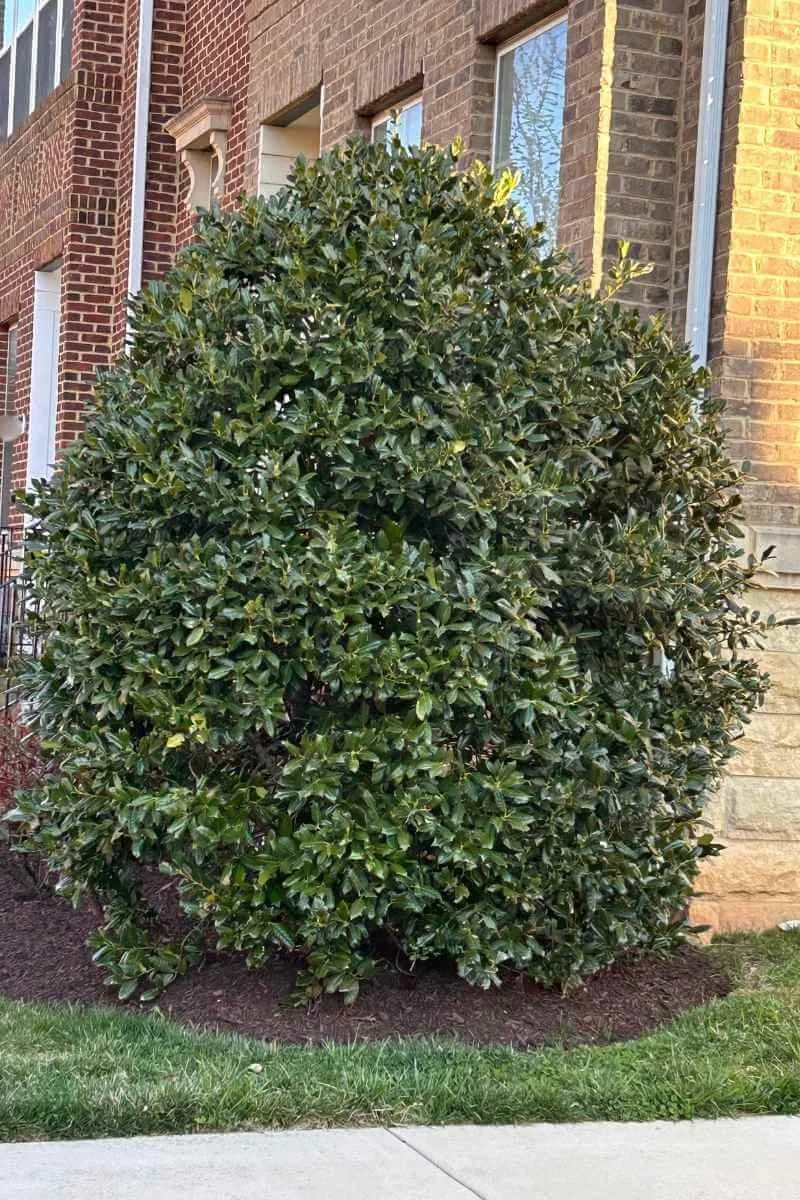
Nellie Stevens Holly anchoring the front corner of a house. A classic, polished look that works in every season. Image © Plant and Bloom Design Studio
Type: Evergreen tree/large shrub
Zones: 6–9
Light Requirements: Full sun to part shade
Size: 15–25 feet tall, 8–10 feet wide
Attributes: Dense, pyramidal shape; glossy, dark green leaves; bright red berries in fall and winter; excellent year-round structure; tidy natural form; fast-growing.
Landscaping Ideas: Specimen planting, screening, privacy planting, anchoring corners of the house, framing an entryway, lining a driveway.
Designer's Notes: Nellie Stevens holly is a landscape designer favorite for good reason. It's one of the most reliable, handsome evergreens available for front yard landscaping in zones 6–9. The glossy leaves and naturally pyramidal shape give it a formal, classic look that works with both traditional and contemporary homes.
Come fall and winter, the bright red berries add a festive touch that genuinely boosts curb appeal through the coldest months and it's absolutely gorgeous draped in holiday lights.
🌿 Ready to skip the guesswork? Grab a plant palette with the plants already chosen for you → Full Sun Front Yard Plant Palette | Shade Front Yard Plant Palette
Designer-Curated for Zones 4-8
8. Delaware Valley White Azalea
Botanical name: Rhododendron 'Delaware Valley White'
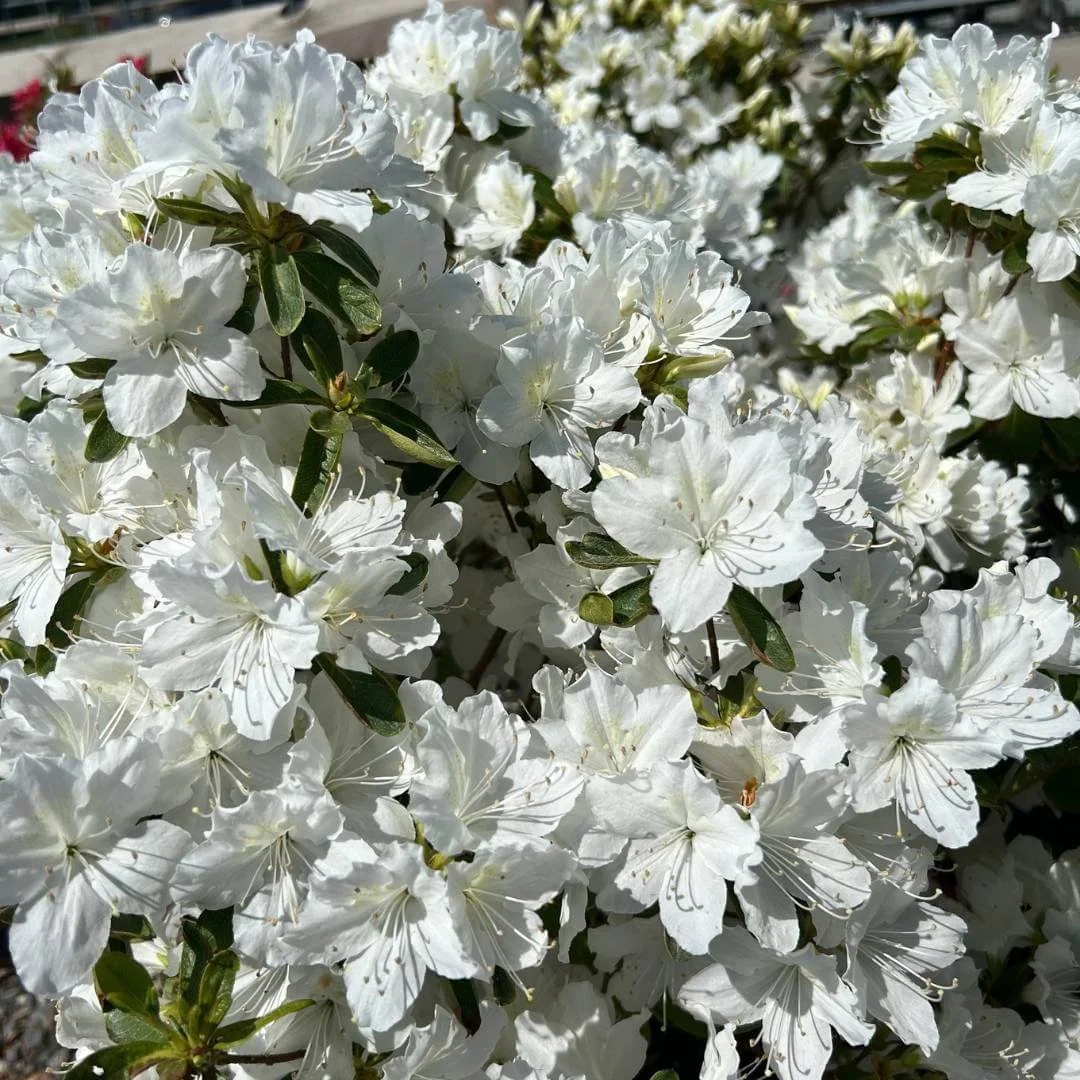
Delaware Valley White Azalea in full spring bloom, with elegant white flowers that complement virtually any house color. Image © Plant and Bloom Design Studio
Type: Evergreen flowering shrub
Zones: 6–8
Light Requirements: Part shade to full shade (tolerates more sun in cooler zones)
Size: 3-4 feet tall and wide
Attributes: Evergreen; masses of pure white flowers in spring; glossy, dark green leaves; tidy mounded habit; adaptable and easy to grow.
Landscaping Ideas: Foundation planting, under windows, shaded entryways, mixed shrub borders, mass planting under trees.
Designer's Notes: Evergreen foliage plus a spectacular spring flower display? Yes, please. Delaware Valley White azalea is a pretty yard idea that earns its spot in the landscape year-round because it looks polished even when it's not in bloom. When those bright white flowers open up in spring, it's absolutely beautiful.
Plants with white flowers are one of my favorite choices for front yard landscaping because they complement virtually every house color. Whether your home is brick, painted, or sided in a dark tone, white blooms are elegant and easy to work with. Plant this one in a partially shaded foundation bed and enjoy a nearly maintenance-free, four-season front yard presence.
9. Fire Chief™ Arborvitae
Botanical name: Thuja occidentalis 'Congabe'
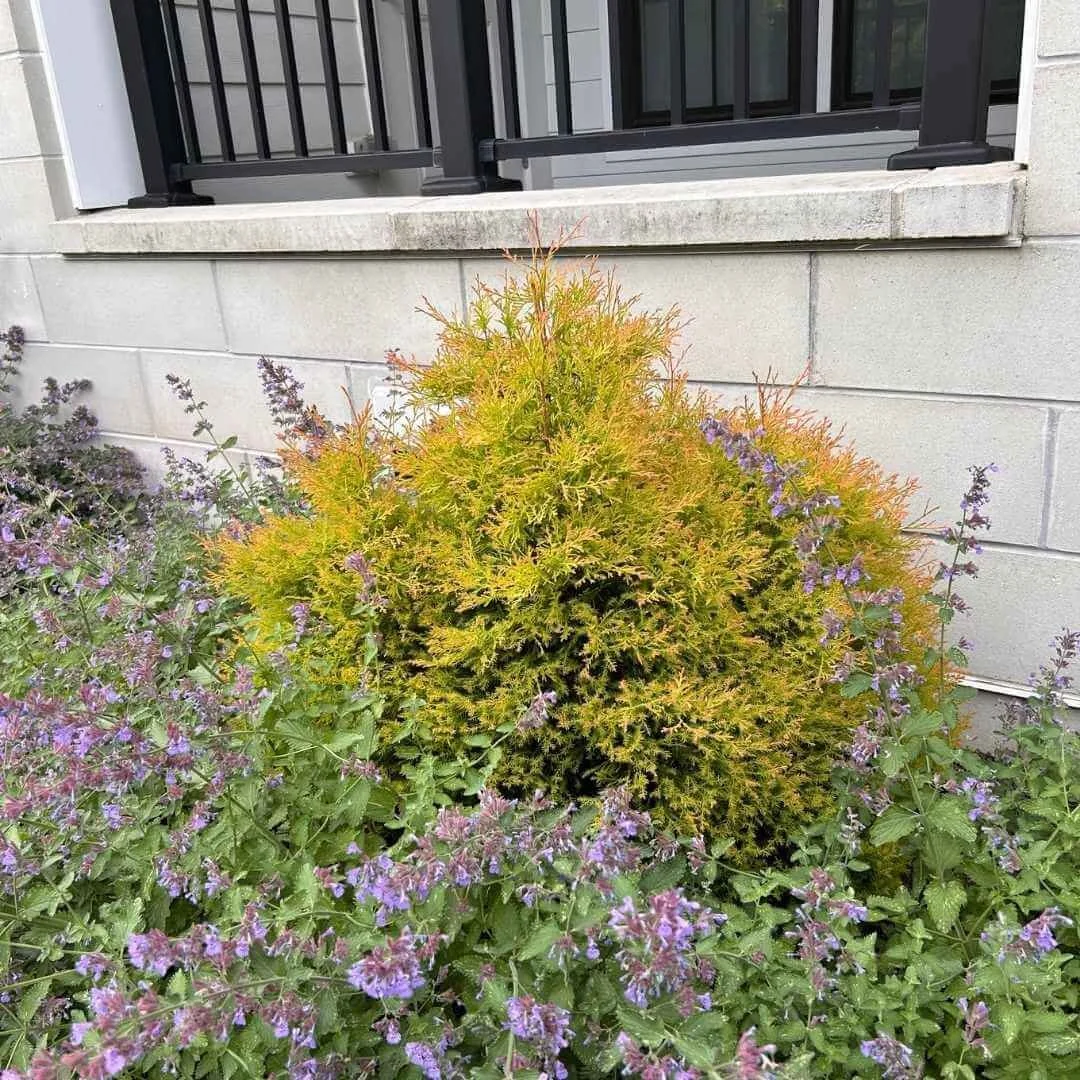
Fire Chief™ Arborvitae paired with catmint along a foundation: a simple, colorful combination that looks great all season. Image © Plant and Bloom Design Studio
Type: Evergreen shrub
Zones: 5-8
Light Requirements: Full sun to part shade
Size: 4 feet tall and wide
Attributes: Compact globe to oval shape; color-changing foliage starts bright golden yellow, shifts to orange, and deepens to rich red in fall and winter; very heat tolerant; no pruning required.
Landscaping Ideas: Foundation planting, mixed borders, accent plant among green evergreens, corners of the house, mass planting.
Designer's Notes: If you think all arborvitae look the same, Fire Chief™ is here to change your mind. This compact little evergreen is a chameleon: its foliage starts bright gold in spring, shifts to orange as the season goes on, and deepens to a warm, glowing red by fall and winter. It's one of the most interesting front yard landscaping plants for adding year-round color without a lot of fuss.
It looks especially striking planted next to purple flowers like catmint or salvia, where the warm golden and orange tones really stand out. Its compact size means it fits into smaller foundation beds and tight spots where you need color and structure without a big footprint.
10. Brilliantina® Abelia
Botanical name: Abelia × grandiflora 'KEYFLY’
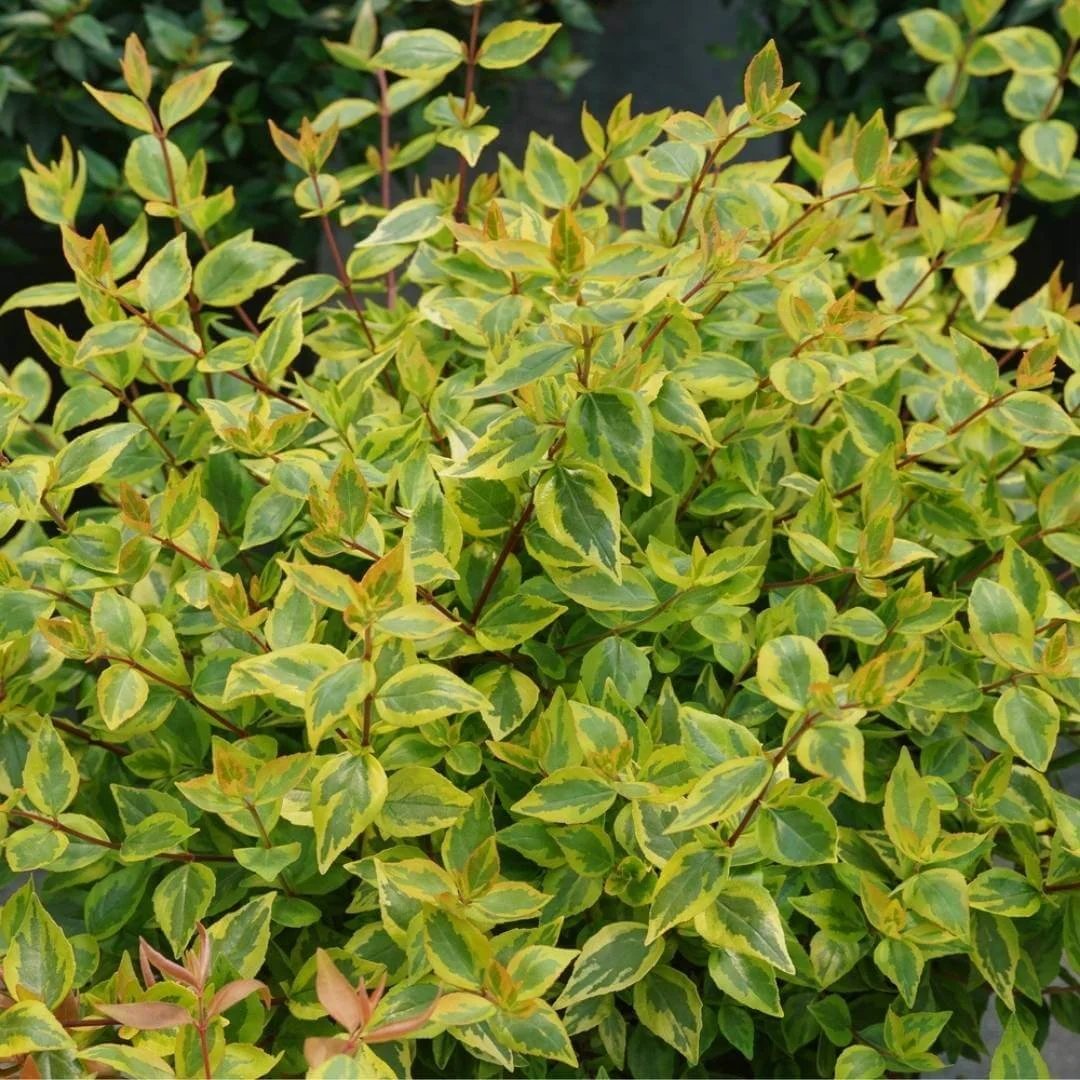
Brilliantina® Abelia's bright variegated foliage adds color and interest even when it's not in bloom. Image courtesy of Spring Meadow Nursery, Inc. - Proven Winners
Type: Semi-evergreen flowering shrub
Zones: 6–9
Light Requirements: Full sun to part shade
Size: 3-4 feet tall and 4-5 feet wide
Attributes: Bright variegated foliage in yellow and green; white to light pink summer flowers; semi-evergreen (holds most of its leaves through mild winters but may drop some in colder zones); attracts butterflies and hummingbirds.
Landscaping Ideas: Foundation planting, mixed borders, lining walkways, mass planting, containers.
Designer's Notes: Brilliantina® abelia is one of those front yard landscaping plants that brings layered interest to garden beds and foundations. The bright, variegated foliage works even when it's not blooming, and once it starts flowering in summer, it just keeps going. The yellow and green leaves pop especially well against darker house colors like charcoal, navy, or deep gray siding.
A quick note on "semi-evergreen": in mild winters, this abelia holds most of its leaves and stays looking full and lush. In colder zones, it may drop some foliage but comes back reliably in spring. Either way, it's a great-looking, easy-care addition to any front yard border.
Tips for Buying Front Yard Landscaping Plants
Smart shopping makes all the difference when it comes to front yard landscaping! Here's how to set yourself up for success before you even get to the nursery:
Shop by botanical name. Common names vary by region and can be confusing. The botanical name ensures you're bringing home exactly the plant you want and not a similar-but-different variety.
Shop early in the season. Many of these popular plants sell out quickly, and once they're gone, garden centers often don't restock until the following year. Getting to the nursery in early to mid-spring gives you the best selection.
Bring photos of your house. Not sure if a plant's color will work with your siding or brick? Snap a photo of your front yard and pull it up in the nursery to compare. Staff can also help point you in the right direction.
Ask for help. Seriously! A well-staffed garden center is full of people who love plants. Don't be shy! If you're new to gardening or not sure what will work in your space, asking is always a great move.
Don't be afraid to shop online. Packing and shipping technologies have come a long way, and your plants will arrive healthy and ready to grow. Online nurseries may carry a wider selection of specialty varieties than your local garden center, and if the thought of a nursery packed full of plants feels overwhelming, shopping online is a great way to cut through the decision fatigue. You can browse at your own pace, filter by what you need, and track down exactly what you're looking for without driving all over town.
Design Tips for Front Yard Landscaping
Choosing the plants is the fun part, but a little planning goes a long way toward making it all come together beautifully:
Measure before you shop. Take measurements of your foundation beds and any other planting areas before heading to the nursery. It's much easier to buy the right number of plants when you know exactly how much space you're working with.
Always consider mature size. This is probably the most common front yard landscaping mistake I see. That cute little shrub at the garden center will eventually become its full-grown self, and if it's planted too close to the house, a window, or a walkway, you'll have problems down the road. Always check the mature size before you plant.
Think about color harmony. Take a look at your house colors, including the siding, brick, trim, and front door, before deciding on plant colors. Warm tones in brick or stone can clash with some pinks, purples, and lime greens, while cool gray or dark siding tends to look amazing with white, gold, or bright green foliage. A quick trick: pull up plant photos on your phone and hold them next to your house for a color-check before you commit.
Use evergreens as your anchor. Evergreen plants are a landscape designer's best friend for front yard landscaping because they keep your home looking polished and put-together even in the middle of winter. Build your foundation around evergreens, then layer in the seasonal color.
Mind the traffic flow. Before you place plants, think about how people move around your property. You don't want to block the path between a car and the front door, narrow a walkway, or crowd the spot where the trash cans live. These things seem small now but matter a lot once the plants fill in.
Plant away from the sidewalk if dogs are an issue. This is a real thing that doesn't get talked about enough! Repeated dog activity near the sidewalk can cause yellowing foliage and eventually kill plants. If you have a high-traffic dog-walking street, plant further back or skip planting in that area altogether.
Caring for Your Front Yard Landscaping Plants
Once your plants are in the ground, a little TLC goes a long way, especially during the first growing season:
Zone: Before planting anything, confirm it's rated for your USDA hardiness zone. All of the plants on this list include zone information in their profiles.
Light: Match each plant's light requirements to the actual conditions in your front yard. Full sun means 6+ hours of direct sunlight per day; part shade means 3–6 hours.
Watering: Watering newly planted shrubs and trees properly is one of the single most important things you can do for your front yard. Consistent moisture during the establishment period (typically the first 1-2 growing seasons) helps plants develop strong root systems and sets them up to look their best and provide maximum curb appeal for years to come.
Helpful resources:
How to Water Your Plants: everything you need to know to keep your plants healthy and hydrated
USDA Plant Hardiness Zone Finder: find your exact zone by zip code
US Drought Monitor: check if your area is currently in drought conditions and adjust your watering schedule as needed
Further Reading
Frequently Asked Questions
What are the best front yard landscaping plants for curb appeal? The best front yard landscaping plants for curb appeal are ones that look great for multiple seasons, stay tidy without constant pruning, and complement the style and colors of your home. Evergreens give you year-round structure, flowering shrubs add seasonal color, and specimen trees create focal points that elevate the whole look. The ten plants in this list cover all of those bases. Scroll through the profiles to find the ones that fit your yard, your light conditions, and your style.
What are the easiest front yard plants for beginners? The plants on this list are all easy to grow, even if you're new to gardening. North Pole® Arborvitae, Incrediball® Hydrangea, Nellie Stevens Holly, and Golden Mop False Cypress are all forgiving, adaptable, and low-maintenance once established. The key is matching the right plant to the right light conditions and watering well during the first two growing seasons.
What front yard plants look good year-round? For year-round curb appeal, focus on evergreens because they hold their foliage and structure through all four seasons. Great options on this list include Golden Mop False Cypress, North Pole® Arborvitae, Fire Chief™ Arborvitae, Delaware Valley White Azalea, and Nellie Stevens Holly. Add in a few flowering shrubs and a specimen tree for seasonal interest on top of the evergreen structure.
What small trees are good for front yard landscaping? Small trees are one of the best ways to add height, focal points, and seasonal drama to a front yard. Kousa Dogwood, Ruby Falls Weeping Redbud, and Metamorphosa® Japanese Maple are all excellent choices because they stay a manageable size, have outstanding seasonal interest, and have a naturally tidy shape that fits into front yard landscaping beautifully.
How do I improve curb appeal with plants? Start with a mix of evergreens for structure, add a specimen tree for height and seasonal interest, and layer in flowering shrubs for color. Think in seasons: what will this look like in winter? In spring? Choose plants that contribute something beautiful across multiple times of year rather than just for one brief bloom. The tips in the design section of this article walk you through the most important considerations before you plant.
Can I do front yard landscaping myself? Absolutely, these plants are all great candidates for a DIY front yard landscaping project. The key is measuring your space, matching plant requirements to your light conditions, choosing the right plants for your zone, and watering consistently after planting. The tips sections in this article will walk you through everything you need to know to get started with confidence.
🌿 Shady Front Yard? Transform Your Curb Appeal with a Professional Plant Palette
Stop struggling with what to plant in your shady front yard! This comprehensive landscaping guide solves one of the biggest challenges DIY homeowners face — creating a cohesive, professionally designed look in partial to full shade, without the overwhelm of choosing plants that actually work together.
Say Goodbye to Shade Guesswork
Does your front yard have patchy shade, overhanging trees, or that frustrating mix of sun and shadow that makes plant shopping feel impossible? You're not alone. Most homeowners either give up on their shady front yard or grab whatever's left in the "shade plants" section at the garden center — and hope for the best. This ebook changes all that.
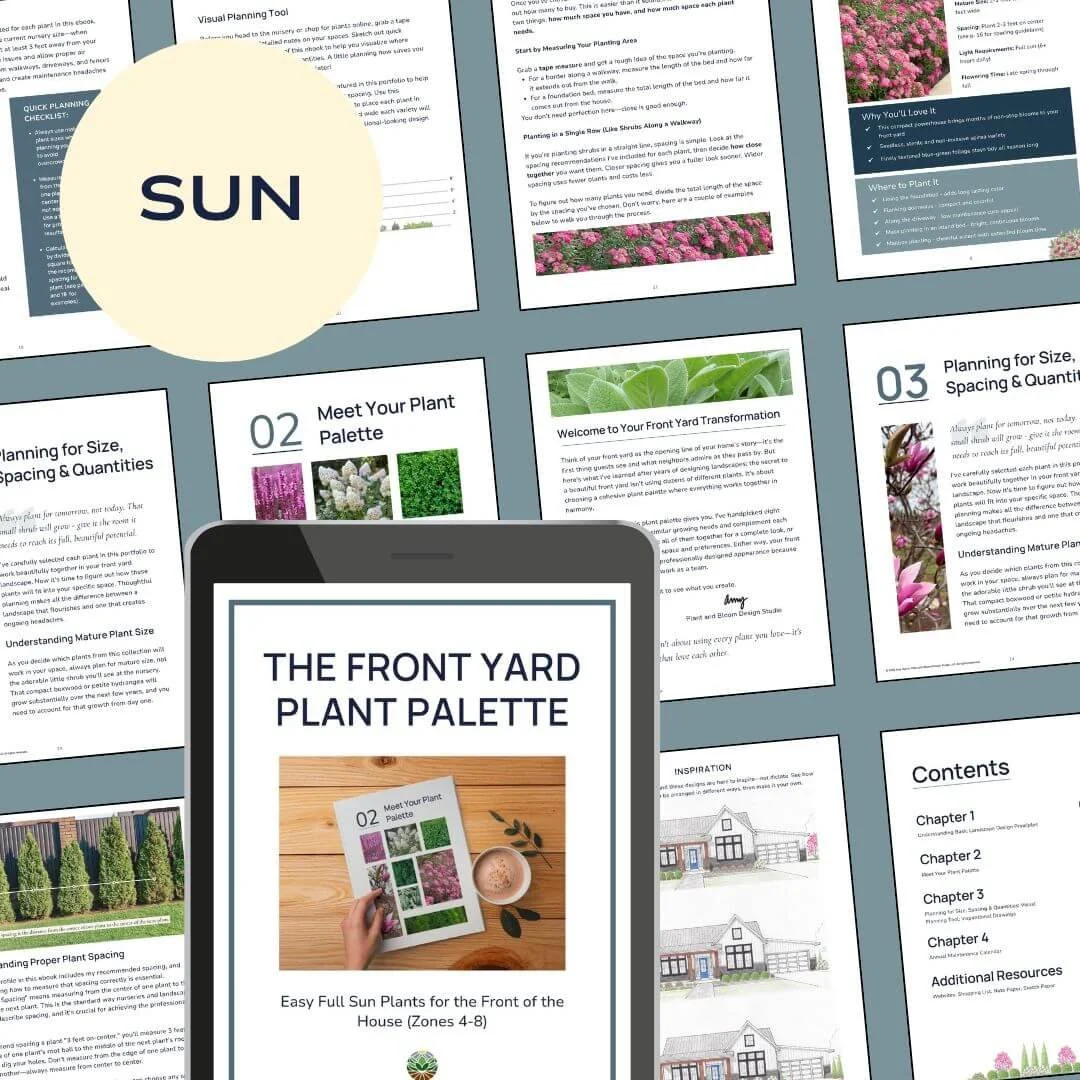
This Front Yard Plant Palette features 8 handpicked, versatile partial shade plants for zones 4-8, specifically chosen to complement each other beautifully and create that polished, professionally designed appearance. These aren't random suggestions — they're a curated plant palette designed to work as a team, giving you confidence every step of the way. And with 3 plants that can also handle full sun and 4 that can tolerate full shade, this palette is flexible enough for yards with varying degrees of shade too.
This 29-Page Downloadable Ebook Includes:
✓ Chapter 1: Understanding Basic Landscape Design Principles – Learn professional secrets for creating visual harmony and avoiding common front yard landscaping mistakes
✓ Chapter 2: Understanding Light Conditions – Decode what partial shade, full shade, and full sun really mean for your yard — and how to work with what you have
✓ Chapter 3: Meet Your Plant Palette – Detailed profiles of 8 carefully selected partial shade plants (zones 4-8) that work beautifully together
✓ Chapter 4: Planning for Size, Spacing & Quantities – Discover how to account for mature size when planning your layout, plus spacing guidelines and plant quantity recommendations
✓ Visual Planning Tool & Inspirational Drawings – See how these plants come together for maximum curb appeal
✓ Chapter 5: Annual Maintenance Calendar – Know exactly what to do and when, season by season
✓ Bonus Resources: Helpful plant care reference sites, a ready-to-use shopping list for purchasing plants, note-taking pages, and gridded design paper for planning your layout
Perfect For:
Partial shade front yards (3–6 hours of direct sunlight)
Yards with varying light — from dappled shade to sunnier pockets
Zones 4-8 (Not sure of your zone? Visit the USDA Plant Hardiness Zone Map)
DIY homeowners who want professional-looking results in a shady yard
Anyone tired of guessing what shade plants will actually look good together
Homeowners ready to boost their curb appeal on a budget
Those ready to refresh old, overgrown, or neglected shady front yard plantings
Homeowners with a lawn or landscaping service who need design direction
Getting more than 6 hours of sun in your front yard? This palette might not be the right fit — but I've got you covered! Check out the Full Sun Plant Palette instead →
Flexible Design Options:
Use all 8 plants together for a complete, coordinated look, or mix and match based on your space, light conditions, and personal preferences. With plants that span partial shade, full shade, and full sun tolerance, you have built-in flexibility no matter what your yard throws at you — and you'll still achieve that professionally designed appearance because these plants were specifically chosen to complement each other.
Ready to Finally Love Your Shady Front Yard?
For just $12, you'll get instant access to professional landscape design knowledge that typically costs hundreds of dollars in designer fees. Download this easy-to-follow ebook and start transforming your front yard today — shade and all!
📘 IMPORTANT: What You're Purchasing
This is a digital plant guide ebook (PDF format), not physical plants, seeds, a printed book, or a custom landscape design drawing.
You'll receive a digital ebook detailing 8 professionally selected plants with guidance on how to arrange them using landscape design principles. This is a flexible plant palette with design ideas — not a specific layout drawn for your yard. Every yard is different, so you'll adapt these recommendations to fit your unique space. You are responsible for purchasing the actual plants from your local nursery or preferred online plant retailer. The included shopping list makes plant purchasing easy!
To receive your digital download: Your ebook will be available immediately after purchase — both on the checkout page and via email. Please ensure your email address is correct at checkout. Due to the digital nature of this product, all sales are final.