
18 Best Flowering Shrubs: A Landscape Designer’s Favorite Picks
Flowers make us happy. That’s not just a nice thought, it’s the number one request I hear from clients: “I want flowers.” There’s something genuinely wonderful about coming home and seeing color spilling out of your front yard, or spotting your favorite flowering shrubs in full bloom from your kitchen window. Flowers enhance curb appeal, yes, but more than that, they give you something to look forward to every single year.
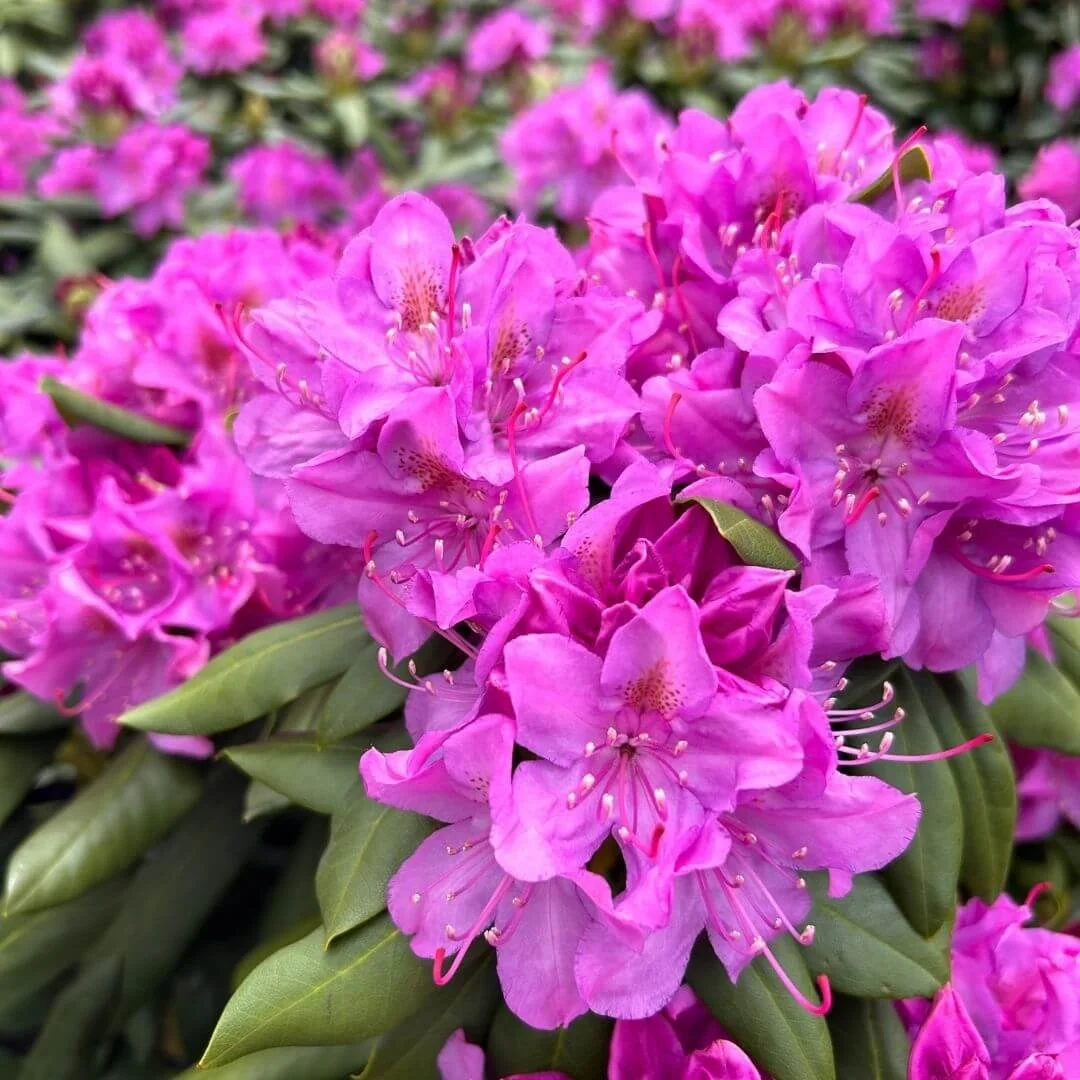
‘Roseum Elegans’ rhododendron is one of my favorite flowering shrubs (see #1 on this list). Those lavender-pink flower clusters are simply stunning in a shaded border. Image © Plant and Bloom Design Studio
So why shrubs specifically? Because they are workhorses. Flowering shrubs offer incredible variety and they’re genuinely easy to work with. Beyond their blooms, many bring evergreen foliage, beautiful leaf texture, outstanding fall color, or multi-season interest. There are shapes and sizes for almost any landscaping situation, and unlike perennials, they don’t need dividing. Once established, most are lower maintenance than you’d expect.
This list includes 18 of my absolute favorites, the ones I come back to again and again in my own designs and the ones my clients love. You’ll find spring bloomers, summer bloomers, and long-blooming shrubs that just keep going. Some are evergreen, some are deciduous. A few have incredible fragrance and several offer stunning fall color. There are choices for full sun, partial shade, and even deep shade. These are the best flowering shrubs for landscaping whether you’re a beginner just discovering the joy of flowering plants or an experienced gardener looking for fresh ideas.
One more thing: most plants on this list have been cultivated into many different varieties with different sizes, habits, and sometimes flower colors. Always read tags carefully if you’re shopping in person, and check website descriptions thoroughly when shopping online. Measure your outdoor spaces before you go plant shopping and plan for the mature size of your flowering shrub. Your future self will thank you. 😉
And yes, these are real photos, either taken by me or sourced from trusted growers and nurseries. No AI here. Just real plants from a real garden designer who has used every single one of these.
How to Use Flowering Shrubs in Your Landscape
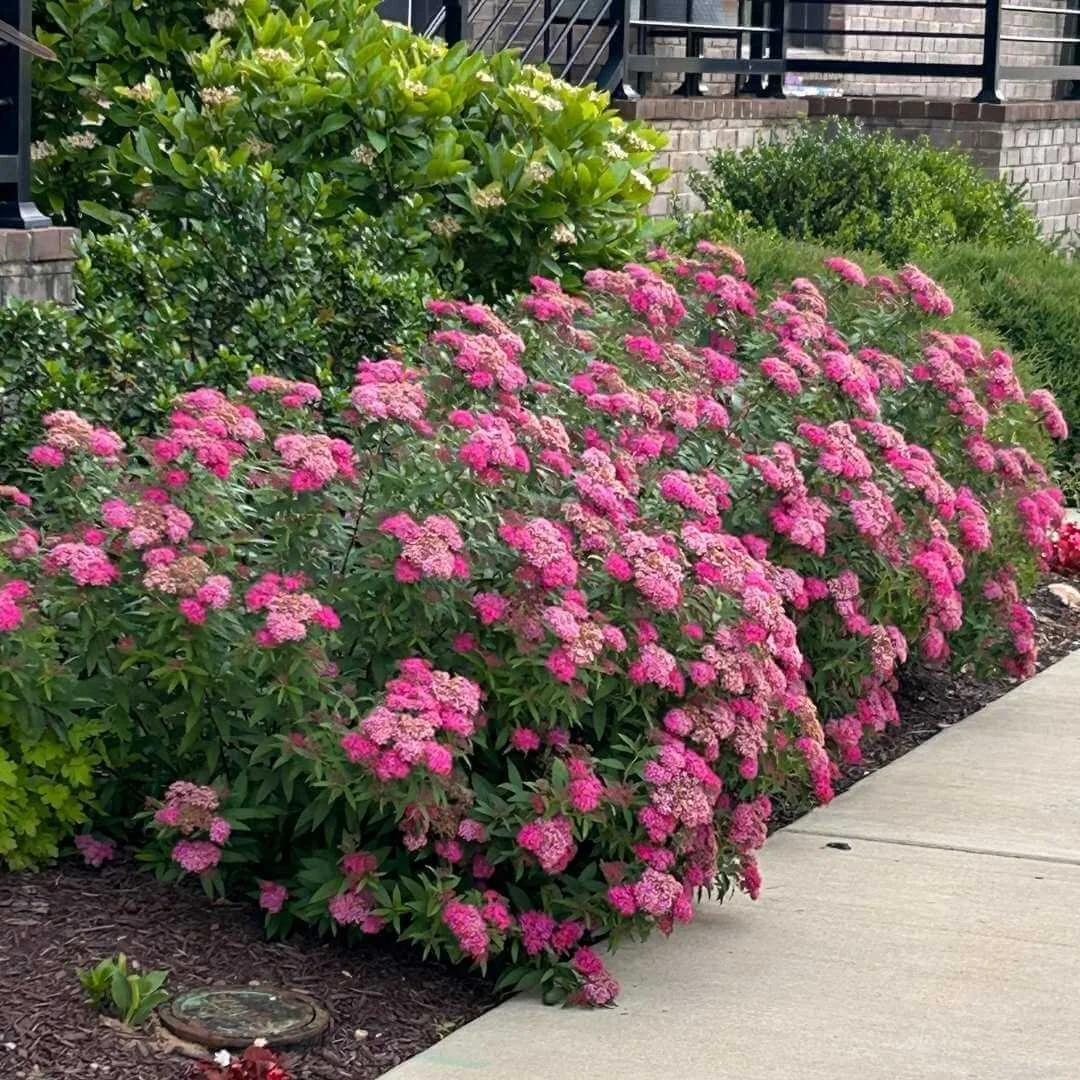
Double Play Doozie spirea (#10 on this list) as a foundation planting. It reblooms from early summer through fall with virtually no fuss. Image ® Plant and Bloom Design Studio
Before we get into the plant list, let’s talk strategy. How you place flowering shrubs matters as much as which ones you choose. Here are four design approaches I use constantly in my own work:
Mass Planting
Plant in large groups, always in odd numbers, and let the flowers make a real statement. Mass planting is the secret weapon of professional landscape design. It works beautifully along property boundaries, fence lines, and in large beds or borders. When five or seven of the same flowering shrub are in bloom at once, the visual impact is stunning and the flowers really pop.
Specimen Planting
Sometimes one plant is all you need. A specimen planting lets a single shrub be the star of the show. This works especially well next to a doorway (particularly with fragrant varieties), in a spot visible from a favorite window, or as a focal point near a patio or seating area. Think about when you actually use your outdoor spaces. If you love your patio in spring and fall but avoid it in the heat of summer, plant something like fothergilla because it has gorgeous spring flowers and brilliant fall color.A summer-blooming shrub in that spot would put on its whole show when you're least likely to see it.
Succession Planting
This is my favorite strategy for foundation plantings and mixed borders. Combine flowering shrubs that bloom at different times, and add in some evergreens for structure, so that something is always interesting no matter the season. A well-designed succession planting gives you spring flowers, summer blooms, fall color, and winter evergreen texture all from the same bed.
Pay Attention to Flower Color Against Your House
This one trips up a lot of people. Some color combinations are harder to pull off than others. A bright pink azalea against orange-toned brick, for example, can clash because the undertones compete with each other. If color feels tricky, stick with shrubs that flower in white or lavender-purple. They are more versatile and forgiving than bold fuchsias or salmon pinks, and they work beautifully against almost any exterior color.
The 18 Best Flowering Shrubs for Landscaping
Here are my top picks, organized roughly from spring through fall bloom time so you can plan for a full season of color.
Spring Flowering Shrubs
1. Rhododendron & Azalea
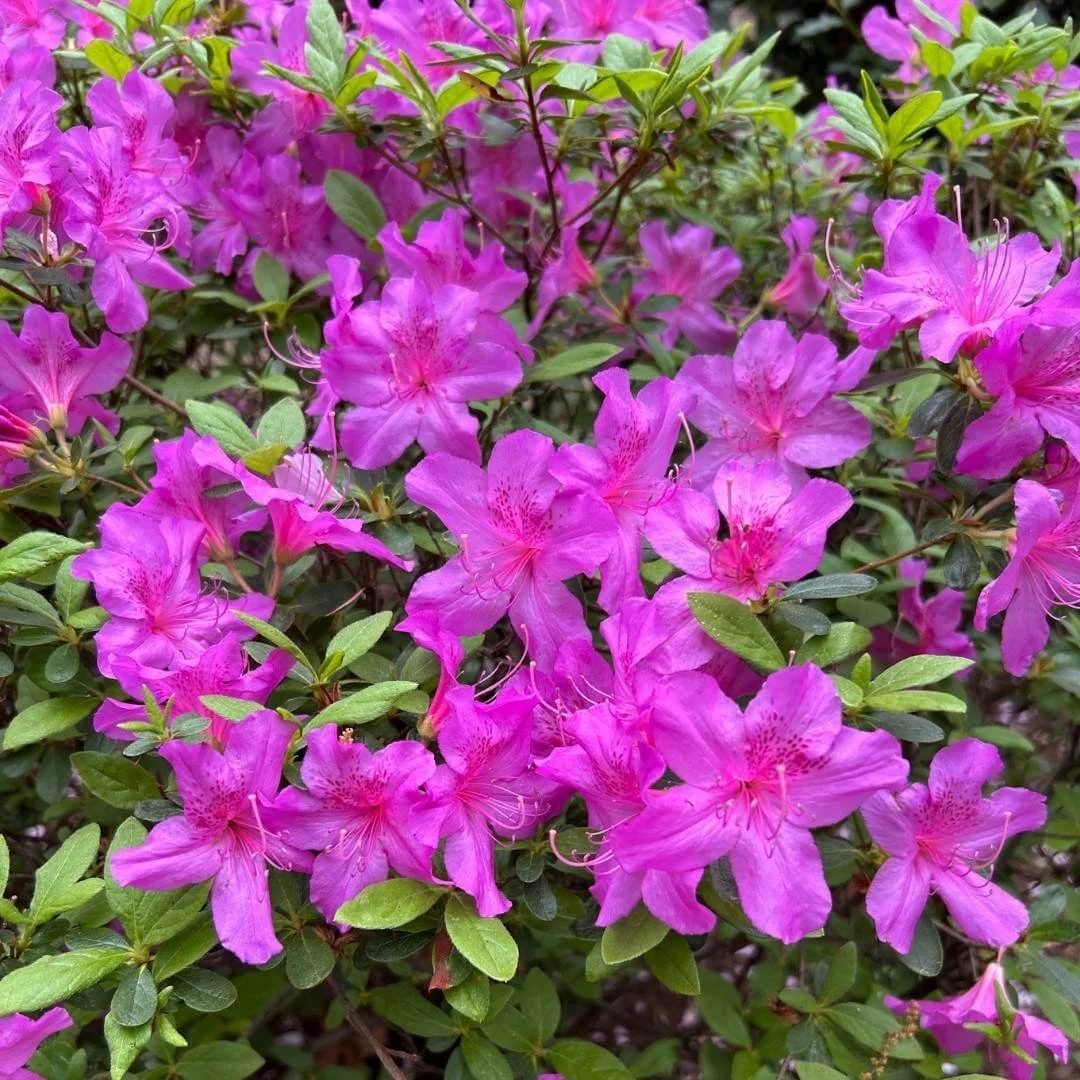
Autumn Royalty® Encore® Azalea: rich purple flowers that rebloom from spring through fall. Image © Plant and Bloom Design Studio
If you want a true showstopper in spring, rhododendrons and azaleas are hard to beat. Both belong to the same genus (Rhododendron) and both produce an absolute explosion of flowers in spring, but they have distinct personalities. Rhododendrons tend to prefer cool, moist soil and dappled shade, and most are evergreen with large, leathery leaves. Azaleas are more flexible: some tolerate sun, some thrive in shade, and they come in a wider range of sizes. Both groups love acidic soil, so if your soil is neutral or alkaline, plan to amend when planting with a product like Holly-tone or Azalea-tone.
Flowers range from pure white to palest blush, vivid pink, hot magenta, soft lavender, and deep purple depending on the variety. Flower form varies too, from classic single flowers to frilly doubles. Many are lightly fragrant.
Top Picks: ‘English Roseum’ rhododendron grows 6 to 10 feet tall with vibrant lavender-pink flowers and prefers afternoon shade. ‘PJM Elite’ is a reliable evergreen rhododendron with increased winter hardiness, and it’s excellent for colder zones. Pinxterbloom azalea (Rhododendron periclymenoides) is a beautiful native choice with delicate pink flowers. The Encore® series azaleas are a favorite of mine for clients who want more than just spring color, because they rebloom through fall and grow in full sun to partial shade.
Common name: Rhododendron, Azalea
Botanical name: Rhododendron species
Zones: 3–9 (varies by species and cultivar)
Light: Part shade to full shade (azaleas can take more sun)
Size: 2 to 10 ft. tall and wide is typical, but can vary widely by cultivar
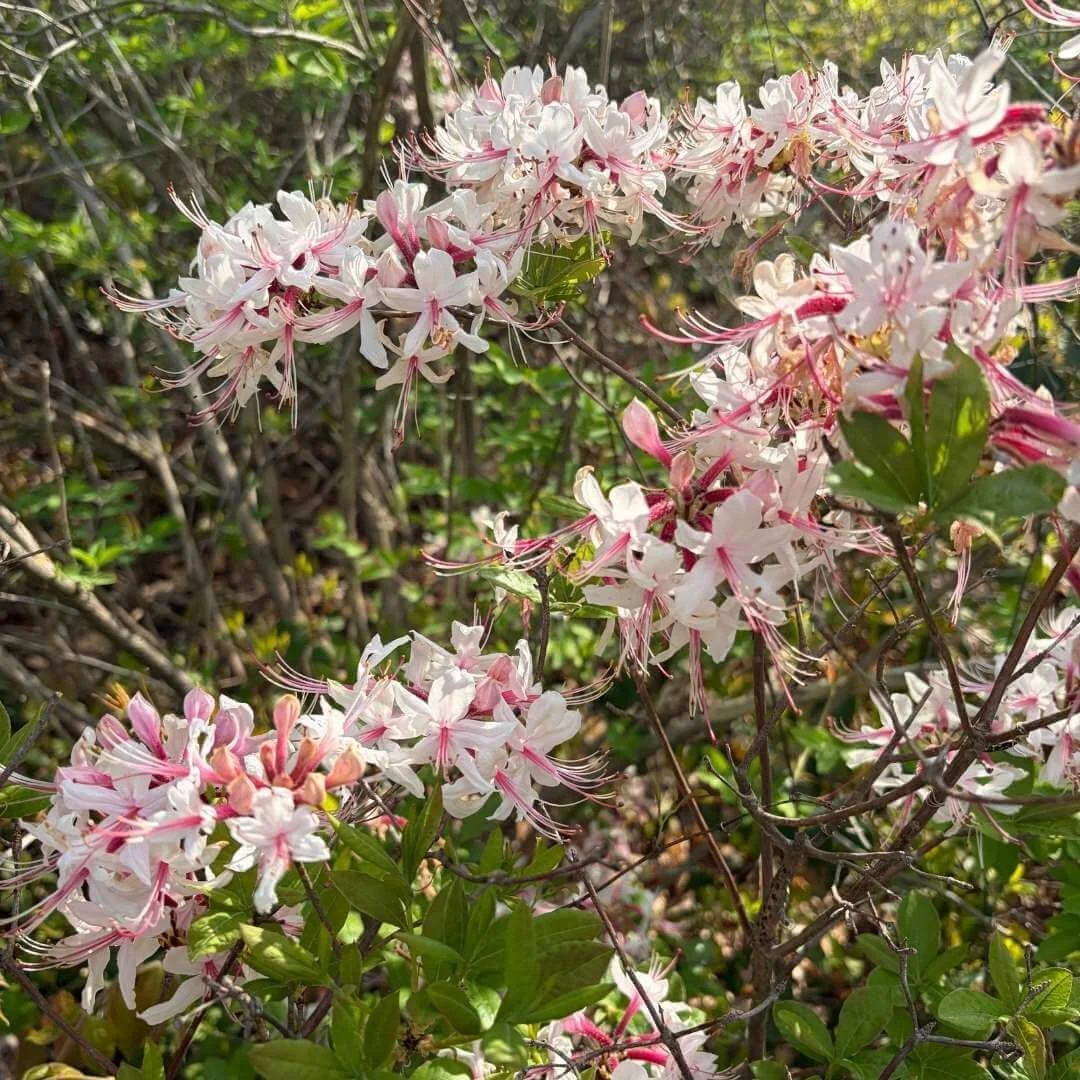
The Pinxterbloom azalea is a fragrant spring-blooming shrub native to the eastern US. Image © Zachary Martin, used with permission
2. Viburnum
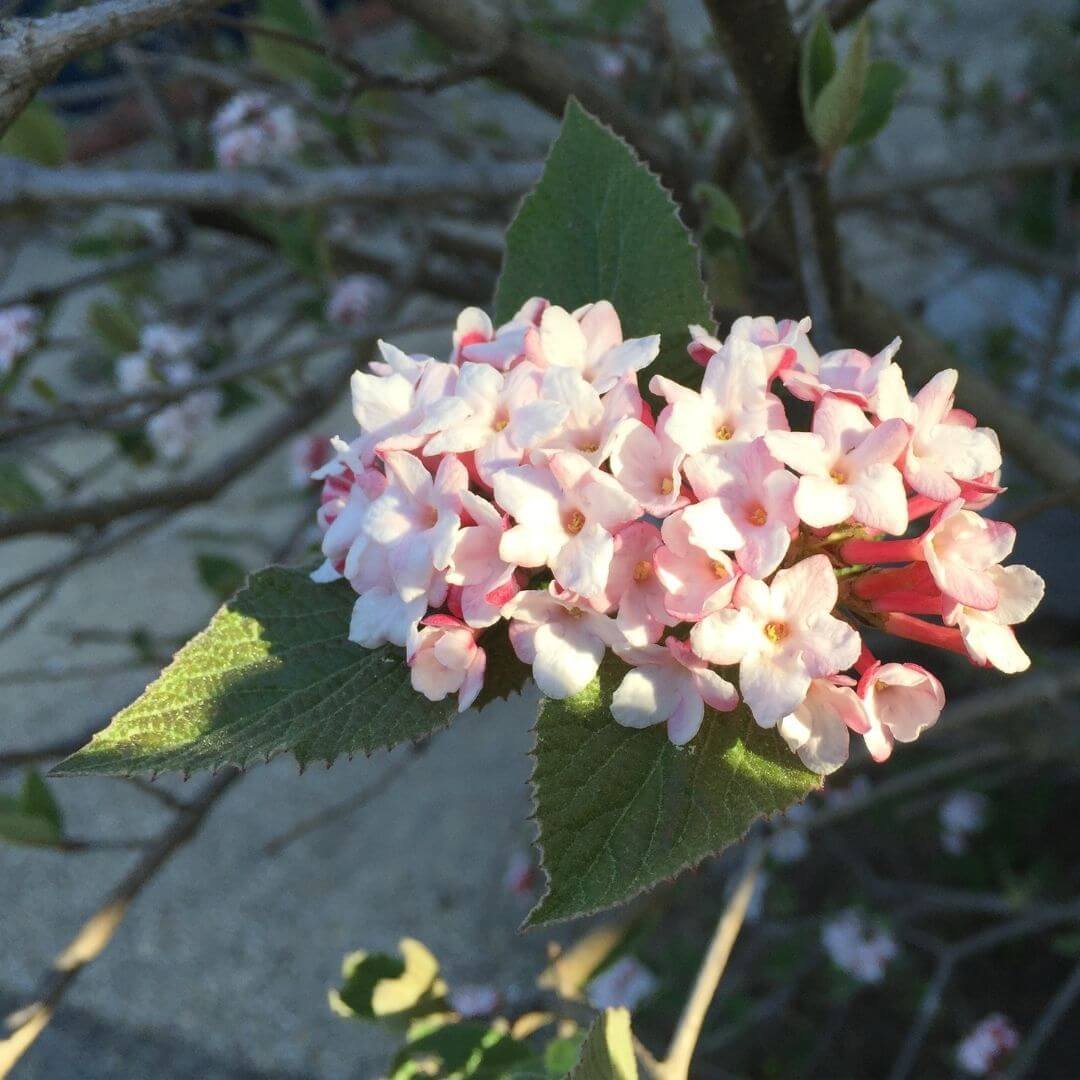
Korean Spice viburnum: possibly the most intoxicating fragrance in the spring garden. Image © Plant and Bloom Design Studio
Viburnum is one of those plant groups where the more you learn, the more you love it. This is a huge and varied group of shrubs, and many of them are among the best flowering shrubs for landscaping because they deliver so much more than just flowers. Spring blooms are followed by berries that birds go wild for, attractive foliage that often turns brilliant shades of red and orange in fall, and in the case of some species, intoxicating fragrance. Many viburnums are native to North America and serve as valuable host plants for pollinators.
Flowers are typically white or pale pink, often held in flat-topped or rounded clusters. Bloom time is spring, and the display can last for several weeks.
Top Picks: Korean Spice Viburnum (Viburnum carlesii) is all about the fragrance, rather than the berries and fall color. The pale pink to white spring flowers have an intoxicating, heady fragrance that stops people in their tracks. It’s one of my go-to specimen plants near doorways. Brandywine™ and ‘Winterthur’ are native Viburnum nudum cultivars with white flowers followed by a spectacular show of bright berries that shift from pink to blue to purple as they ripen. They pollinate each other, so plant both for the best berry production. Glitters & Glows® Arrowwood viburnum is a native cultivar with white flowers and outstanding wildlife value. It's actually two compatible shrubs grown together in the same pot, so pollination is built in right from the start.
Common name: Viburnum
Botanical name: Viburnum species
Zones: 4–9 (varies by species)
Light: Full sun to part shade
Size: 4 to 10 ft. tall and wide (varies by species)
3. Pieris (Andromeda)
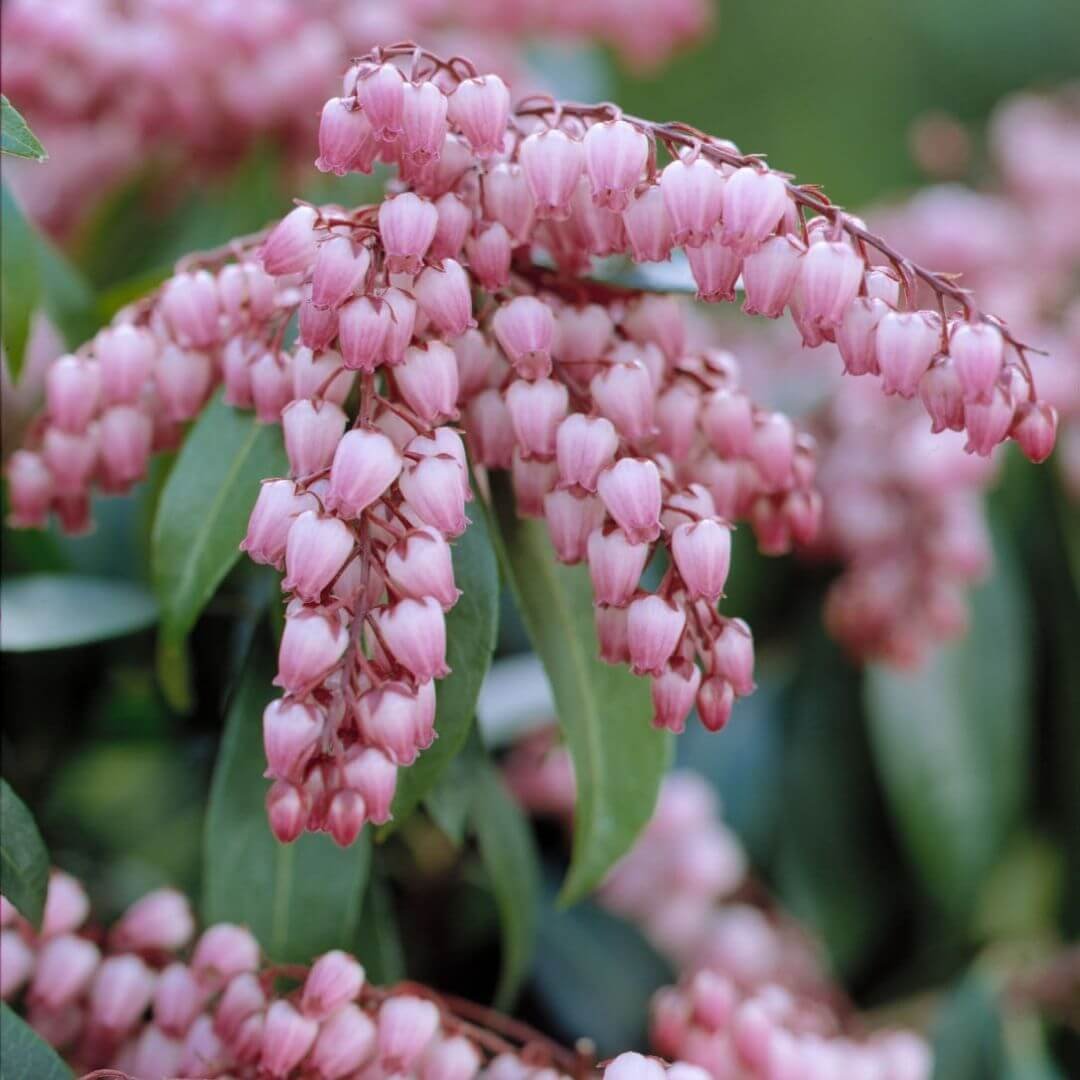
Katsura Pieris. Image courtesy of PlantHaven International, Inc.
Pieris is one of the most elegant flowering shrubs for shade gardens, and it earns its spot in the landscape in two distinct ways: first with cascading clusters of tiny, delicate, lily-of-the-valley-like flowers in early spring, and then with its glossy evergreen foliage that looks polished and refined year-round. The flowers are subtly fragrant, creamy white or pink, and dangle in long drooping panicles.
Top Picks: ‘Mountain Fire’ is a classic for a reason: its new spring foliage emerges a vivid, almost electric red before deepening to glossy green, contrasting beautifully with the white flowers. ‘Cavatine’ is a compact cultivar that works wonderfully in smaller gardens or tight spaces, and ‘Katsura’ is especially pretty with soft pink flowers and red-tinted new growth.
Common name: Pieris, Andromeda, Lily-of-the-Valley Shrub
Botanical name: Pieris japonica
Zones: 5–8
Light: Part shade to full shade
Size: 3 to 8 ft. tall, 3 to 6 ft. wide (varies by cultivar)
4. Camellia
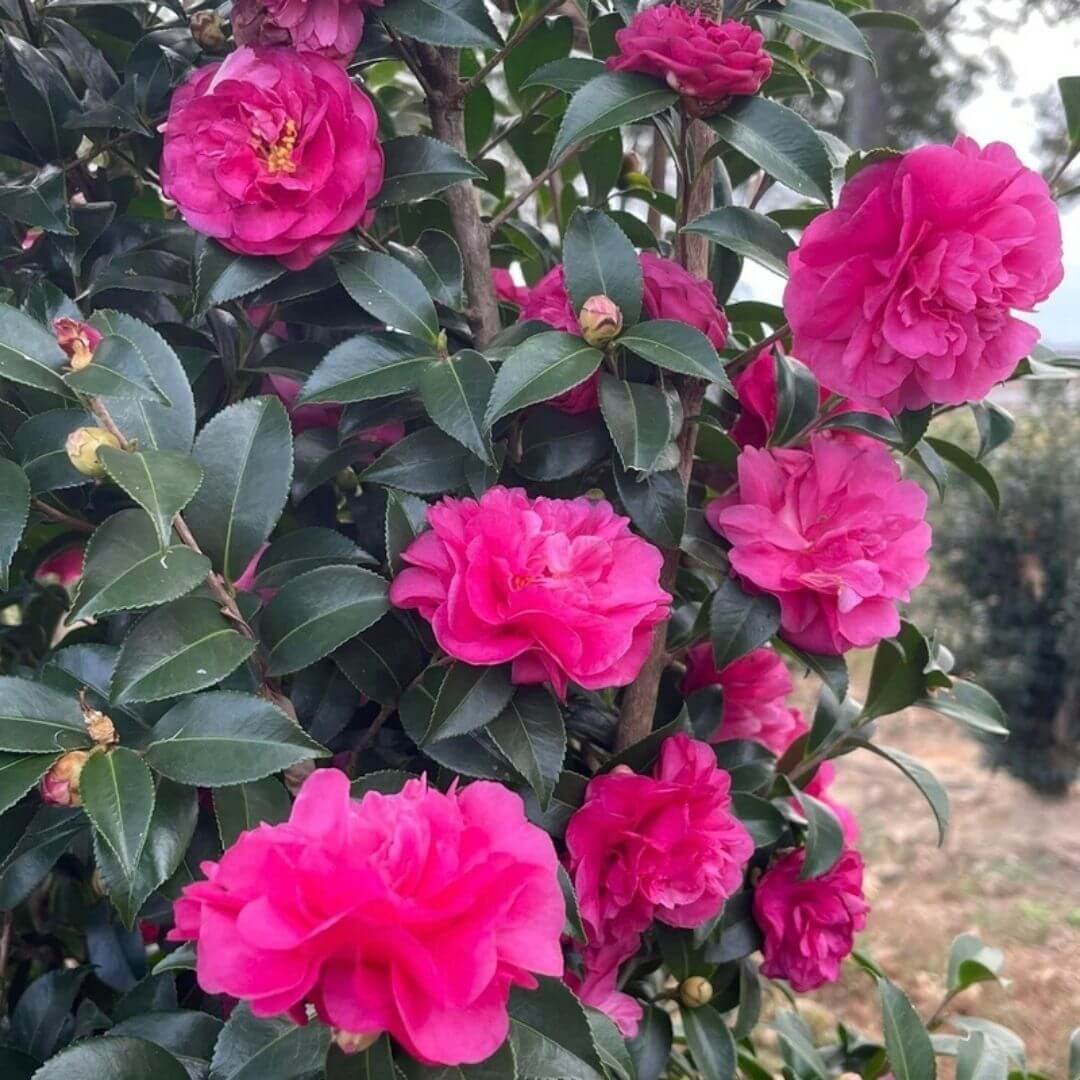
Warm Hearted™ Ruby Sasanqua Camellia. Image courtesy of Spring Meadow Nursery, Inc. - Proven Winners
Camellias are the kind of flowering shrub that make people stop and stare. The flowers are lush and perfectly formed, ranging from rose-like singles to full peony-like doubles in shades of white, pink, red, and bicolor. This evergreen shrub with glossy, deep green leaves looks beautiful year-round, which means you get gorgeous foliage even when it’s not in bloom.
There are a few different camellia types to know. Sasanqua camellias (Camellia sasanqua) bloom in fall and into early winter and tolerate more sun than other types, a great choice if you have a sunnier spot and want late-season flowers. Japanese camellias (Camellia japonica) bloom in late winter to spring and prefer part shade. Hybrid camellias often offer a good middle ground with improved cold hardiness. All camellias want deep, rich, acidic soil. If you have the right conditions for camellia, it is an absolute stunner.
Top Picks: ‘Yuletide’ is a classic Sasanqua camellia with striking red flowers with yellow centers that blooms during the holiday season. ‘Kramer’s Supreme’ is a Japanese camellia with lush, deep rose-colored blooms. The Just Chill® hybrid series offers improved cold hardiness and gorgeous peony-like flowers. Warm Hearted™ Ruby has palm-sized, frilly, deep pink flowers and a long season of bloom.
Common name: Camellia
Botanical name: Camellia species
Zones: 6–9 (some cultivars to Zone 5 with protection)
Light: Part shade (Sasanqua tolerates more sun)
Size: 4 to 10 ft. tall, 4 to 8 ft. wide (varies by type)
5. Fothergilla
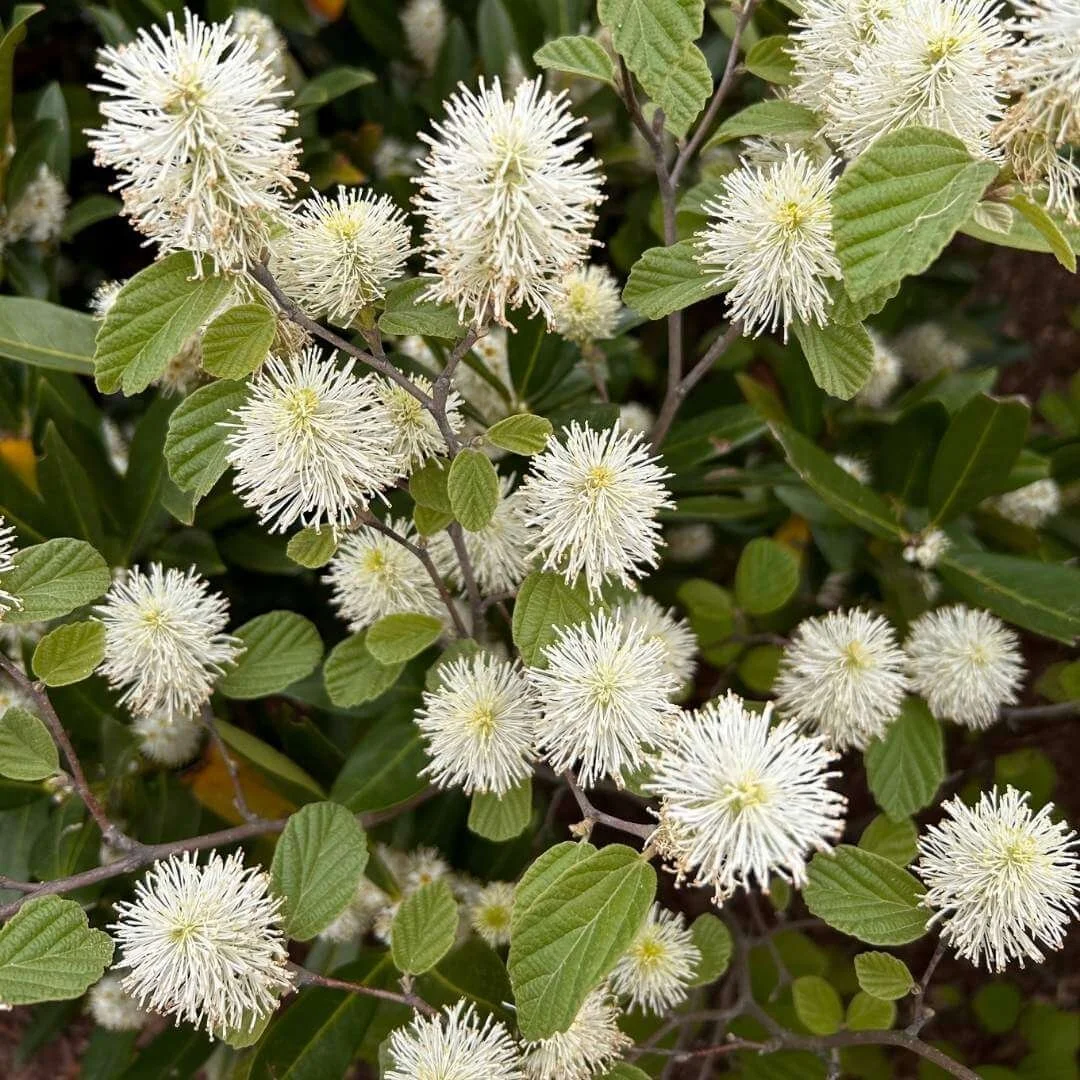
Dwarf Fothergilla (Fothergilla gardenii). Image © Plant and Bloom Design Studio
Fothergilla is a native shrub that truly earns its keep in the landscape from spring through fall. In early spring, before the leaves fully emerge, it produces unique bottlebrush-shaped flower clusters that are creamy white and lightly honey-scented. Then in fall, the foliage transforms into one of the most spectacular color displays of any flowering shrub, with brilliant oranges, reds, and yellows, often all on the same plant at the same time.
This is also an adaptable and easy shrub to grow. It does well in average garden conditions and is a great choice for foundation plantings, mixed borders, or as a specimen where you want reliable multi-season interest.
Top Picks: The straight native species, dwarf fothergilla (Fothergilla gardenii), forms a tidy rounded shrub with beautiful blue-green summer foliage. Legend of the Small® is low and wide with a spreading habit, making it an excellent filler plant for smaller spaces or anywhere you need something that stays low. ‘Blue Shadow’ and ‘Blue Mist’ have striking blue foliage that creates interest even before the fall color show begins.
Common name: Fothergilla, Witch Alder
Botanical name: Fothergilla species
Native range: Eastern North America
Zones: 5–9
Light: Full sun to part shade
Size: 2 to 6 ft. tall and wide (varies by cultivar)
6. Deutzia
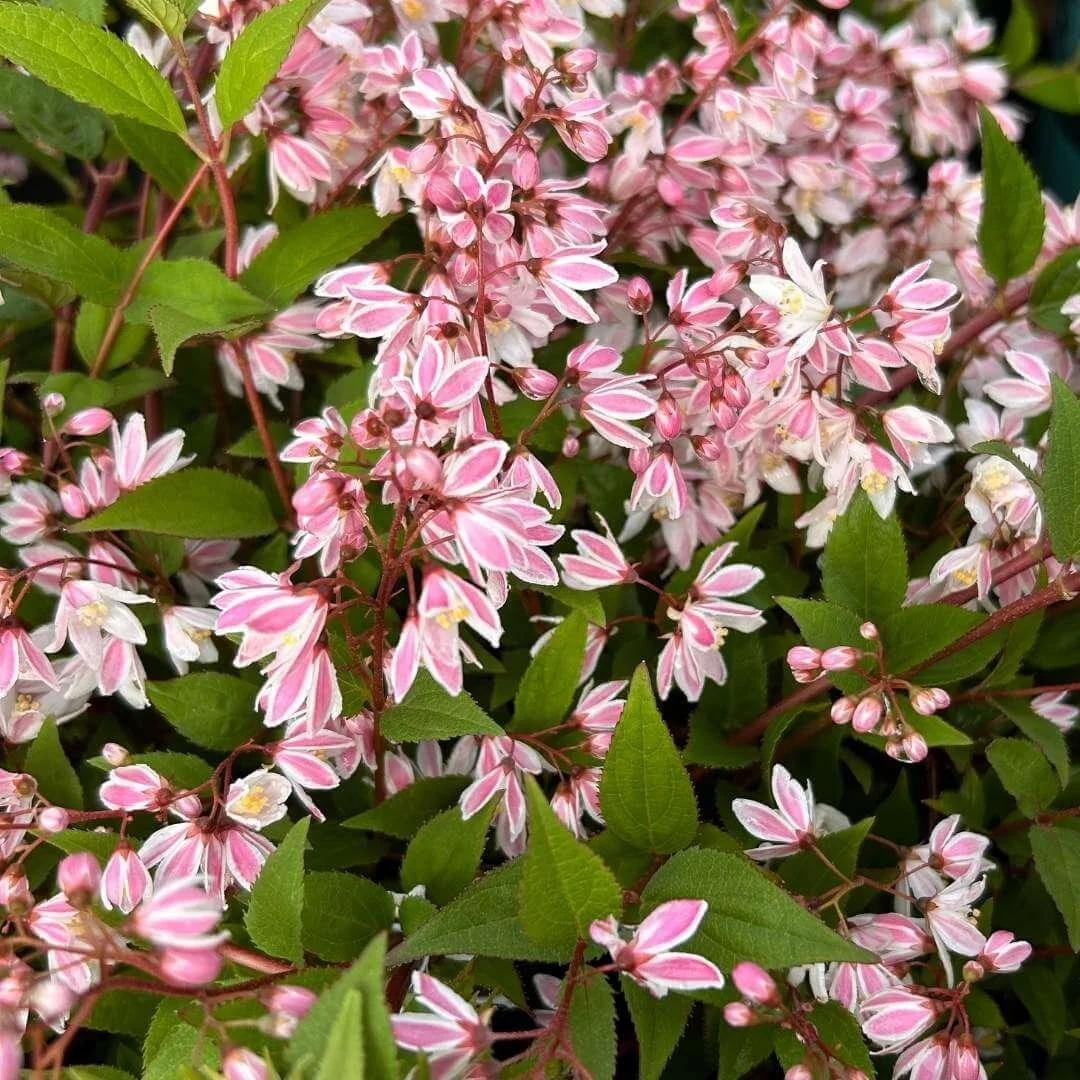
Yuki Cherry Blossom® Deutzia. Image © Plant and Bloom Design Studio
Deutzia is a compact, mounded spring-flowering shrub that earns its keep with sheer floral abundance. In late spring it covers itself so densely with flowers that the foliage practically disappears, and the effect is a cloud of white or pink blossoms that stops people in their tracks. Many cultivars are also lightly fragrant. In fall, the foliage often takes on attractive reddish or burgundy tones before dropping.
Deutzia is tough and adaptable, tolerating a range of soil conditions and handling both heat and cold reasonably well. It’s a great choice for the front or middle of a mixed border, or planted in groups for a dramatic spring display.
Top Picks: ‘Nikko’ has been a landscaping staple for years, producing a reliable and generous flush of white flowers every spring. Yuki Cherry Blossom® has striking pink-and-white bicolor flowers that resemble cherry blossoms. Chardonnay Pearls® has elegant small star-shaped white flowers and lovely yellow-green foliage that adds brightness to the garden when blooming has finished.
Common name: Deutzia
Botanical name: Deutzia species
Zones: 4–8 (varies by cultivar)
Light: Full sun to part shade
Size: 1.5 to 4 ft. tall, 2 to 4 ft. wide (varies by cultivar)
7. Ninebark
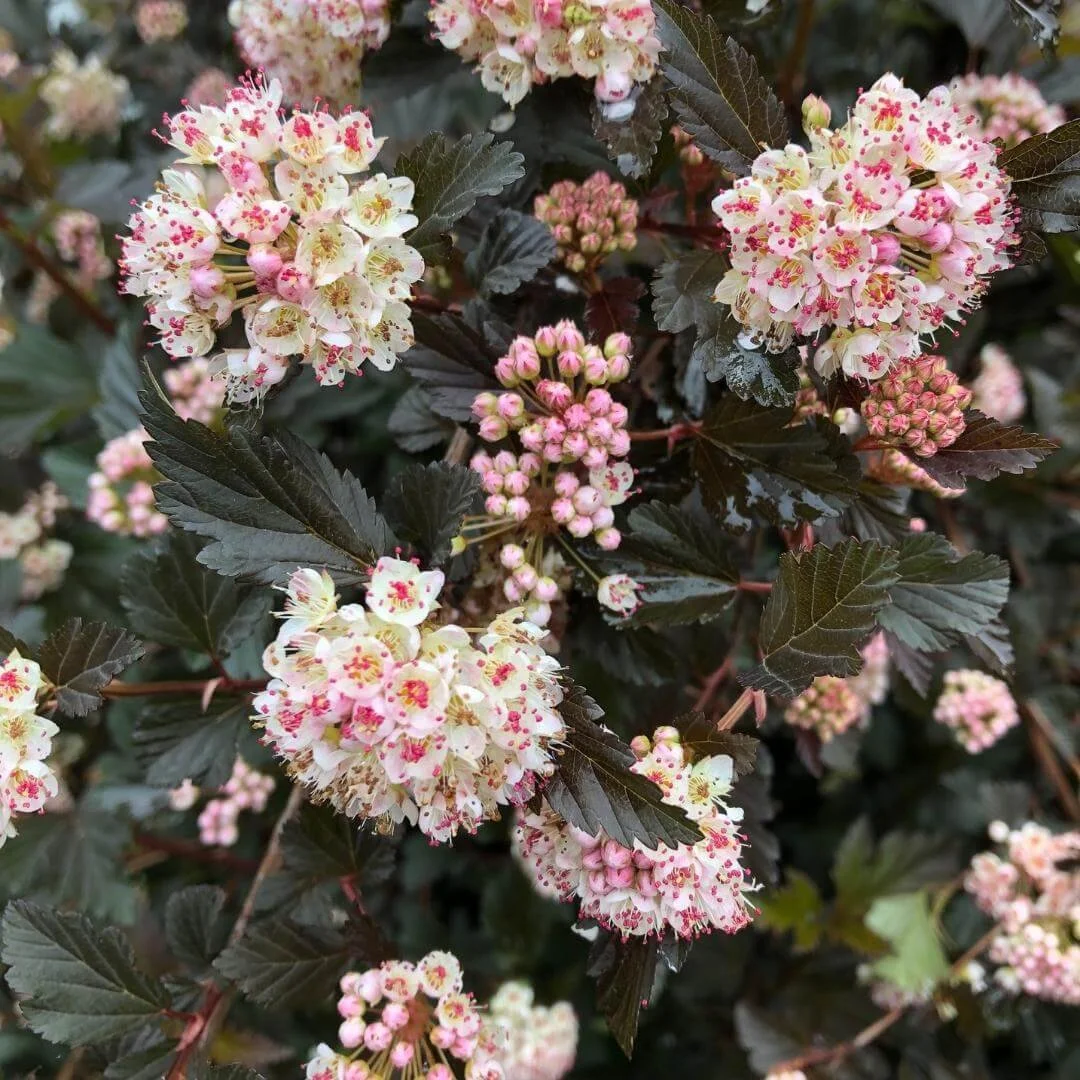
Diabolo® Ninebark. Image © Plant and Bloom Design Studio
Ninebark is a North American native shrub that delivers color and drama from spring through fall. In late spring it produces clusters of small pink buds that open into pretty pink-tinged to creamy white flowers. But ninebark is truly a multi-season plant: the foliage is just as much a feature as the flowers, coming in a remarkable range of leaf colors from deep burgundy-purple to chartreuse green, giving you a shrub that earns its spot in the landscape long before and after bloom time. In fall, the foliage turns fiery shades of orange, red, or burgundy for a final curtain call.
This is also one of the easiest shrubs to grow. Ninebark is adaptable, drought tolerant once established, and genuinely tough. It’s a great choice for difficult spots and works well massed along property boundaries or used as a bold specimen.
Top Picks: Diabolo® is a classic large-form ninebark with rich, deep purple foliage and cascading arching branches. It’s wide so be sure to give it room to spread. Tiny Wine® is the refined, compact version: same gorgeous dark foliage, same flowers, but in a tidy package that works in smaller gardens. Ginger Wine® has beautiful pink-tinged flowers and foliage that turns fiery shades of orange and red in fall, and Amber Jubilee™ has bright foliage and makes an eye-catching 3 season hedge.
Common name: Ninebark
Botanical name: Physocarpus opulifolius
Native range: Eastern North America
Zones: 3–7
Light: Full sun to part shade
Size: 2 to 10 ft. tall (varies significantly by cultivar)
Summer Flowering Shrubs
8. Hydrangea
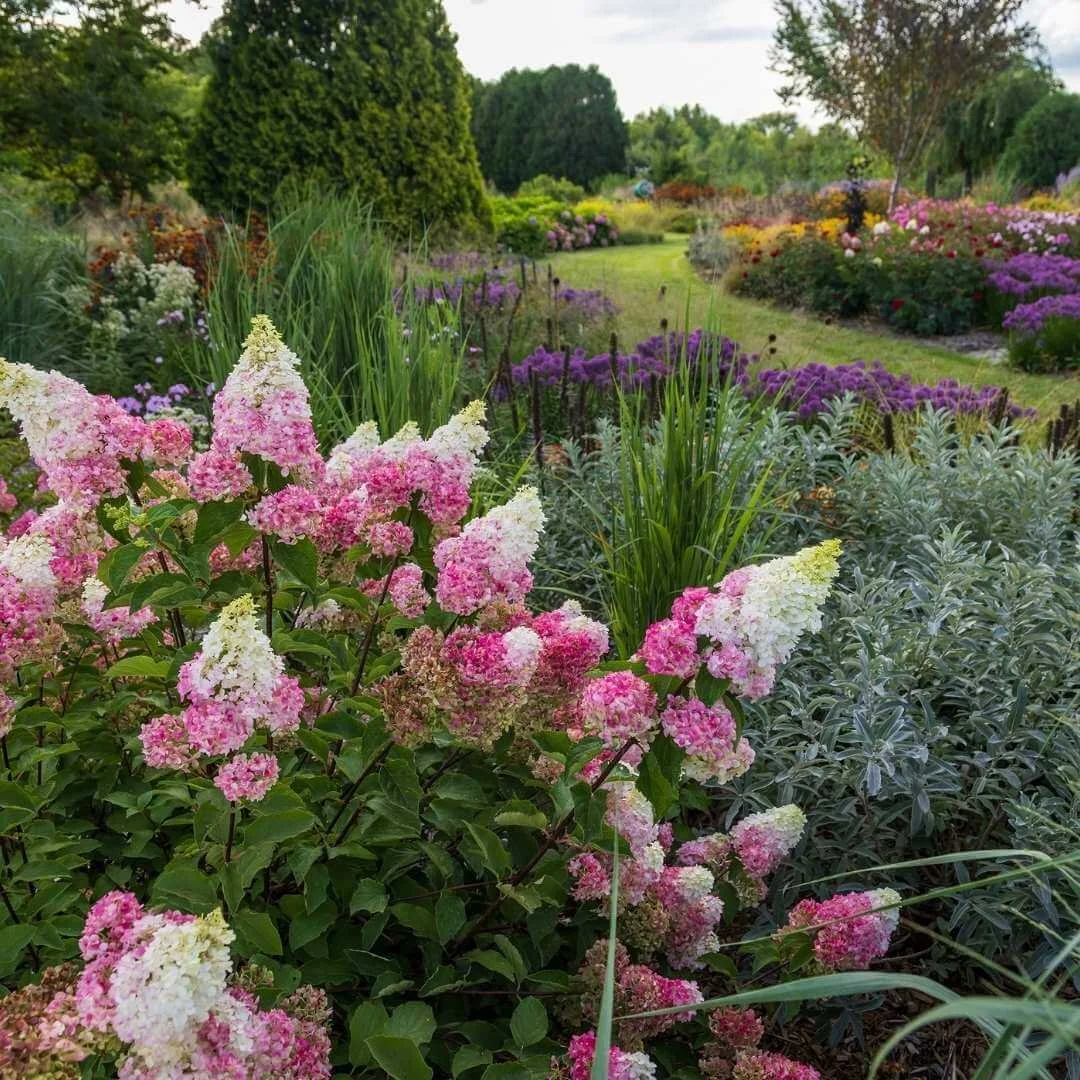
Vanilla Strawberry™ panicle hydrangea in the foreground, showing off its signature pink and white blooms. Image courtesy of Bailey Nurseries
No list of the best flowering shrubs would be complete without hydrangeas. They are beloved for a reason: the flowers are iconic, the range of cultivars is vast, and there is truly a hydrangea for almost every garden situation. The blooms are large and lush, in shades of white, pink, blue, purple, or green, and they dry beautifully on the shrub as the season progresses.
The key to success with hydrangeas is understanding which type you have, because they differ significantly in their preferred light conditions and bloom habits. Many first-time gardeners get frustrated because they bought the wrong type for their conditions. My complete guide to hydrangea types walks you through everything you need to know to choose the right one for your garden. Read the guide →
Top Picks: Bigleaf hydrangeas like Endless Summer® The Original and Bloomstruck® prefer part shade and are the classic mophead types whose flower color shifts with soil pH. Panicle hydrangeas like Vanilla Strawberry™ and Fire Light Tidbit® are the toughest and most adaptable, and the best choice for full sun. Oakleaf hydrangeas like ‘Alice’ are beautiful natives with excellent fall foliage color. Smooth hydrangeas like ‘Annabelle’ are beloved for their giant white flower clusters, but give them at least 3 to 4 hours of sun or the stems will flop. Incrediball® is a stronger-stemmed alternative that holds up better under the weight of its enormous blooms.
Common name: Hydrangea
Botanical name: Hydrangea species
Zones: 3–9 (varies by type and cultivar)
Light: Full sun to part shade (varies by type)
Size: 2 to 8 ft. tall and wide (varies by type and cultivar)
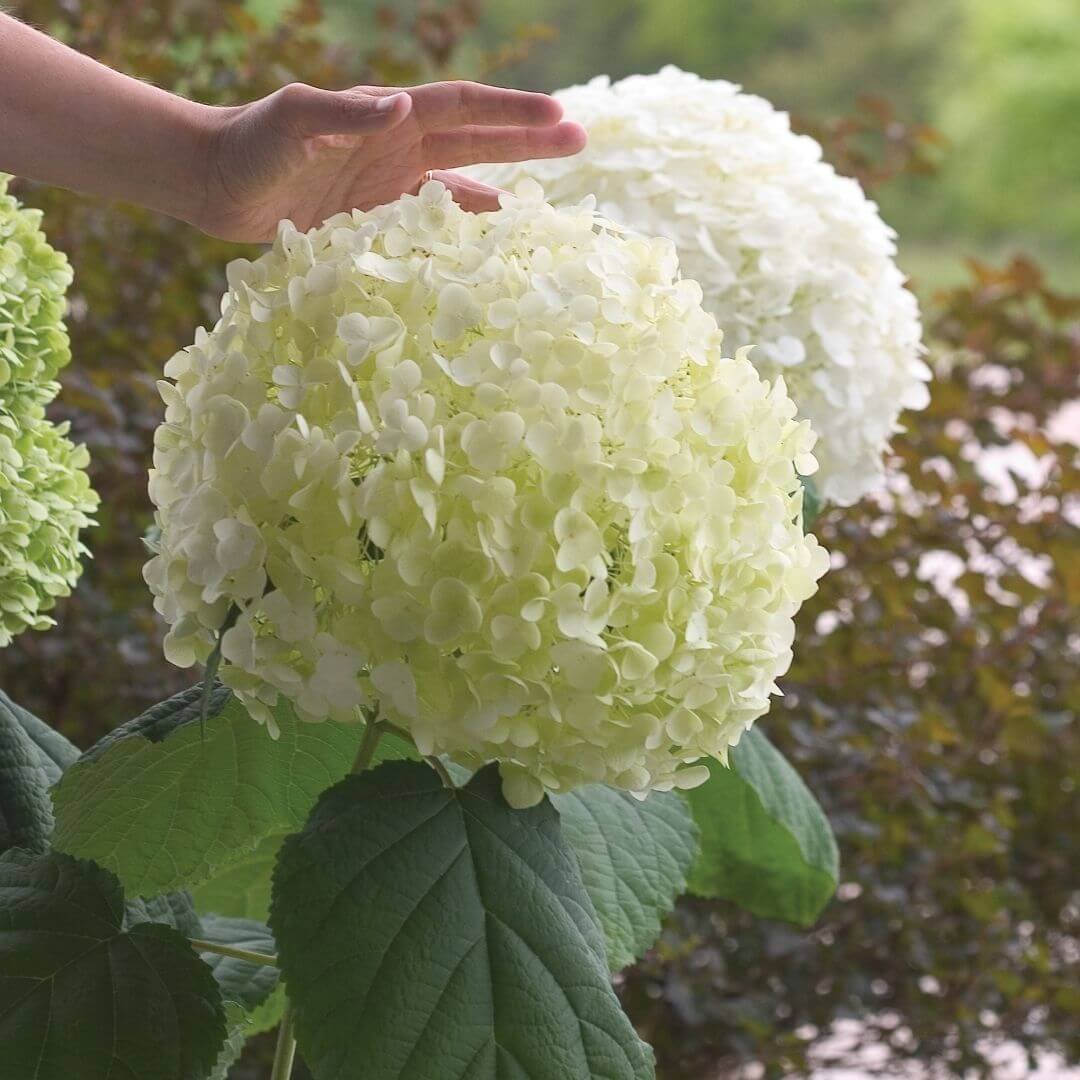
Incrediball® Smooth Hydrangea lives up to its name, with flowerheads that can reach the size of a volleyball! Image courtesy of Proven Winners Colorchoice Flowering Shrubs
9. Weigela
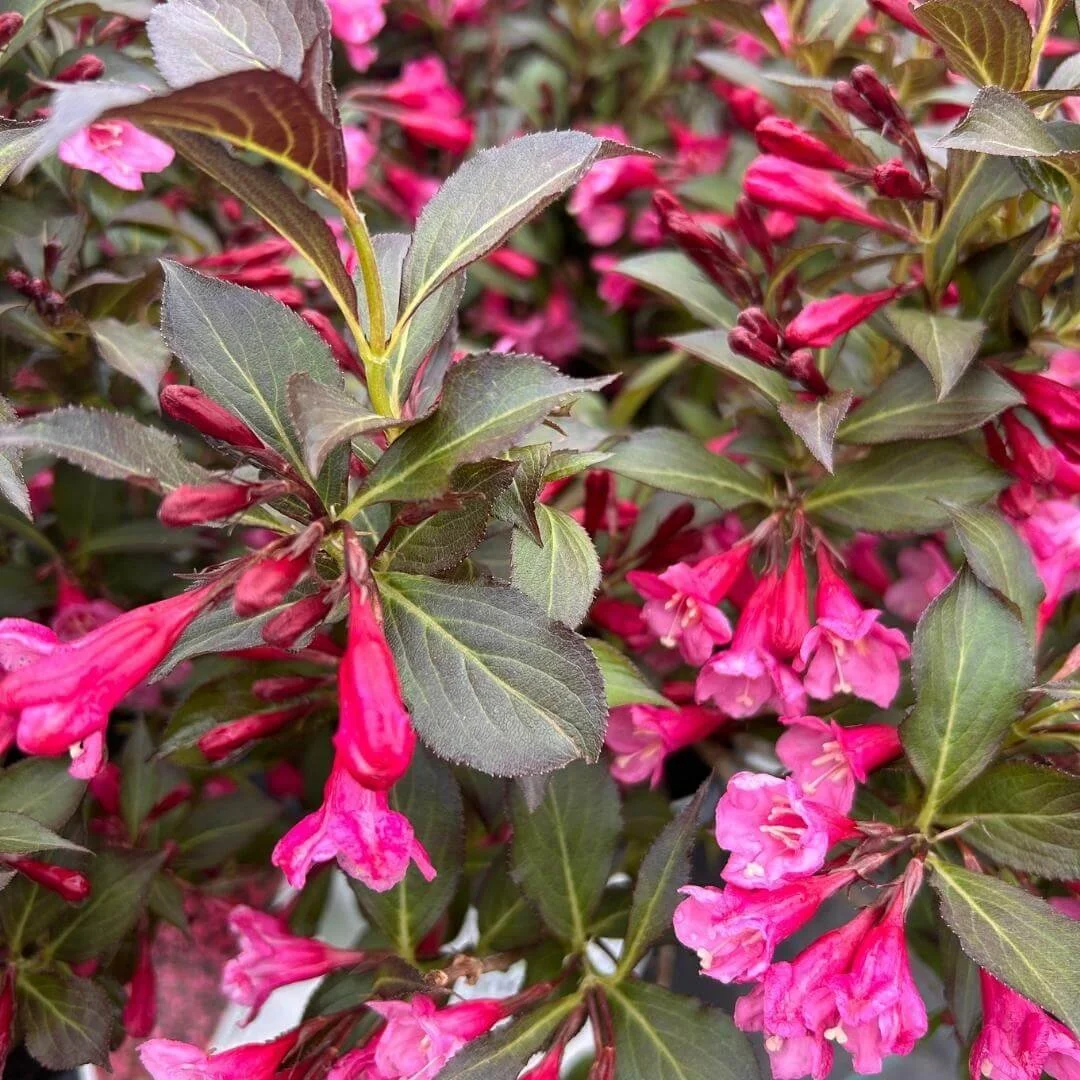
Midnight Wine Shine® Weigela. Image © Plant and Bloom Design Studio
Weigela is one of those flowering shrubs that garden designers reach for again and again, and for good reason: it’s easy, adaptable, and produces an abundance of tubular flowers that hummingbirds absolutely love. The classic bloom time is late spring into early summer, but many modern cultivars are reblooming, sending out a fresh flush of flowers through summer and into fall. This makes weigela one of the best flowering bushes for extended seasonal color.
Many newer cultivars also have beautiful foliage in deep burgundy-purple or variegated patterns, so the shrub earns its place in the garden even when it's not in bloom.
Top Picks: Midnight Wine Shine® is a reblooming cultivar, with vivid pink flowers against dark, glossy foliage. Czechmark Trilogy® is uniquely fun: it produces three flower colors (pink, white, and red) all on the same plant at the same time. Wine & Spirits® is another rebloomer with striking white flowers and dark foliage for a more elegant, understated look. Bubbly Wine® is a bright and cheery shrub with pink flowers and eye-catching variegated leaves.
Common name: Weigela
Botanical name: Weigela florida
Zones: 4–8
Light: Full sun to part shade
Size: 2 to 5 ft. tall and wide (varies by cultivar)
10. Spirea
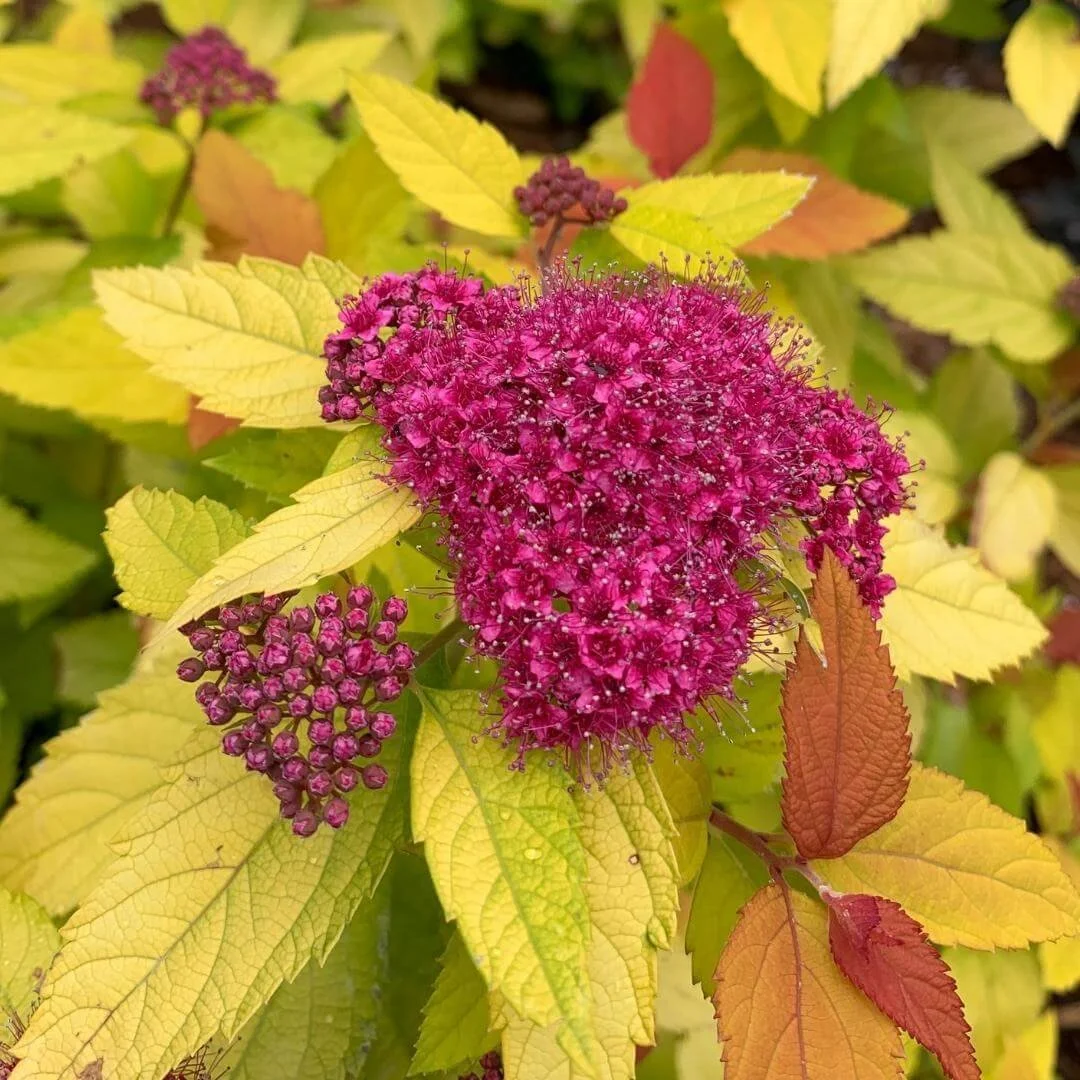
Double Play® Candy Corn® Spirea has pink flowers and bright, multi-hued foliage. Image courtesy of Spring Meadow Nursery, Inc. - Proven Winners
If you’re looking for a flowering shrub that blooms all summer with very little fuss, spirea deserves a serious look. It’s airy and graceful in habit, producing flat-topped clusters of flowers over a remarkably long season. Some cultivars are not only easy to grow but also bring multi-season foliage interest to the garden, changing color as the season progresses.
Spirea is also one of the most low-maintenance flowering shrubs you can plant. It’s adaptable, drought tolerant once established, and remarkably disease-resistant. A note on invasiveness: some older spirea varieties can self-seed aggressively. The cultivars I recommend below are non-invasive, and I’ve written more about this in my article on Japanese spirea (linked below) if you want to learn more.
Top Picks: Double Play® Candy Corn® is a dynamic cultivar. It has bright pink flowers and foliage that shifts from red in spring to yellow and orange as the season progresses, making it a genuinely multi-season plant. Double Play Doozie® has reddish-pink flowers and deep green leaves and is a reliable rebloomer from early summer through fall.
Common name: Spirea
Botanical name: Spiraea japonica
Zones: 3–8 (varies by cultivar)
Light: Full sun
Size: 2 to 4 ft. tall and wide (varies by cultivar)
Learn more: Japanese Spirea: You Might Not Have to Skip It
11. Virginia Sweetspire
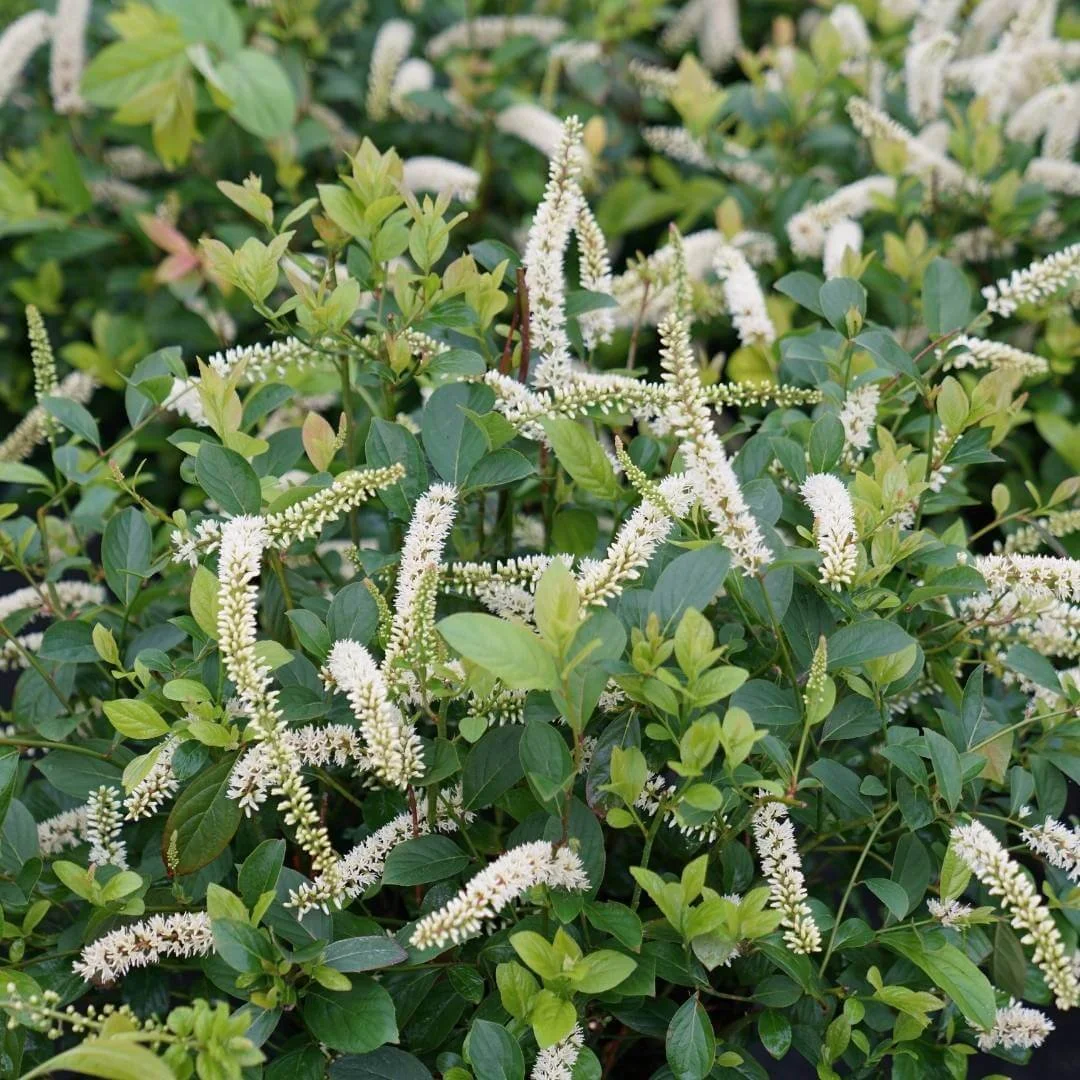
Scentlandia® Virginia Sweetspire. Image courtesy of Spring Meadow Nursery - Proven Winners
Virginia Sweetspire is a native shrub that tends to fly under the radar, but it definitely should not. In late spring to early summer it produces arching, drooping clusters of small white flowers with a lovely fragrance, and the display lasts for several weeks longer than many other spring-blooming shrubs. The nectar-rich flowers are a favorite of native bees, butterflies, and hummingbirds. And in fall, the foliage turns brilliant shades of red, orange, and burgundy, making it one of the best native flowering shrubs for multi-season interest.
It is also remarkably adaptable. Virginia Sweetspire does well in average garden conditions, is tolerant of wet soil, and handles both sun and shade with ease.
Top Picks: Little Henry® is a compact choice, reaching just 3 feet tall, making it ideal for smaller yards and foundation plantings. Scentlandia® is notable for its exceptionally large, highly fragrant flowers. It’s a great specimen plant near a path or seating area. Fizzy Mizzy® is another compact, tidy cultivar that works beautifully in foundation plantings.
Common name: Virginia Sweetspire
Botanical name: Itea virginica
Native range: Eastern United States
Zones: 5–9
Light: Full sun to part shade
Size: 2 to 5 ft. tall, 3 to 6 ft. wide
Learn more: My Guide to Growing Virginia Sweetspire
12. Summersweet (Clethra)
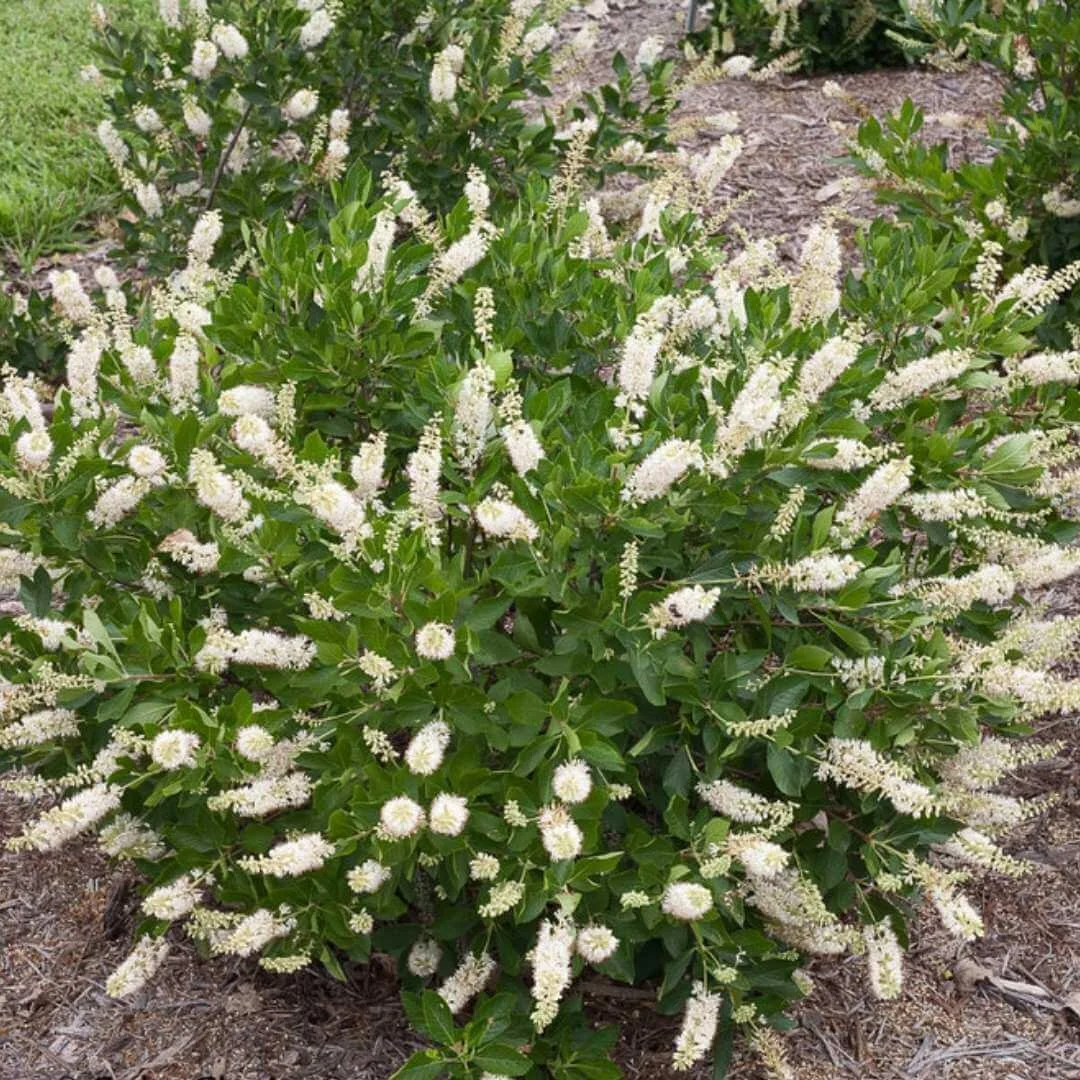
Vanilla Spice® Summersweet. Image courtesy of Proven Winners, provenwinners.com
Summersweet is a true workhorse of garden design and one of my most-recommended flowering shrubs for difficult garden situations. It blooms in mid to late summer when many other shrubs have finished, producing upright spikes of small, intensely fragrant white or pink flowers that pollinators adore. Butterflies, bees, and hummingbirds flock to it.
What makes summersweet truly special for landscape design is its incredible adaptability. It will flower in full sun, partial shade, or even full shade (though blooms may be more sparse in deep shade). It tolerates wet soil and is even happy near downspouts or in areas that stay damp. This flexibility makes it invaluable for spots where other shrubs struggle.
Top Picks: The straight species Clethra alnifolia is a large shrub with white summer flowers and is a top pollinator plant. Vanilla Spice® has extra-large, extra-fragrant flower clusters, perfect for planting near doorways. ‘Ruby Spice’ has bright, beautiful rose-pink flowers. Sugartina® is a compact cultivar and a great choice for smaller yards, while ‘Sixteen Candles’ is notable for its erect, upright habit, making it a natural fit for foundation plantings.
Common name: Summersweet, Sweet Pepperbush
Botanical name: Clethra alnifolia
Native range: Eastern North America
Zones: 3–9
Light: Full sun to full shade
Size: 3 to 8 ft. tall, 4 to 6 ft. wide
Learn more: My Guide to Growing Summersweet
13. Buttonbush
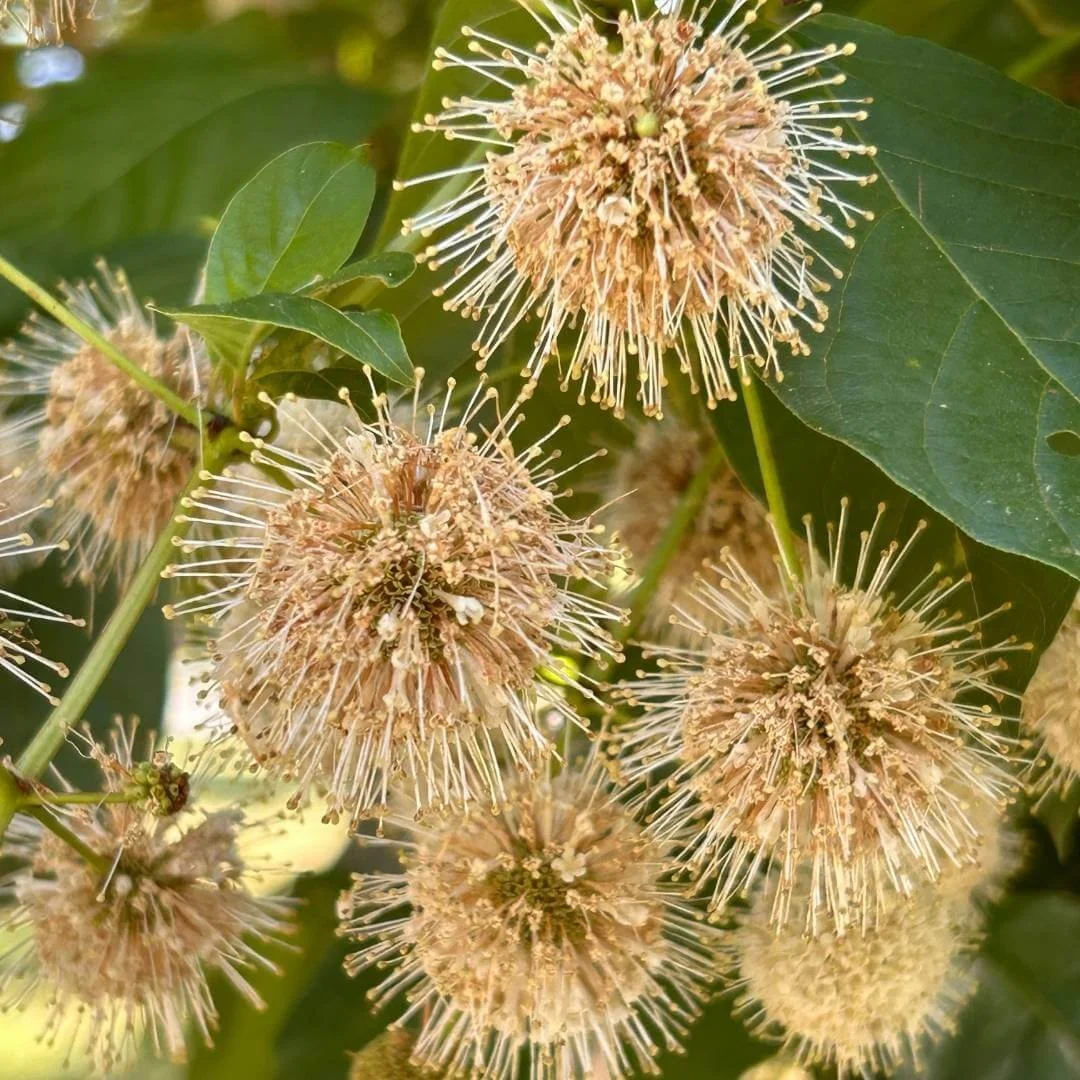
Buttonbush flowers. Image © Plant and Bloom Design Studio
Buttonbush is a native flowering shrub that stops people in their tracks, because the flowers are so delightfully unusual. They are perfectly spherical, white, and spiky, like tiny pincushions or golf balls covered in white pins. Butterflies and pollinators can’t get enough of them. After the flowers fade, the plant produces round, reddish fruits that are irresistible to birds and other wildlife. In fall, the foliage turns yellow or red, depending on the variety.
Buttonbush is also one of the best flowering shrubs for wet spots. It thrives in poorly draining areas, near ponds, and in rain gardens where other shrubs would struggle or fail.
Top Picks: The straight species Cephalanthus occidentalis is large and dramatic, so give it plenty of room. Sugar Shack® is a more compact cultivar and a better choice for average-sized yards. ‘Magical Moonlight’ has a tidy, rounded, compact form that works well in front yard plantings near downspouts or other wet areas, and ‘Crimson Comet’ is a large shrub with bright red fruits and fall color.
Common name: Buttonbush
Botanical name: Cephalanthus occidentalis
Native range: North America
Zones: 4–9
Light: Full sun to part shade
Size: 3 to 10 ft. tall (varies by cultivar)
14. Crape Myrtle (Shrub Form)
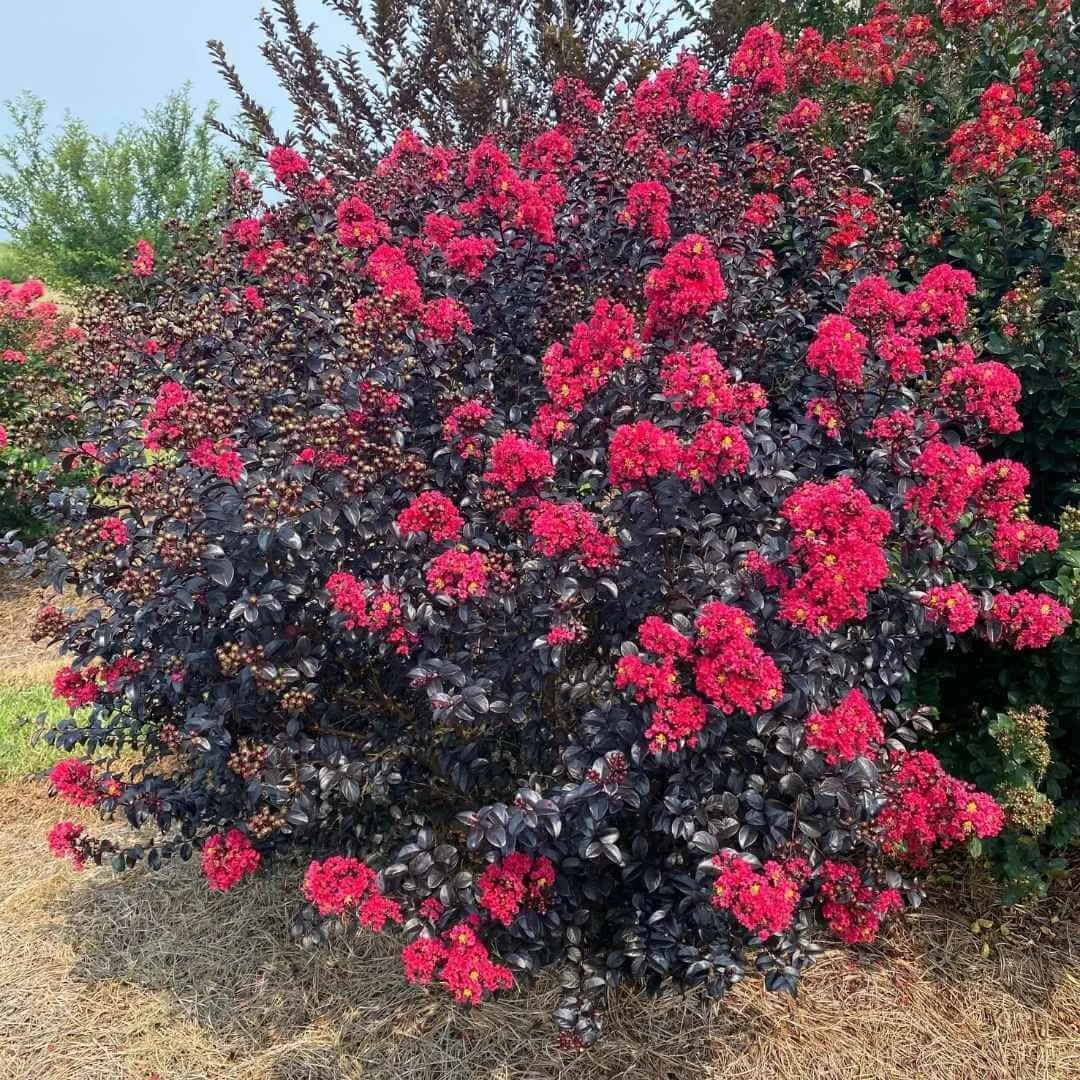
Shadow Magic® Crape Myrtle Shrub. Image courtesy of Bailey Nurseries - National Garden Bureau
Most people think of crape myrtles as a tree, but here's something worth knowing: crape myrtles also come in shrub form, and they are a fantastic way to fit summer color into a smaller space. You get the same gorgeous summer flowers in colors ranging from white to pale pink to deep red, lavender, and purple, but in a compact shrub-sized package that fits beautifully into mixed borders, foundation plantings, and smaller landscapes.
Shrub crape myrtles bloom from summer into fall, one of the longest-blooming flowering shrubs on this list. Some cultivars also have striking dark or near-black foliage that makes them look interesting even before the flowers open.
Top Picks: ‘Pocomoke’ has lovely rose-pink flowers and stays a compact 3 to 5 feet tall, making it a great choice for smaller gardens and front-of-border planting. Center Stage® Red features cherry-red flowers contrasting dramatically with almost-black foliage. Black Diamond® Pave Pink™ is 4 to 5 feet tall with soft pink flowers and dark foliage, a sophisticated color combination that works beautifully against light-colored exteriors. Shadow Magic® has dark rose-colored flowers, deep purple foliage and the bonus of excellent disease resistance.
Common name: Crape Myrtle
Botanical name: Lagerstroemia species
Zones: 6–9
Light: Full sun
Size: 3 to 6 ft. tall and wide (shrub cultivars)
15. Butterfly Bush
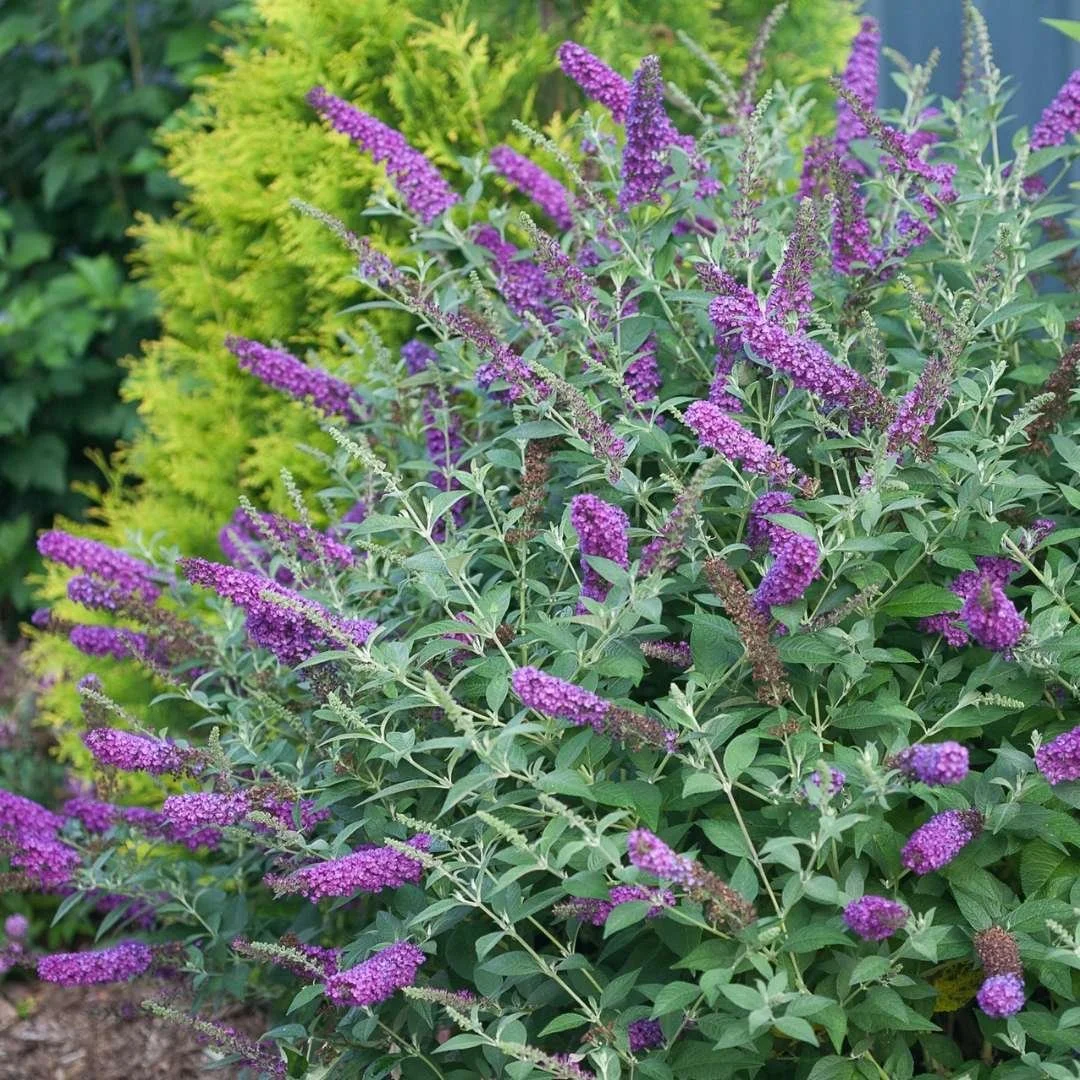
Miss Violet butterfly bush: a sterile, non-invasive cultivar that butterflies love just as much as invasive types. Image courtesy of Proven Winners, provenwinners.com
Butterfly bush lives up to its name completely. Plant one and stand back, because the butterflies will find it almost immediately. It produces long, arching spikes of densely packed tiny flowers in shades of purple, lavender, pink, white, and red, from summer through frost. This is one tough shrub that blooms all summer long, and it does so reliably and abundantly. It’s drought tolerant, heat tolerant, and easy to grow in a wide range of soil conditions.
A note on invasiveness: Butterfly bush can self-seed aggressively and is considered invasive in some regions. If this is a concern for you, choose a sterile, seedless cultivar. These won’t spread and are just as beautiful and butterfly-attractive as the standard types.
Seedless cultivars to look for: Lo & Behold® ‘Blue Chip Jr.’, Lo & Behold® ‘Pink Microchip’, Lo & Behold® ‘Purple Haze’, ‘Miss Molly’, ‘Miss Ruby’, ‘Miss Violet’, ‘Asian Moon’
Common name: Butterfly Bush
Botanical name: Buddleia species
Zones: 5–9 (varies by cultivar)
Light: Full sun
Size: 2 to 8 ft. tall and wide (varies by cultivar)
16. Bluebeard (Caryopteris)
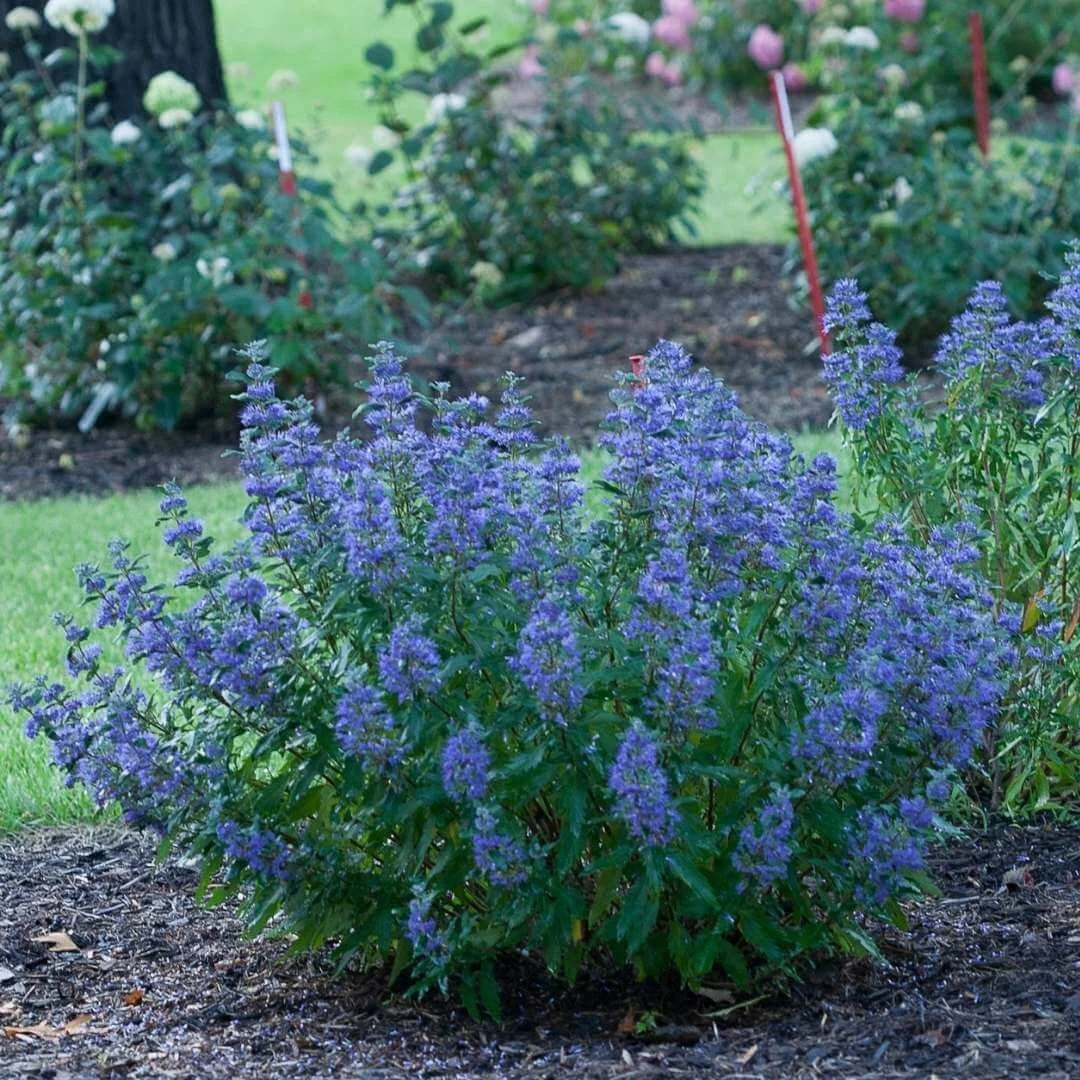
Beyond Midnight® Bluebeard. Image courtesy of Proven Winners ColorChoice Flowering Shrubs, provenwinners.com
Bluebeard is a compact, fine-textured shrub that earns its spot in the late-summer garden with one of the most distinctive flower colors available: true blue. Not purple-blue, not lavender. This shrub has genuine, vivid blue flowers that appear in late summer and early fall, exactly when the garden most needs a color refresh. The flowers cluster along the stems and are absolutely irresistible to bees and butterflies. The foliage is dark green and aromatic.
One important caveat: bluebeard does not like clay soils or wet, poorly draining conditions. Give it well-drained soil and full sun and it will reward you generously.
Top Picks: Beyond Midnight® has deep, rich blue flowers and stays compact. It’s excellent for small spaces and container planting. Sunshine Blue® II is one of the most striking plants in my design palette: lime green foliage paired with electric blue flowers, for a combination that turns heads. ‘Dark Knight’ has deep purple-blue flowers and gray-green foliage for a more muted, silvery effect. And Petit Bleu™ is…you guessed it, a small selection growing only 2-3 feet high.
Common name: Bluebeard, Blue Mist Shrub
Botanical name: Caryopteris species
Zones: 5–9
Light: Full sun
Size: 2 to 4 ft. tall, 2 to 4 ft. wide
Late Summer and Fall Flowering Shrubs
17. Abelia
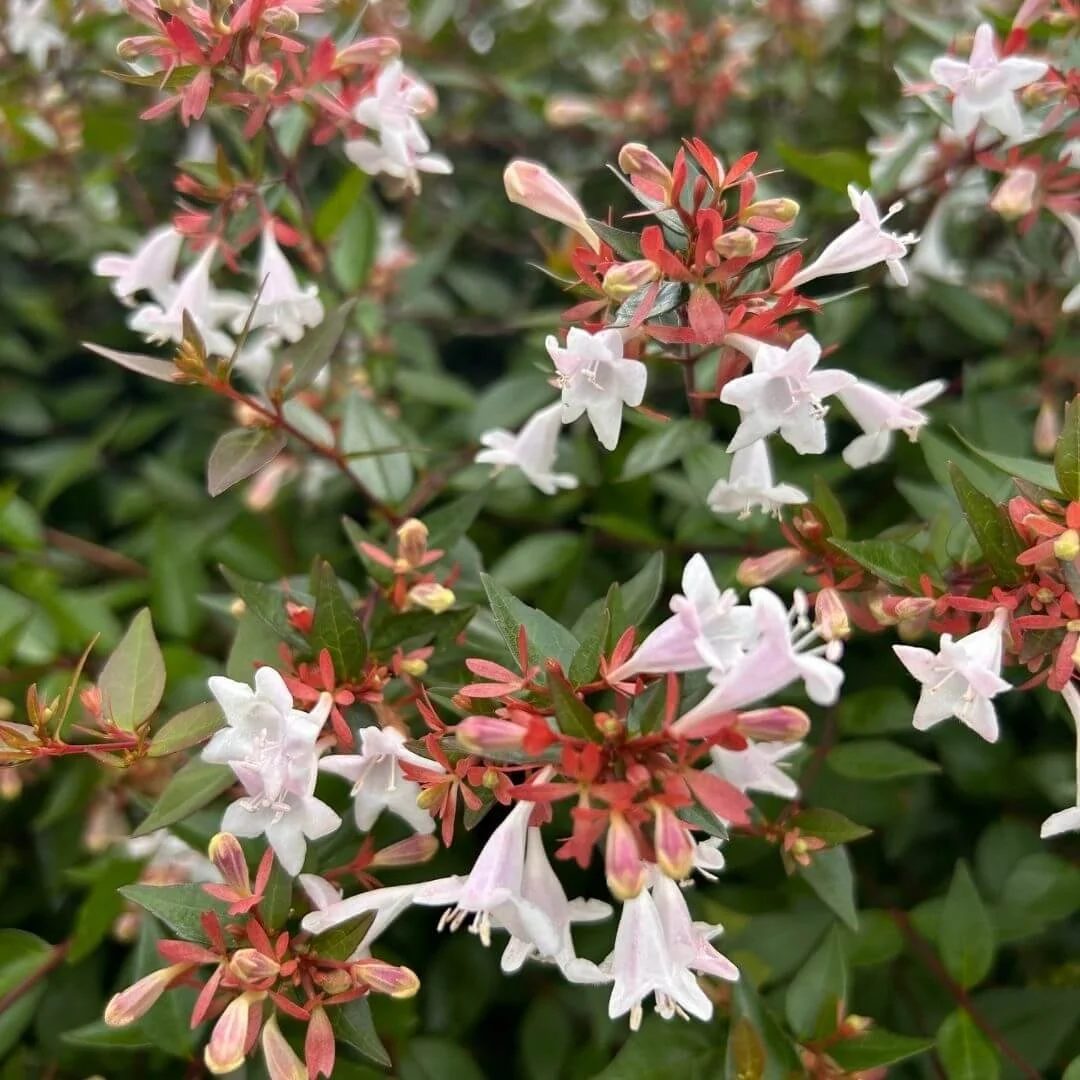
Glossy Abelia (Abelia x grandiflora). Image © Plant and Bloom Design Studio
Abelia is the quiet workhorse of garden design, a shrub that landscape designers reach for constantly because it delivers so much with so little fuss. The flowers are small, bell-shaped, and delicately fragrant, appearing from summer through frost in a long, steady season of bloom that is unusual even among the best flowering bushes. Butterflies love it. The foliage is small-leaved and semi-evergreen to evergreen depending on your climate, giving the shrub a refined, polished look year-round.
Larger cultivars make beautiful informal hedges and screening plants, while more compact varieties are ideal for foundation plantings and mixed borders.
Top Picks: Glossy Abelia (Abelia x grandiflora) is the classic large-form species, with green leaves and white flowers, 4 to 6 feet tall and wide, great for hedging and screening. ‘Kaleidoscope’ brings fragrant white flowers and bright variegated leaves that change throughout the growing season, making it genuinely eye-catching as a specimen. Sweet Emotion Blaze® has fragrant pink blossoms and green foliage that turns vivid shades of orange, red, and yellow in fall, extending the plant's season of interest well past the last flowers. Poco Loco® is a compact 2-3 feet wide with pink flowers and dynamic foliage color.
Common name: Abelia
Botanical name: Abelia species
Zones: 5–9 (varies by cultivar)
Light: Full sun to part shade
Size: 2 to 6 ft. tall and wide (varies by cultivar)
18. Rose of Sharon
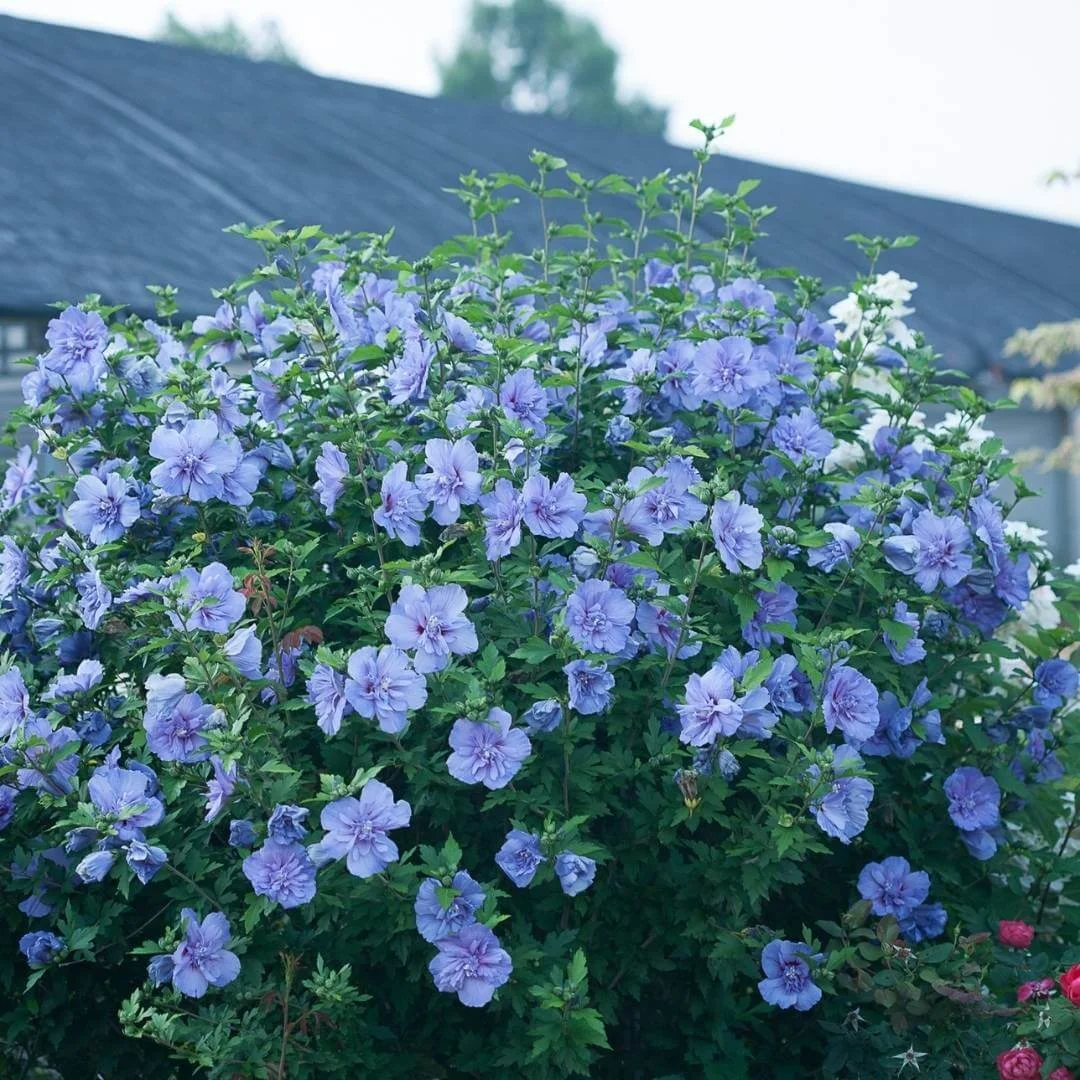
Blue Chiffon® Rose of Sharon. Image courtesy of Proven Winners ColorChoice Flowering Shrubs, provenwinners.com
Rose of Sharon earns its place at the end of this list by doing something very few flowering shrubs manage: it blooms in late summer and into fall, when most of its competitors have long since finished. The flowers are large, showy, and classically hibiscus in form (no surprise: Rose of Sharon is a true hibiscus), appearing in shades of white, pink, lavender, purple, and deep red, often with a contrasting dark eye at the center. The display lasts for weeks.
This is also a wonderfully versatile shrub. It can be used as a specimen, pruned into a hedge or privacy screen, or trained into a small tree form. Some columnar cultivars are narrow enough to fit in very tight spaces while still growing quite tall, making them valuable for creating living screens without sacrificing too much horizontal space.
Top Picks: Purple Pillar® has stunning two-toned purple flowers and a remarkably narrow habit (just 2 to 3 feet wide but 10 to 15 feet tall), making it ideal for tight spots where you need height and privacy. White Pillar® is similarly narrow with large white flowers: you can tuck it almost anywhere to create a living wall. Magenta Chiffon® has a rounded, upright form and vivid magenta double flowers that are genuinely dramatic, and Blue Chiffon® has unique, true blue flowers.
Common name: Rose of Sharon, Hardy Hibiscus
Botanical name: Hibiscus syriacus
Zones: 5–9
Light: Full sun to part shade
Size: 4 to 12 ft. tall, 2 to 6 ft. wide (varies by cultivar)
Frequently Asked Questions
What are the best flowering shrubs for full sun? Some of the best flowering shrubs for full sun include spirea, weigela, butterfly bush, bluebeard, crape myrtle, and panicle hydrangeas like Vanilla Strawberry. These shrubs thrive in at least six hours of direct sunlight per day and reward you with abundant blooms from late spring through fall. When planting in full sun, look for drought-tolerant varieties once established, since sunny spots tend to dry out faster. Find full profiles, top cultivar picks, and design tips for all of these in the article above.
What shrubs bloom all summer long? Several flowering shrubs offer a long season of bloom that stretches through summer and even into fall. Top picks include spirea (especially reblooming cultivars like Double Play Doozie), butterfly bush, abelia, weigela (reblooming varieties), crape myrtle, and bluebeard. For the longest season of color, choose cultivars specifically labeled as reblooming or everblooming, and deadhead spent flowers where practical to encourage fresh flushes. Find full profiles, top cultivar picks, and design tips for all of these in the article above.
What are the best flowering shrubs for shade? For shaded spots, look to pieris, rhododendrons, azaleas, fothergilla, and summersweet. Pieris and rhododendrons prefer part to full shade with moist, acidic soil. Summersweet is particularly impressive because it will flower in full shade, which almost no other flowering shrub will do reliably. Virginia sweetspire is another excellent native option that handles both sun and shade with beautiful spring blooms and outstanding fall color. Find full profiles, top cultivar picks, and design tips for all of these in the article above.
What is the easiest flowering shrub to grow? Ninebark, spirea, and weigela are consistently among the easiest flowering shrubs to grow. All three are adaptable to a range of soil conditions, cold-hardy across most of the country, drought tolerant once established, and require very little maintenance beyond occasional pruning. Ninebark in particular is remarkably tough and brings bonus foliage color in addition to its spring flowers, making it one of the best low-maintenance flowering shrubs for landscaping. Find full profiles, top cultivar picks, and design tips for all of these in the article above.
Do flowering shrubs come back every year? Yes! Flowering shrubs are woody perennials, which means they come back reliably year after year without replanting. Unlike annual flowers that need to be replaced each season, a well-chosen flowering shrub will grow and improve with age, becoming more beautiful and floriferous over time. This is one of the biggest advantages of using shrubs in your landscape: a one-time investment that rewards you every single year.
Final Tips for Choosing and Planting Flowering Shrubs
A few things I tell every client before they head to the nursery:
Always measure your space first and plan for mature size. A shrub that looks small at the nursery can easily double or triple in size within a few years. Knowing your mature size before you plant saves a lot of work later.
Know your zone and your light. Both of these factors are non-negotiable. Even the most beautiful flowering shrub will struggle if it’s planted in the wrong zone or the wrong light conditions.
Think about bloom time, not just flower color. A well-planned combination of early, mid-season, and late-blooming shrubs means something is always in flower from spring through fall.
Check your soil drainage. Some flowering shrubs (like buttonbush and summersweet) love wet feet. Others (like bluebeard) will fail in poorly draining soil. Matching the shrub to your actual soil conditions is as important as matching it to your sun exposure.
Helpful Resources
These tools will help you make the right choices for your specific garden:
Ask Extension: Free expert gardening advice from your local university extension service
Found this helpful? Save it to your garden planning board:
Want More Flowering Plant Ideas?
Explore more of my favorite flowering plant guides:
Follow Plant and Bloom Design Studio for Gardening Tips & Landscape Design Ideas