
Hydrangea Indoors: How to Care for a Potted Hydrangea
Published: September 2, 2026
Who hasn’t been seduced by a pot overflowing with colorful mophead hydrangea blooms?
I used to work in a plant shop where potted hydrangeas arrived from the greenhouse for Easter, Mother’s Day and other spring celebrations, looking almost impossibly perfect.
These plants had been pampered under carefully controlled greenhouse conditions and coaxed into bloom at exactly the right time.
Once they left that environment, however, keeping them looking perfect could be surprisingly difficult. They tended to dry out and wilt quickly, and sometimes disappointed customers would return them.
That doesn’t mean you should avoid these beautiful potted plants. Flowers are meant to be enjoyed!
Put your hydrangea somewhere you’ll see it, admire the spectacular flowers while they last and follow these simple care tips to keep it looking good for as long as possible.
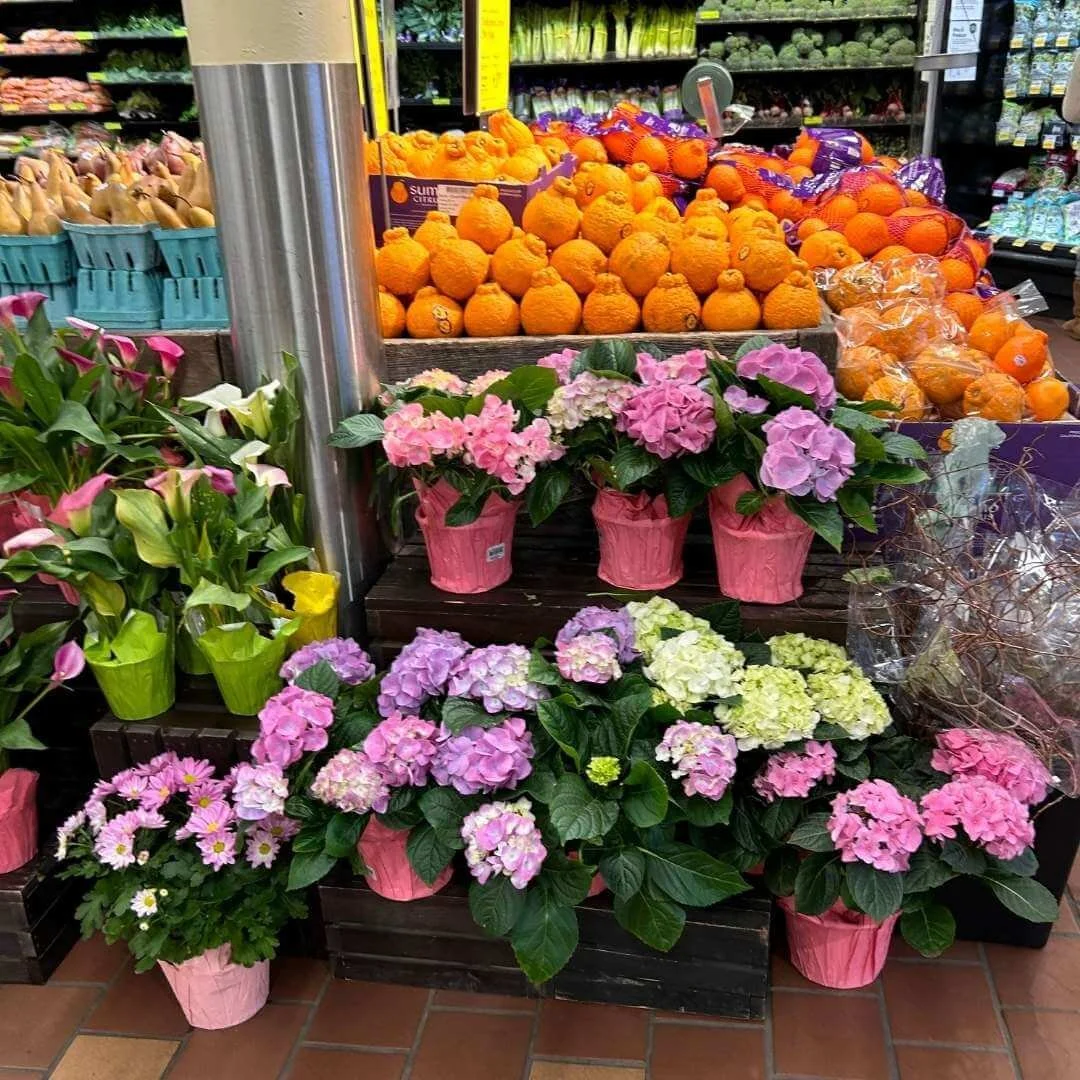
Who among us hasn’t been tempted by a display of flowering hydrangeas while innocently shopping for groceries? 😉 Image © Plant and Bloom Design Studio
Can Hydrangeas Grow Indoors?
A potted hydrangea can live indoors for a time, but it is better treated as a beautiful seasonal display rather than a permanent houseplant.
Unlike pothos, philodendrons and other tropical houseplants, hydrangeas are woody shrubs that naturally experience changing seasons and a period of winter dormancy.
Greenhouse growers carefully manage light, temperature and timing to bring potted hydrangeas into bloom for spring holidays. Recreating those conditions inside an average home and getting the plant to bloom again is much harder.
That’s why I recommend enjoying your hydrangea for what it is right now: a living bouquet with the potential to last longer than cut flowers, but not necessarily forever.
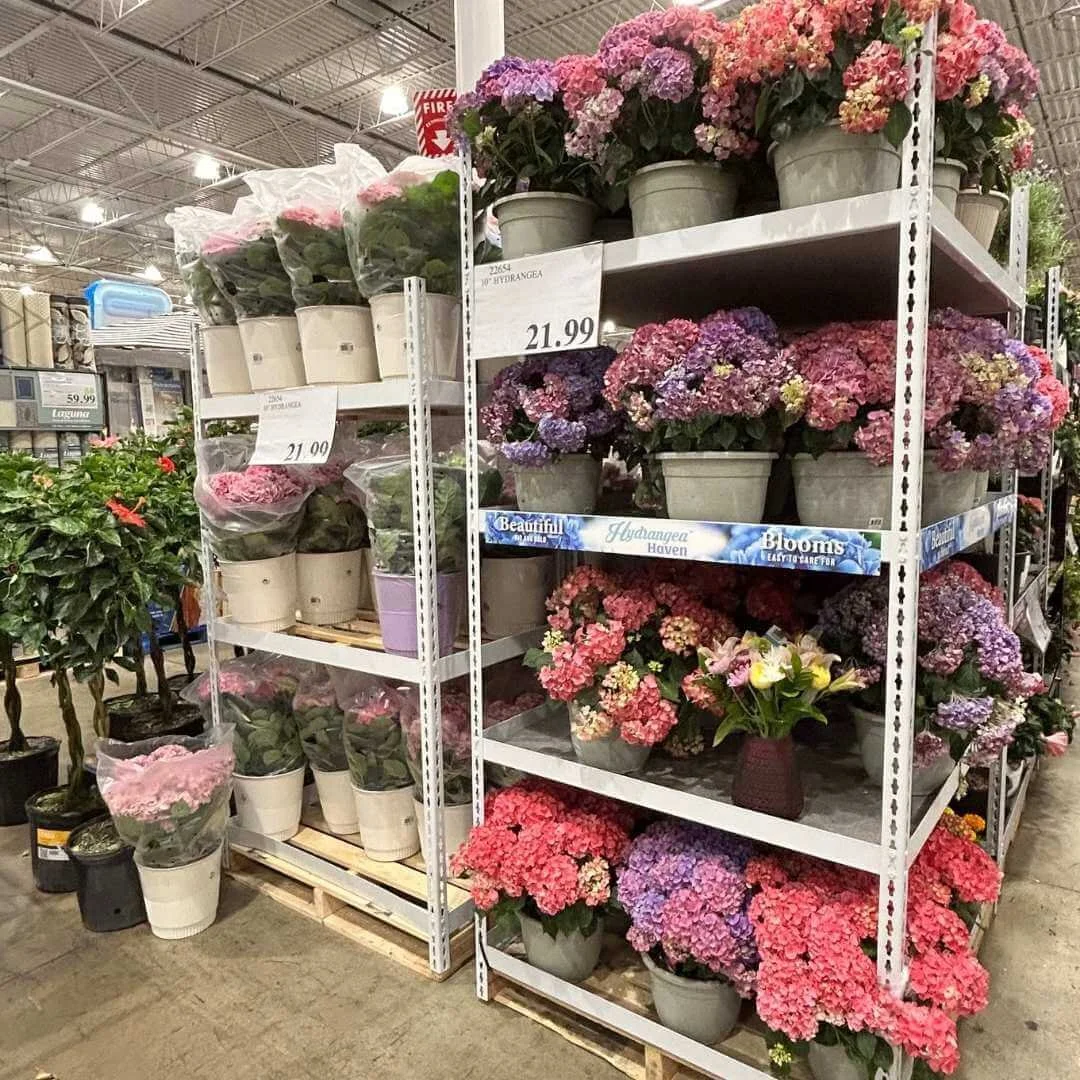
Potted hydrangeas arrive in stores looking almost impossibly perfect after being pampered in the greenhouse. Image © Plant and Bloom Design Studio
How to Care for a Hydrangea Indoors
Put It Somewhere You Can Enjoy It
Place your indoor hydrangea near a bright window and protect it from hot afternoon sun.
Hydrangeas prefer cooler conditions, so keep yours away from heating vents, fireplaces and other hot, dry locations that will fade the flowers and dry the soil out quickly.
Most importantly, don’t tuck your potted hydrangea in an out-of-the-way room. Put it somewhere you will notice and enjoy it, and remember to check on it often. 😉
Check the Soil Often
Watering is usually the trickiest part of hydrangea care indoors.
With so many leaves and flowers packed into a small pot, a blooming hydrangea can dry out surprisingly quickly. At the plant shop, a hydrangea that looked fine one day could be dramatically drooping the next.
Check the soil frequently and water when the surface begins to feel dry. Water thoroughly, allowing the excess to drain and don’t leave the pot standing in water.
If your hydrangea came in decorative foil or a container without drainage holes, remove the inner plastic nursery pot before watering. Let it drain completely before returning it to the decorative cover.
A wilted hydrangea may perk up after a thorough watering, but repeatedly allowing it to dry out will shorten the display and stress the plant.
Skip the Fertilizer While It Is Blooming
Your hydrangea already has everything it needs to produce its current flowers, so there is no need to fertilize it.
Fertilizer won’t make the existing flowers last longer, and too much can damage a stressed plant.
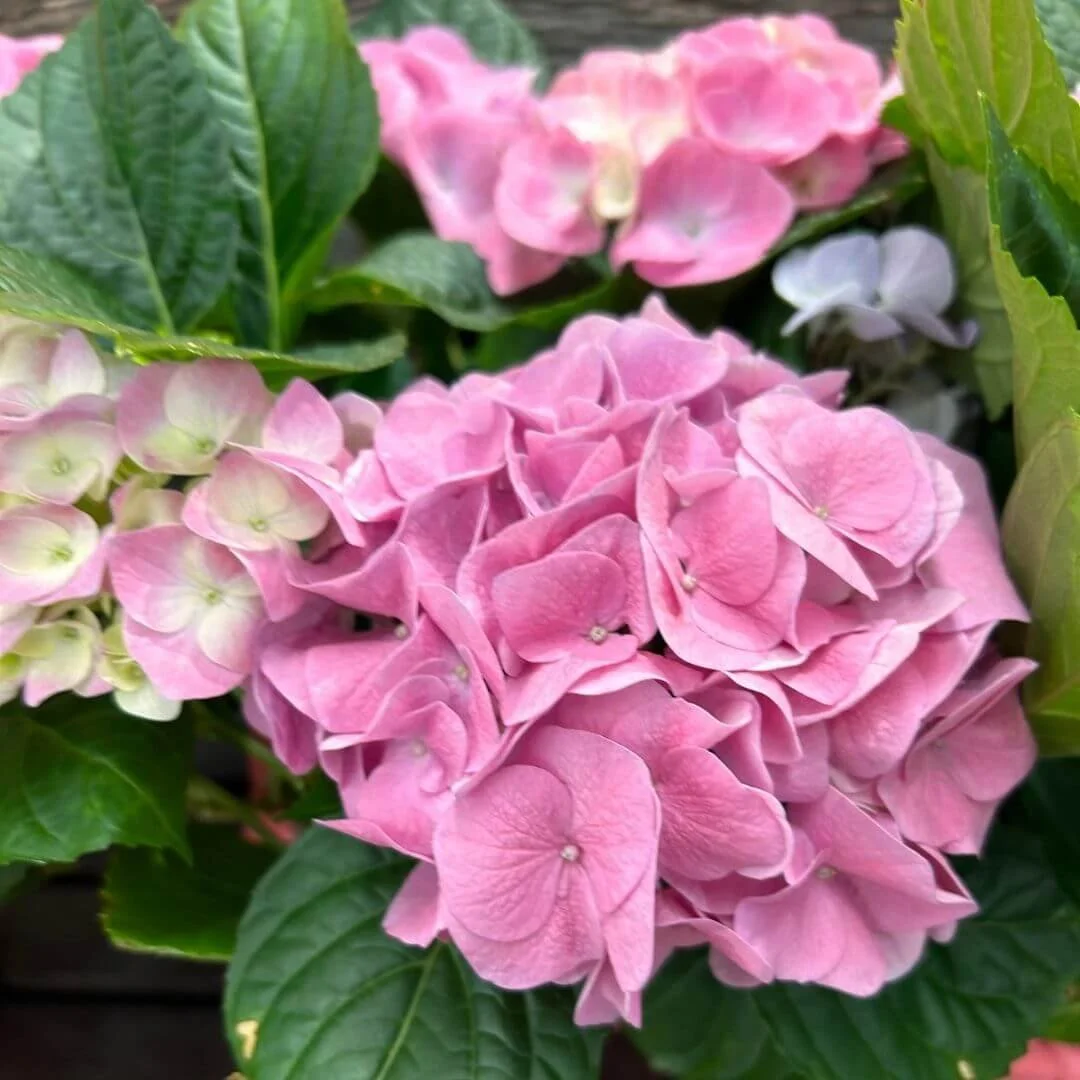
Pink and cream hydrangea flowers make a beautiful indoor display while they last. Image © Plant and Bloom Design Studio
What Happens After the Flowers Fade?
Even with attentive care, the flowers will eventually fade. This is normal and doesn’t mean you did anything wrong.
You can remove the faded flower heads and continue caring for the foliage, but your hydrangea will gradually lose its appeal as an indoor plant.
At that point, you can compost or discard it without guilt, or you can consider giving it a chance outside.
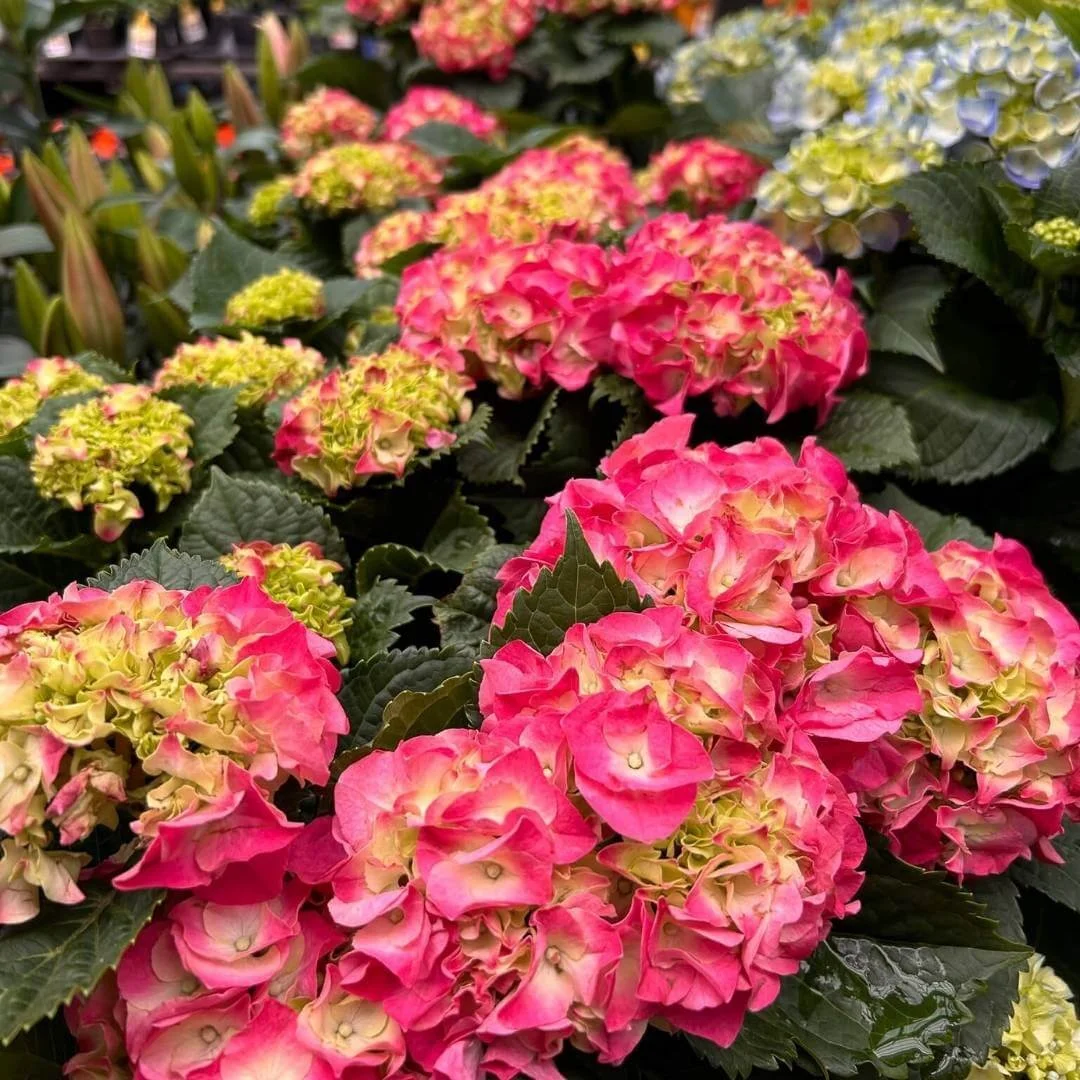
Intense pink flowers make these potted hydrangeas nearly impossible to resist. Image © Plant and Bloom Design Studio
Can You Plant an Indoor Hydrangea Outside?
Yes, but treat it as an experiment rather than a guaranteed addition to your landscape.
Most florist hydrangeas are bigleaf hydrangeas (Hydrangea macrophylla), but the plant label may not identify the cultivar or provide information about its cold hardiness. A florist hydrangea may not be hardy enough to survive winter in your climate.
Before planting, consider whether:
The hydrangea is hardy in your growing zone.
The danger of frost has passed.
You have a location with morning sun and afternoon shade.
The soil is moist, well-draining and not prone to drying out.
You are willing to water it regularly while it becomes established.
A hydrangea that has been living indoors needs time to adjust to stronger outdoor light. Begin by placing it outside in a sheltered, shady spot for short periods, gradually increasing its time outdoors before planting it.
If you receive the plant while the weather is still cold, keep it indoors until the danger of frost has passed. Continuing to care for it in a small pot for many weeks may be challenging, which is one reason not every gift hydrangea successfully makes the transition into the garden.
As a landscape designer, I wouldn’t plan an important part of a garden around an unidentified florist hydrangea. But if you have an appropriate spot and would enjoy seeing what happens, why not give it a try? 🤷♀️
If it survives and grows, consider it a delightful bonus.
Want to learn more about growing bigleaf hydrangeas outdoors? Visit my complete bigleaf hydrangea guide for care tips, landscaping ideas, and varieties to grow.
Potted Hydrangeas to Know
Some hydrangeas are specifically marketed as premium potted plants for indoor displays, patios and balconies. Explore these three colorful varieties: