
Limelight Hydrangea: Complete Care Guide (Zones 3–9)
Published: February 16, 2024 | Updated: June 15, 2026
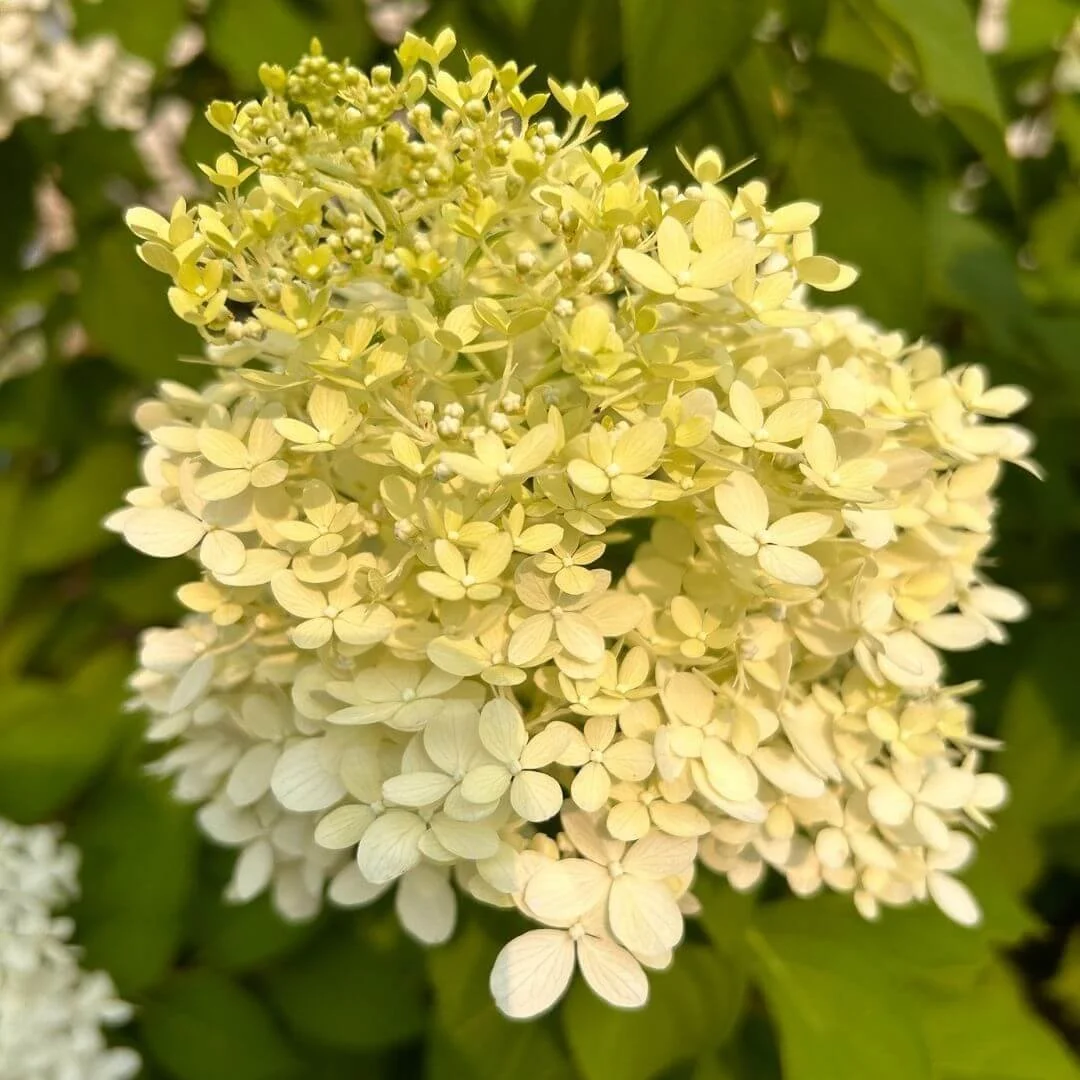
Limelight hydrangea flowers emerge chartreuse green in midsummer, transition to this beautiful creamy white as summer peaks, and deepen to blush pink and rose as autumn arrives. Image © Plant and Bloom Design Studio
If you're looking for a hydrangea that can handle the heat and look stunning doing it, the Limelight panicle hydrangea (Hydrangea paniculata 'Limelight') belongs at the top of your list.
What makes Limelight special isn't just that it tolerates full sun, though that alone sets it apart from many hydrangeas. It's the color show. Flowers emerge in midsummer as a soft, almost luminous chartreuse green, shift to creamy white as summer peaks, then deepen to blush pink and rose as autumn moves in. One shrub, three seasons of color, all without a single soil pH adjustment.
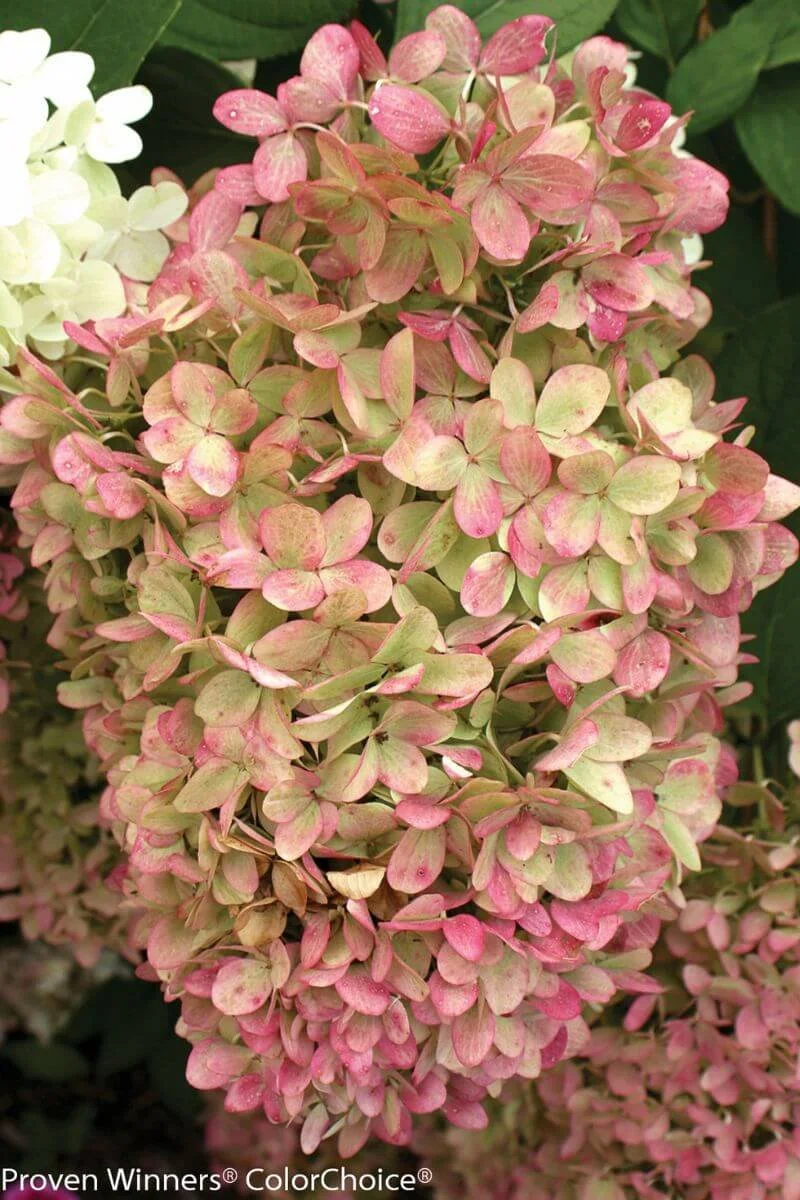
As temperatures cool in early fall, Limelight's flower heads deepen from creamy white to soft blush pink and rose, one of the most beautiful phases of the color show. Image courtesy of Proven Winners, provenwinners.com.
Limelight is a panicle hydrangea, and it shares all the best traits of the group: tough, adaptable, blooms on new wood so late pruning or a long winter won't cost you a single flower. It grows large, reaching 6 to 8 feet tall and wide at maturity, so give it room to do its thing. If you'd like to explore other panicle varieties, my panicle hydrangea guide covers the full group.
If you've ever struggled with bigleaf hydrangeas that droop in afternoon heat, fail to flower after a late frost, or leave you confused about pruning timing, Limelight is the answer. It thrives in the hot, sunny spots where bigleafs struggle, blooms reliably, and keeps its demands simple: 4+ hours of direct sun (which also keeps stems strong and upright), consistent moisture, and an annual pruning.
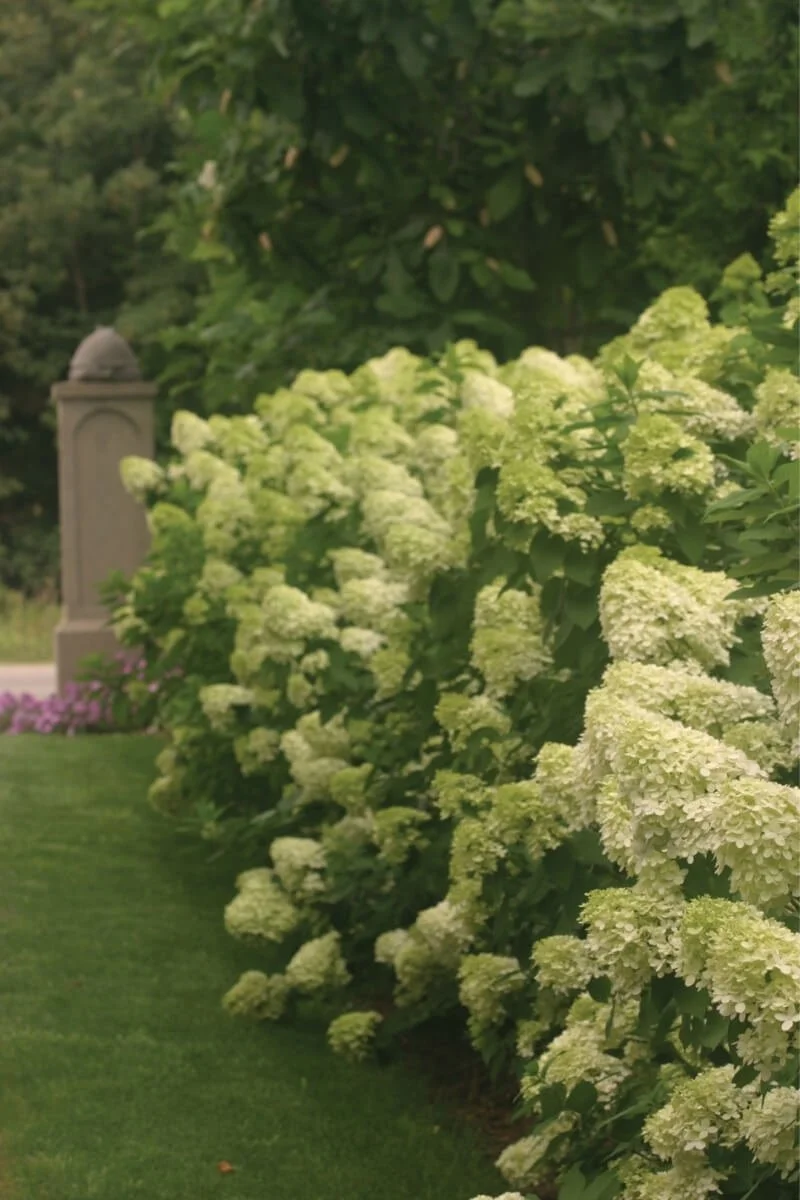
Planted in a row, Limelight hydrangeas make an impressive informal hedge. Image courtesy of Proven Winners, provenwinners.com.
Here in the Mid-Atlantic, Limelight is my go-to recommendation for gardeners who want a hydrangea but have more sun than shade. It won't fail to bloom after a late frost the way bigleafs do, because it flowers on new wood every year regardless of what winter throws at it. It's also one of the few panicle hydrangeas that grows reliably into Zone 9, making it a strong choice for gardeners in warmer climates.
Whether you're growing it in Zone 3 or Zone 9, this complete Limelight hydrangea care guide covers everything you need: planting, pruning timing, and design ideas from a landscape designer with 12+ years of experience in the Mid-Atlantic. As always, every image in this article is real, either taken by me or sourced from trusted horticultural growers and nurseries. No AI generated photos here.
Limelight Hydrangea at a Glance
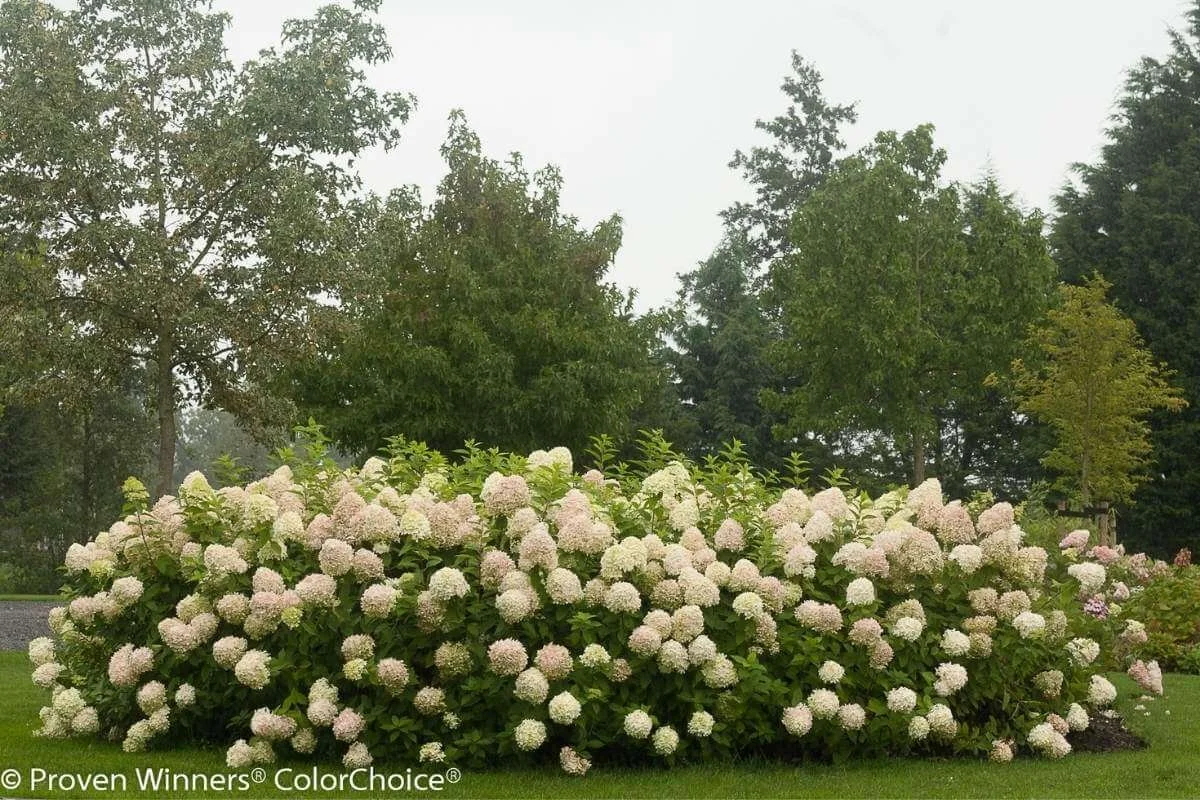
Limelight hydrangeas planted in a row make a bold statement in the landscape, delivering months of color from midsummer through fall. Image courtesy of Proven Winners, provenwinners.com.
Botanical Name: Hydrangea paniculata 'Limelight'
Type: Panicle hydrangea
Hardiness Zones: 3 to 9
Mature Size: 6 to 8 feet tall and wide
Light: Full sun to part shade (4+ hours direct sun)
Soil: Rich, well-draining, consistently moist
Bloom Time: Midsummer through fall
Flower Color: Chartreuse green to creamy white to blush pink
Blooms On: New wood
Pruning Window: Late winter to early spring
Deer Resistant: No
Limelight vs. Little Lime: Which One Should You Plant?
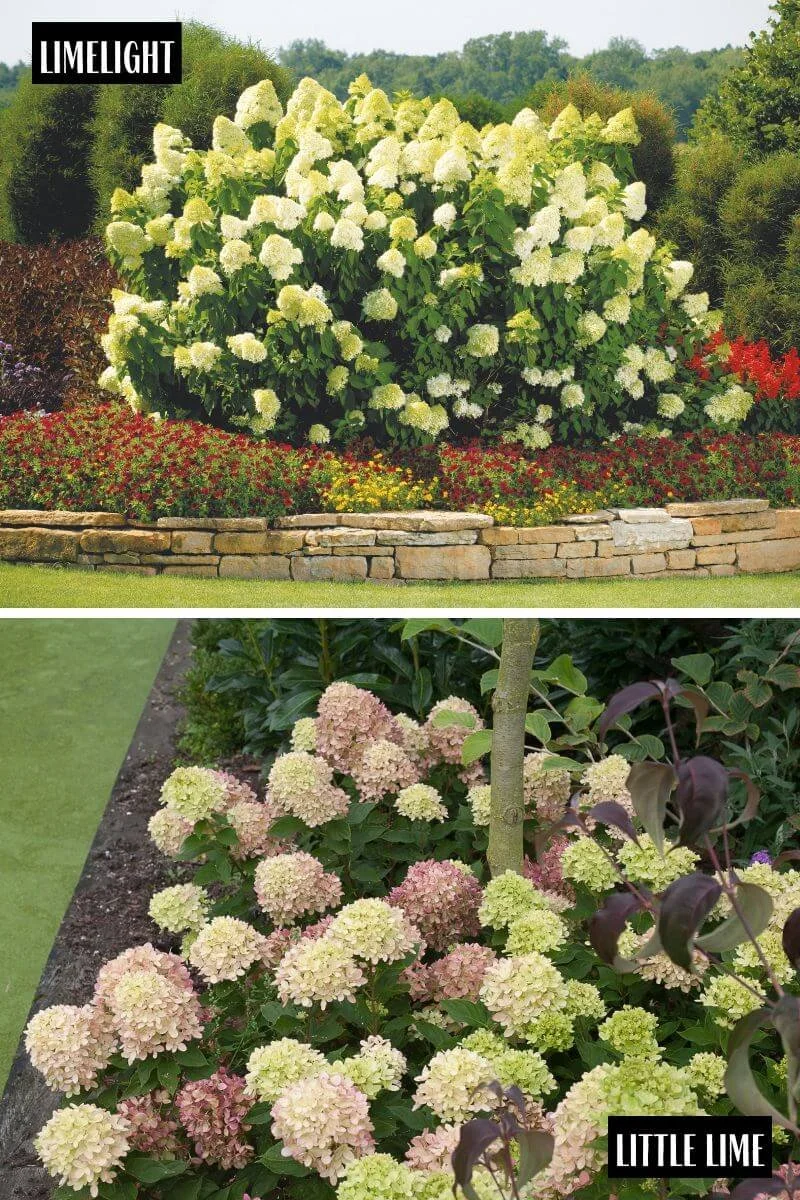
Size matters when choosing between these two. Limelight (top) fills a large raised bed beautifully; Little Lime® (bottom) is perfectly at home in a smaller planting under a tree. Images courtesy of Proven Winners, provenwinners.com.
Limelight and Little Lime® (Hydrangea paniculata 'Jane') are the same shrub in different sizes, sharing the same flower color progression, the same sun tolerance, and the same reliable new wood blooming habit. The decision really comes down to your space and how you want to use them in the landscape.
Limelight is the full-sized version, maturing to 6 to 8 feet tall and wide. It's a bold, architectural shrub that earns its place as a specimen plant, a tall mixed border anchor, or a flowering hedge. Its size is part of its appeal, but it does need room. Planting it too close to a foundation, a walkway, or other shrubs is one of the most common mistakes I see, and it means years of fighting the plant rather than enjoying it.
Little Lime® tops out at 3 to 5 feet tall and wide, which makes it a much more versatile option for smaller gardens, front yard foundation beds, or anywhere you want the same flower show without the large footprint. It works beautifully in containers, as a low hedge, or massed along a pathway where Limelight would quickly overwhelm the space.
If you have the room, Limelight delivers more visual impact and a more dramatic late season color change. If space is tight or you're working with a smaller scale design, Little Lime® gives you everything you love about Limelight in a smaller package.
Quick Comparison
Limelight
Size: 6 to 8 feet tall and wide
Best for: Specimens, tall hedges, large mixed borders
Not ideal for: Small gardens, foundation beds, tight spaces
Little Lime®
Size: 3 to 5 feet tall and wide
Best for: Small gardens, foundation beds, pathways, containers
Not ideal for: Large spaces where you need height and impact
What they share: Same flower color progression, same sun requirements, same new wood blooming habit, same care needs
Limelight Hydrangea Bloom Time and Color Phases
One of the most loved things about the Limelight hydrangea is that it doesn't just bloom and fade. It puts on a three-act color show that carries the garden from midsummer all the way through fall, and even into winter if you leave the dried flower heads on the plant.
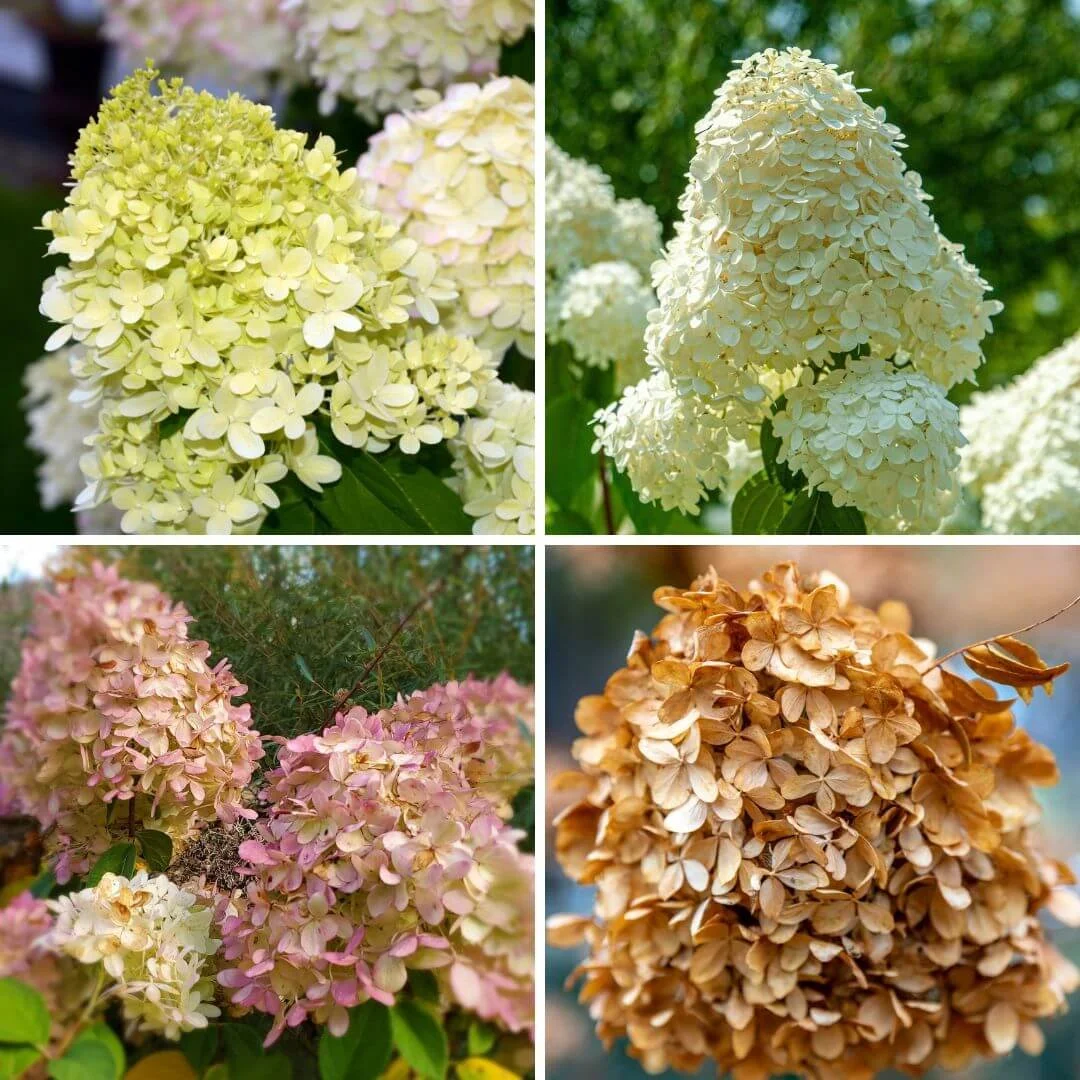
The full color arc of Limelight hydrangea: chartreuse green in early summer, creamy white at peak bloom, blush pink in fall, and warm parchment brown through winter.
Phase 1: Chartreuse Green (Early to Midsummer)
Bloom time starts in early to midsummer when large, cone-shaped panicles emerge in a soft, luminous chartreuse green. This is one of the most distinctive things about Limelight and one of the reasons it pairs so beautifully with other plants.
Phase 2: Creamy White (Midsummer to Late Summer)
As summer peaks, the flowers transition to a rich creamy white. This is the phase most people associate with Limelight and when the plant is at its most showy. The large flower heads are full and heavy at this stage, which is one more reason adequate sun is so important. Strong stems hold those blooms upright rather than flopping under their weight.
Phase 3: Blush Pink and Rose (Fall)
As temperatures cool in early fall, the flowers deepen to blush pink and rose tones. This is a particularly beautiful phase, and it coincides with the wider fall garden palette beautifully.
Phase 4: Dried Flower Heads (Winter)
Don't cut the flowers off in fall. The dried flower heads persist through winter, taking on a warm parchment color that looks beautiful against a snowy backdrop or in a winter arrangement. Leave them on the plant until you prune in late winter and you'll have months of additional interest long after the rest of the garden has gone to sleep.

Leave the dried flower heads on your Limelight through winter for months of added interest and remove them when you prune in late winter to early spring. Image courtesy of Spring Meadow Nursery, Inc. - Proven Winners, provenwinners.com.
How to Grow Limelight Hydrangea
Planting
The best time to plant a Limelight hydrangea is in spring or fall, when moderate temperatures give the roots time to establish before the stress of summer heat or winter cold sets in. Dig a hole twice as wide as the root ball and just as deep, position the plant so the top of the root ball sits level with the surrounding soil, and water deeply immediately after planting.
Location
Choose a spot with at least 4 hours of direct sun per day. More sun means stronger stems and a better flower display, so don't be tempted to tuck it into a shadier spot to protect it. In the warmer gardening zones, a little afternoon shade is welcome during the hottest weeks of summer, but Limelight handles full sun far better than any other hydrangea type. Avoid low-lying areas where water pools after rain, and give it plenty of room. This is a large, wide shrub that reaches 6 to 8 feet in both directions at maturity.
Soil
Limelight hydrangeas prefer rich, well-draining soil that retains some moisture without becoming waterlogged. Before planting, amend the soil generously with compost or Leaf-gro. Unlike bigleaf hydrangeas, flower color is not affected by soil pH, so no adjustments needed there.
Mulch
Apply a 2 to 3 inch layer of organic mulch around the base of the plant to retain soil moisture, regulate soil temperature, and suppress weeds. Keep mulch a few inches away from the base of the stems to avoid rot and discourage pests.
Watering
Consistent moisture is one of Limelight's few real requirements. Water deeply and regularly, especially during the first growing season while the plant is establishing, and during hot, dry stretches in summer. Deep watering encourages a strong, deep root system and is far more effective than frequent shallow watering. If you're not sure whether your area is in drought, the U.S. Drought Monitor is a helpful resource.
If you are planning a larger planting, it is worth thinking about irrigation before you plant. A well designed soaker hose or drip irrigation system makes consistent moisture much easier to maintain across multiple shrubs. See Soaker Hose vs Drip Irrigation for help deciding which system is right for your garden.
Fertilizing
Limelight hydrangeas don't need much in the way of fertilizer when they're growing in rich, well-amended soil. Each spring, spread a layer of compost or shredded leaves around the root zone, keeping it away from the base of the plant. That's usually all they need. Avoid high-nitrogen fertilizers, which encourage leafy growth at the expense of flowers.
Pruning
Limelight hydrangeas bloom on new wood, which means they should be pruned in late winter or early spring before new growth begins. Cut the plant back by about one third, removing last year's dried flower heads and any damaged or crossing branches. Avoid pruning late into spring once new growth is underway, or you risk removing developing flower buds.
Pests and Disease
Limelight is generally a tough, trouble-free shrub. Powdery mildew and fungal leaf spots can occasionally be problems, particularly in humid summers, and aphids or spider mites may appear from time to time. Good air circulation, proper spacing, and consistent watering habits go a long way toward keeping the plant healthy. Avoid overhead watering where possible.
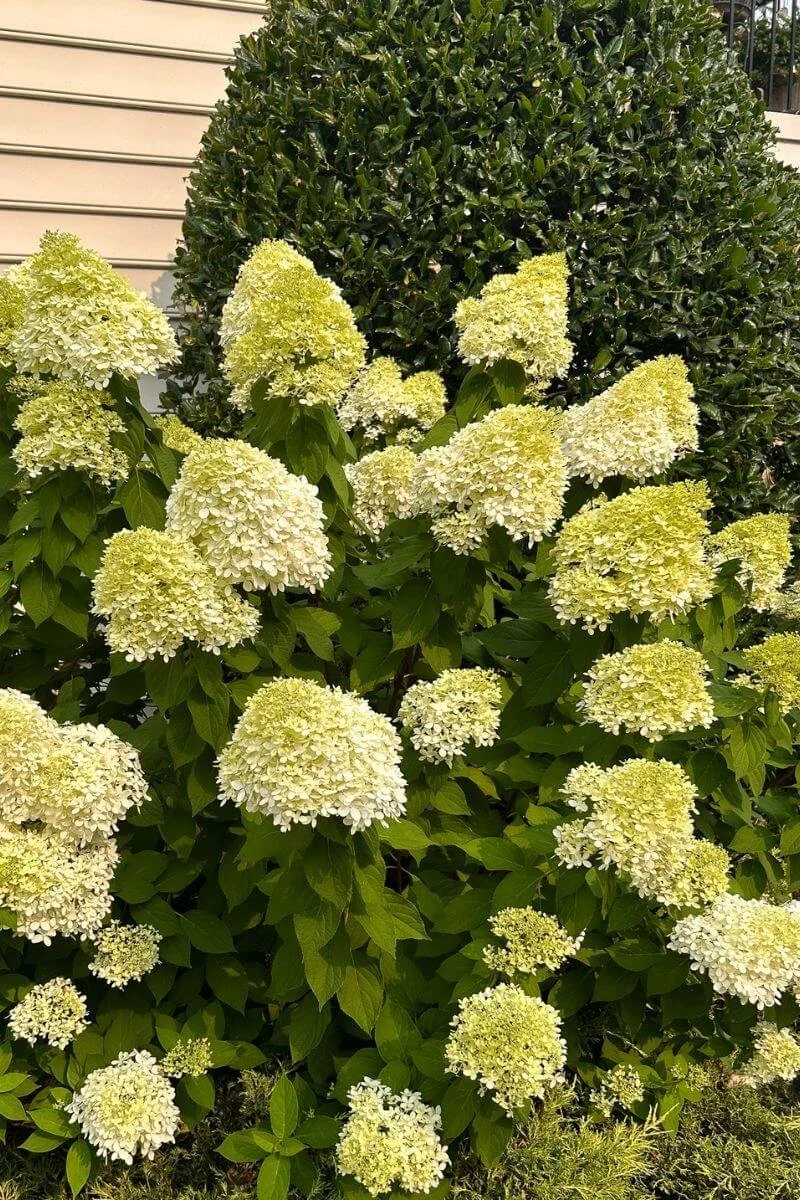
Limelight hydrangea paired with a holly tree in a foundation planting, a classic combination that delivers year round structure and seasonal flower interest. Image © Plant and Bloom Design Studio
When and How to Prune Limelight Hydrangea
Limelight hydrangea blooms on new wood, which is the single most important thing to understand about pruning it. Unlike bigleaf hydrangeas, which bloom on old wood and can lose an entire season of flowers to incorrect pruning timing or a late frost, Limelight produces its flowers on the current season's growth.
When to Prune
Prune in late winter to early spring, before new growth begins. This is the ideal window because you can see the structure of the plant clearly, remove last year's dried flower heads, and shape the shrub before it puts energy into new growth. Avoid pruning in late spring once new growth is underway, or you risk removing developing flower buds and reducing this year's display.
How and What to Prune
Cut the plant back by about one third of its overall height, removing last year's dried flower heads as you go. In late winter the plant will look entirely dormant, so don't be alarmed, this is normal. Avoid cutting back too hard. Severely pruned plants can produce fewer but larger flower heads that are too heavy for the stems to support, which leads to flopping. If you spot any obviously snapped or damaged branches, cut those back as well. Beyond that, Limelight doesn't need to be fussed over.
Can You Skip a Year?
Yes, though you may notice a less tidy habit and slightly reduced flowering over time. An annual pruning is a small investment of time that pays off in a noticeably fuller, more floriferous shrub each season.
Limelight Hydrangea Tree Form
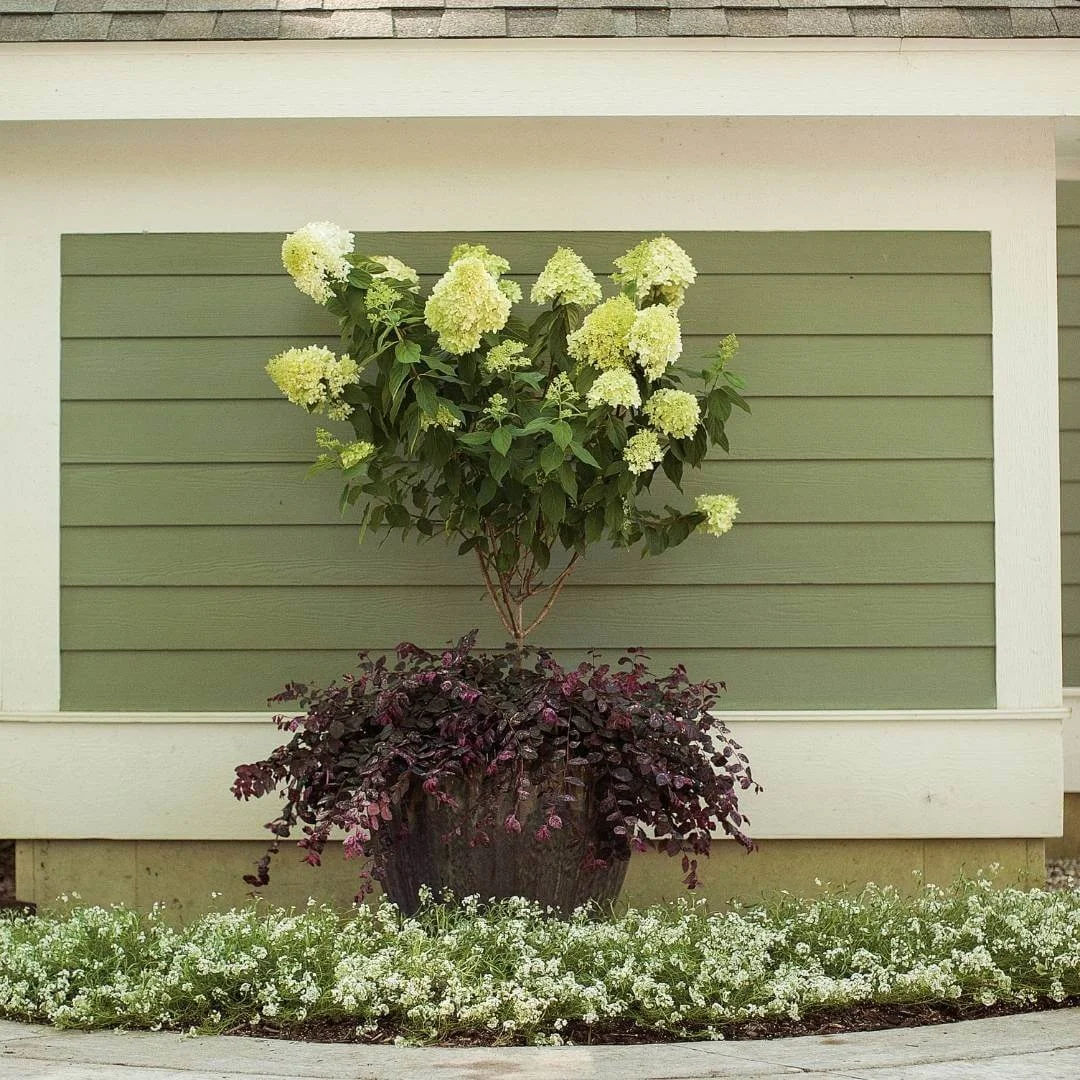
The tree form of Limelight hydrangea makes a striking container planting paired here with Jazz Hands® Loropetalum alongside a walkway. Image courtesy of Proven Winners. provenwinners.com.
If you love Limelight but want a more architectural, sculptural look in the landscape, the tree form is worth considering. Limelight is available trained as a standard, which means a single straight trunk topped with a rounded canopy of foliage and flowers rather than the typical multi-stemmed shrub habit.
The tree form reaches a similar overall height to the shrub form but with a much smaller footprint at ground level, making it a useful option for tighter spaces where you want vertical interest without a wide spreading base. It works beautifully as a focal point in a mixed border, flanking an entrance, in a container, or anchoring a formal garden bed.
Care requirements are identical to the shrub form: full sun, consistent moisture, and an annual pruning in late winter to early spring. When pruning a tree form, focus on maintaining the rounded canopy shape and removing any shoots that emerge from the trunk, which will sap energy from the top growth if left unchecked.
One thing to keep in mind is that the tree form is more vulnerable to wind damage than the multi-stemmed shrub, so choose a somewhat sheltered location if possible and make sure it is staked properly at planting until the trunk establishes.
Why Isn't My Limelight Hydrangea Blooming?
Limelight is one of the most reliable bloomers in the hydrangea family, so if yours isn't flowering it's worth investigating. Here are the most common reasons:
It's Still Young
Panicle hydrangeas can take a year or two to settle in and start blooming after planting. If your plant is newly installed, be patient. Put your energy into good watering habits and let it establish.
It Isn't Getting Enough Sun
This is the most common culprit. Limelight needs a minimum of 4 hours of direct sun per day to flower well, and more is better. A plant that is struggling in too much shade will put its energy into foliage rather than flowers. If your Limelight is in a spot that has gotten shadier over time as surrounding trees and shrubs have matured, that may be your answer.
It Was Pruned at the Wrong Time
Pruning too late in spring, after new growth has already begun, removes the developing flower buds for the current season. If you pruned in May or June and your plant isn't blooming, this is likely the reason. Move your pruning window to late winter or early spring next year and you should see a full flush of flowers.
It Was Pruned Too Hard
Cutting a Limelight back too severely can result in fewer but oversized flower heads that are too heavy for the stems to support. Stick to removing about one third of the overall height and you will get the best results.
Inconsistent Watering
Drought stress during the growing season can affect flowering. If your plant went through extended dry periods without supplemental watering, that stress may show up as reduced blooms. Deep, consistent watering through the summer growing season makes a huge difference.
Deer
Deer are particularly fond of hydrangea buds and flowers, and they can strip a plant overnight without leaving obvious signs of their visit. If your Limelight had buds that simply disappeared, deer may be the answer.
Landscape Uses and Design Ideas for Limelight Hydrangea
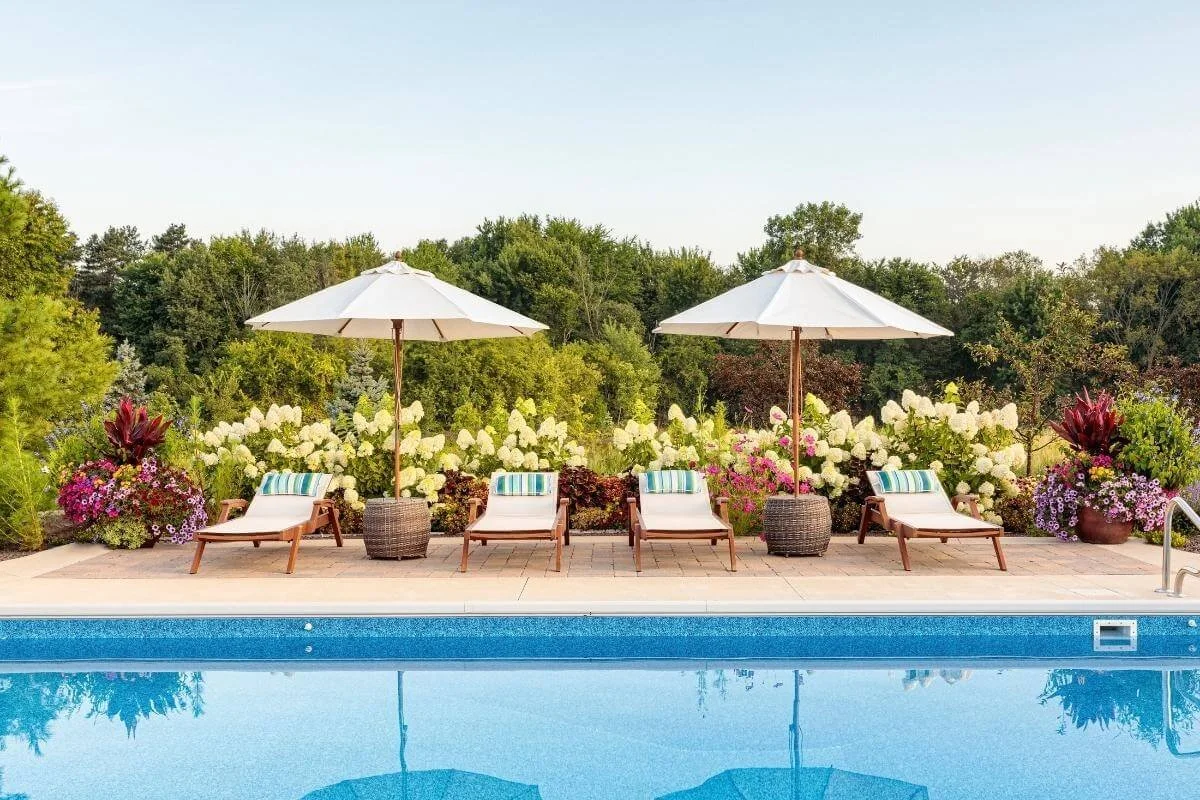
Limelight hydrangeas make a stunning backdrop in a poolside garden, delivering color and structure behind this pool deck. Image courtesy of Proven Winners, provenwinners.com.
Limelight is a big shrub, so it works best in landscapes where there is room to let it do its thing. When it has the space it needs, it earns its place in almost any style, from relaxed naturalistic gardens to clean modern designs. Here are some of my favorite ways to use it.
As a Specimen Plant
A single Limelight hydrangea planted where it has room to reach its full size is a showstopper. Choose a prominent spot in the garden where the full color arc from chartreuse to white to pink can be appreciated across the seasons. Give it a generous layer of mulch and let it be the star.
As a Flowering Hedge or Screen
Plant multiple Limelight hydrangeas in a row for a spectacular informal hedge. This approach works beautifully along property lines, behind a perennial border, or to soften the look of a fence. Keep in mind that panicle hydrangeas are deciduous, so this hedge will be bare in winter.
In a Mixed Border
Limelight is a natural anchor for a large mixed border. Its late summer and fall color fills the gap when many spring and early summer flowering shrubs have finished, and it pairs beautifully with ornamental grasses, late season perennials like rudbeckia and asters, and broadleaf evergreens.
In a Mass Planting
In larger landscapes, a mass planting of Limelight hydrangeas creates a dramatic sweep of seasonal color. This approach works particularly well in large yards, along driveways with adequate width, or in commercial landscapes where bold, low maintenance plantings are needed.
As a Tree Form Focal Point
The standard tree form of Limelight works beautifully as a formal focal point flanking an entrance, anchoring a symmetrical bed, or standing alone as a sculptural element in a smaller garden where the full shrub form would be too large.
In a Side Yard
A sunny side yard is one of the spots gardeners struggle with most, and Limelight handles it beautifully. It tolerates the reflected heat from structures, fills vertical space with interest, and creates a sense of intentional design in an area that often gets overlooked.
Limelight Hydrangea Companion Plants
Limelight's long season of color and its cool chartreuse to white to pink progression make it an easy plant to pair. It works beautifully with plants that echo its soft tones or provide contrasting texture and structure. Here are some of my favorites:
Lavender(Lavandula spp.): The soft purple flower spikes and silver-gray foliage of lavender are a natural complement to Limelight's creamy white blooms. Both love full sun and well-draining soil, making them reliable partners in a sunny border. Keep in mind that lavender prefers drier conditions and needs less water than Limelight, so pair them thoughtfully and avoid overwatering to keep both plants happy.
Purple Coneflower (Echinacea purpurea): A native perennial that blooms right alongside Limelight in midsummer, bringing bold color and pollinator activity to the garden. As coneflower finishes blooming, Limelight takes over as the star of the late summer and fall garden.
Russian Sage (Salvia yangii): Airy blue-purple flower spikes and silver stems create a soft, hazy contrast against Limelight's bold flower heads. Russian sage is tough, drought tolerant once established, and thrives in the same full sun conditions. Keep in mind that Russian sage prefers drier conditions and needs less water than Limelight, so pair them thoughtfully and avoid overwatering to keep both plants happy.
Karl Foerster Feather Reed Grass (Calamagrostis x acutiflora 'Karl Foerster'): The vertical structure of this ornamental grass is a beautiful counterpoint to Limelight's rounded habit. It adds movement and texture and looks stunning alongside the dried flower heads in winter.
Black Eyed Susan (Rudbeckia fulgida): Cheerful golden yellow flowers that bloom in late summer alongside Limelight's creamy white phase. A classic combination that works in almost any sunny garden.
Catmint (Nepeta spp.): Low growing and soft, catmint softens the base of Limelight and eases the transition between garden bed and lawn or pathway. It blooms in early summer and often reblooms after cutting back.
Boxwood (Buxus spp.): The dense, fine-textured evergreen foliage of boxwood provides year round structure and a tidy, formal contrast to Limelight's loose, billowing habit. It works beautifully as a low border edging a bed anchored by Limelight.
Cherry Laurel (Prunus laurocerasus): A bold, broadleaf evergreen with large glossy leaves that creates a rich contrast in texture alongside Limelight. Both are substantial shrubs that work well together in larger borders and foundation plantings where you need year round structure and seasonal flower interest.
Emerald Green Arborvitae (Thuja occidentalis 'Emerald Green'): A classic narrow evergreen that pairs well with Limelight in larger borders and foundation plantings, providing vertical structure and year round green interest alongside the seasonal flower show.
Frequently Asked Questions
How big does a Limelight hydrangea get?
Limelight hydrangea reaches 6 to 8 feet tall and wide at maturity. It is a large, substantial shrub that needs plenty of room to grow, more than most people expect when they first plant it.
Does Limelight hydrangea need full sun?
Yes, and more sun is better with this plant. Limelight tolerates part shade but full sun produces stronger stems, better flower production, and a more upright habit. See the care section above for the full explanation.
Is Limelight hydrangea hard to prune?
It is one of the most forgiving hydrangeas to prune because it blooms on new wood every year; however, timing and how much you cut back matter more than most people realize. See the full pruning section above for everything you need to know.
Why isn't my Limelight hydrangea blooming?
There are several reasons a Limelight may fail to bloom, and the answer is not always obvious. Sun, pruning timing, plant age, watering, and even deer are all worth investigating. See the troubleshooting section above for a full breakdown.
What is the difference between Limelight and Little Lime® hydrangea?
The short answer is size. Limelight reaches 6 to 8 feet tall and wide while Little Lime® tops out at 3 to 5 feet. They share the same flower color progression, sun requirements, and care needs. See the full comparison section above for help deciding which one is right for your space.
Does Limelight hydrangea grow in Zone 9?
Yes, Limelight is one of the few panicle hydrangeas that grows reliably into Zone 9, which sets it apart from many other varieties in its group. It is hardy from Zone 3 to Zone 9.
Helpful Resources
USDA Plant Hardiness Zone Map: Find your hardiness zone
U.S. Drought Monitor: Check current drought conditions in your area
Ask Extension: Get plant and gardening advice from your local cooperative extension service