
Panicle Hydrangea (Hydrangea paniculata): Varieties, Care + Landscape Ideas
Published: February 13, 2024 | Updated: June 10, 2026
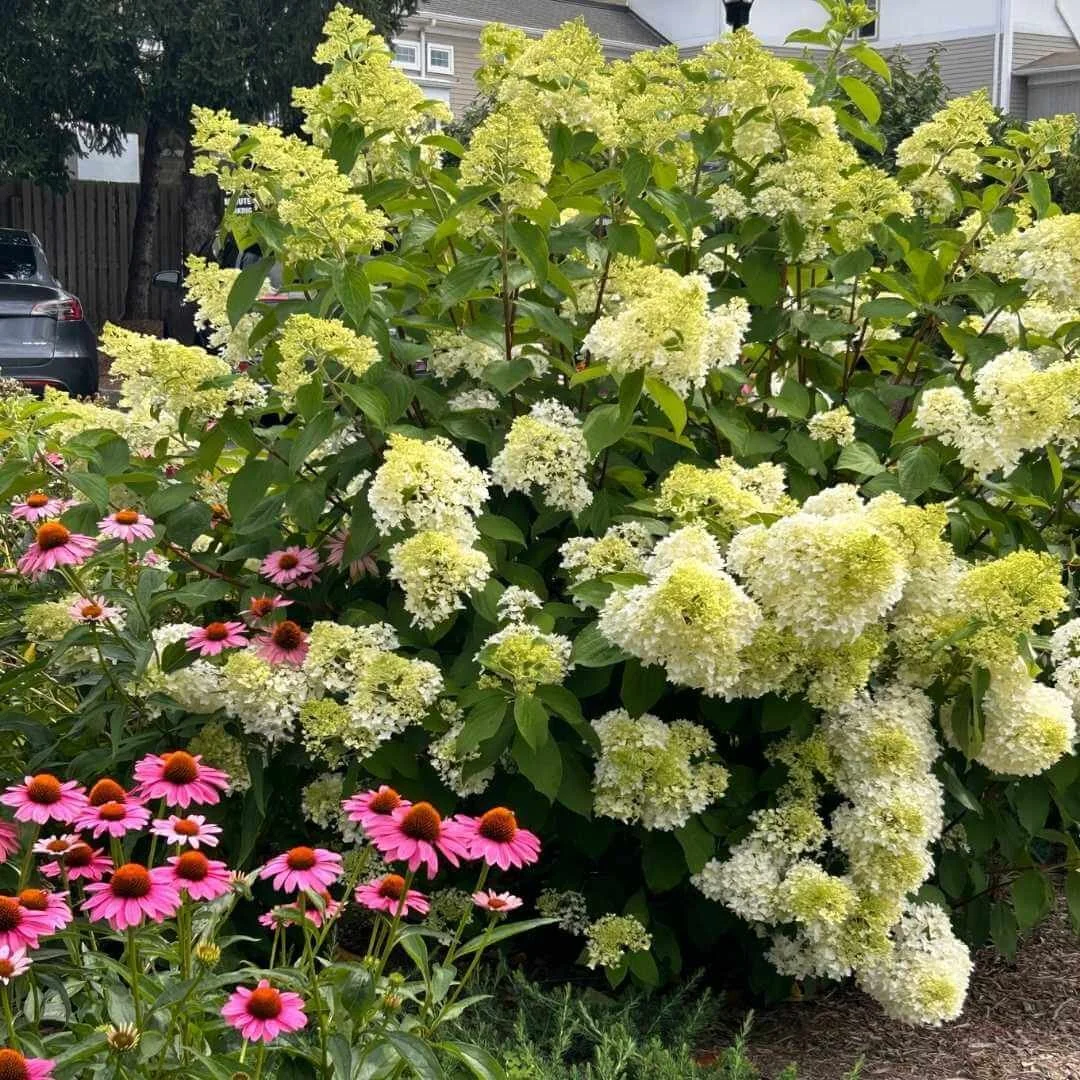
Limelight Prime panicle hydrangea (Hydrangea paniculata) paired with purple coneflower in a summer garden border. Limelight Prime is #4 on this list. Image © Plant and Bloom Design Studio.
Meet the panicle hydrangea, the toughest hydrangea in my design palette. It thrives in full sun, shrugs off summer heat and humidity, is easy to prune, and blooms reliably from summer through fall, even in zone 3. If you've ever struggled with temperamental bigleaf hydrangeas that refuse to bloom, the panicle hydrangea (Hydrangea paniculata) is about to become your new favorite shrub.
Native to China, Japan, and Siberia, panicle hydrangeas are large, fast-growing, multi-stemmed deciduous shrubs that produce big, cone-shaped flower clusters in summer. The flowers open white or lime green, then gradually deepen to shades of pink and red as the season progresses. Flowerheads dry naturally on the plant for winter interest, and unlike bigleaf hydrangeas, flower color isn't affected by soil pH. Best of all, they bloom reliably on new wood every year, so late spring frosts won't cost you a season of blooms.
Hydrangea paniculata is also remarkably adaptable. Panicle hydrangeas grow in zones 3 to 8, tolerate well-draining clay soil, and are widely considered the easiest hydrangea type to grow. There are dozens of cultivars on the market, ranging from compact 3-foot dwarfs to towering 8-foot specimens, so there's a panicle hydrangea for every spot in the landscape.
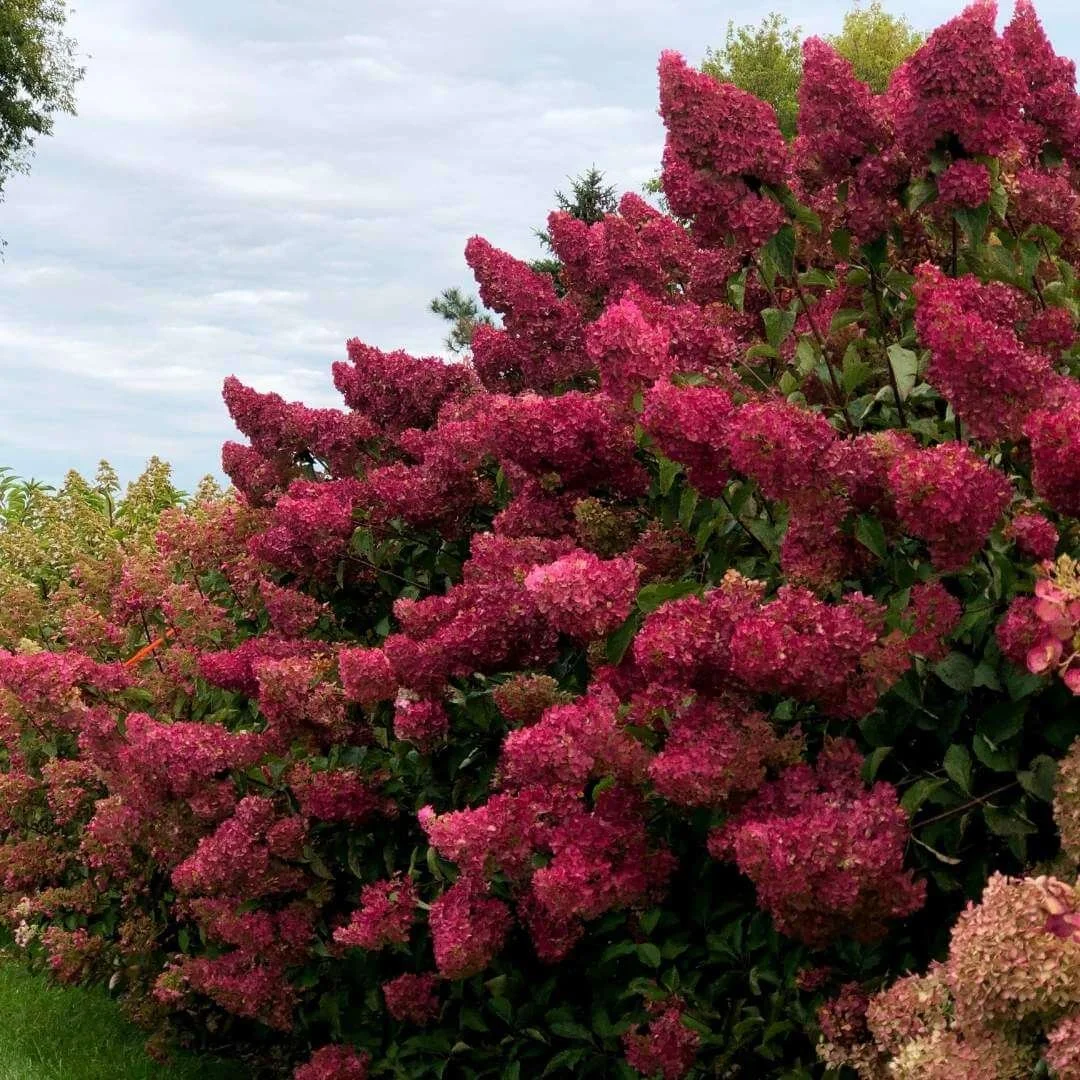
Berry White panicle hydrangea (Hydrangea paniculata) in a mass border planting. The white summer flowers age to this stunning deep raspberry red as the season progresses. Berry White is #7 on this list. Image courtesy of Bailey Nurseries.
Panicle hydrangeas are also commonly sold in tree form. Many varieties are grown this way, including the old-fashioned Peegee hydrangea (Hydrangea paniculata 'Grandiflora'), and I'll cover more on that below.
In this guide, I'll also cover 8 of the best panicle hydrangea varieties for home landscapes, plus everything you need to know about planting, pruning, and designing with them. All photos are real, taken by me or sourced directly from trusted nurseries and growers, because you deserve to see exactly how these plants look in an actual garden, not an AI-generated version of perfection.
Panicle Hydrangea at a Glance
Common name: Panicle hydrangea
Botanical name: Hydrangea paniculata
Native range: China, Japan and Siberia
Hardiness zones: 3 to 8 (the Limelight variety can grow in zone 9a)
Mature size: 3 to 8+ feet tall and wide, depending on cultivar
Light requirements: Full sun to part shade (minimum 4 hours of direct sun per day)
Bloom time: Summer through early fall
Flower color: White or lime green, aging to shades of pink and red
Fall color: Foliage turns yellow to orange on some cultivars; flower heads deepen to pink and burgundy in fall, then dry to a warm brown and persist through winter
Deer resistant: No
Drought tolerant: No
Attracts: Bees, butterflies, and other pollinators
Blooms on: New wood (prune in late winter or early spring)
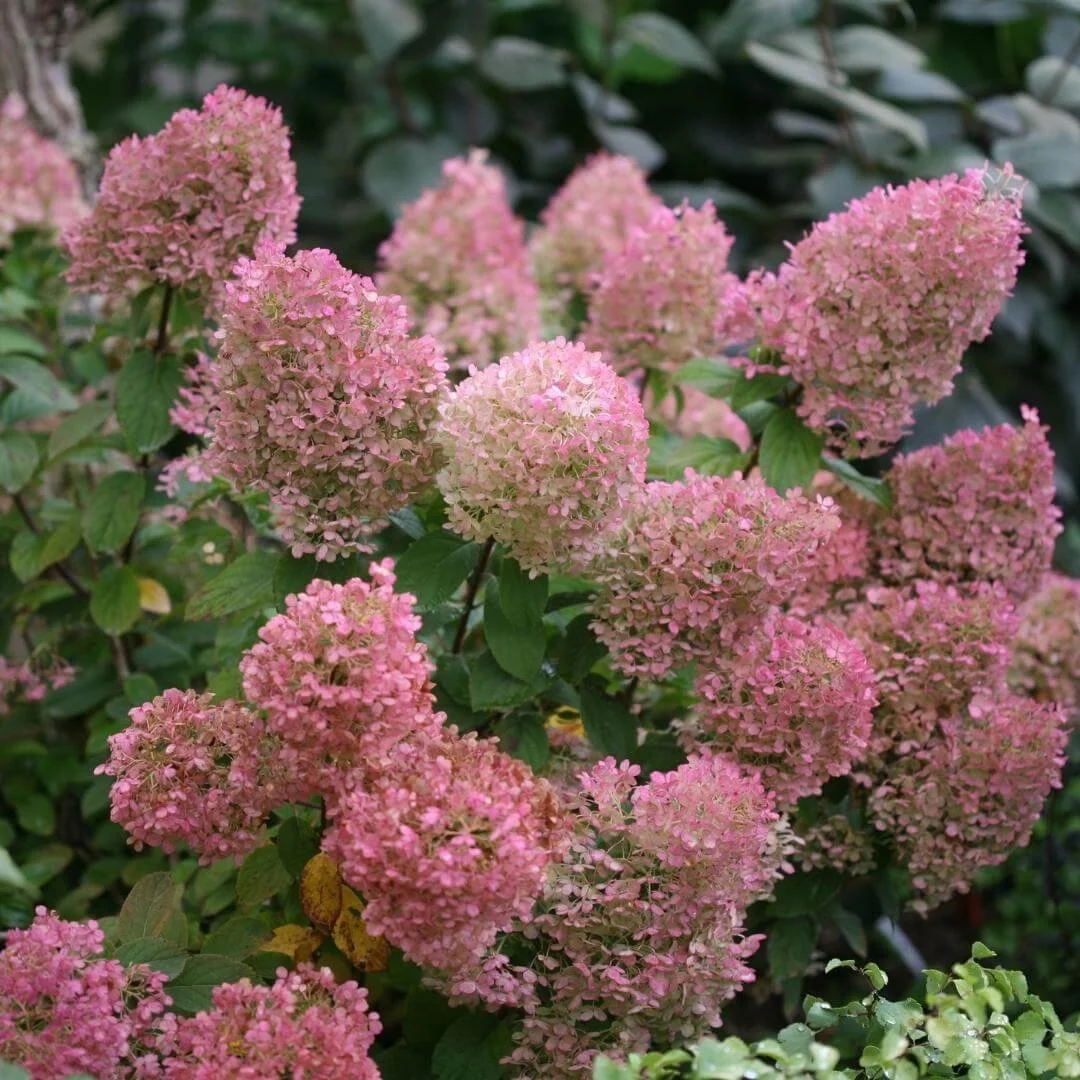
Bobo panicle hydrangea (Hydrangea paniculata) has white summer flowers that age to soft pink. It’s one of the most popular dwarf panicle hydrangeas available, and it’s #2 on this list. Image courtesy of Proven Winners ColorChoice Flowering Shrubs, provenwinners.com.
8 Best Panicle Hydrangea Varieties
Selecting the right panicle hydrangea starts with size. Some cultivars stay a tidy 3 feet tall and wide, while others push 8 feet tall and wide, so matching the correct plant to the space is the most important decision you'll make.
The varieties below are organized from smallest to largest to help you find the right fit, with a mix of compact dwarfs, reliable mid-size workhorses, and bold large-scale specimens that make a serious statement in the landscape.
1. Firelight Tidbit® Panicle Hydrangea
Hydrangea paniculata 'SMNHPK'
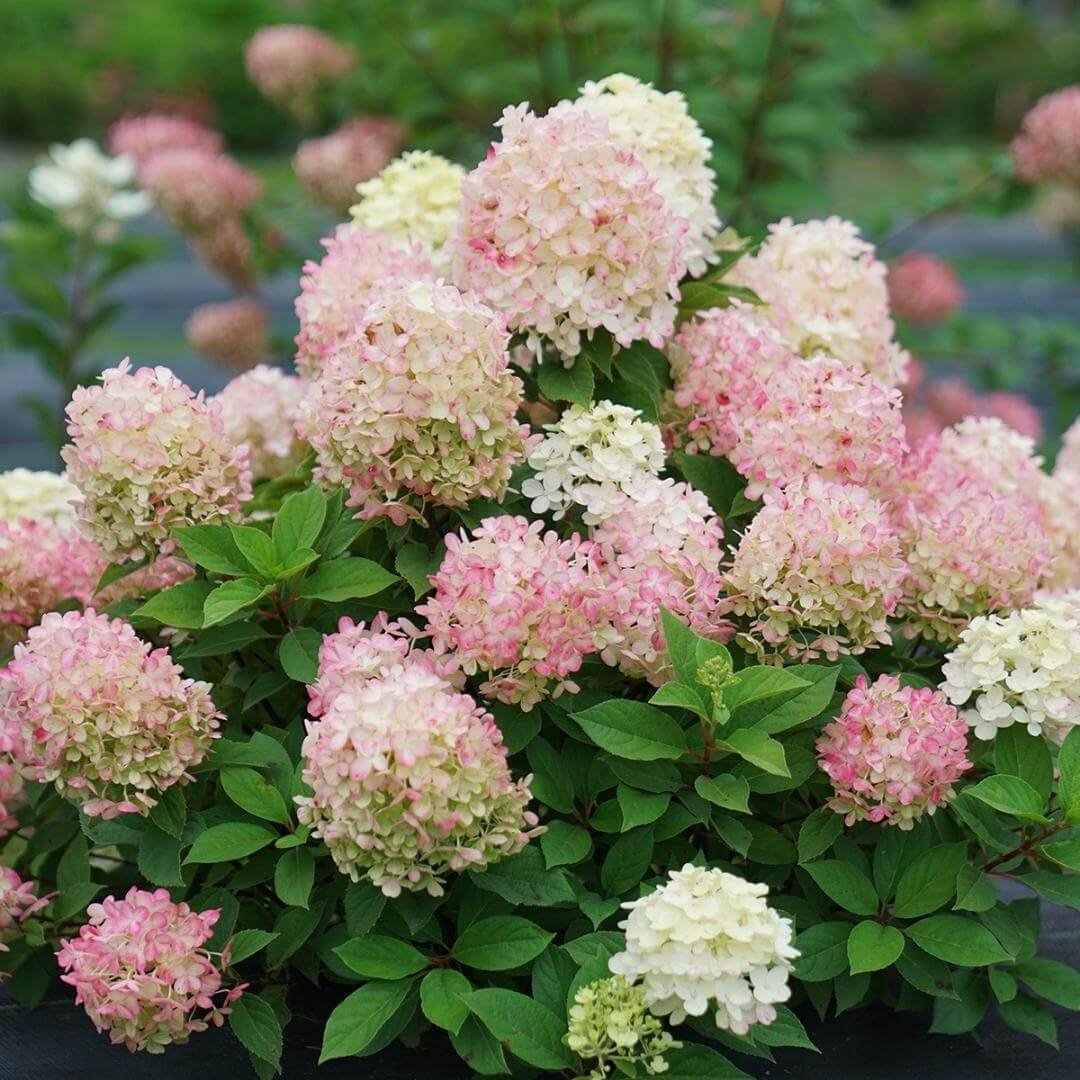
Firelight Tidbit panicle hydrangea (Hydrangea paniculata). The white flowers age to pink as summer progresses. Image courtesy of Spring Meadow Nursery, Inc. - Proven Winners, provenwinners.com.
Flower color: White, aging to vivid pink and red
Size: 2 to 3 feet tall and wide
Spacing: 2 to 3 feet on center
Hardiness zones: 3 to 8
Attributes: Most compact panicle hydrangea on this list; flowers age from white to deep pink; stunning orange and red fall color on the foliage.
Landscaping ideas: Front of the border, foundation plantings, containers, small garden beds, mass planting, lining walkways.
Designer's notes: Firelight Tidbit is the plant I recommend when someone tells me they love panicle hydrangeas but don't have the space for one. At just 2 to 3 feet tall and wide, this tiny hydrangea packs a punch with big, lush flower heads that nearly smother the foliage. Thick sturdy stems hold everything upright in a neat mounded shape with no pruning needed. The color show is outstanding for a plant this size: flowers open white in early to mid summer, then develop bright pink and red tones that deepen as the season progresses, and the foliage turns fiery oranges and reds in fall.
2. Bobo® Panicle Hydrangea
Hydrangea paniculata 'ILVOBO'
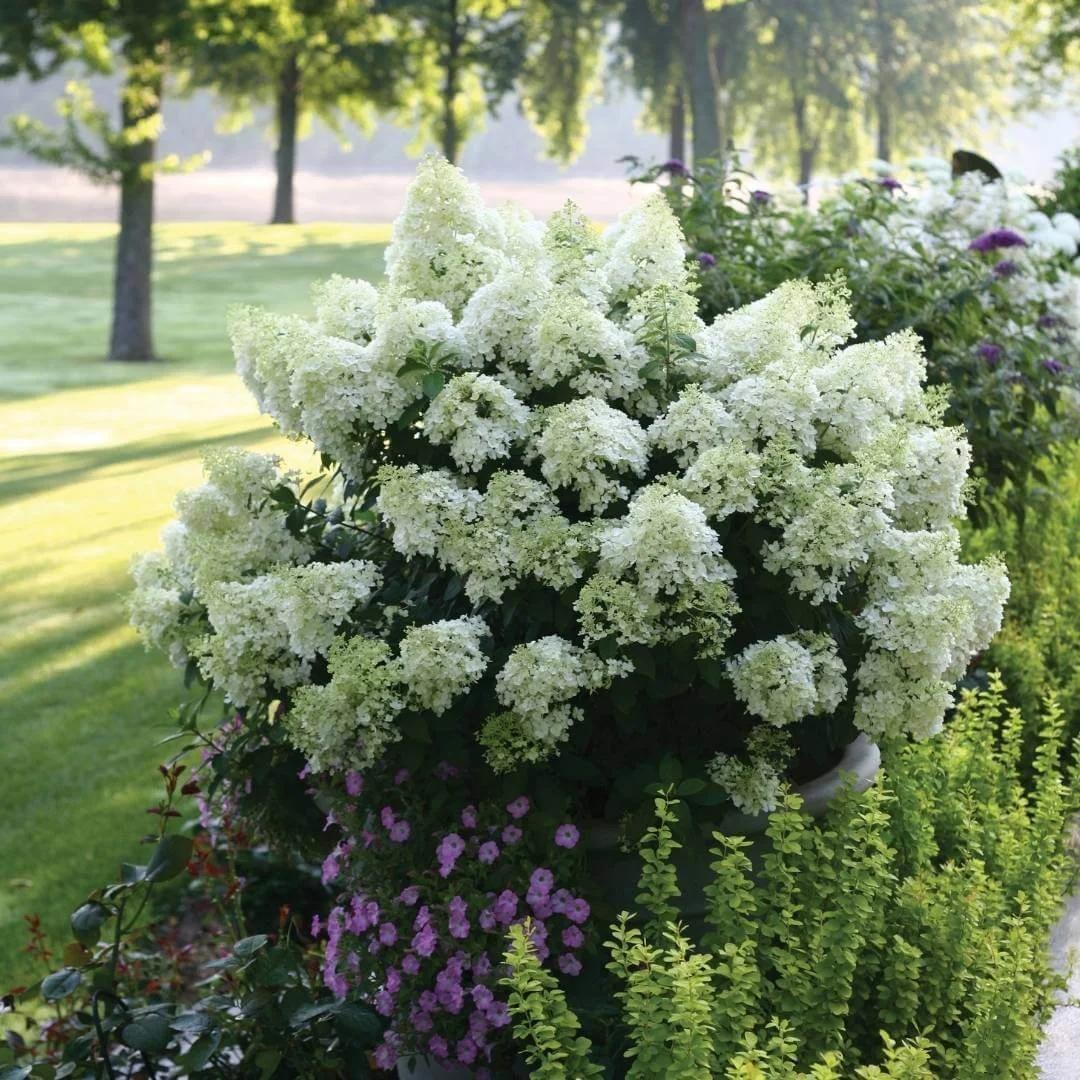
Bobo panicle hydrangea (Hydrangea paniculata) in a garden border. One of the most popular compact panicle hydrangeas, Bobo stays just 3 feet tall and wide. Image courtesy of Proven Winners ColorChoice Flowering Shrubs, provenwinners.com
Flower color: White, aging to pink
Size: 2.5 to 3 feet tall, 3 to 4 feet wide
Spacing: 3 to 4 feet on center
Hardiness zones: 3 to 8
Attributes: Dwarf and compact; large upright white blooms relative to plant size; strong stems; long season of bloom; earlier to flower than many other compact varieties.
Landscaping ideas: Foundation plantings, front of the border, low hedges, containers, mass planting, narrow garden beds, small backyards.
Designer's notes: Bobo earns its place at the front of the border by doing everything a compact shrub should do, and then some. The flower heads are surprisingly large for such a small plant, and the stems are strong enough to hold them upright without flopping, which is not always a given with heavily flowering dwarf shrubs.
It blooms earlier than many other panicle hydrangeas, which extends your overall season of interest when combined with later-blooming varieties. A great choice for smaller yards, townhome gardens, tight foundation beds, or anywhere you need reliable summer color without a large footprint.
3. Little Lime® Panicle Hydrangea
Hydrangea paniculata 'Jane'
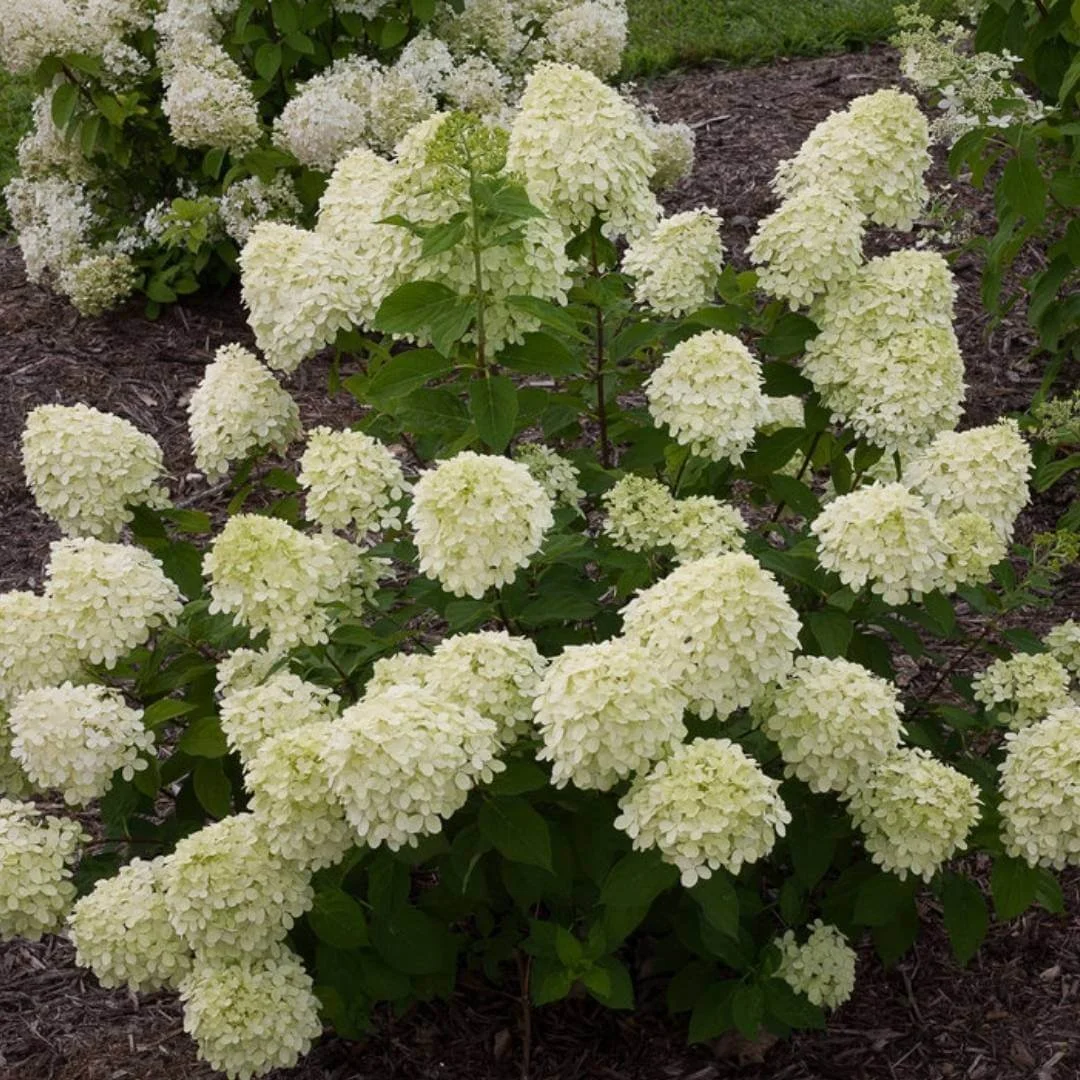
Little Lime panicle hydrangea (Hydrangea paniculata) in a mulched garden bed. A compact, more manageable alternative to the classic Limelight, Little Lime stays 3 to 5 feet tall and wide. Image courtesy of Proven Winners, provenwinners.com.
Flower color: Lime green, aging to pink and burgundy
Size: 3 to 5 feet tall and wide
Spacing: 3 to 5 feet on center
Hardiness zones: 3 to 8
Attributes: Compact habit; distinctive lime green flowers; strong stems; excellent pink and burgundy fall flower color; a smaller, tidier version of the classic Limelight.
Landscaping ideas: Foundation plantings, mixed borders, low hedges, mass planting, containers, cottage garden.
Designer's notes: Little Lime delivers everything gardeners love about Limelight in a much more manageable size, making it one of the most useful panicle hydrangeas for smaller landscapes. The lime green flowers are distinctive and versatile, pairing easily with almost any color in the garden, and the fall color is impressive, with flowers turning rich shades of pink and burgundy before drying to a warm parchment brown for winter. If you love the Limelight look but don't have the space for an 8-foot shrub, Little Lime is your answer.
4. Limelight Prime® Panicle Hydrangea
Hydrangea paniculata 'SMNHPPH'
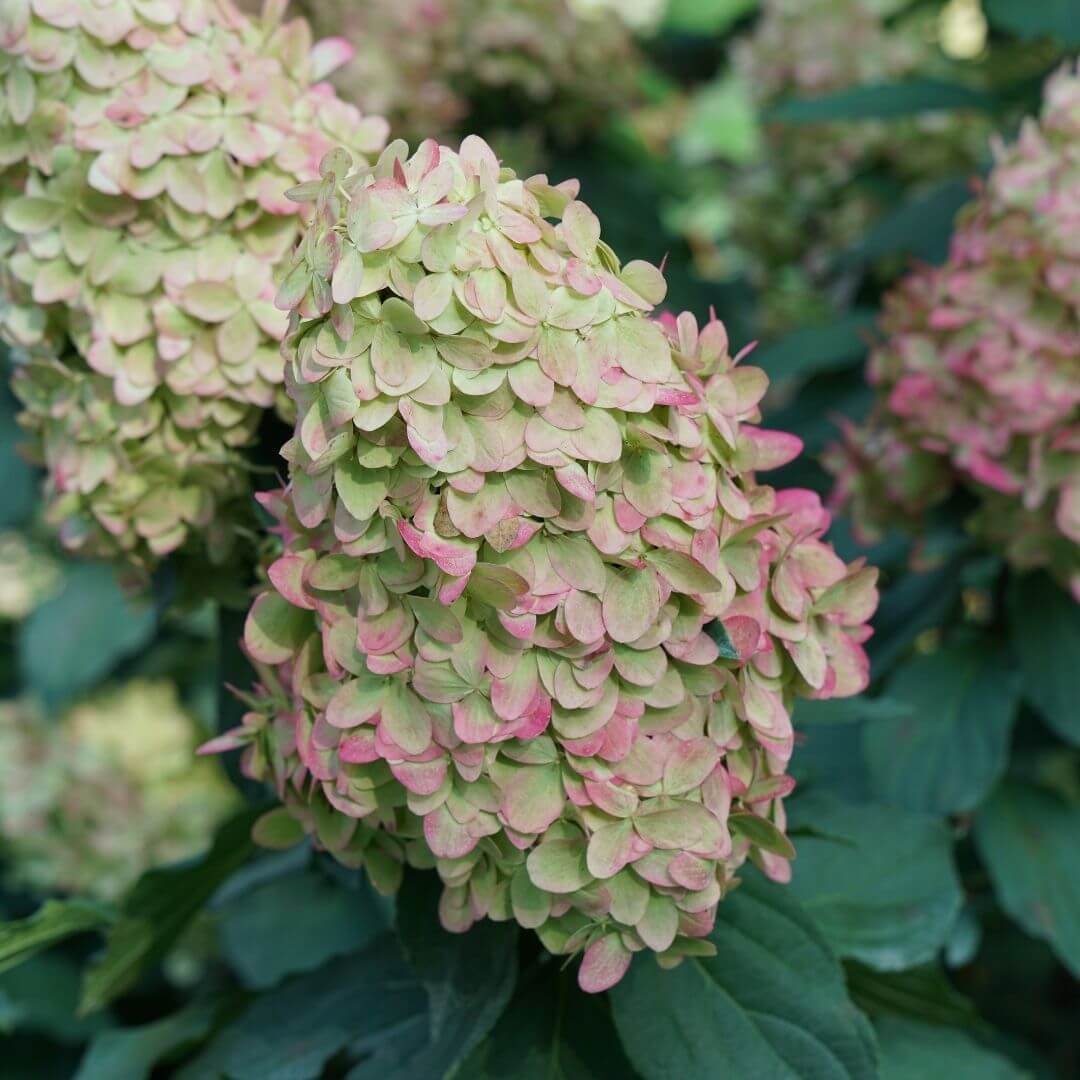
Limelight Prime panicle hydrangea (Hydrangea paniculata). The distinctive lime green flower heads develop pink tones as the season progresses. Image courtesy of Spring Meadow Nursery, Inc. - Proven Winners, provenwinners.com.
Flower color: Lime green, aging to vivid pink and red
Size: 4 to 6 feet tall, 4 to 5 feet wide
Spacing: 4 to 5 feet on center
Hardiness zones: 3 to 8
Attributes: Improved version of Limelight; longer flowering season; stronger stems; more vivid flower color; slightly more compact than the original.
Landscaping ideas: Mixed borders, foundation plantings, hedges, specimen planting, mass planting.
Designer's notes: Think of Limelight Prime as Limelight with all the rough edges smoothed out. The stems are stronger, so the flower heads stay upright instead of flopping after a heavy rain. The flowering season starts earlier and runs longer. The color transition from lime green to pink and red is more vivid and dramatic. And the overall size is slightly more compact, which makes it a better fit for many residential landscapes.
5. Firelight® Panicle Hydrangea
Hydrangea paniculata 'SMHPFL'
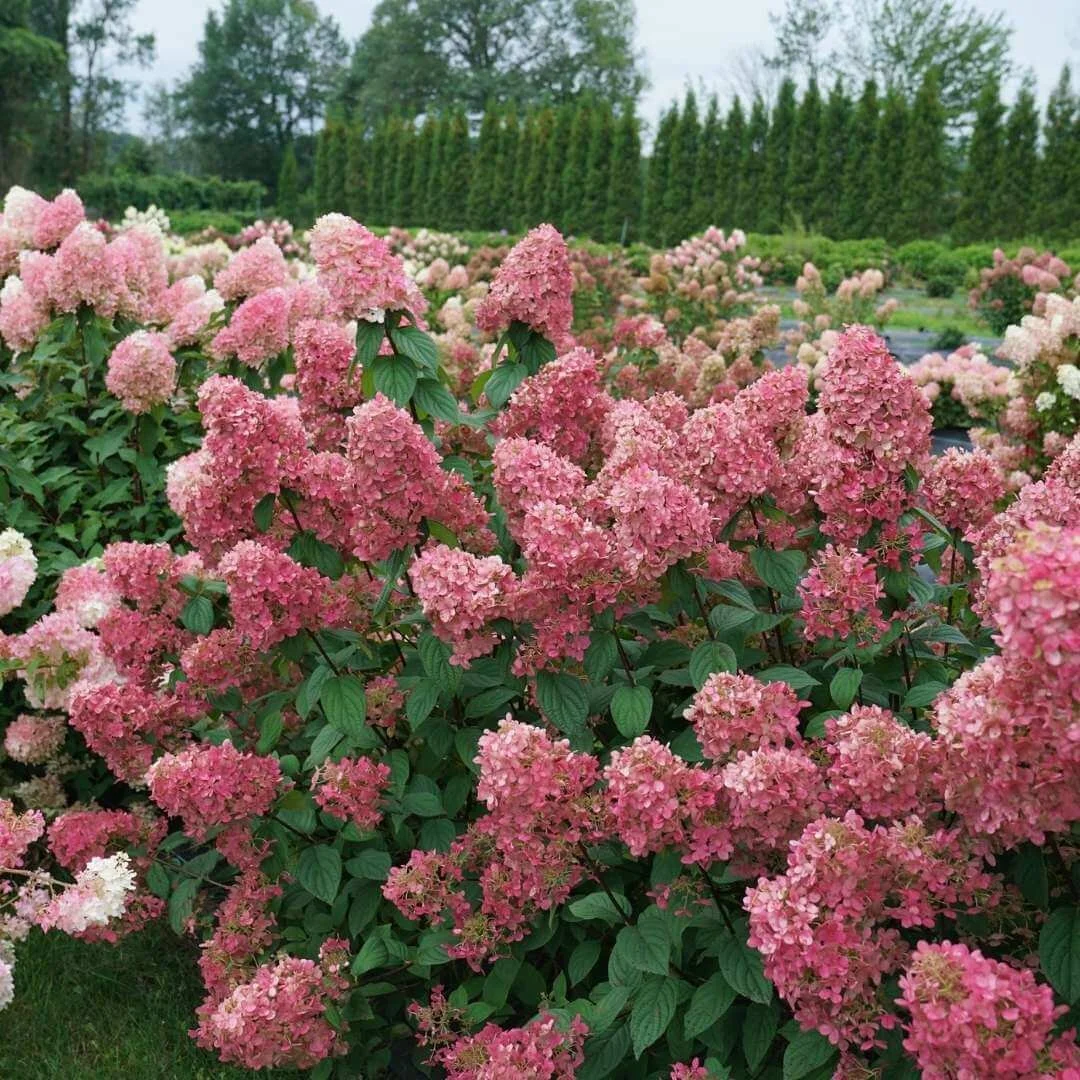
Firelight panicle hydrangea (Hydrangea paniculata) in a mass planting, showing the stunning range of pink tones as the flowers age through the season. Image courtesy of Spring Meadow Nursery, Inc. - Proven Winners, provenwinners.com.
Flower color: White, aging to vivid pink and red
Size: 6 to 8 feet tall and wide
Spacing: 6 to 8 feet on center
Hardiness zones: 3 to 8
Attributes: Exceptionally vivid pink and red fall color; strong upright stems; large flower panicles; one of the most colorful panicle hydrangeas available; great for cut flowers.
Landscaping ideas: Back of the border, specimen planting, hedges and screens, mass planting in larger landscapes.
Designer's notes: Firelight is the showstopper of the group when fall arrives. The flowers transition from white to a vivid, saturated pink and red that is more intense than almost any other panicle hydrangea on the market, and the strong upright stems hold the large flower heads without drooping even after heavy rain. It fills a large space beautifully and pairs well with ornamental grasses and late-blooming perennials for a dramatic end-of-season display. If you have the space for it, Firelight earns every square foot.
6. Vanilla Strawberry™ Panicle Hydrangea
Hydrangea paniculata 'Renhy'
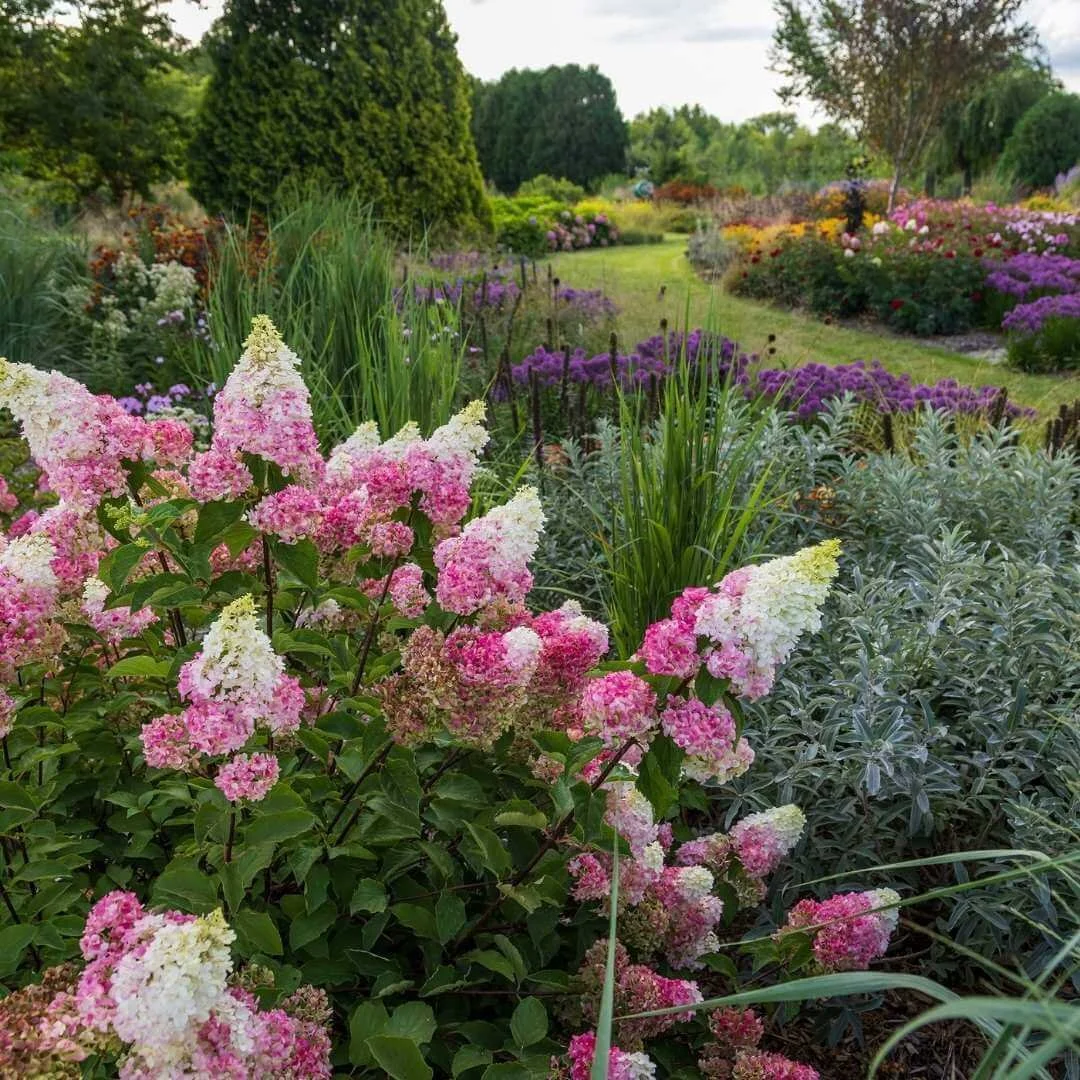
Vanilla Strawberry panicle hydrangea (Hydrangea paniculata) in a mixed garden border. It makes a natural specimen plant with multicolored blooms ranging from white to strawberry red. Image courtesy of Bailey Nurseries.
Flower color: White, aging to pink and strawberry red
Size: 6 to 7 feet tall, 5 to 6 feet wide
Spacing: 5 to 6 feet on center
Hardiness zones: 3 to 8
Attributes: Striking, multicolored flowers; upright habit; strong stems; fountain-like shape; long season of interest.
Landscaping ideas: Specimen planting, back of the border, hedges, mixed shrub borders.
Designer's notes: What makes Vanilla Strawberry special is that individual flowers transition through their color stages at different rates, so you often see white, pink, and deep strawberry red blooms all on the same shrub at the same time. This layered, multicolored effect makes it a natural choice for a lawn specimen or accent plant.
7. Berry White® Panicle Hydrangea
Hydrangea paniculata 'RENBA'
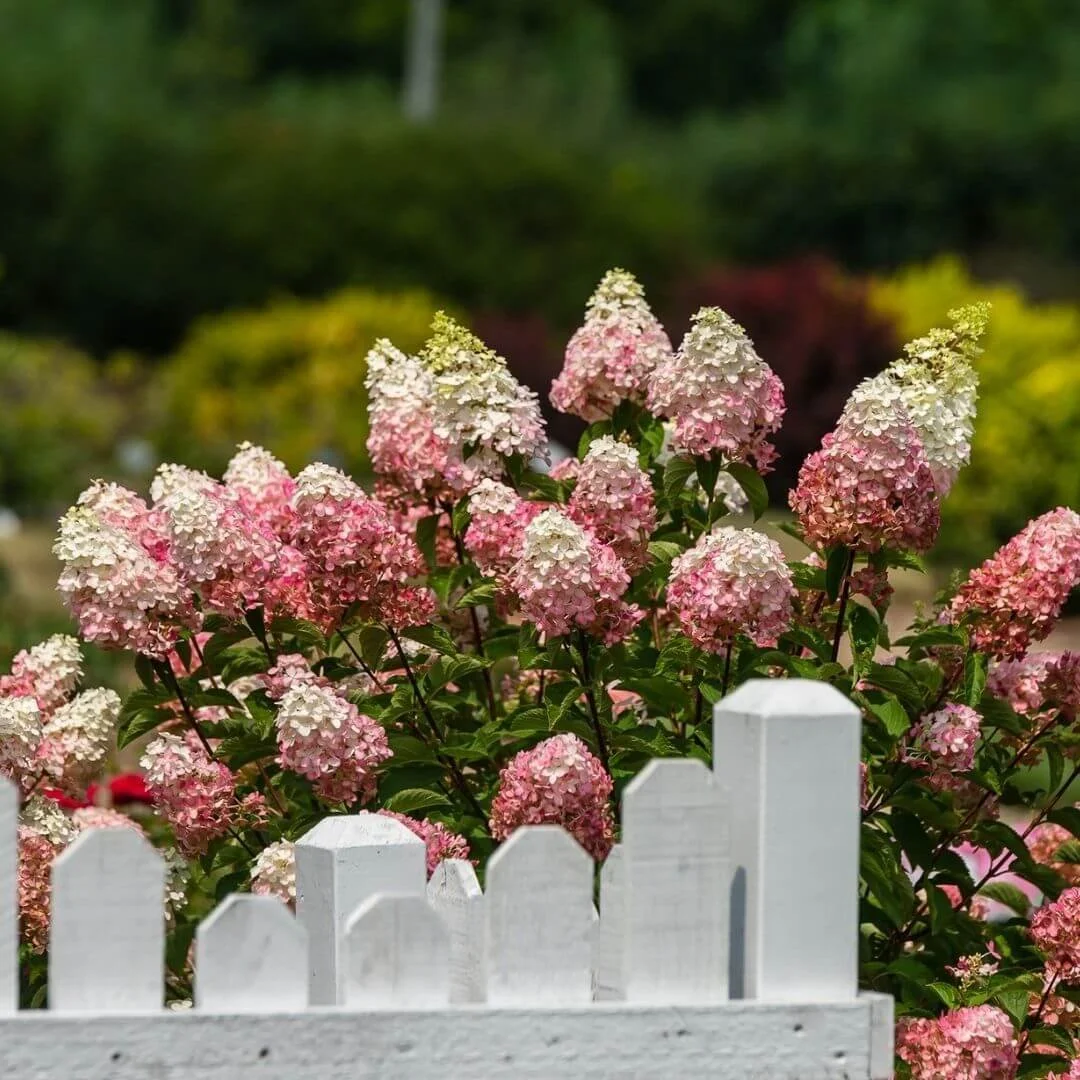
Berry White panicle hydrangea (Hydrangea paniculata) is an excellent choice for garden borders and fence lines. Image courtesy of Bailey Nurseries.
Flower color: White, aging to deep pink and red
Size: 6 to 7 feet tall, 4 to 5 feet wide
Spacing: 5 to 6 feet on center
Hardiness zones: 3 to 8
Attributes: Massive 6-12 inch white flowers age to gradients of pink and raspberry, finishing wine red in the fall; sturdy burgundy stems; slightly more upright and narrower habit than other large varieties; flower color is especially intense in colder zones.
Landscaping ideas: Back of the border, specimen planting, hedges and screens, mass planting.
Designer's notes: Berry White is the variety to reach for when you want deep, saturated color and a slightly more upright, narrower profile than a typical large panicle hydrangea. The flowers age to gorgeous shades of pink and red, and gardeners in colder zones get an especially vivid display because the color intensifies with cooler fall temperatures. Its narrower habit also makes it a useful choice for hedges, screens and side yards where you want height without the full width of the Limelight or Vanilla Strawberry varieties.
8. Limelight Panicle Hydrangea
Hydrangea paniculata 'Limelight'
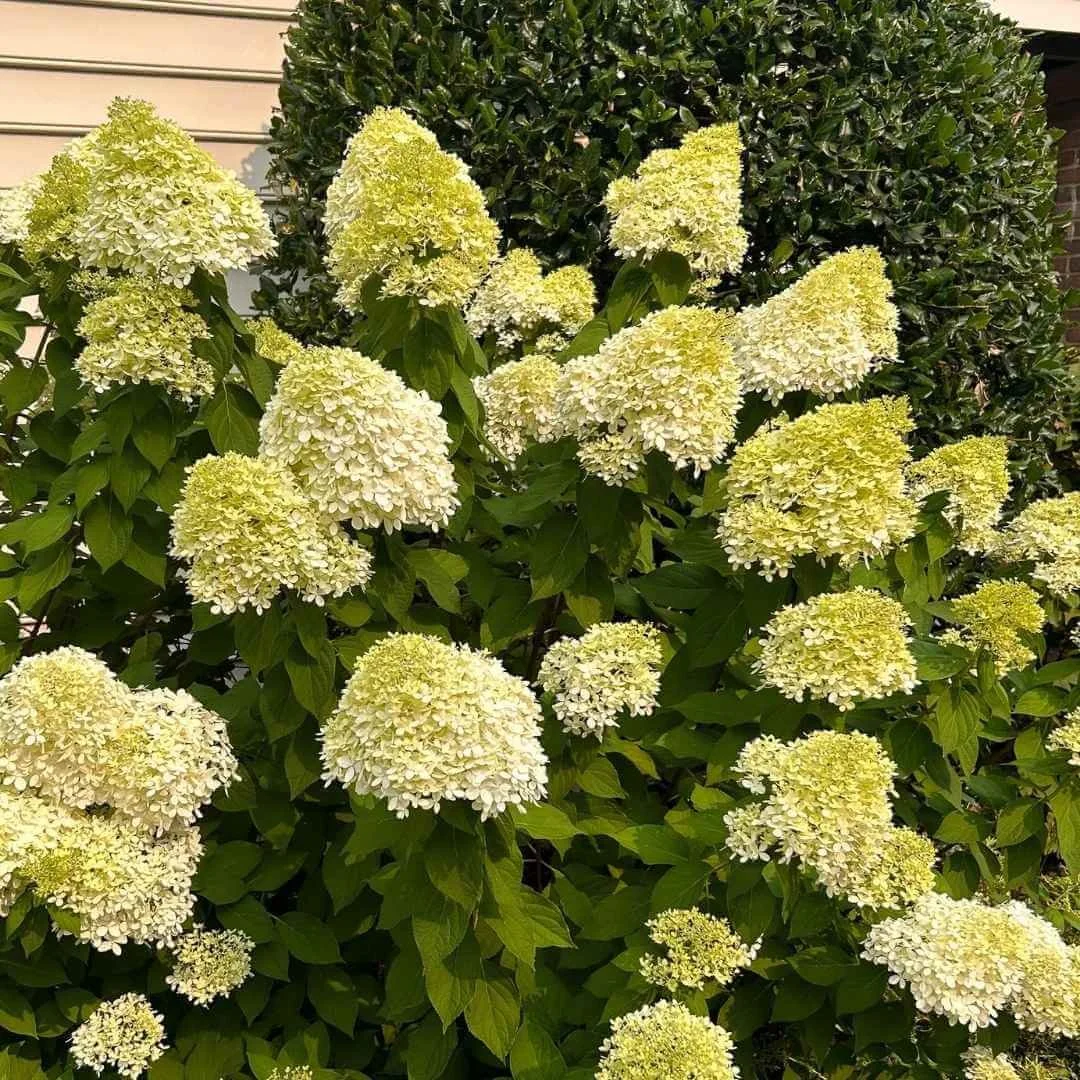
Limelight panicle hydrangea (Hydrangea paniculata) as a foundation planting alongside a holly shrub, a classic combination that provides structure and year-round interest. Image © Plant and Bloom Design Studio.
Flower color: Lime green, aging to pink and burgundy
Size: 6 to 8 feet tall and wide
Spacing: 6 to 8 feet on center
Hardiness zones: 3 to 9
Attributes: The classic panicle hydrangea; iconic lime green flowers; large shrub with bold presence; one of the most widely available and recognizable hydrangeas in the landscape industry; zone 9 hardy.
Landscaping ideas: Back of the border, specimen planting, flowering hedge, screening, mass planting in larger landscapes.
Designer's notes: Limelight is the hydrangea that introduced an entire generation of gardeners to the panicle family, and it remains one of the most planted shrubs in American landscapes for good reason. The lime green flowers are iconic, the plant is virtually indestructible, and it delivers a reliable, spectacular show every single year with minimal effort.
It is a big shrub, and that is worth emphasizing before you plant it: give it the full 6 to 8 feet of space it needs or you will be fighting it forever. In the right spot, there is nothing quite like a mature Limelight in full bloom. It is also the only variety on this list that extends to zone 9, making it the go-to choice for gardeners in warmer climates.
How to Plant and Grow Panicle Hydrangeas
Panicle hydrangeas are forgiving, adaptable shrubs that thrive in a wide range of conditions. A few key decisions at planting time make the difference between a plant that survives and one that truly thrives.
When to Plant
The best time to plant a panicle hydrangea is in spring or fall, when milder temperatures give the roots time to establish before the onset of summer heat or winter cold. Spring planting gives the shrub a full growing season to get settled in, while fall planting takes advantage of cooler weather to reduce transplant stress. Water deeply immediately after planting and keep the soil consistently moist for the remainder of the season.
Panicle Hydrangea Sun Requirements
Panicle hydrangeas are the sun lovers of the hydrangea world. They grow in full sun to part shade and need a minimum of 4 hours of direct sunlight per day, but will thrive with more. Unlike bigleaf hydrangeas, which need protection from hot afternoon sun, panicle hydrangeas can handle direct sun all day without complaint. Too much shade tells a different story: the stems become weak and floppy, flowering is significantly reduced, and the plant takes on a leggy, anemic appearance. When in doubt, choose the sunnier spot.
Soil
Panicle hydrangeas are adaptable to a wide range of soil types, including clay, which sets them apart from many other flowering shrubs. They prefer rich, well-draining soil that retains consistent moisture without becoming waterlogged or soggy. Amend the planting area with compost or shredded leaves to improve drainage and fertility before planting. Unlike bigleaf hydrangeas, flower color is not affected by soil pH, so there is no need to adjust your soil to achieve a particular bloom color.
How Far Apart to Plant Panicle Hydrangeas
How far apart you plant your panicle hydrangeas depends on the variety. Use on center spacing, measured from the center of one plant to the center of the next. As a general rule:
Compact varieties like Firelight Tidbit and Bobo: 3 to 4 feet on center
Mid-size varieties like Little Lime and Limelight Prime: 4 to 5 feet on center
Large varieties like Firelight, Vanilla Strawberry, Berry White, and Limelight: 6 to 8 feet on center
Panicle hydrangeas are fast growers, adding 12 to 36 inches per year, so resist the urge to plant closer for immediate impact. They will fill in quickly.
Watering
Panicle hydrangeas need consistent moisture to perform their best, and this is especially true during the blooming season when the plants are putting significant energy into producing and maintaining their large flower heads. The soil should stay evenly moist but never waterlogged or soggy.
Poor drainage and standing water around the roots will cause serious problems, so good drainage is non-negotiable. During hot, dry summers plan on supplemental watering to keep the soil from drying out, and check container-grown plants more frequently since pots dry out much faster than garden soil.
Apply a layer of organic mulch around the base of the plant to conserve moisture, regulate soil temperature, and suppress weeds. Keep mulch pulled back slightly from the stems to prevent rot.
Wondering if your area is in a drought? Check the current U.S. Drought Monitor status before adjusting your watering schedule.
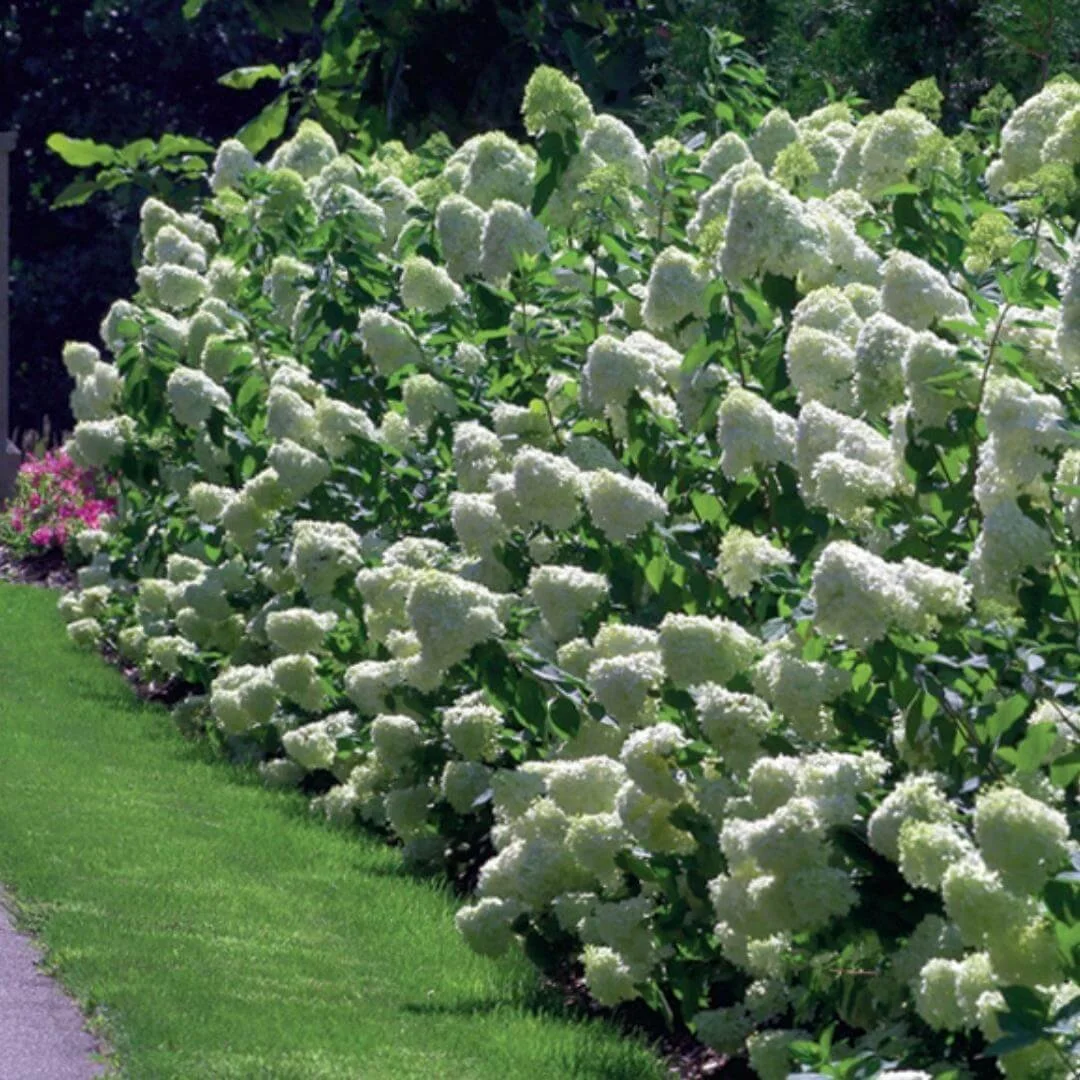
A mass planting of Limelight panicle hydrangeas used to create a flowering hedge. If you are planning to use a large number of plants, soaker hoses or drip irrigation are worth considering. Panicle hydrangeas perform best with consistent moisture and an irrigation system makes this much easier to maintain. Image courtesy of Proven Winners, provenwinners.com.
Fertilizing
Panicle hydrangeas are not heavy feeders. A thin layer of compost worked into the soil in early spring is generally all they need to support healthy growth and flowering throughout the season. Avoid high nitrogen fertilizers, which promote lush foliage at the expense of flowers.
When and How to Prune Panicle Hydrangeas
Panicle hydrangeas bloom on new wood, which means they produce flowers on growth that emerges in the current season. This makes them forgiving of pruning mistakes and gives you a more flexible window for cutting them back.
Prune in late winter or early spring, before new growth begins. Cut the entire plant back by about one third, removing the previous season's dried flower heads at the same time. This encourages strong new growth and abundant flowering. Avoid pruning in late summer or fall, which can reduce cold hardiness going into winter.
Panicle hydrangeas do not require deadheading to rebloom, and the dried flower heads are worth leaving on the plant through winter for seasonal interest. Remove them when you do your late winter pruning.
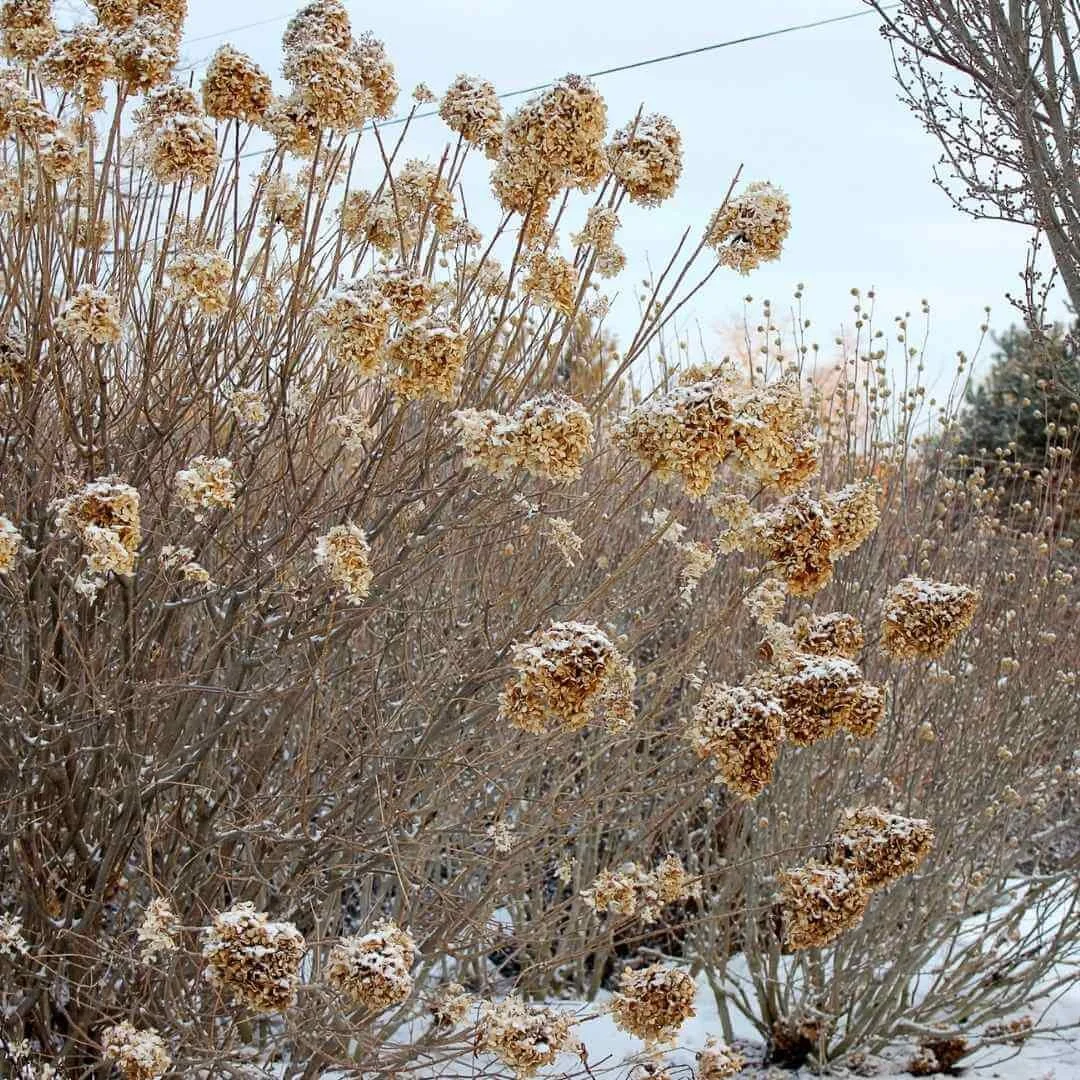
Panicle hydrangea dried flower heads persist through winter, adding seasonal interest to the garden. Leave them on the plant until late winter pruning time. Limelight hydrangea image courtesy of Spring Meadow Nursery, Inc. - Proven Winners, provenwinners.com.
Landscaping Ideas for Panicle Hydrangeas
Hydrangea paniculata is among the most versatile flowering shrubs you can plant across zones 3 to 8. The upright habit, long season of bloom, and adaptability to a wide range of conditions make panicle hydrangeas useful in almost every landscape situation, from tight foundation beds to large open borders.
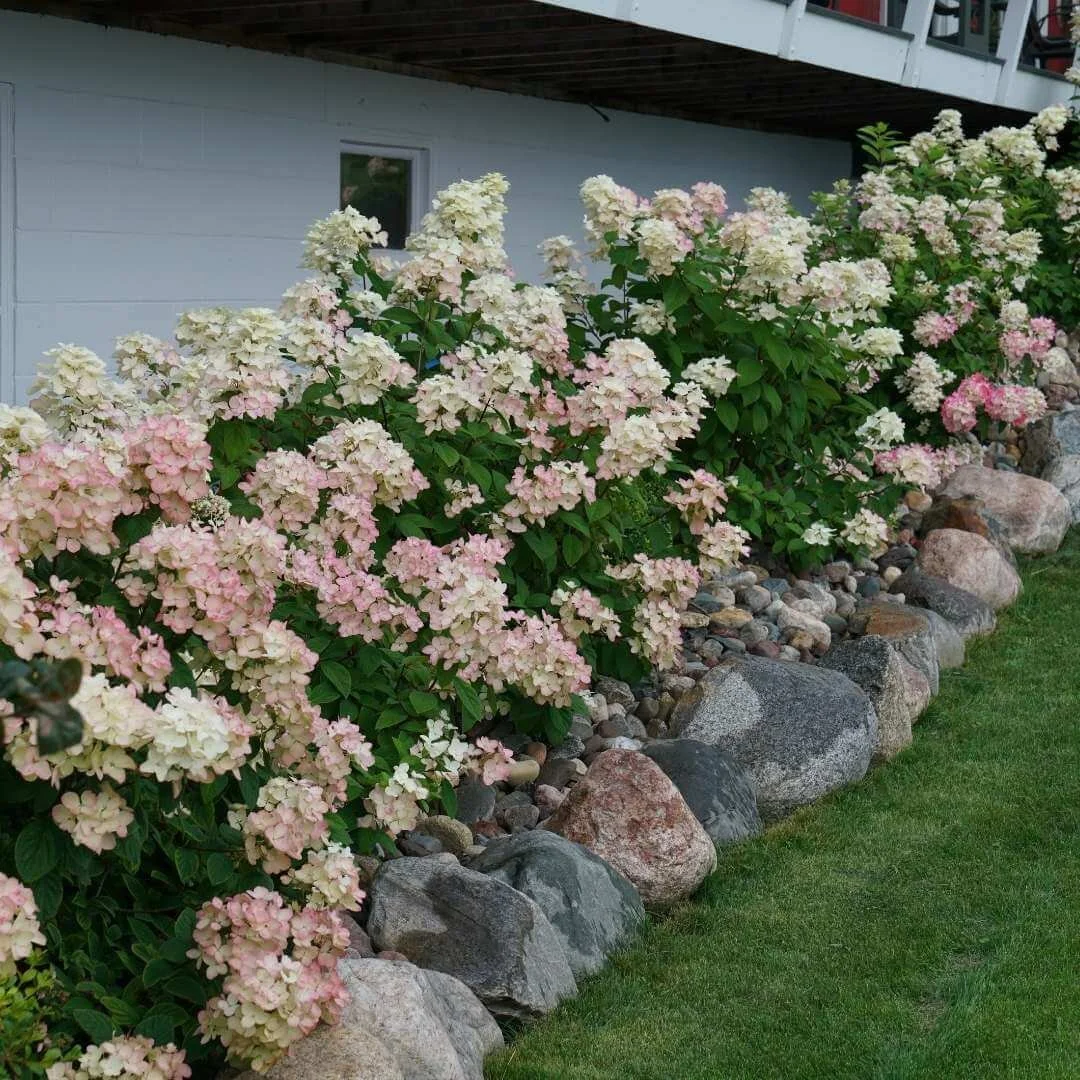
Firelight panicle hydrangea (Hydrangea paniculata) as a foundation planting, showing the beautiful transition from white to pink as the flowers age. Image courtesy of Proven Winners ColorChoice Flowering Shrubs, provenwinners.com.
Foundation Plantings: Panicle hydrangeas make excellent foundation plants, particularly the compact and mid-size varieties. Their upright habit and attractive foliage provide structure through the growing season, while large conical blooms add a generous burst of summer color. Choose a variety that fits comfortably under your windows at maturity. Firelight Tidbit and Bobo are ideal for low foundation beds, while Little Lime and Limelight Prime work beautifully for larger foundation plantings where you have more vertical space.
Mixed Borders: Panicle hydrangeas combine beautifully with a wide range of companion plants, making them a natural anchor for mixed borders. Their white to lime green summer flowers transition to pink and red in fall, giving them an unusually long window of color that bridges the gap between summer and fall. Good companions include Karl Foerster feather reed grass, Russian sage, coneflowers, and late blooming sedums.
Hedges and Privacy Screens: A panicle hydrangea hedge is one of the most rewarding alternatives to a traditional evergreen screen. Plant them in a row to create a dense, flowering 3 season hedge or privacy screen that delivers spectacular summer and fall color as a bonus. This works particularly well with the larger varieties like Limelight, Berry White, and Firelight, which can reach 6 to 8 feet tall and create a substantial screen in just a few seasons.
Specimen Planting: A single, well-sited panicle hydrangea can anchor an entire planting or serve as a focal point in the garden. Vanilla Strawberry is a natural specimen plant thanks to its multicolored blooms. Limelight makes a bold statement at the end of a path or in the corner of a backyard. Give a specimen plant enough space to develop its full natural shape without crowding, and resist the urge to surround it with too many competing plants.
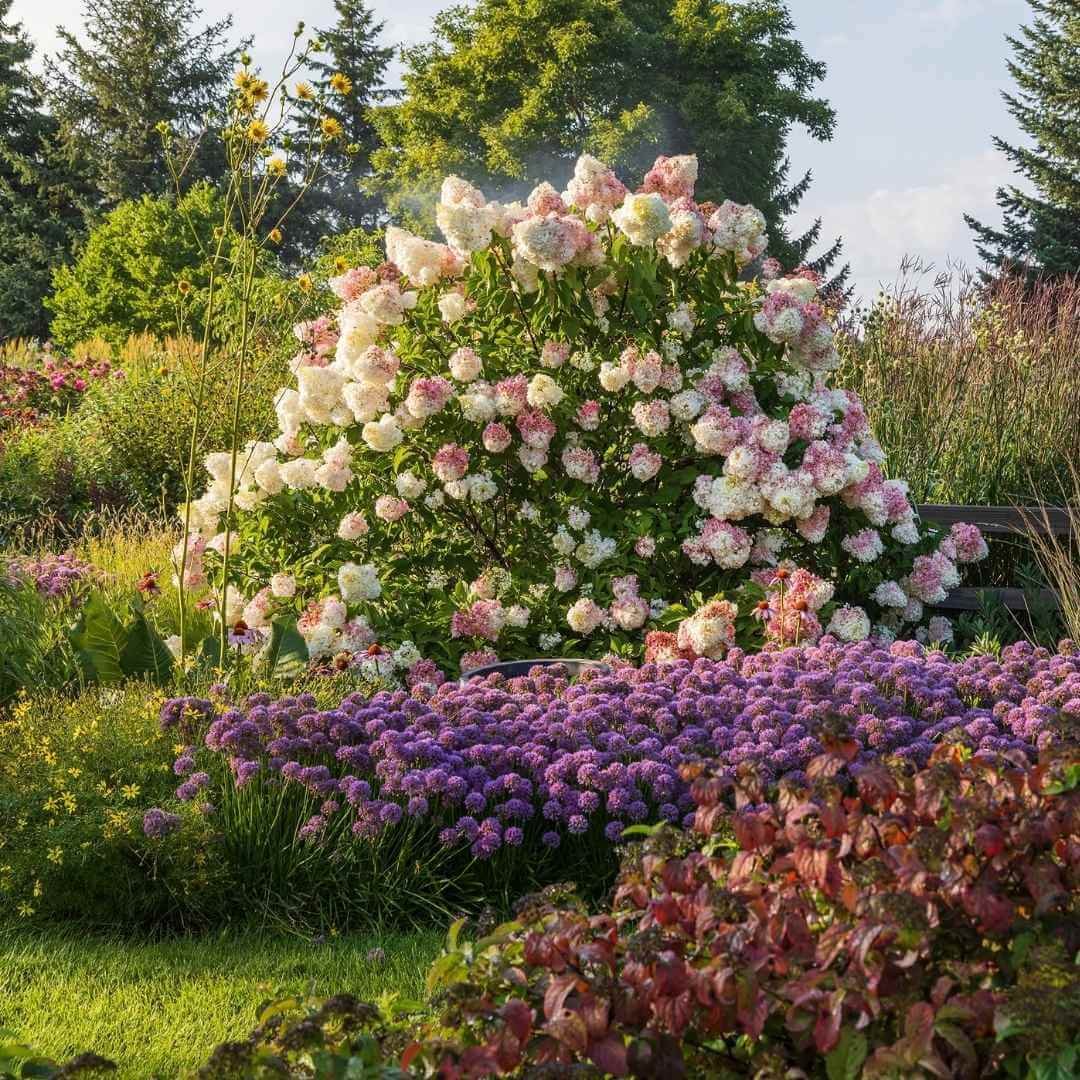
Vanilla Strawberry panicle hydrangea (Hydrangea paniculata) in a mixed garden border, underplanted with purple alliums. Image courtesy of Bailey Nurseries.
Mass Plantings: Few flowering shrubs make as much impact in a mass planting as a panicle hydrangea. A group of five or more planted together creates a sweeping, cohesive display of color that reads beautifully from a distance. Mass plantings work especially well along driveways, fences, or property lines. Stick to one variety for a clean, unified look.
Containers: Compact panicle hydrangea varieties grow well in large containers on sunny patios, balconies, and front entryways. Choose a container that is at least 18 to 24 inches in diameter to give the roots adequate room. Container grown panicle hydrangeas dry out much faster than those planted in the ground and will need more frequent watering, especially during hot summer weather. In zones 6 and colder, move containers to a protected location or unheated garage for the winter to protect the roots from freeze damage.
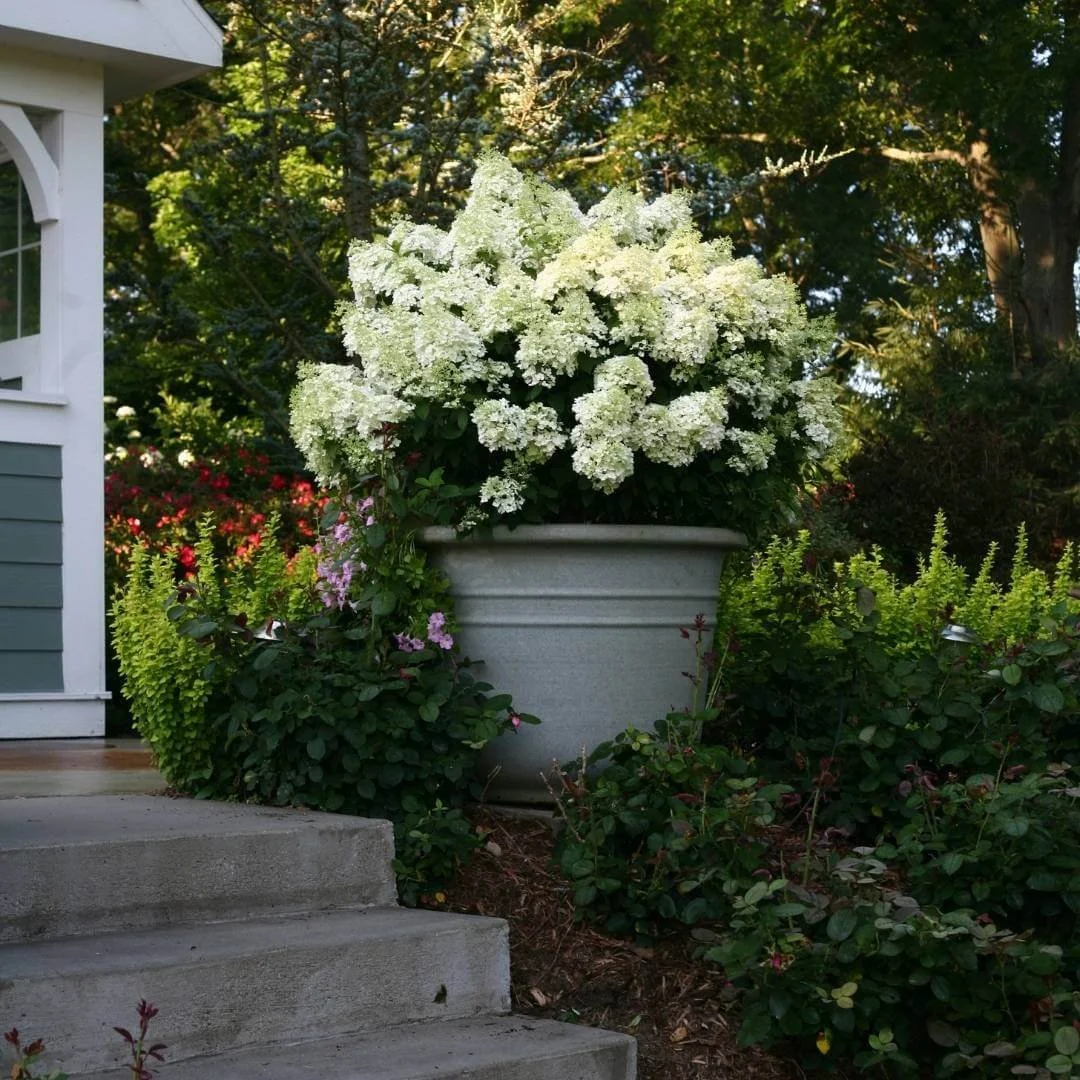
Bobo panicle hydrangea (Hydrangea paniculata) in a container planting. Its compact 3 foot habit makes it one of the best panicle hydrangeas for growing in containers. Image courtesy of Proven Winners ColorChoice Flowering Shrubs, provenwinners.com.
Peegee Hydrangea Tree (Hydrangea paniculata 'Grandiflora')
If you've ever driven past an older property and noticed a large, tree-shaped hydrangea with massive white flower clusters, chances are you were looking at a Peegee hydrangea tree. Introduced from Japan in 1862, the Peegee is one of the oldest and most recognizable panicle hydrangeas in American landscapes, and it is still growing in countless yards across the country.
The name Peegee comes from the initials PG, a nod to the plant's species and cultivar names. Sometimes listed simply as Hydrangea paniculata ‘Grandiflora’ at nurseries and garden centers, it remains widely available today. At maturity, Peegee hydrangeas typically reach 10 to 15 feet tall and wide, though older specimens can push considerably larger.
Hardy in zones 3 to 8, it is most commonly trained into a tree form by nurseries, pruned to a single trunk with a rounded crown of branches at the top. The Peegee hydrangea tree form is a common sight in older neighborhoods, and you will also see this treatment applied to other panicle hydrangea cultivars.
The Peegee has real charm, especially on a mature specimen in full bloom. The flower clusters are enormous, opening creamy white in midsummer and aging to pink and parchment brown by fall. But it comes with some practical drawbacks. The stems have a tendency to droop and flatten under the weight of the heavy flower heads, especially after a heavy rain, and the overall size can quickly overwhelm a smaller landscape.
The good news is that modern breeding has solved most of the Peegee's problems. The cultivars on this list offer the same reliable sun tolerance, cold hardiness, and spectacular blooms in sizes and habits that work for today's residential landscapes, with stronger stems and far better manners. If you have a mature Peegee on your property it is worth keeping and enjoying. If you are starting fresh, one of the modern cultivars will most likely serve you better.
Panicle Hydrangea Not Blooming? Common Causes and Fixes
Several factors could contribute to a panicle hydrangea not blooming:
Young plant: Panicle hydrangeas may take a few years to establish before they start blooming. If your plant is still relatively young, it may need more time to mature and establish itself.
Pruning: Pruning at the wrong time or too aggressively can remove the flower buds. Panicle hydrangeas bloom on new wood, so pruning in late winter or early spring before new growth starts is ideal.
Insufficient sunlight: For best flowering, panicle hydrangeas need at least 4 hours of direct sunlight per day. If they're not getting enough sunlight, they may produce fewer blooms or fail to bloom altogether.
Watering: Panicle hydrangeas need consistent moisture to perform their best. Allowing the soil to dry out, particularly during the blooming season, stresses the plant and can significantly reduce flowering.
Over fertilizing: Too much nitrogen fertilizer encourages lush leafy growth at the expense of flowers. Go easy on the fertilizer and let a spring top dressing of compost do the work instead.
Deer: Deer are particularly fond of hydrangea flowers and buds. They may visit your yard and nibble the buds off your panicle hydrangea overnight, leaving no evidence of their presence other than the absence of flowers.
Frequently Asked Questions About Panicle Hydrangeas
Are Panicle Hydrangeas Deer Resistant?
No. Deer are particularly fond of hydrangeas and will browse panicle hydrangeas readily, especially the tender new growth and flower buds in spring and early summer. If deer pressure is high in your area, protective fencing or repellent sprays may be necessary to keep your plants intact.
Can Panicle Hydrangeas Grow in Full Sun?
Yes, and they actually thrive in it. Panicle hydrangeas are the most sun tolerant of all the hydrangea types and can handle direct sun all day without the wilting and stress you would see in a bigleaf hydrangea under the same conditions. A minimum of 4 hours of direct sunlight per day is required for strong stems and abundant flowering. More sun generally means more blooms and better stem strength.
When Do Panicle Hydrangeas Bloom?
Most panicle hydrangeas begin blooming in midsummer and continue through early fall, giving them one of the longest bloom seasons of any flowering shrub. Exact timing varies by cultivar. Early blooming varieties like Firelight and Limelight Prime begin flowering in late June to early July, while others follow through August and into September. The dried flower heads persist through winter, extending the season of interest well beyond the last bloom.
How Fast Do Panicle Hydrangeas Grow?
Panicle hydrangeas are fast growers, typically adding up to 36 inches of new growth per year under good conditions. This makes them one of the quickest flowering shrubs to reach mature size, which is part of their appeal for new landscapes and privacy screens. Keep the fast growth rate in mind when spacing plants at planting time.
What is the Difference Between Panicle and Bigleaf Hydrangeas?
Panicle hydrangeas (Hydrangea paniculata) and bigleaf hydrangeas (Hydrangea macrophylla) are two very different plants with different needs and growing habits. Panicle hydrangeas are cold hardy to zone 3, thrive in full sun, bloom reliably on new wood every year, and are largely unaffected by soil pH. Bigleaf hydrangeas are cold hardy only to zone 5, prefer part shade, bloom on old wood in most varieties which makes them vulnerable to late frosts and incorrect pruning, and produce their characteristic blue or pink flower color based on soil pH. If you garden in a cold climate or a sunny spot, panicle hydrangeas are the more reliable and forgiving choice.
Are Panicle Hydrangeas Invasive?
No, panicle hydrangeas are not considered invasive. They do not self-seed aggressively or spread beyond their designated planting area. The USDA does not list Hydrangea paniculata as an invasive species in the United States. You can verify current status at the USDA Terrestrial Plants Database.
What Type of Hydrangea Do I Have?
If your hydrangea produces cone-shaped flower clusters rather than round mophead or lacecap blooms, and blooms reliably every summer regardless of winter temperatures, it is most likely a panicle hydrangea. Other identifying characteristics include upright multi-stemmed growth, opposite dark green serrated leaves, and flowers that open white or lime green and age to pink and red. If you are still unsure, your local cooperative extension office can help with plant identification. You can also browse my Hydrangea Types Explained guide for a full breakdown of each type.
Recommended Resources
A few trusted resources to help you get the most out of your panicle hydrangeas:
USDA Plant Hardiness Zone Map: Find your hardiness zone to confirm panicle hydrangeas are a good fit for your climate.
Ask Extension: Get free gardening advice from your local cooperative extension service, staffed by Master Gardeners and university horticulture experts.
U.S. Drought Monitor: Check current drought conditions in your area to help guide your watering schedule.
Rutgers University Landscape Plants Rated by Deer Resistance: A comprehensive and reliable deer resistance rating system available, organized by plant genus and species.